

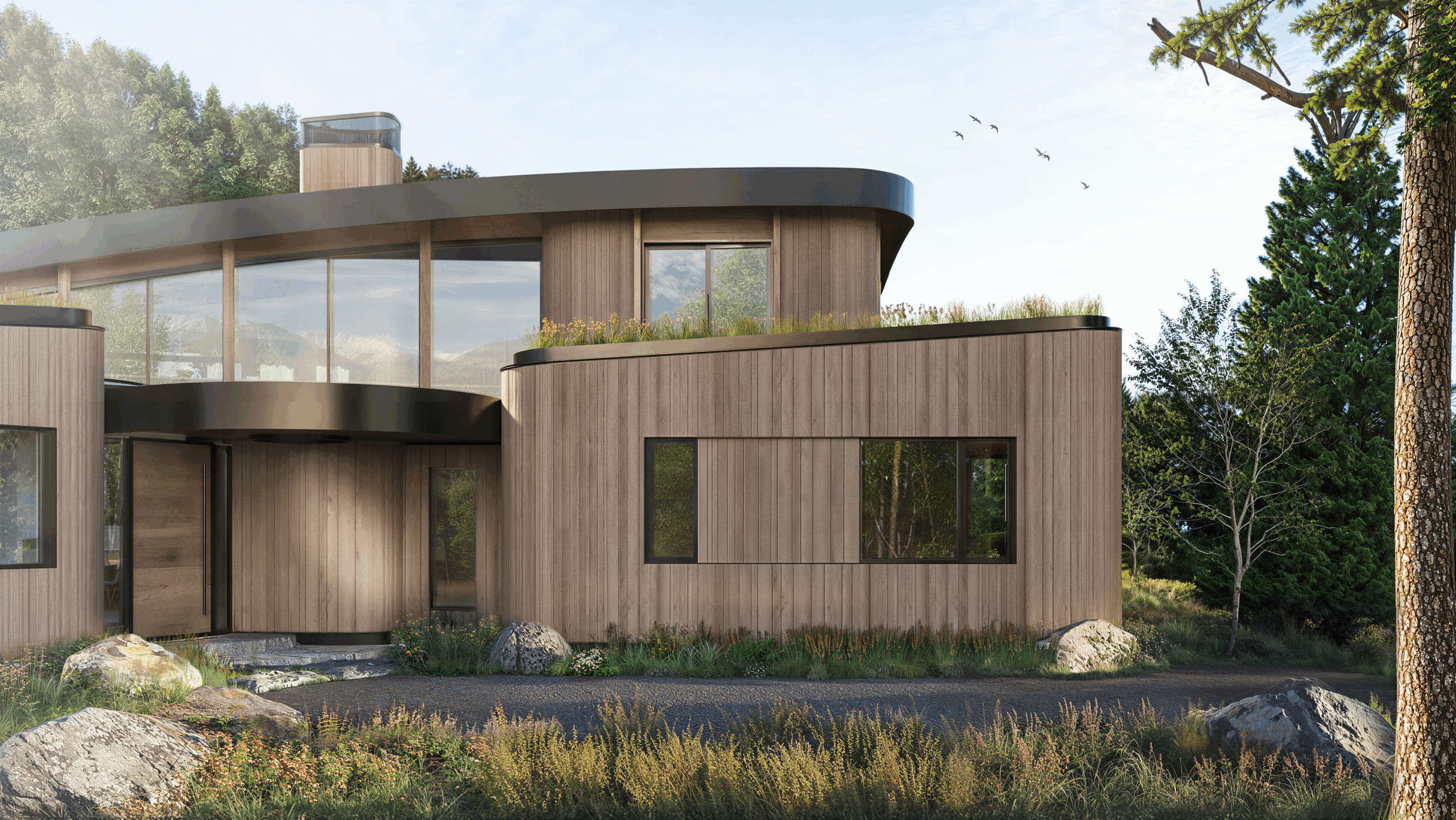
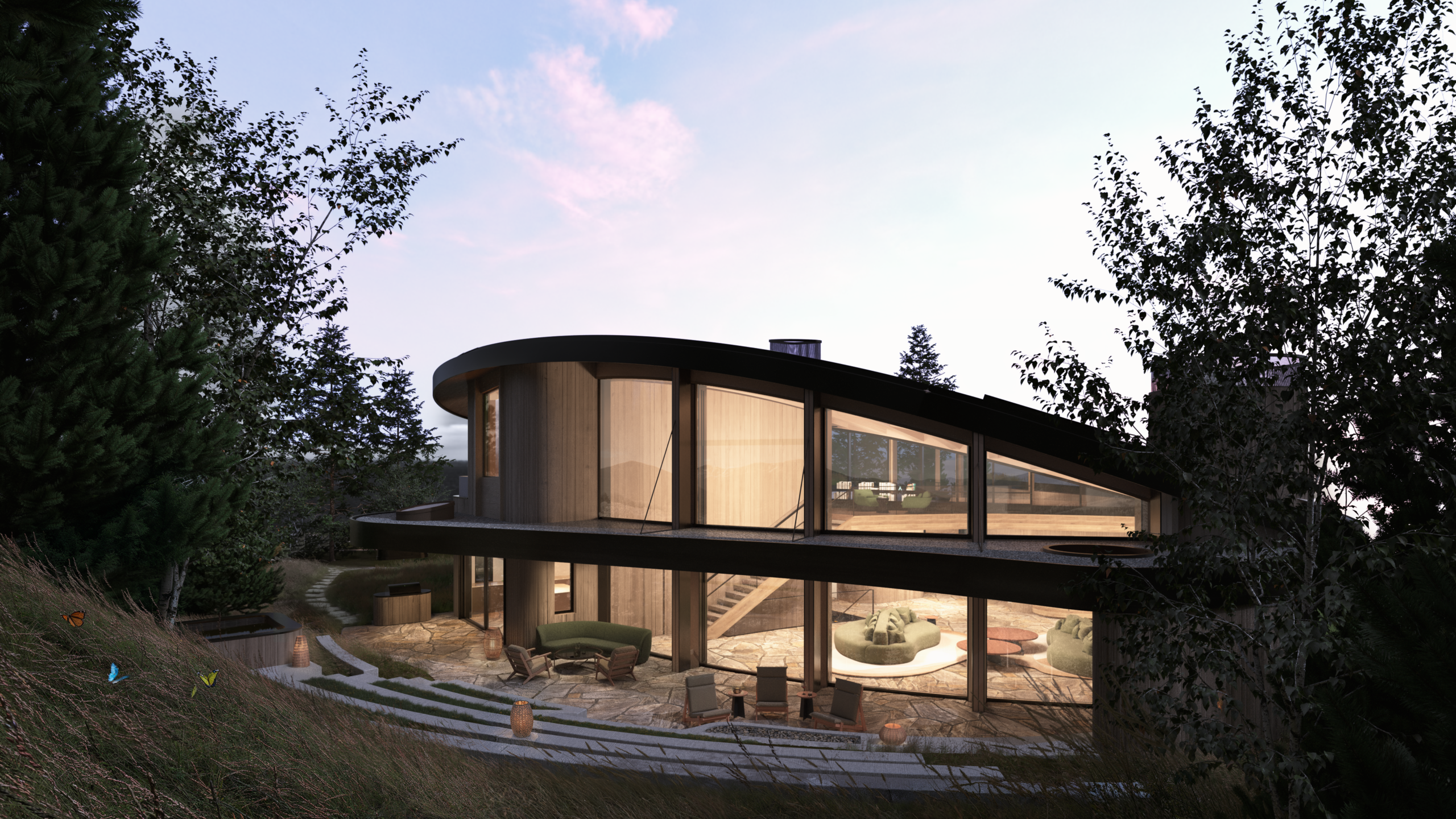
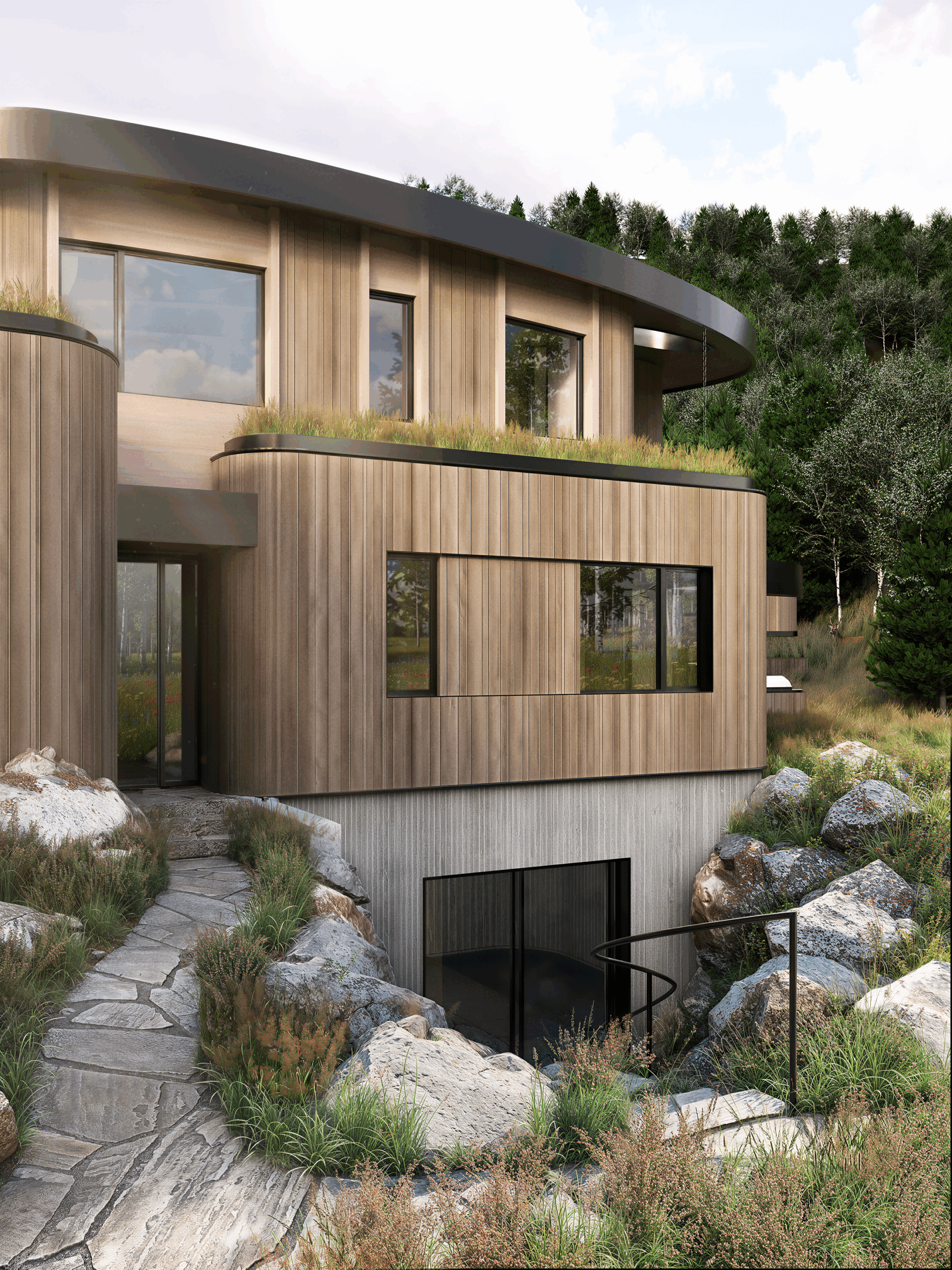
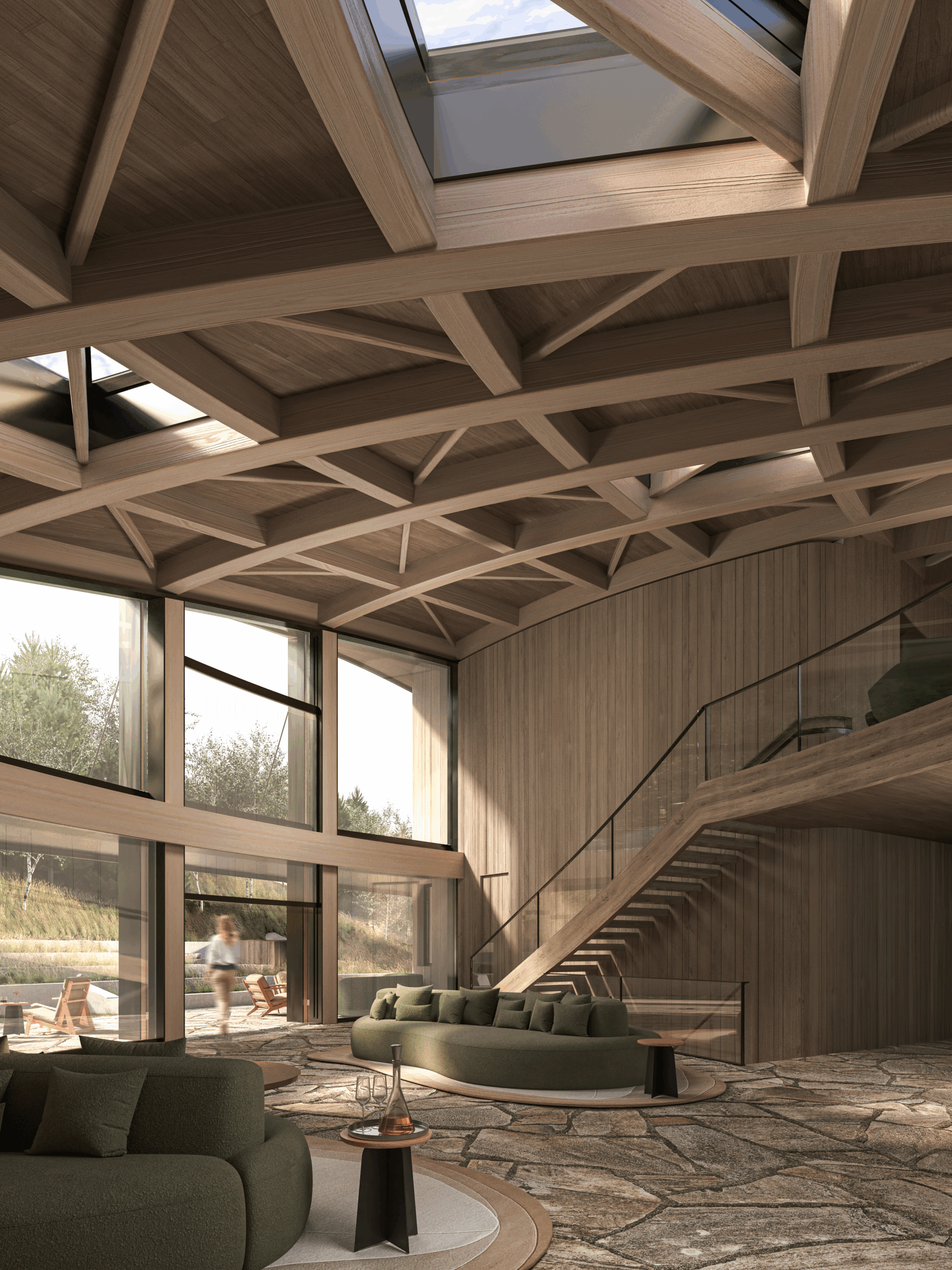
Set at the base of a dramatic mountain outcropping, this forward-thinking custom home balances beauty, wellness, sustainability, and innovation. Inspired by the natural environment of the heavily treed site, along with the organic architecture of John Lautner and artist James Turrell’s concept of framing light, it engages seamlessly with the surroundings in a contemporary manner.
Keeping progressive, sustainable design at the forefront and with manufacturing and assembly in mind, prefabricated glulam assembly was specified for speed and efficiency of mass timber construction. Parametric modeling, virtual reality rendering, and physical modeling were implemented to explore design iterations and advance the creative integrity of the architecture.
Primary challenges included a steep grade directly adjacent to the site at the base of the mountain and close proximity to a neighboring unit. In response, a dramatic sloping roof opens the volume toward the sky while editing views of the adjacent building.
Exterior materials and elements include vertically oriented wood rainscreen referencing the wooded site, aluminum cladding at windows, glass guardrails at decking, and an integrated solar shingle roof system.
Beyond the entry, an ample community room designed for purposes including intellectual gatherings features flagstone flooring and a high, intricately beamed wood ceiling with clustered skylights. An iconic architectural expression, a curved, glazed curtain wall wraps the area to highlight the mountain view. Through sliding glass doors, the interior opens to a patio and tiered amphitheater carved into the landscape.
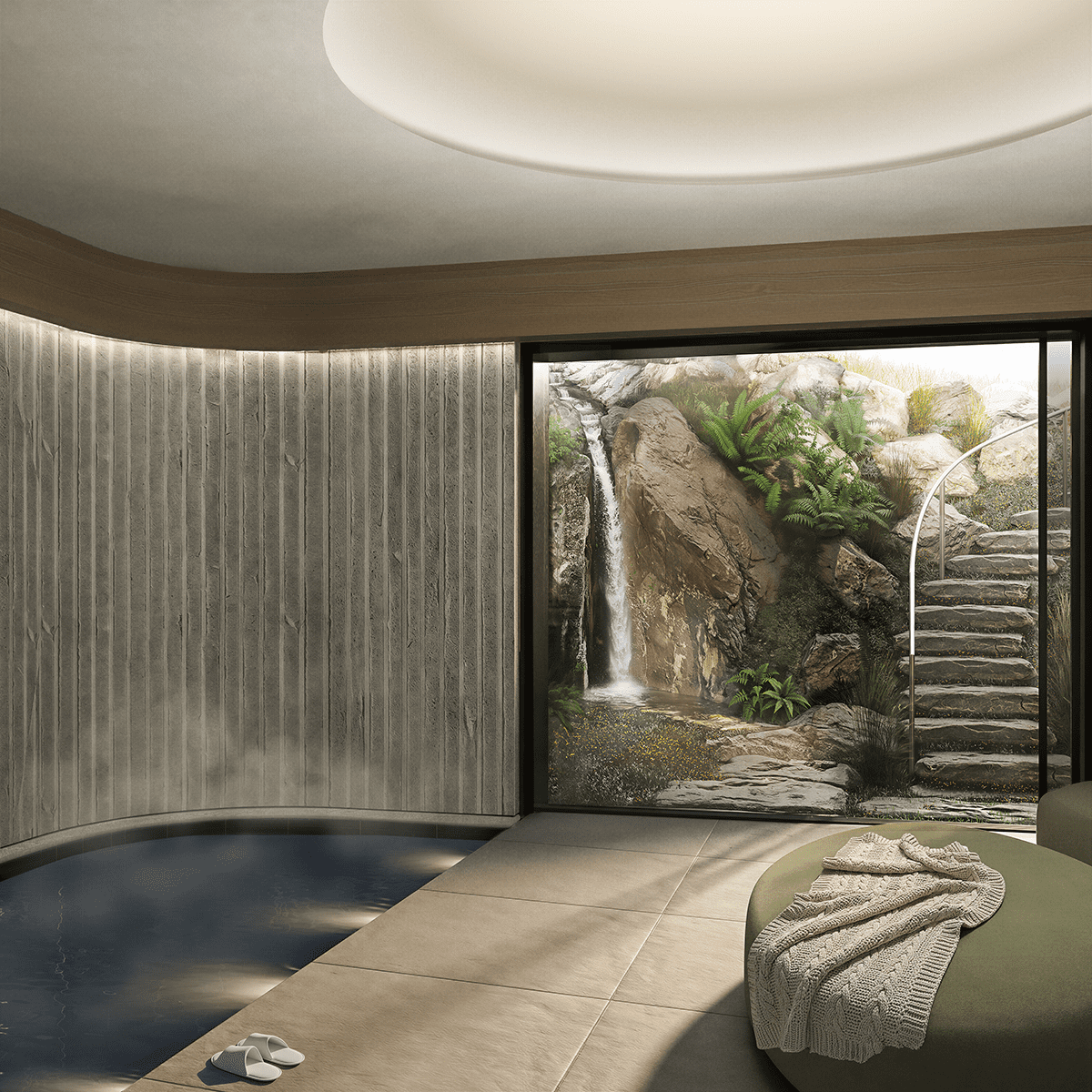
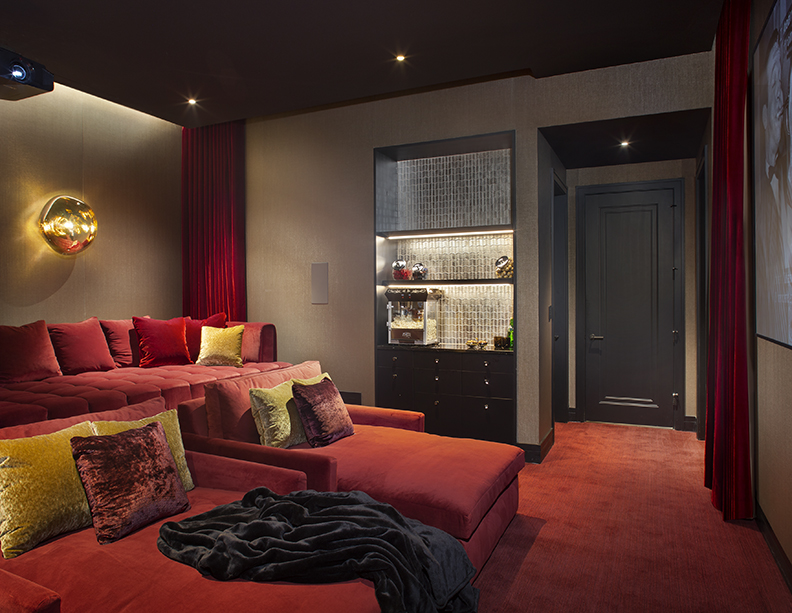
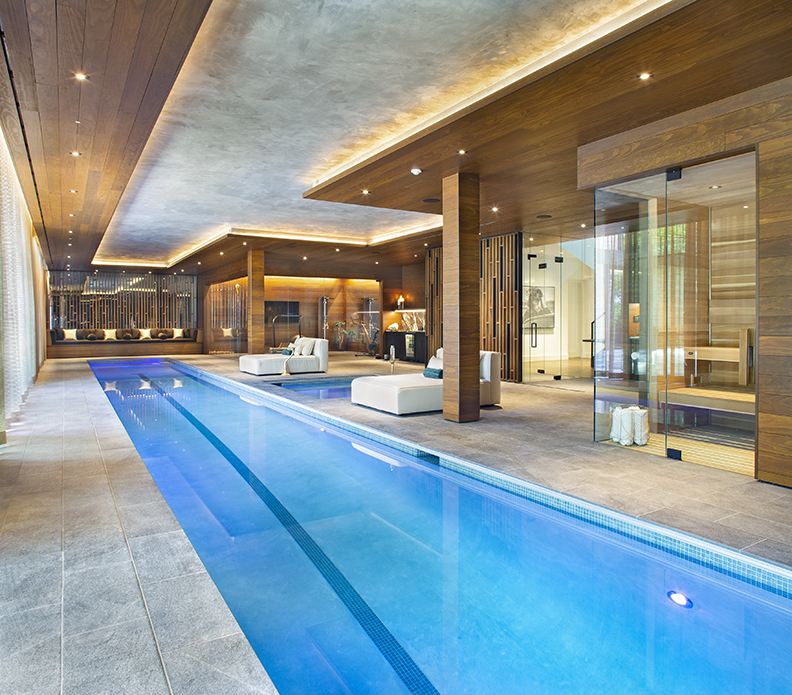
Main level spaces include ample kitchen, bar, and dining areas as well as dual bedroom suites. The upper level accommodates a pair of guest bedroom suites, one with a roof top deck encouraging connection to nature. With an emphasis on relaxation, a virtual wellness retreat complete with a therapeutic thermal bath and spa, and access to an outdoor grotto garden, is located at the basement level, which also houses a theater/game room.
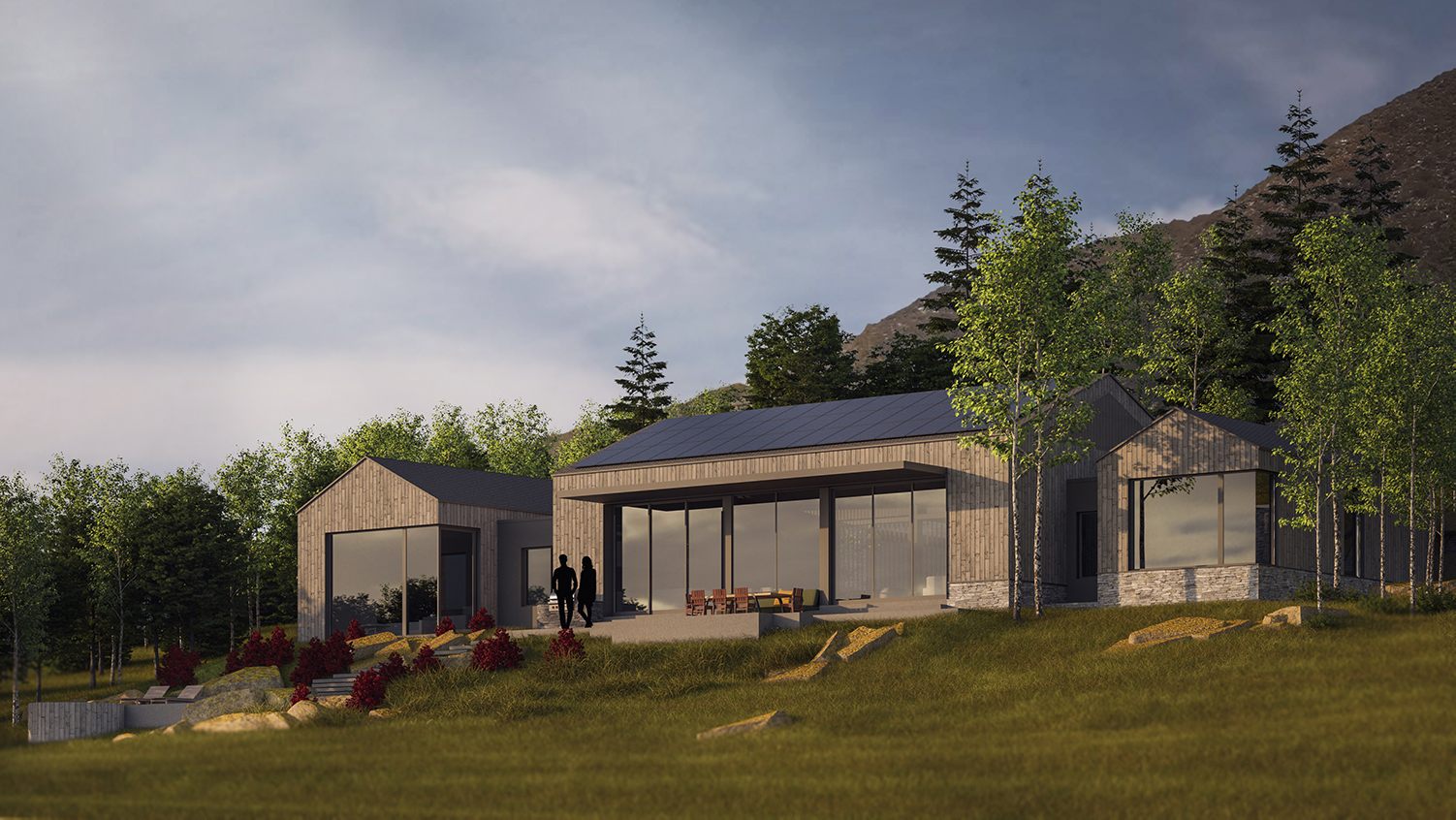
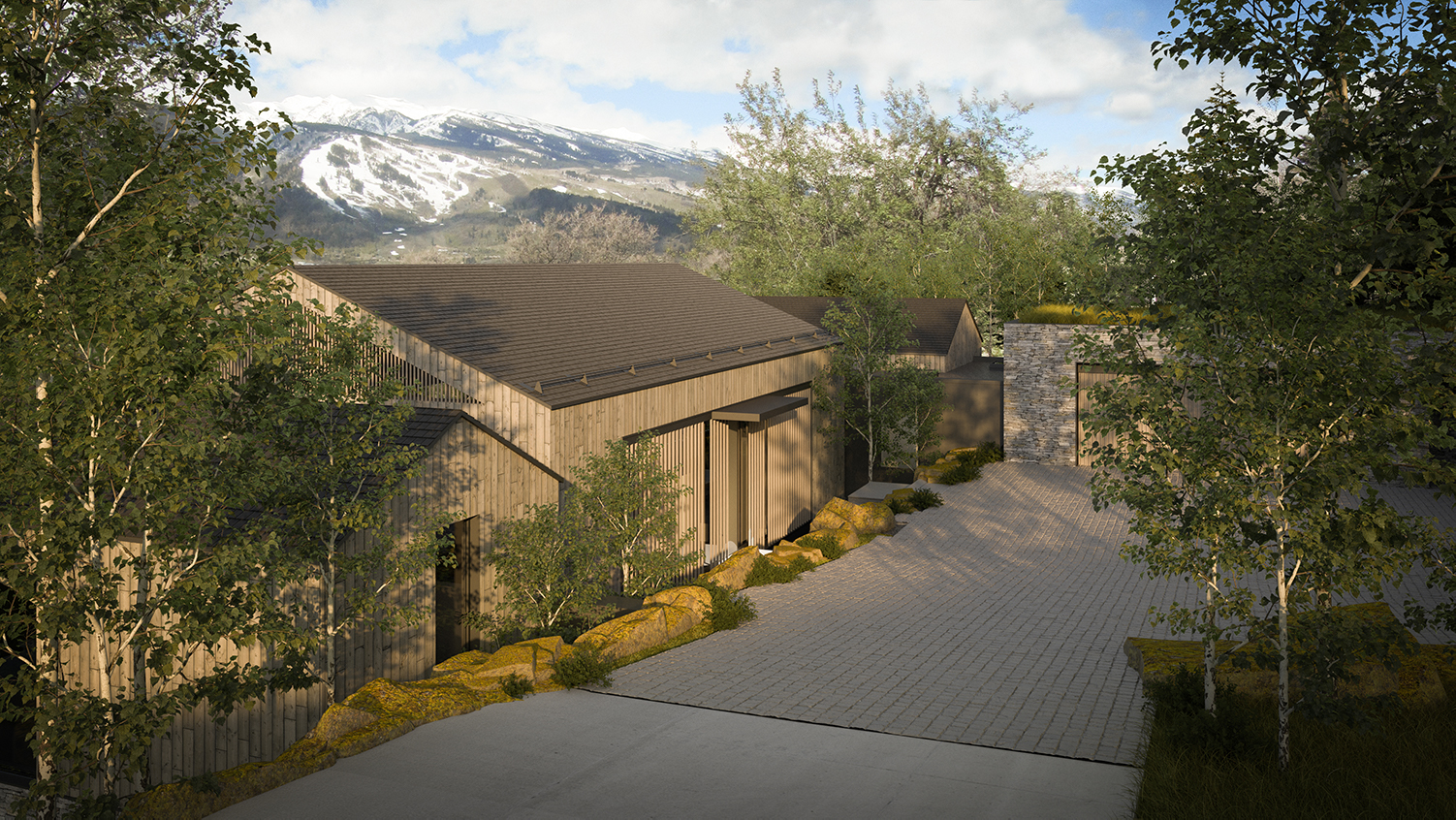
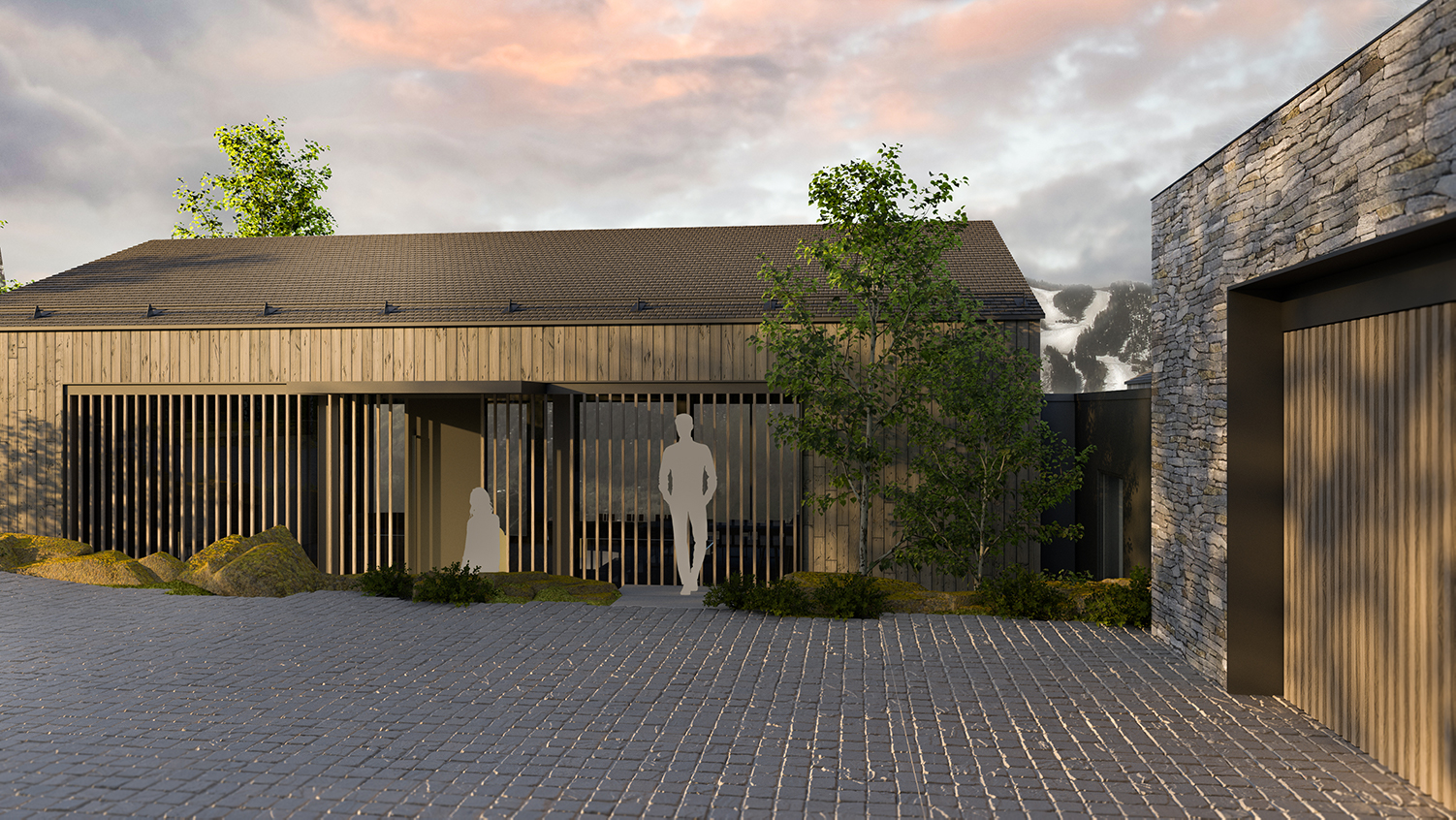
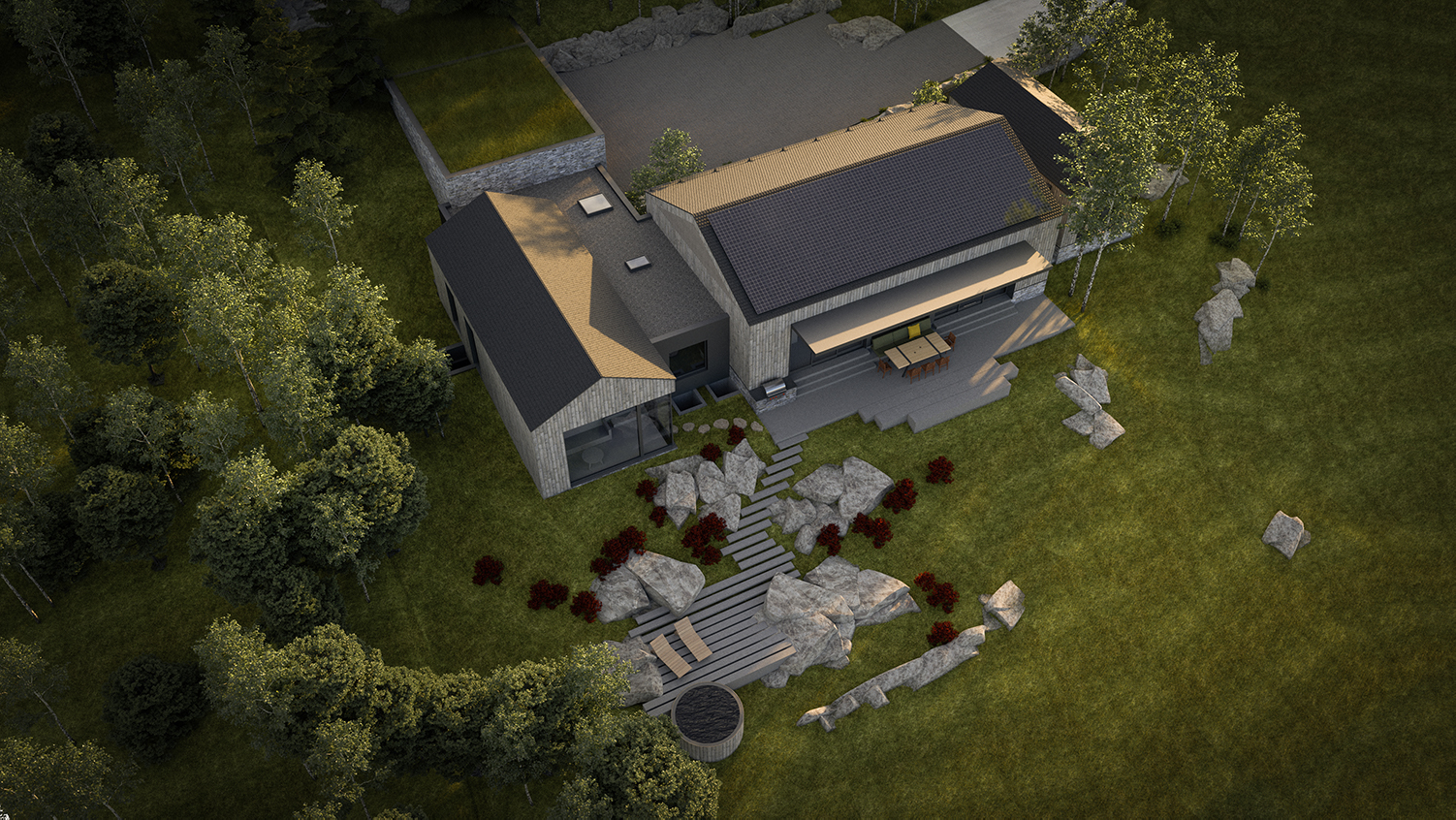
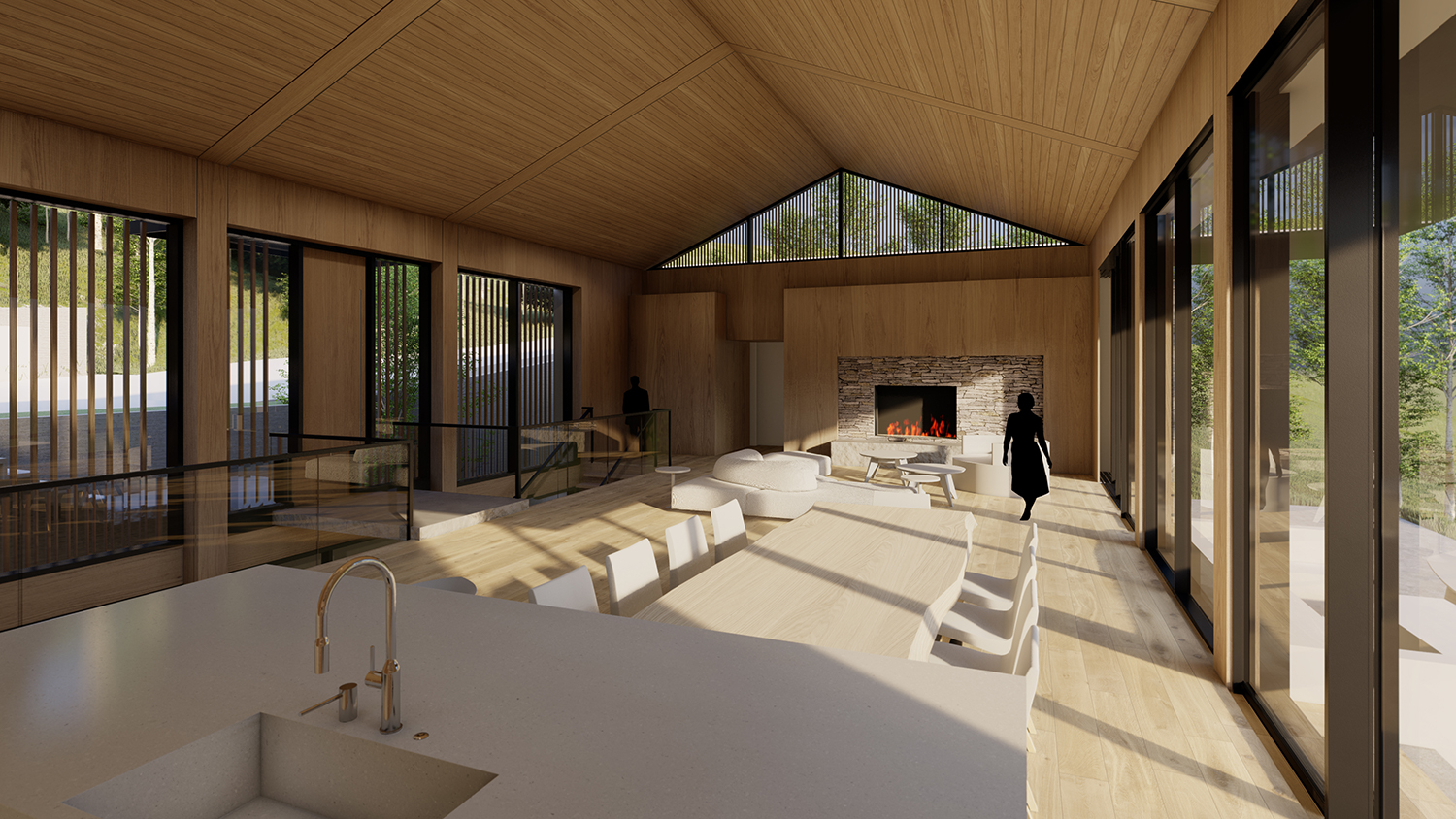
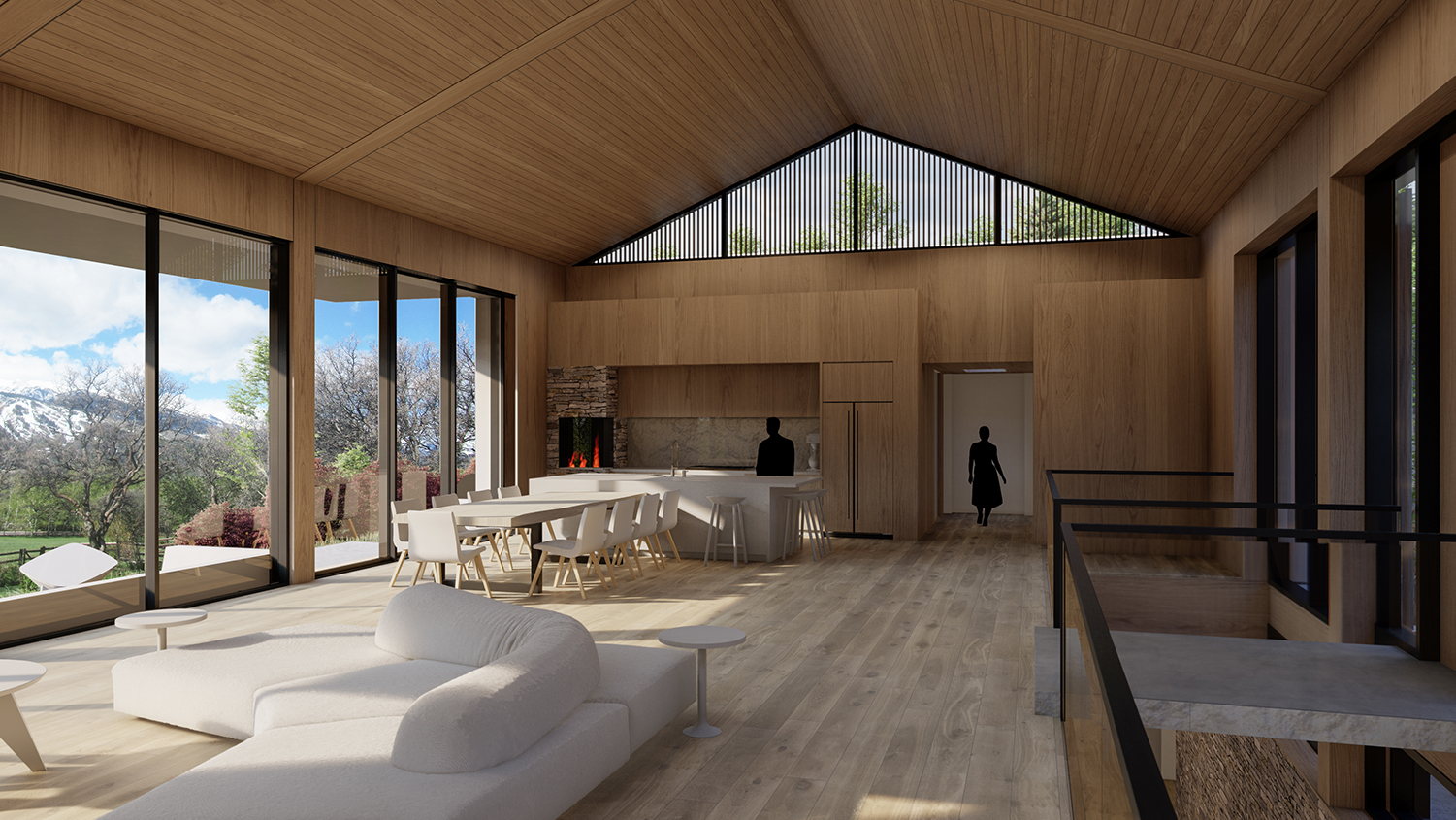
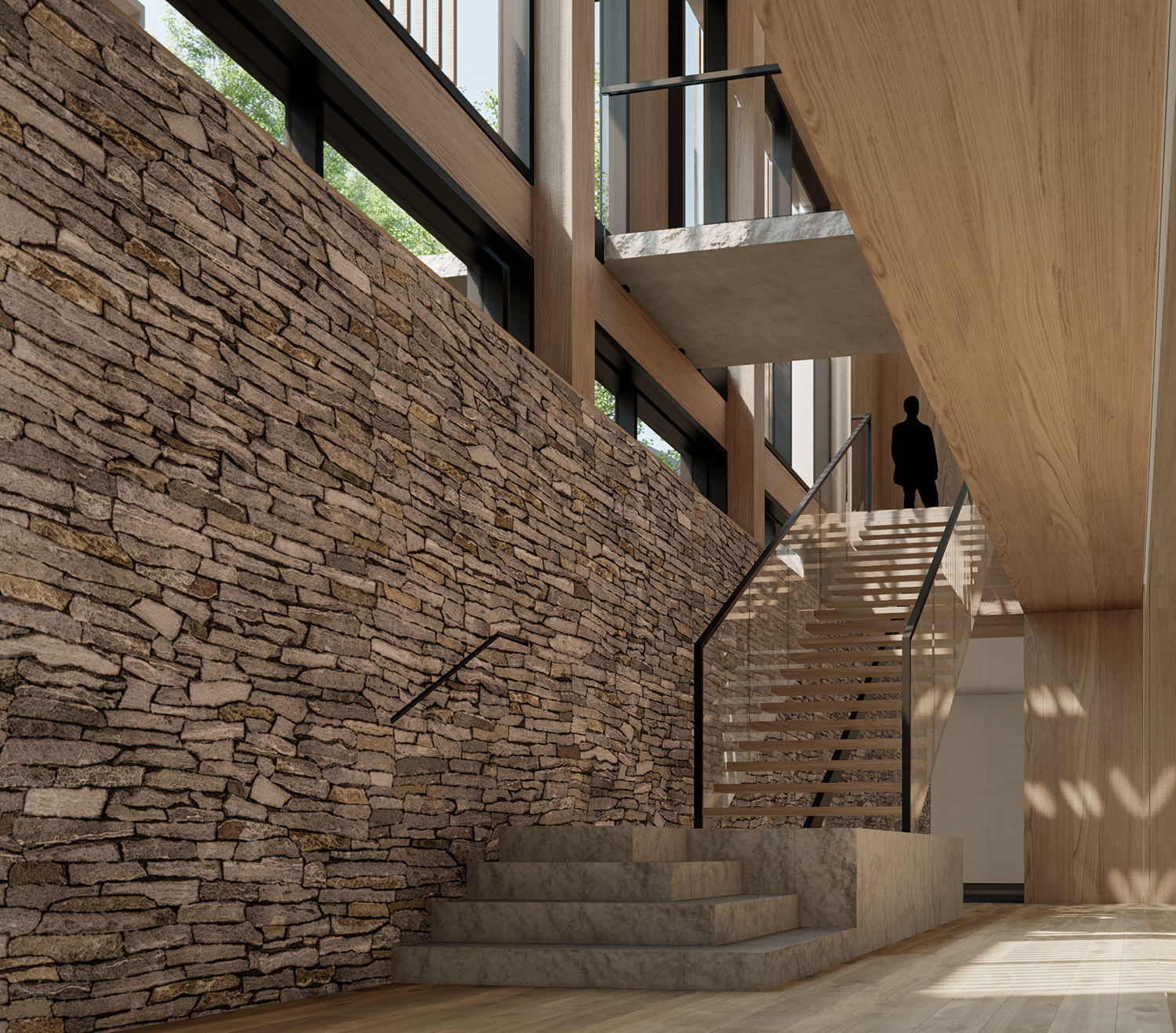
REDstead is nestled high above Aspen within the coveted Red Mountain Ranch community that at one time was a working ranch. The sloping site overlooks a pristine pasture, which is the center piece of the ranch, and enjoys unobstructed views of Aspen Mountain and Independence Pass. The bucolic surroundings immediately influenced the design thinking to respect the sense of place rather than trying to define it. The Japanese principle of Wabi Sabi, roughly translated as ‘rustic simplicity’ and ‘perfectly imperfect’, also helped guide and define the spiritual nature of the project.
The steep site was the most significant challenge. The access point on to the property sits approximately 25’ above the desired auto court level. In addition, the existing driveway was not up to code, which required it to be wider and less steep. The other challenge that further complicated the grading was the desire for the great room to walk out on to natural grade and not be suspended in the air with a deck. This greatly impacted the house’s entry sequence. The design team approached the entry sequence by setting the great room floor level 5’-6” below the auto court level, which opened the opportunity to create a dynamic and experiential entry through a sunken rock garden. Rather than immediately stepping into the home from the auto court, guest now leave the car behind and journey down over large natural rock outcroppings and over a stone bridge leading to the front door.
The sustainability efforts included a 16kW photovoltaic array, continuous wrapped insulation, and advanced mechanical systems. Passive solar strategies were also used to create less dependency on mechanical controls. The exterior materials were carefully researched for their durability, low-maintenance and were sourced locally, when possible.
An indoor/outdoor experience was a critical design objective. The house was situated so that it is unmistakably nestled and deeply rooted to the land. The native grasses from the pasture below were intentionally introduced into the property to honor and respect the context as if the house has always been there.
The primary design goal was to create a simple lifestyle where the main level provides one-story living. The central great room is the predominate volume and flanked on either side by secondary volumes, the primary suite and secondary suite. These individual programs have their own gable volumes and are united by subservient linking volumes to suggest a rambling, homestead collection of buildings.
Another design goal was to capture unobstructed views of Aspen Mountain from the great room. Coordination with the surveyor and site mockups were meticulously studied to ensure the these views were achieved while creating a walk-out experience to the outdoors without significant grade change or excessive heights.
The most unique program of REDstead is the 1,500 SF wellness center. Although located in the lower level of the home, the wellness center’s gym is flooded with natural light from the adjacent stair and expansive window wall above. Moving past the gym the mood shifts to tranquility and rejuvenation as you enter the relaxation room with an adjoining massage room and full bath. The relaxation room is the ideal environment to relax, as it includes fireside lounging, a spa with a waterfall feature, a sauna and steam shower.
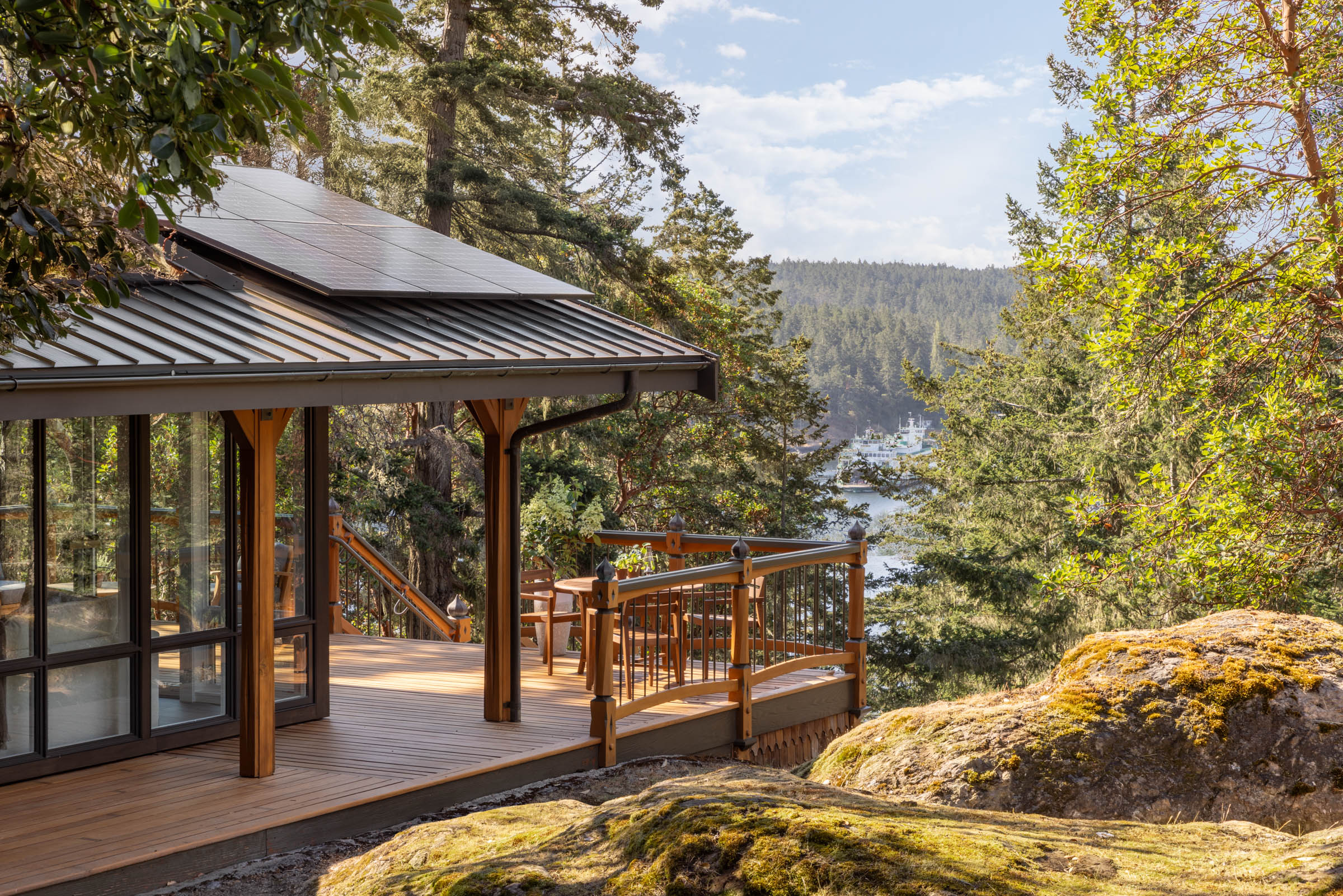
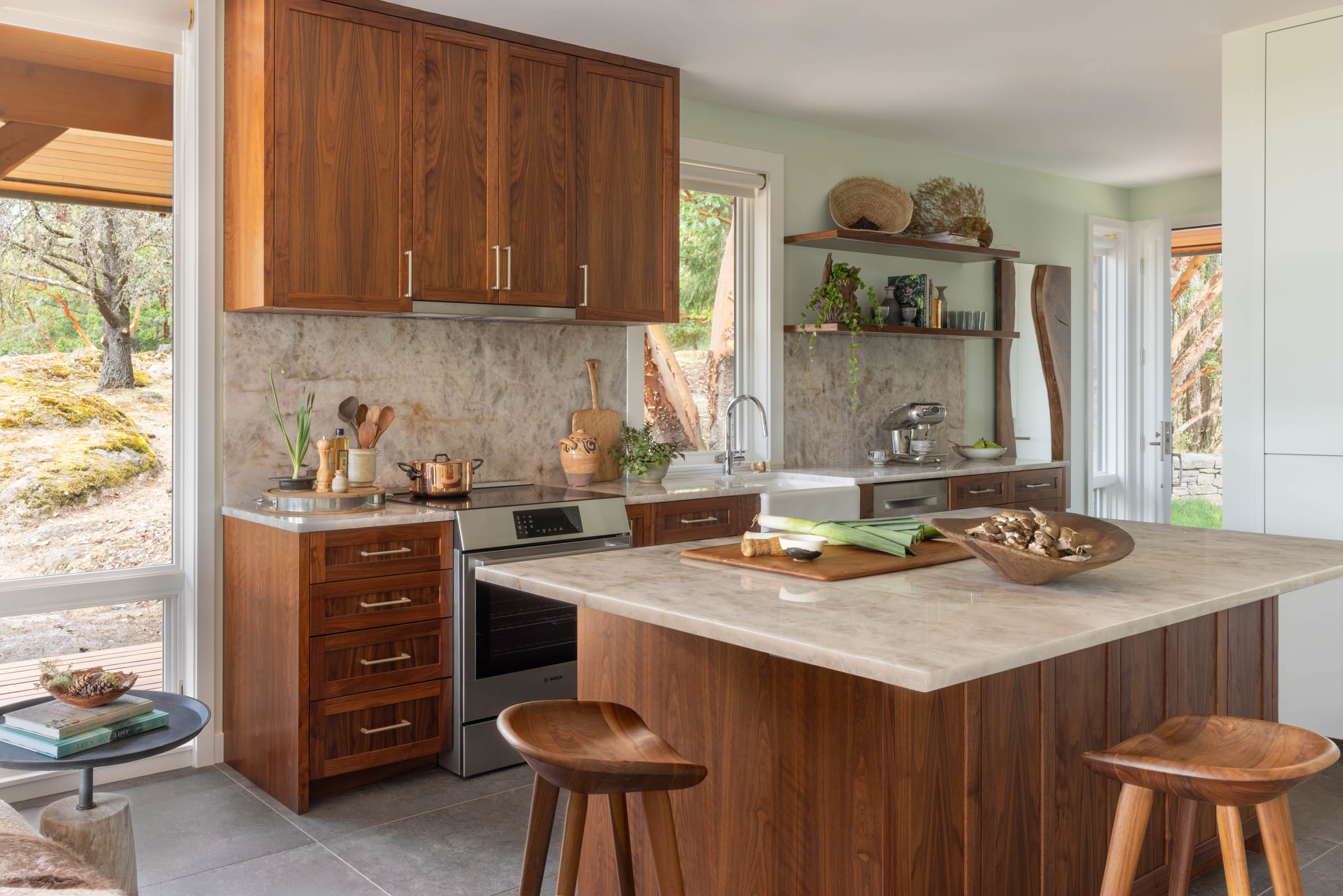
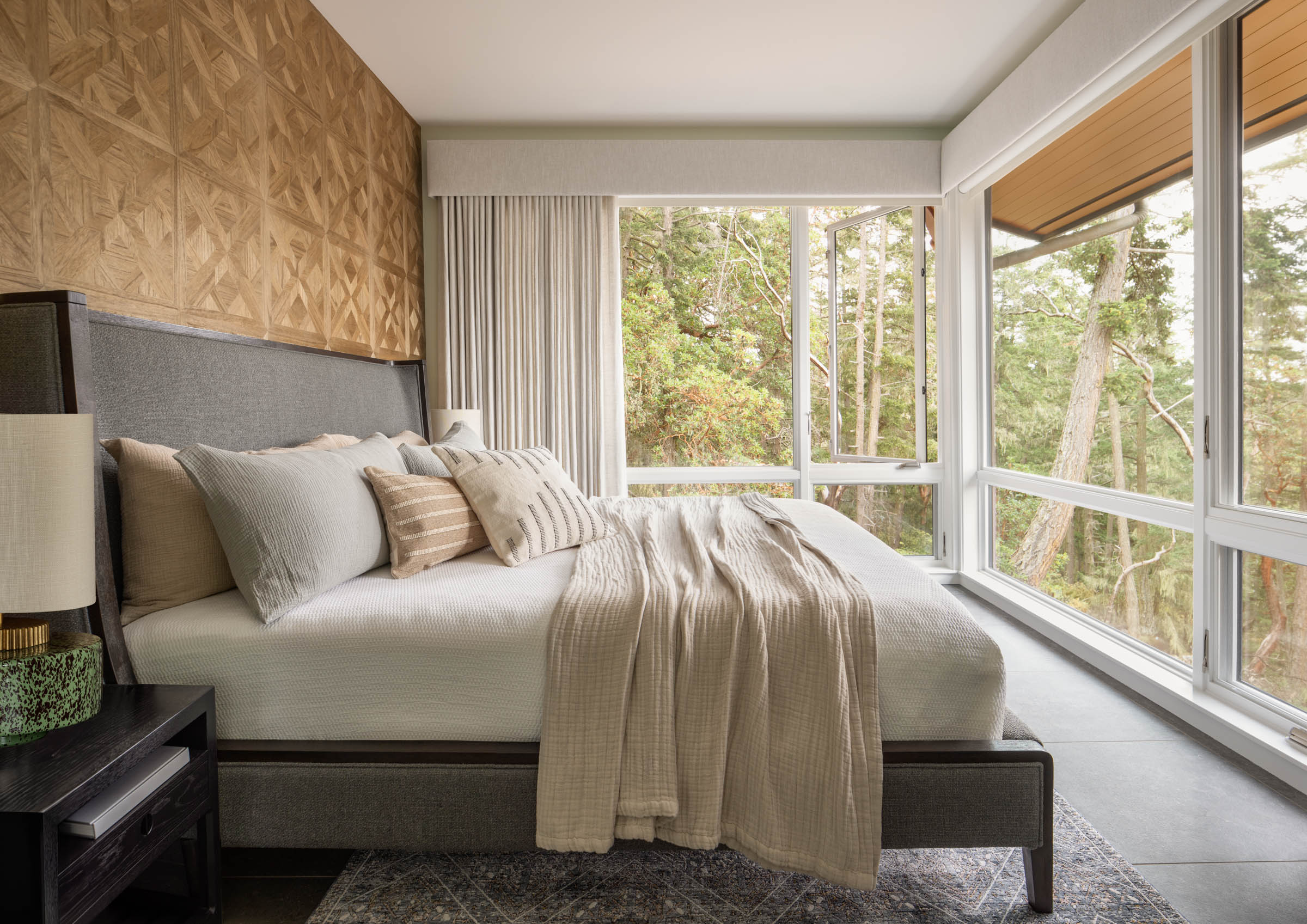
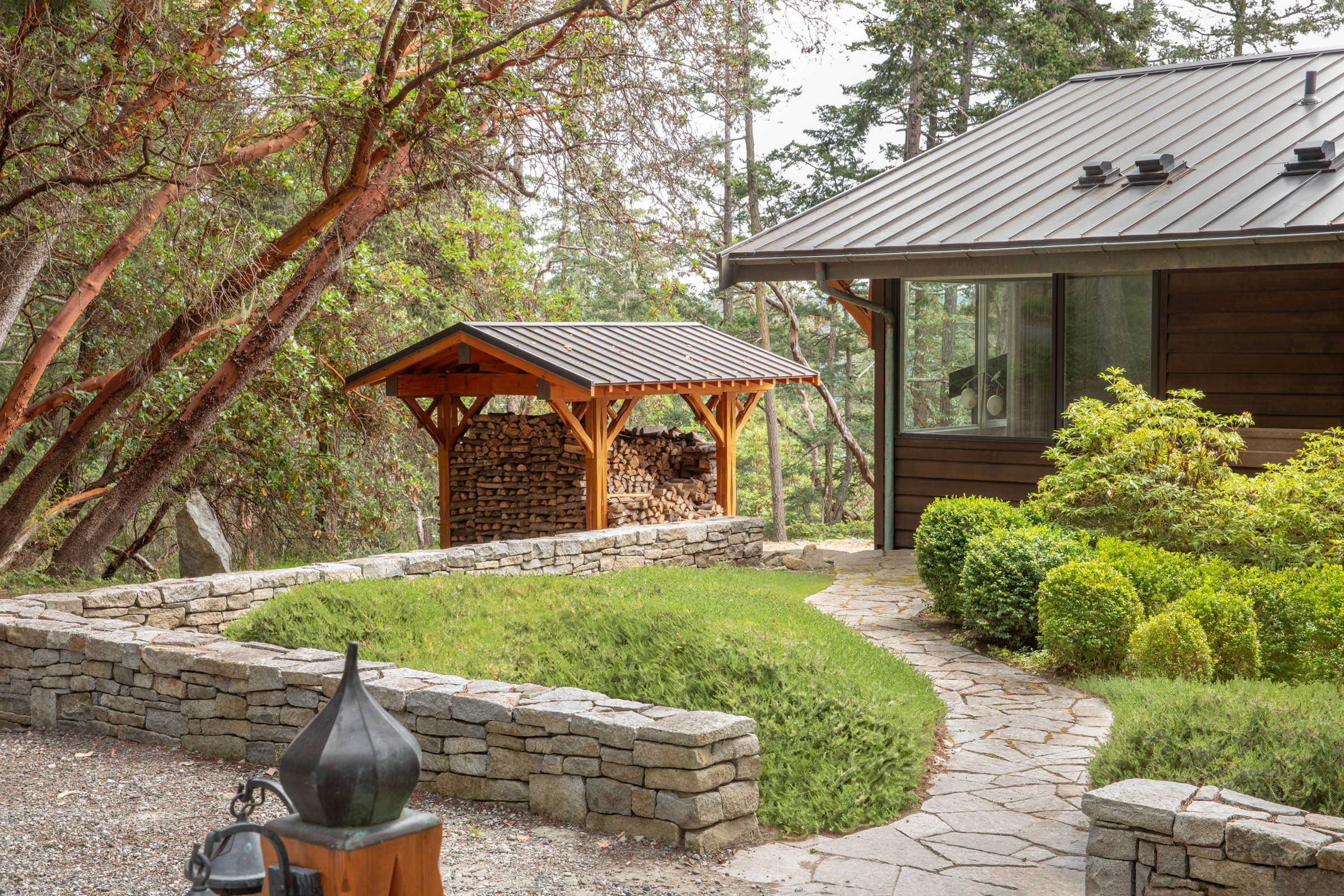
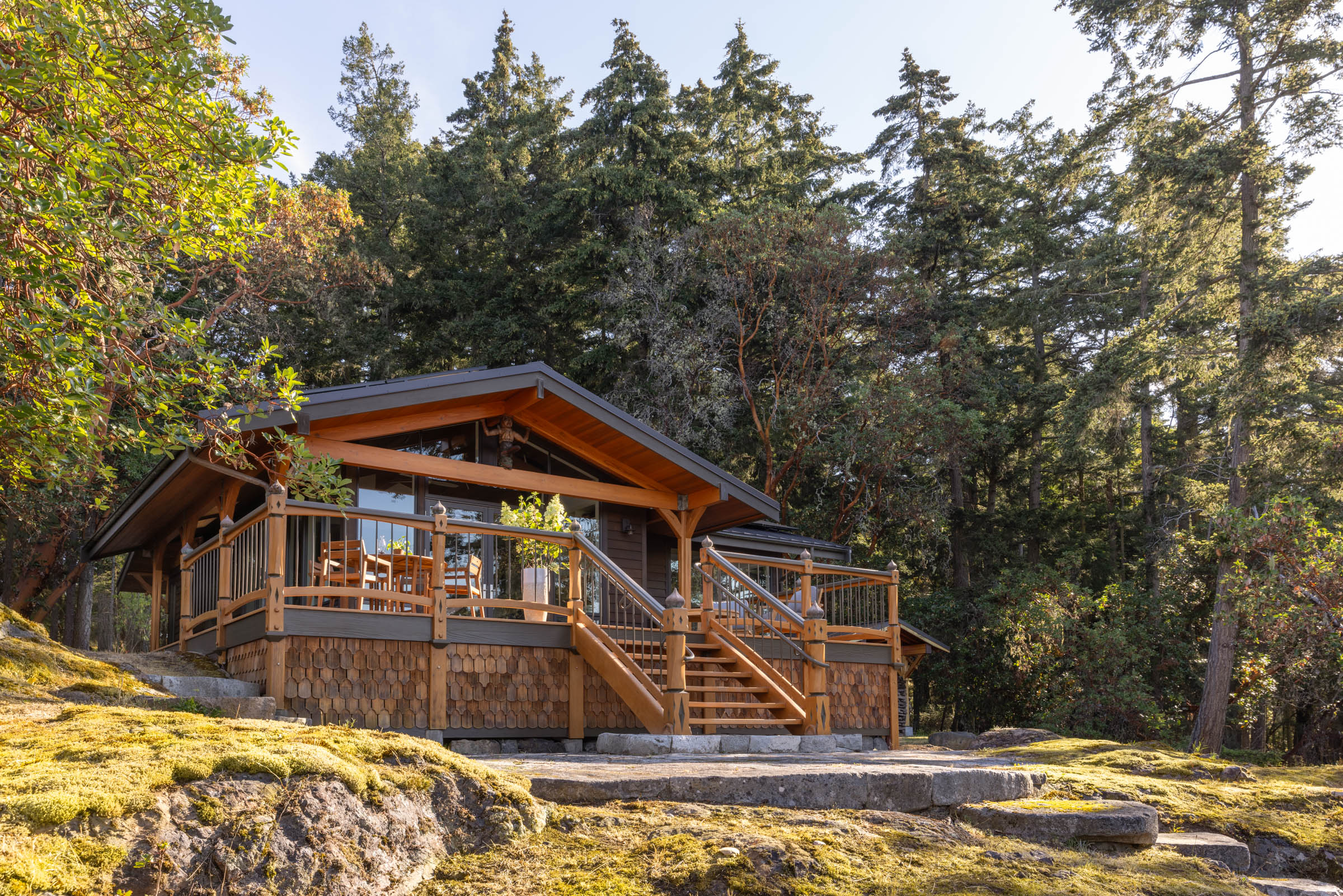
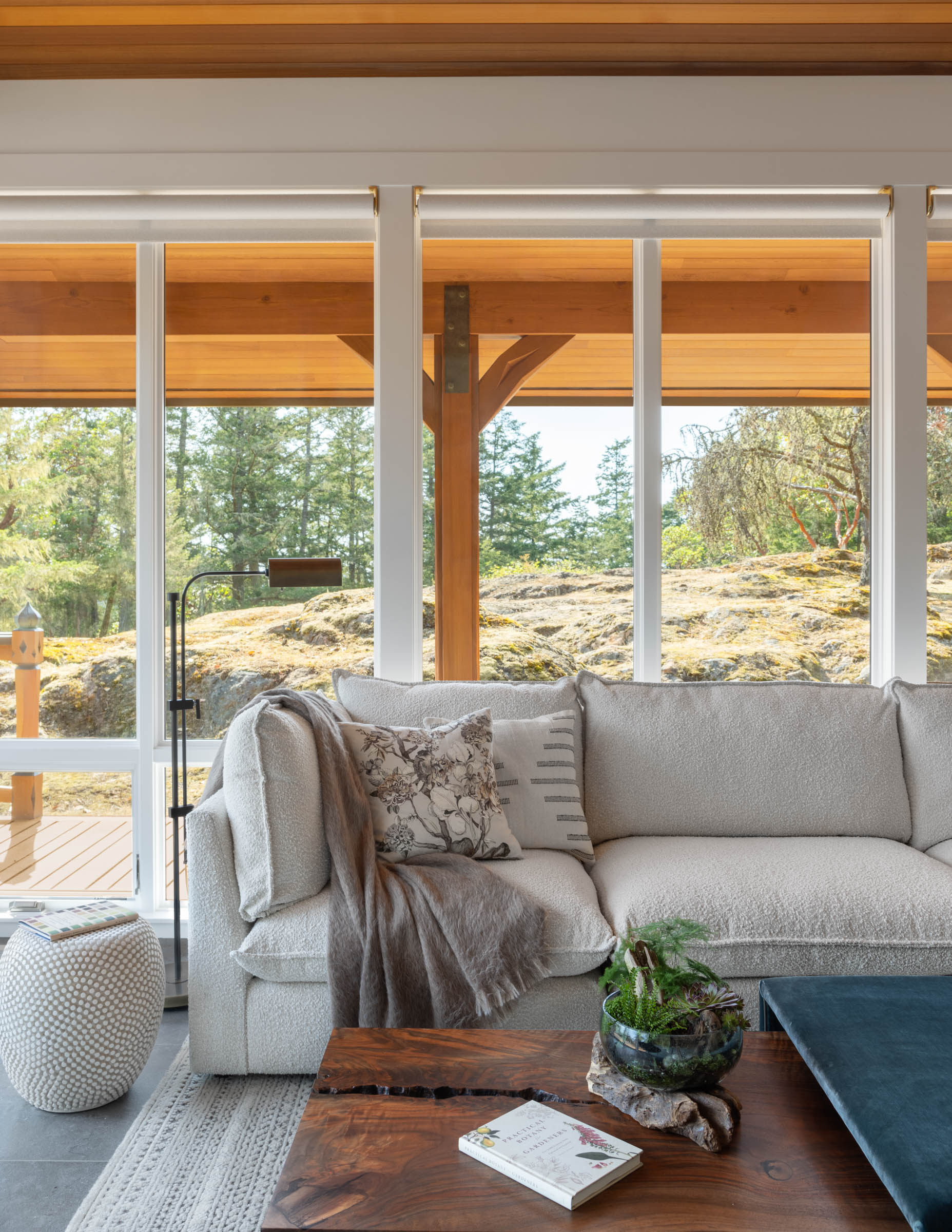
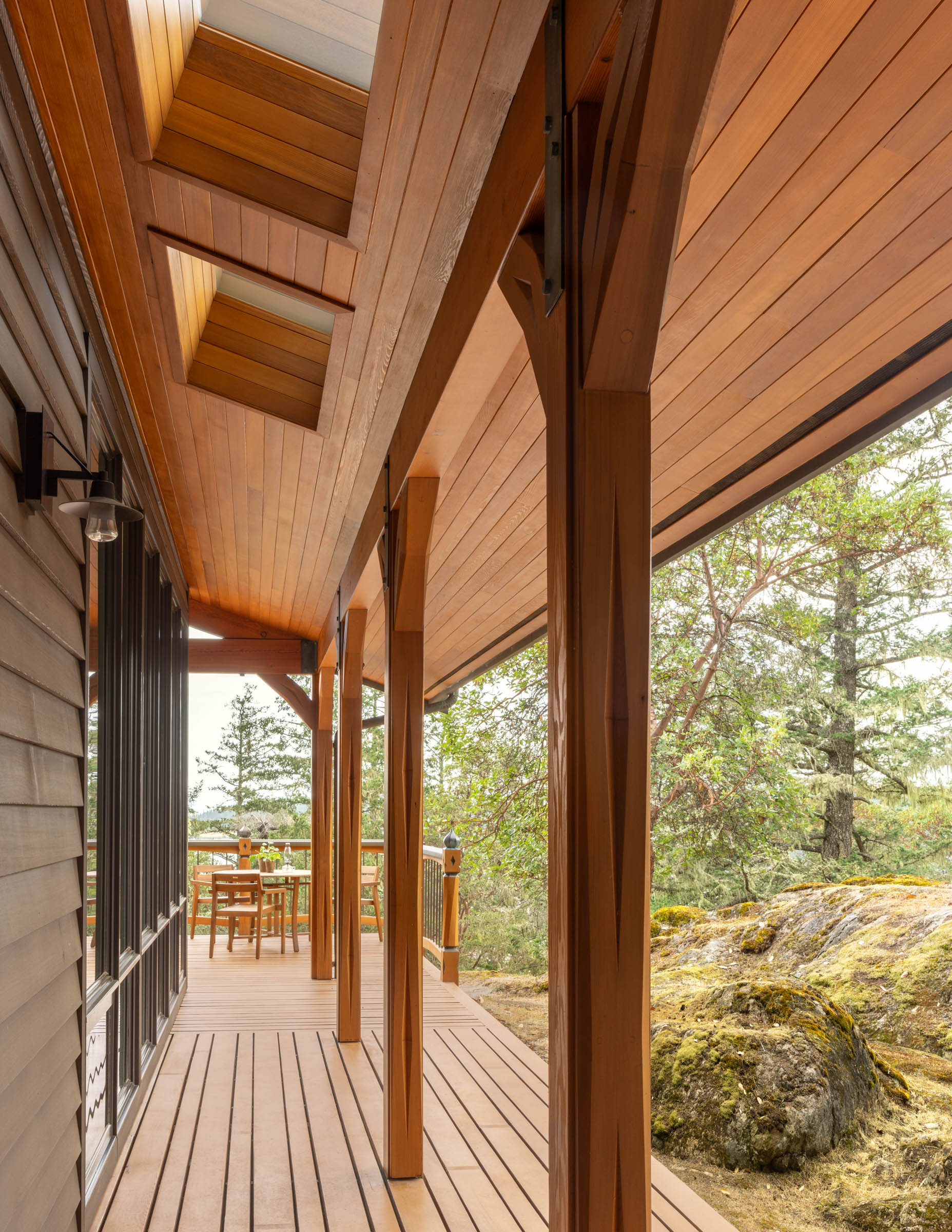
On Orcas Island, the largest of the San Juan Islands of the Pacific Northwest and colloquially known as “the gem of the San Juans,” this intimate 1,200 square foot “getaway” cottage is set on a forested site within a long-time family farm.
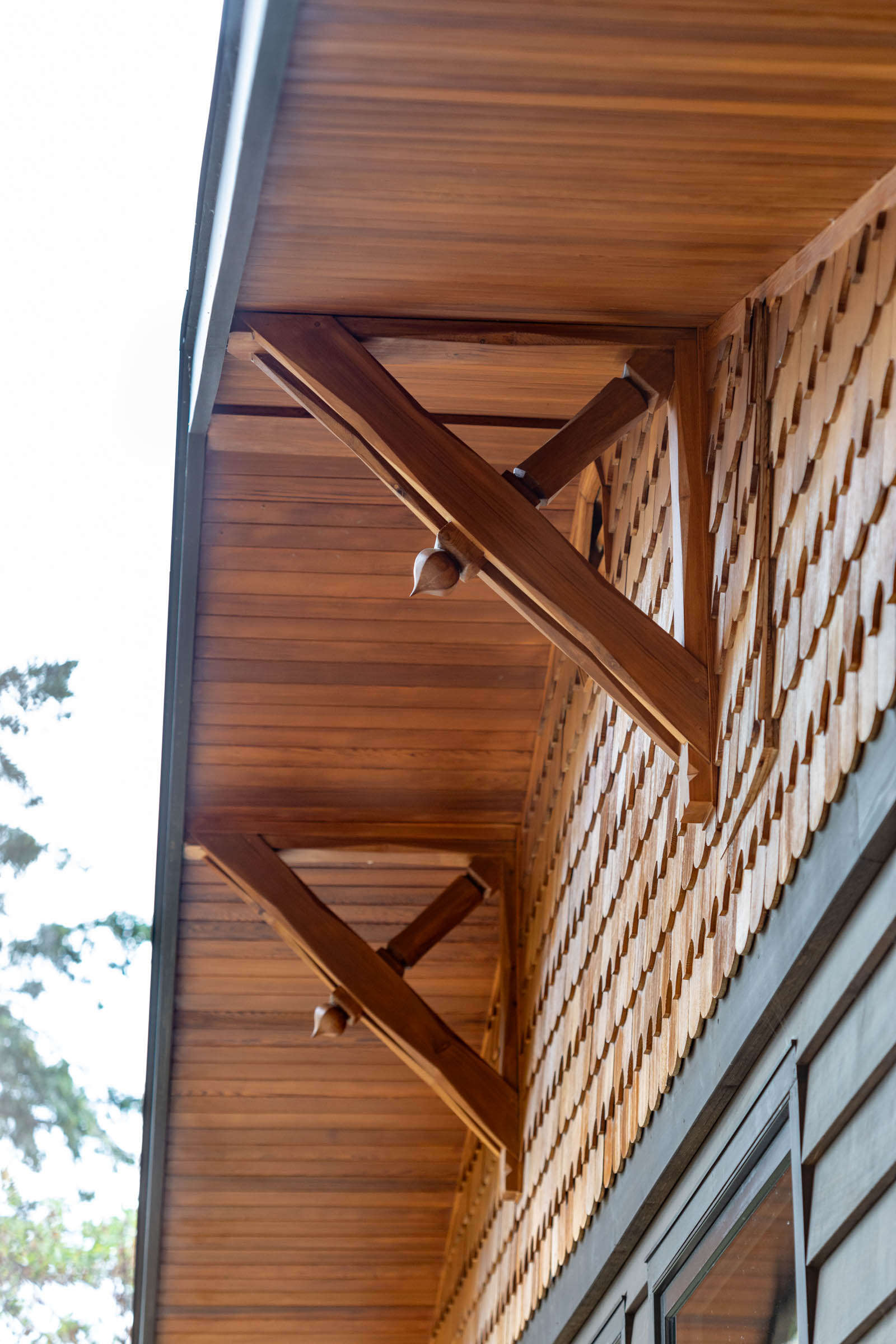
With the challenge of restoring and contemporizing the original structure while preserving its innate charm, the design team repurposed scalloped wood shingles and other exterior wood working details handcrafted by the owner-couple’s family. Multi-color siding was replaced for a more monochromatic aesthetic to draw focus to the natural surroundings.
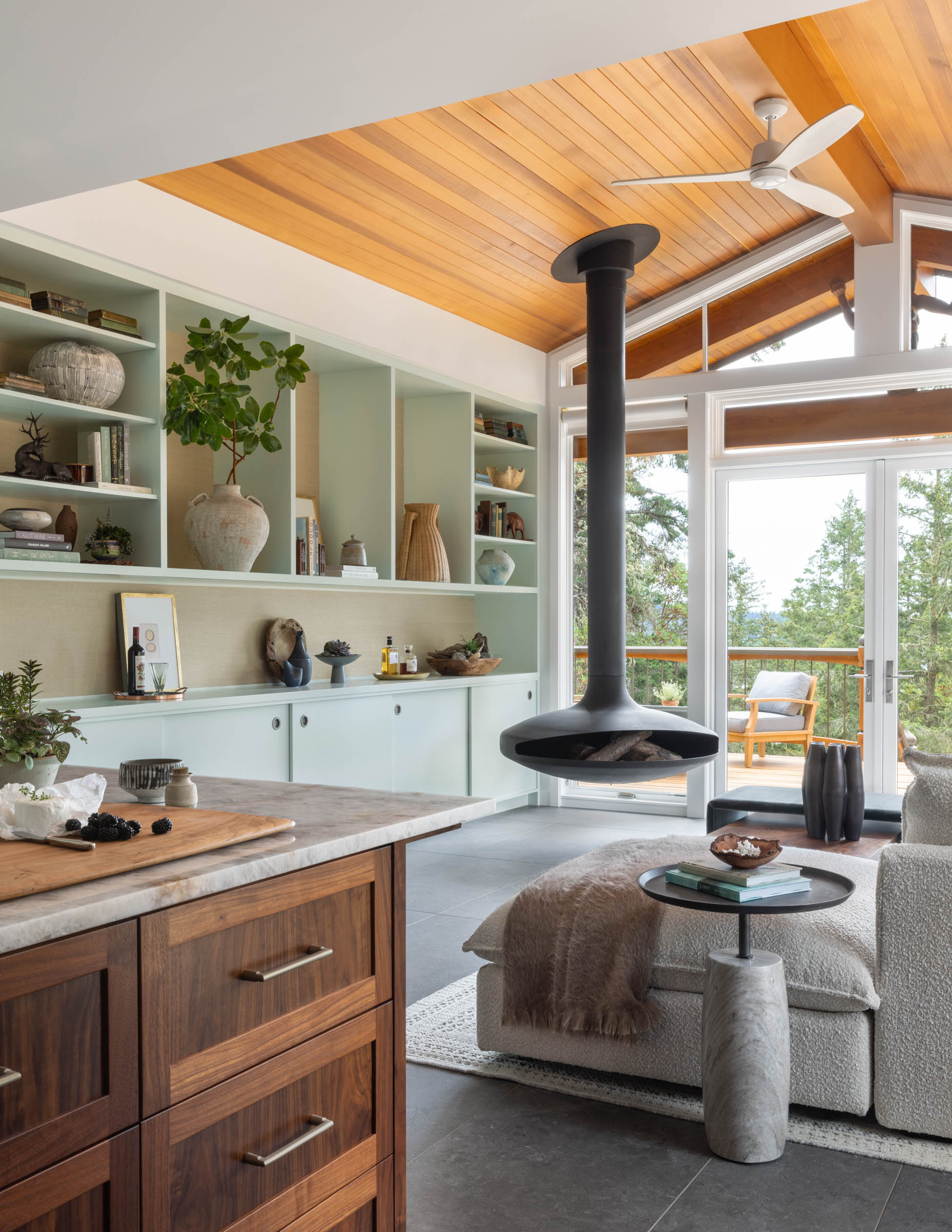
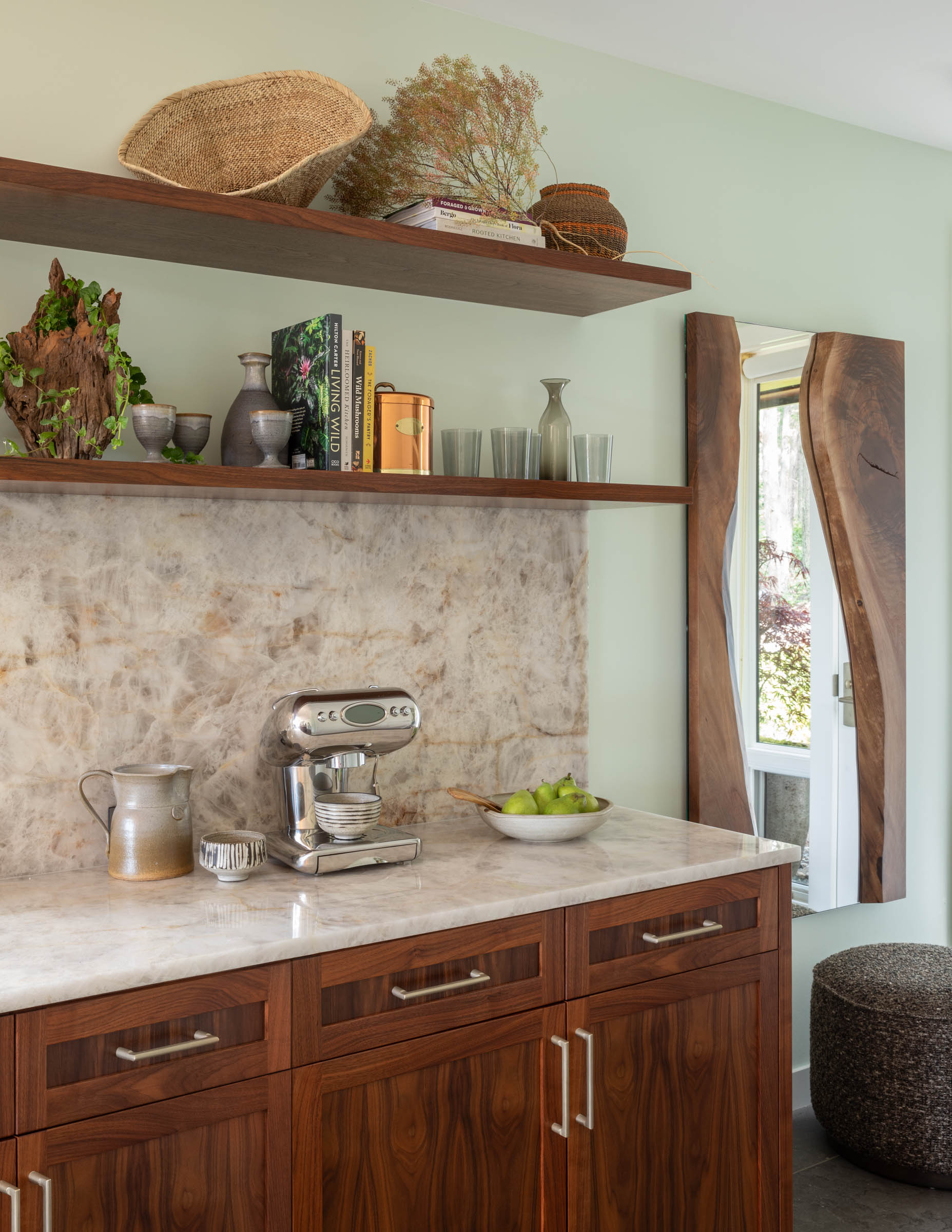
Inside, a complete remodel is marked by the addition of sidelights flanking the new, repositioned wood front door, a custom live-edge walnut mirror, and a built-in bench with open cubbies. Beyond the centrally located open kitchen, complete with a quartzite topped walnut cabinet system and island, the main living area features extensive storage and library space. Ample seating offers plenty of room for settling in with a book and warming by the modern suspended fireplace.
Flooring throughout is durable large format porcelain tile, selected to withstand muddy Pacific Northwest dog paws and the area’s variable weather. Existing exterior cedar was repurposed/refinished and new matching cedar was specified for the living area ceiling and exterior soffits. Additional rooms include the main bedroom suite and a flexible guest suite.
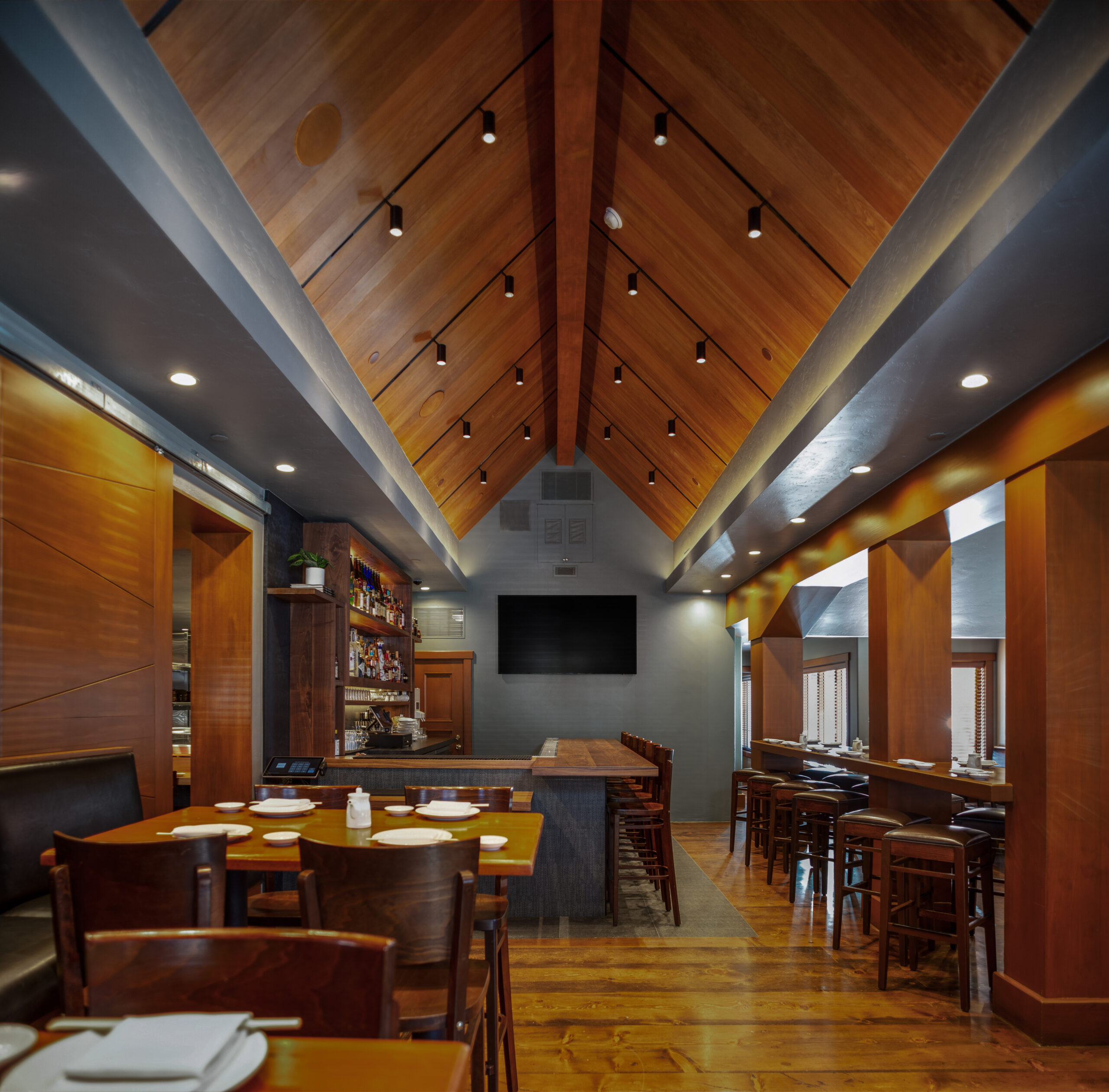
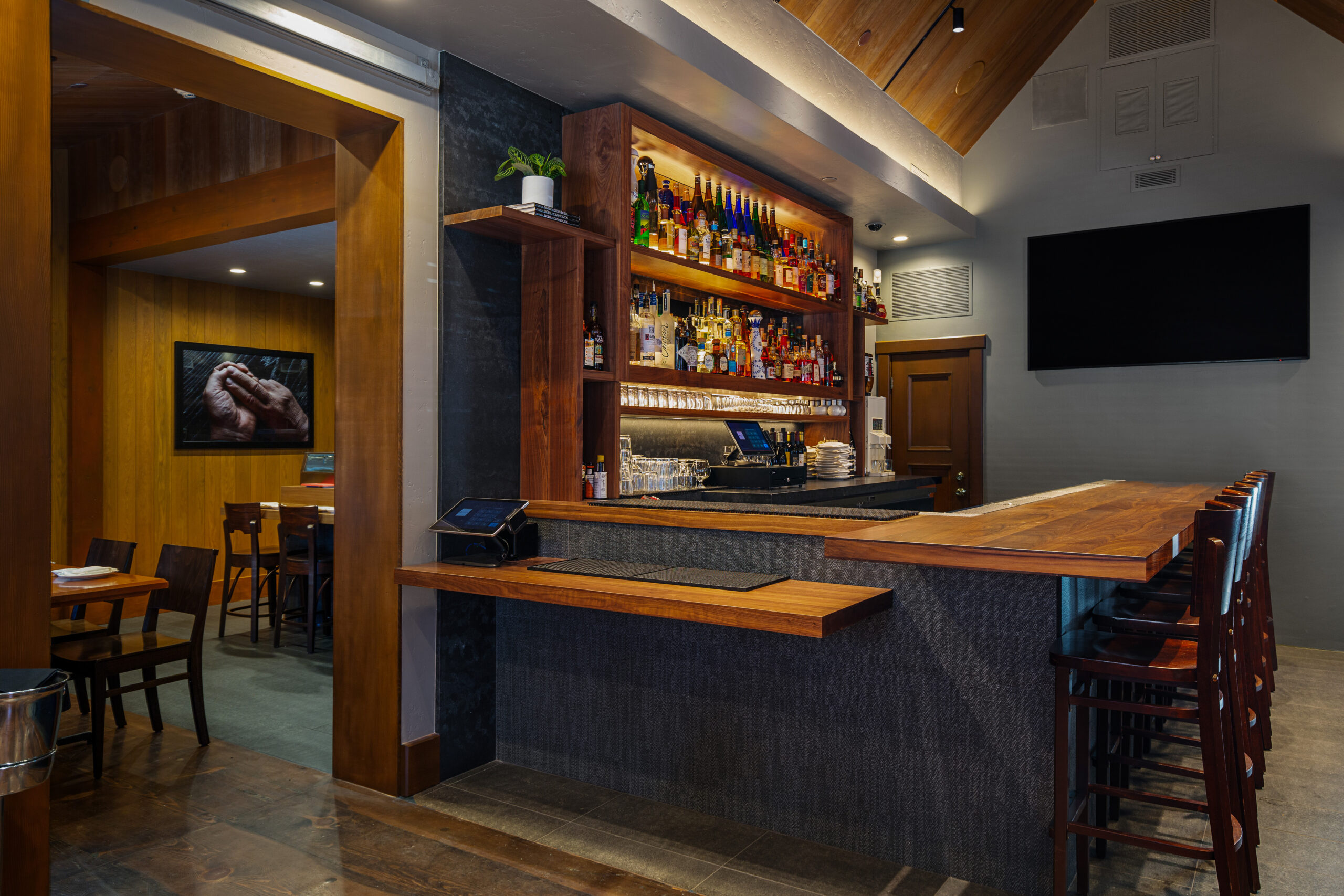
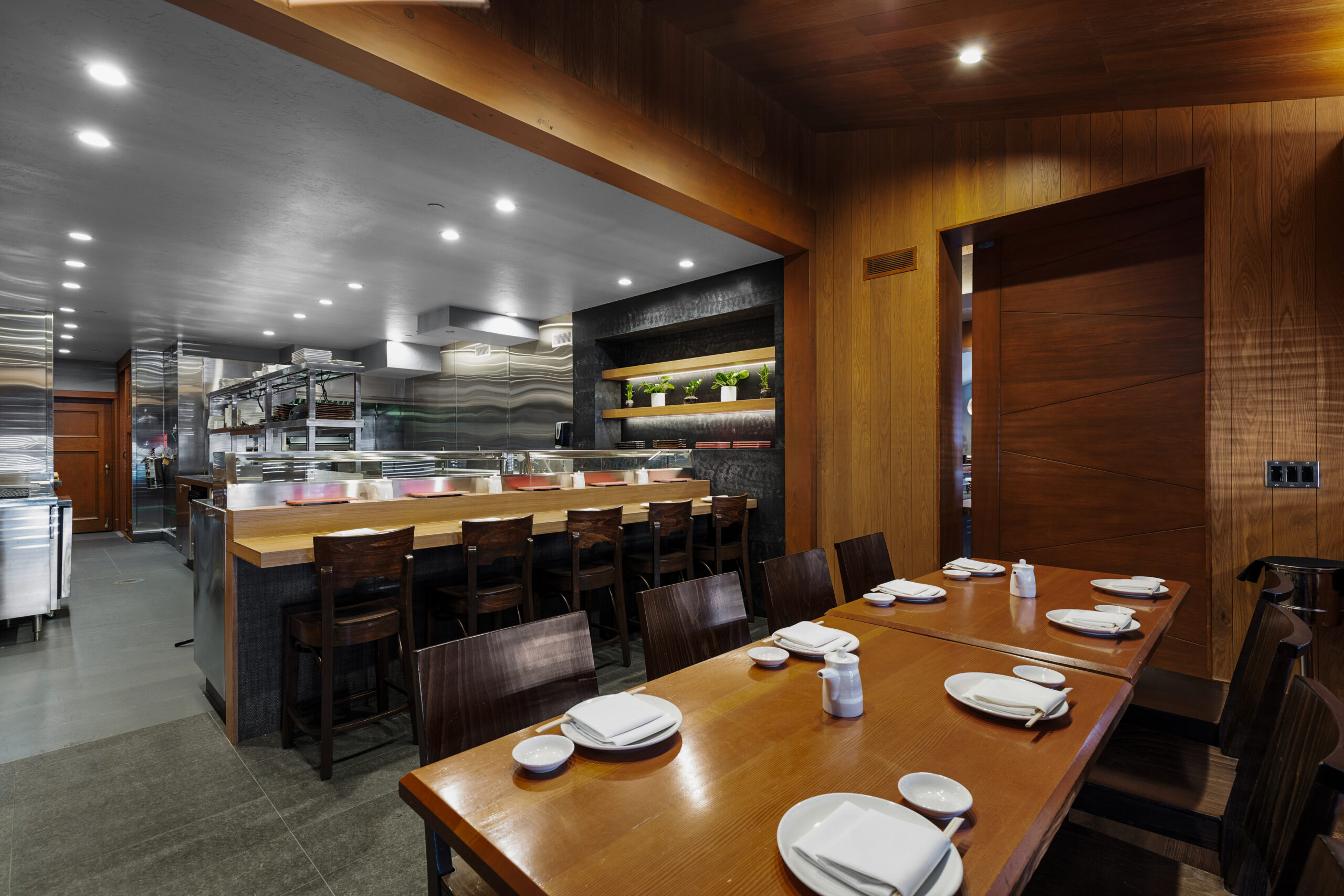
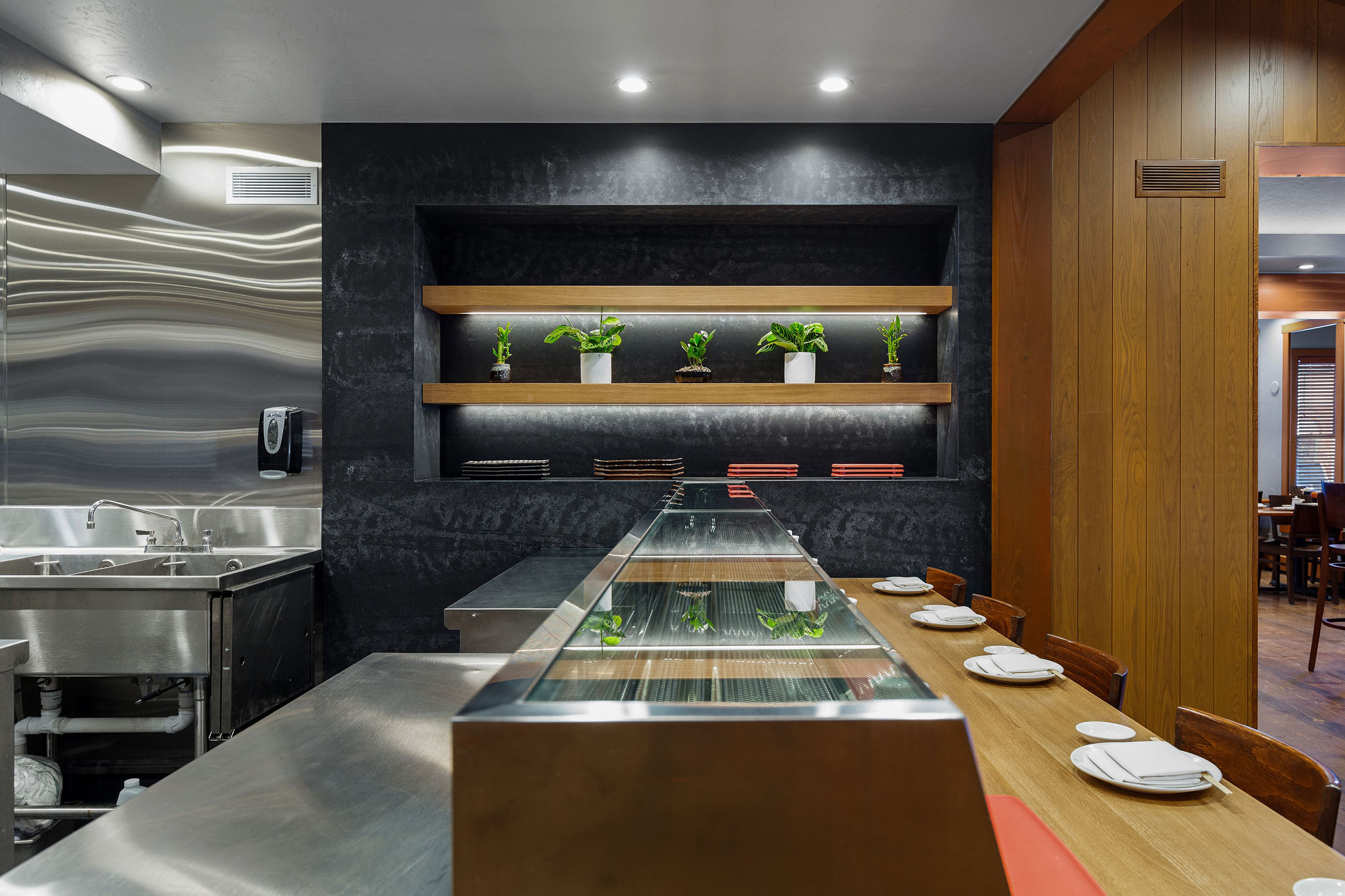
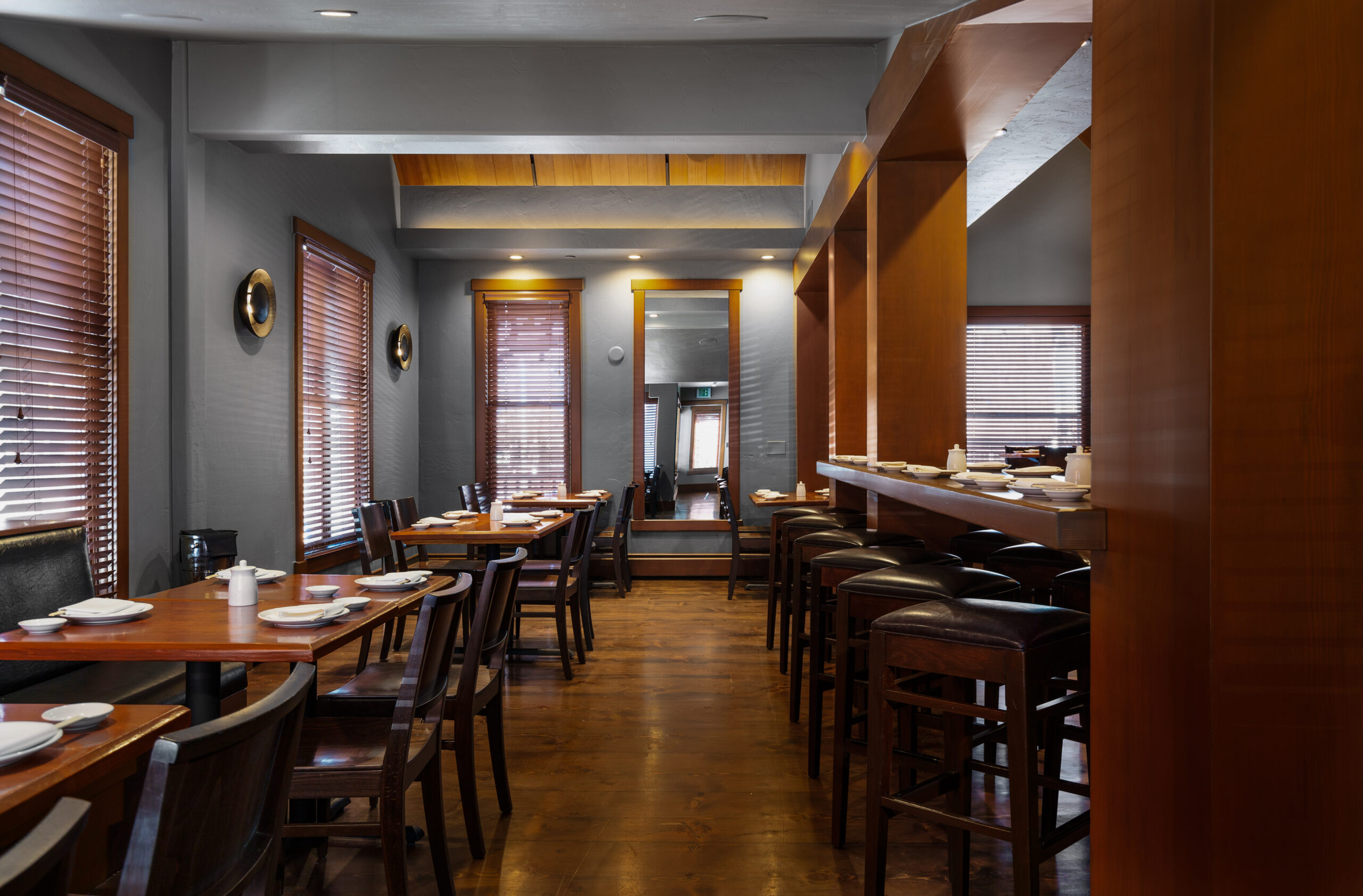
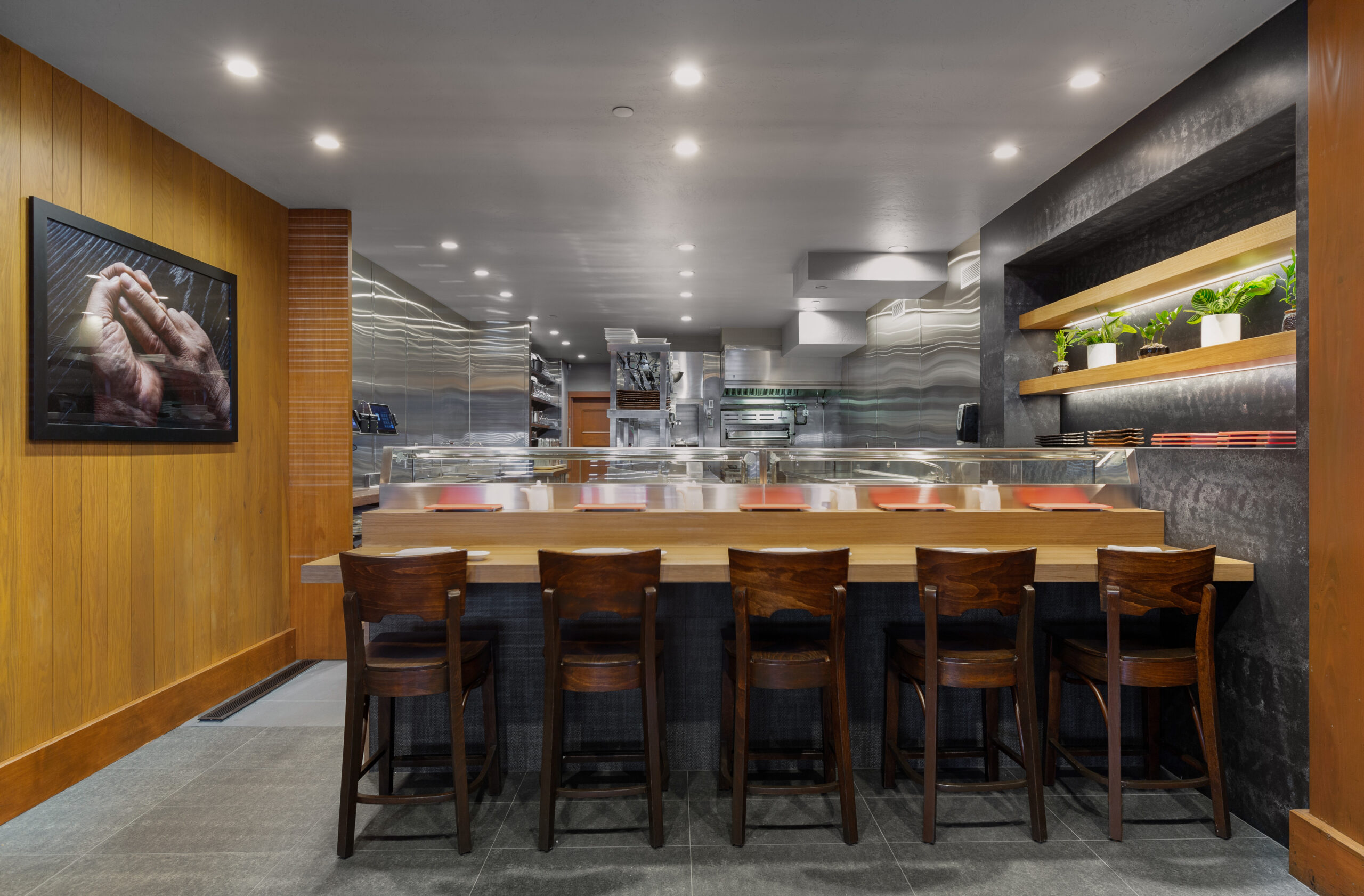
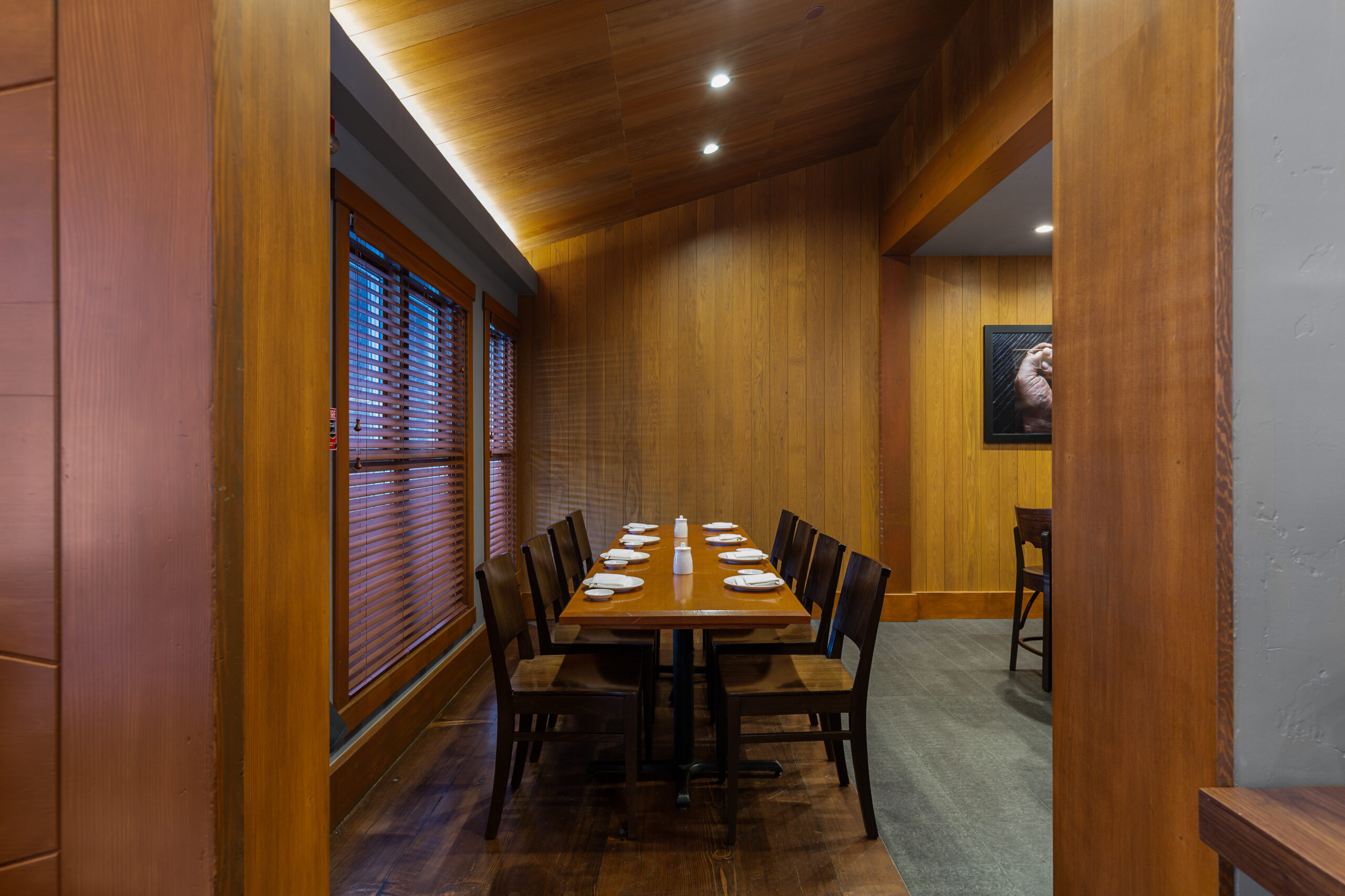
Matsuhisa Aspen is located in a small Victorian building located in right off Main Street of Aspen, CO. Nestled amidst other period homes, constructed in the early 1900s, the property retains many original features such as its wood siding, period windows, and gabled roofline, all contributing to its character as a significant local landmark. The design approach respects the building’s history while introducing subtle, modern interventions that will allow for the functionality required of a contemporary restaurant.
The design of the restaurant has been thoughtfully crafted to create a harmonious environment where the focus remains squarely on the food, enhancing the culinary experience without overpowering it. Inspired by the principles of Japanese design, the interior is intentionally minimalist and restrained, with clean lines, natural materials, and a neutral color palette that provides a serene backdrop. Every element in the space is carefully chosen to complement, rather than compete with, the artistry of the dishes. The use of wood, stone, and soft lighting creates a warm, inviting atmosphere, while the uncluttered spaces allow the vibrant colors and delicate presentation of the food to take center stage.
This project was subject to a strict, three-month timeline for construction, with the goal of completing the remodel during Aspen’s off-season period. Given the seasonal nature of the area, it was critical that the restaurant opens promptly in time for the holiday rush, when Aspen’s peaks with its seasoned visitors. Every phase of the project, from demolition to final finishing touches, is being carefully planned to maximize efficiency without compromising quality
The opportunity to contribute to the creation of a space that aligns with the chef’s exceptional culinary vision has been a privilege. The restaurant now stands as a beautiful reflection of both the chef’s artistry and the timeless charm of Aspen, and we are proud to have played a role in bringing this unique dining experience to life. We look forward to seeing it flourish as a new cultural touchstone for the community and a destination for guests from around the world.
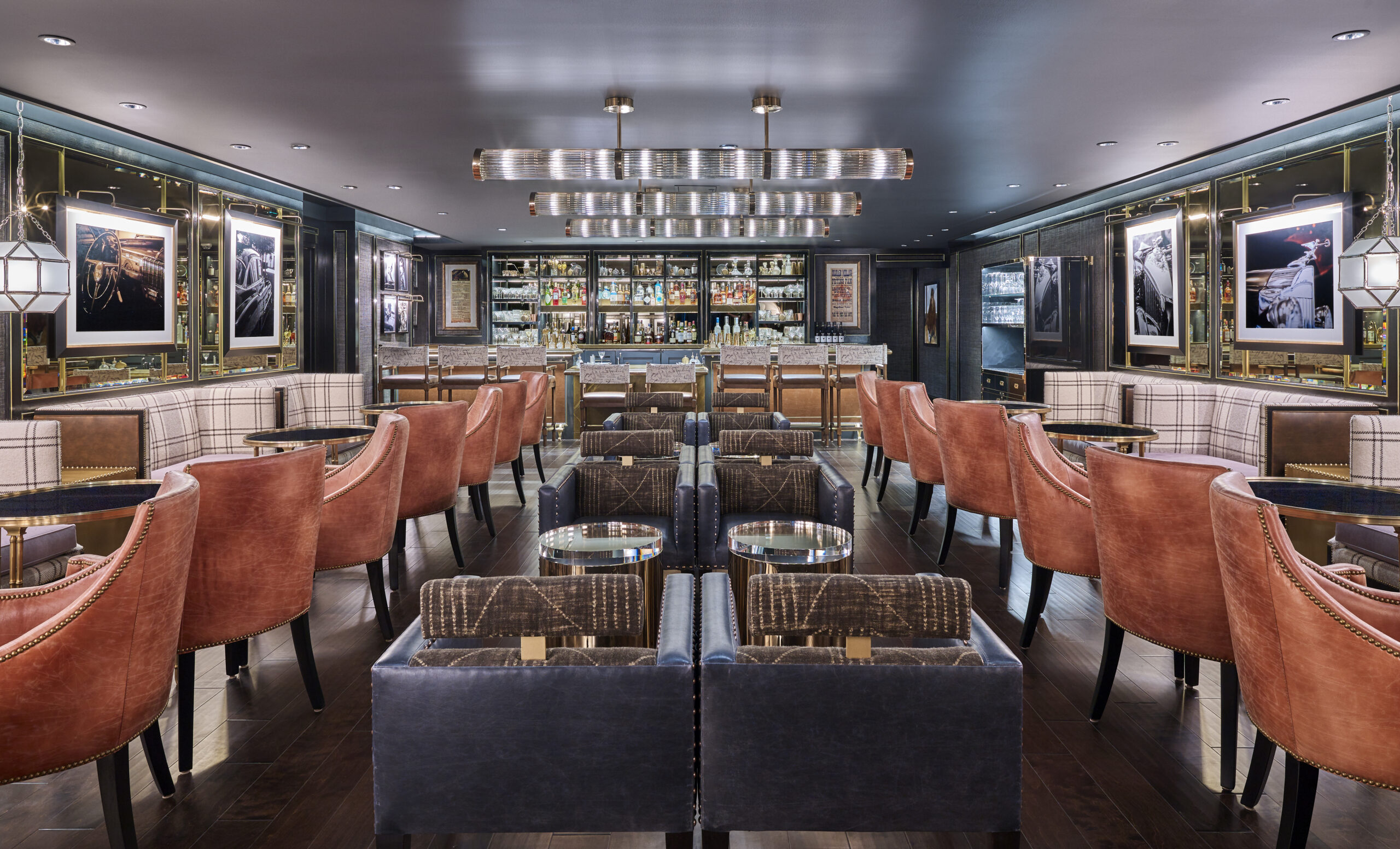
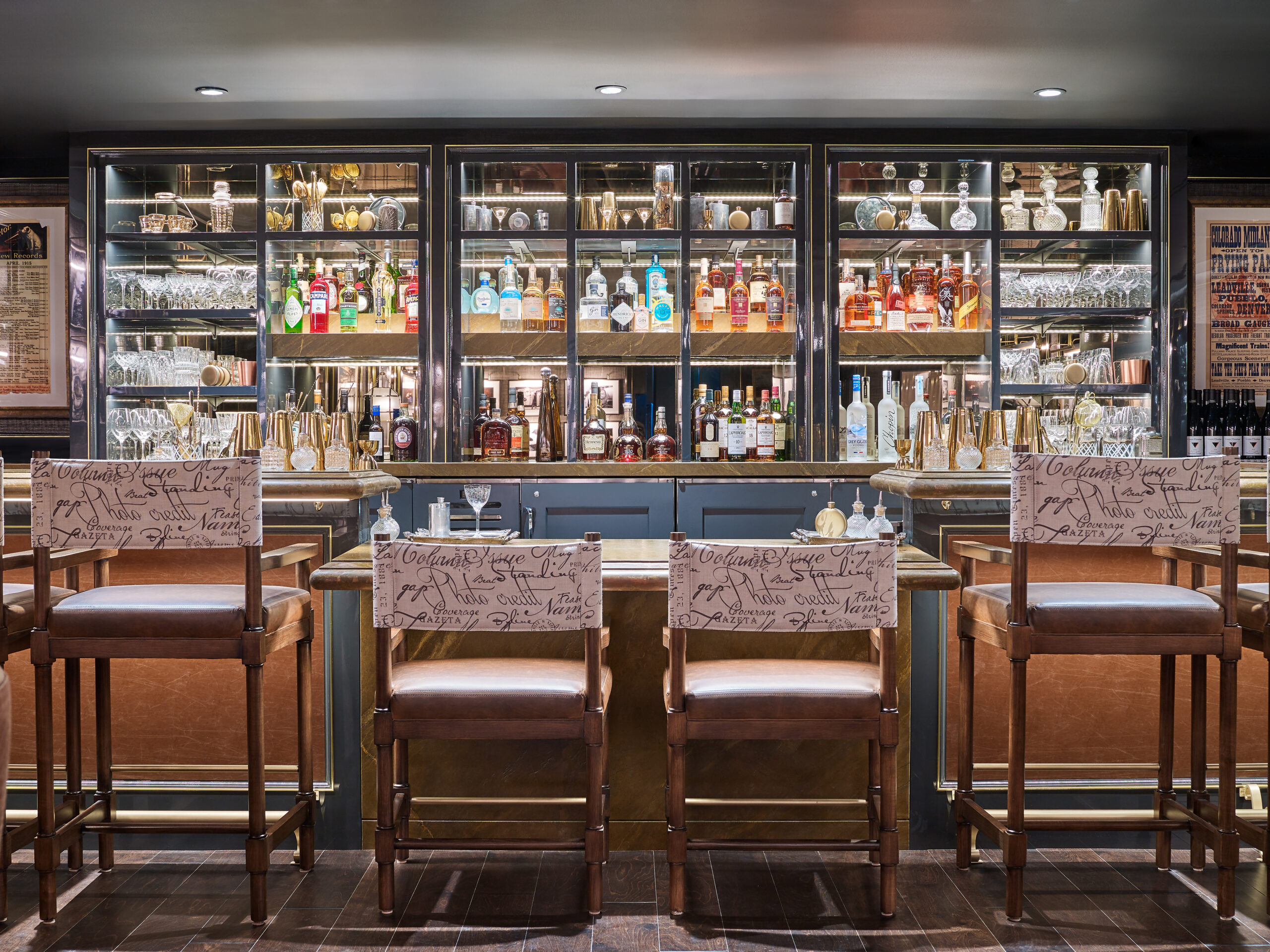
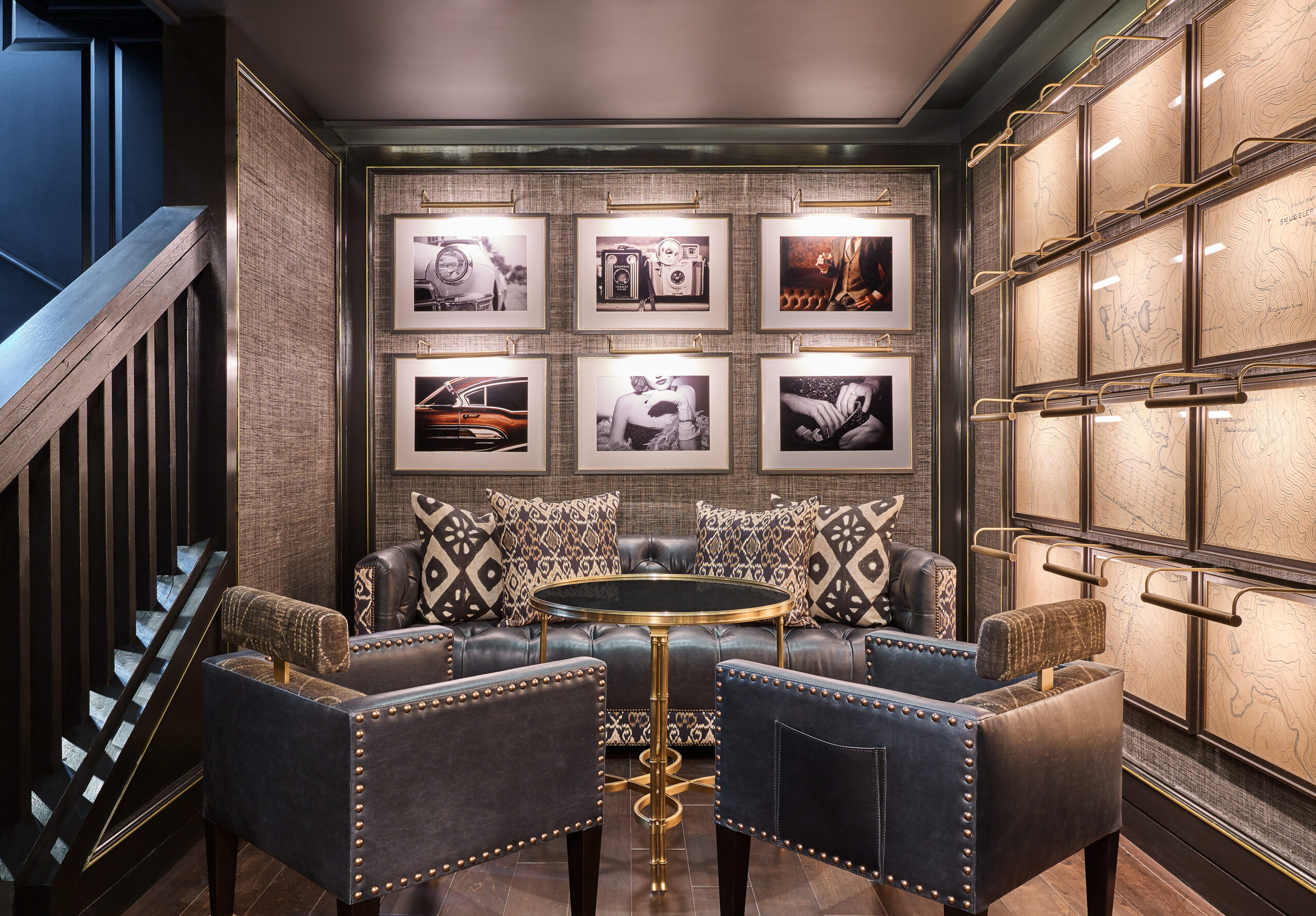
An Aspen landmark for over 125 years, Hotel Jerome has been thoughtfully expanded while remaining loyal to its revered history and authentic character. As part of a recent multi-programmed project, which also included the design of a three-story, multiple-suite and gathering place addition, the design team restored the adjoining historic Aspen Times Building, the highlight of which is the new underground speakeasy bar, Bad Harriet.
Named after the wife of early Aspen developer Jerome B. Wheeler, who built the hotel and after whom the Hotel Jerome is named, Bad Harriet bridges Aspen’s past and future through the conversion of the historic 1904 Aspen Times Newspaper Building. Inspired by the Victorian period in which the building was constructed, and in collaboration with TAL Studio, the same interior design firm the team worked with during the 2012 full interior renovation of the Hotel Jerome, the interior palette, millwork, finishes and furnishings also take their cue from the original hotel. Mirrored wall panels with polished accents pair with painted wood trim to create a sultry atmosphere for the intimate, 55-seat space, while a Bruna Terra Leather stone bar adds a solid contemporary edge.
The restoration of the historic Aspen Times Building provides a timeless addition to the Hotel Jerome. Extraneous exterior additions were removed, and a steel super-structure was installed to allow the original building to once again stand on its own. Original wood siding was preserved and re-detailed. Historic windows that had once been hidden or removed were replaces with new wood windows. A new metal roof was added to reflect the historic vernacular. A new sliding barn door system was added to the original garden-facing wall to create permeability or enclosure as needed.
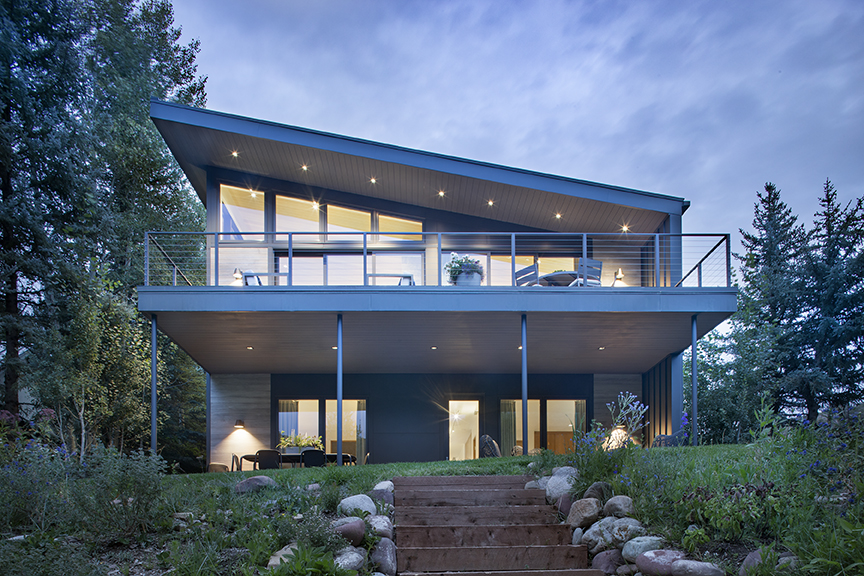
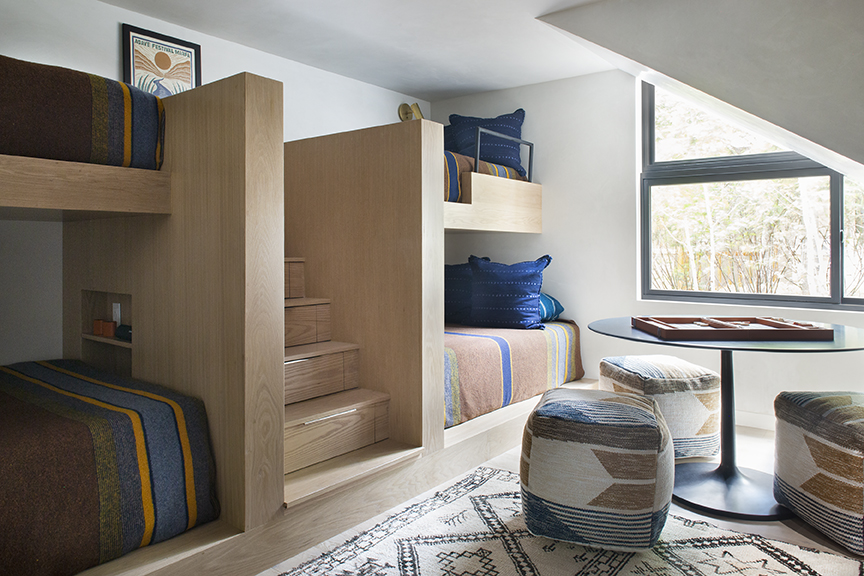
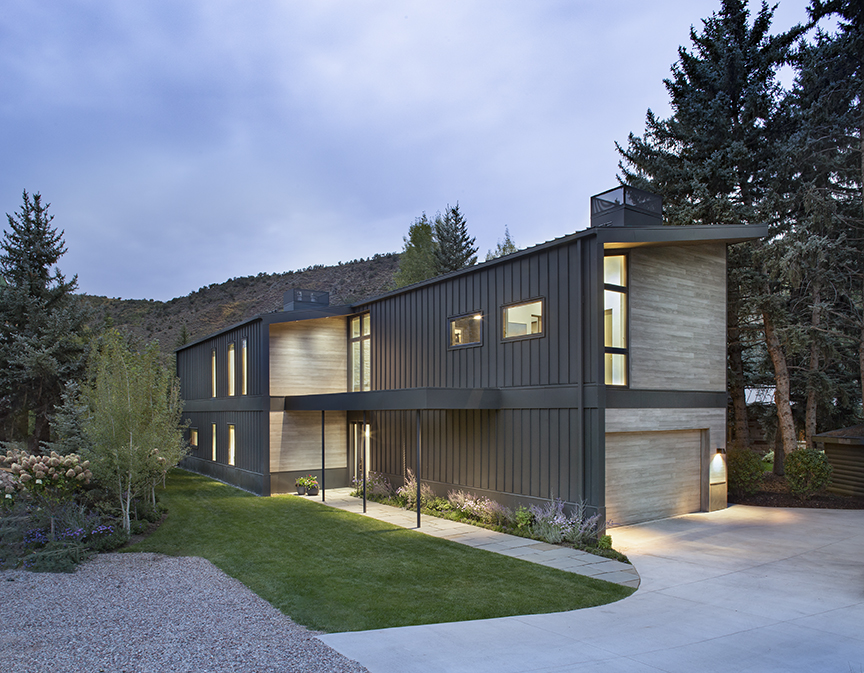
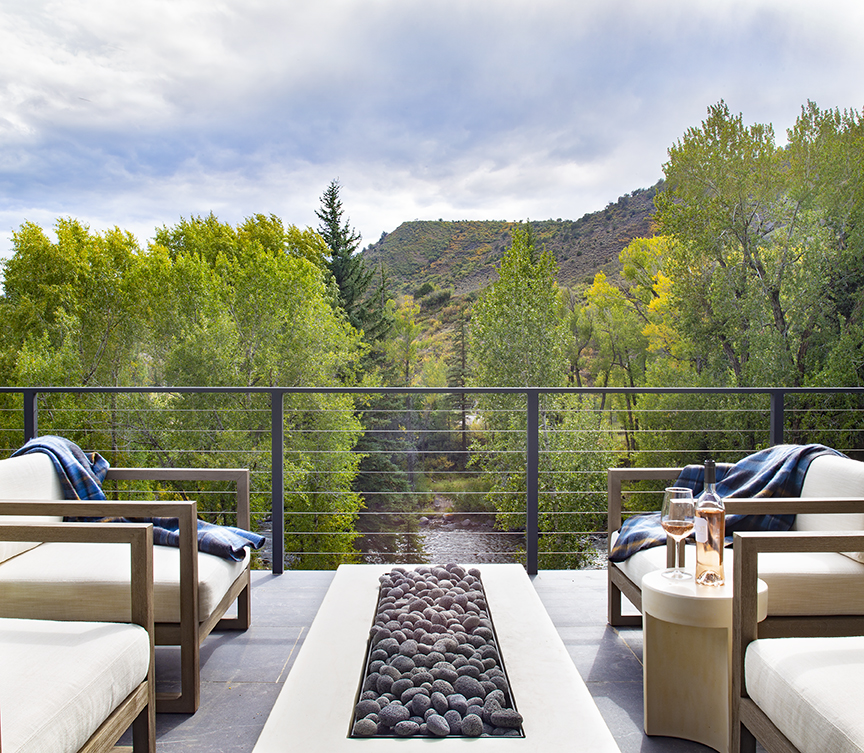
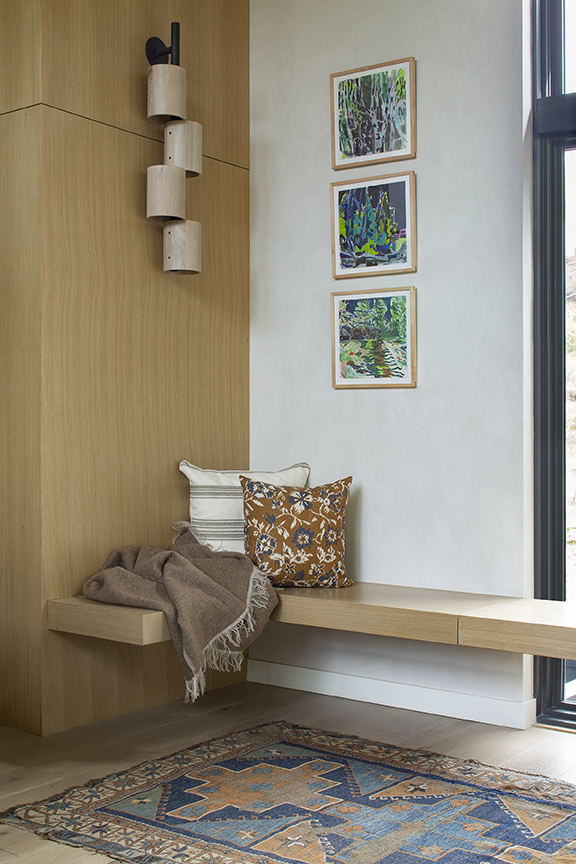
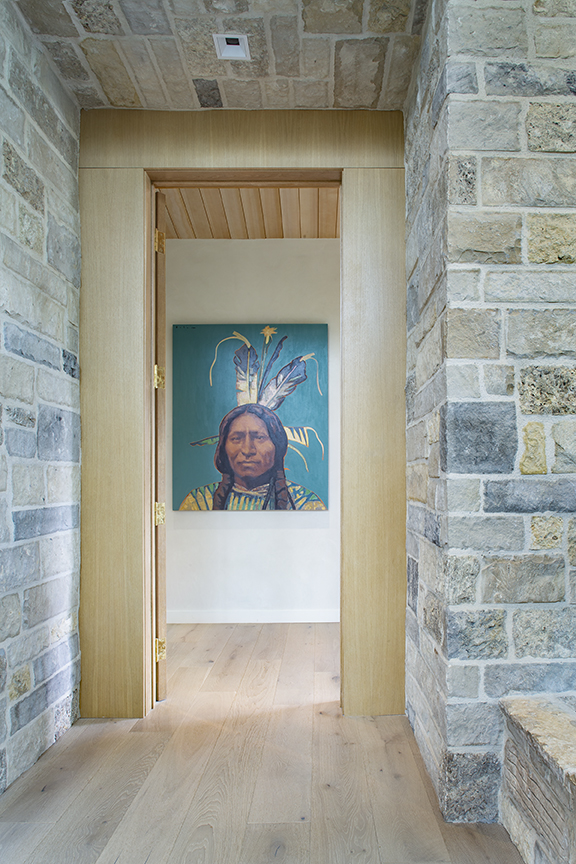
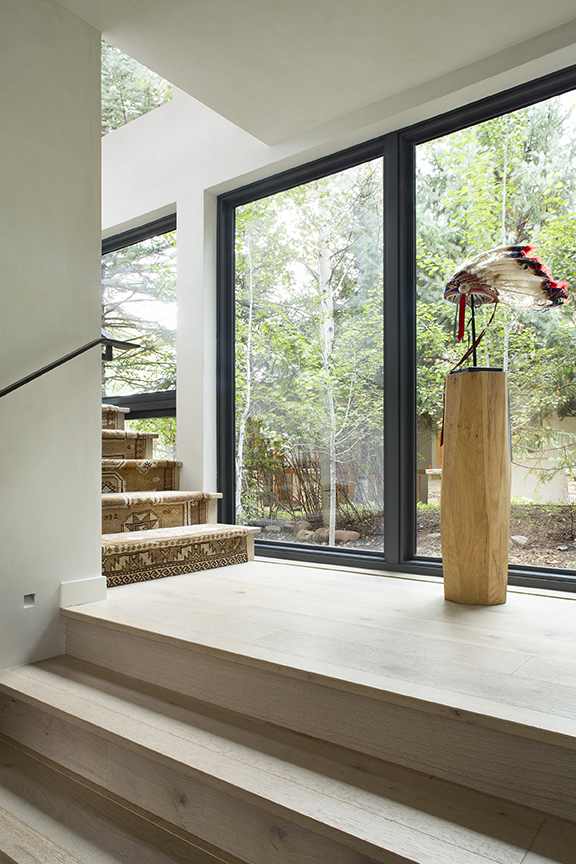
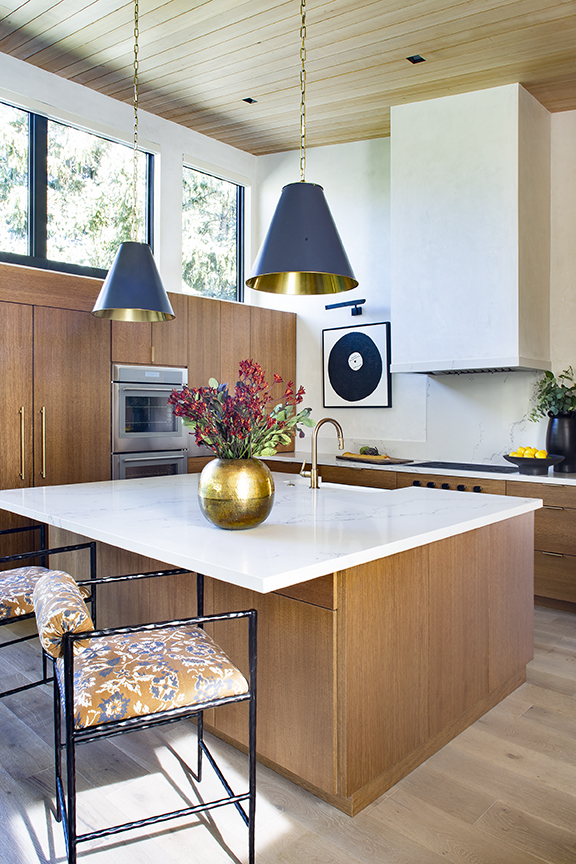
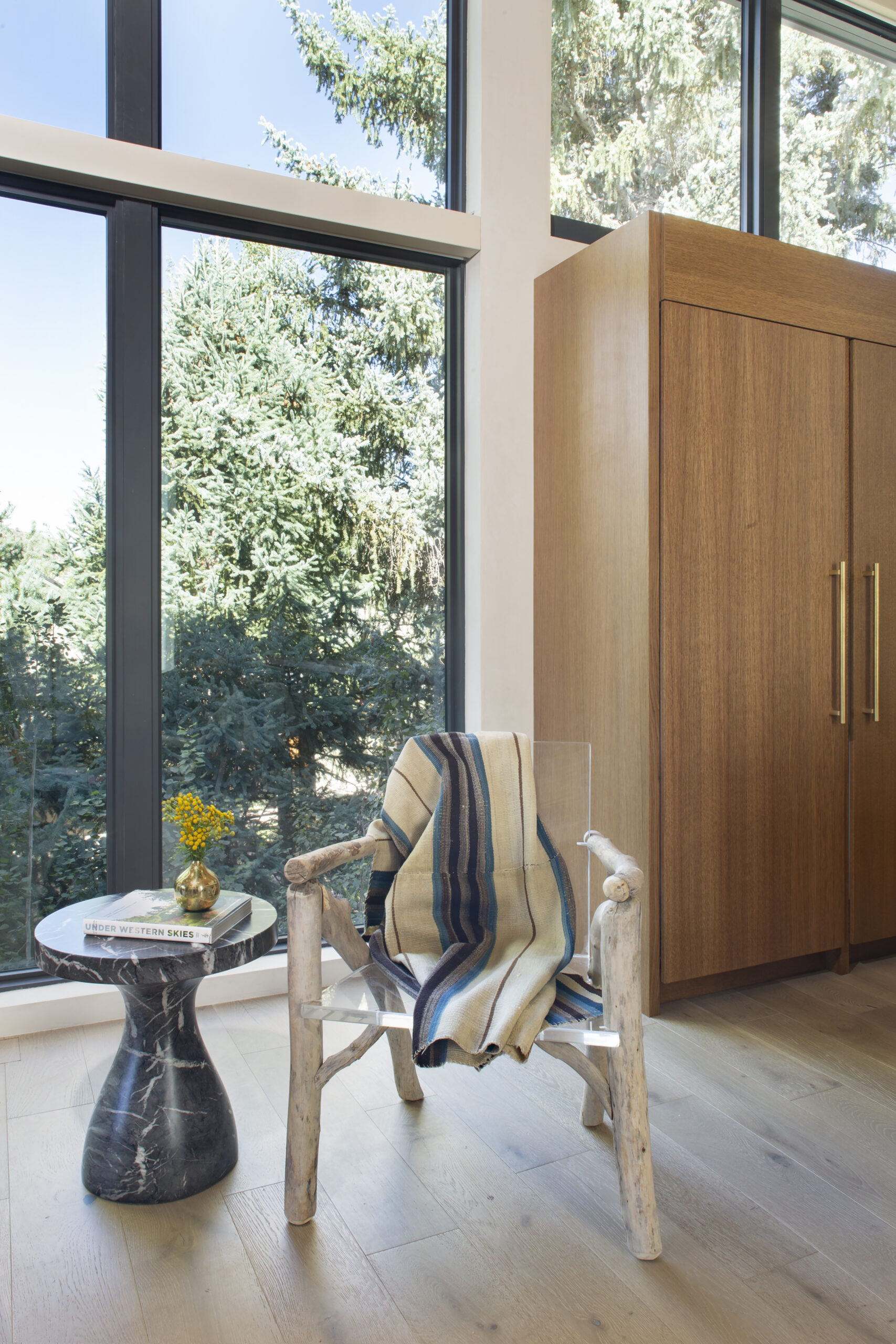
Intended as a family fishing retreat, this 3,500 square foot Aspen home sits effortlessly along the banks of the “Gold Medal” Roaring Fork River.
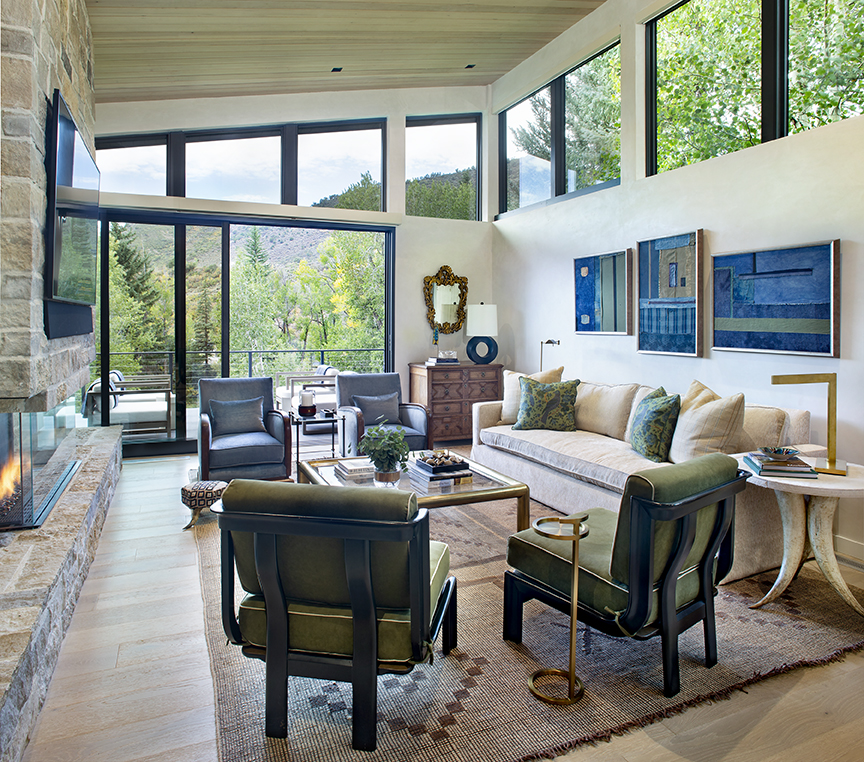
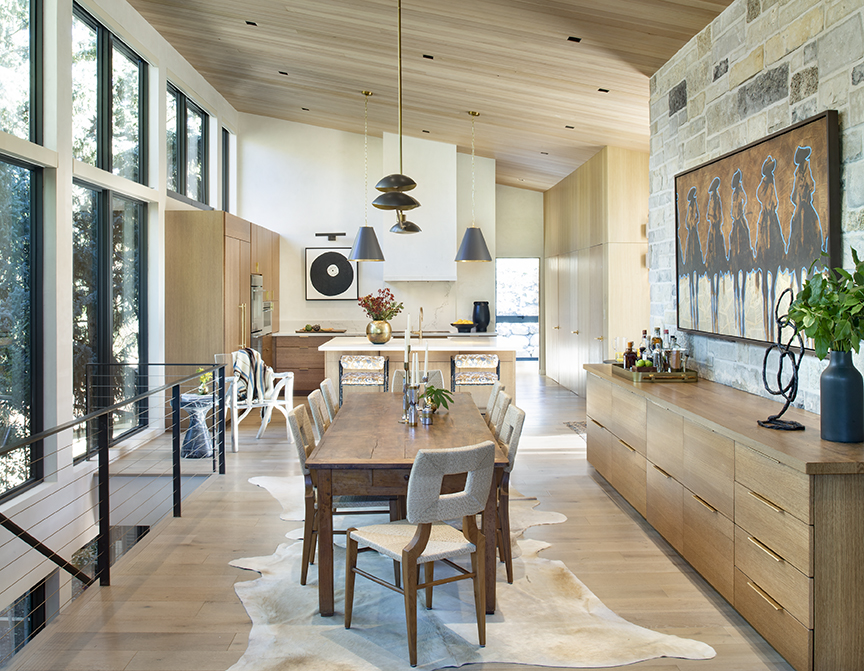
With the goal of embracing the narrow site while sensitively addressing budget requirements, an efficient approach was taken in regard to layout, size and details. The on-grade design was predicated upon the vision of allowing open, high-ceilinged interactive spaces for family gatherings while capturing natural sunlight and the predominant river view.
The simplicity of the shed roof form is reflective of the “11-2” arch of a fisherman’s cast. The singular bronzed grey palette and minimalist detailing of the horizontal metal skin, roof and fascia pairs perfectly with the vertical reclaimed barnwood siding. Large sliding patio doors opening onto a south-facing deck encourage indoor-outdoor living and offer direct river and mountain views.
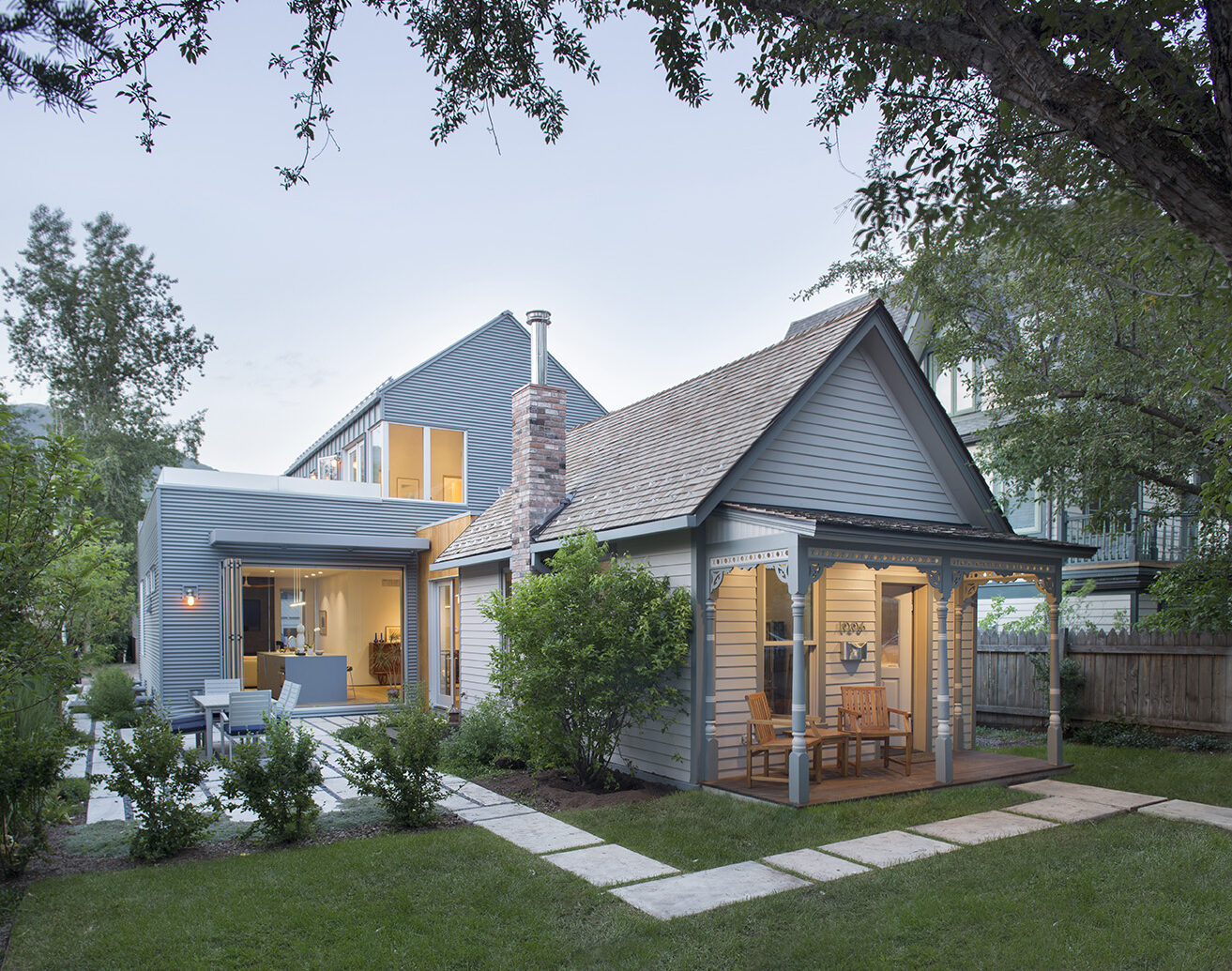
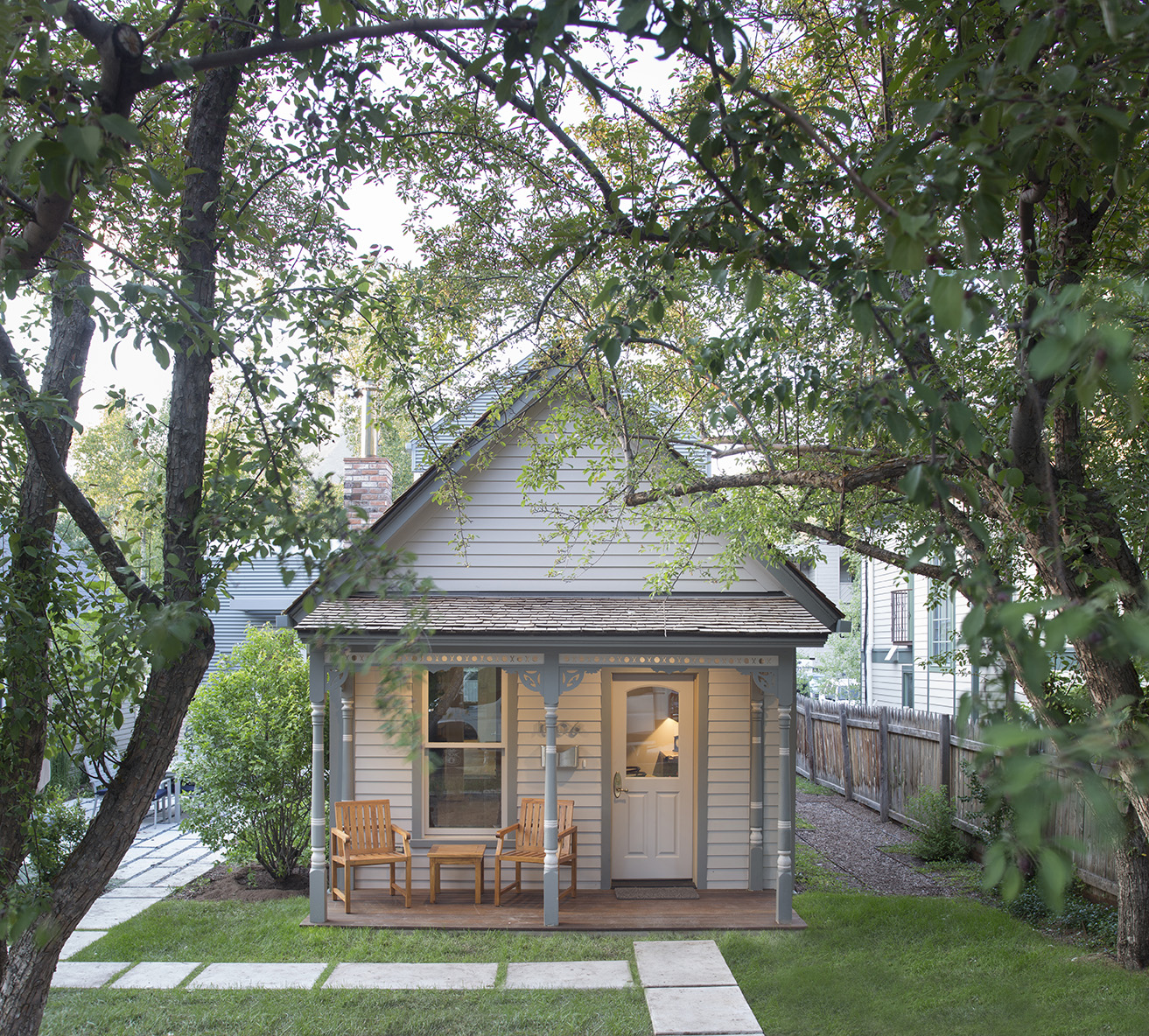
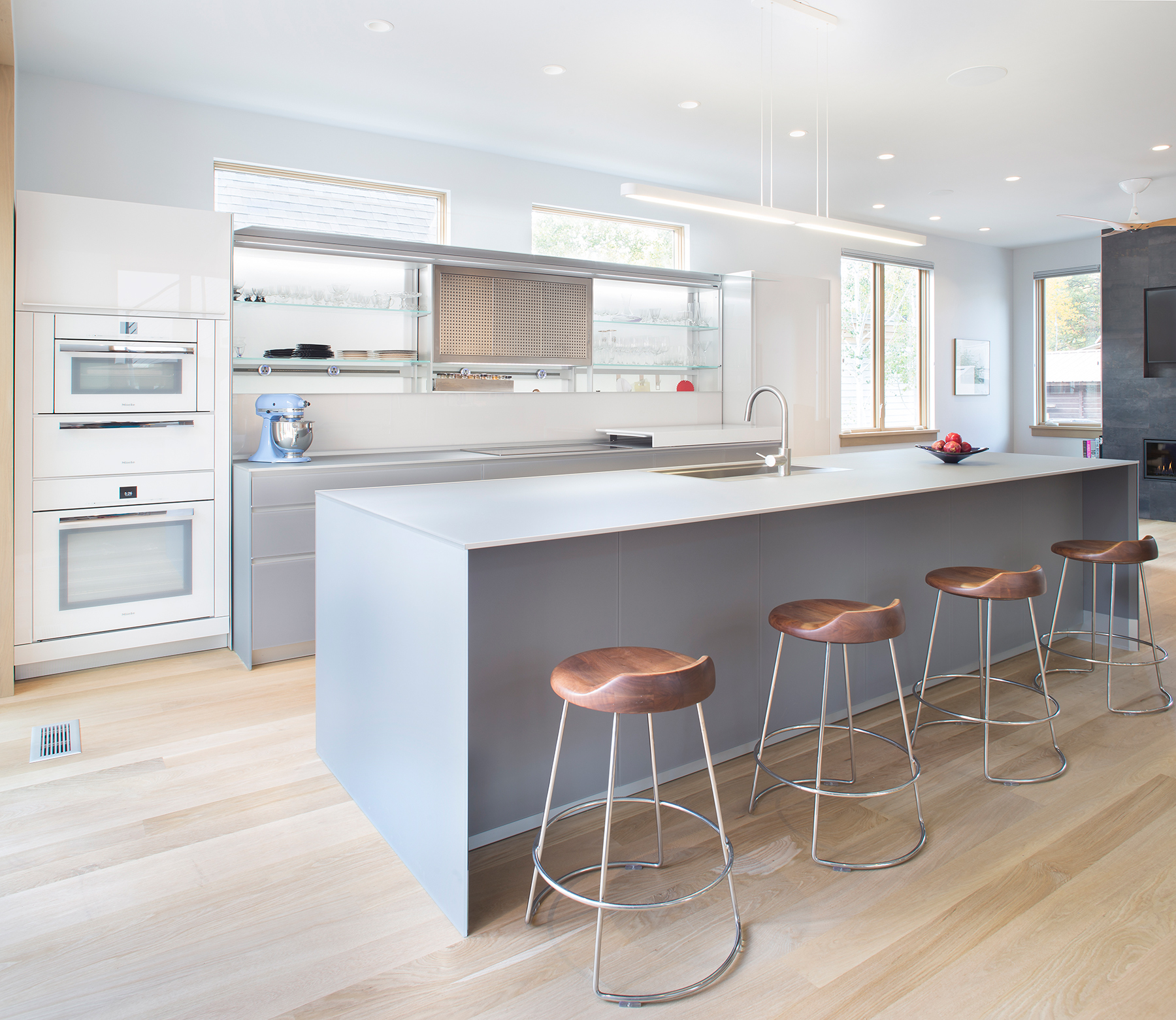
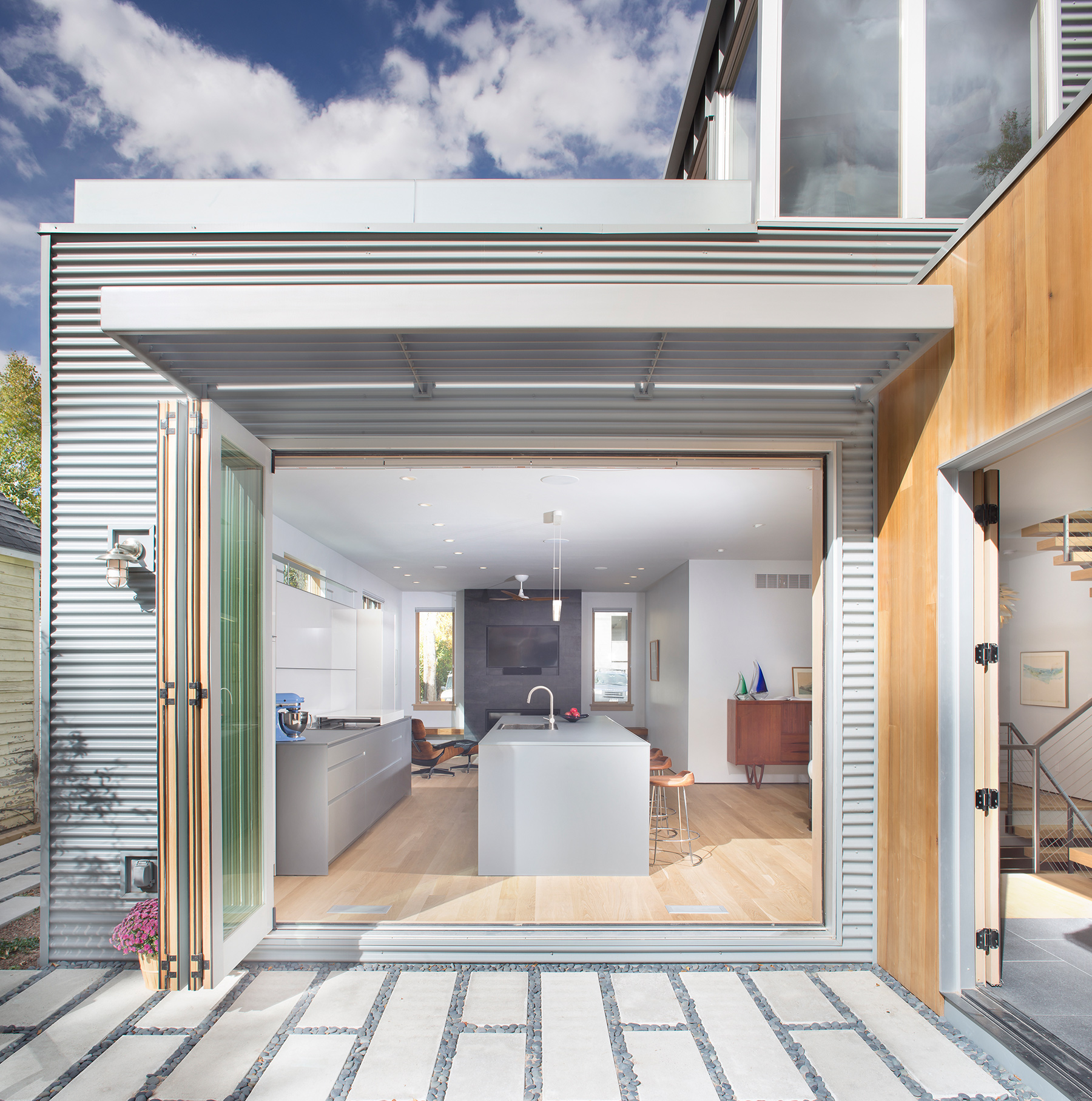
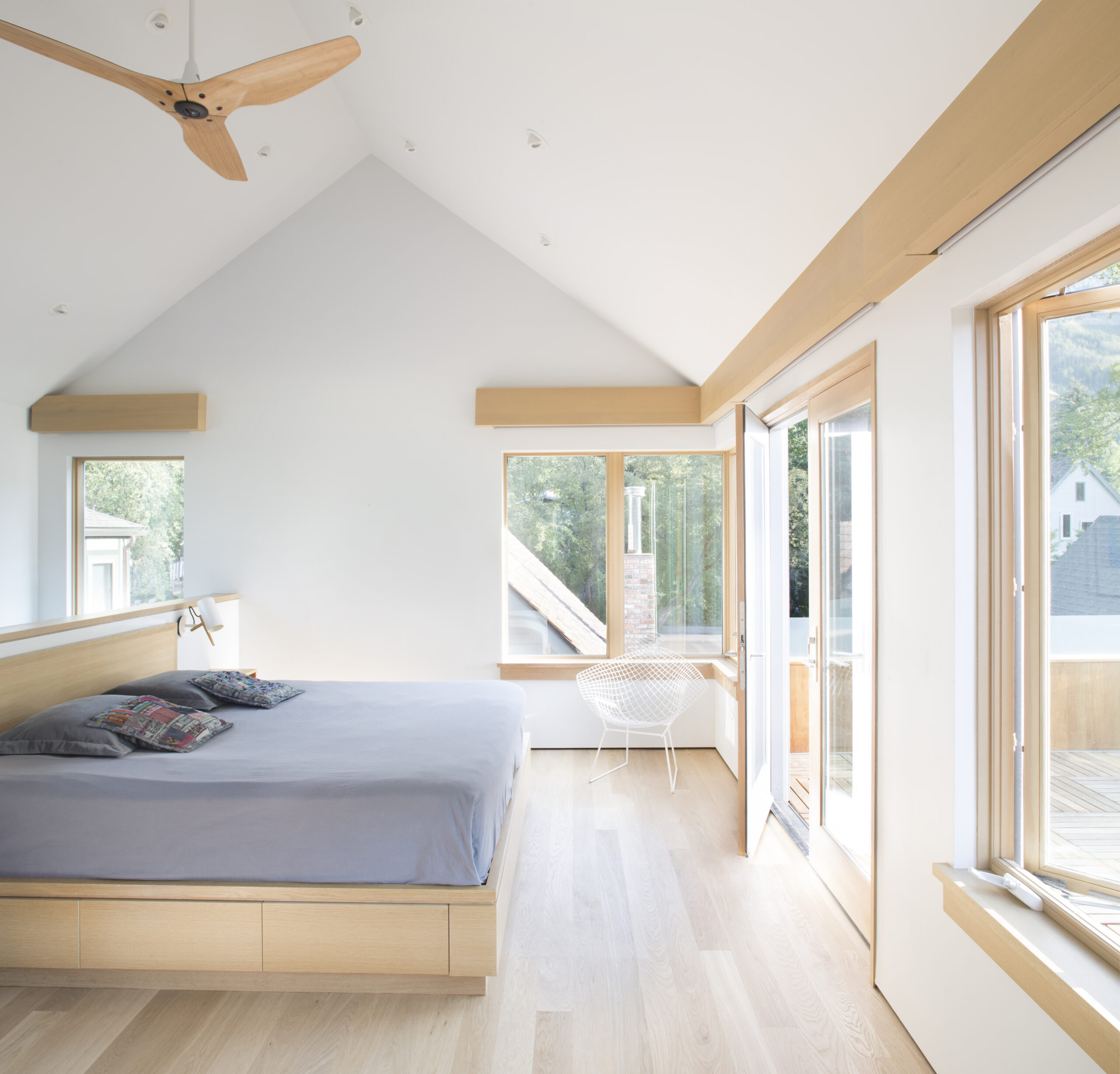
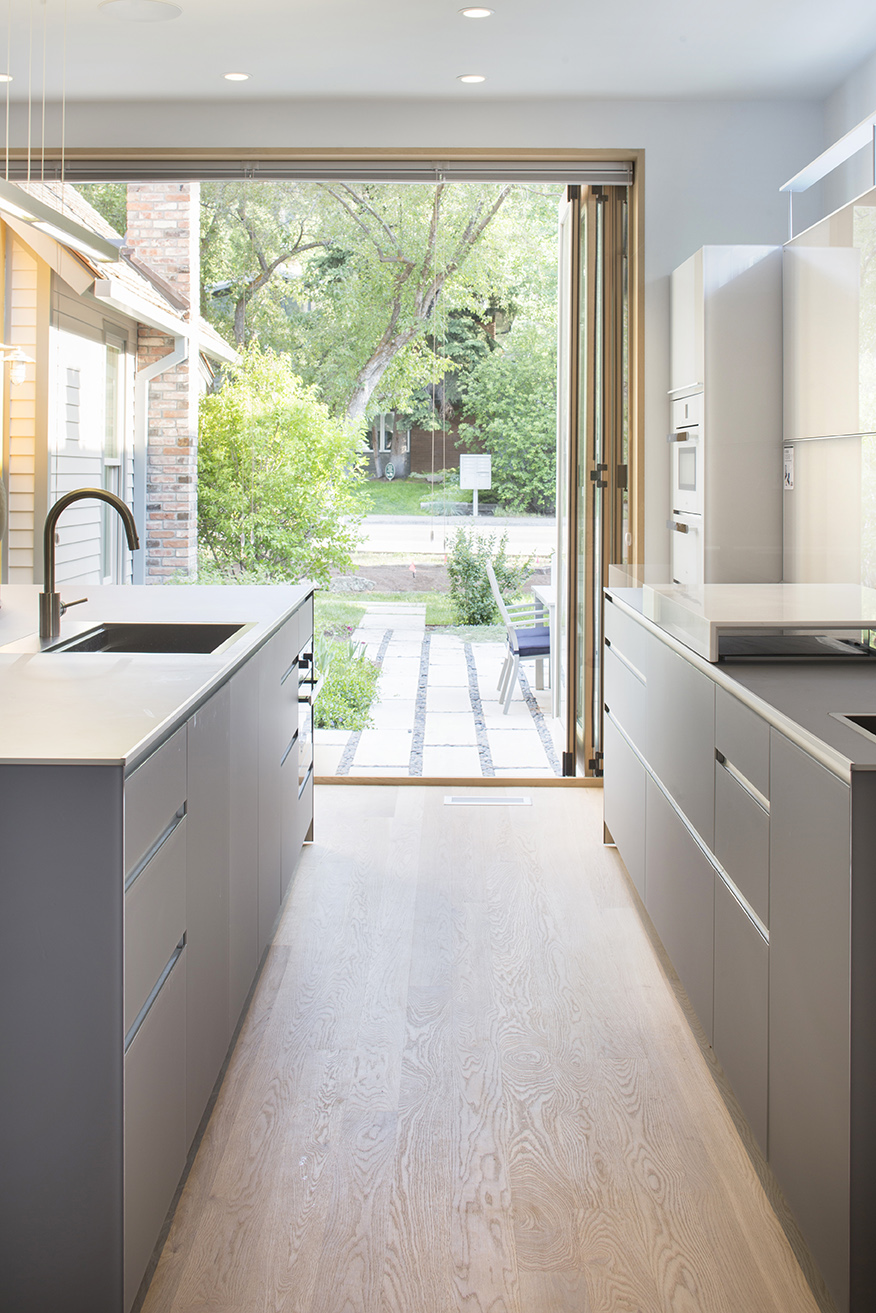
R+B was challenged to surgically remove all the non-historic additions to an 1892 miner’s cabin and perfectly preserve it while complementing it with a new two-story addition. Through the design process, the team worked closely with the owner and Aspen’s Historic Preservation Commission for this sensitive restoration.
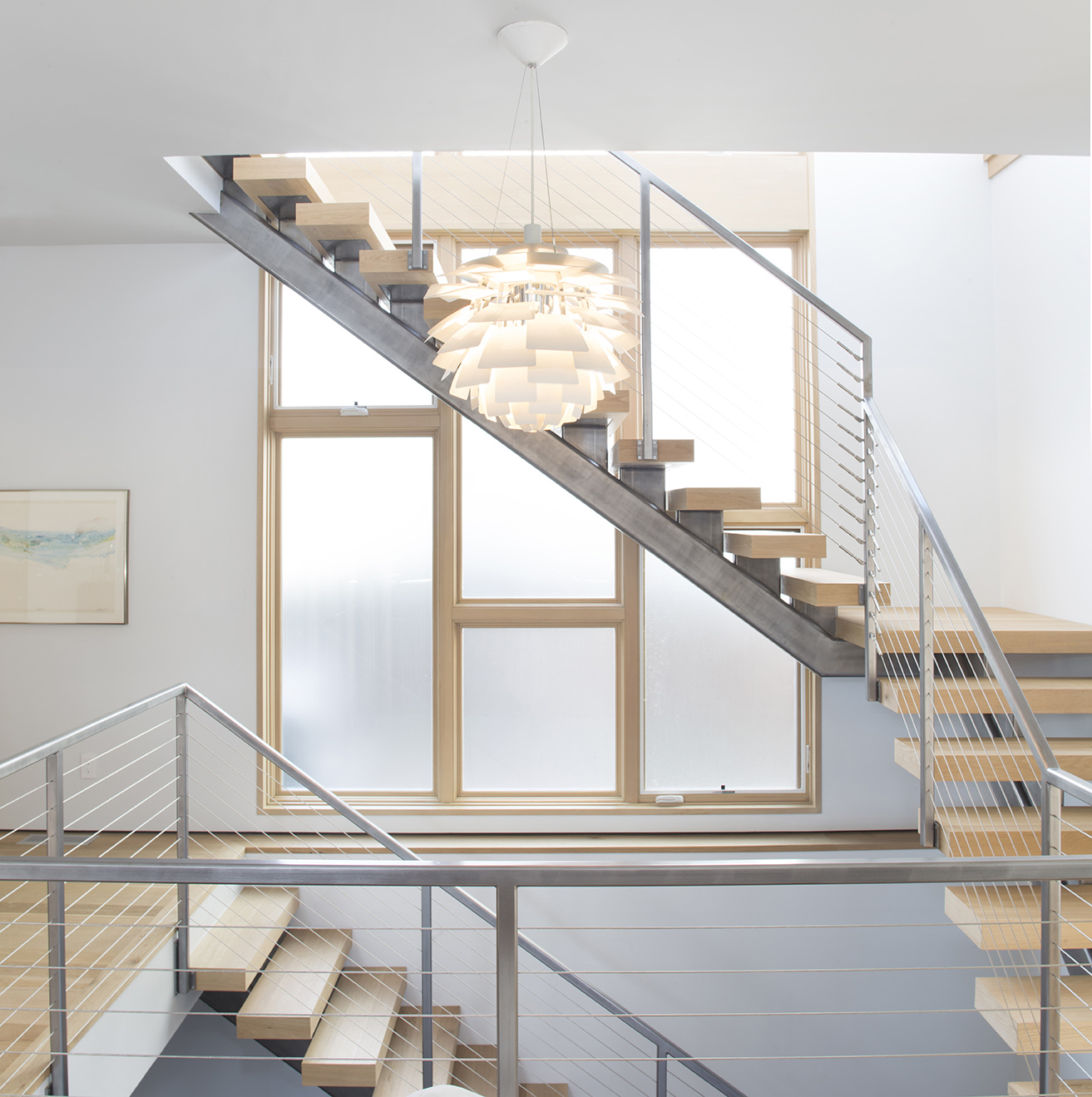
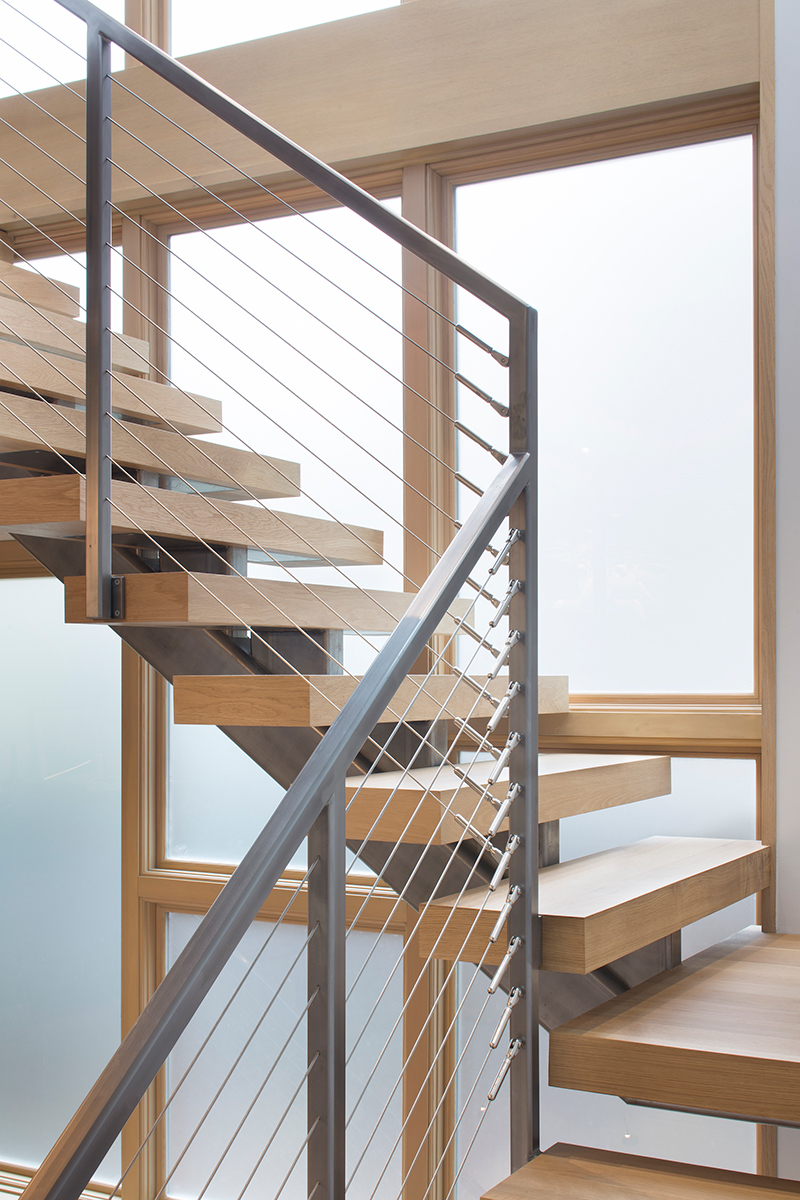
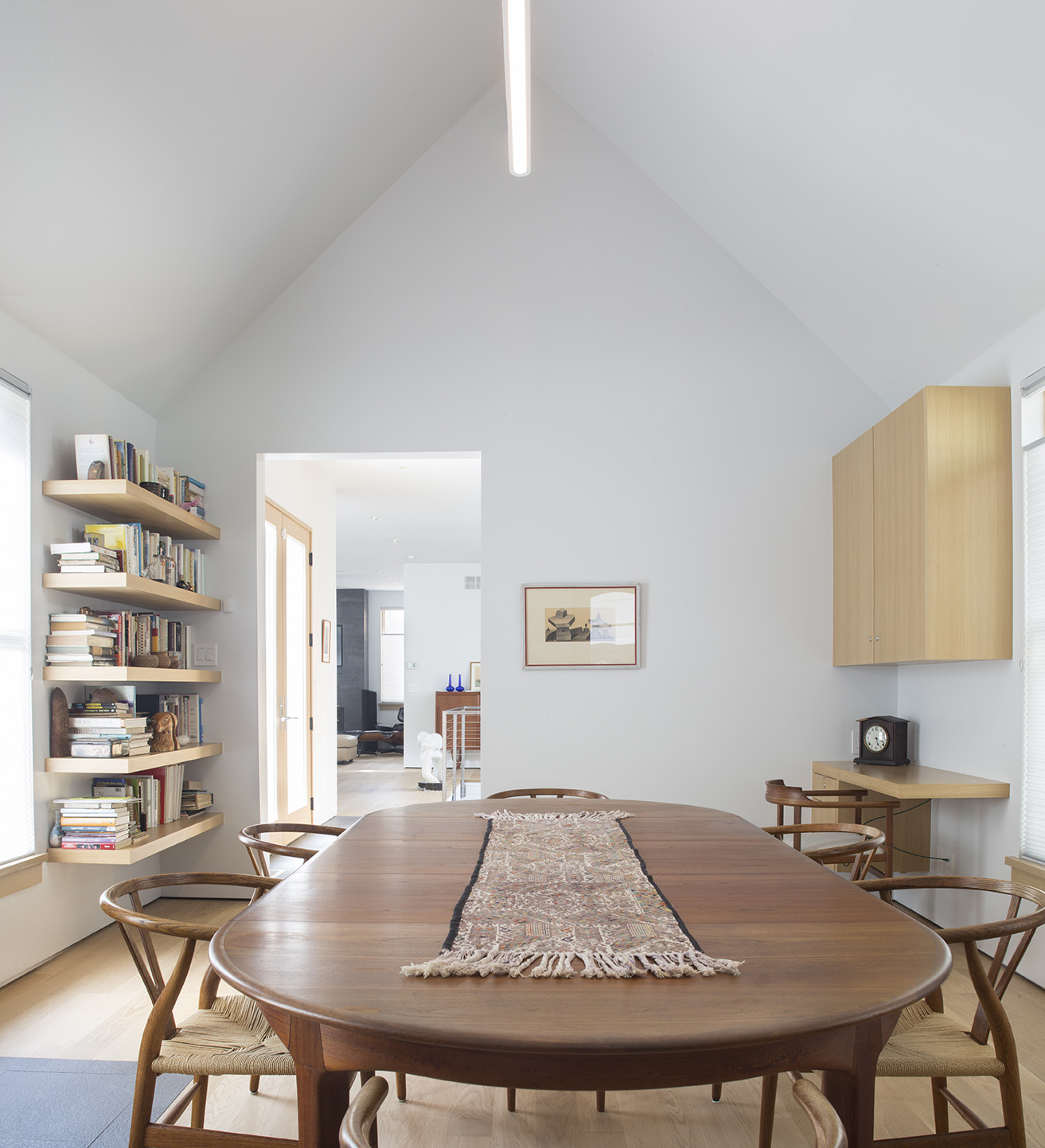
Traditional materials were given new life with contemporary detailing. An efficient, open layout with strategic fenestration provides a seamless connection between indoors and out. Design and space planning consideration was given to the owners’ extensive collection of mid-century Scandinavian furniture. Architectural palette and finishes were juxtaposed with a sleek, modern kitchen from Valcucine.
To me, true creativity, whether in art, technology, or business, is creating something of beauty, function, and joy, while working within inviolable constraints. Rowland+Broughton has managed to accomplish this beyond any reasonable expectations. – Homeowner, Mining Modern
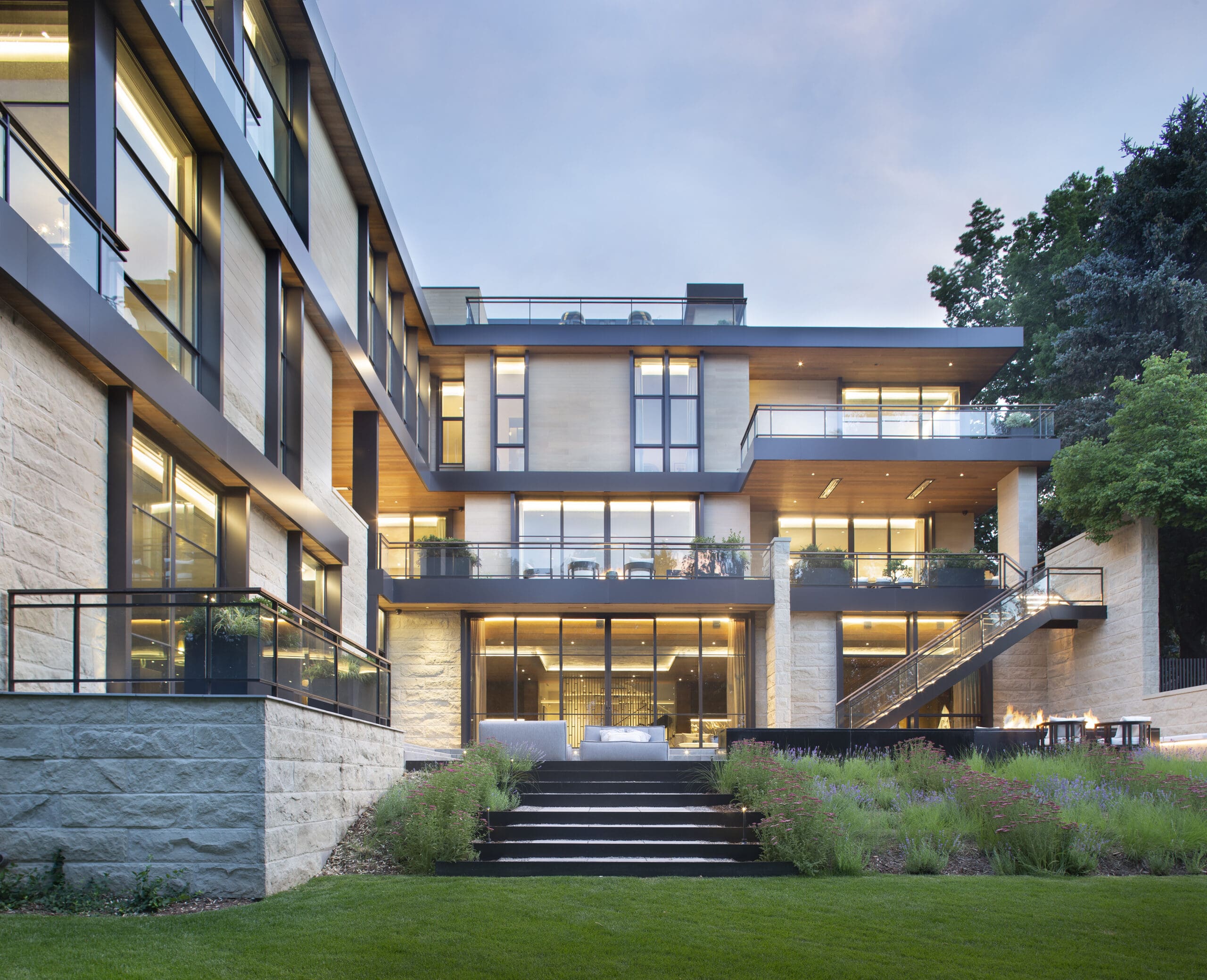
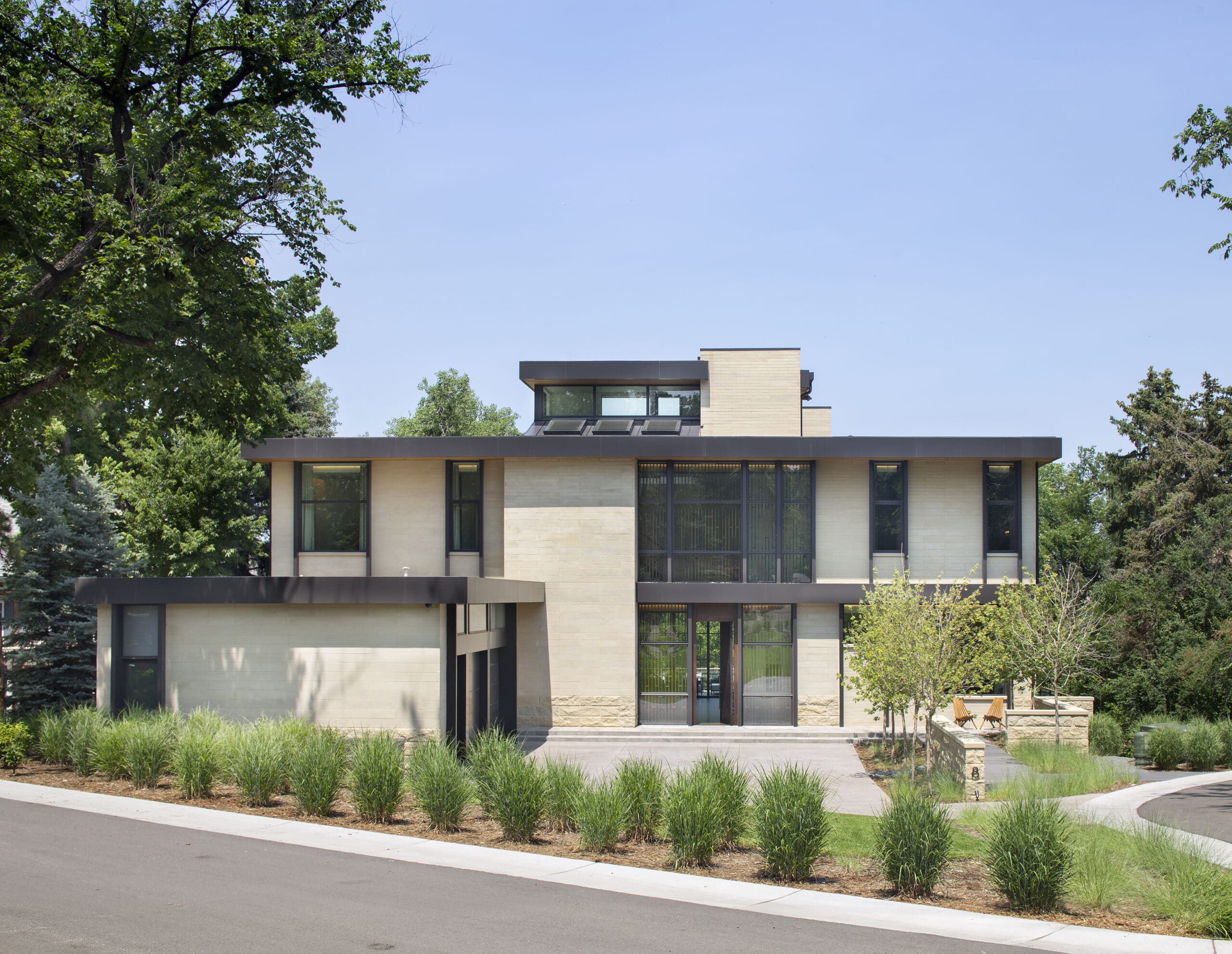
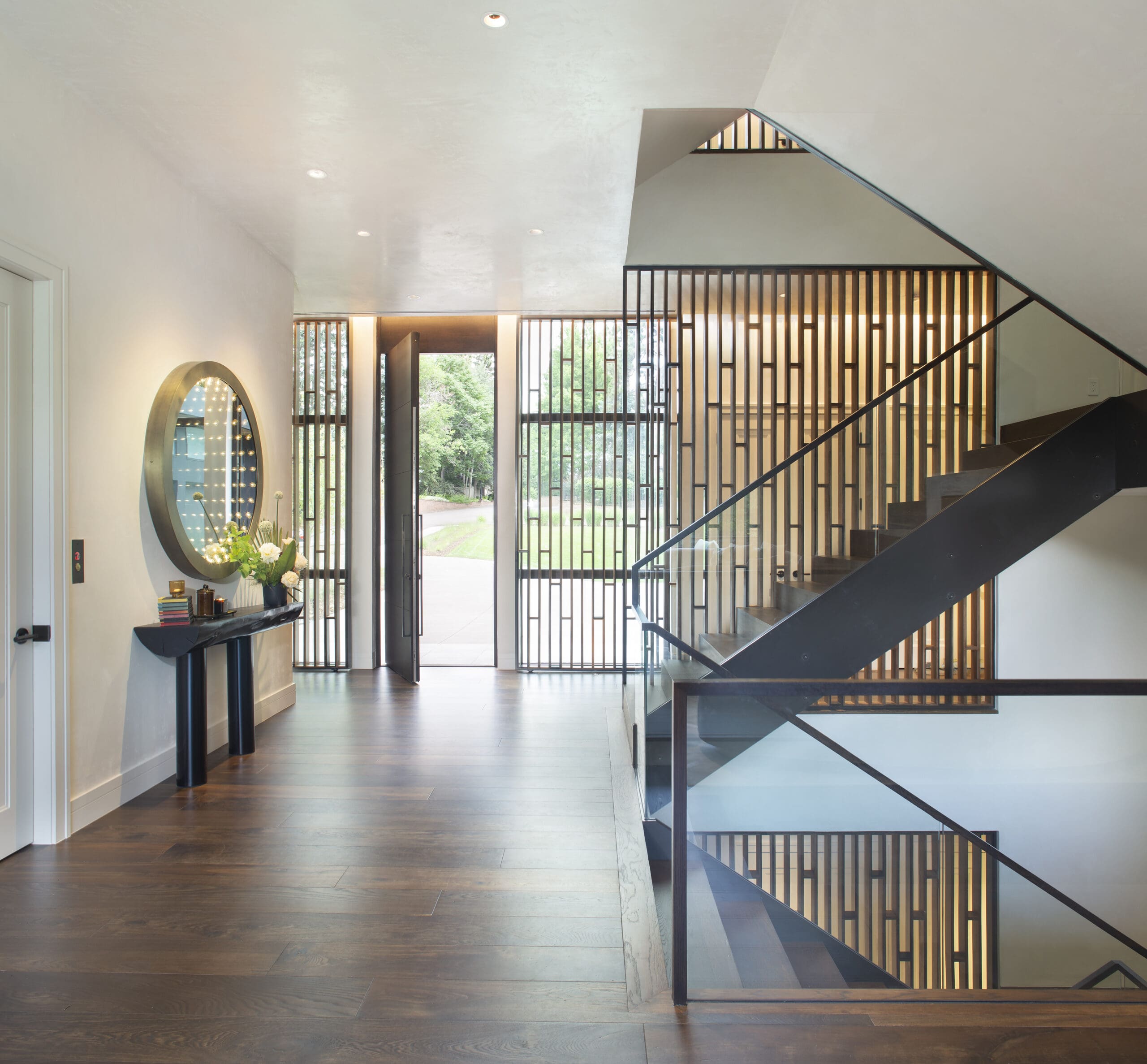
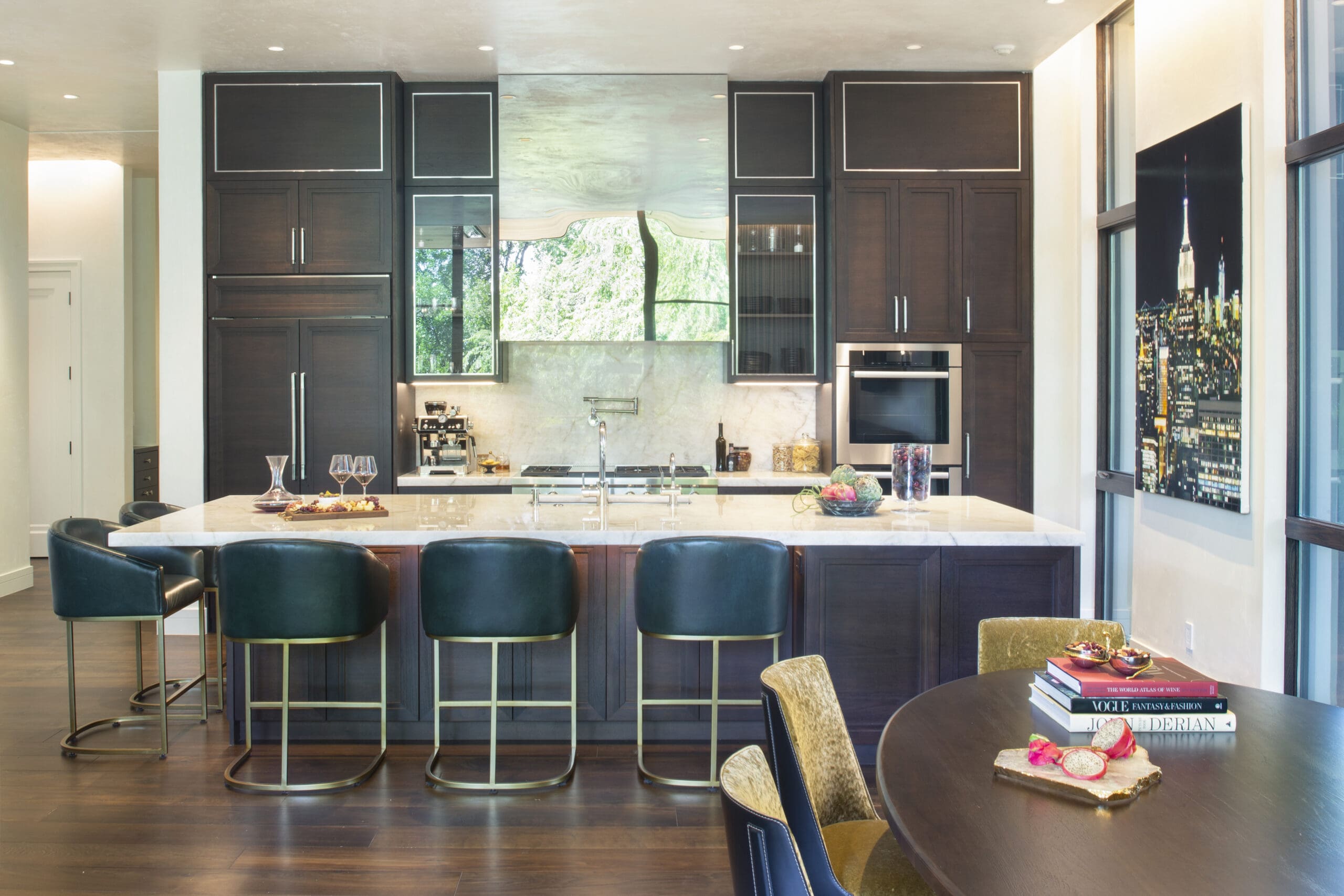
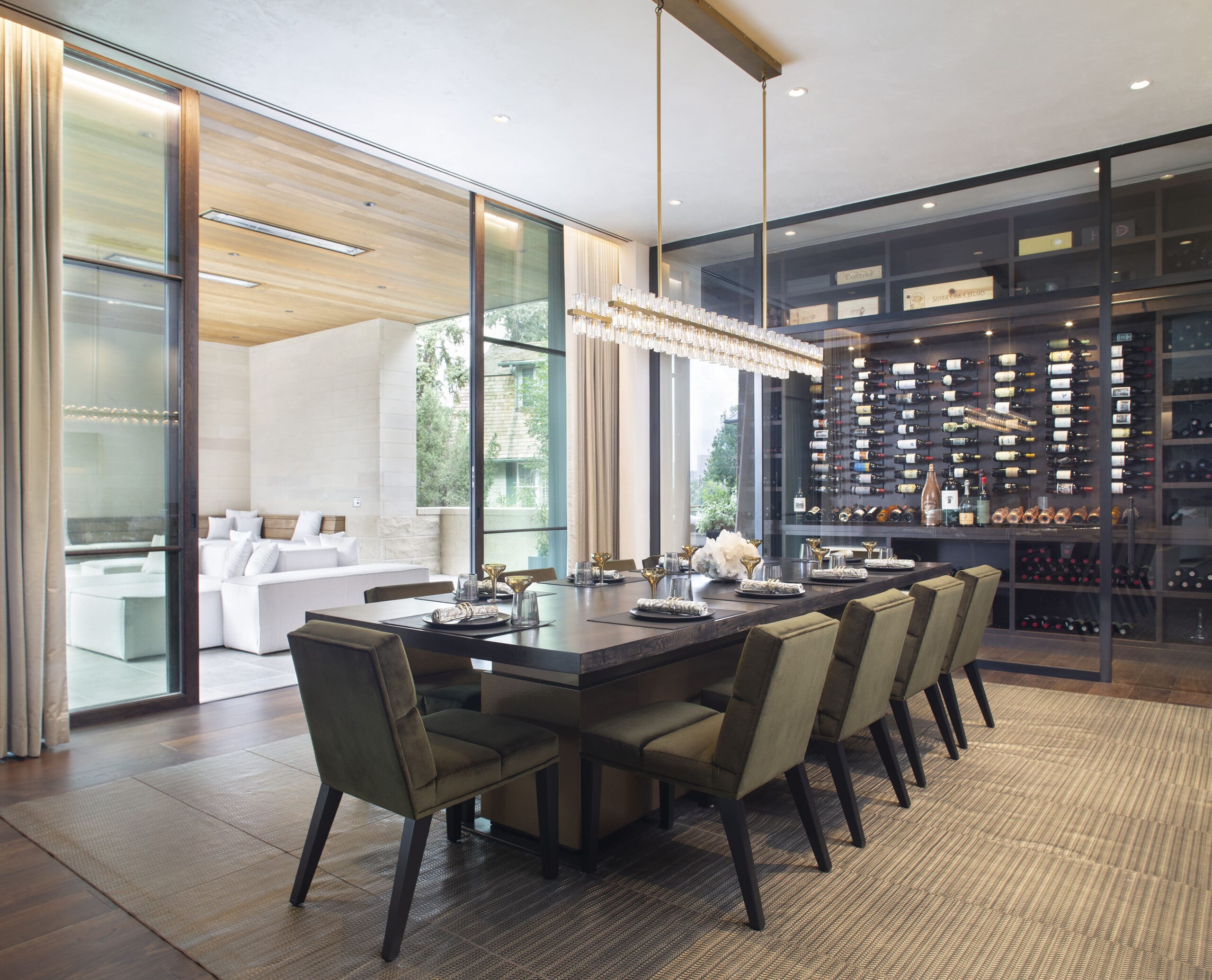
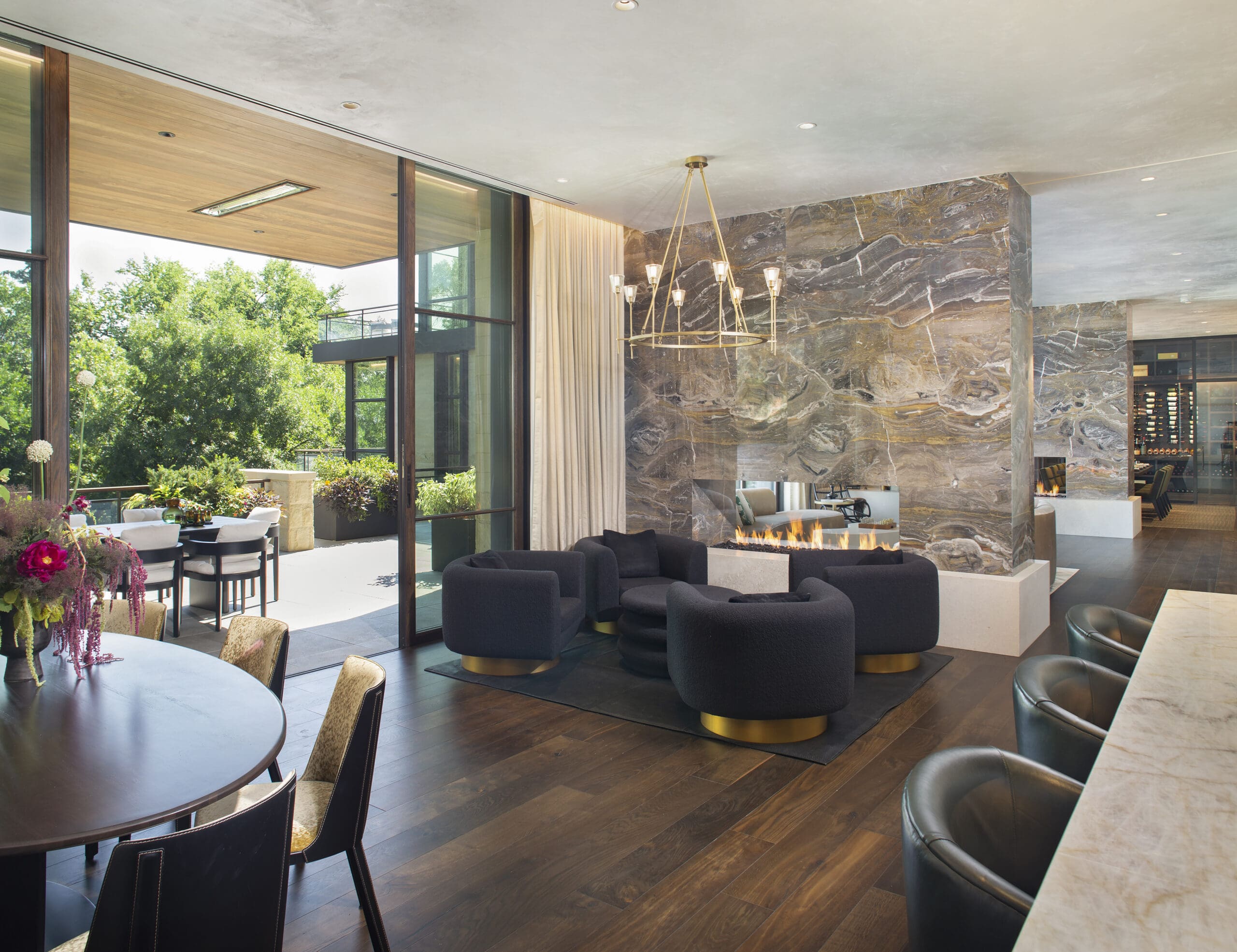
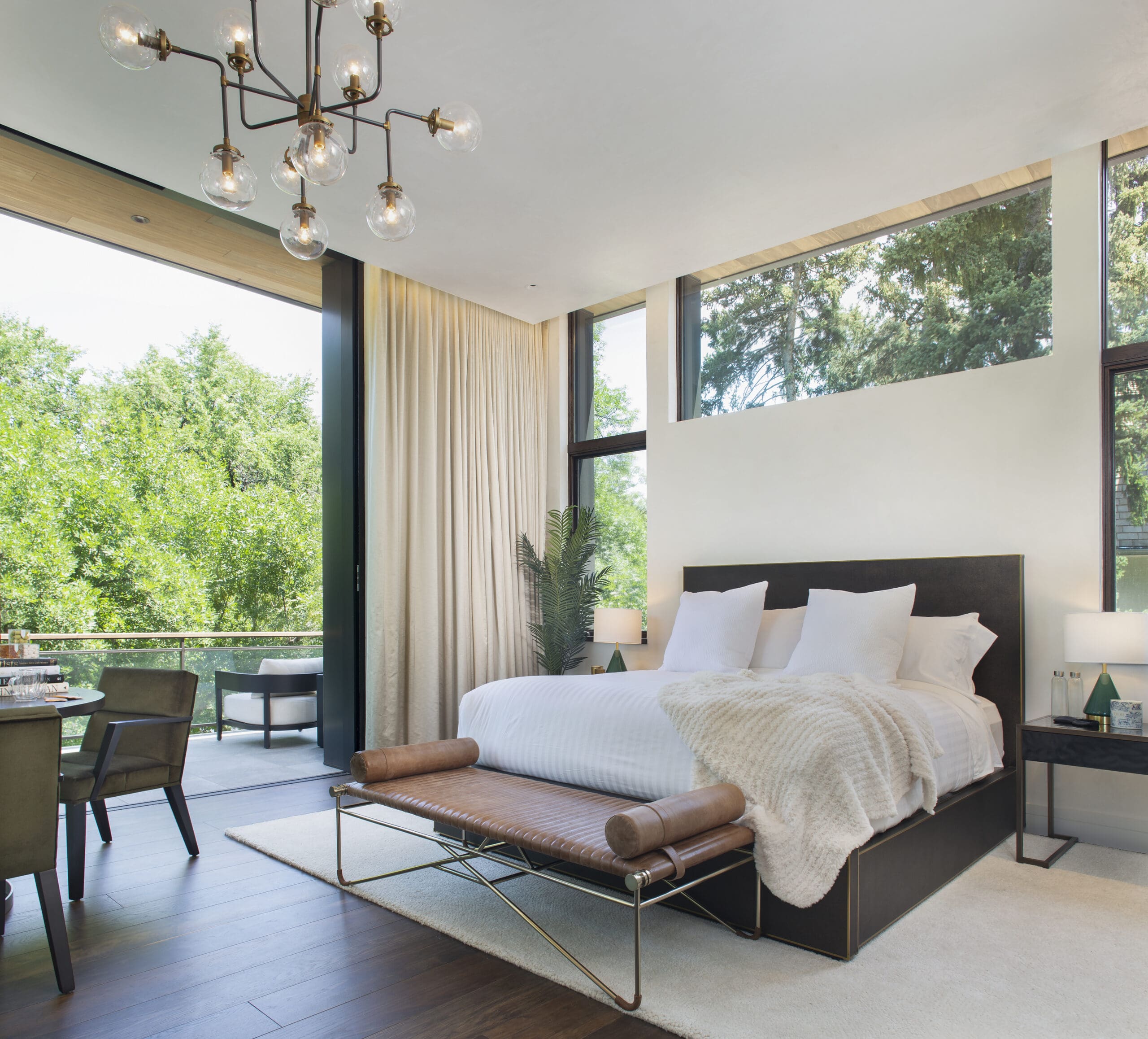
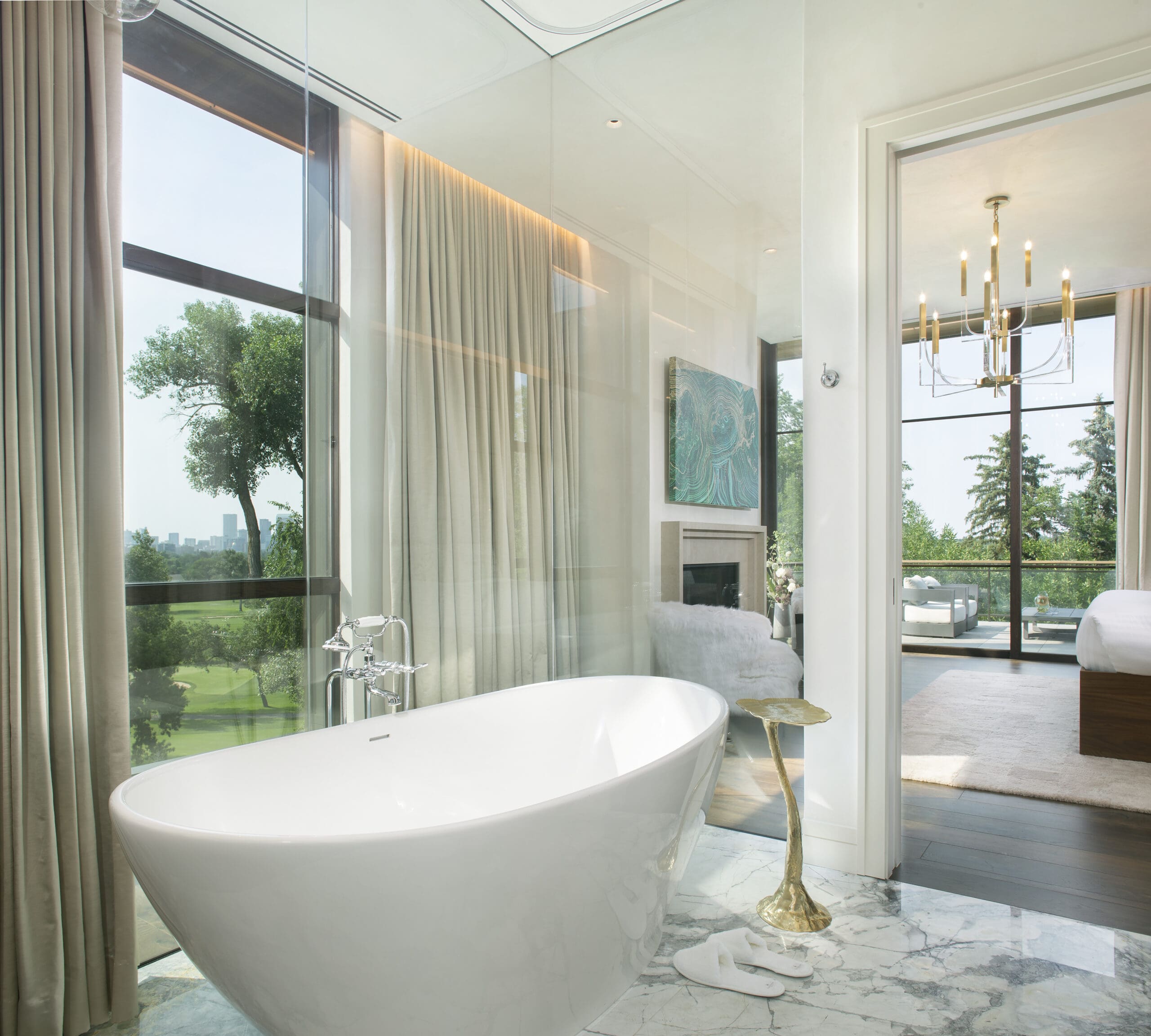
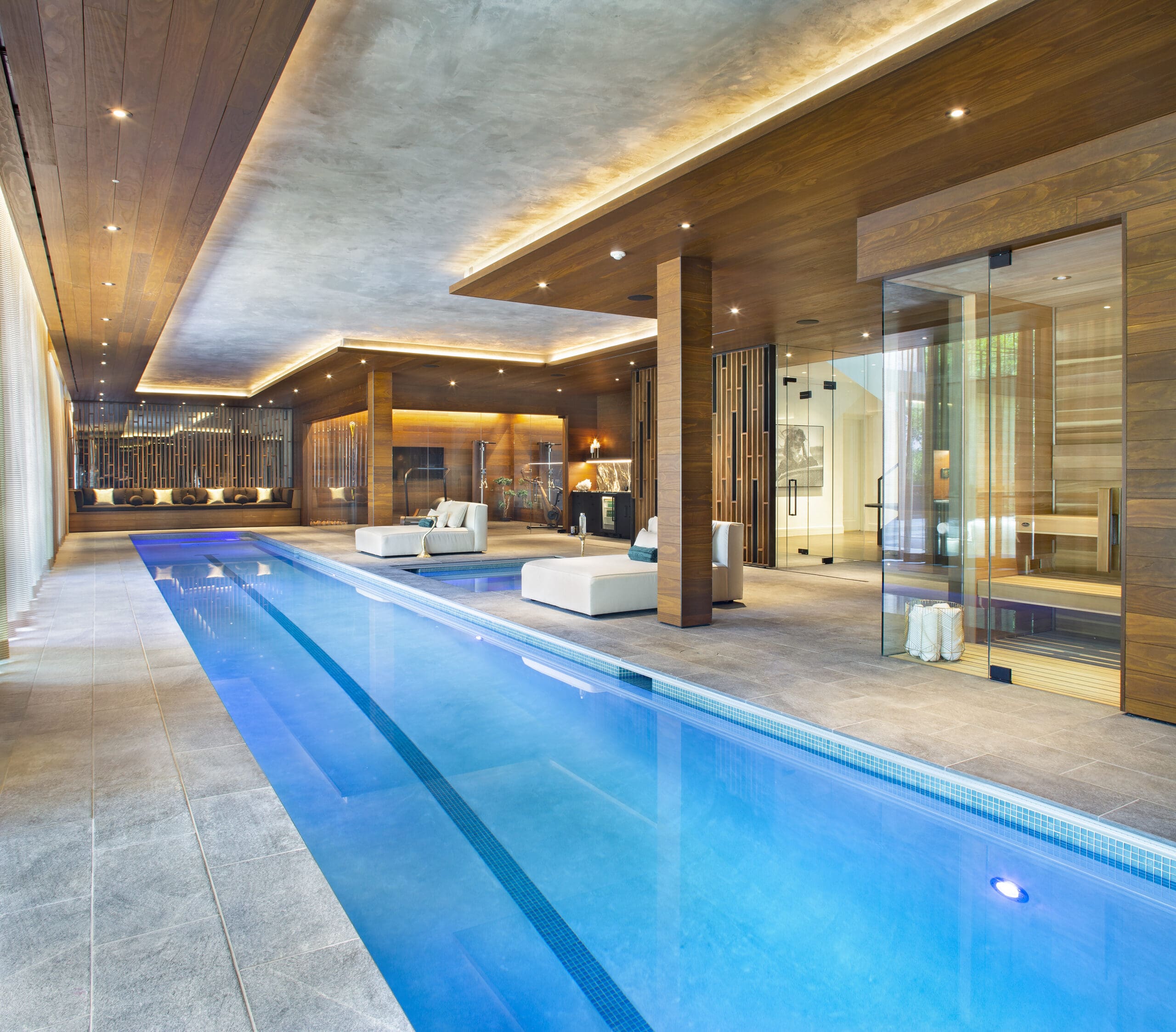
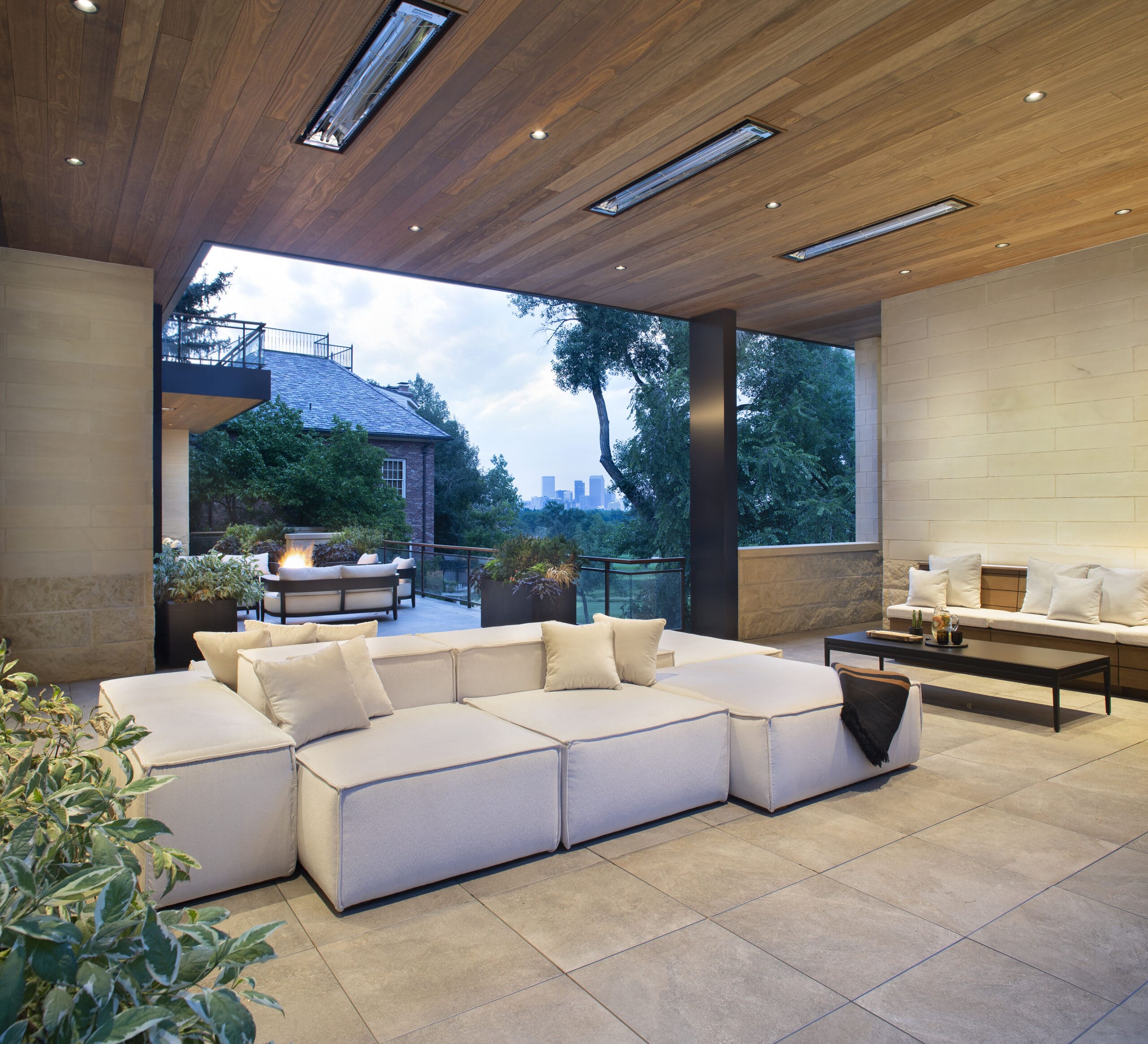
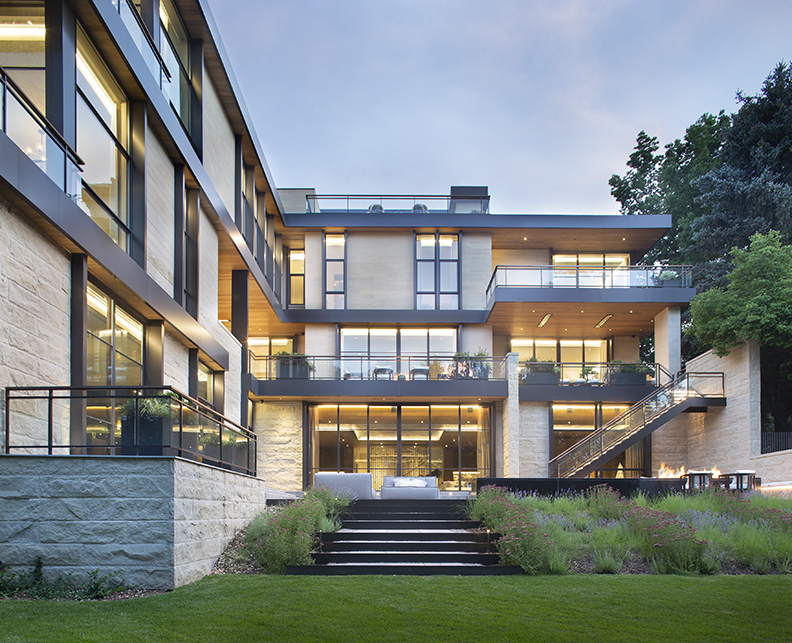
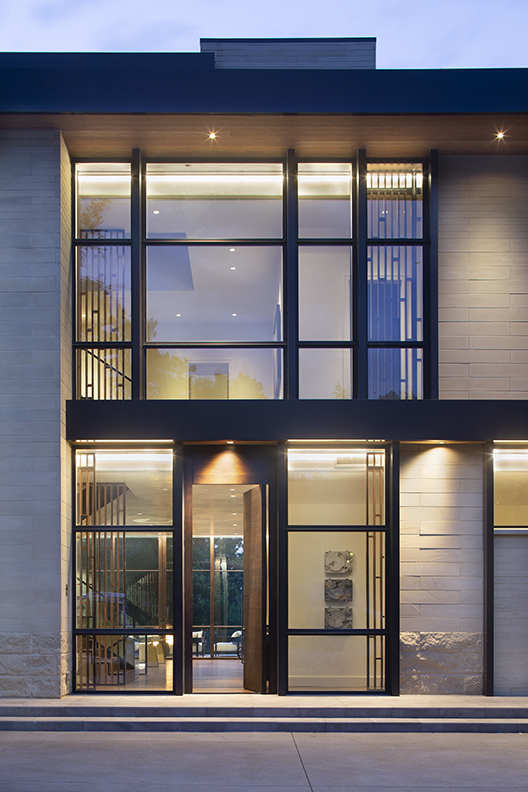
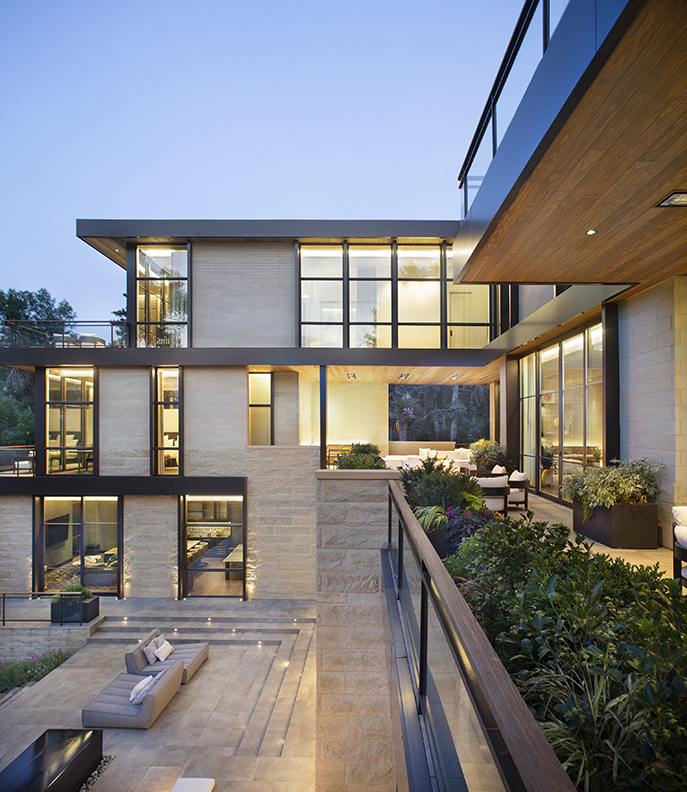
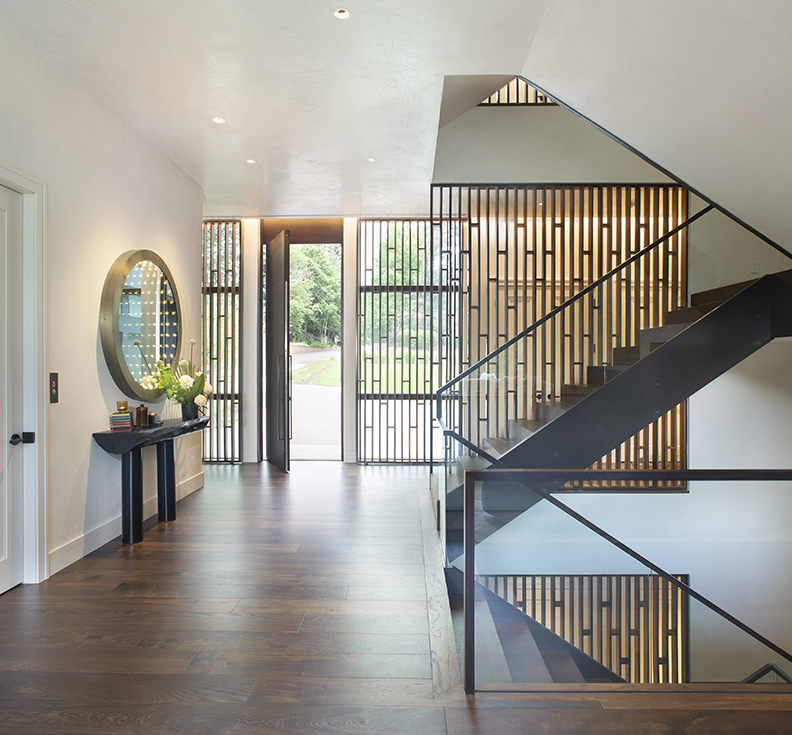
A contemporary take on the Prairie Style of architecture, this modern masterpiece in an exclusive Denver neighborhood is designed to stand the test of time. The modern interpretation of the Prairie Style responds to the historic context of the neighborhood and the surrounding landscape, and also responds to the owner’s musical proclivity and passion. Architectural timelessness is achieved through attention to detail, high quality design and materials, along with expert execution and craftsmanship.
To emphasize the horizontal nature of the home’s design, the team chose a neutral stone palette for the wall surfaces and contrasted it with bands of deep bronze-colored metal. The use of sandblasted-smooth stone and rough cleft-face stone allows for variation of scale and texture, while its coursing emphasizes horizontal lines. The home’s singular fenestration, including floor-to-ceiling windows and doors punctuating the horizontal bands of the façade, was inspired by Musical Instrument Digital Interface (MIDI) wavetables. The end result is an enhancement of the home’s dramatic scale and indoor/outdoor living.
Prevalent during the late 19th and early 20th centuries, and made popular by American Architect Frank Lloyd Wright, the Prairie Style is characterized by use of horizontal lines, broad eave overhangs, flat or low-hipped roofs and high-quality materials. The strong horizontal nature of the structure evokes the expanse of treeless prairie that once dominated the vistas of the Western United States and allows for integration into the landscape.
R+B’s modern take on the Prairie Style reconciles the current-day demand for high ceilings, expansive windows and modern construction techniques with the historic style’s emphasis on craftsmanship, horizontality and sensitivity to the landscape.
Additionally, the landscape design grounds the residence within the established context and aesthetic of the surrounding neighborhood. The chosen planting palette includes mostly native plant species appropriate to the region. In lieu of colorful ornamental plantings, simple massing of ornamental grasses and low deciduous shrubs convey a modern complement to the Prairie Style of architecture.
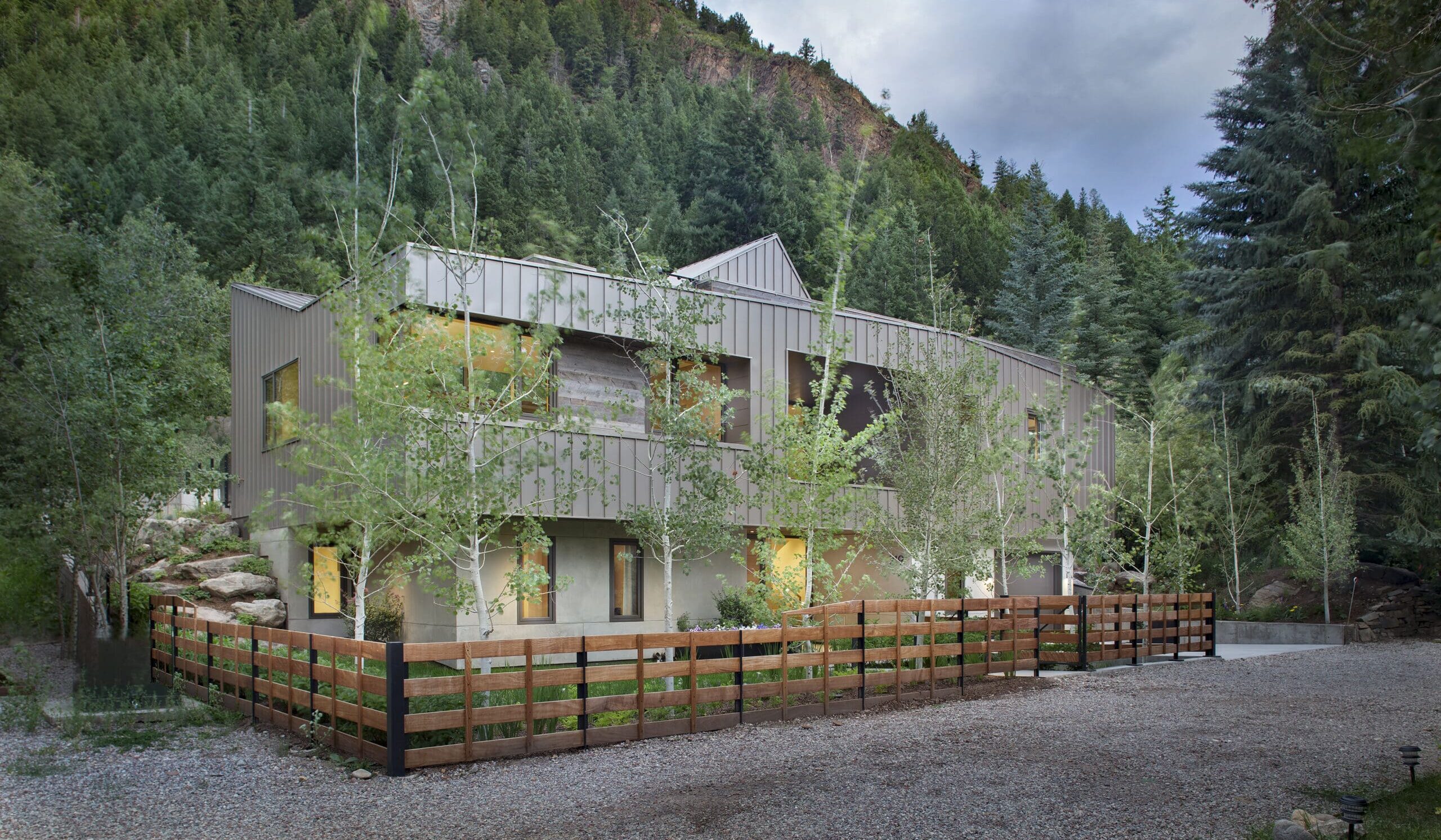
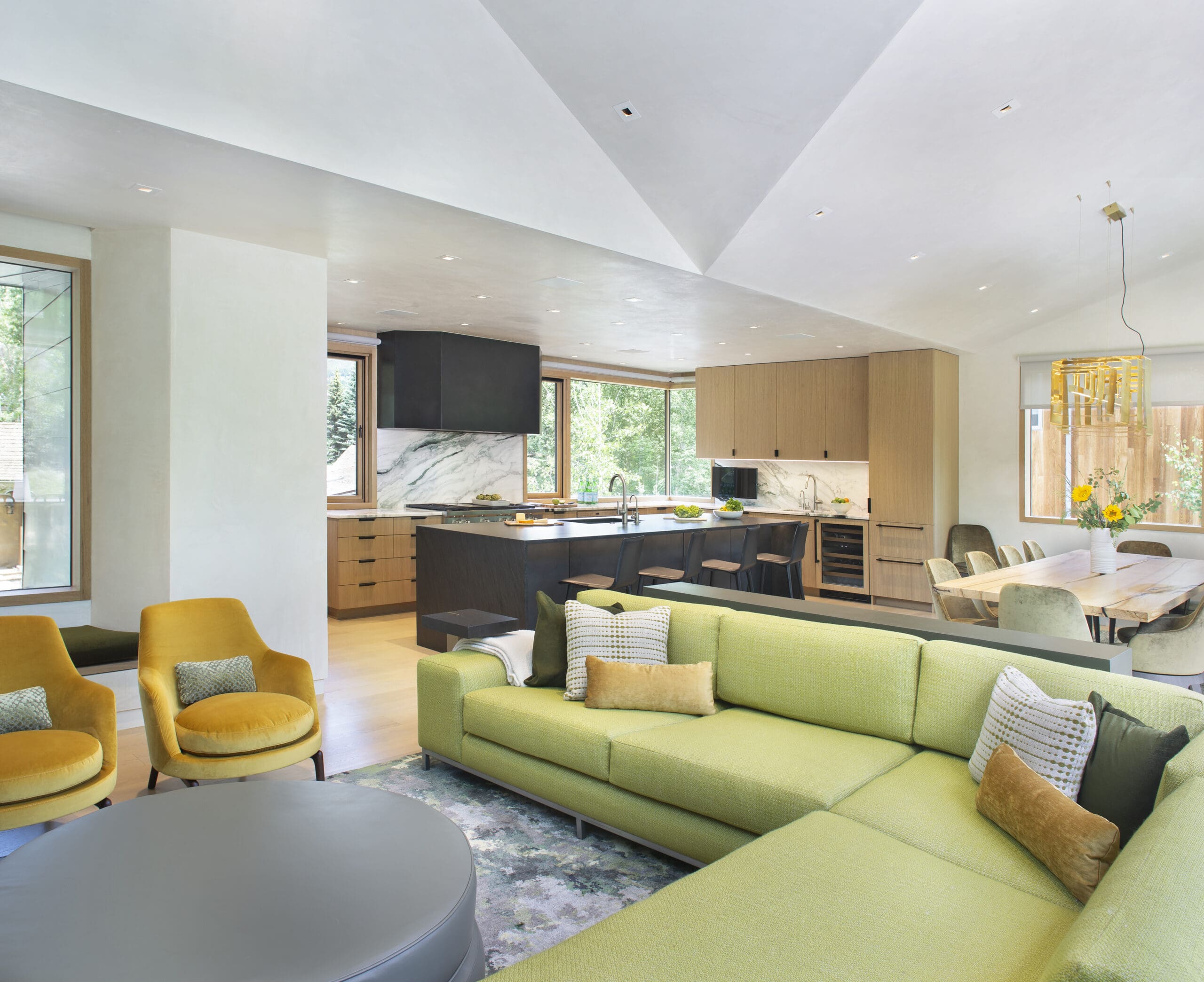
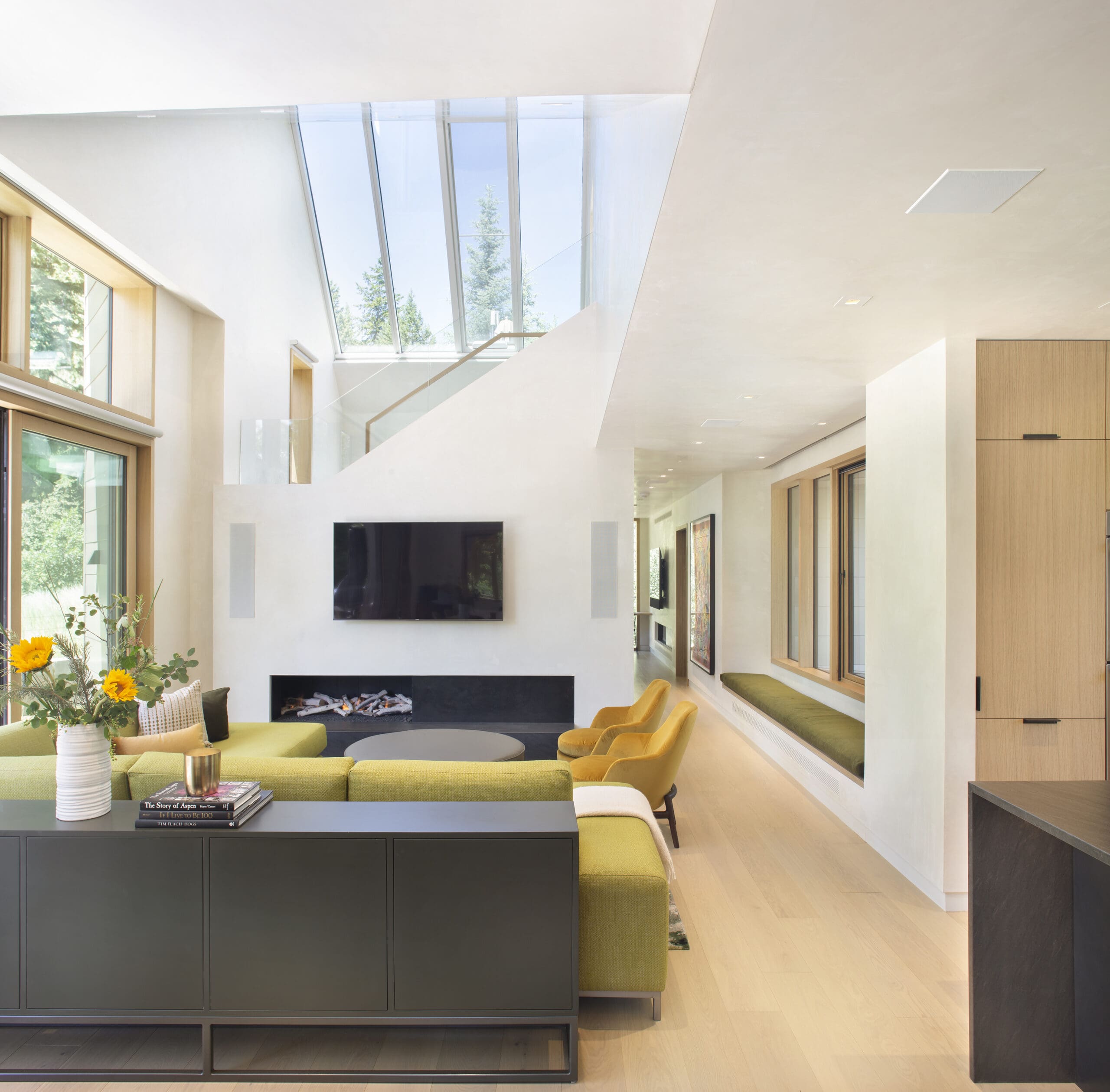
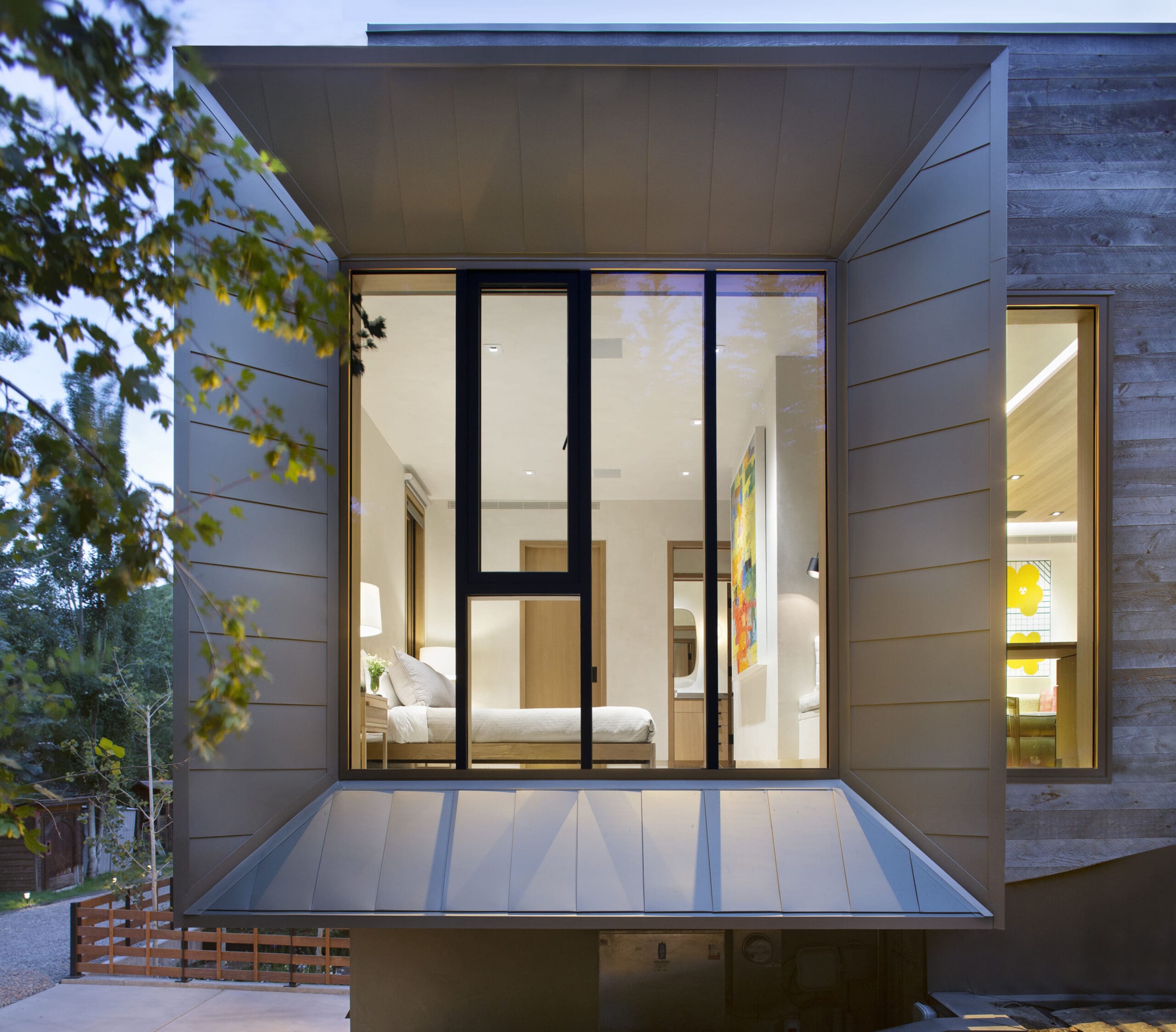
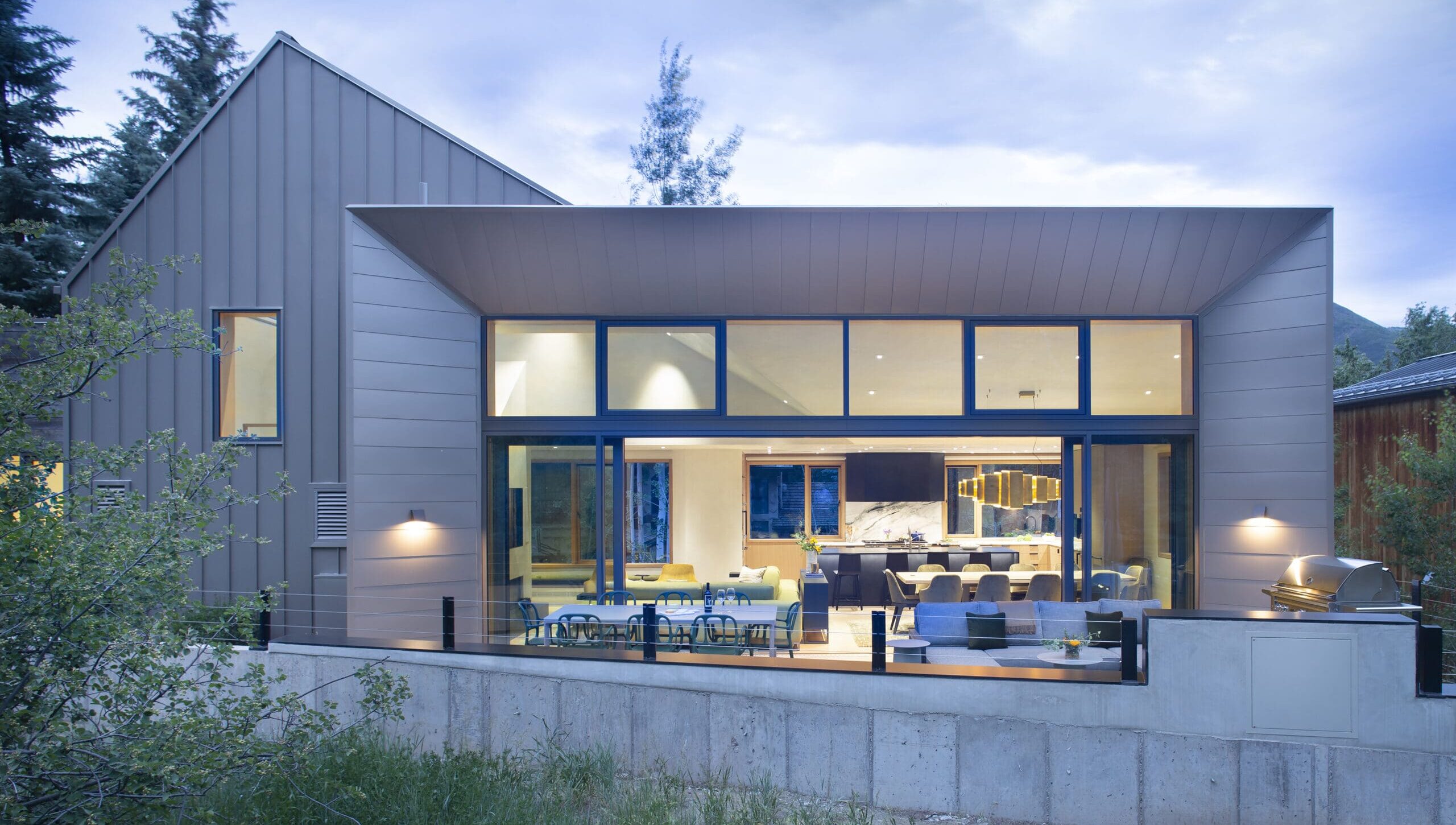
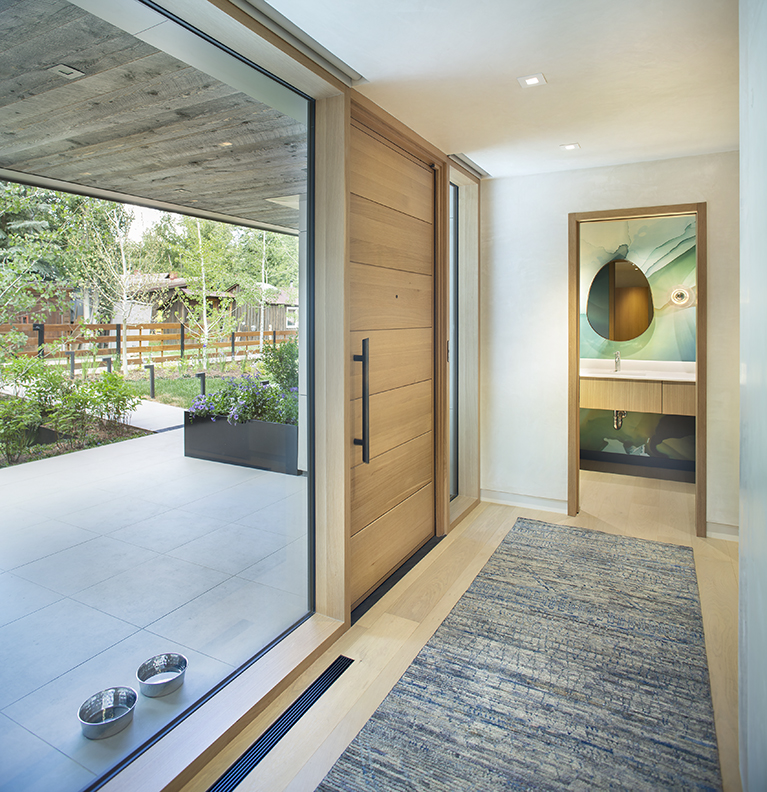
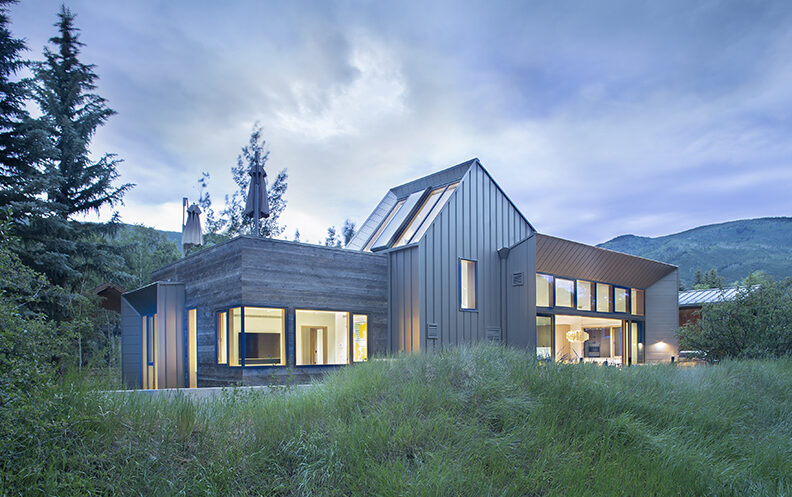
Shadow Mountain House is located on a compact lot at the edge of downtown Aspen, Colorado, within close walking distance of skiing, shops and restaurants. The home is tucked up against the base of iconic Shadow Mountain, which provides unique forested views.
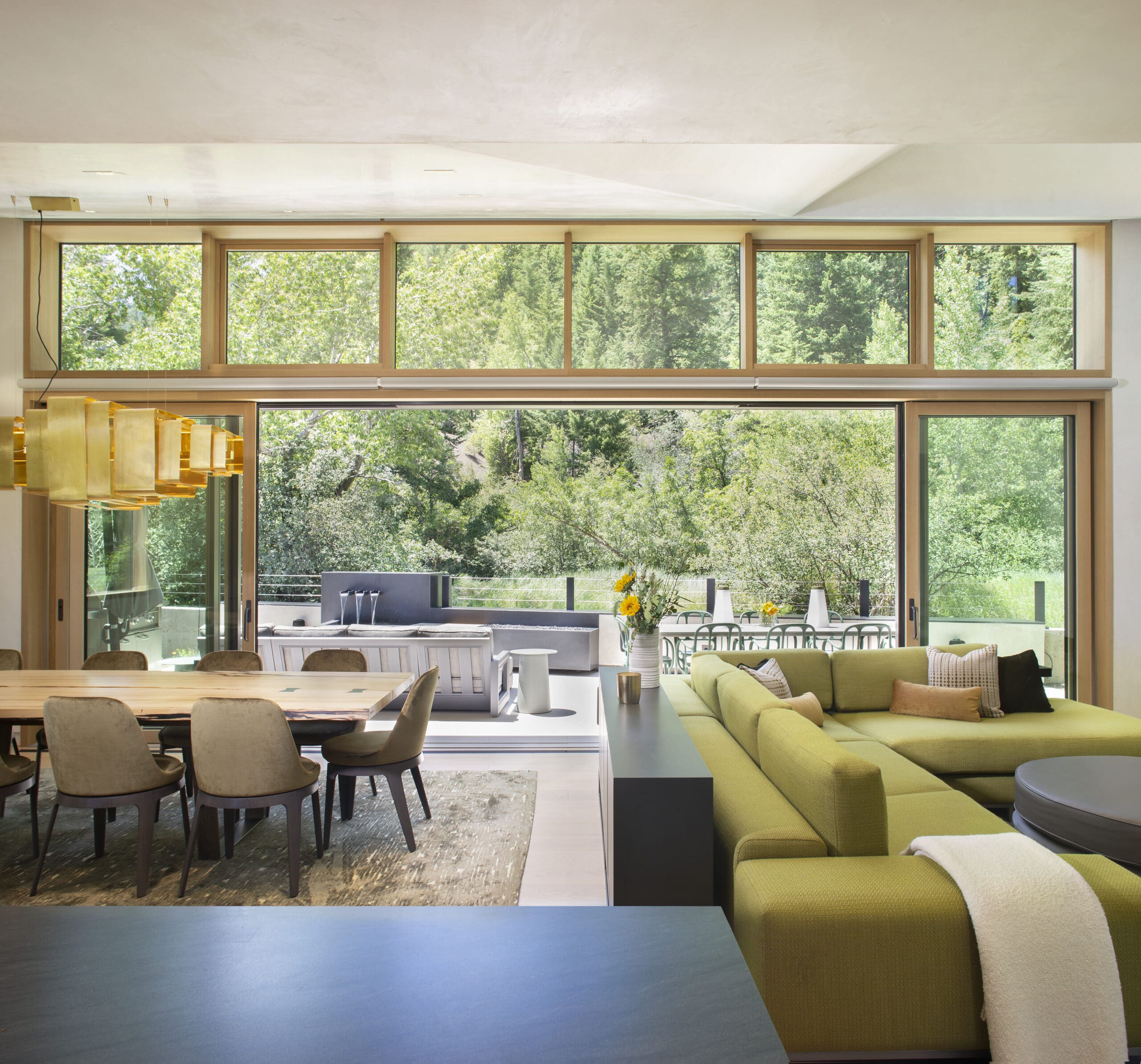
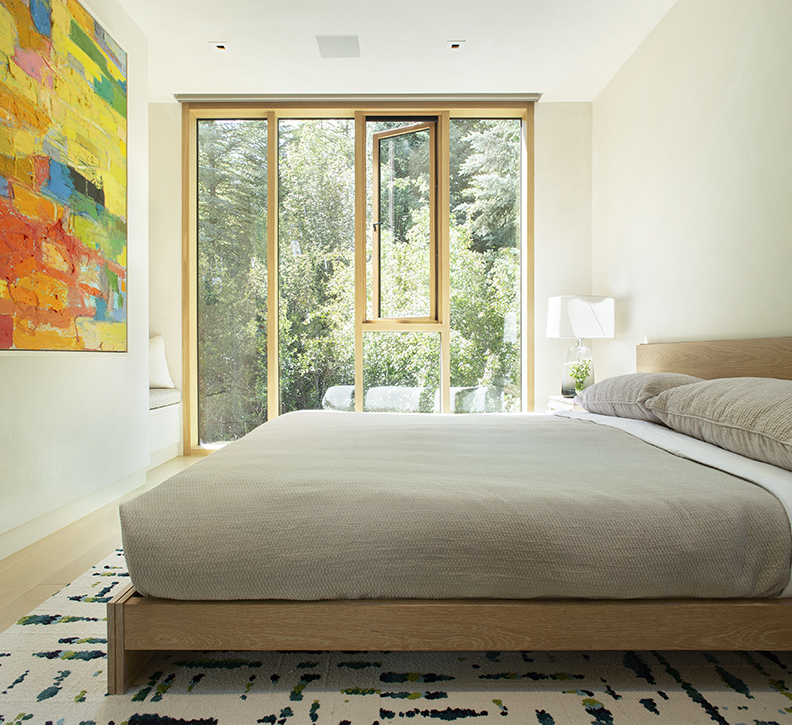
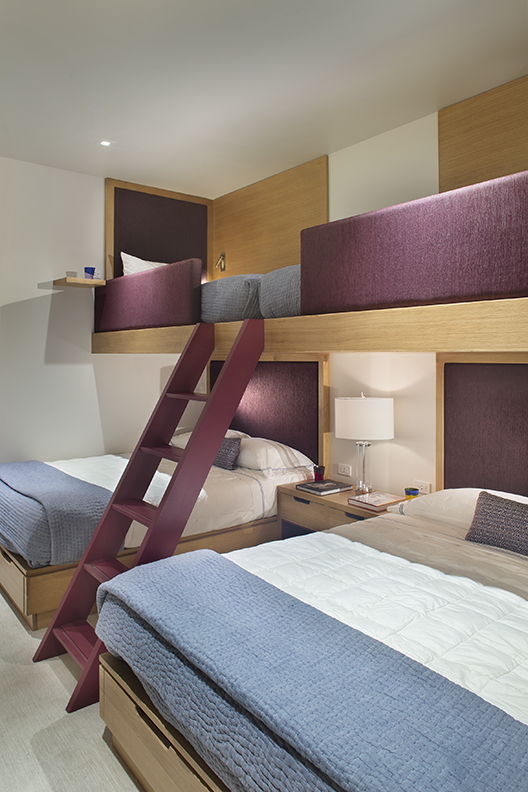
Inside, the furnishings palette was devised to help explore and embrace the owner’s love of bold colors. Each level was provided a central color on which an analogous color palette was developed.
Accordingly, the lower level is purple, the main floor is blue and the upper level is green. Green was chosen for the upper level to pull the rich greens of the surrounding forested views inside. Throughout the home, bold and expressive artwork was located in areas that allow them to be celebrated independently of the views.
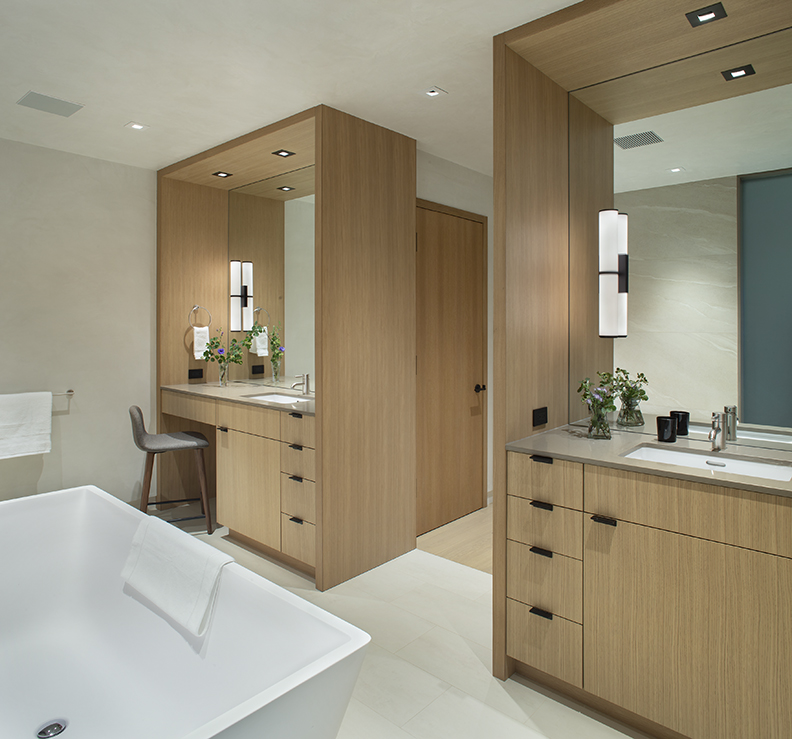
Ensuring that the views were the primary focal points from the interior of the home was a singular challenge. In a compact footprint, essential programmatic elements vie for attention compositionally. So as not to divert attention from the views, a neutral palette of plaster, white oak and minimal detailing was chosen.
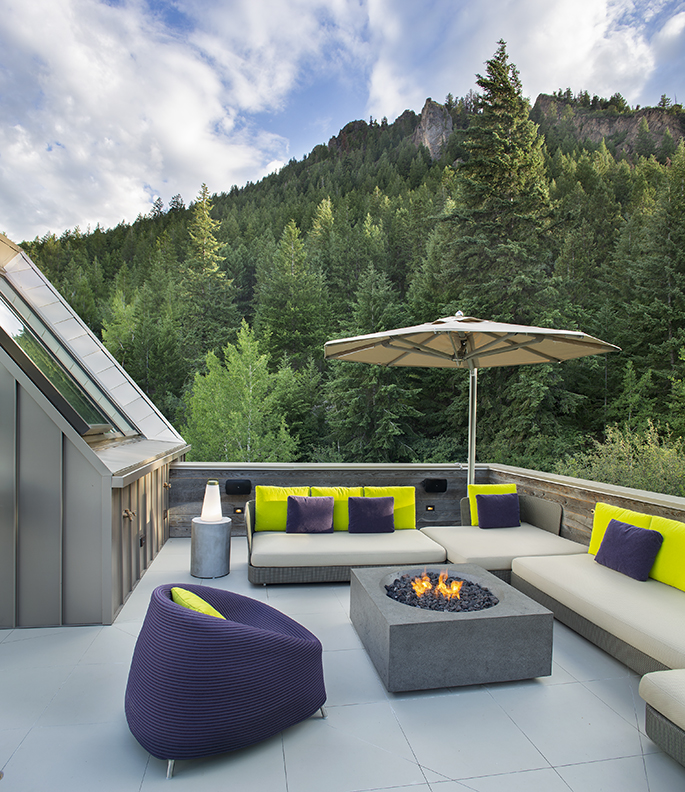
As the form is tucked into the mountainside, the upper level offers a gracious walk-out terrace for outdoor entertaining. A “form follows function” parti was created to incorporate large picture windows aimed directly at primary views. These picture windows informed ceiling slopes and the treatment of other focal features, such as keeping the fireplace volume low to allow the treetops to be viewed through a living room skylight. Another opening provides expansive Shadow Mountain views, and also provides for seamless indoor-outdoor entertainment opportunities in the privacy of the backyard.
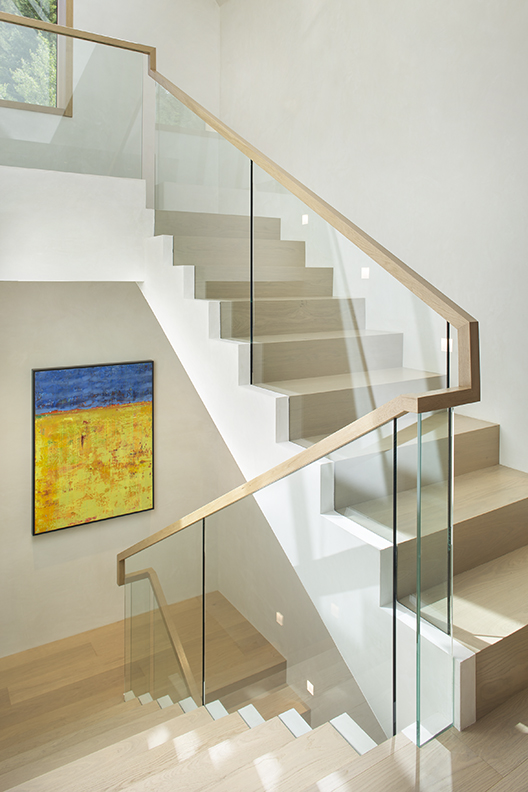
Glass guardrails on the stairs were selected to allow for more natural light to filter uninhibited to the lower levels and for the transparency they provided. Another design challenge was the detailing required for the unique angles driven by the aperture windows. Rainscreen cladding techniques and internal gutters were employed so that the standing seam metal was siding used consistently around the openings.
For our design team, a primary goal was addressing the owners’ desire to capture the best views possible, including of the overhead treetops and the mountains across the valley. Combined with a compact lot size, the goal drove the architecture vertically, with main living spaces placed on the upper level and rooftop, and the bedrooms on the lower levels.
A second design goal was to unify the angular form, emphasizing predominant views within a singular volume. Standing seam metal siding was used as the building’s skin for its ability to be applied on both vertical and horizontal surfaces. The building skin was pulled and stretched, creating aperture-style picture windows that strongly emphasize each opening. Stucco was used on the exterior of the main level as a subdued, monolithic base that recedes from the expressive upper level.
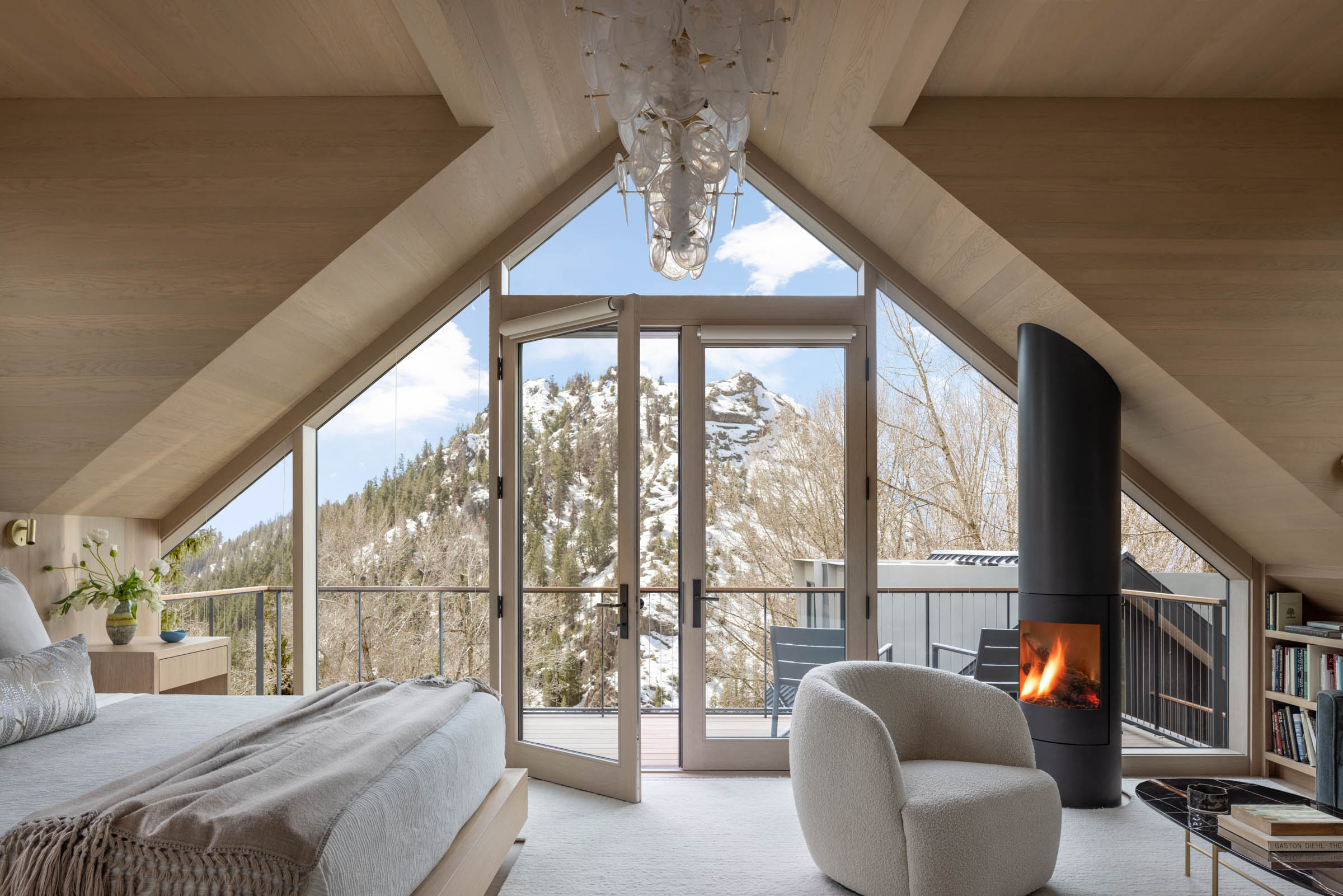
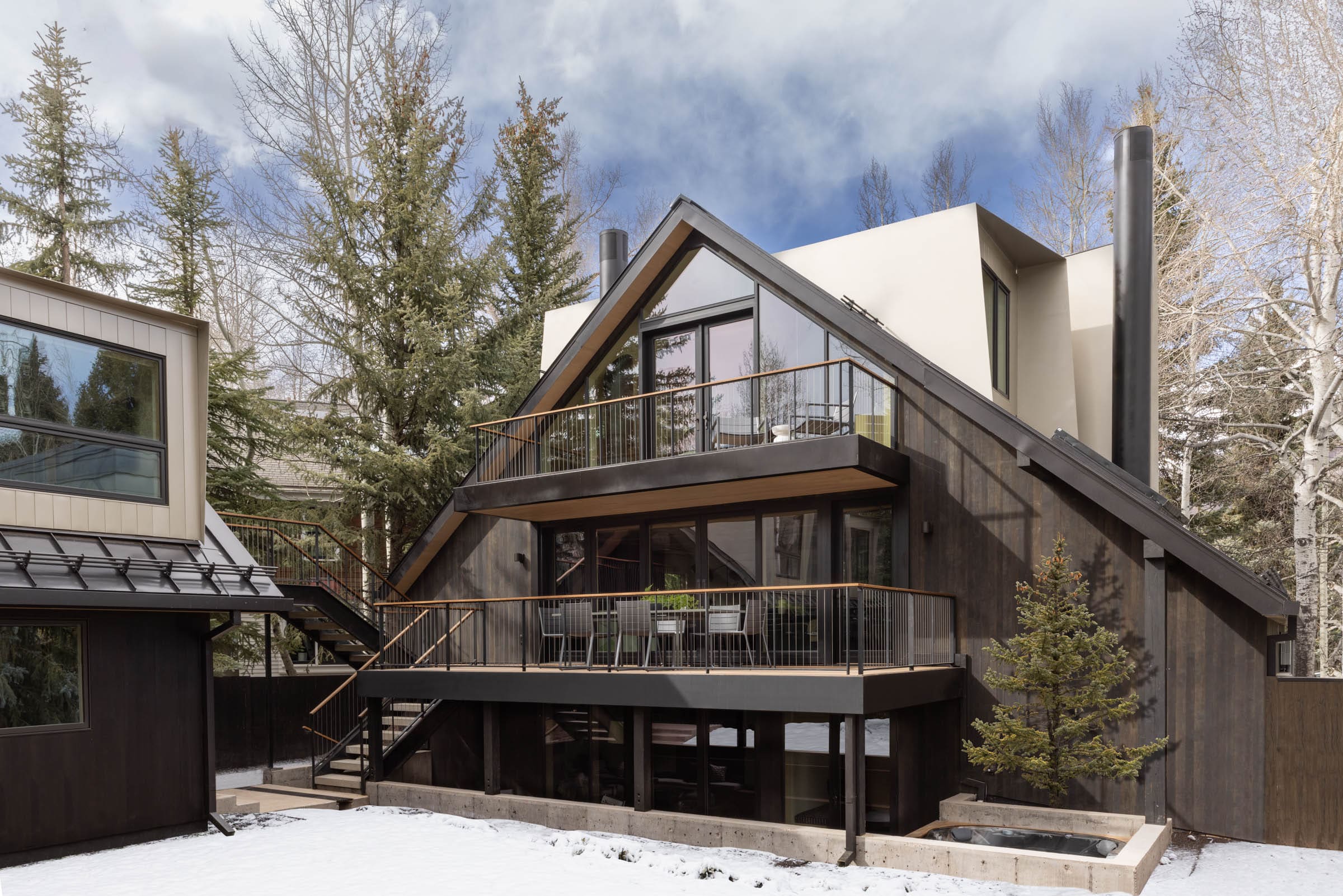
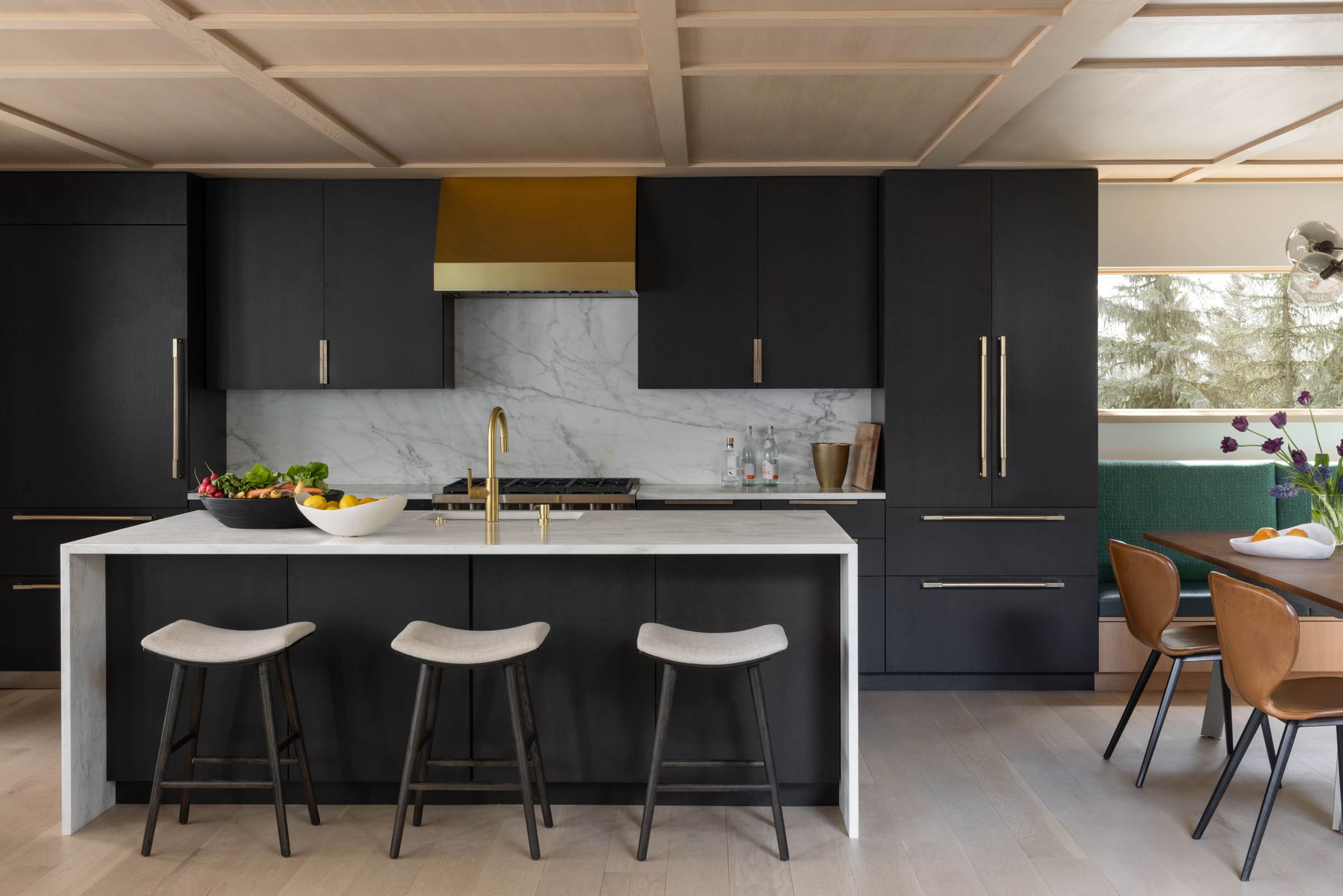
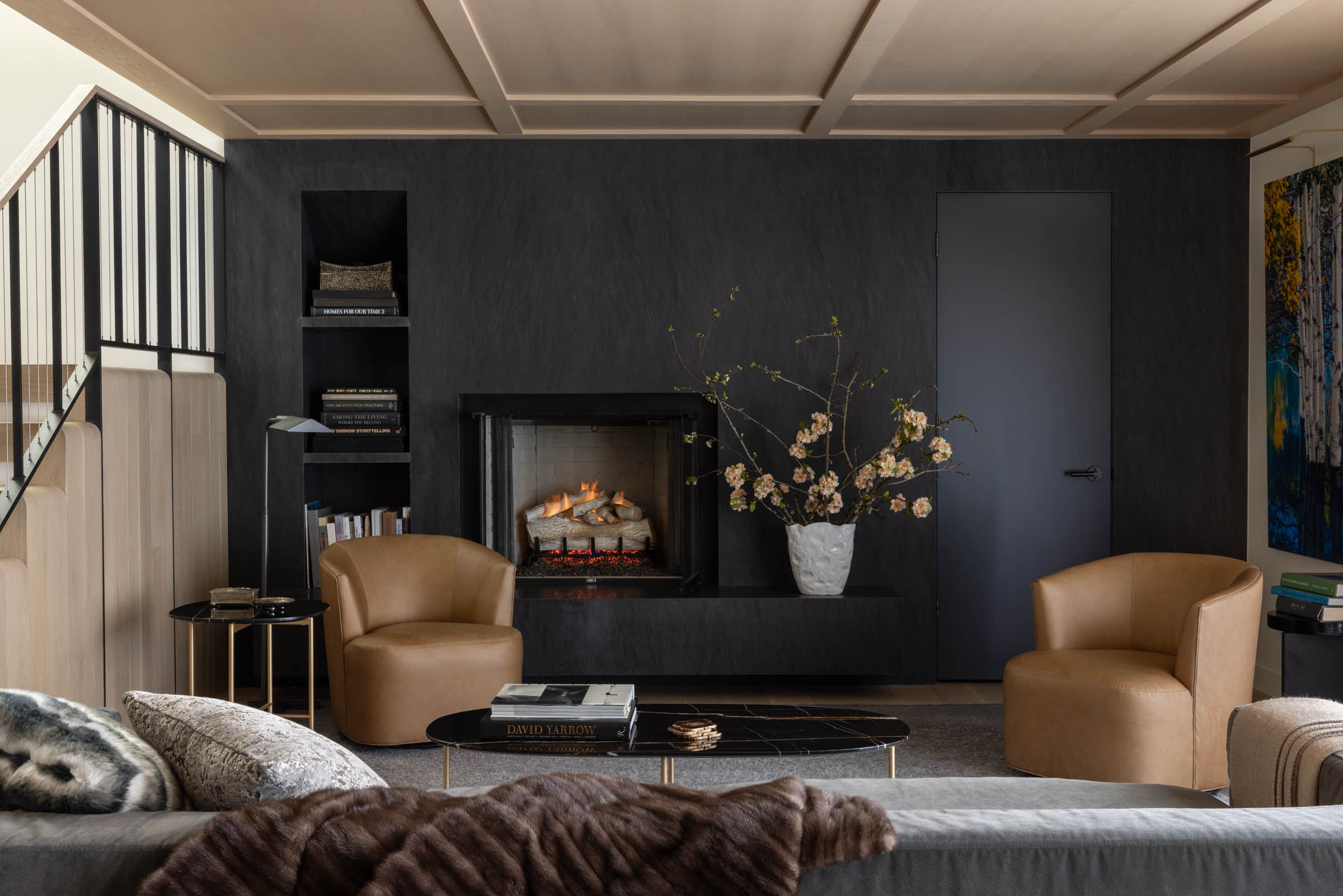
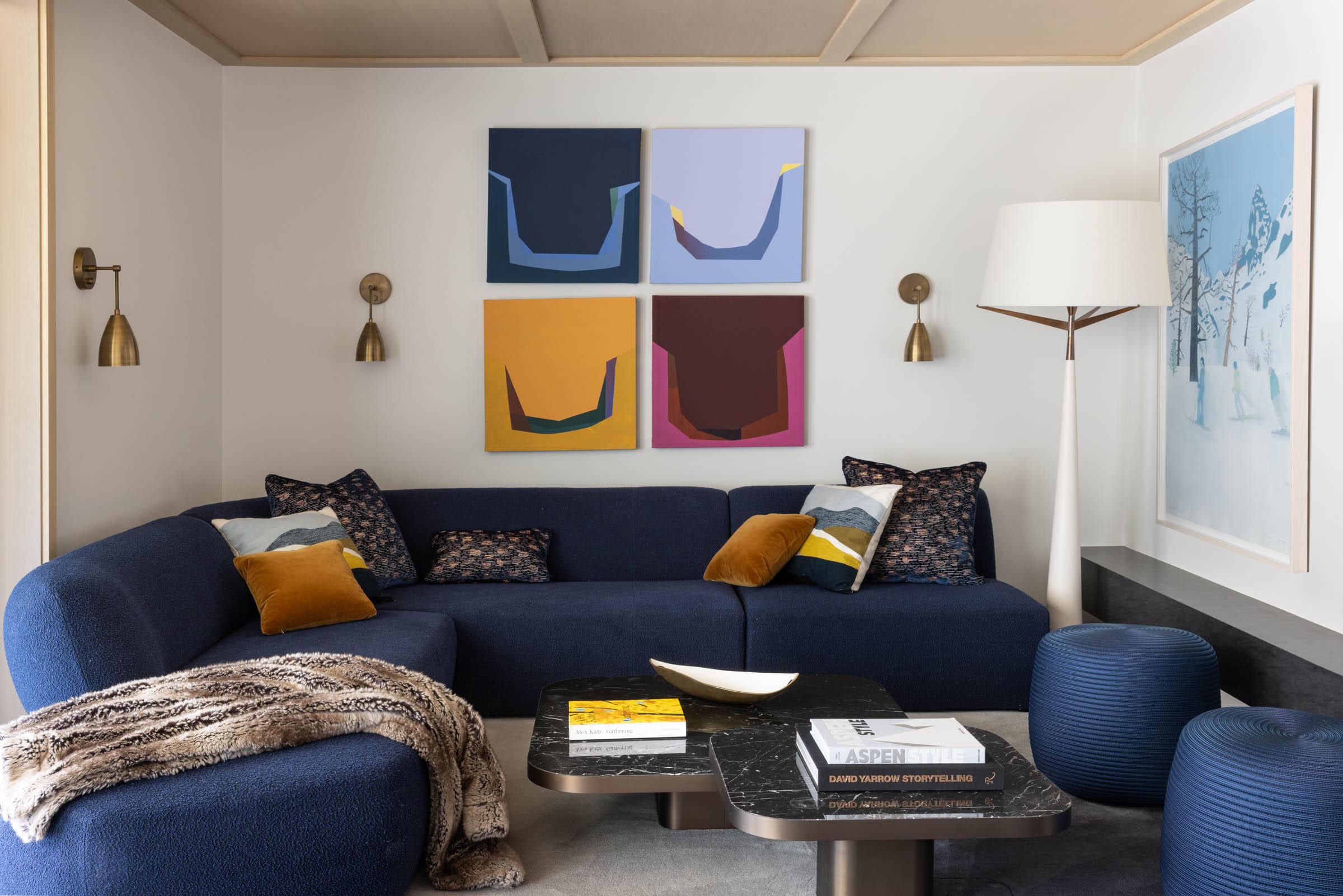
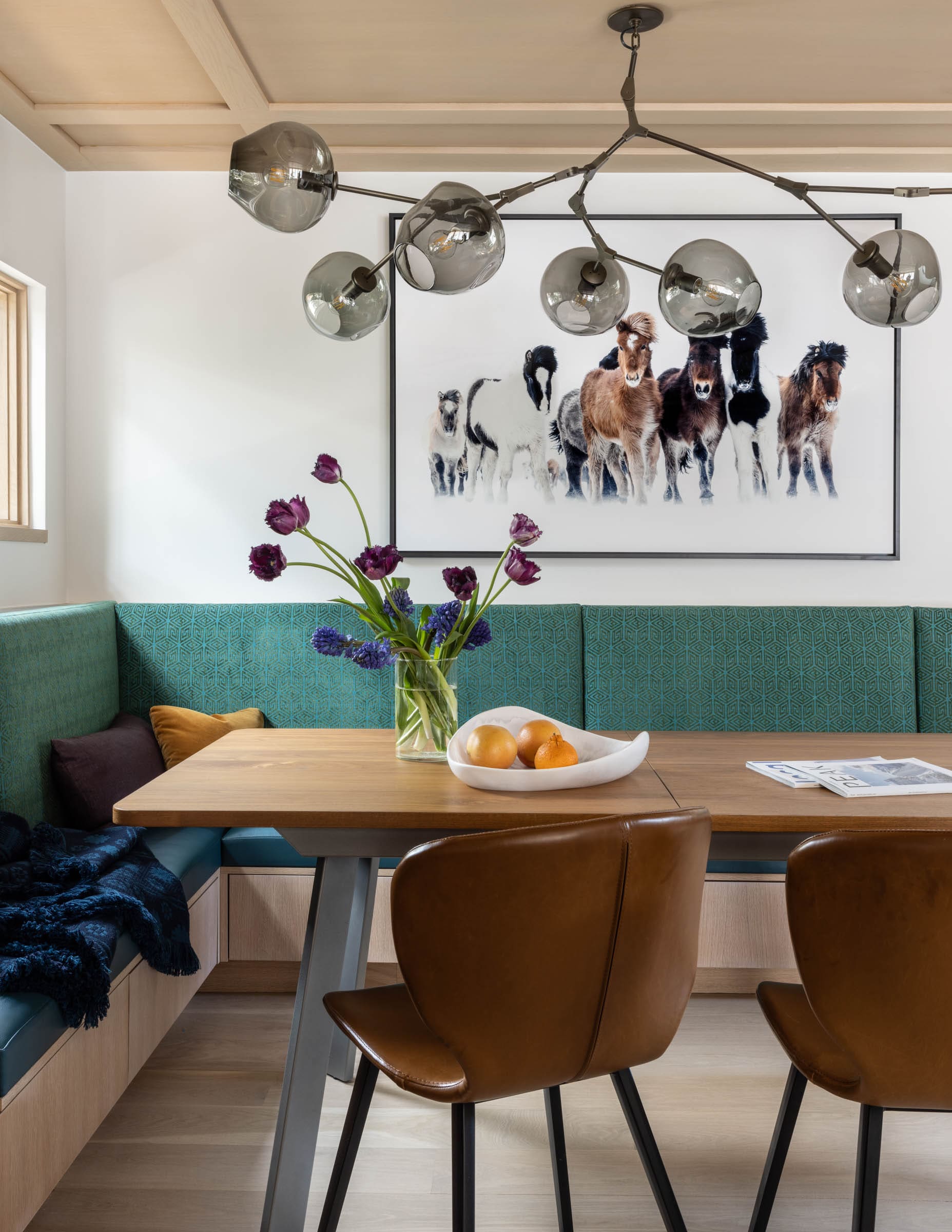
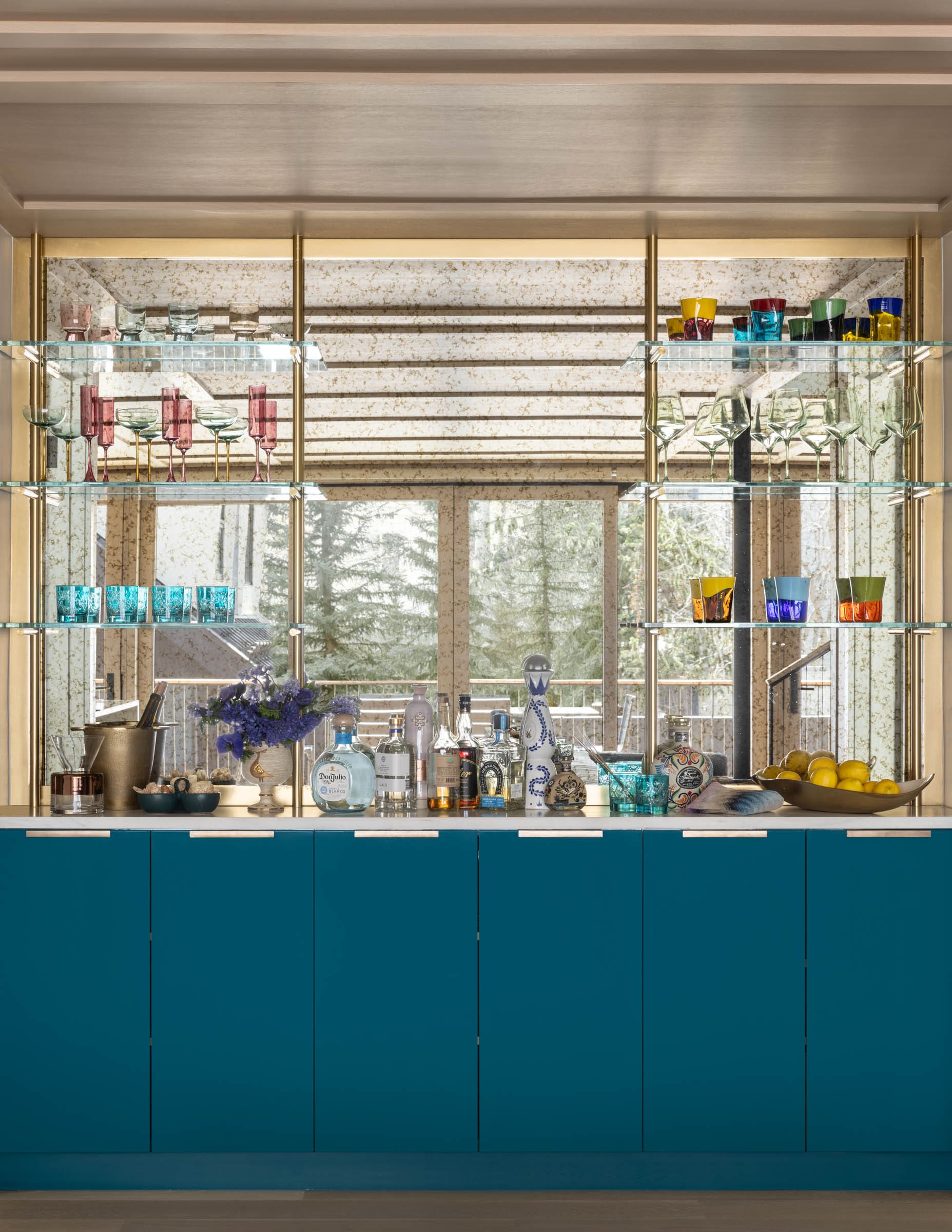
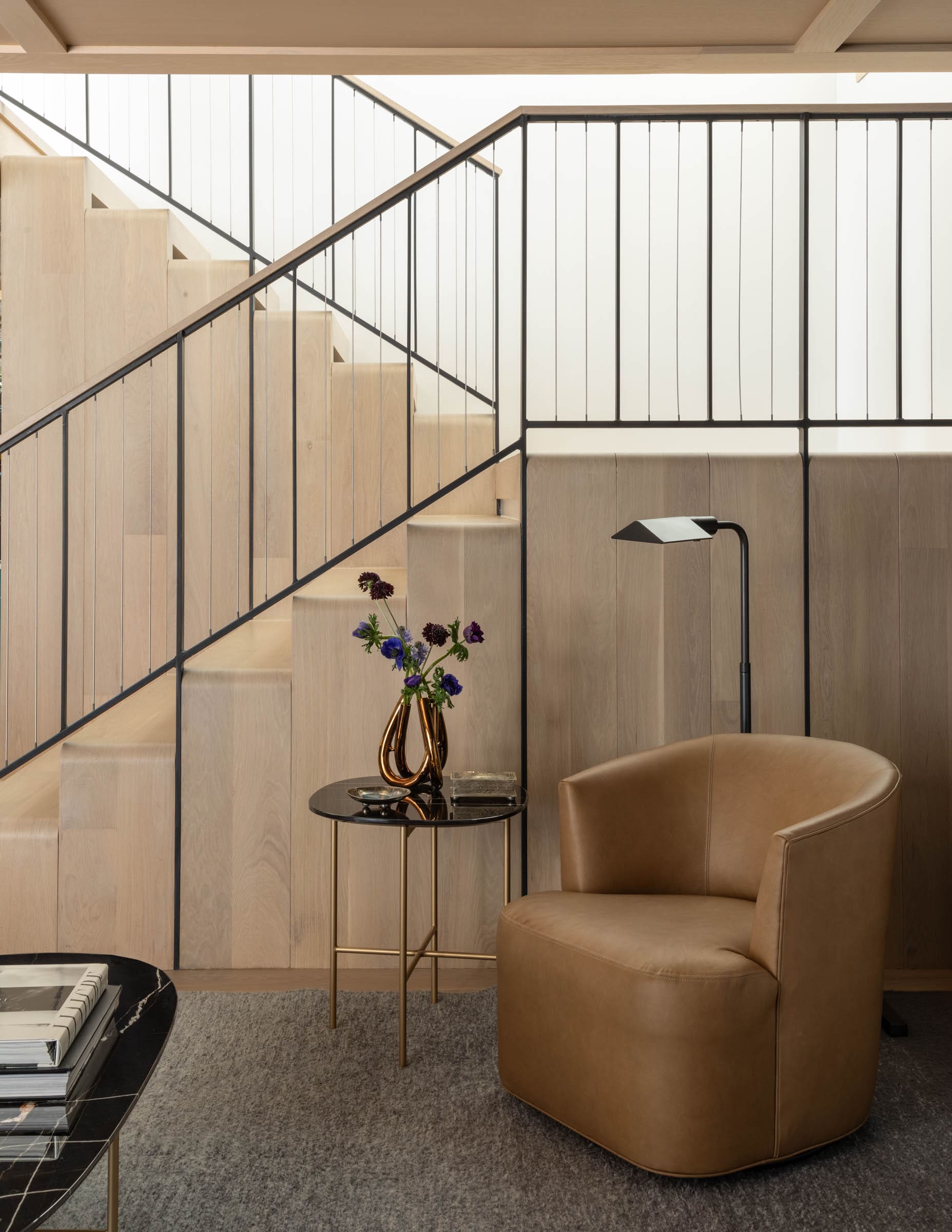
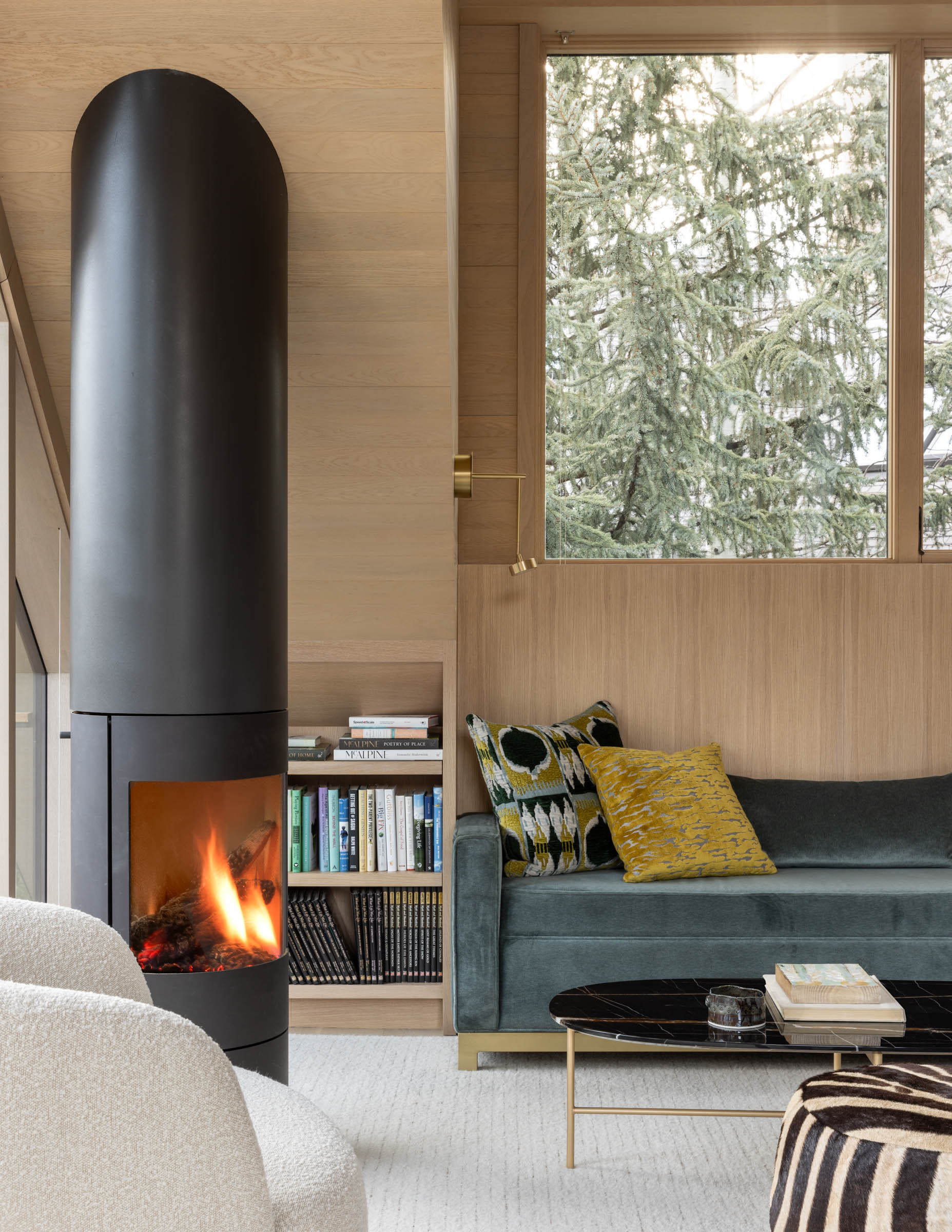
Harkening back to Aspen’s earlier days, this quintessential tri-level mountain chalet is set on a densely treed lot in town’s historic West End neighborhood. Built in the 1960s and reminiscent of classic ski chalets prevalent in the area at the time, the traditional A-frame form both provided contextual character and presented singular design challenges.
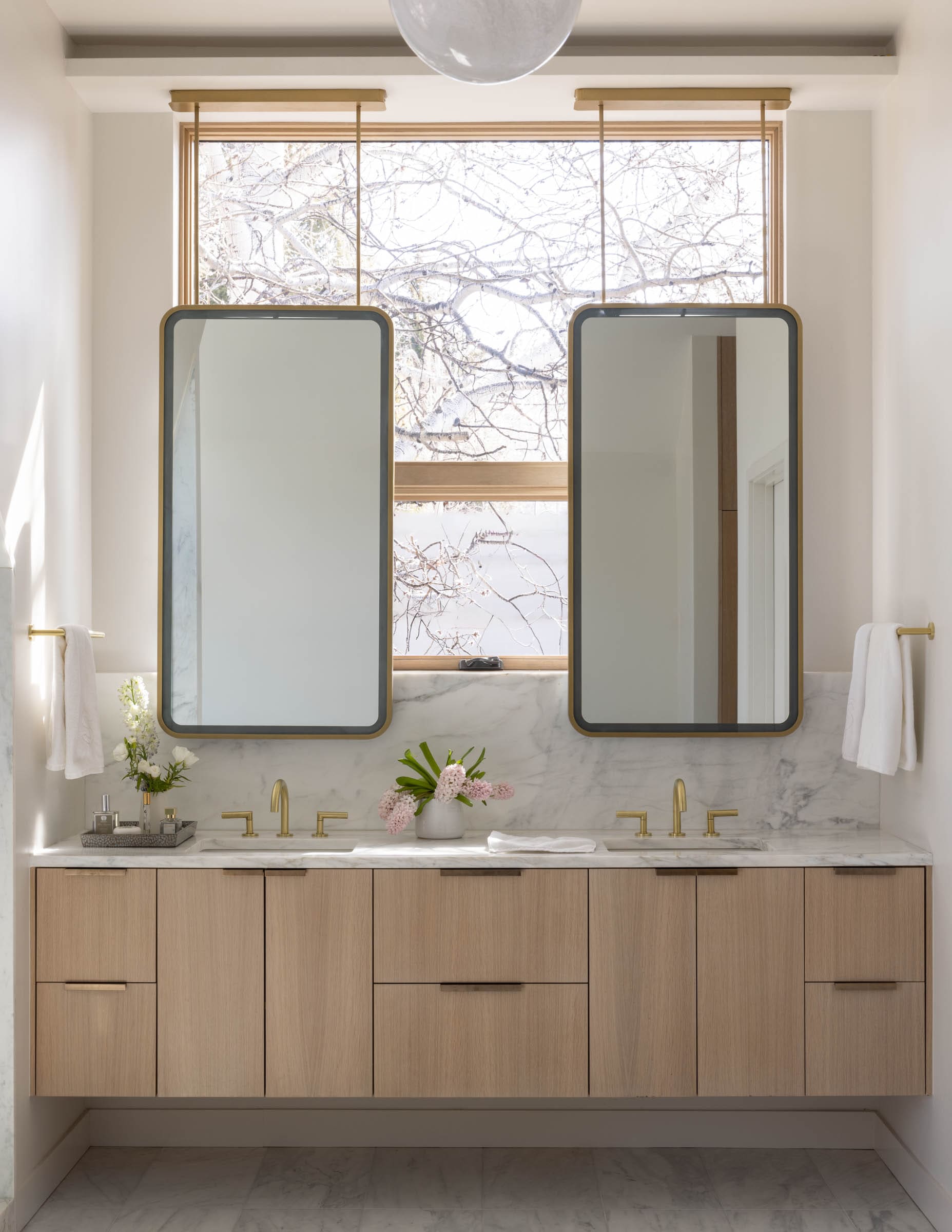
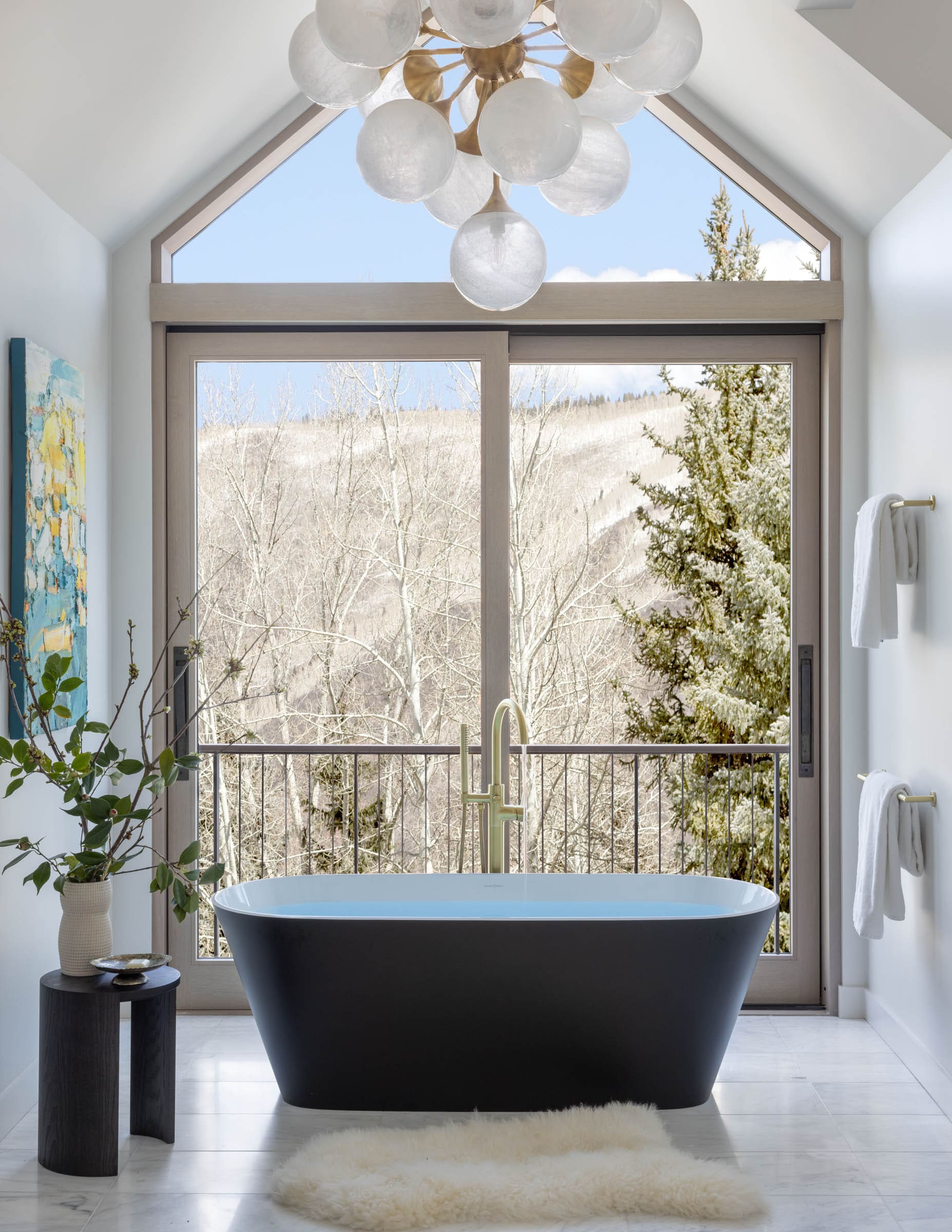
Addressing the goal of embracing mountain views to the east and west, formerly thwarted by the structure’s north-south orientation, the design team repurposed and reconfigured underutilized space at the top level. Specially crafted dormers, purposefully placed to redirect views, feature perforated steel detailing that allows for naturally dappled light to be filtered inside. The dormers also enhance the livability of the chalet, allowing the main bedroom and bath to be tucked within the expanded private space.
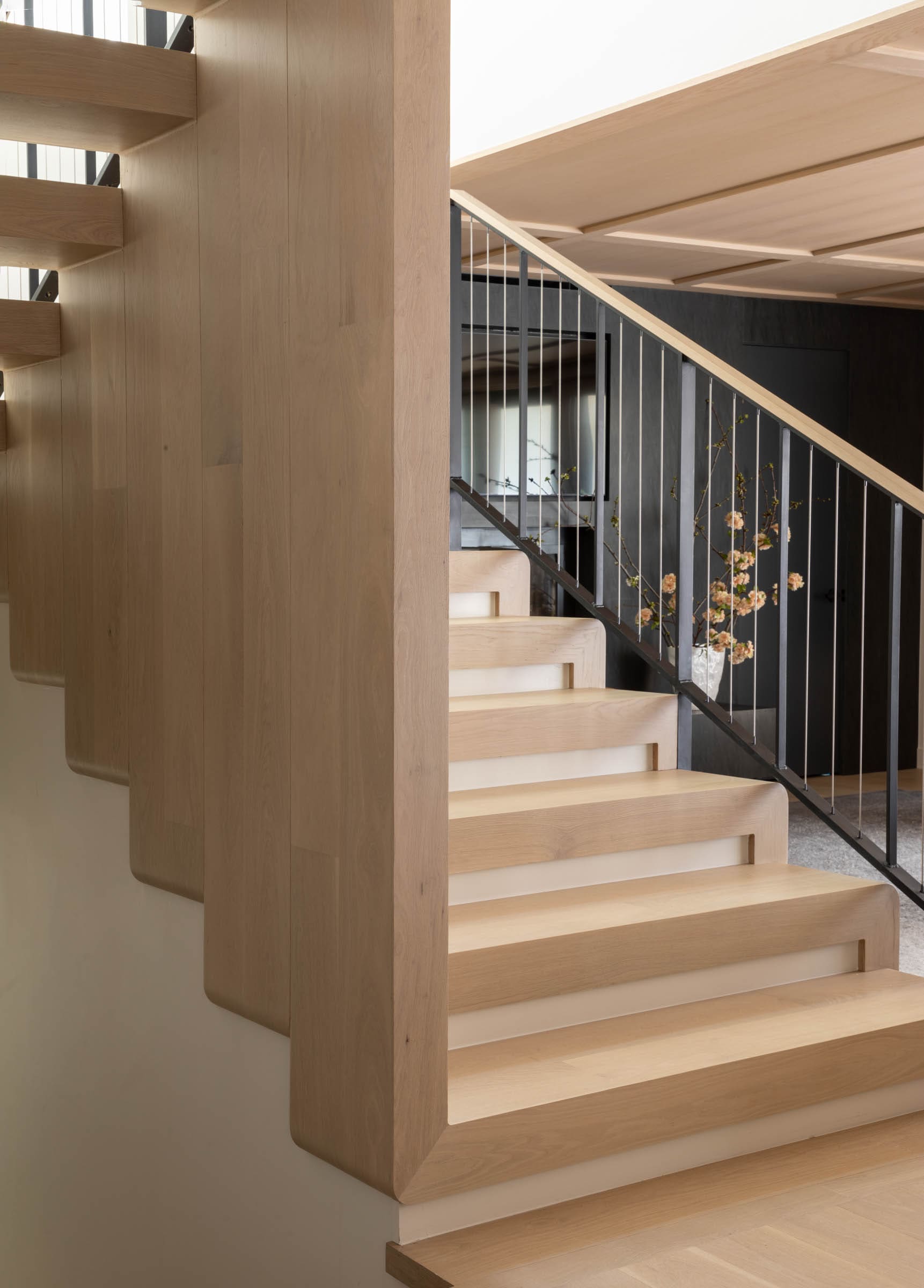
A new open wood stair allows light to circulate throughout the home. In addition to the stair, custom detailing on elements such as wood ceilings give a nod to the vernacular of earlier ski chalets, while introducing a more modern aesthetic.
Connected to the house by a bridge at mid-level, a secondary structure on the site functions as a garage and provides office/yoga studio space. Exterior materials for both structures include dark vertical siding. Flat and standing seam metal roofing (with an intentionally lighter color at the dormers) allow the structure to recede into the surrounding trees. Outdoor spaces, including a deck off the upper bedroom and a sunken garden, allow additional light to flow into the home and encourage an indoor-outdoor lifestyle.