

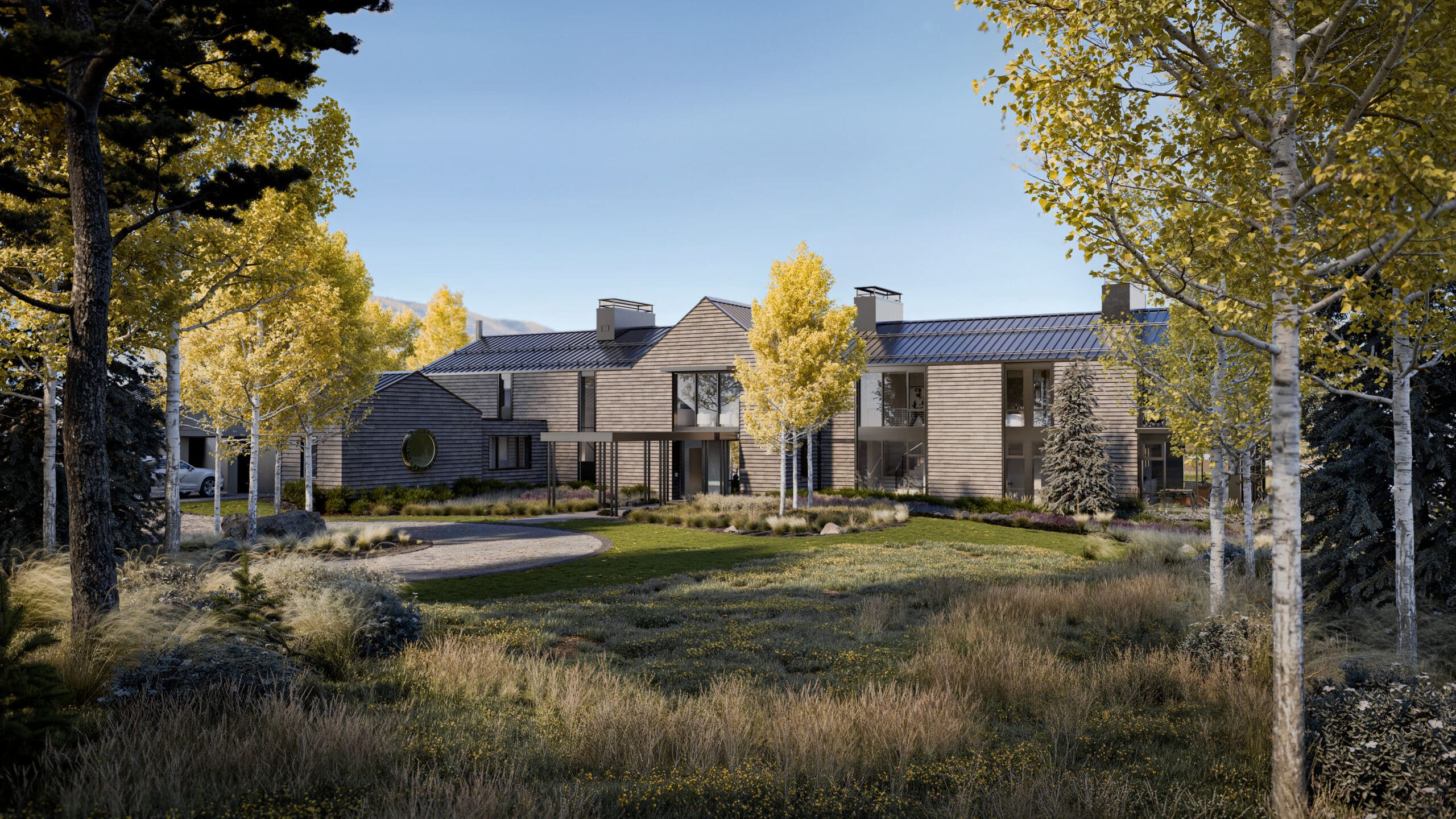
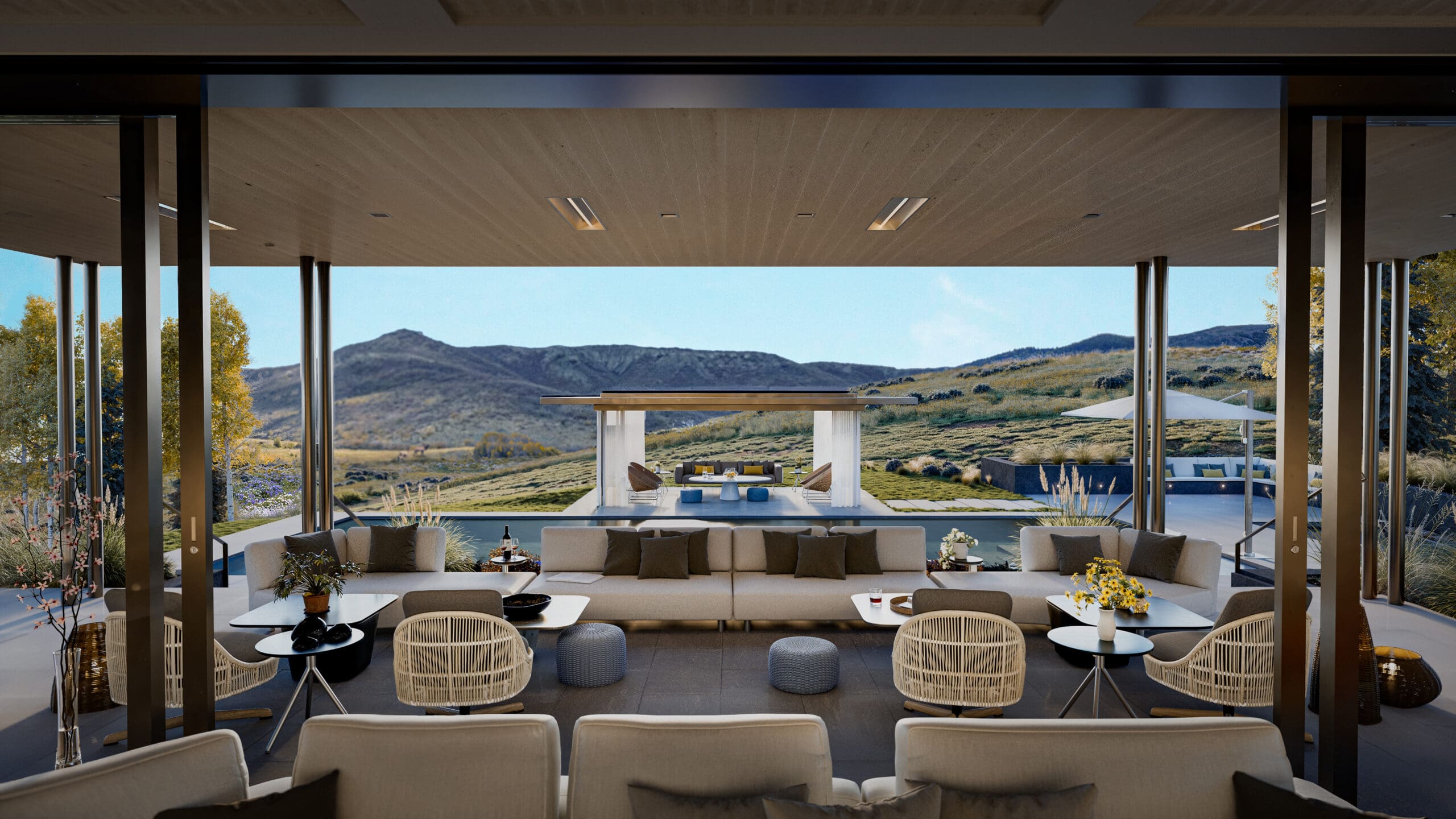
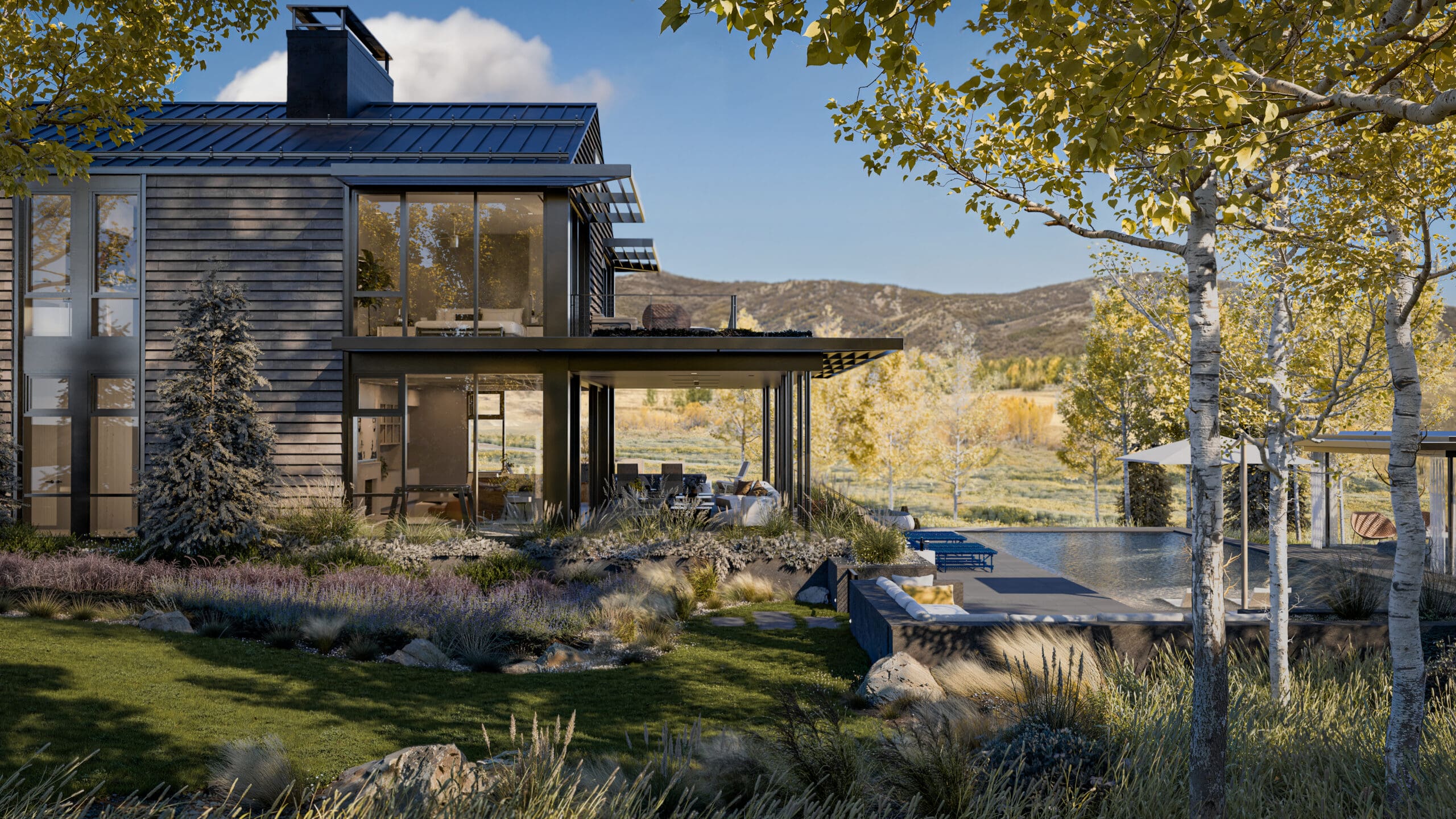
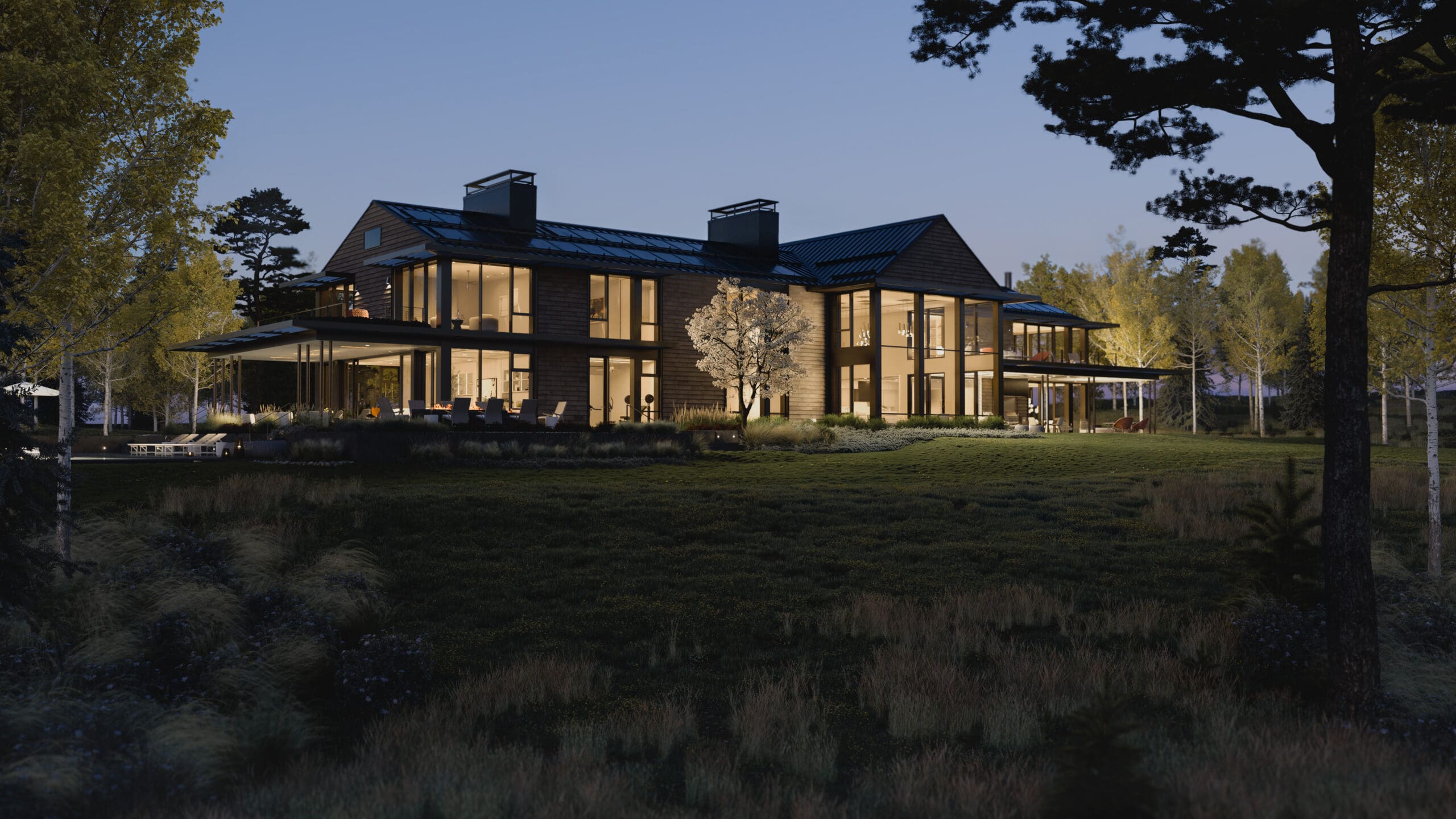
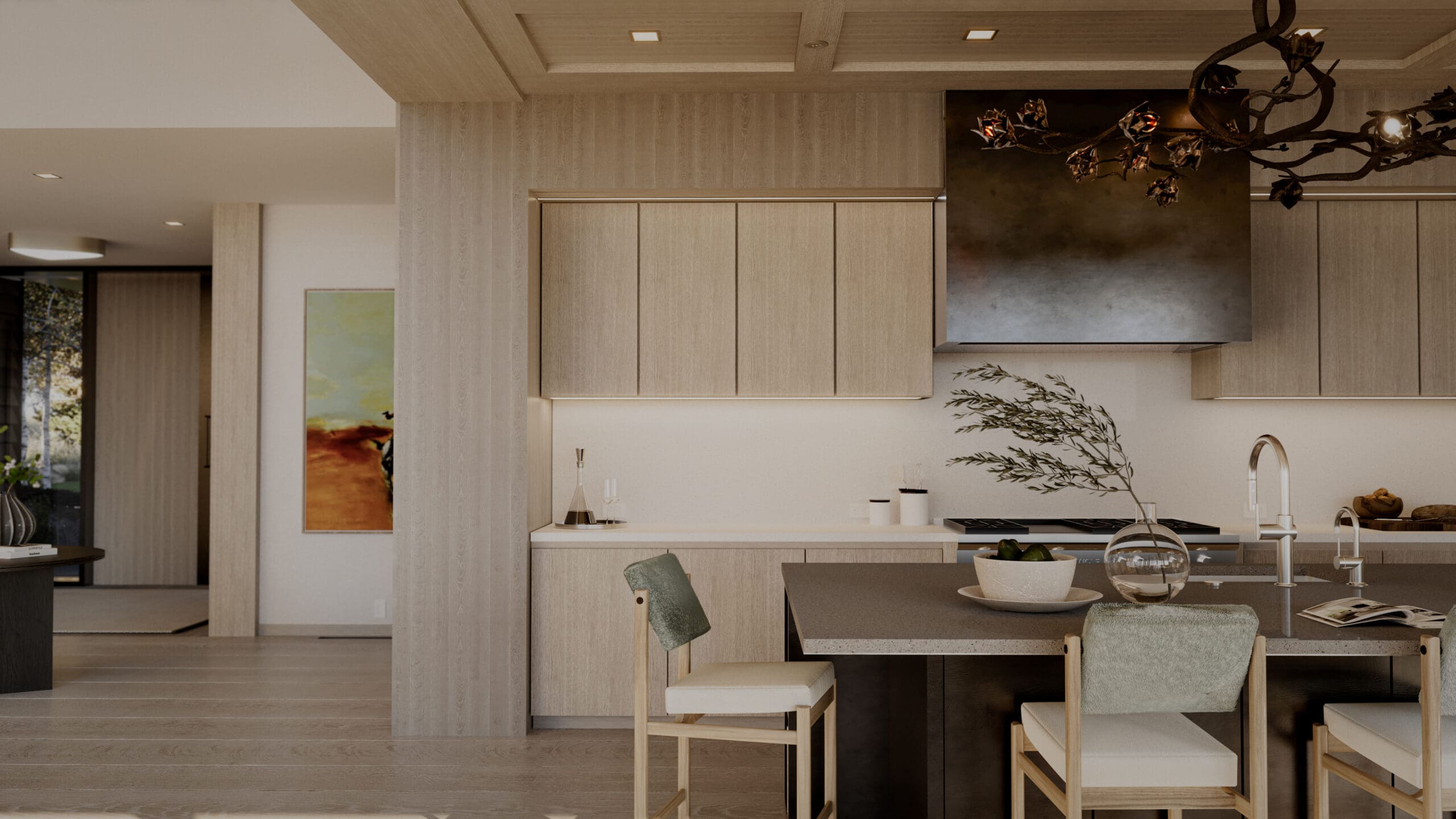
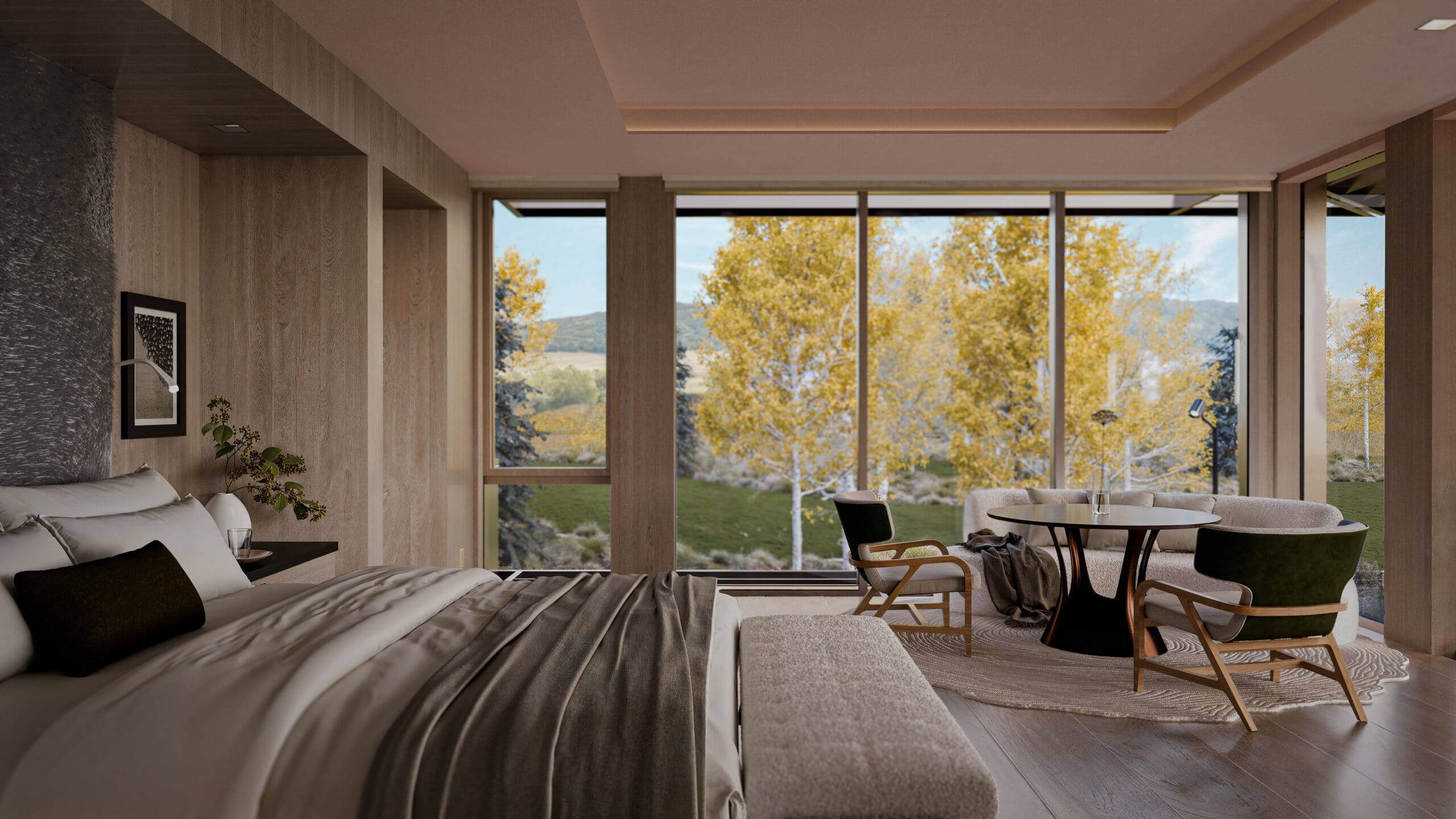
This estate residence, sited on a twenty-eight-acre property and nestled in a sage-covered meadow with spectacular views of Colorado’s Mount Daly, replaced an outmoded 1980s home with nine level changes. Its creation reflected a central challenge of R+B’s residential practice: designing multivalent homes, at a grand scale reflective of and appropriate to their settings, that remain deeply personal to their inhabitants, and entirely reflective of their values.
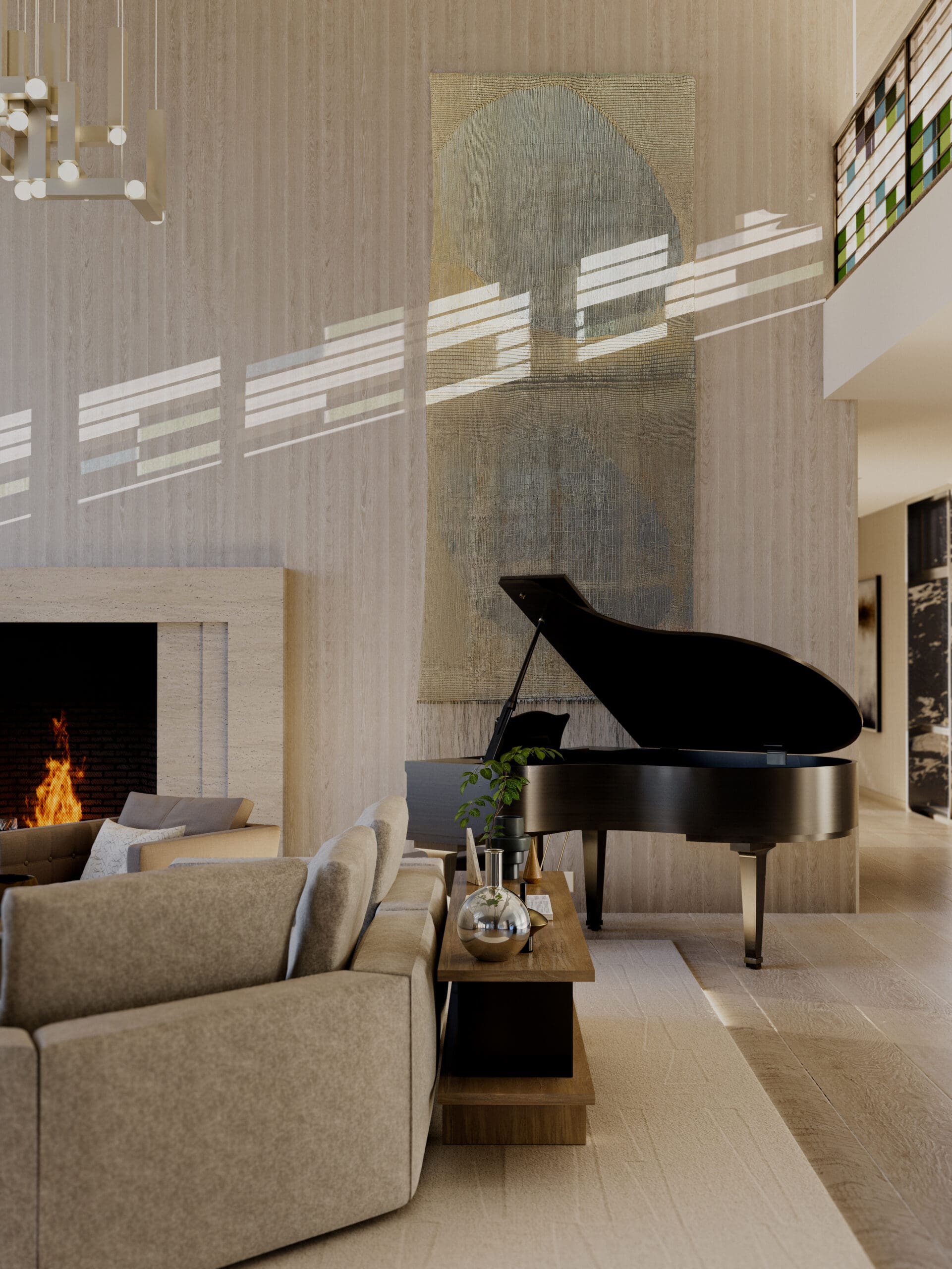
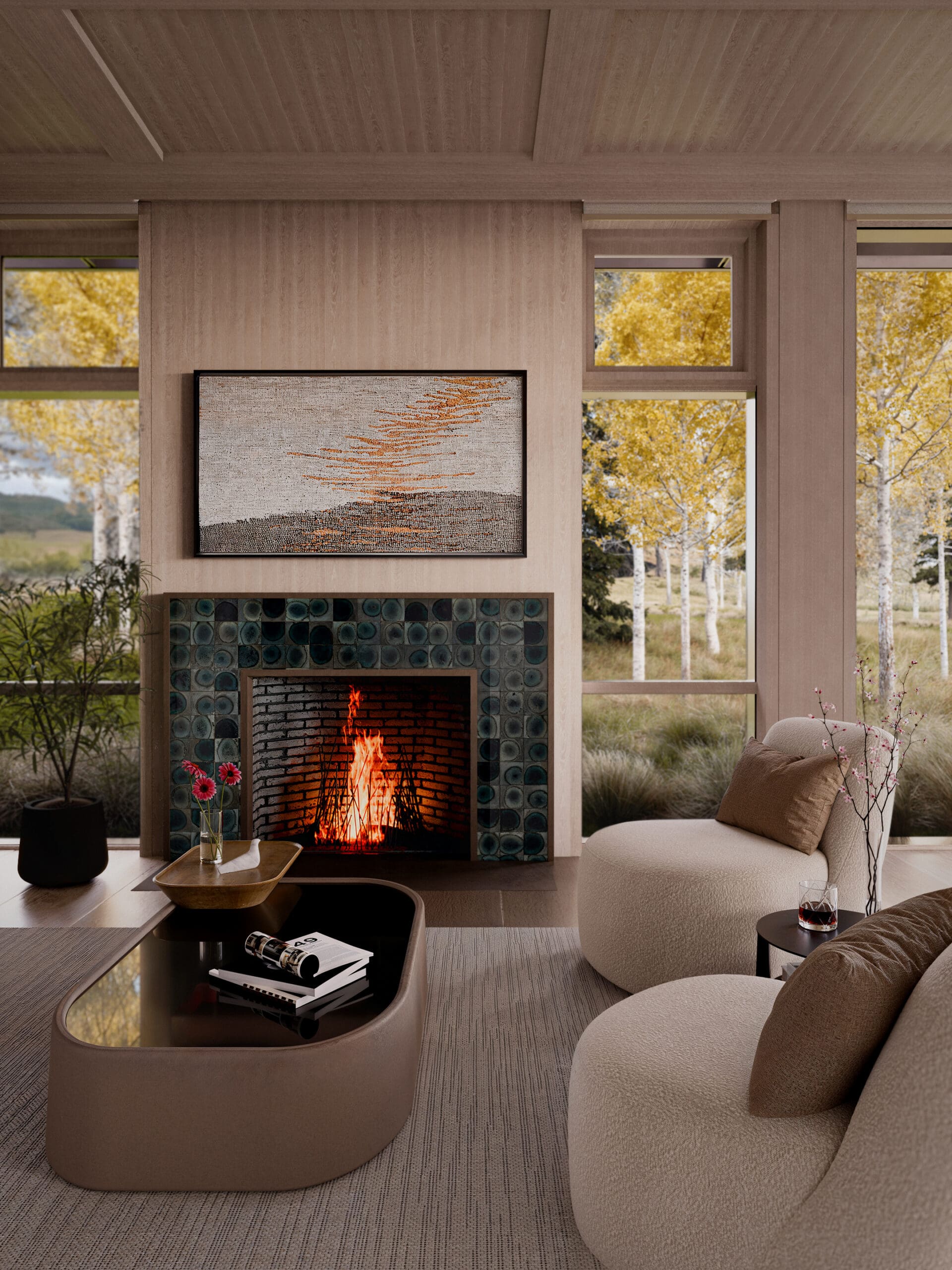
The house both commands its surroundings and defers to them. It is formidable yet, with its vast expanses of glass, transparent, a singular expression of the monumental and evanescent. The exterior is clad in a Danish brick that reveals the appealing irregularity of hand-making, laid up in overlapping horizontal layers like wood shiplap, thereby combining the rugged majesty of the landscape with the simple elegance of a rural building tradition. Within, walls finished entirely in white oak – natural, textural, sustainable – enclose a temple of tranquility and beauty, characterized by pan-cultural craft: a chandelier based on elements R+B discovered in a Milanese chapel; a custom-designed and hand-loomed Japanese wall tapestry; anodized Italian tile enriching the fireplace surrounds.
The family sought a dwelling in which to celebrate their love of music, beauty (natural and human-made), art, and craft, an environment rooted in modesty, faith, and genuineness. Our response is captured in the design’s signature element: a Venetian-made stained glass guardrail, spanning the full length of the double-height living room’s mezzanine, for which we designed a pattern based on the score of the great hymn ‘Amazing Grace’ – a gesture at once bravura in conception and execution, and humbly spiritual in its intent.
Perhaps most unusually, in the manner of such master builders as Frank Lloyd Wright and Carlo Scarpa, R+B not only executed the architecture, landscape, and interiors, but designed almost all of the details and components, down to the table settings and glassware. As such, the house – named Lap House by the owners – stands as a total work of art: an uncompromised expression of its creators’ intentions and, more to the point, the complete fulfillment of the family’s most ardent desires – utterly graceful, and entirely amazing.
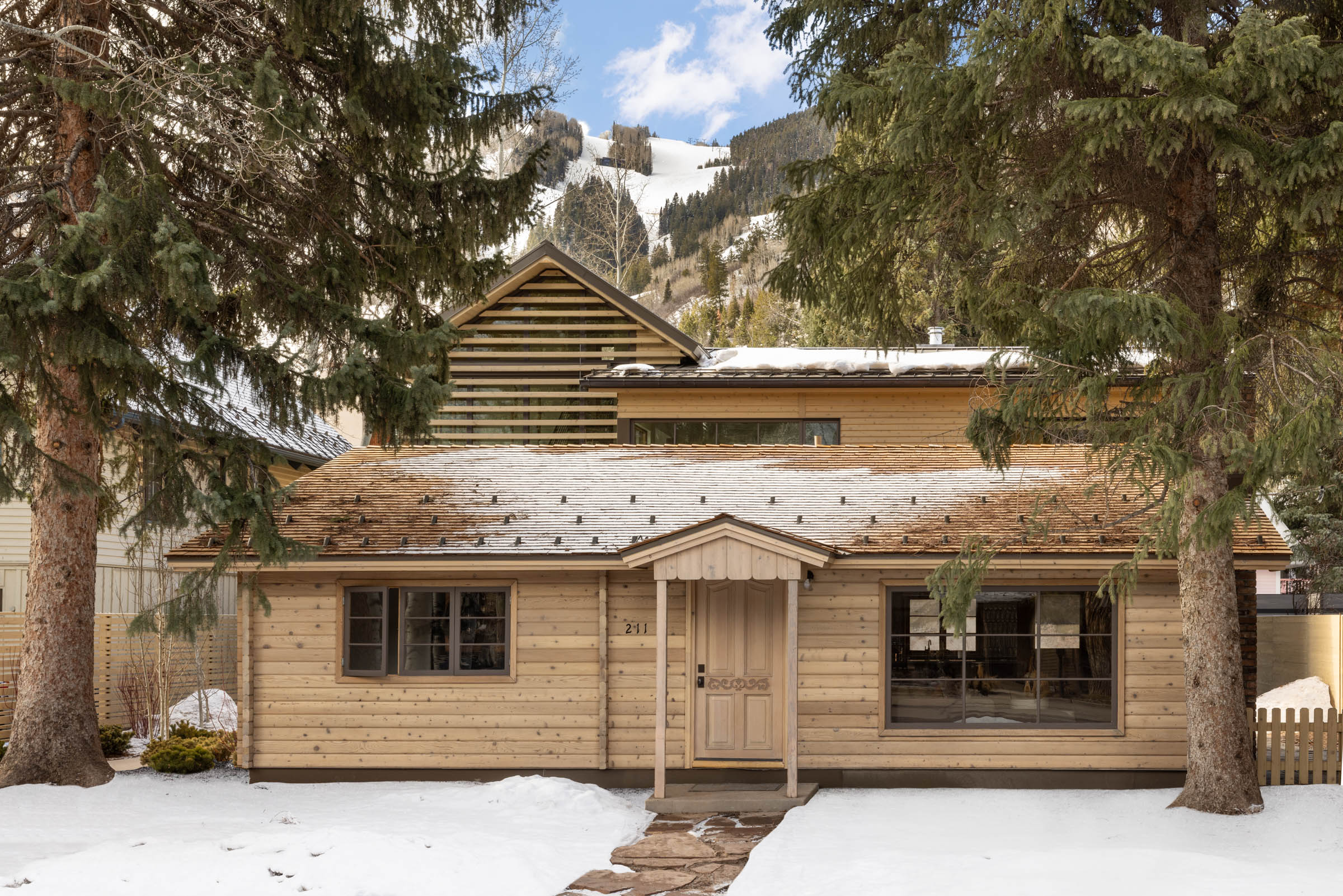
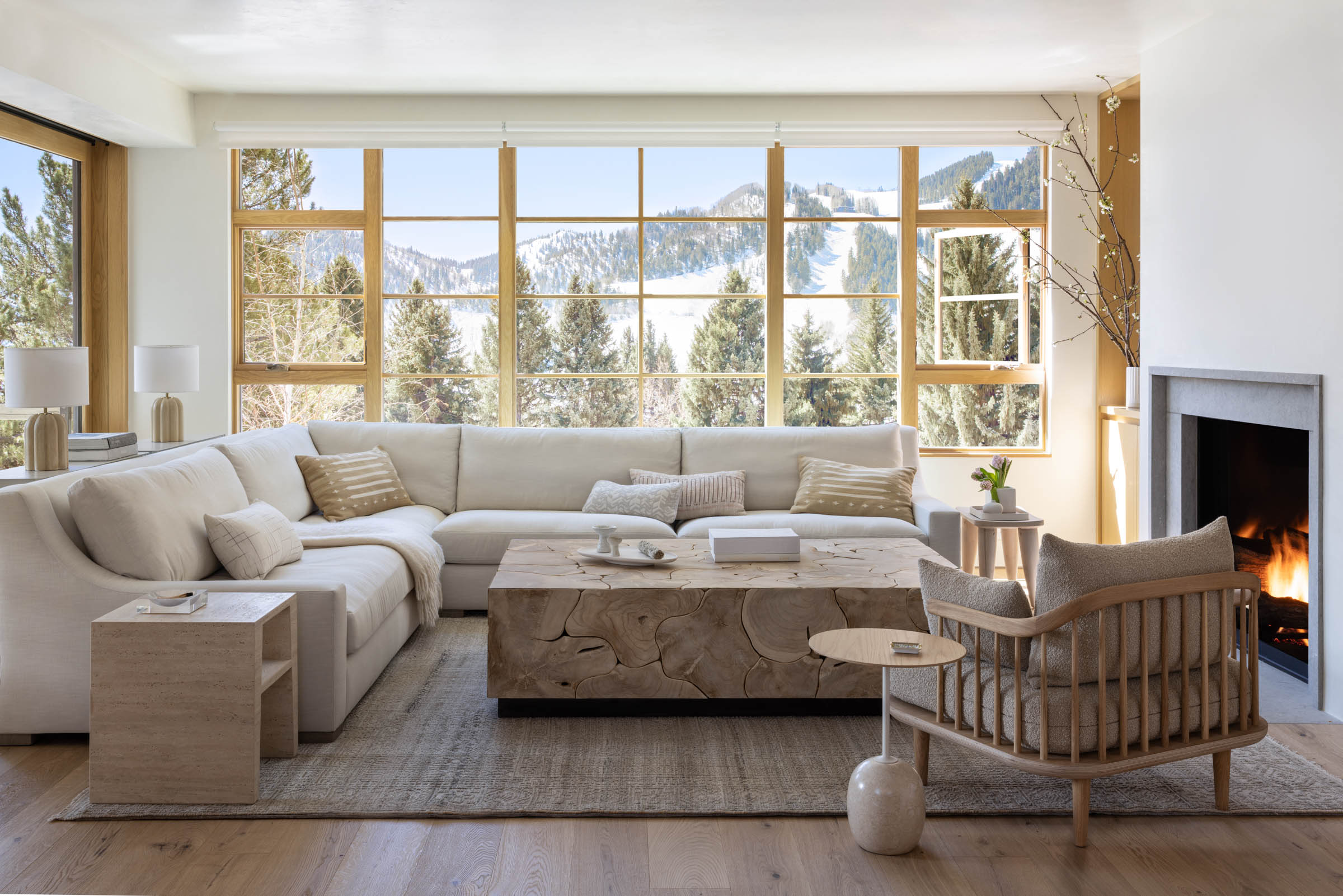
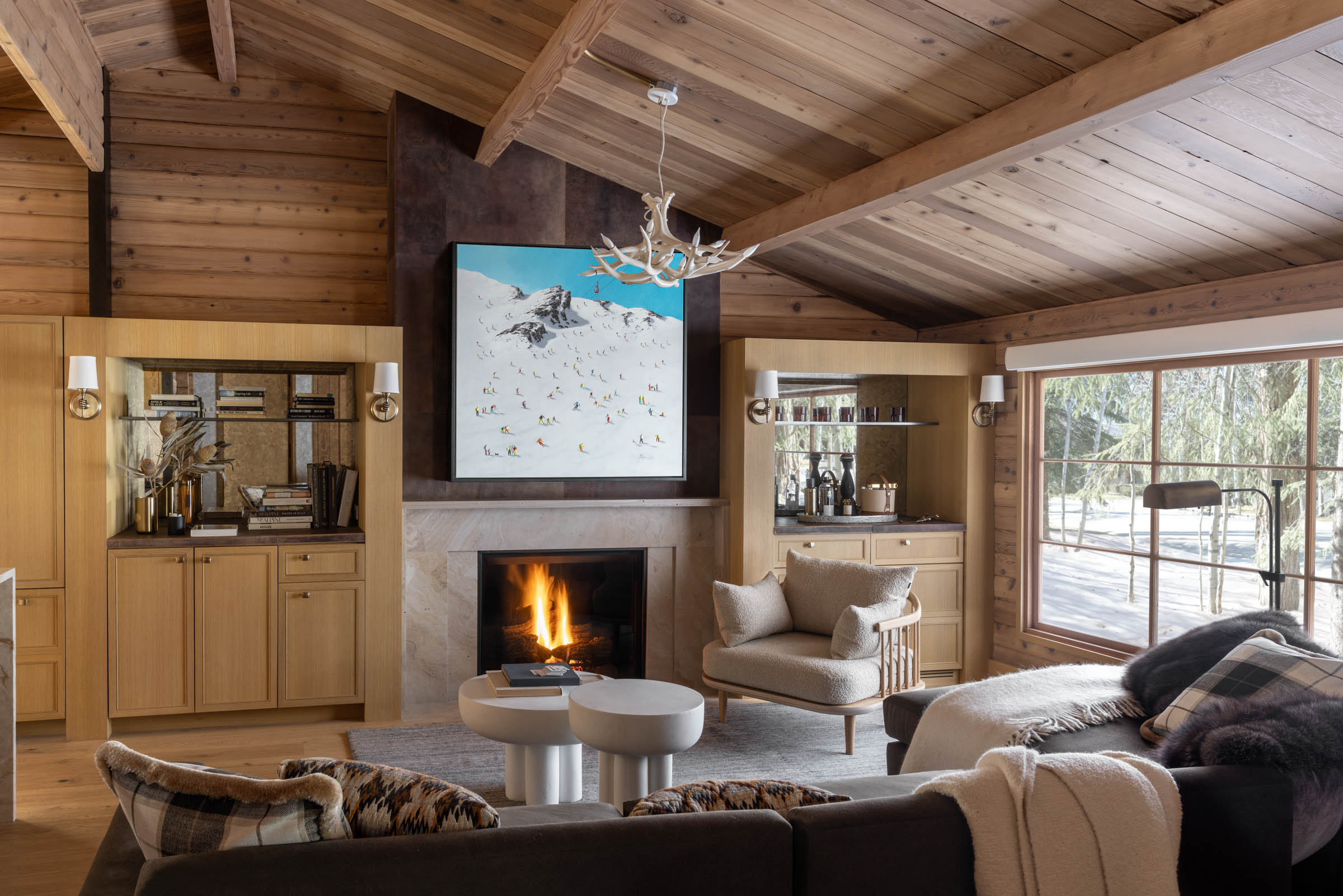
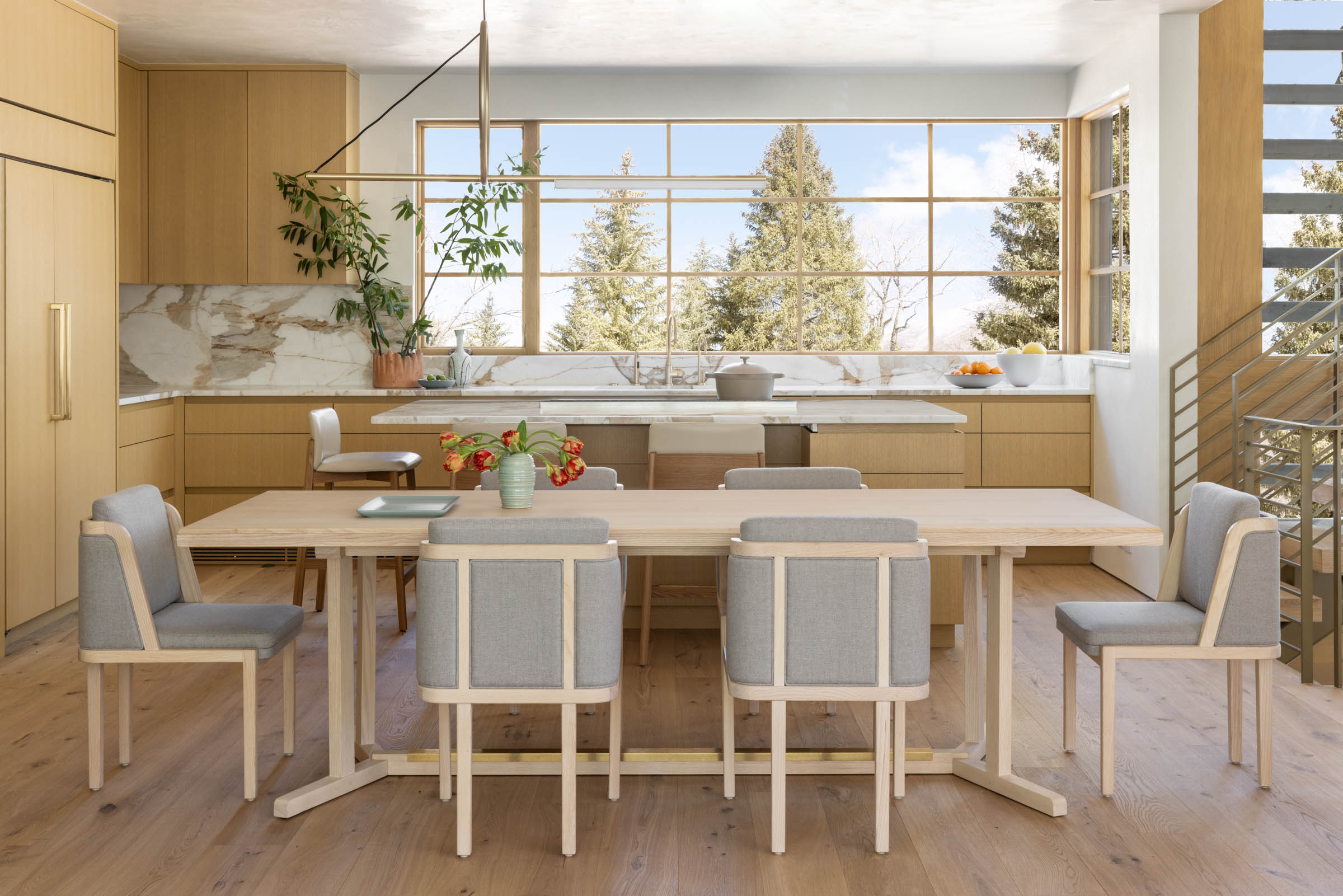
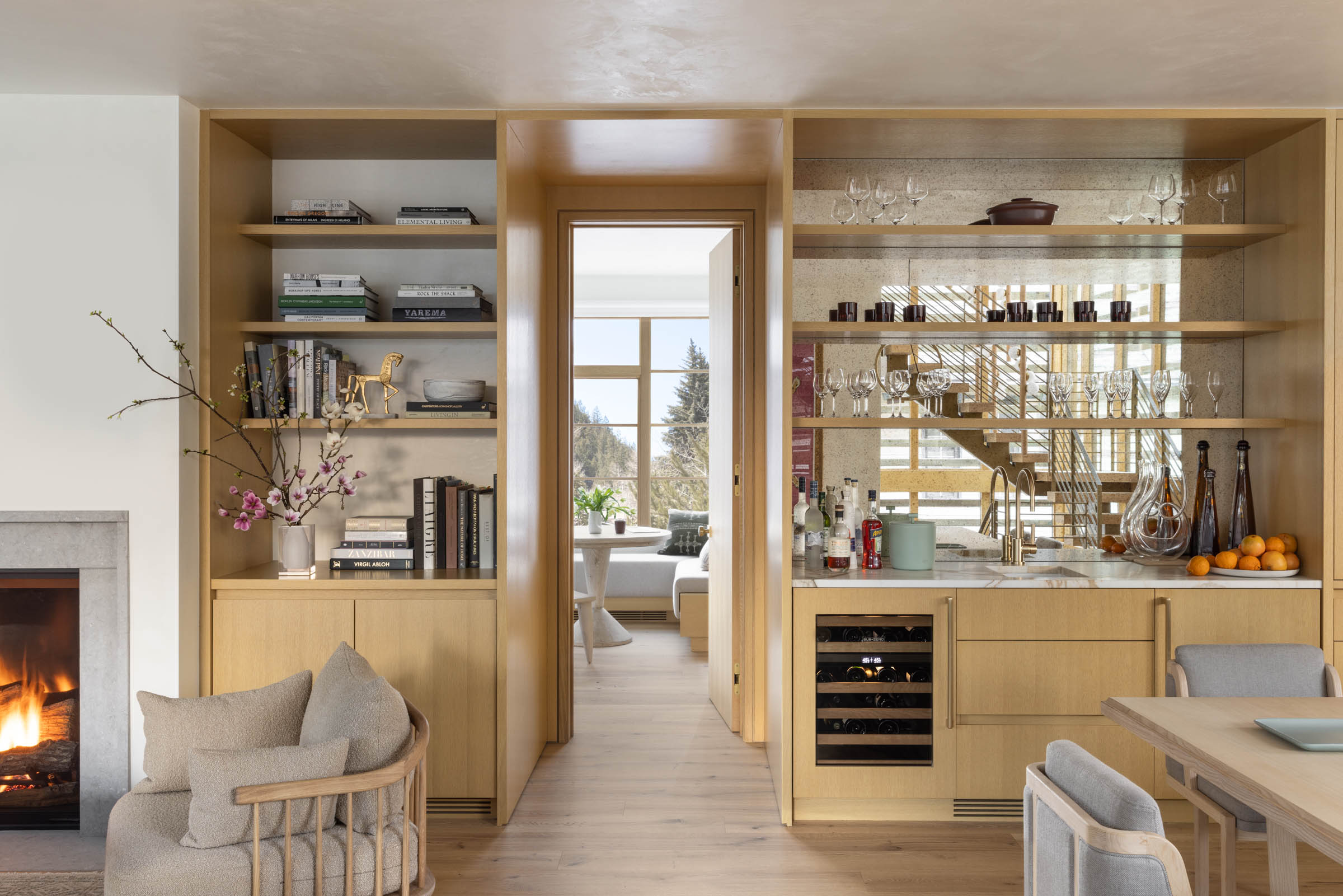
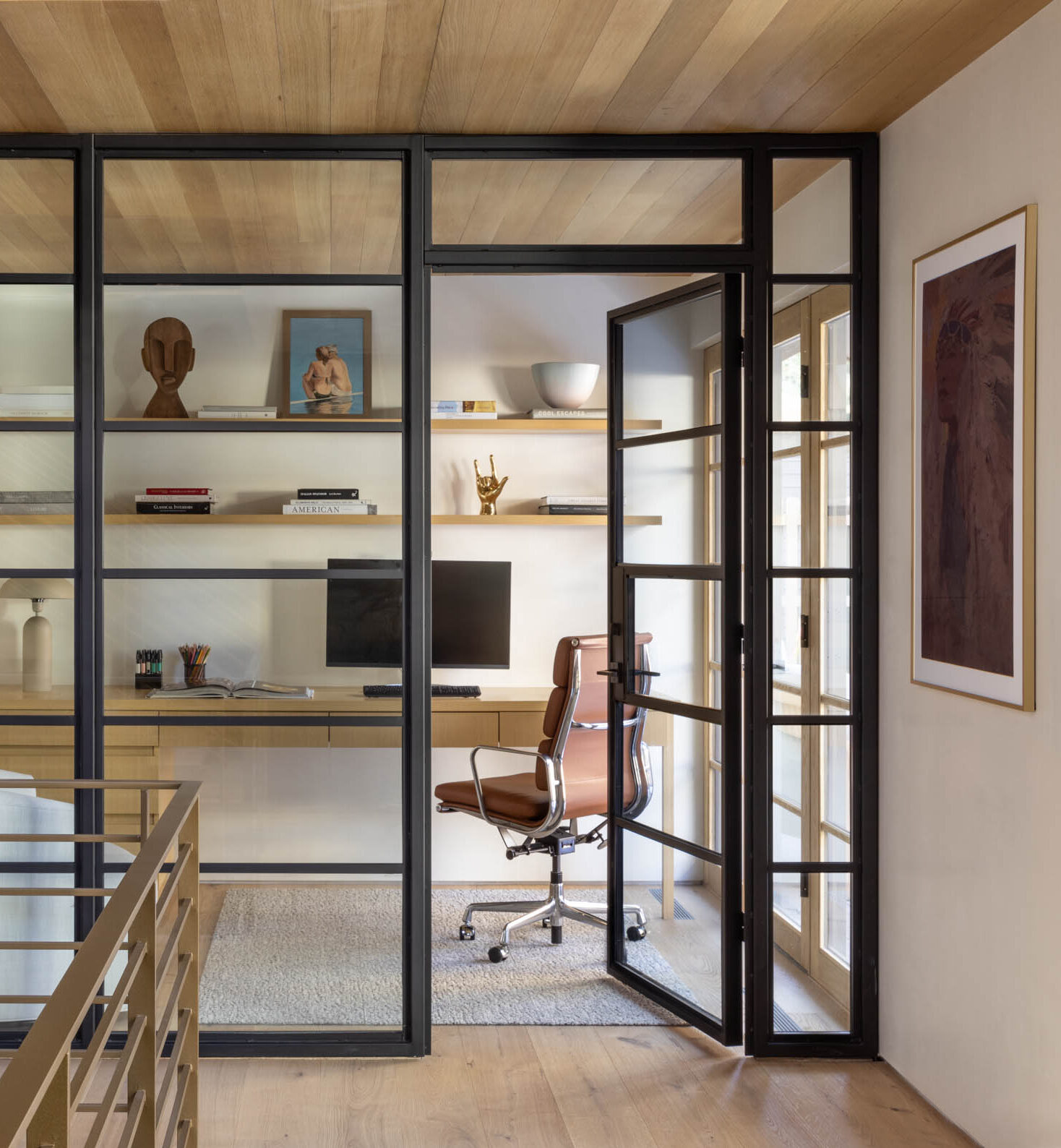
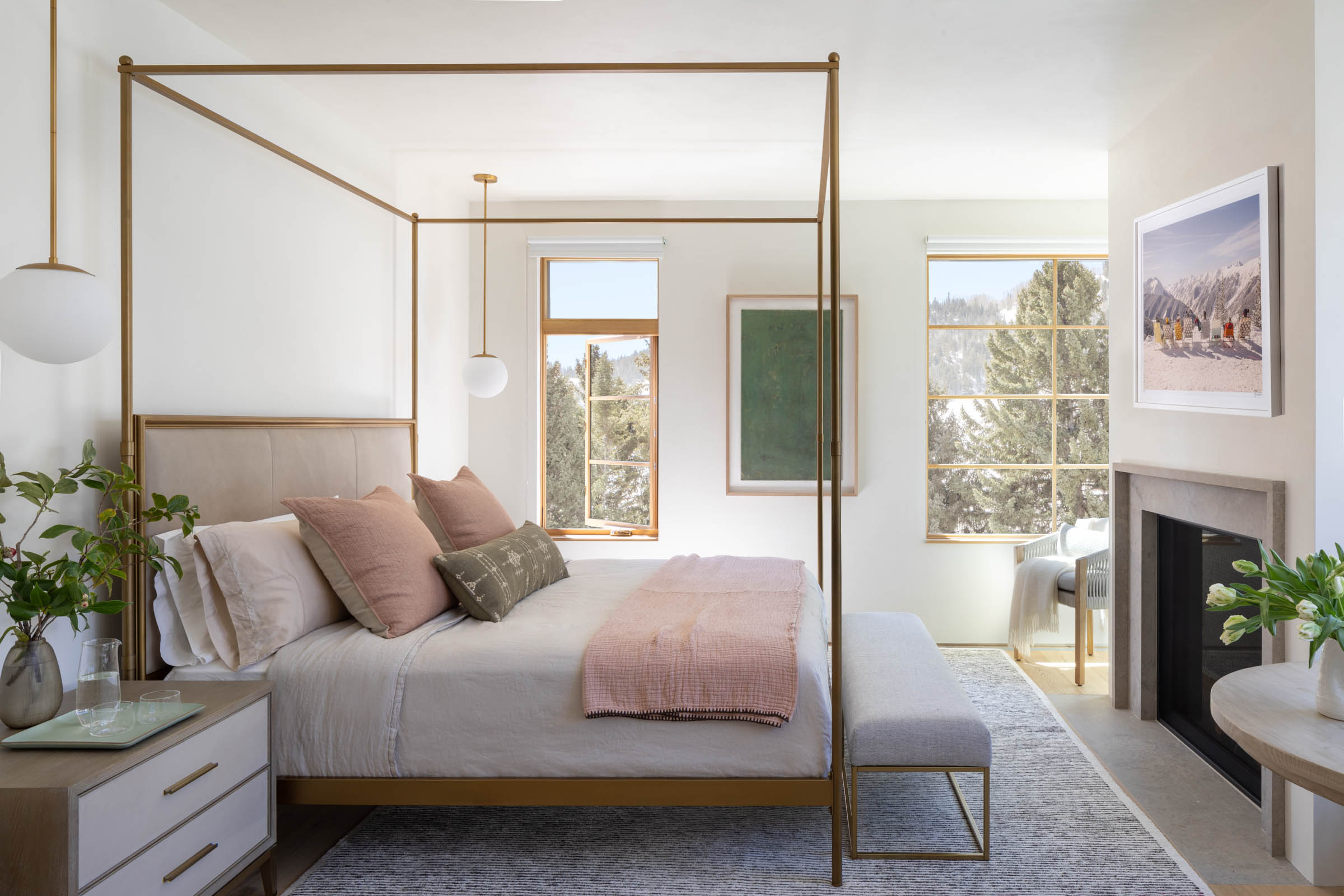
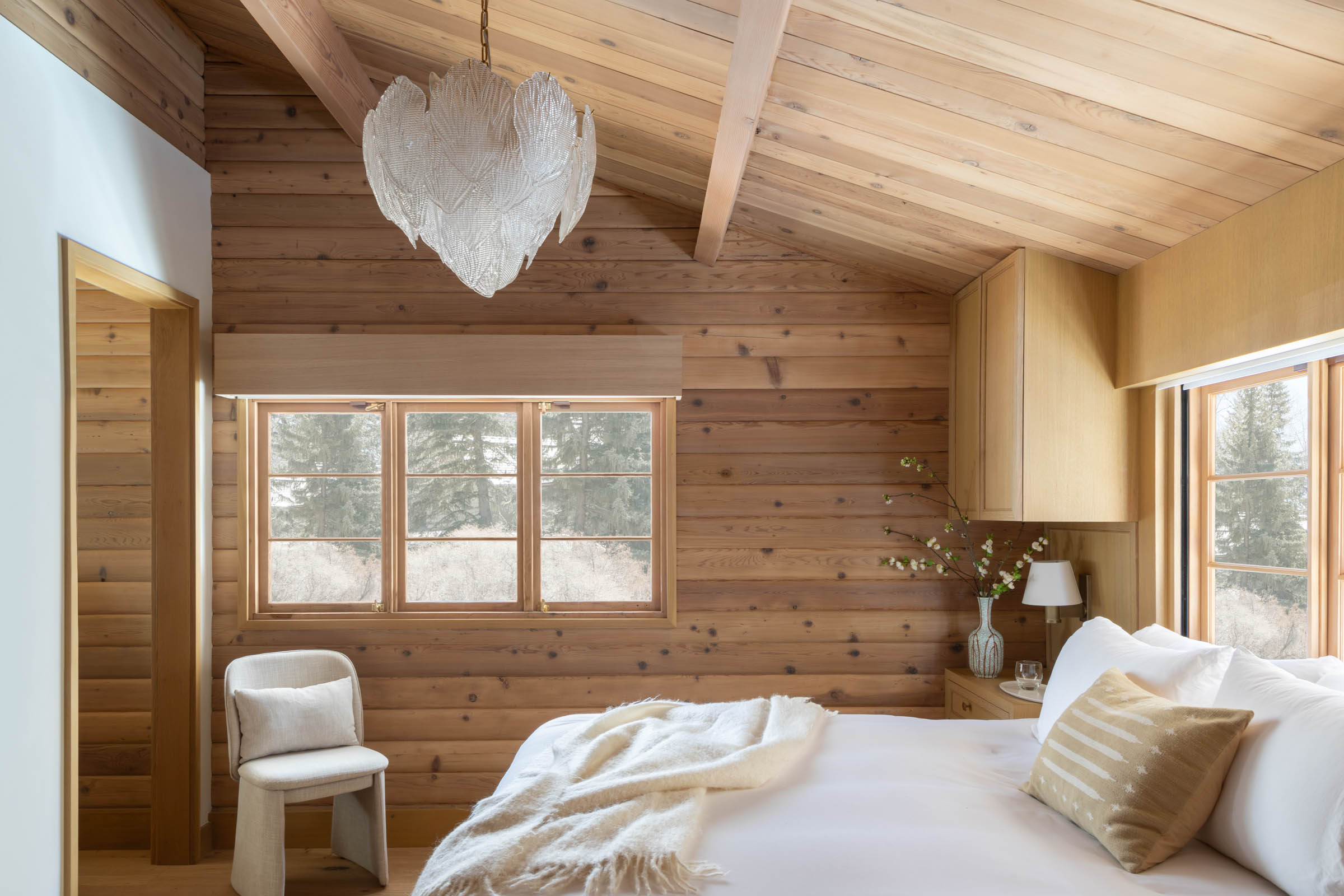
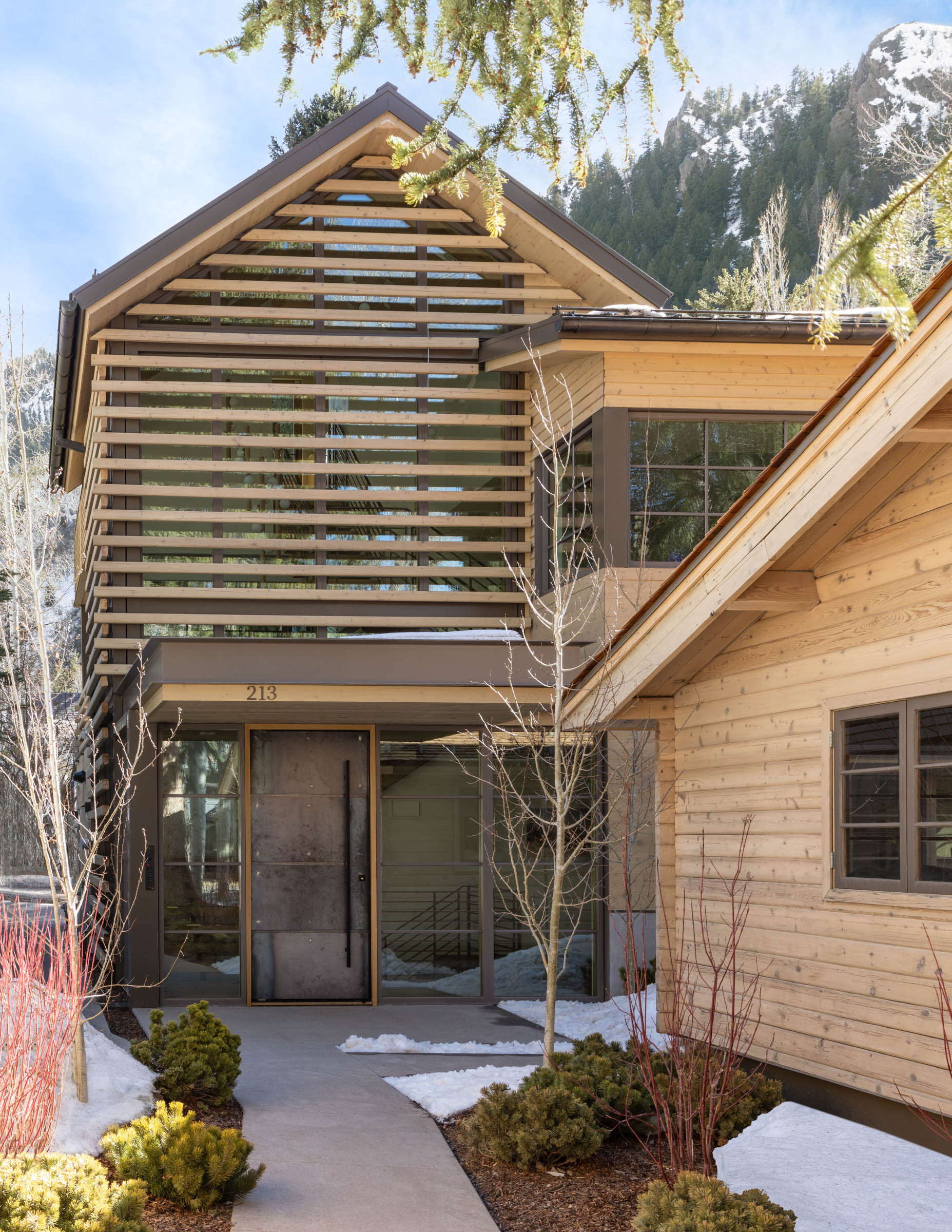
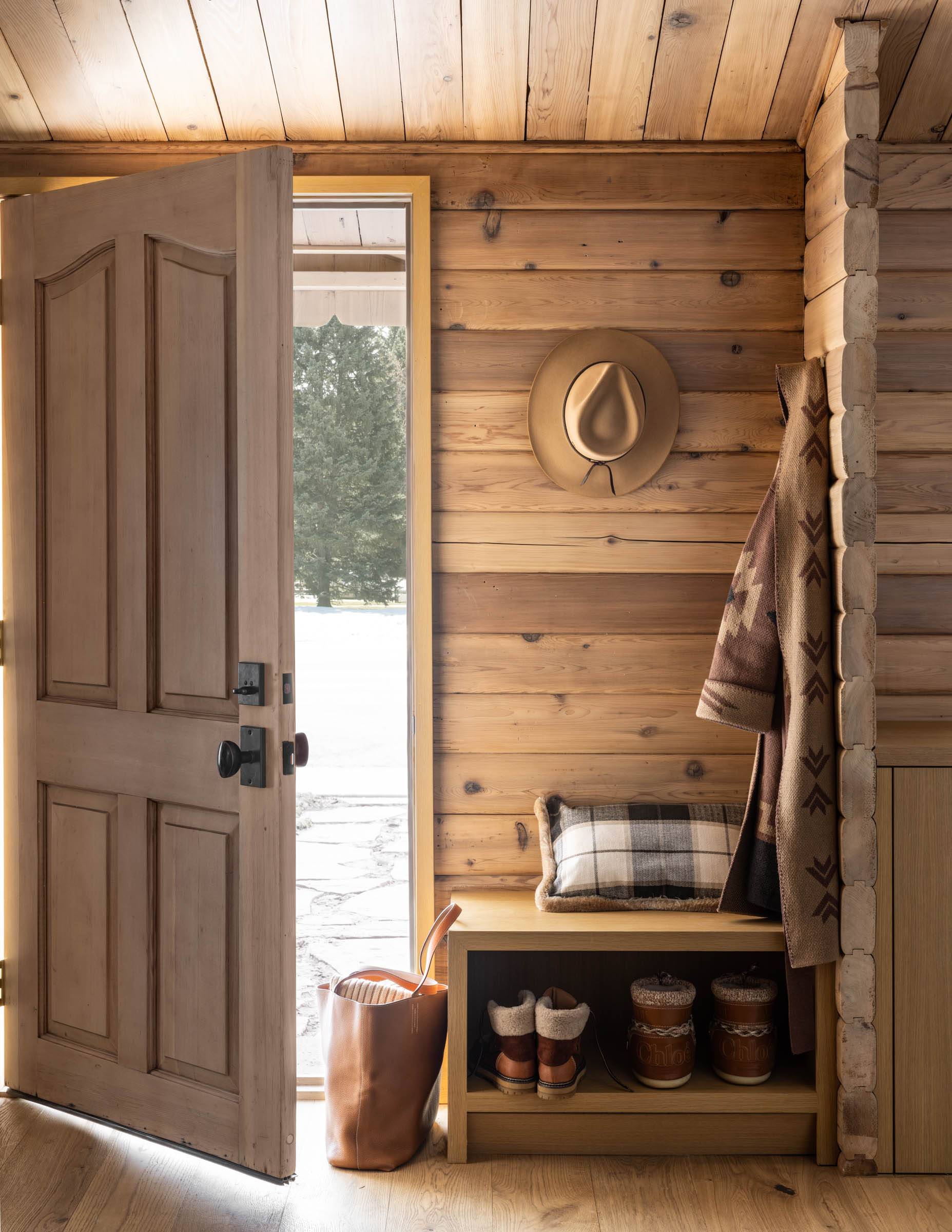
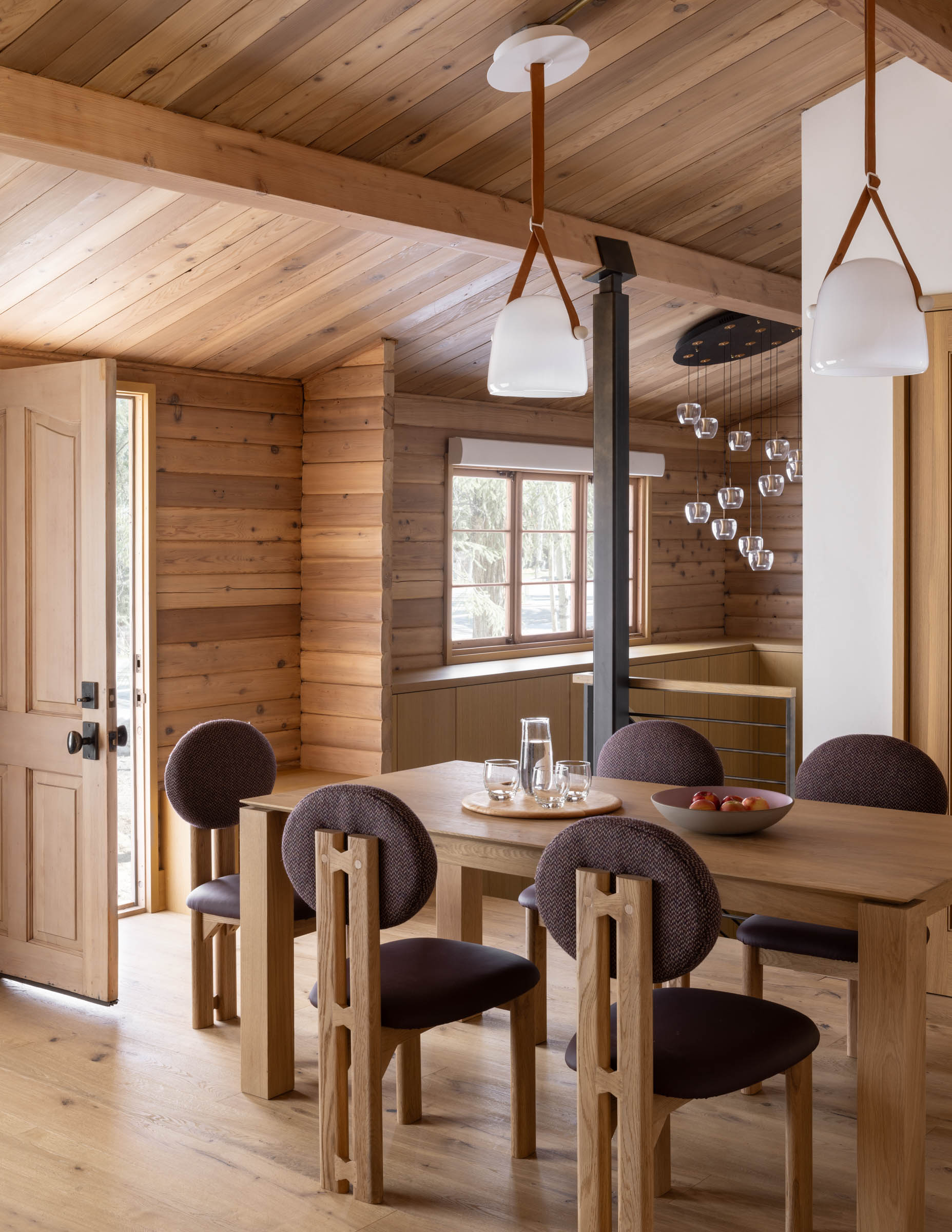
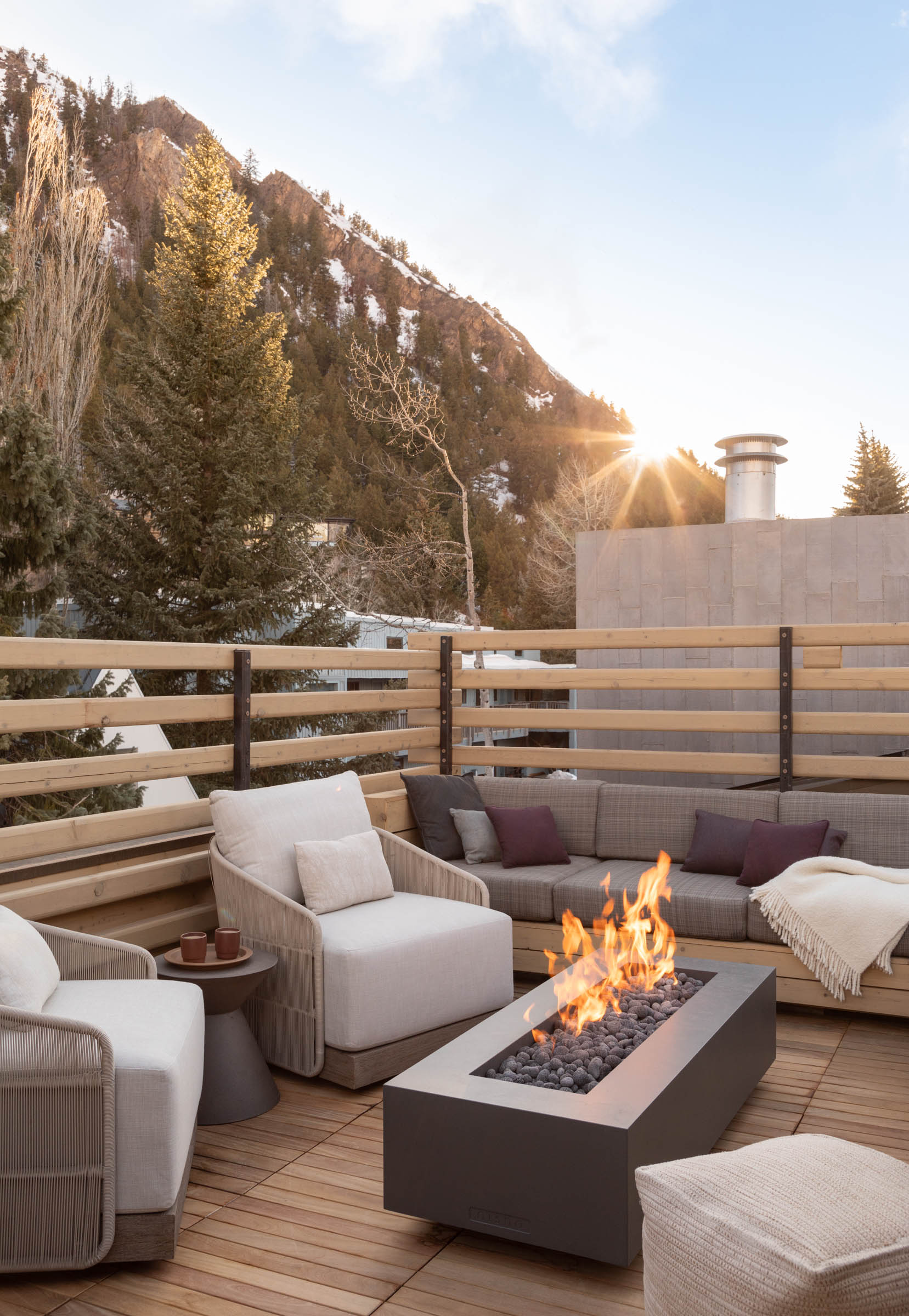
Amid old-growth spruce and aspen trees in the heart of Aspen’s West End neighborhood, this dual building residential project both reflects and contemporizes the classic pan abode construction that contributed to the development of Aspen’s international ski and tourism industries.
Upon the owners’ voluntarily landmark designation of the pan abode through the Aspen Modern Inventory of historic structures and the Aspen Historic Preservation Commission (HPC), the design team undertook the challenge of renovating and restoring a circa 1956, historic structure, a rustic, single-story premanufactured log kit home that once served as an idealized version of the western log cabin.
In addition to the non-historic wing being removed, the interior was reconfigured, and the cabin moved off its foundation to make way for a new below grade level with two bedrooms and flex space, all within the original footprint.
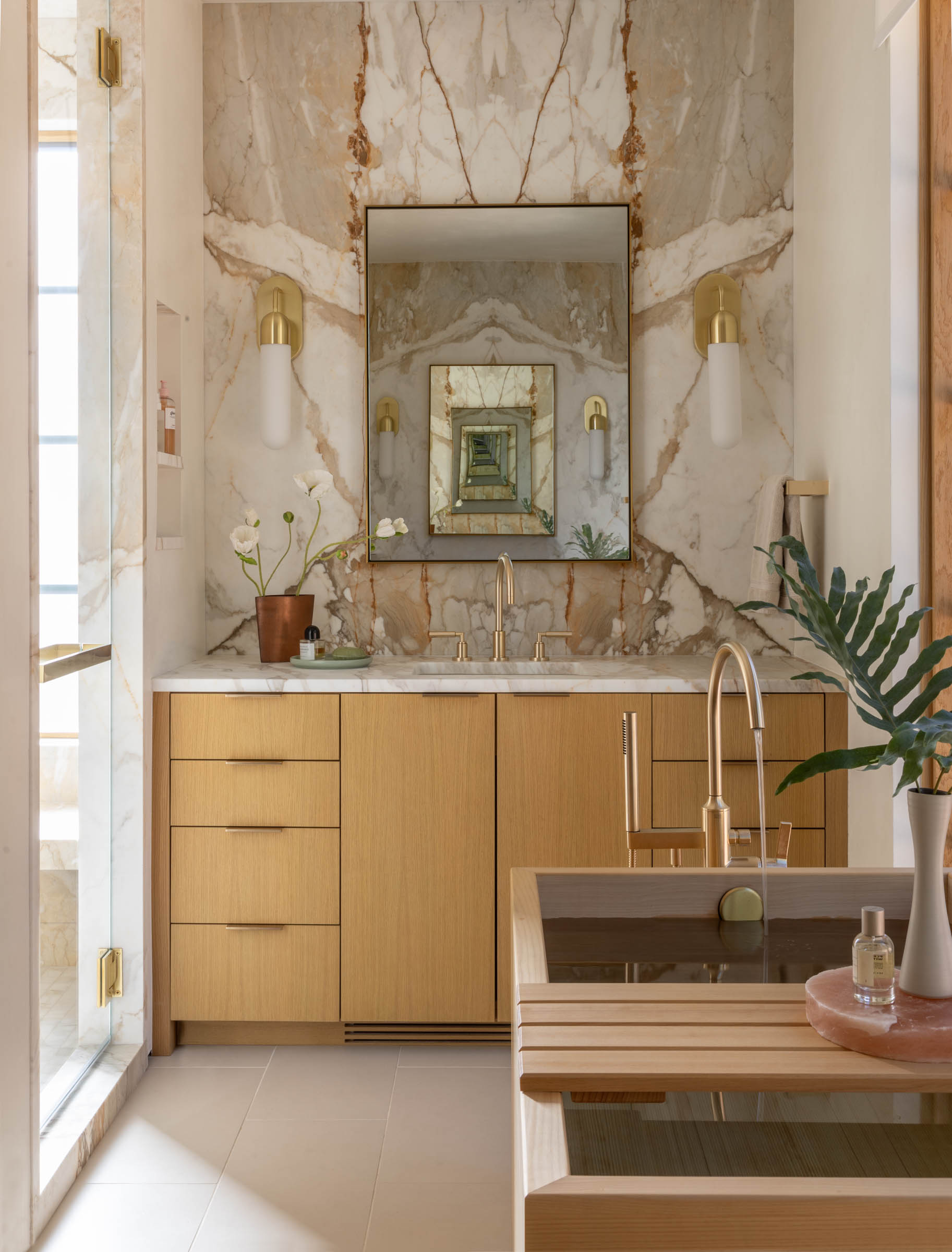
The integrity and architectural characteristics of the historic log cabin were retained. Exterior logs were sanded to the original Western Red Cedar finish, windows repaired and re-stained. Inside, a new primary bedroom suite and great room feature the original exposed logs and simple stone and steel metal finishes. A new connecting stair allows light to flow to the lower level.
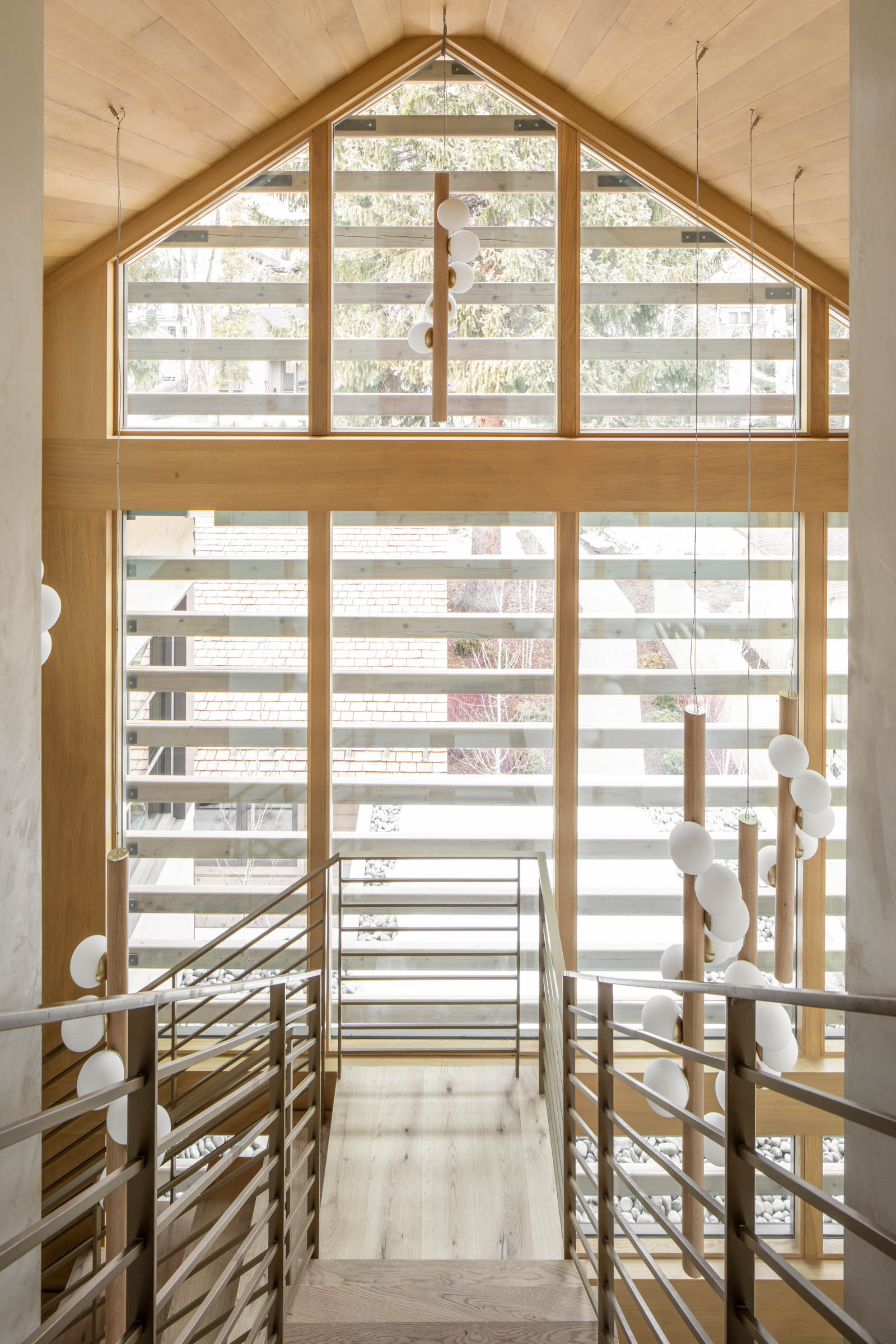
In accordance with Aspen’s HPC requirements, the new building’s design reflects the form, materials, and fenestration of the historic structure while distinguishing it as contemporary. The glass stair volume at the entry connects all four levels of the residence and is screened by new, overlapping pan abode logs to speak to the historic cabin.
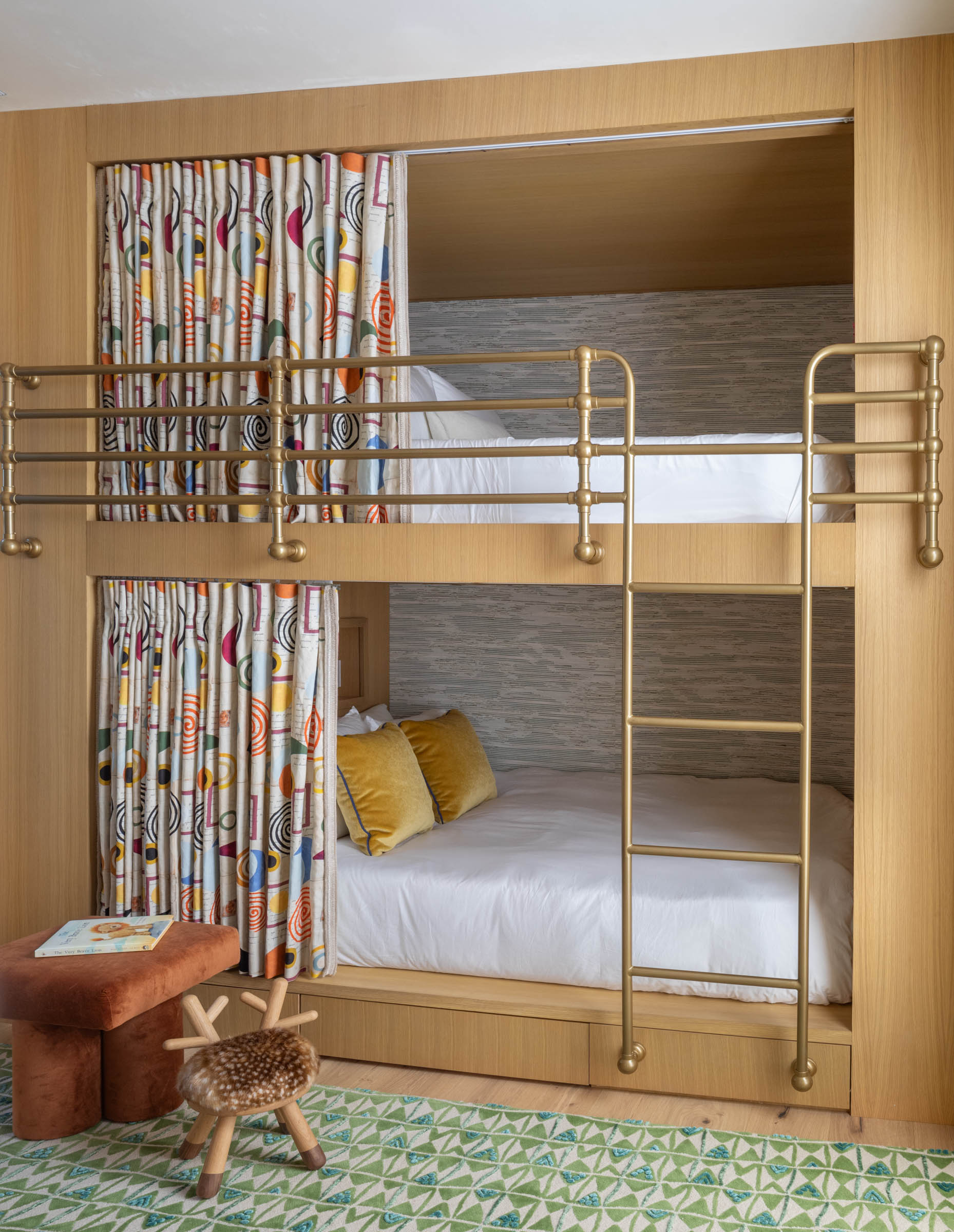
Inside, the basement features a guest suite, bunkroom, media room and a gym that includes an infrared sauna. The upper level features the primary living spaces with kitchen, living, covered alfresco dining and the main bedroom suite. A rooftop deck with 360-degree mountain views encourages a physical and emotional connection to a singular place and time.
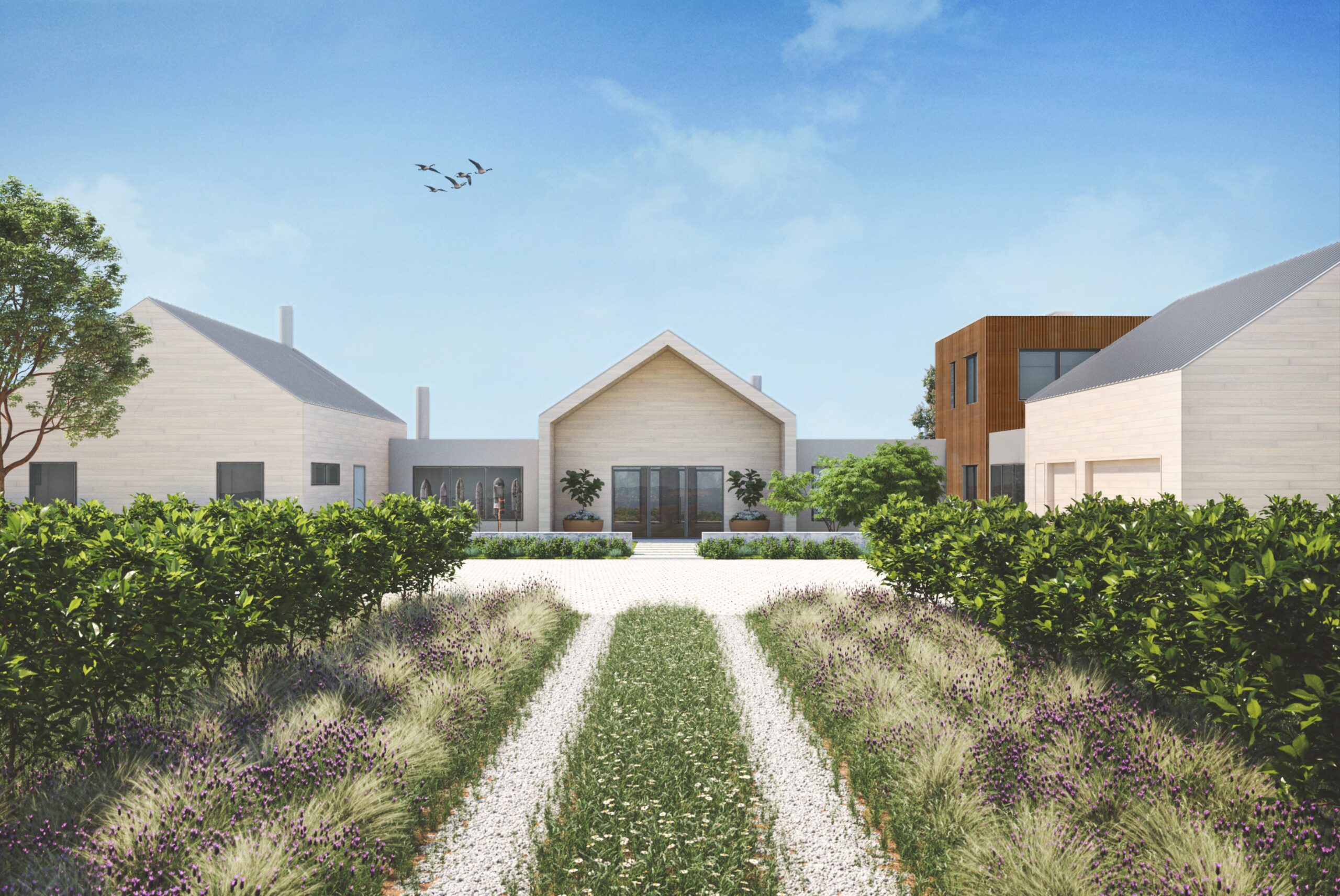
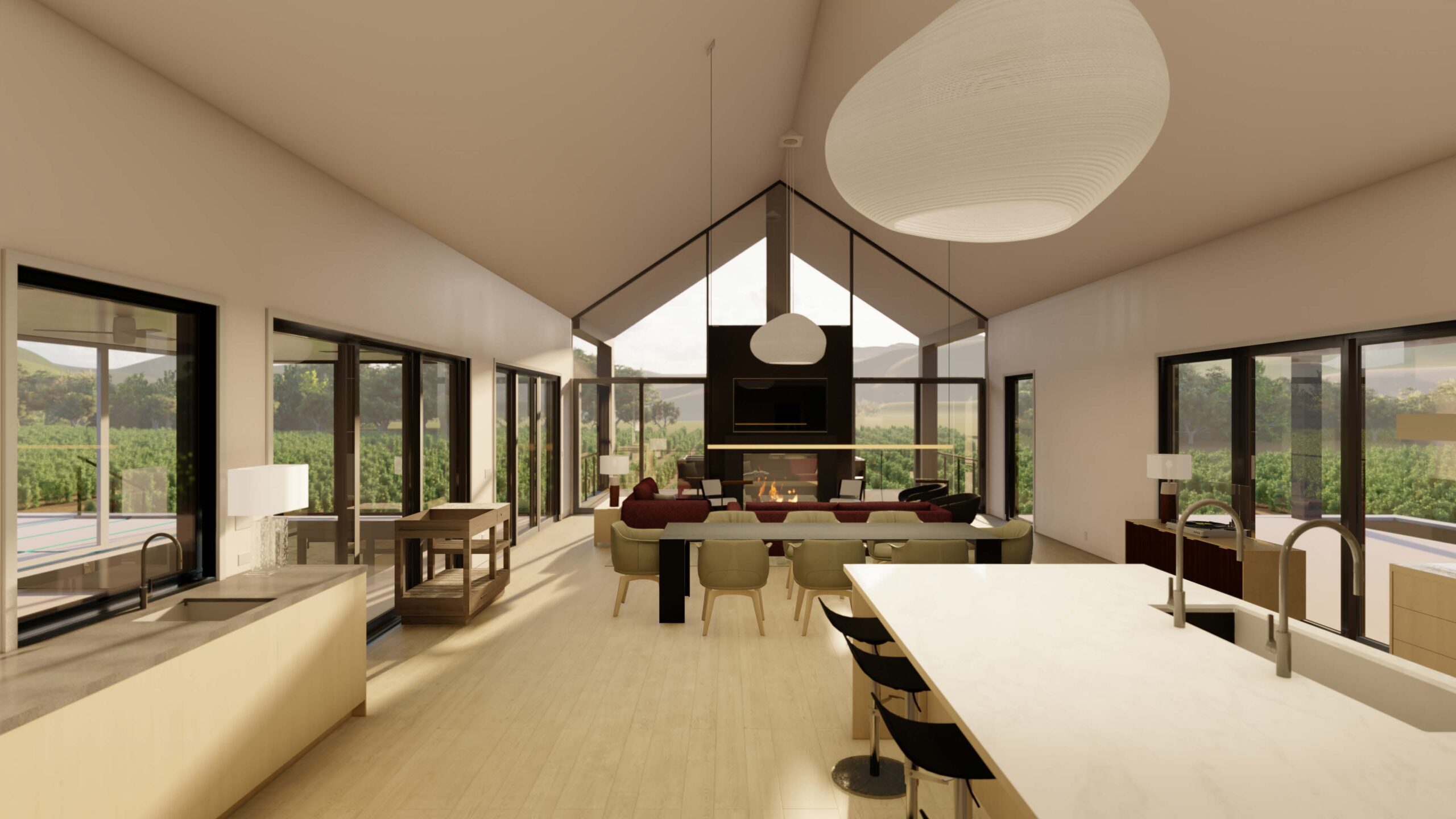
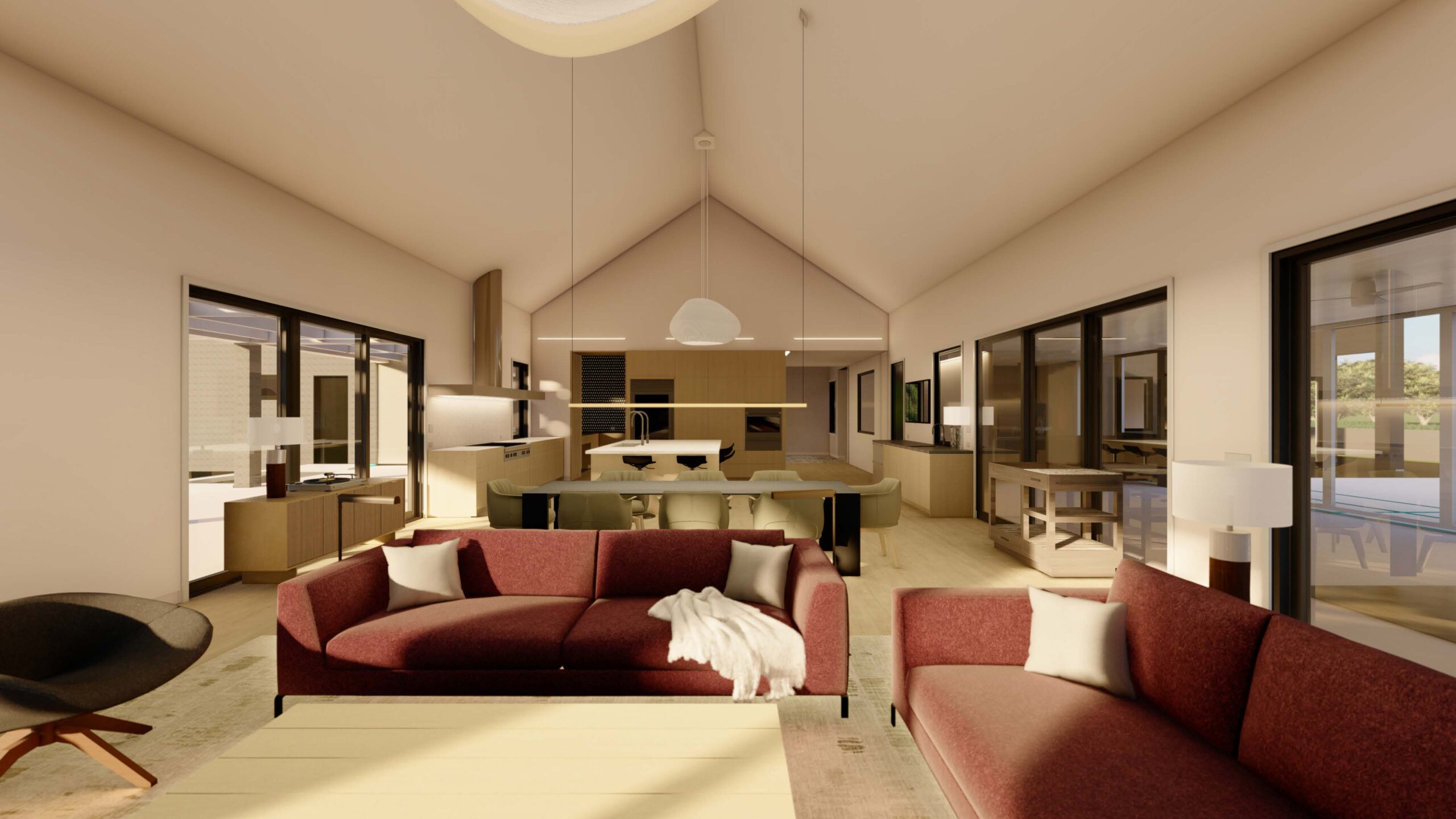
Set within the Walla Walla Valley, one of the State of Washington’s most prolific wine regions, this contemporary residence for a repeat client (passionate wine enthusiasts) is rooted in and responds to the surrounding agrarian landscape. Progressive yet contextual in design for the area, the clean, refined lines of the overall structure ensures that it settles unobtrusively onto the gently sloping ten–acre site.
Primary materials were purposefully specified. Dark gray stone emulates the abundant basalt rock indigenous to the area (and that contributes to the quality of grapes used for winemaking). Cedar recalls the color of wood stakes supporting grapevines in the surrounding vineyard.
Sensitive to the intended lifestyle of the client-family and with the intent of capturing views of the Blue Mountains to the east, multiple structures were integrated into the surrounding landscape. Anchored by a new two-level volume reminiscent of historic buildings inherent to the area, three new extruded gable structures appear to emerge from the vineyard. The gable structures were pushed and pulled around the site to meet programmatic needs, and smaller blocks were extruded to link the four structures together.
Two of the gable structures, encompassing kitchen, dining, and living areas in one and the primary bed and spa-like bathroom suite in the other, encourage single-level living. The third functions as a garage. The two-level metal building accommodates a pair of guest suites on the ground level and a gym and office on the upper level. Wine storage and mechanical areas are below grade.
Outdoor rooms, green space, a sculpture garden and a pool area are thoughtfully designed between the structures, taking sun, wind and views into consideration. Access is through the surrounding vineyard via a pebbled drive, on axis with the main gable volume, and a central courtyard designed for outdoor gatherings and food trucks.
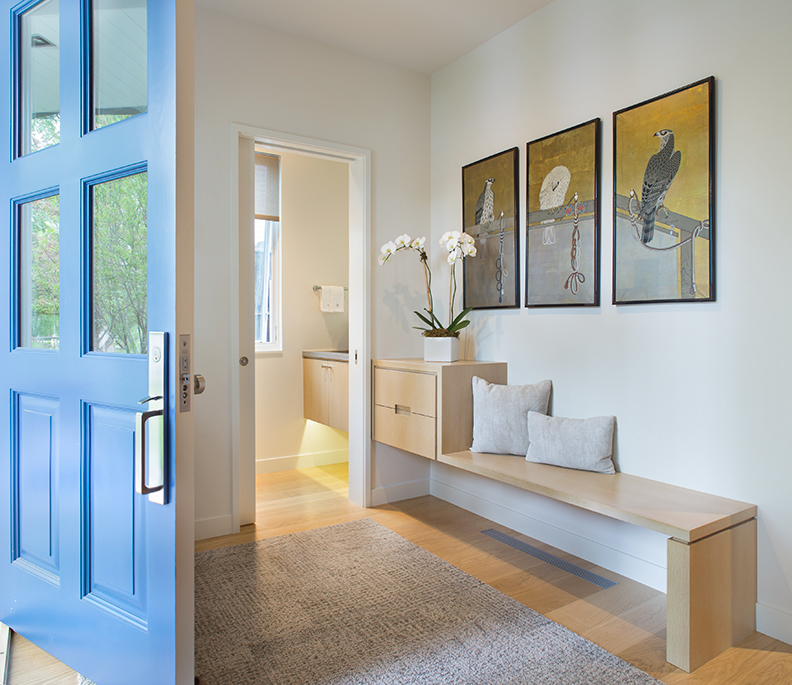
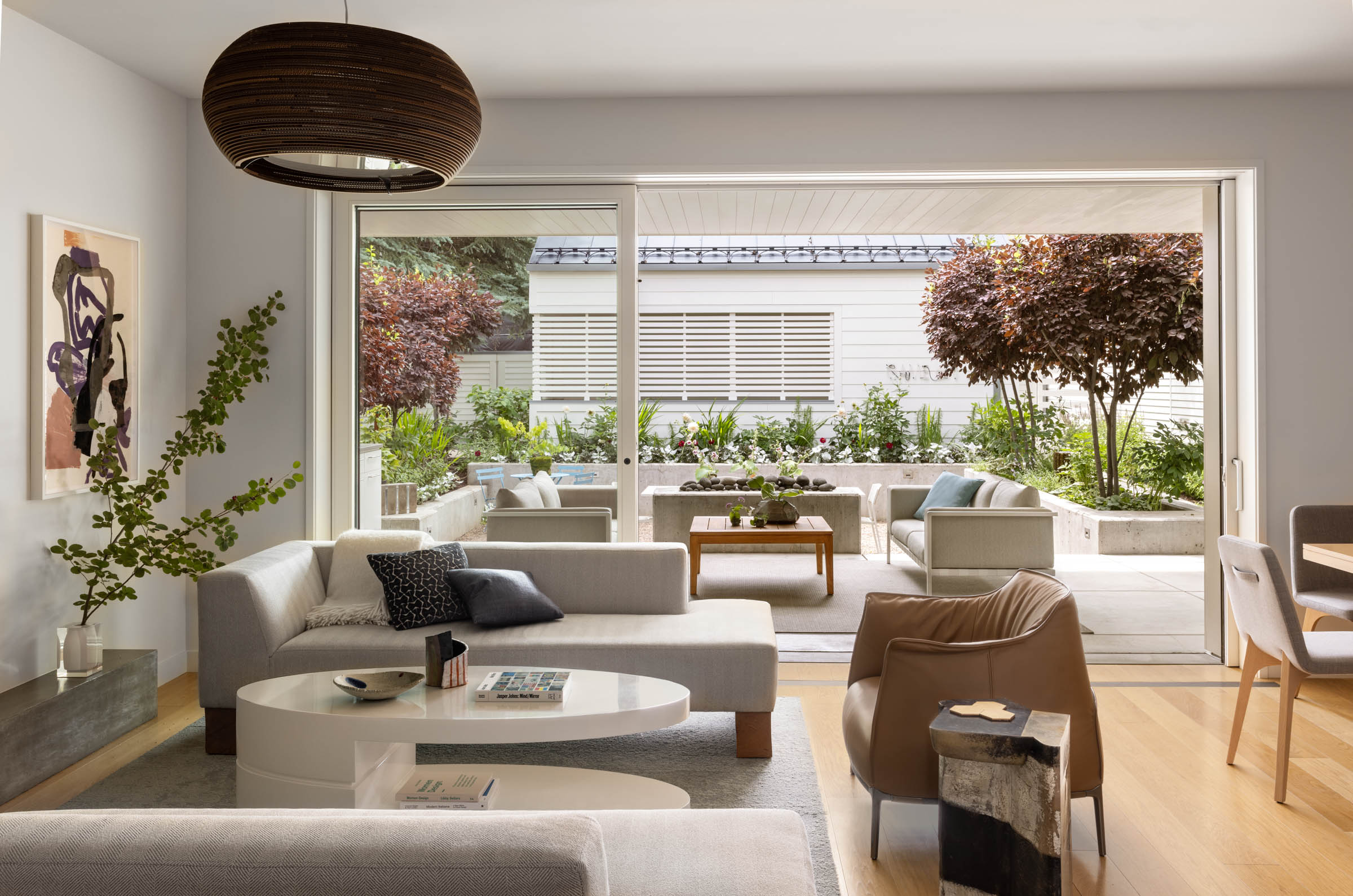
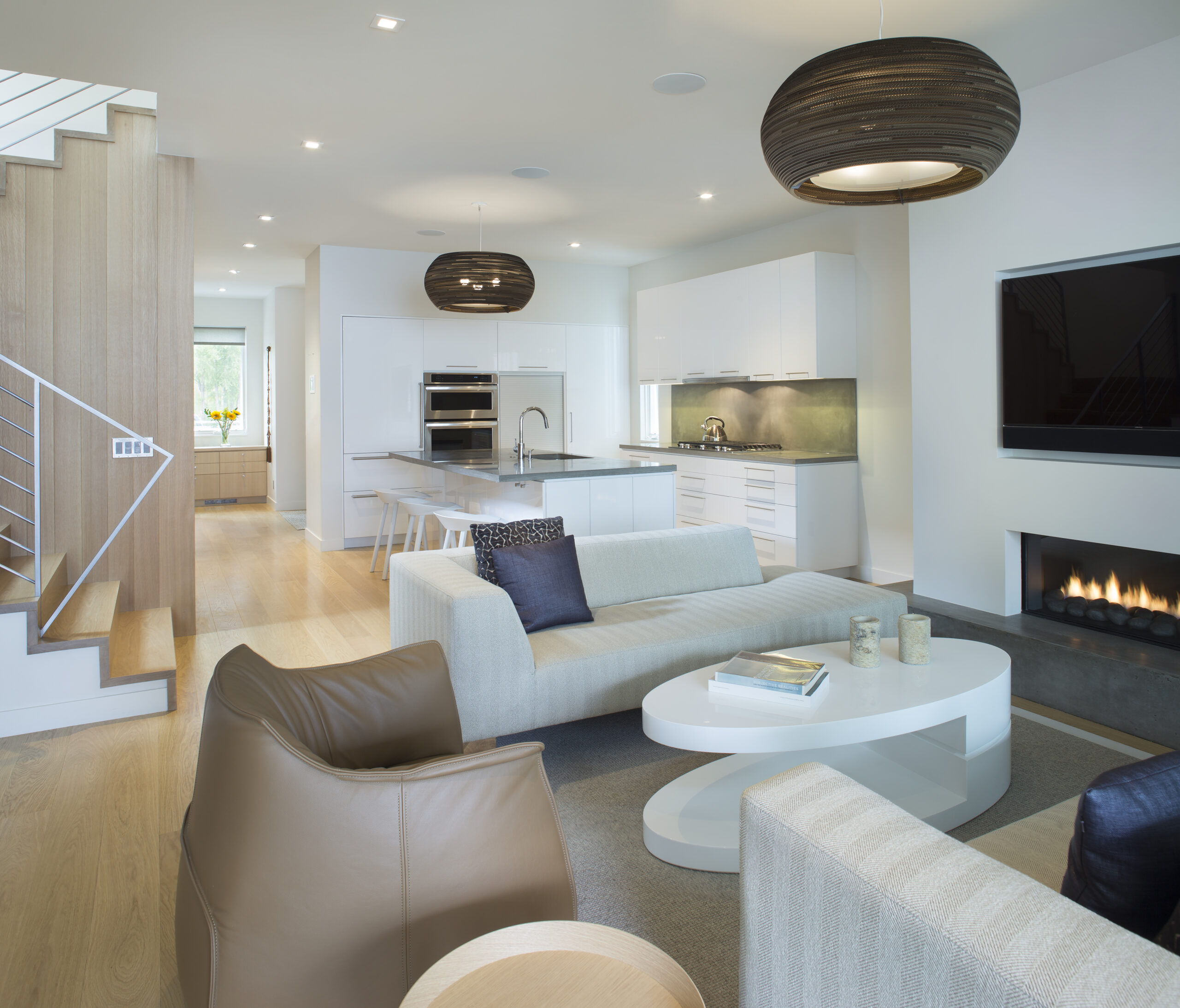
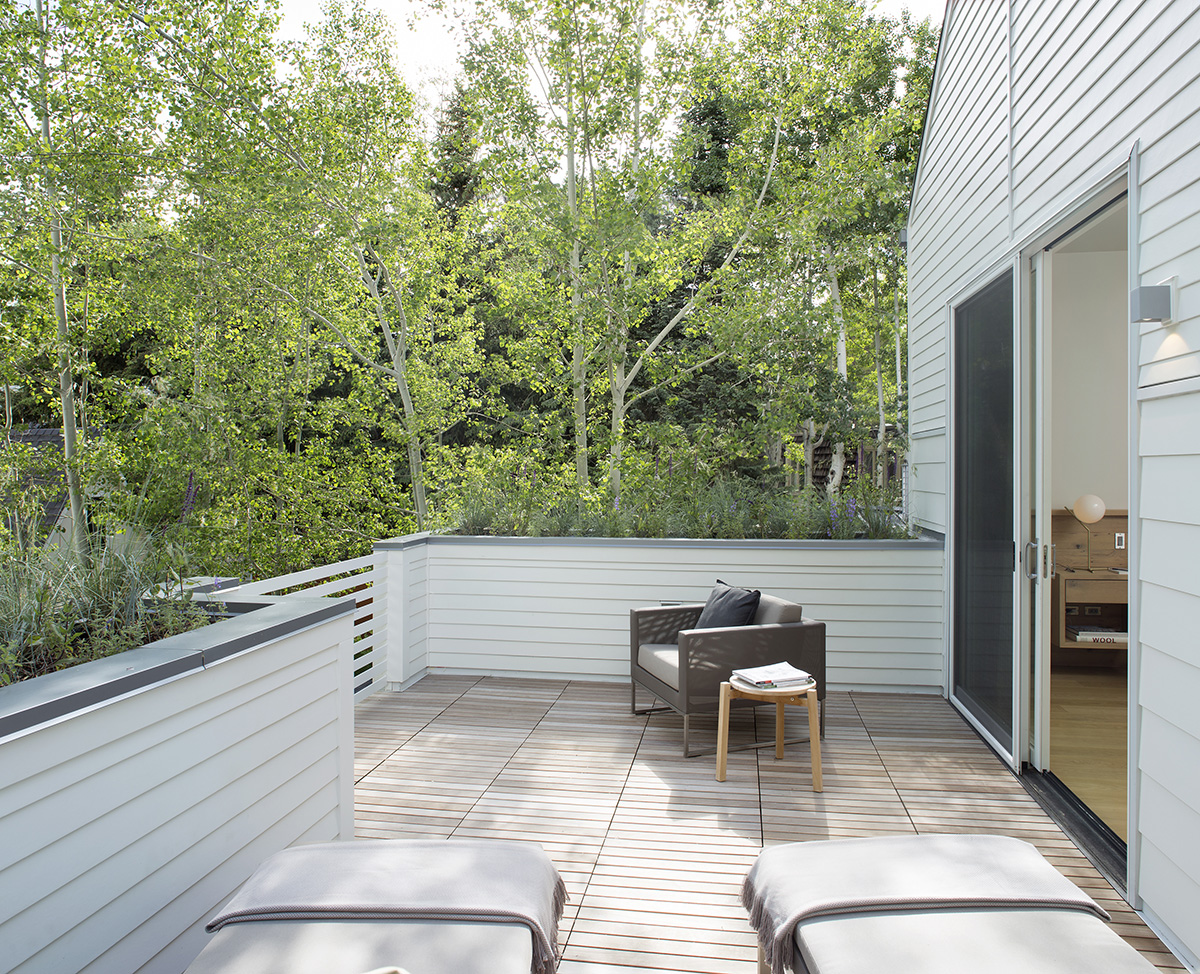
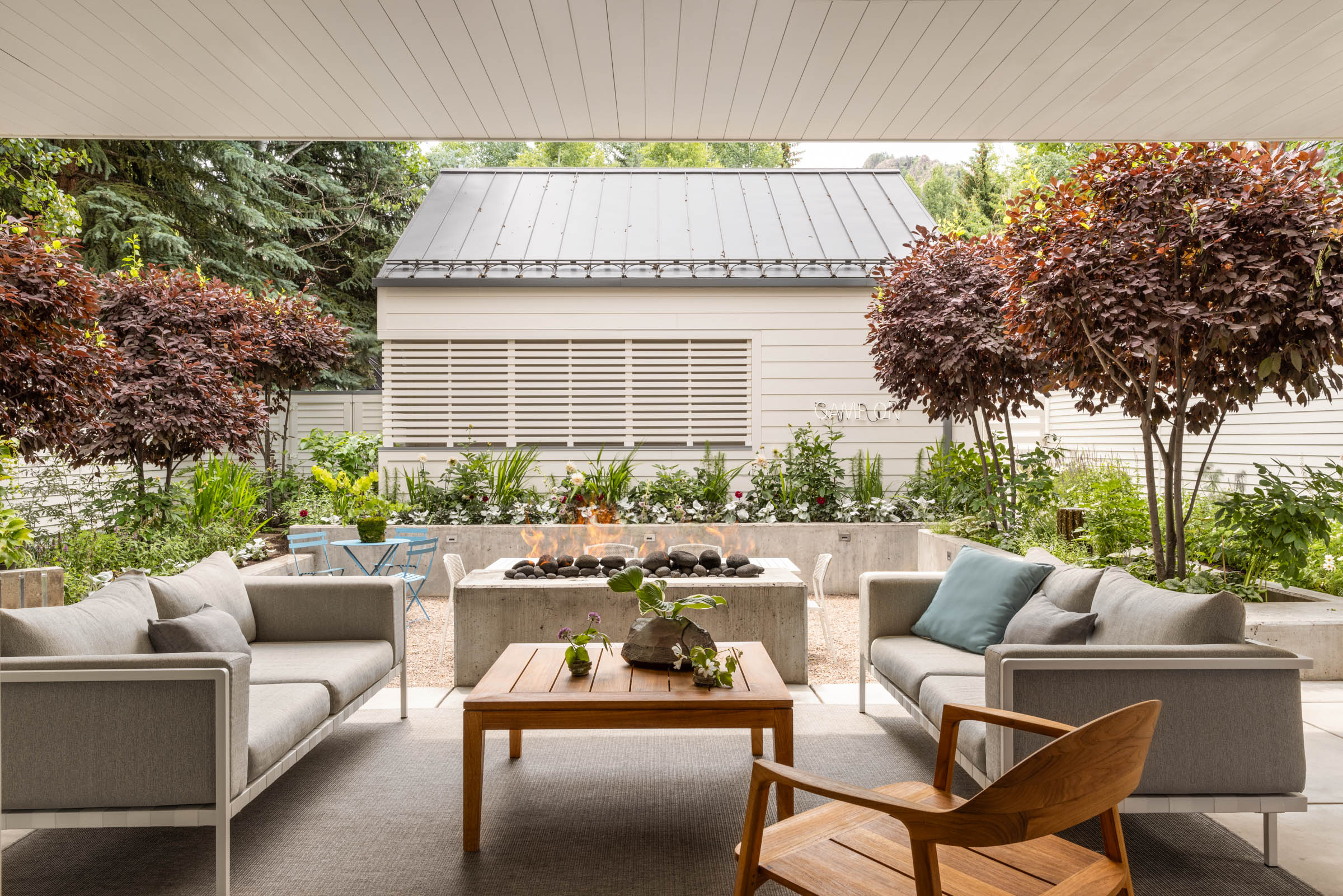
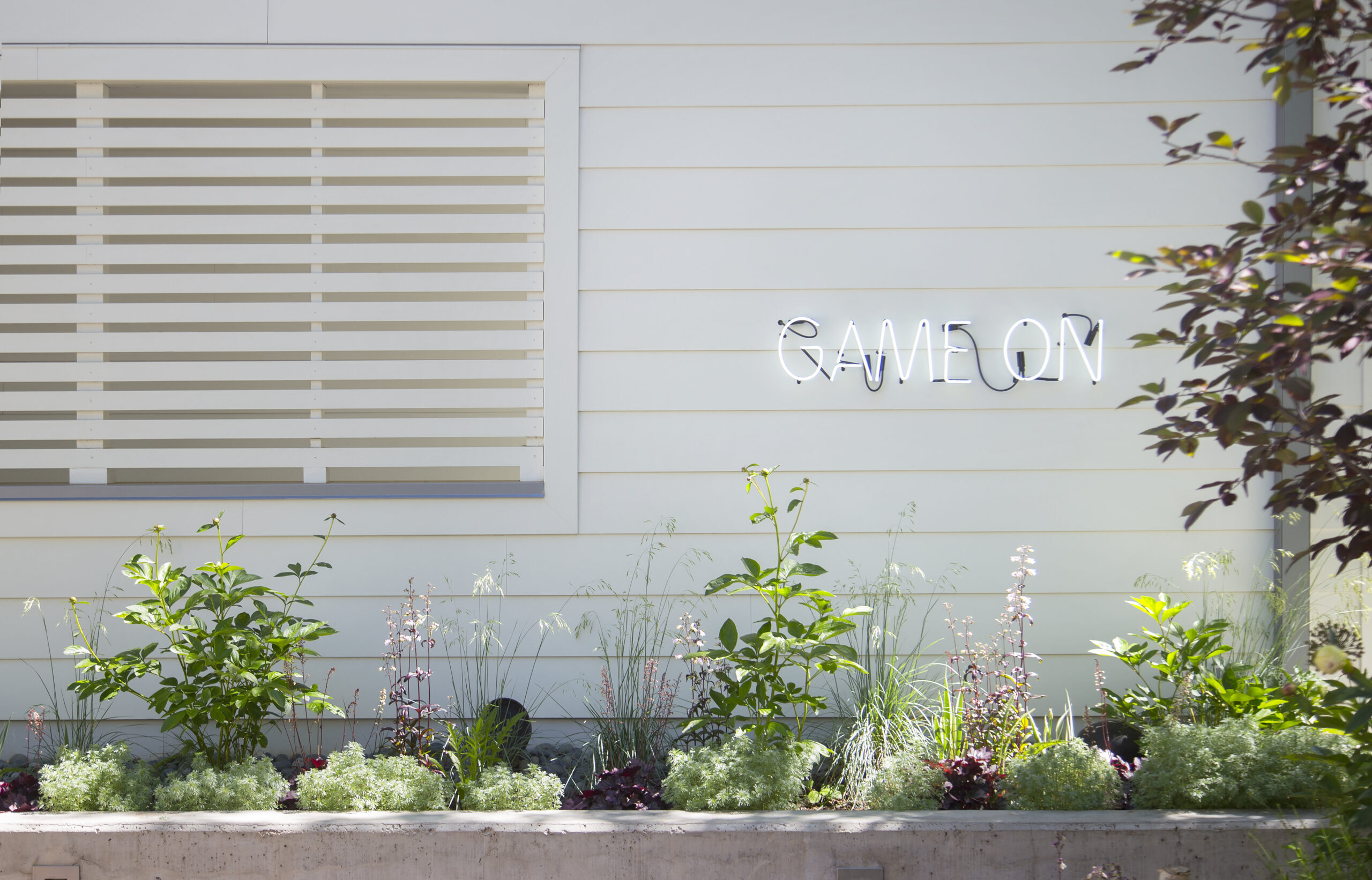
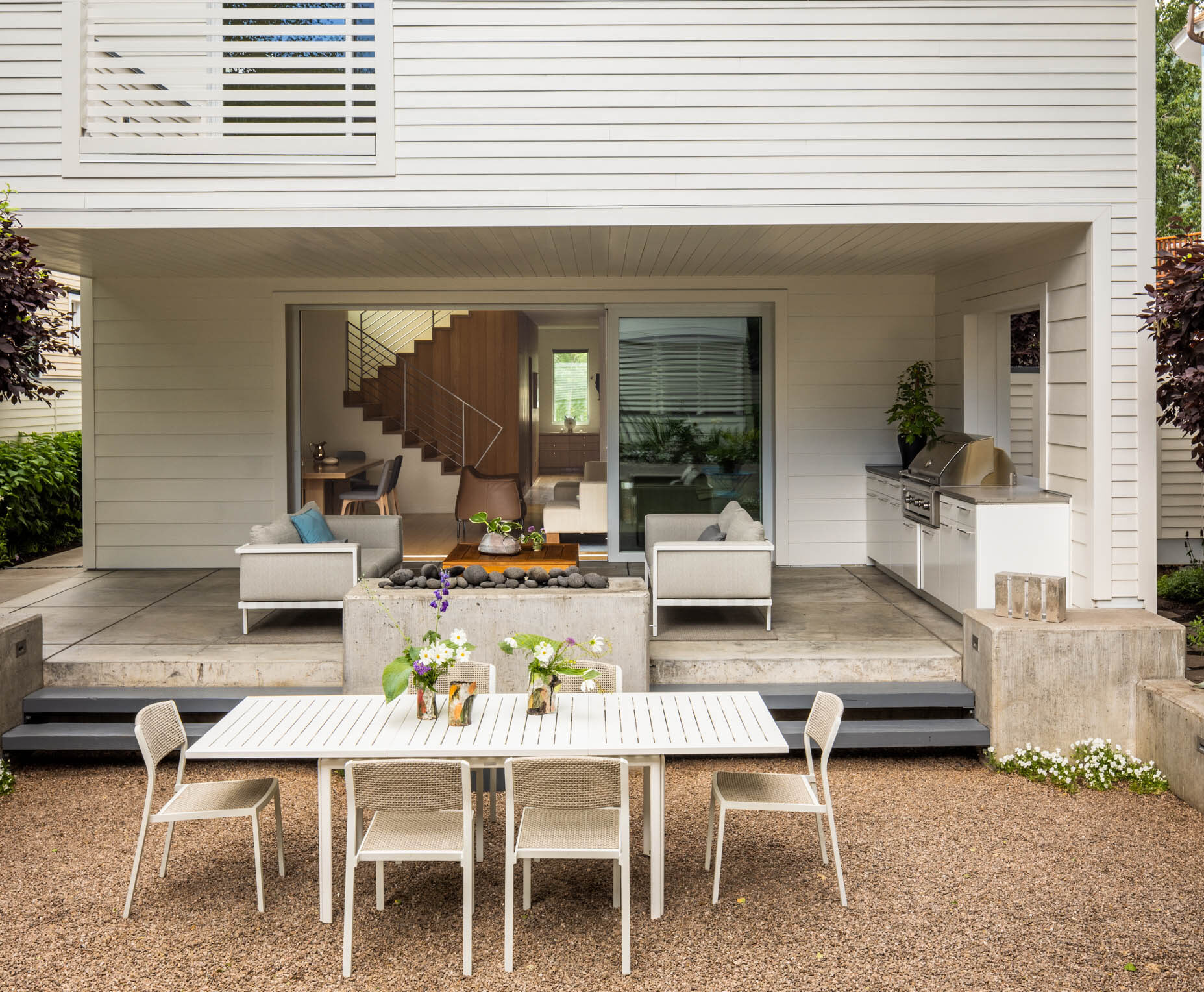
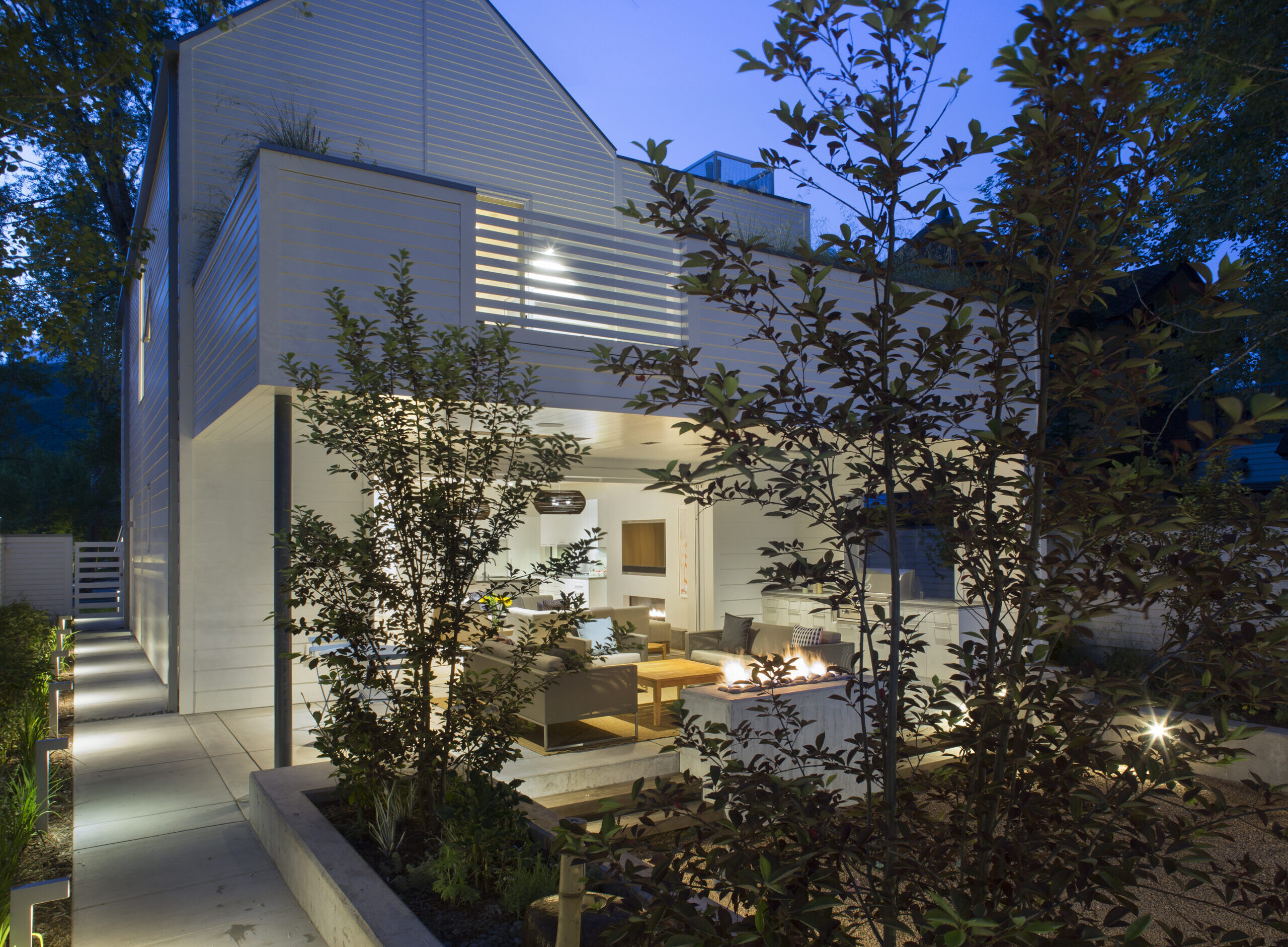
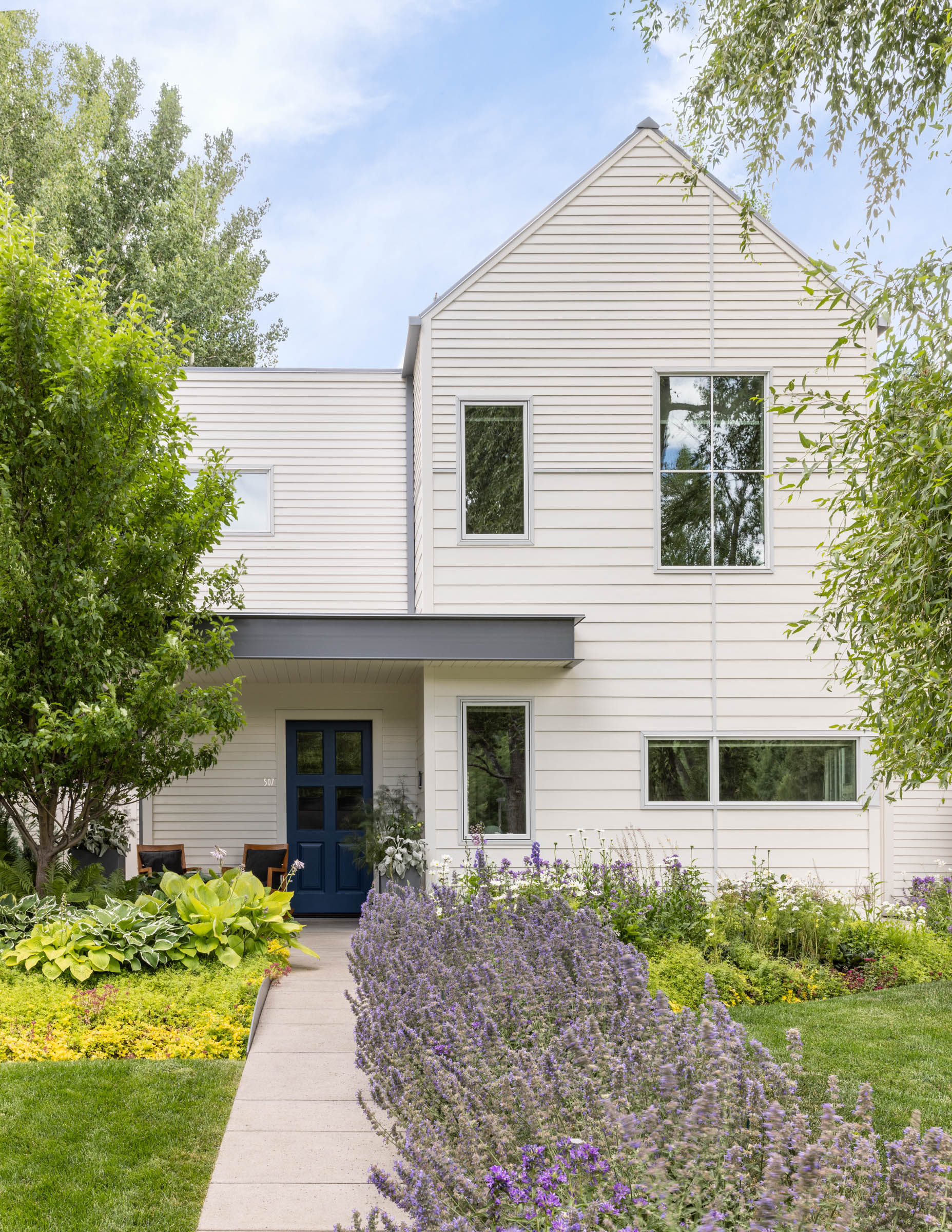
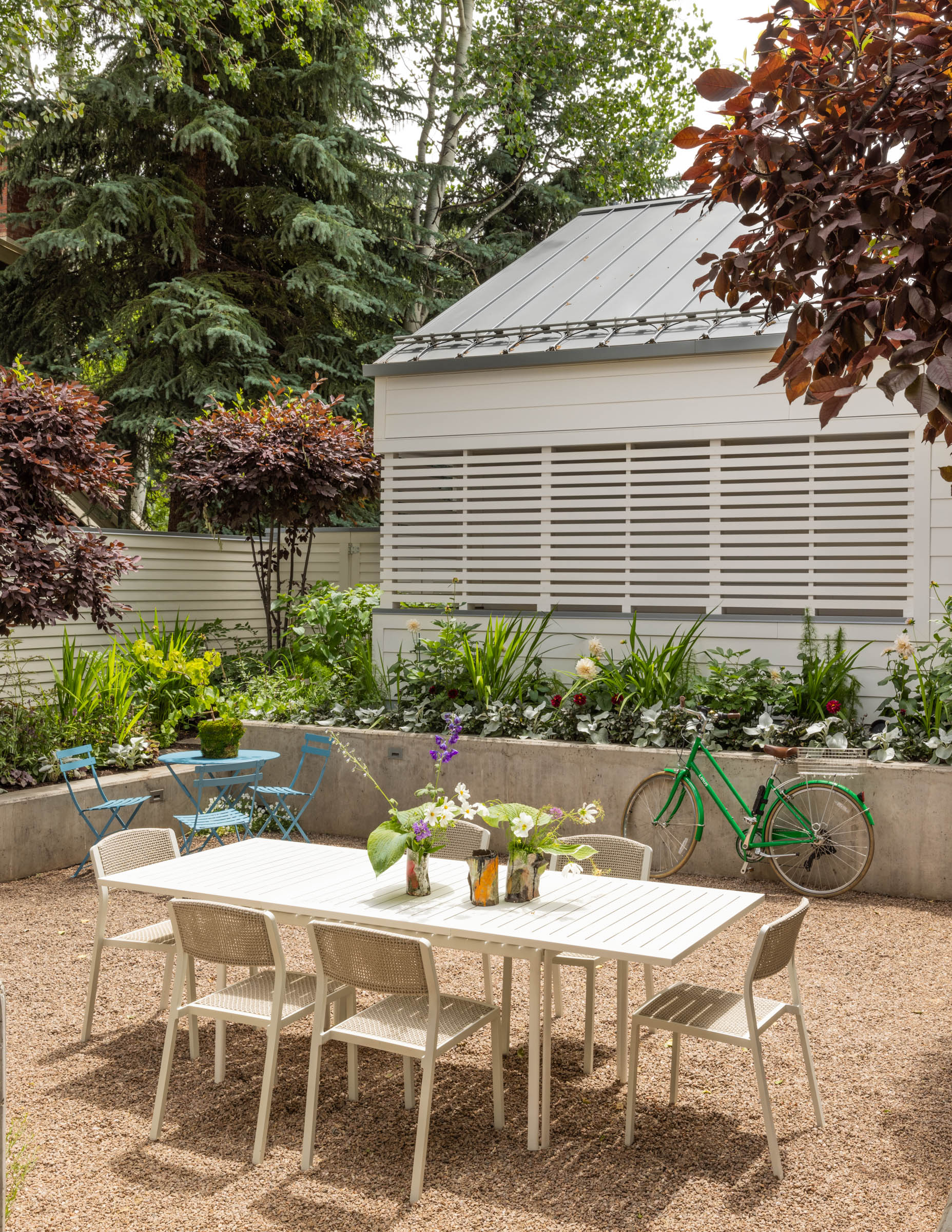
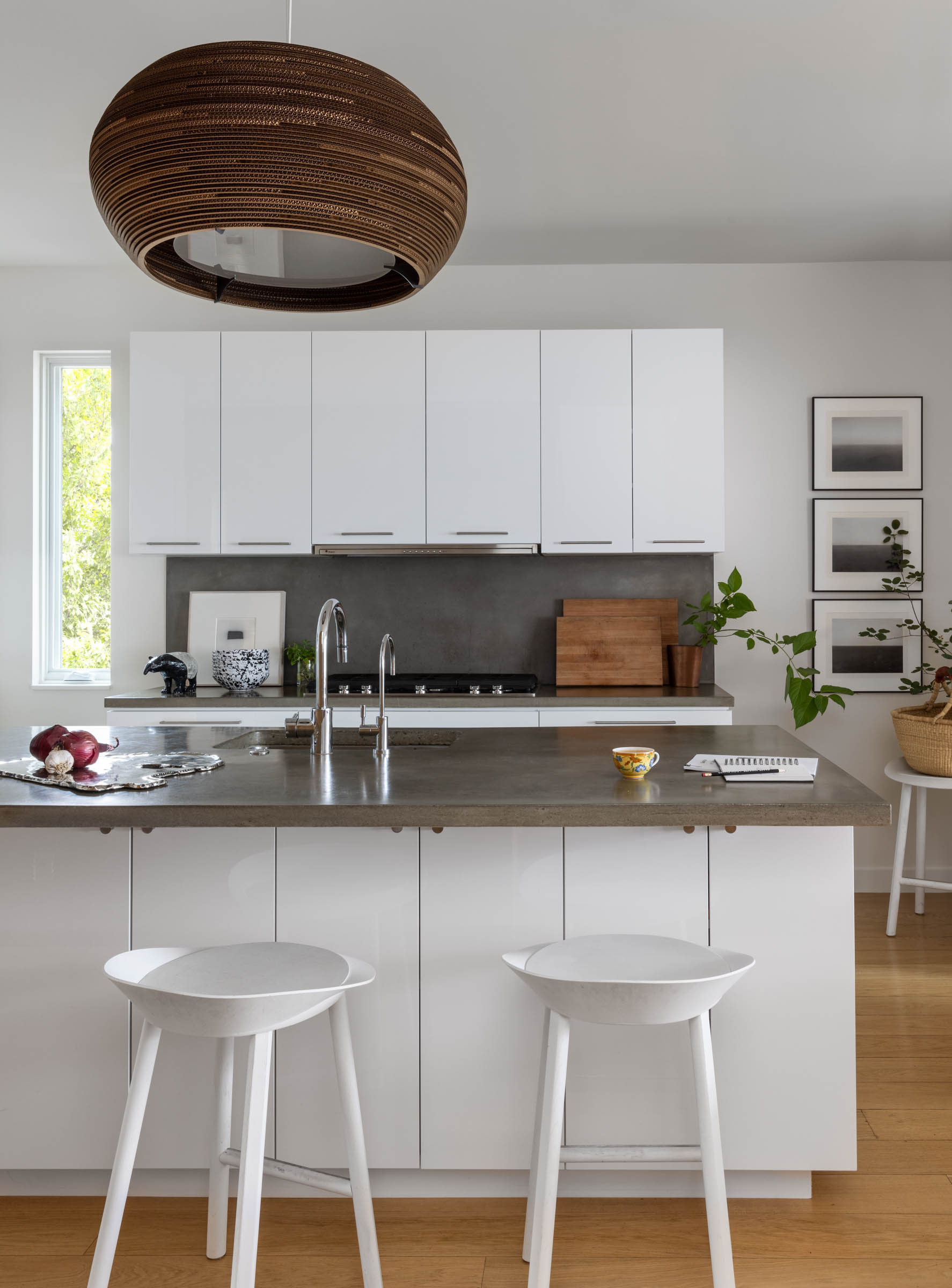
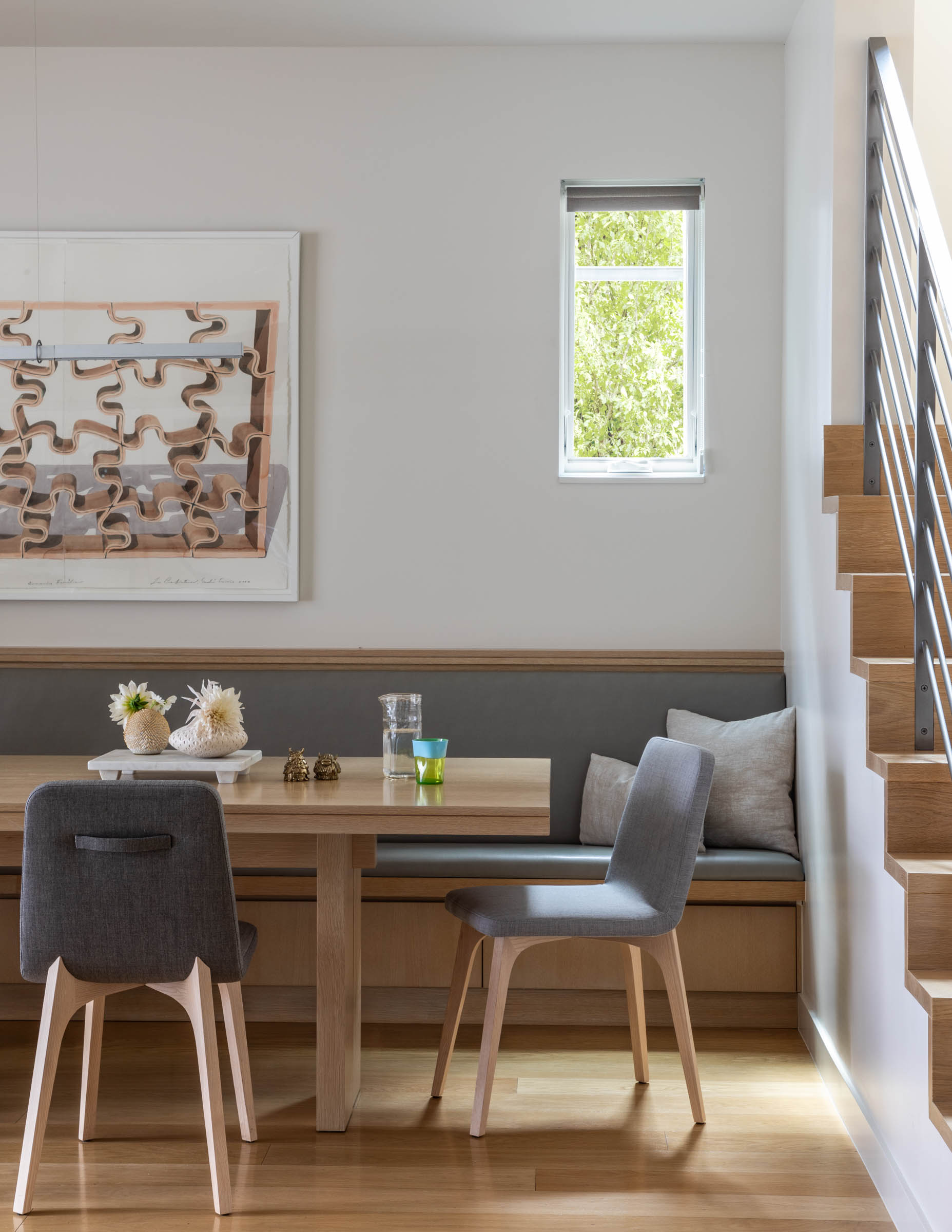
We remain unambiguous architectural contextualists, and find much to admire in our Aspen neighborhood, a repository of mostly modest historic residences, many dating from the late nineteenth century. Yet John and Sarah’s own home, named Game On, at once broadcasts its good-neighbor policy and subtly subverts it, with gestures that remain entirely personal and of the moment.
The site was formerly occupied by the Victorian next door; the owner purchased the house, moved it to one side, split the lot in two, and put the newly vacated eighth acre up for sale. At a glance, Game On represents as the same vintage as the one beside it. Each shares a projecting two-story gabled form, a subordinate side volume, and a front porch. Extend the glance, however, and the residence leaps forward in time, notably via the Miesian cantilevered porch canopy and a slightly surreal flourish: we continued the mullions of a second-story window the full width and height of the gabled volume, a gesture R+B likens to a ribbon on a gift-wrapped package.
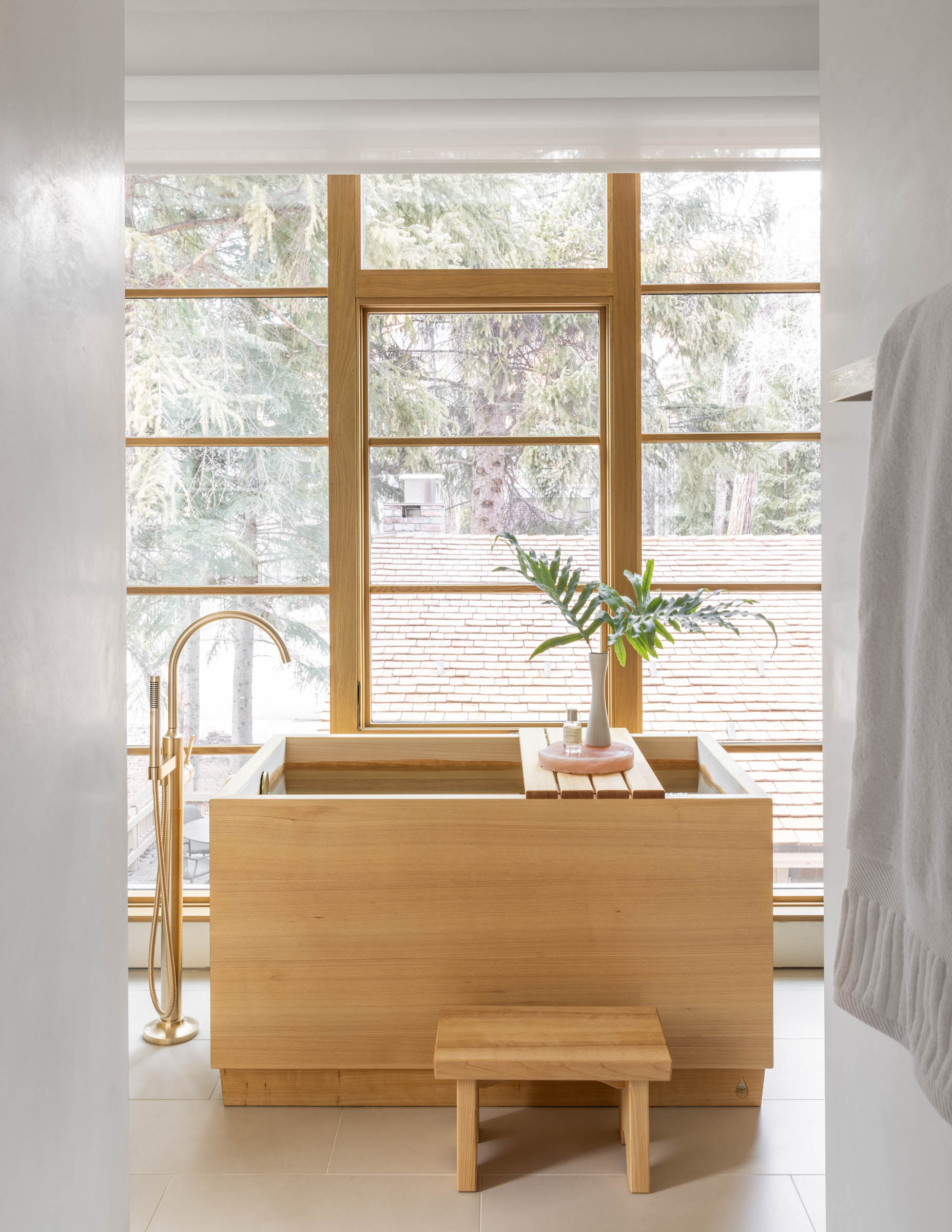
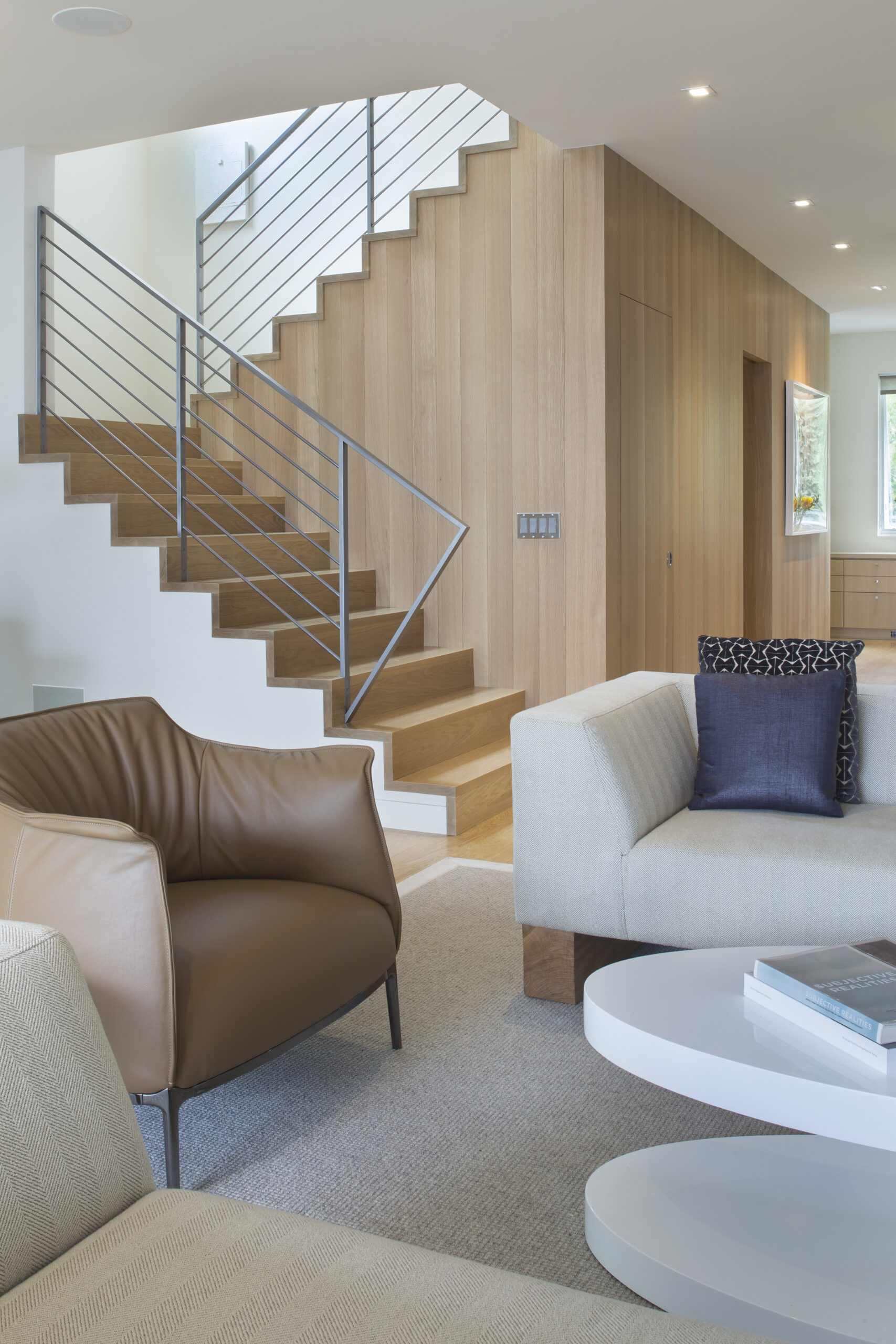
The interior is notable for the restraint of its material palette, largely limited to concrete, white oak, and white-painted walls, and the gracious apportioning of space. Game On’s 3,300 square feet are divided equally between three floors: a spacious, well-equipped subterranean wellness center; a main level with a foyer and office in front and a kitchen/living/dining space on the garden side; and a primary suite – incorporating a large bedroom, and a bath with a steam shower and cedar soaking tub – and guest room upstairs.
In back, lift-and-slide floor-to-ceiling glass pocket doors open the entirety of the main floor to a covered outdoor living room running the full width of the residence. Broad steps lead down to a gravel-covered bocce court that also serves as a storm-water filtration system. The court is flanked by concrete planters that soften the garden’s edges with greenery and lightly screen the lot from the neighbors.
Beyond the garden stands the 500-square-foot garage and, beneath it, a two-bedroom guest apartment, nicknamed Li’l G. Within a small, below-grade footprint, we have arranged a fully equipped kitchen and sitting area, a grown-up bedroom, a bunkroom for kids, and a full bath.
Its modesty and simplicity (and LEED Gold rating) notwithstanding, the house retains a welcoming vibe in an austere environment in the modern style. Game On is often opened up for philanthropic gatherings and salon-style get-togethers, and potential clients are also invited to drop in and have a look. ‘I think it’s important to show them this house,’ Sarah says, ‘not to encourage copying it, but to demonstrate a sensibility.’
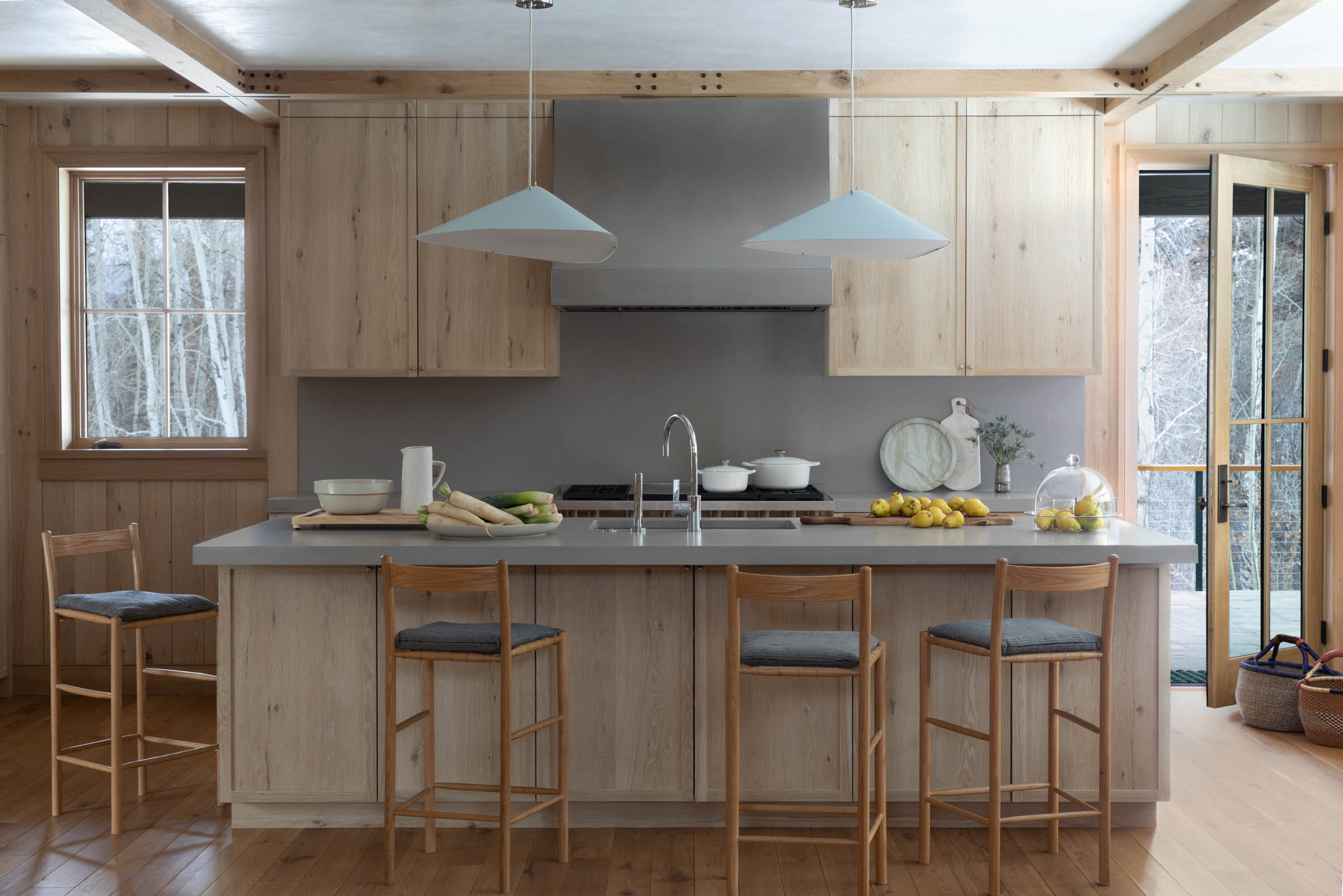
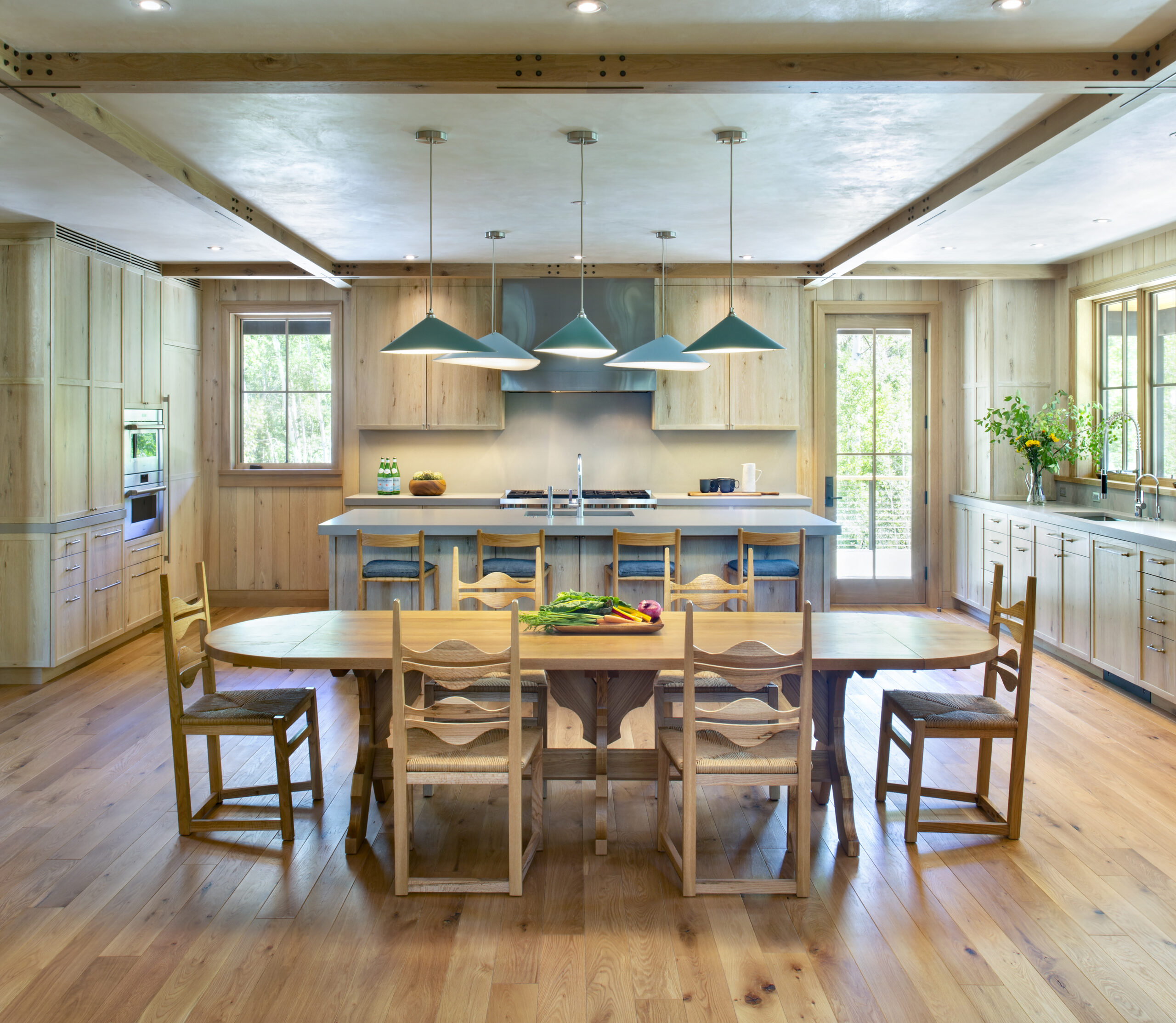
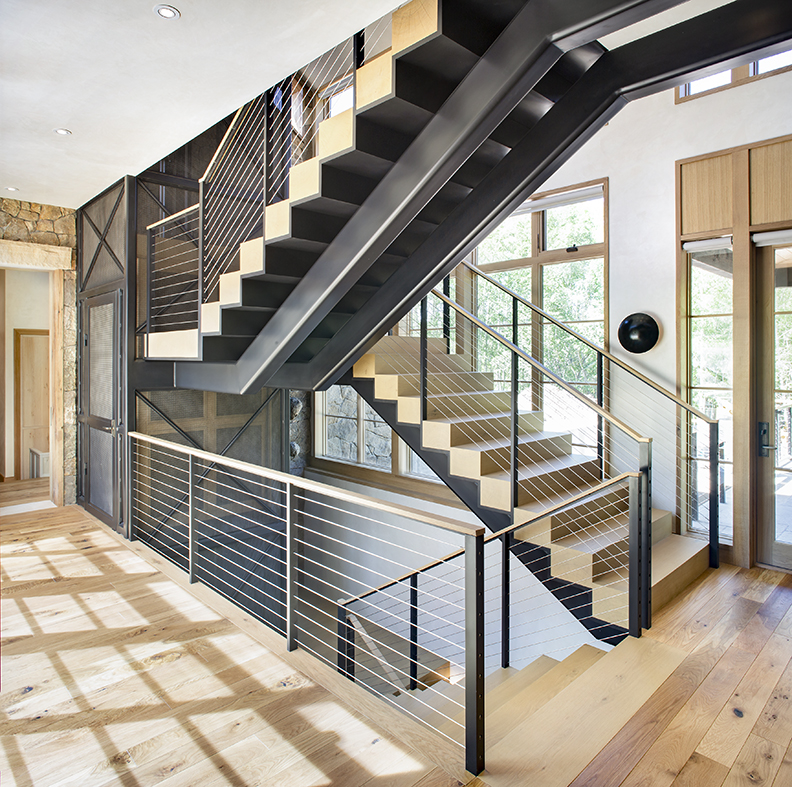
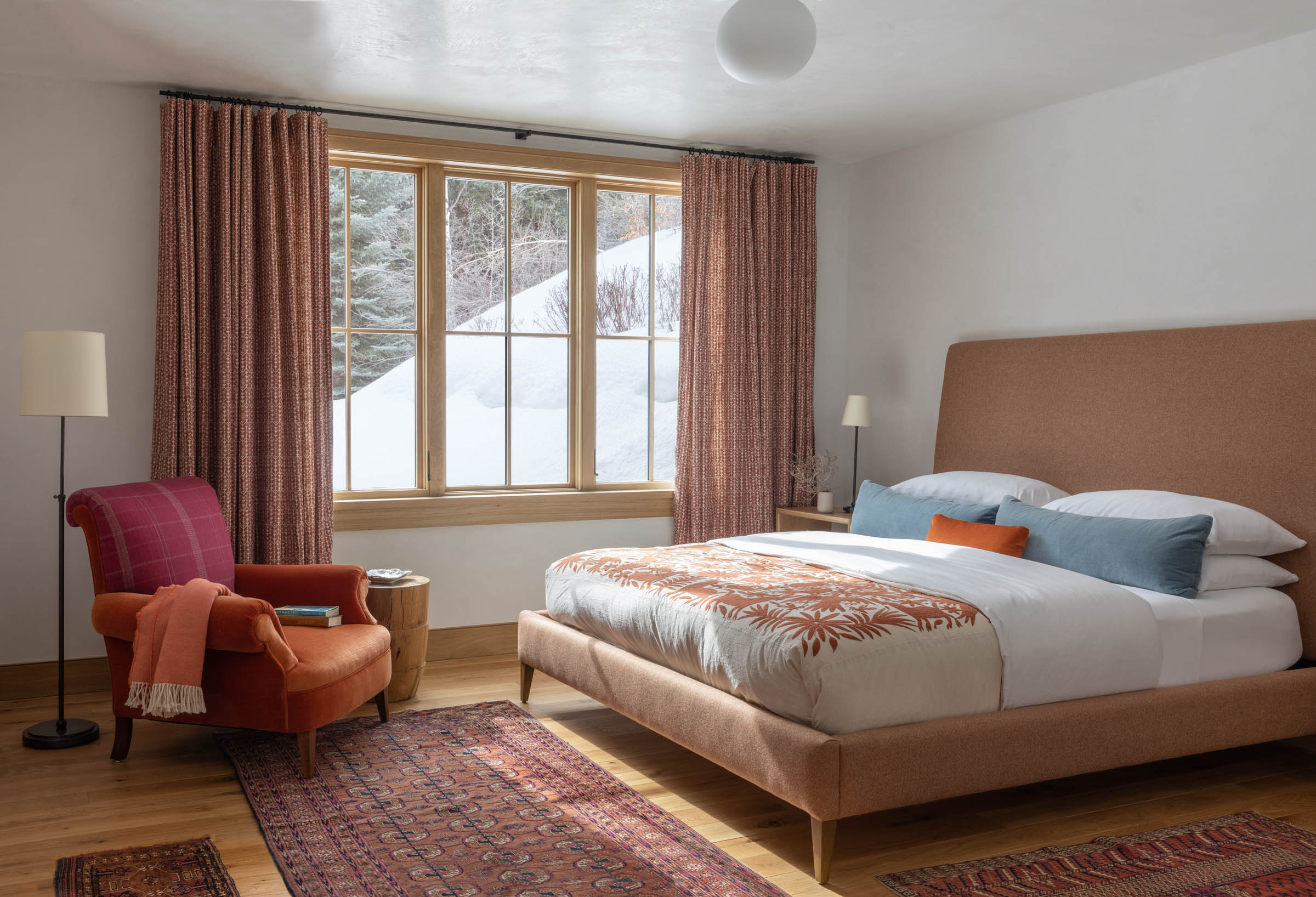
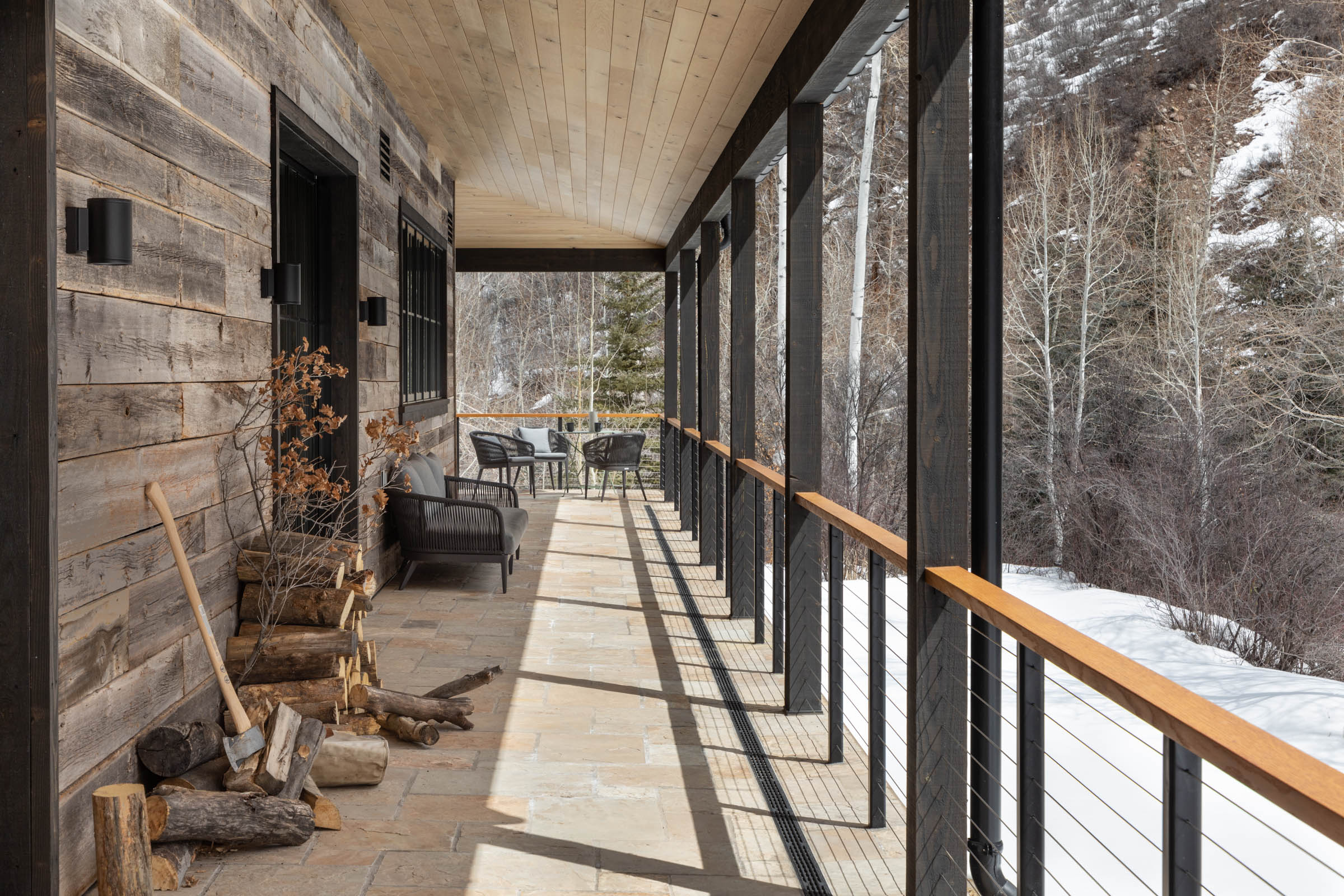
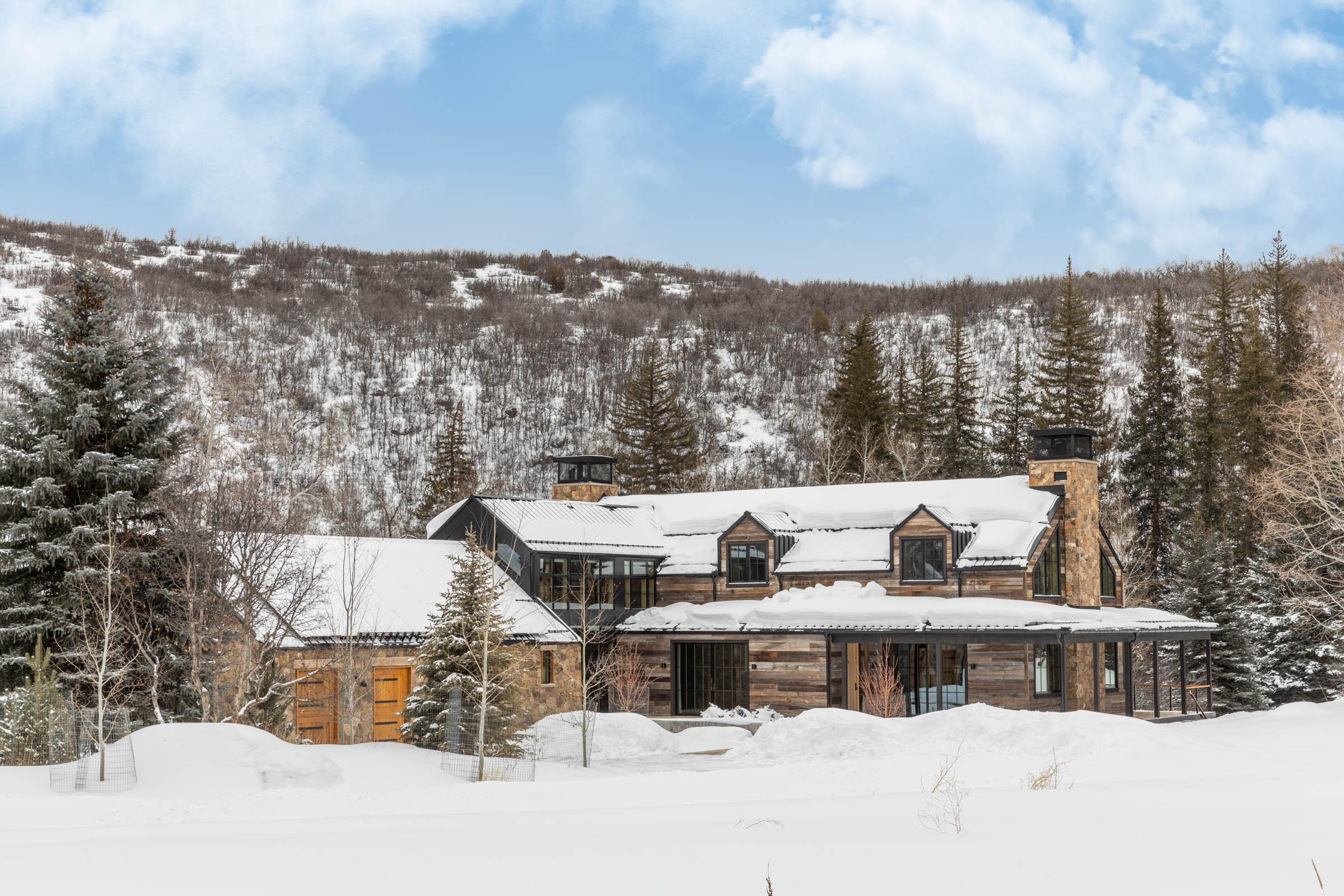
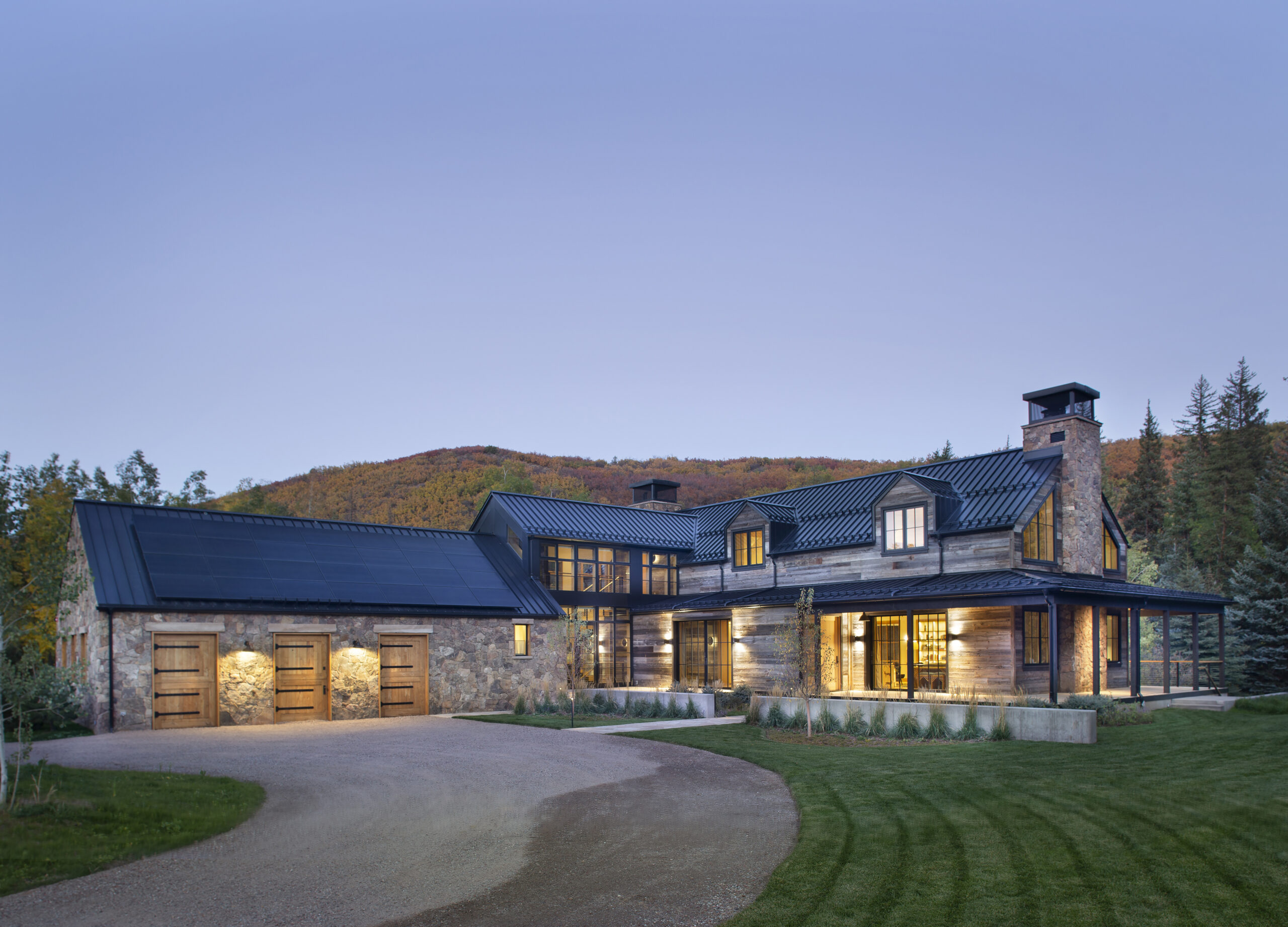
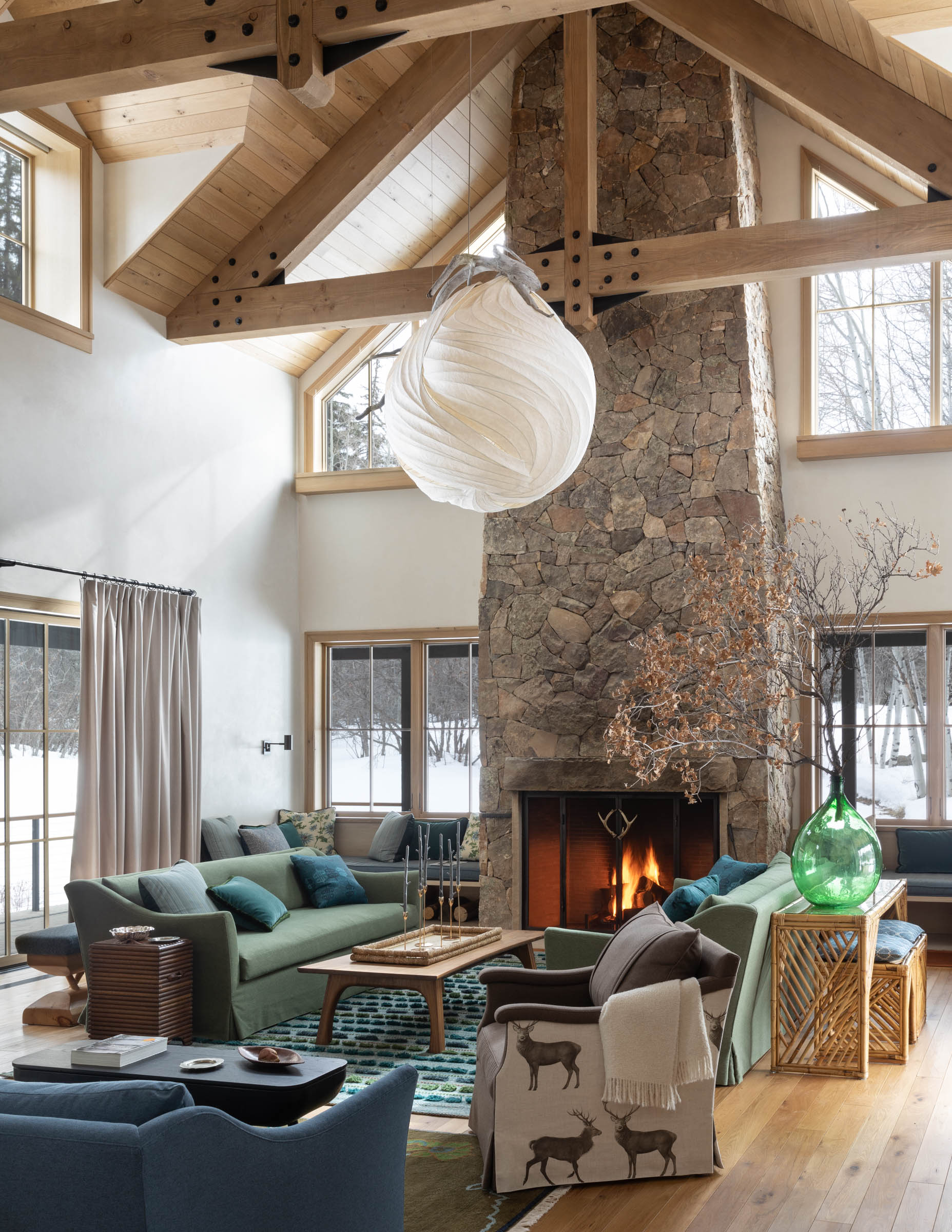
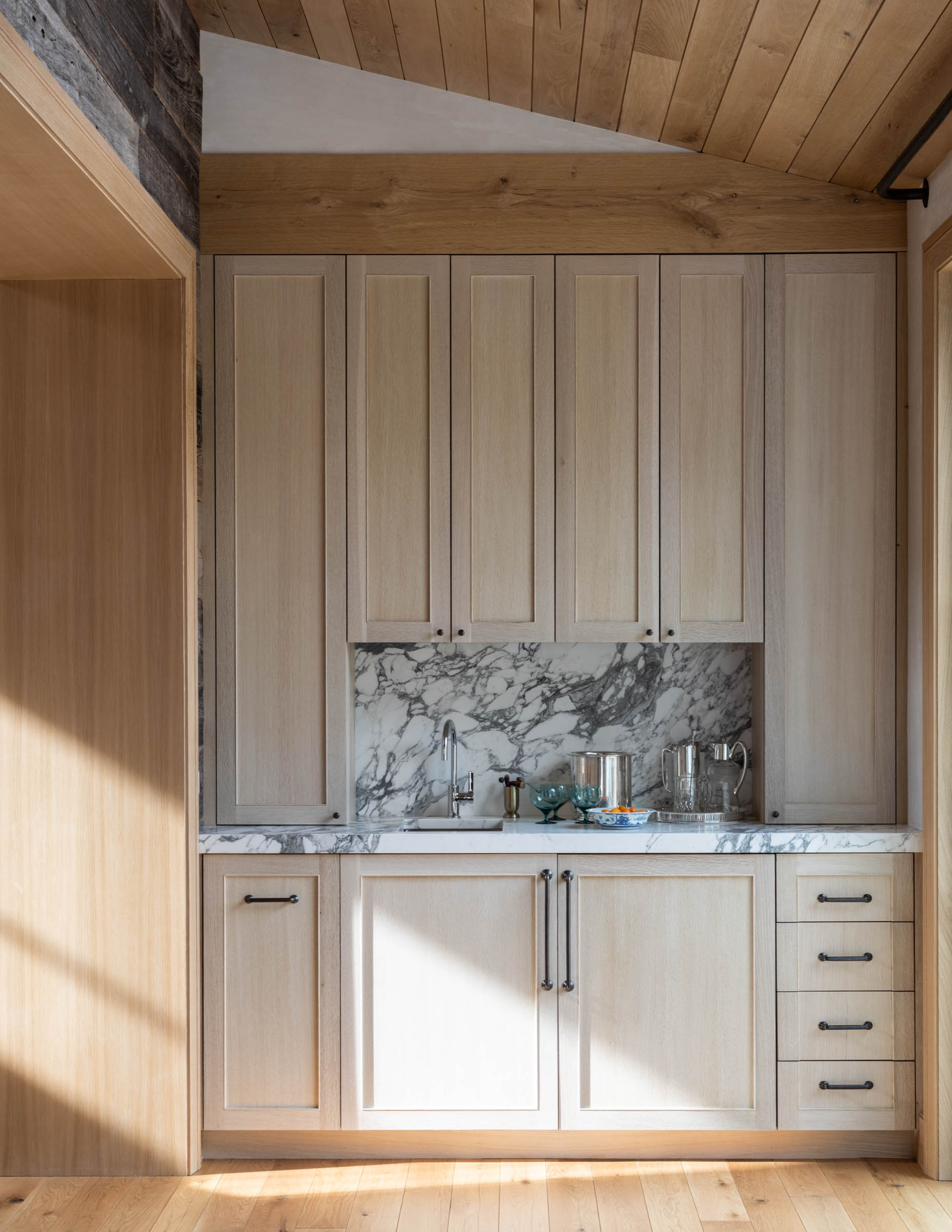
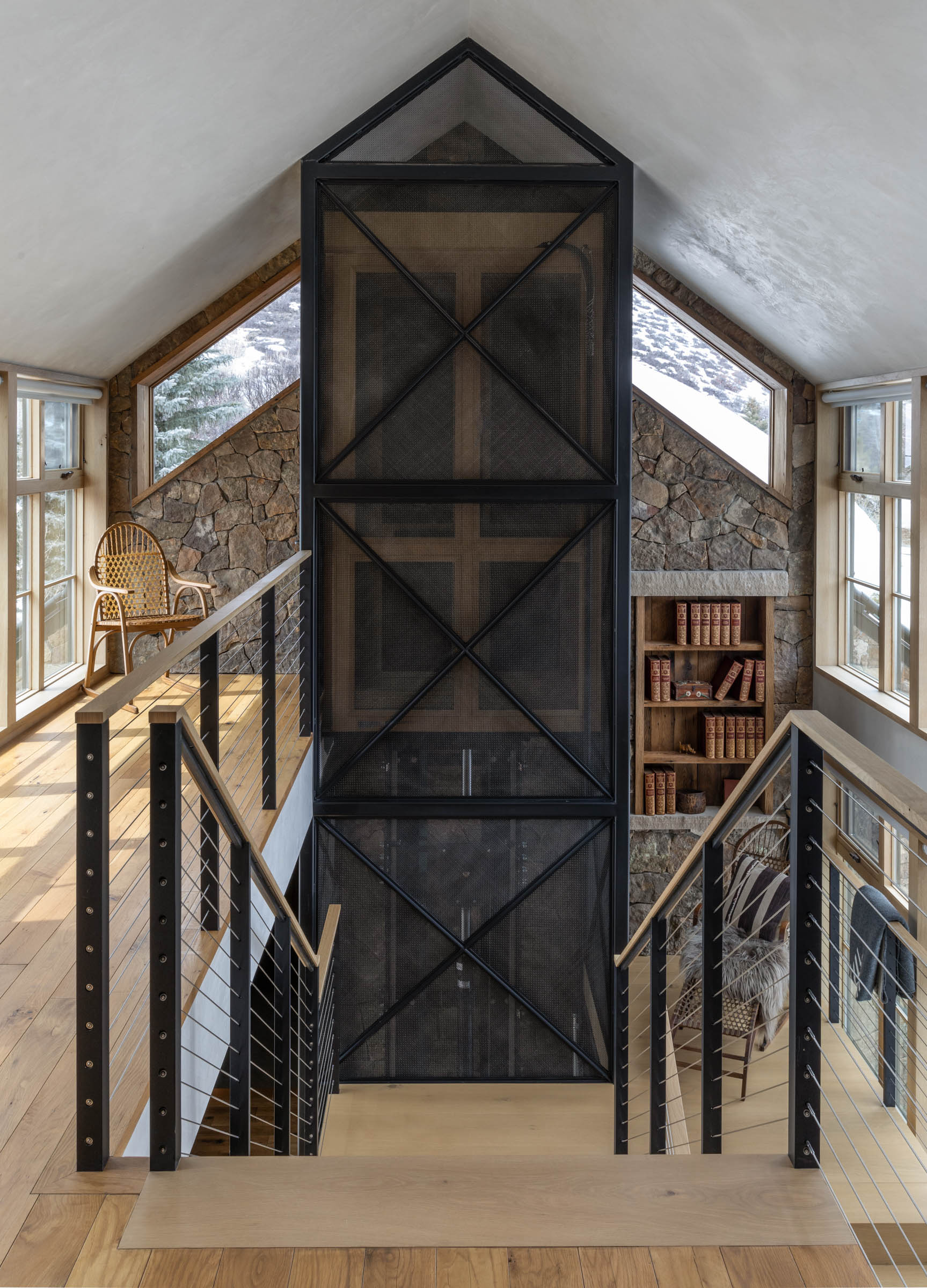
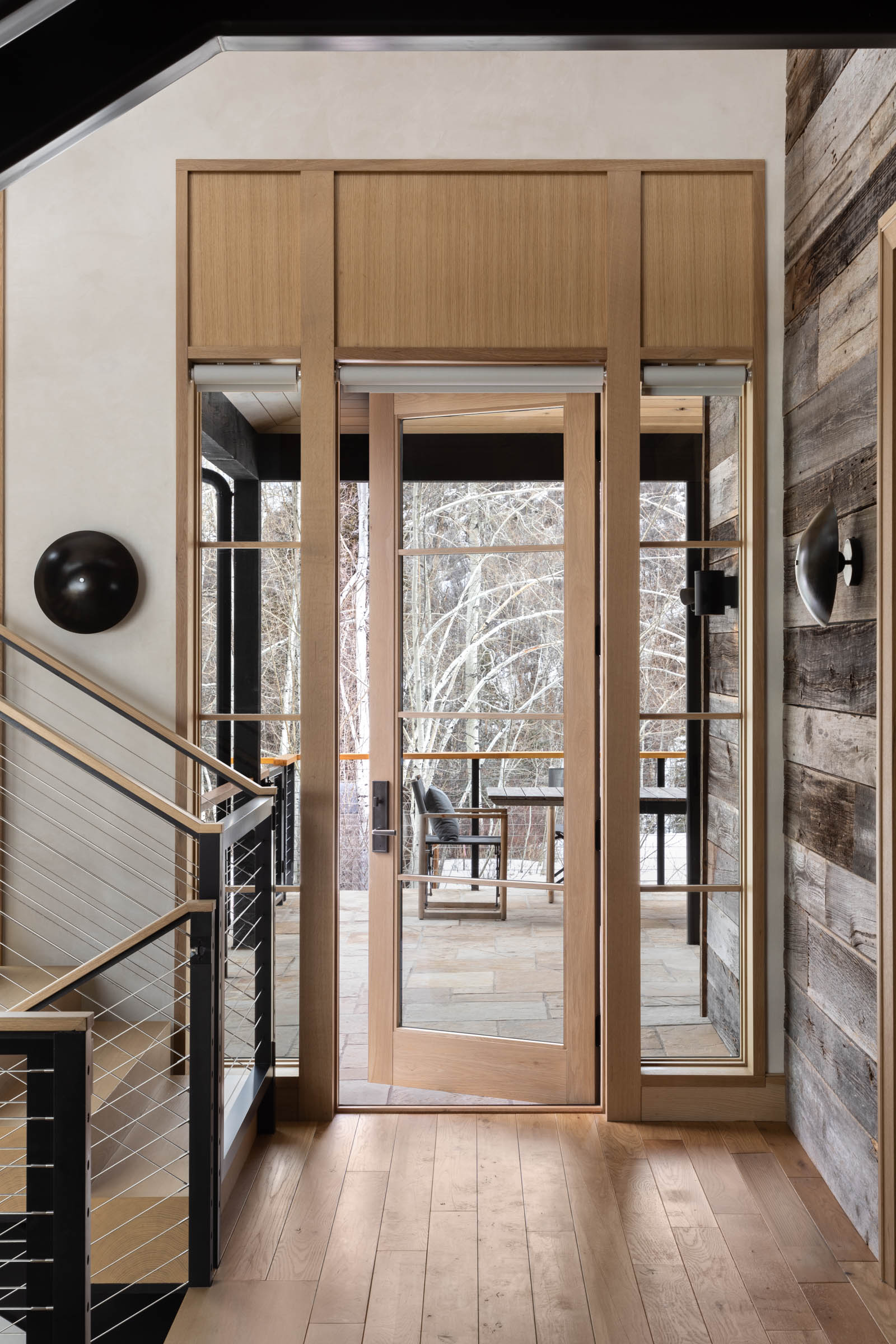
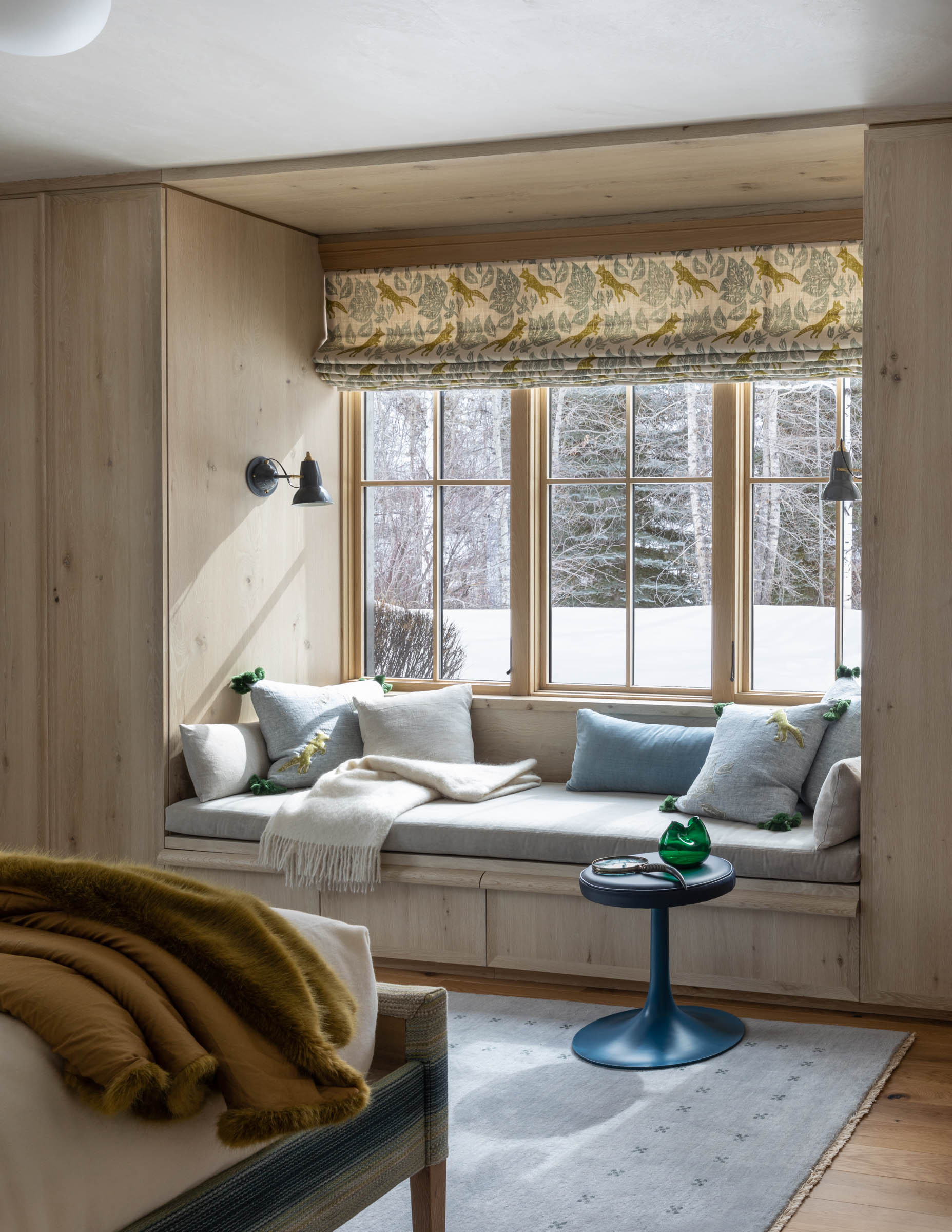
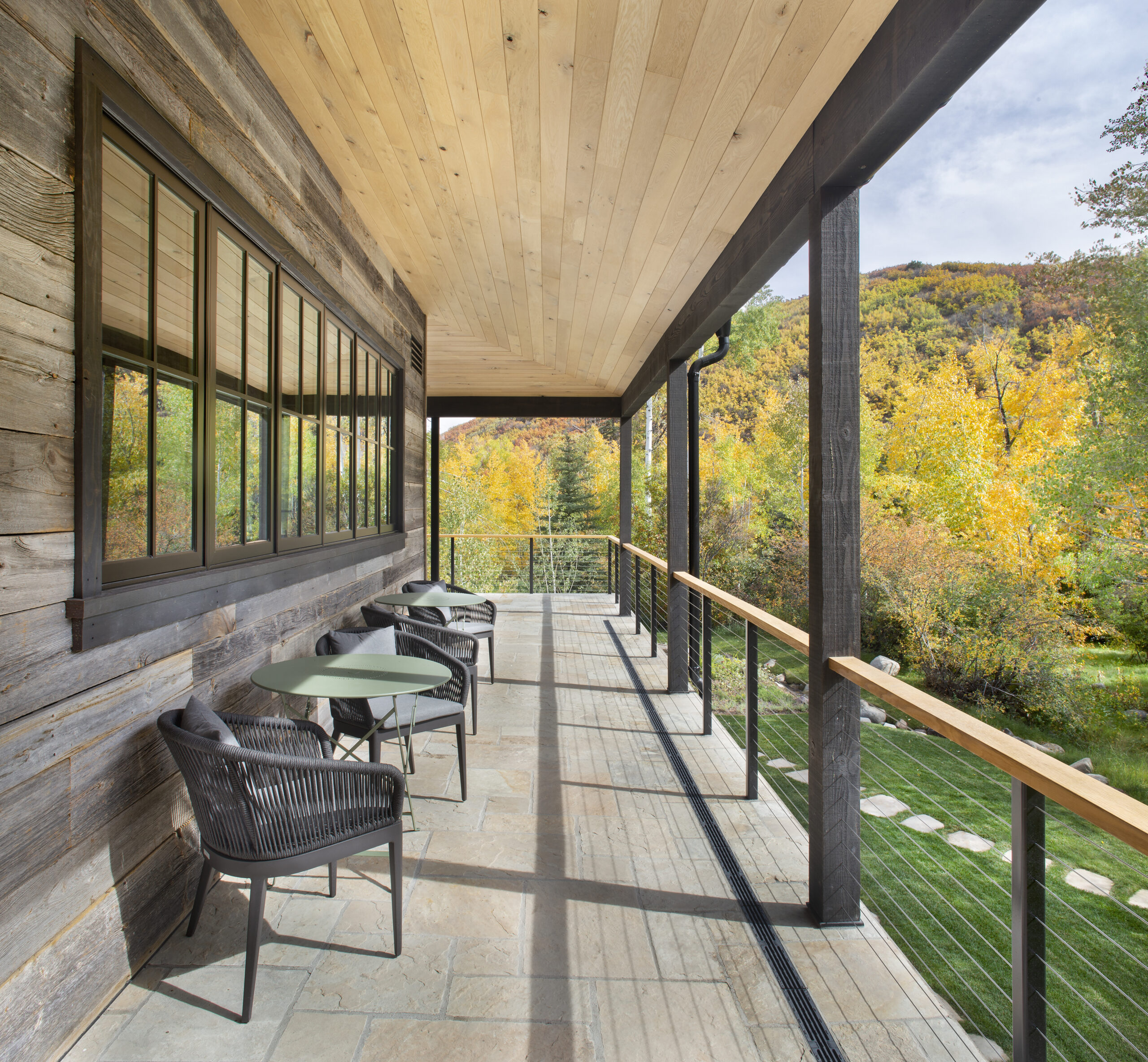
As families get bigger, the notion of ‘a place for all’ escalates in appeal: a retreat that fosters community and interaction, facilitates multi-generational gathering, and supports aging in place. Creek House grew out of precisely this impulse.
‘There are thirty family members, so we solicited feedback for what everyone wanted the house to be,’ Broughton relates. From this research, R+B discovered that the optimal way to strengthen intergenerational connections was via a paradigm of unforced togetherness: to design spaces with specific uses, but to enable the people within them to participate in collective activities, break off into smaller groups, or enjoy solitary pursuits.
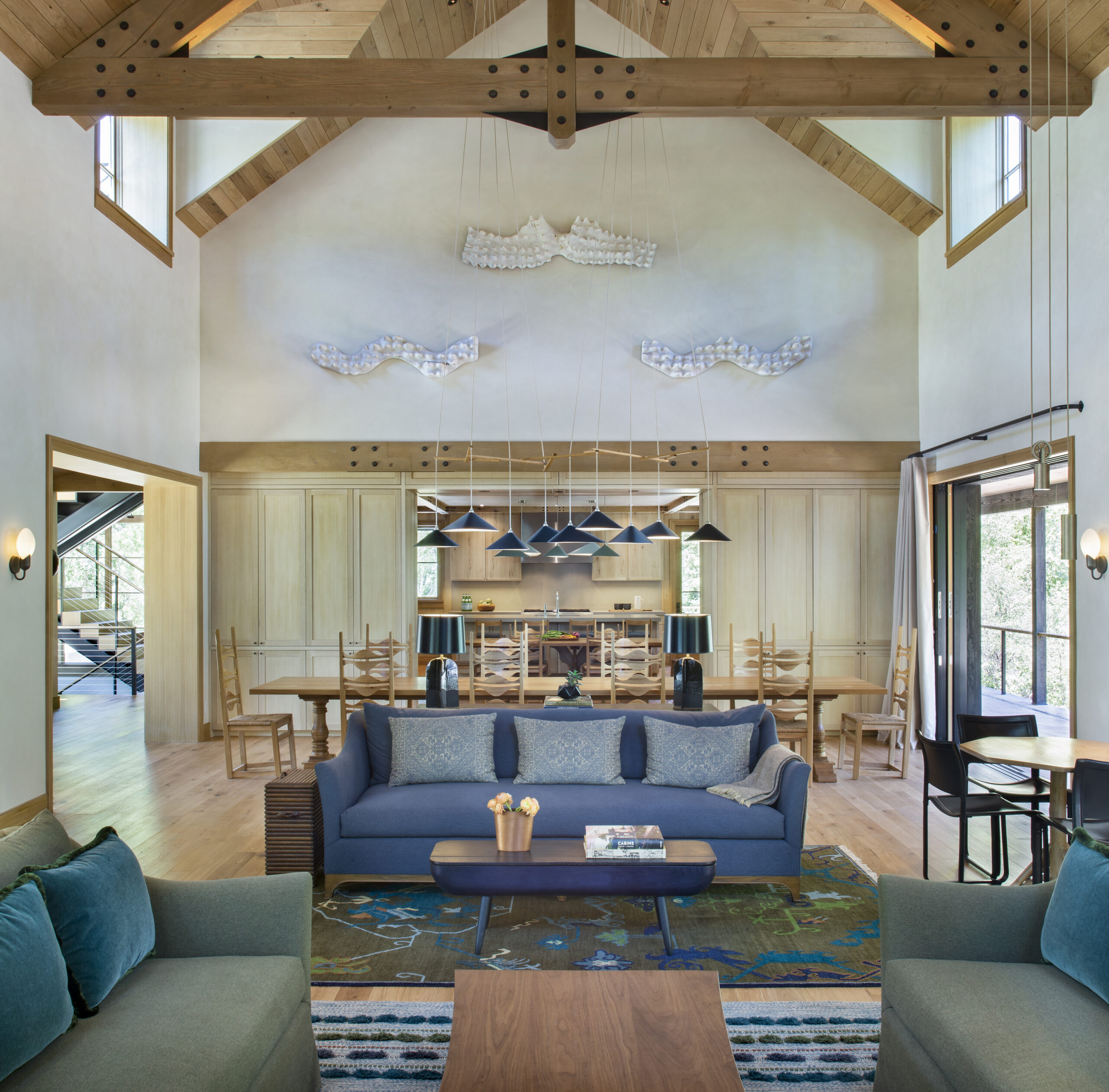
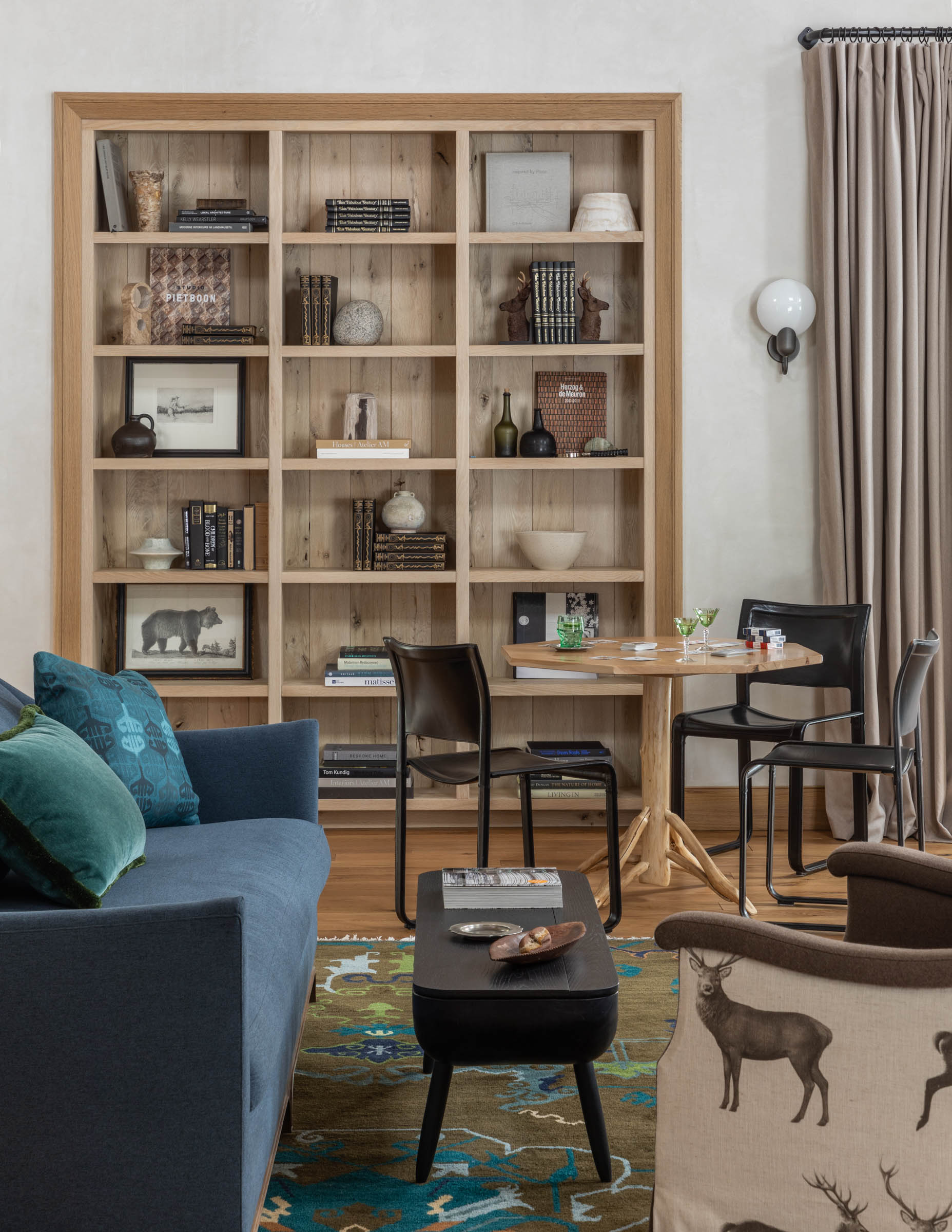
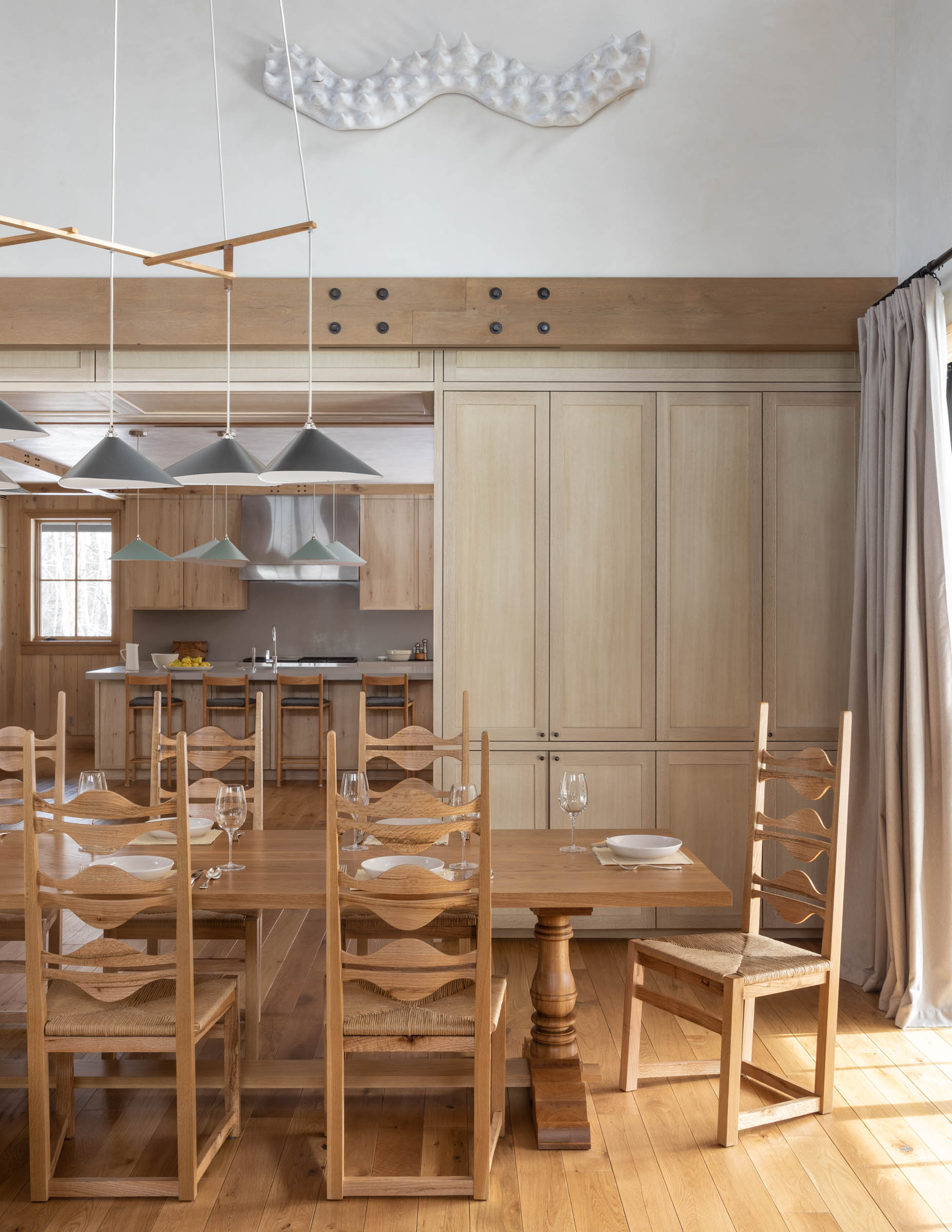
There are multiple bedrooms, as well as play and media rooms, but the principal multigenerational appeal lies in the great room, which soars to a height of twenty-three feet. The fireplace is flanked by reading nooks; there are two primary sitting areas, one before the fireplace, one at the room’s midpoint; a gaming table, in front of a bookcase; and an expanding feasting table for all thirty family members at the room’s far end. The sense of home is palpable, in an environment that can be savored in multiple ways.
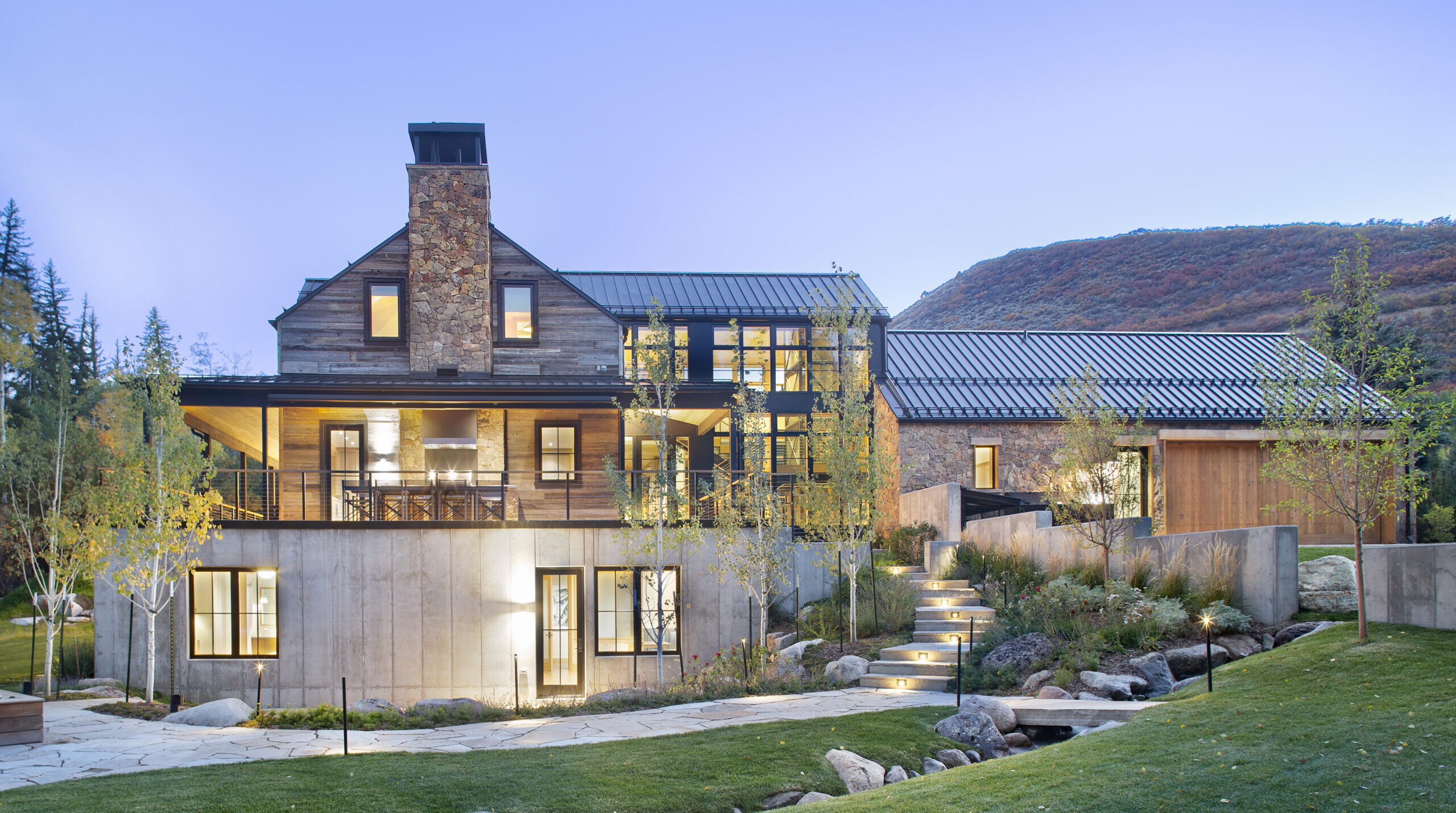
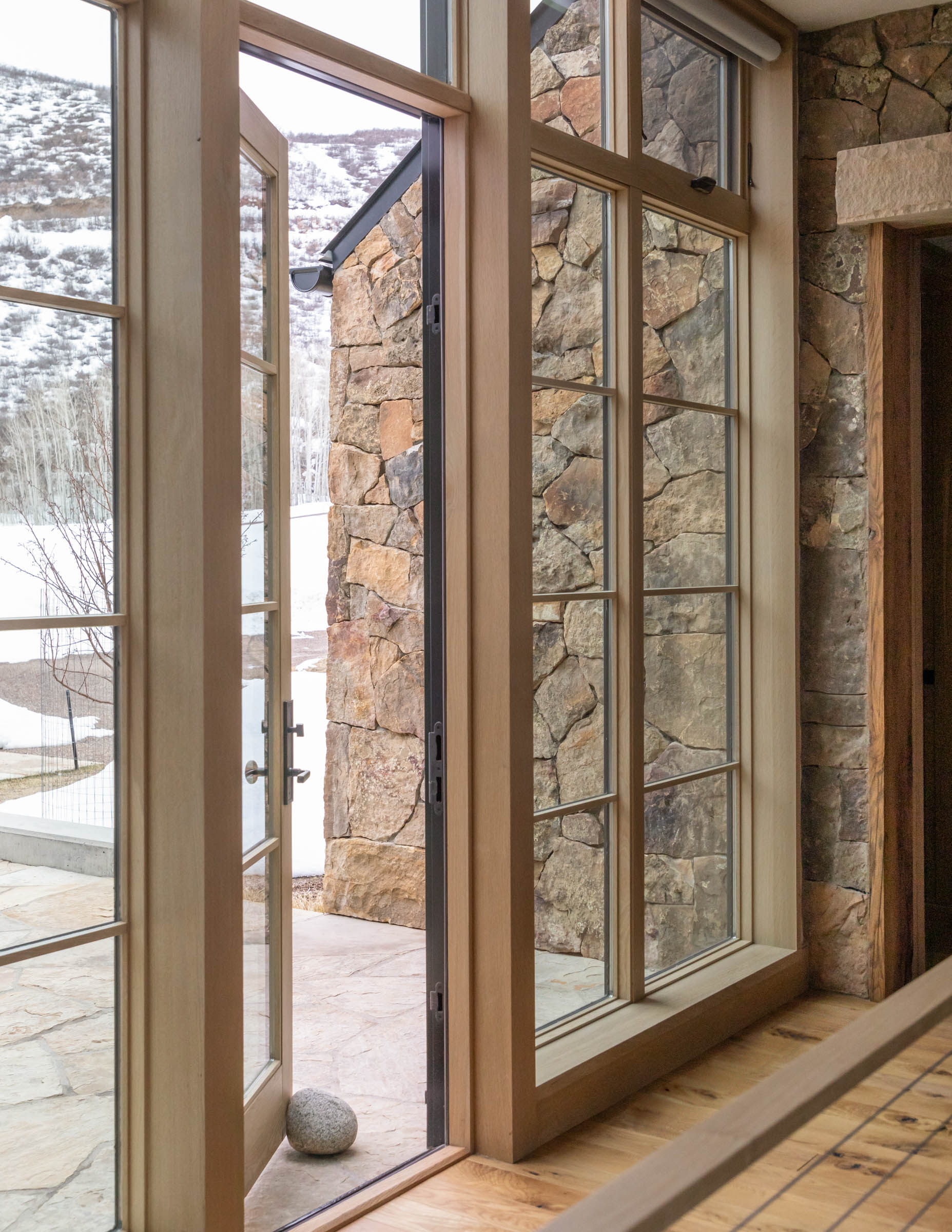
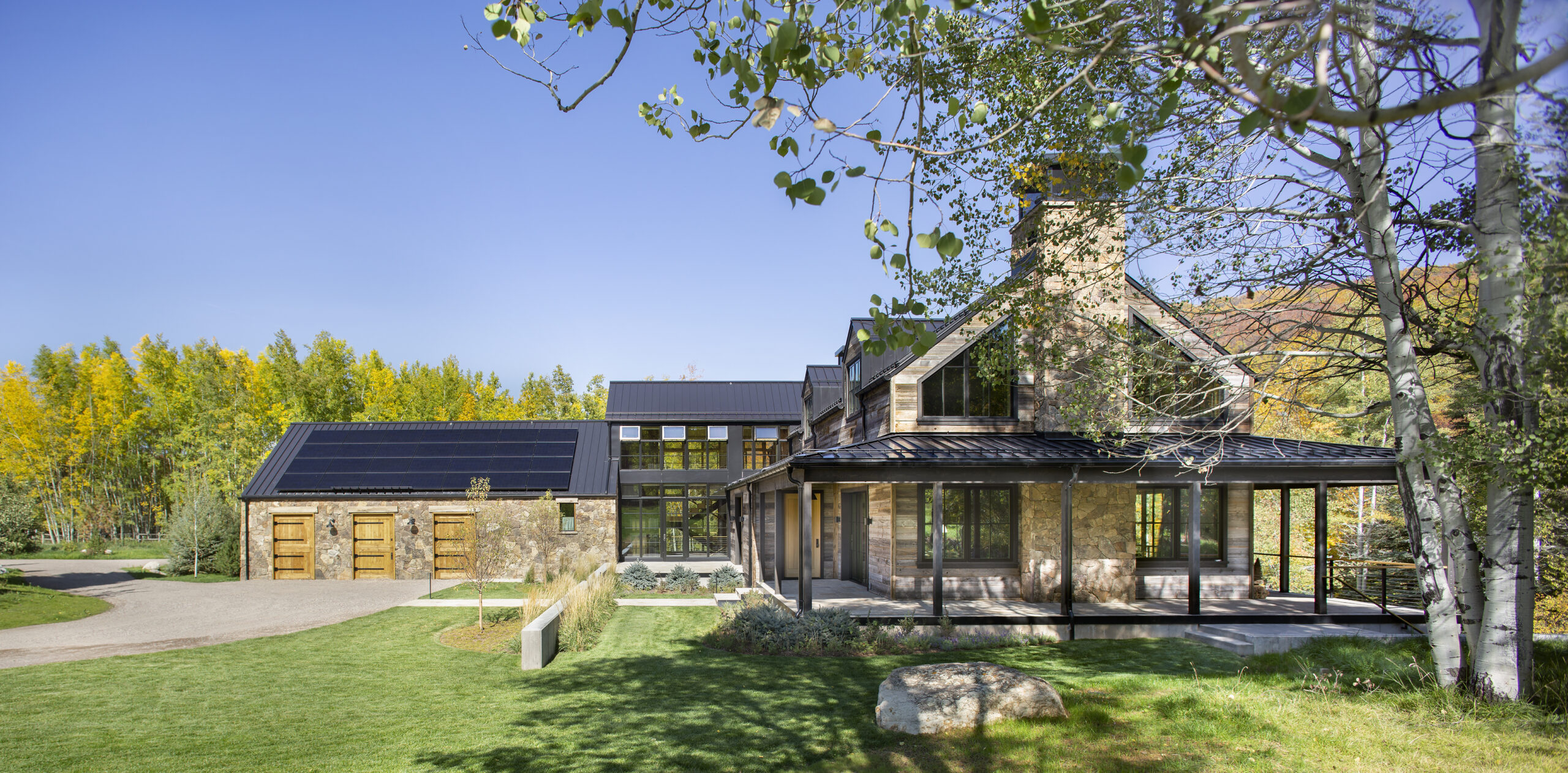
Though the residence calls to mind a Western vernacular ranch, it remains grander than one would have seen in the past. To reconcile the difference, R+B developed a narrative about how Creek House could be both contemporary and authentic. ‘We decided that we’d found a stone barn on the land, and a farmhouse close by it, and connected these two old buildings with a modern glass link,’ Broughton says. ‘And in the link we put the stair and the elevator.’
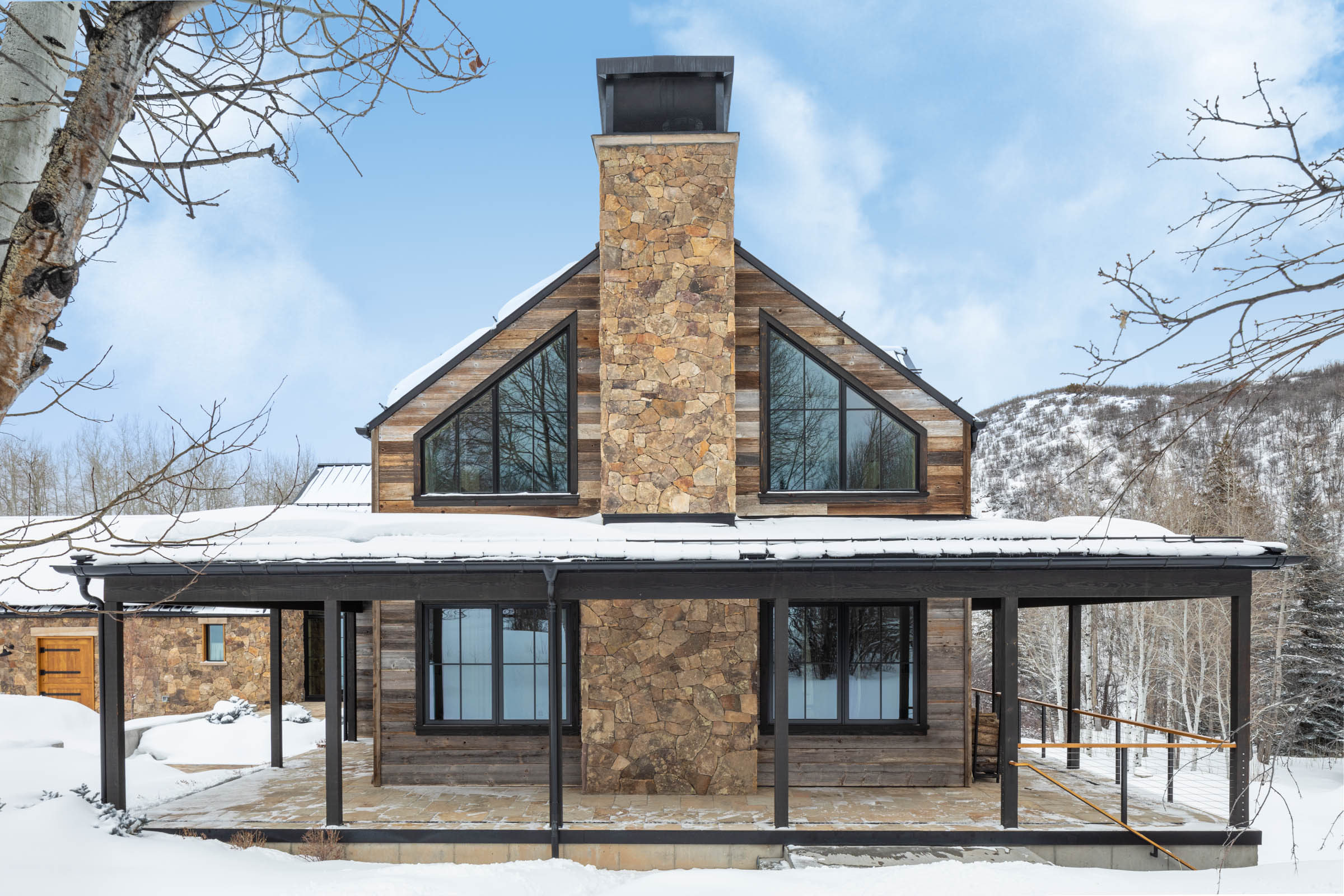
From the front, the stone volume, which contains the garage and mudroom, reveals three wood plank doors, each capped with a roughly chiseled stone lintel and held in place by wrought-iron strap hinges. The glass link incorporates the exterior walls of the stone barn on one side and the wood-clad main house on the other. As for the residence, the weathered horizontal boards, towering stone chimney, and standing-seam metal roof place it indelibly in style and in time. A wraparound covered porch, which touches four elevations, proves inviting even in the cold months.
Ensuring the maintenance of the property’s natural beauty, and ecological health, was a critical part of the mission. To exceed our clients’ expectations for energy performance, and incorporate active and passive systems to reduce the home’s carbon footprint, we chose to re-use the site of a pre-existing house; rotated the new building to move it out of the 100-year floodplain setback; and provided every living space a visual and auditory connection to the adjacent creek – from which the house takes its name.
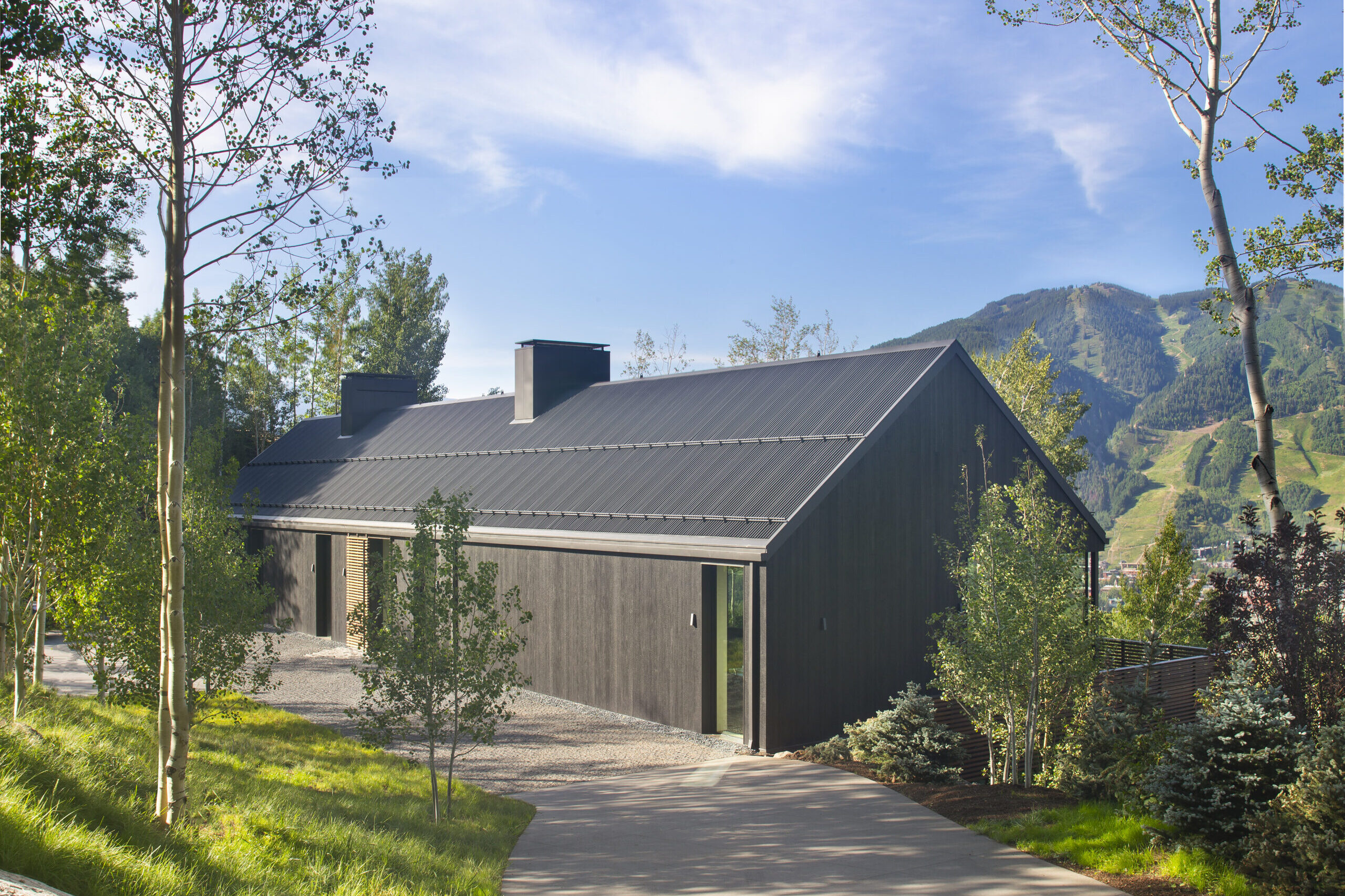
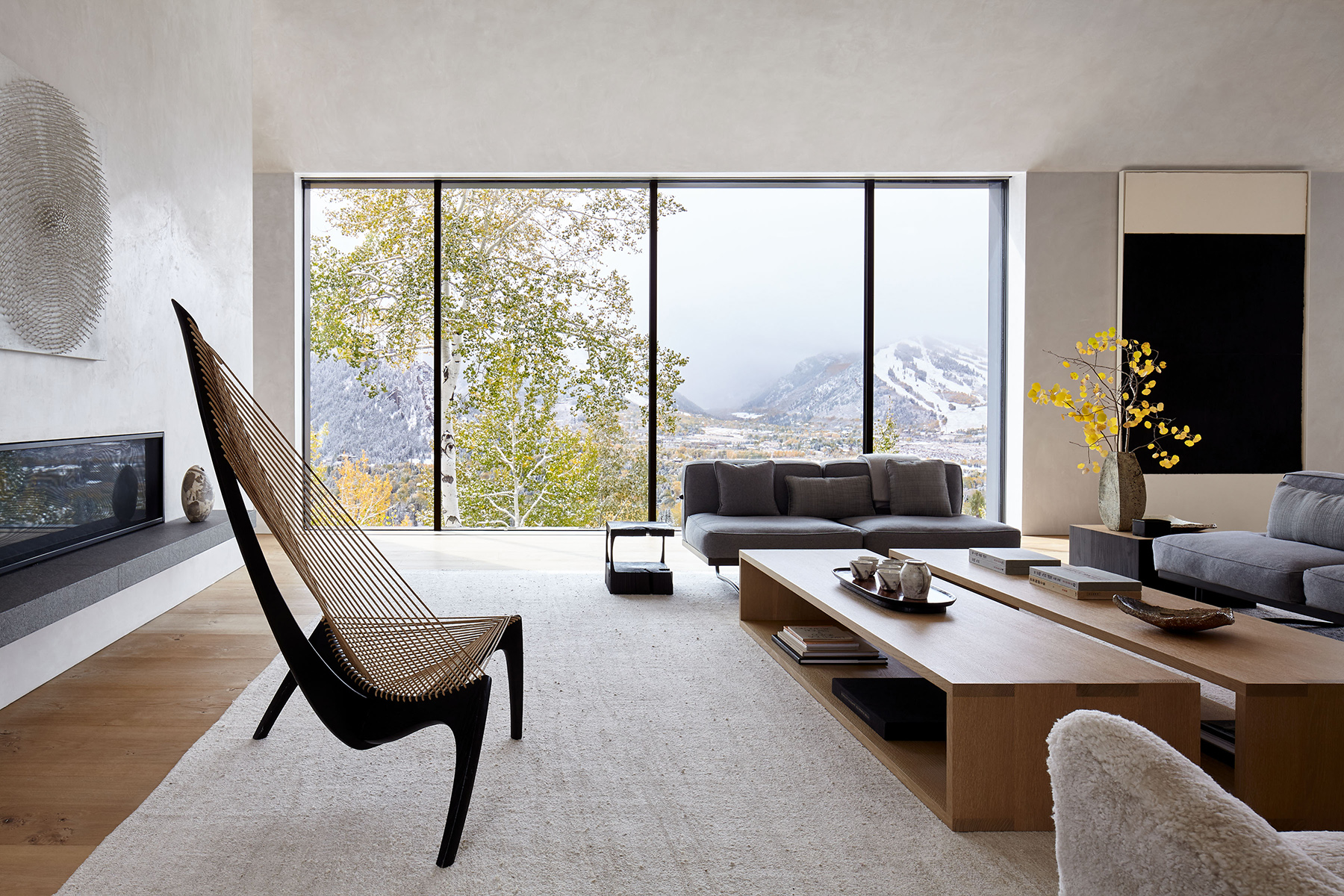
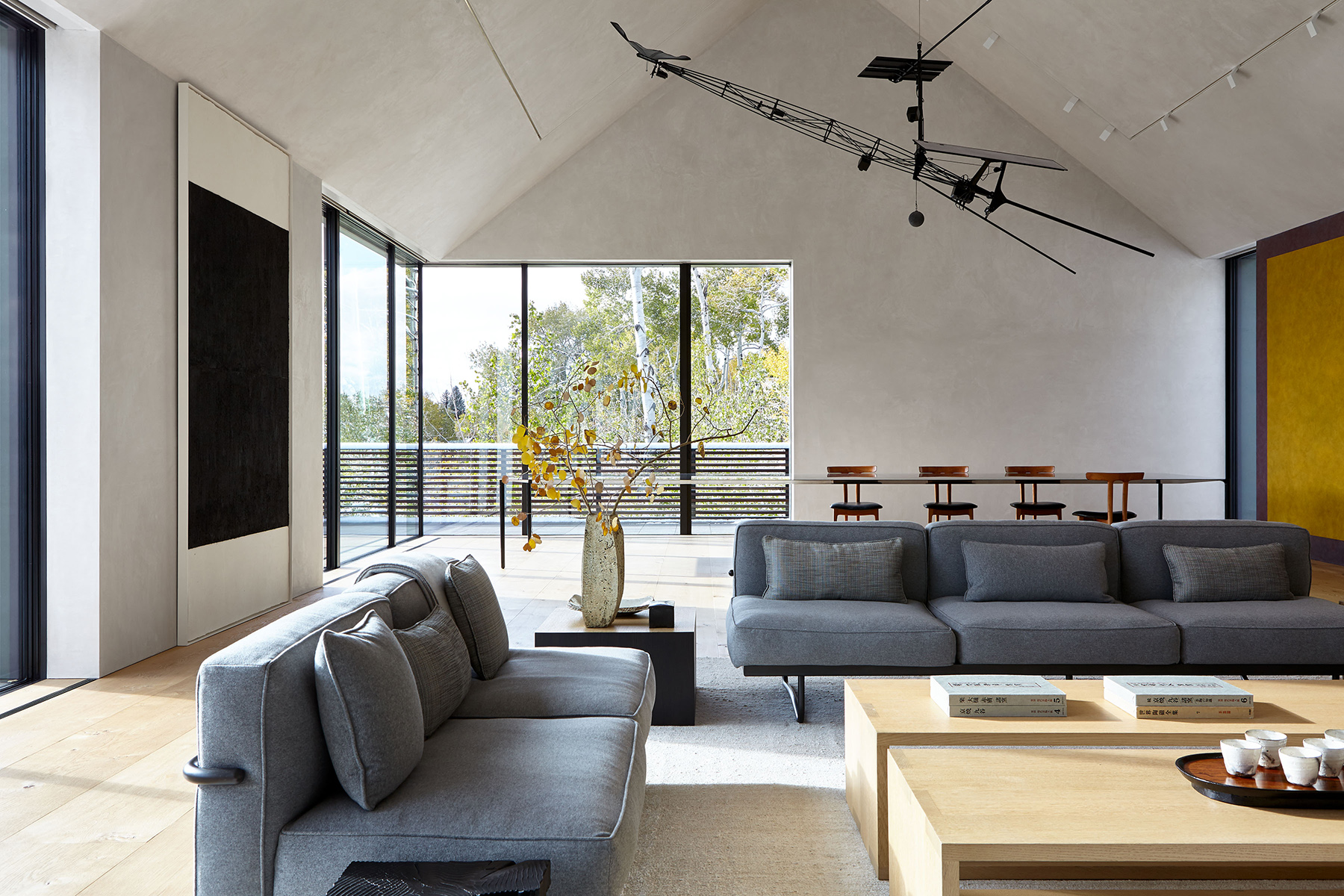
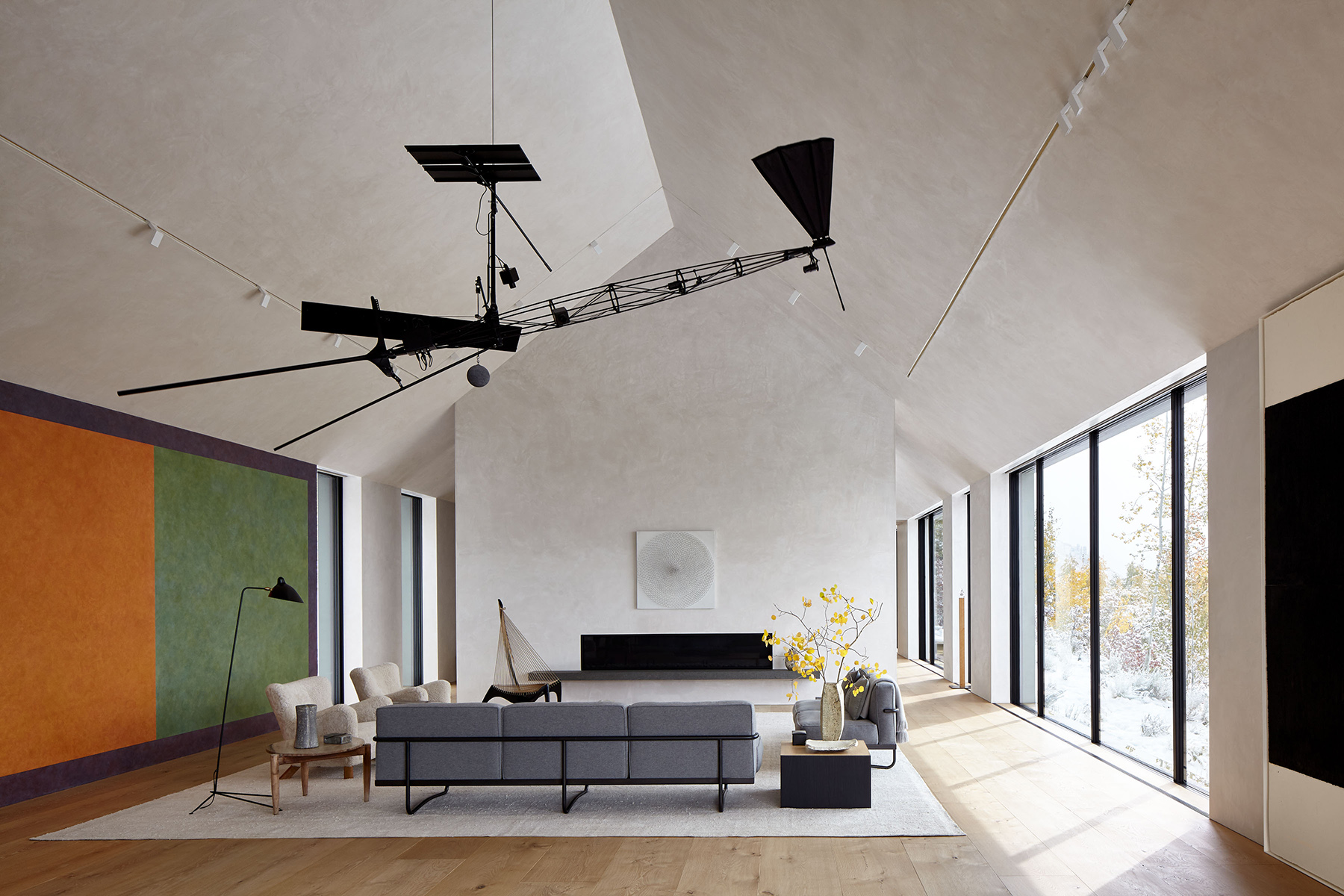
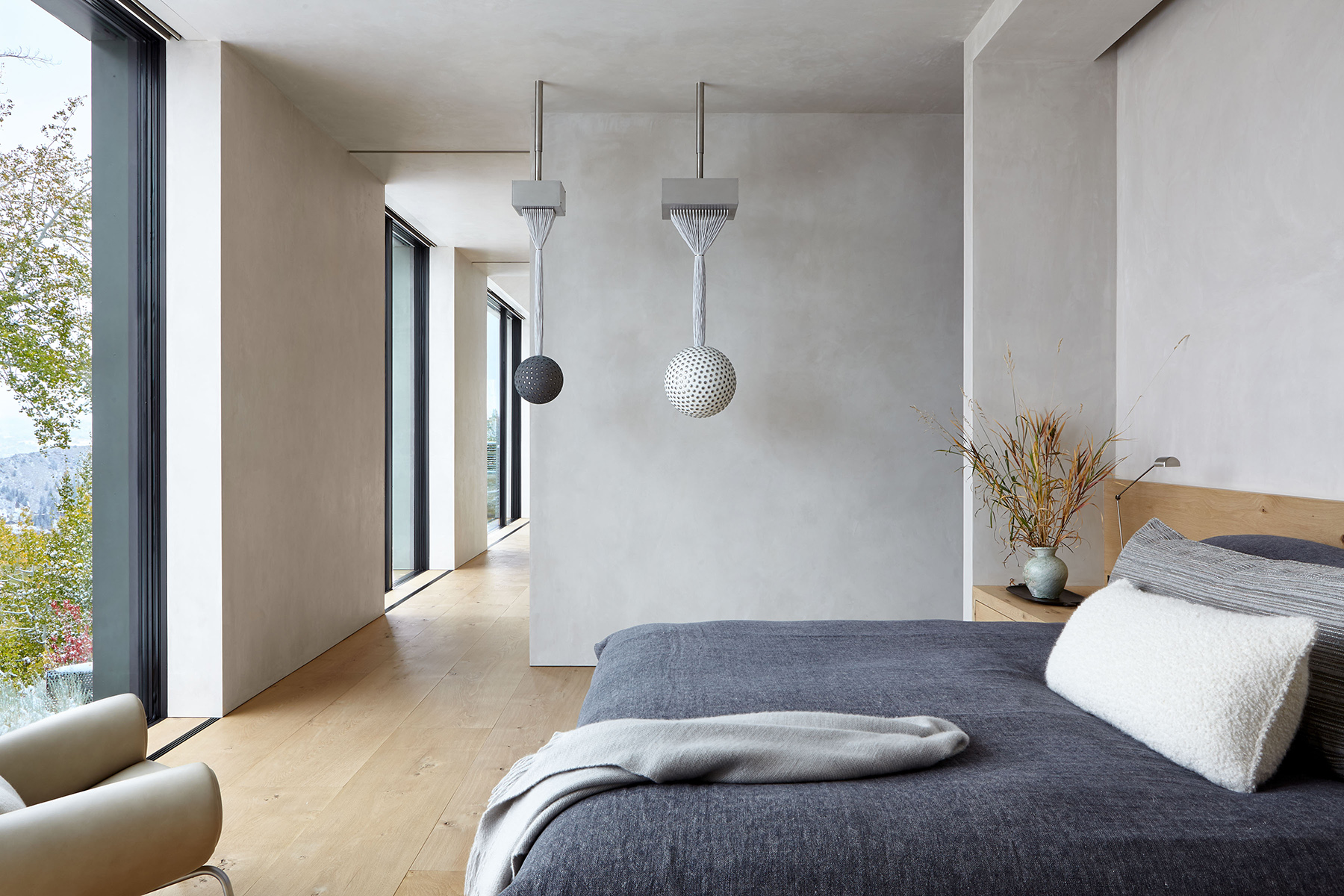
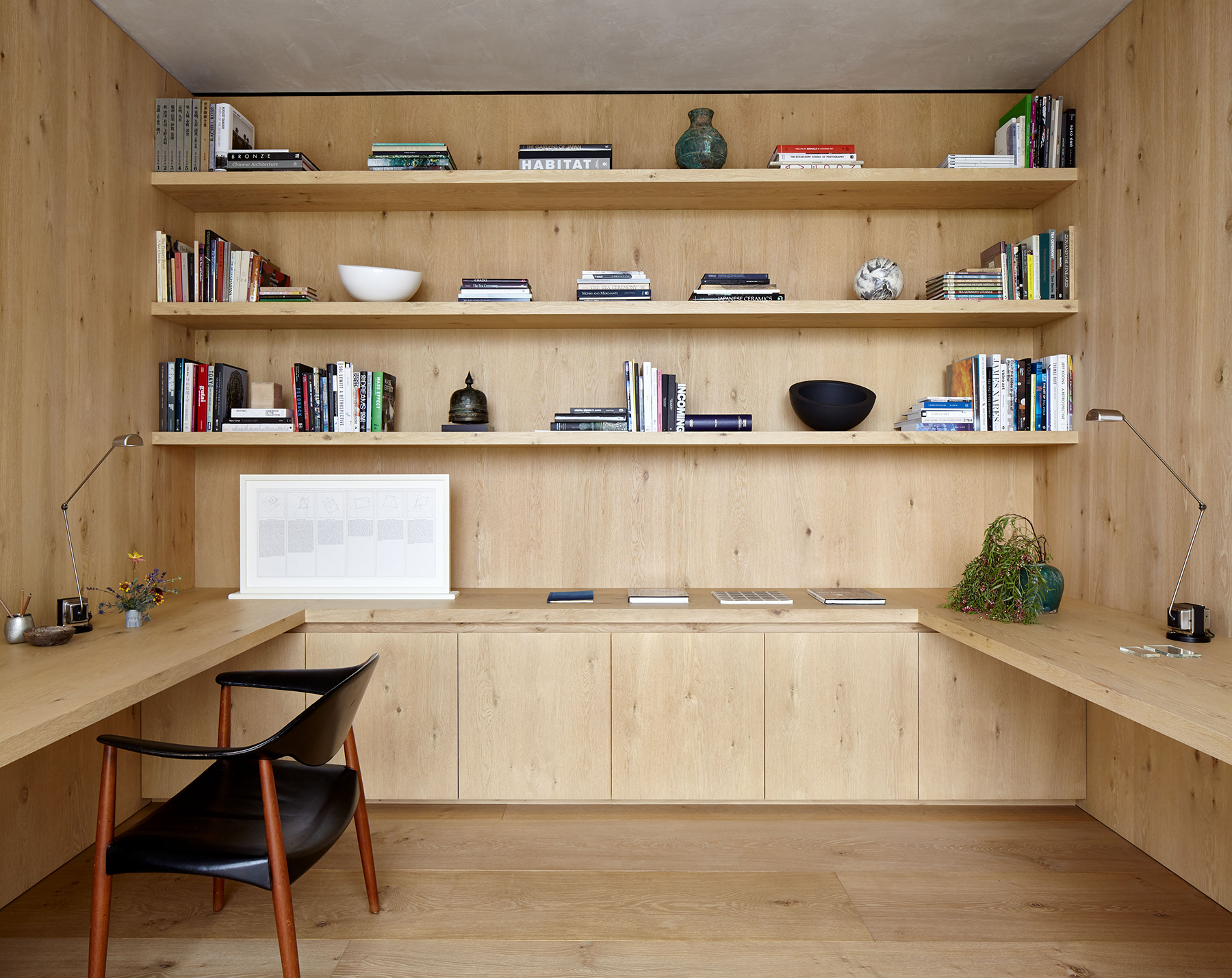
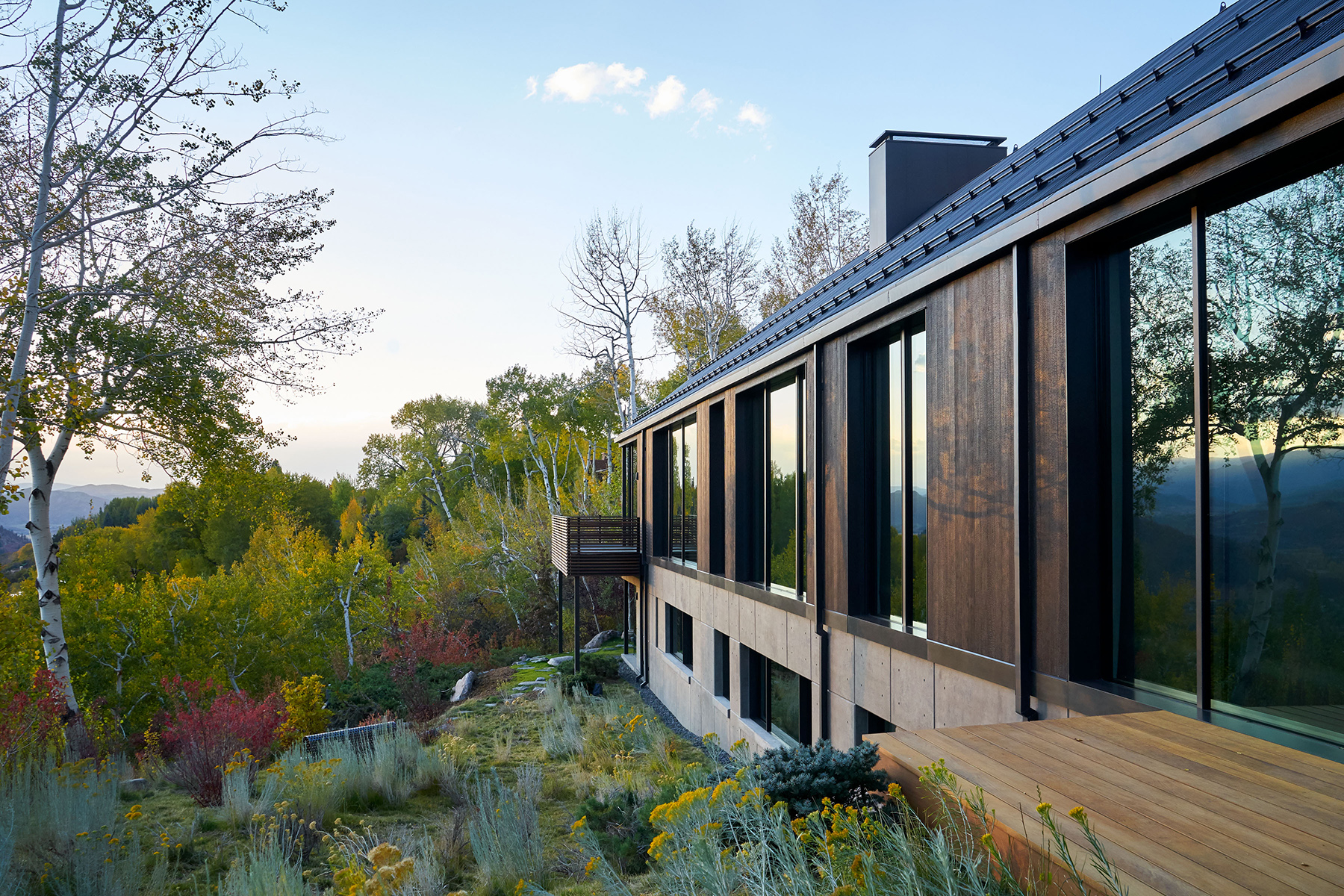
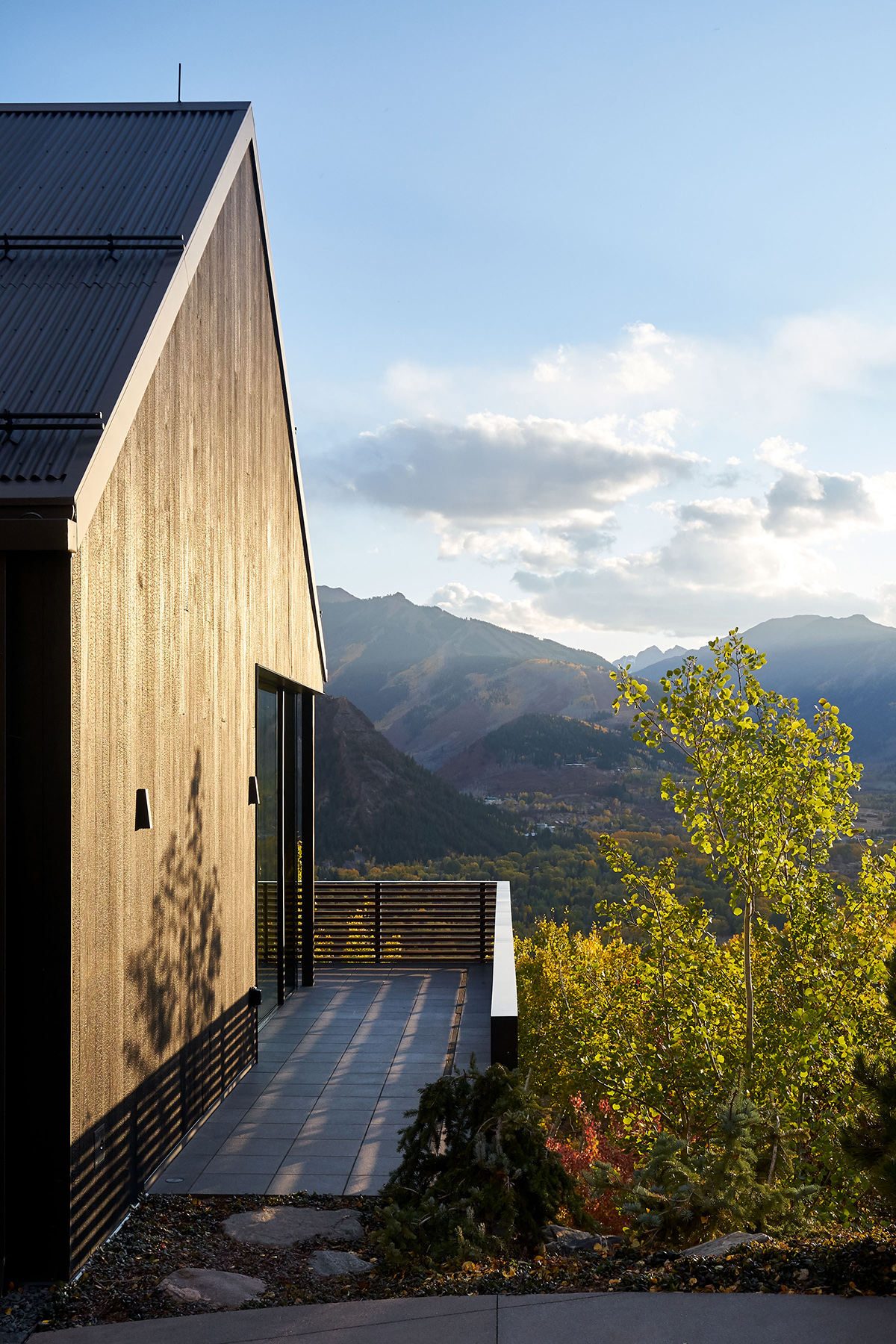
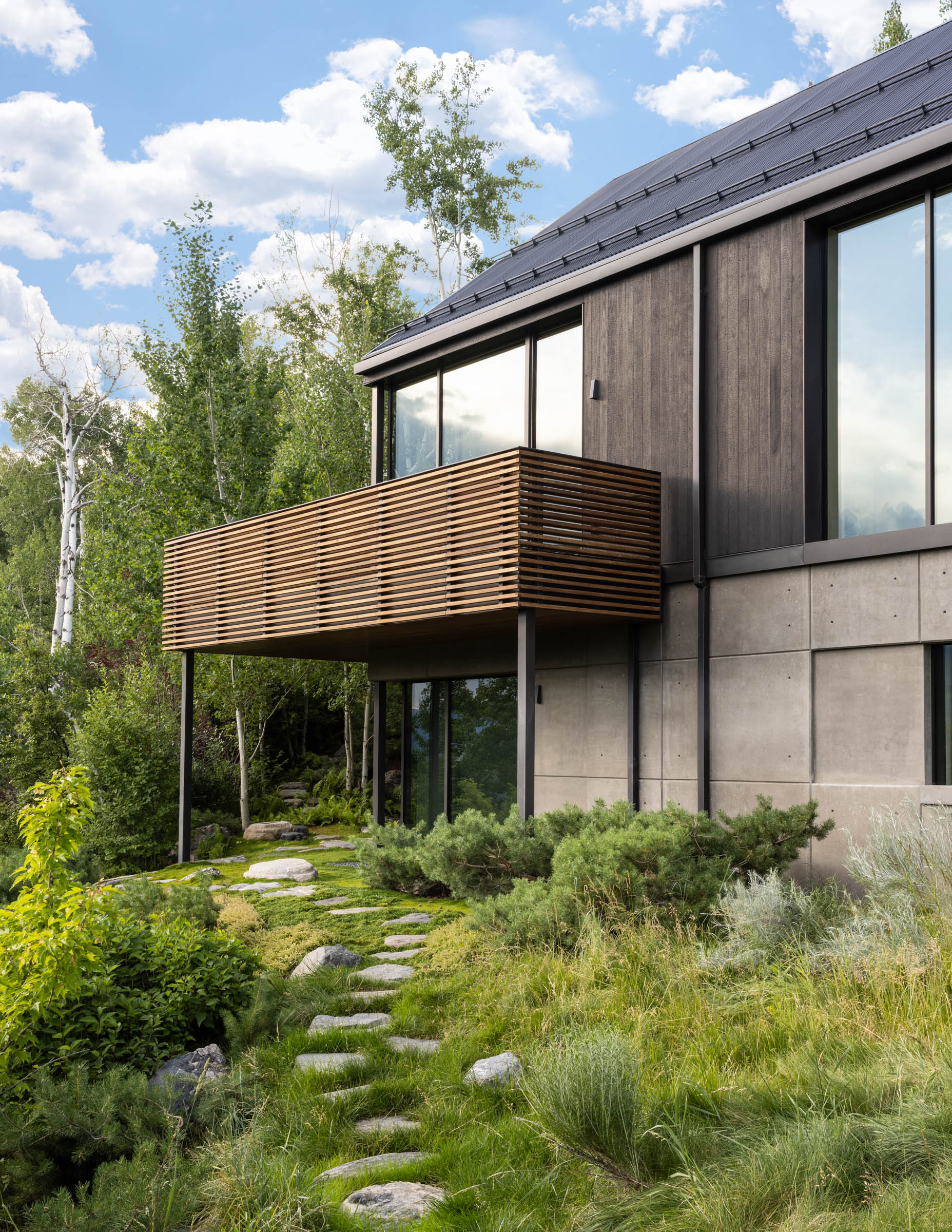
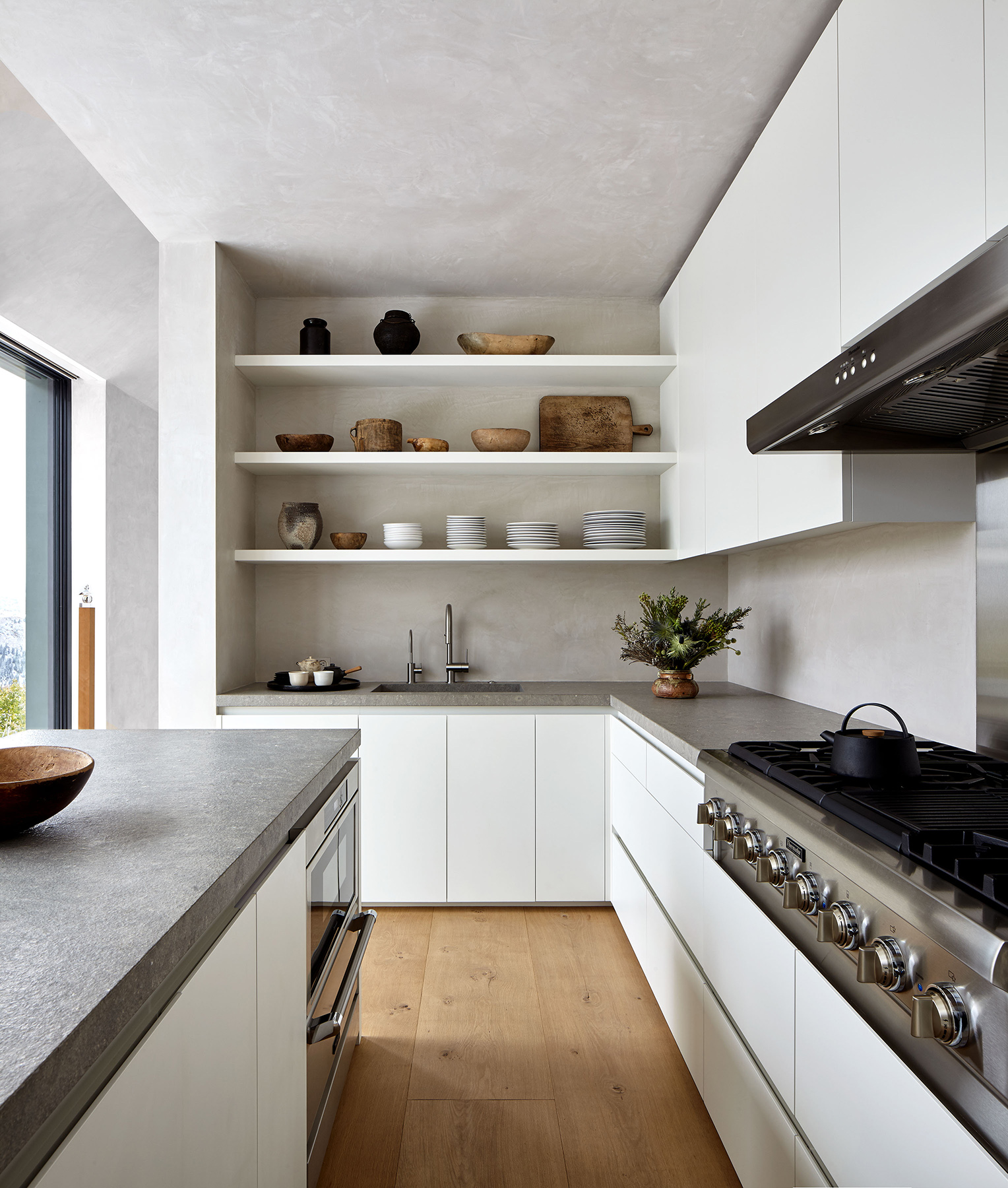
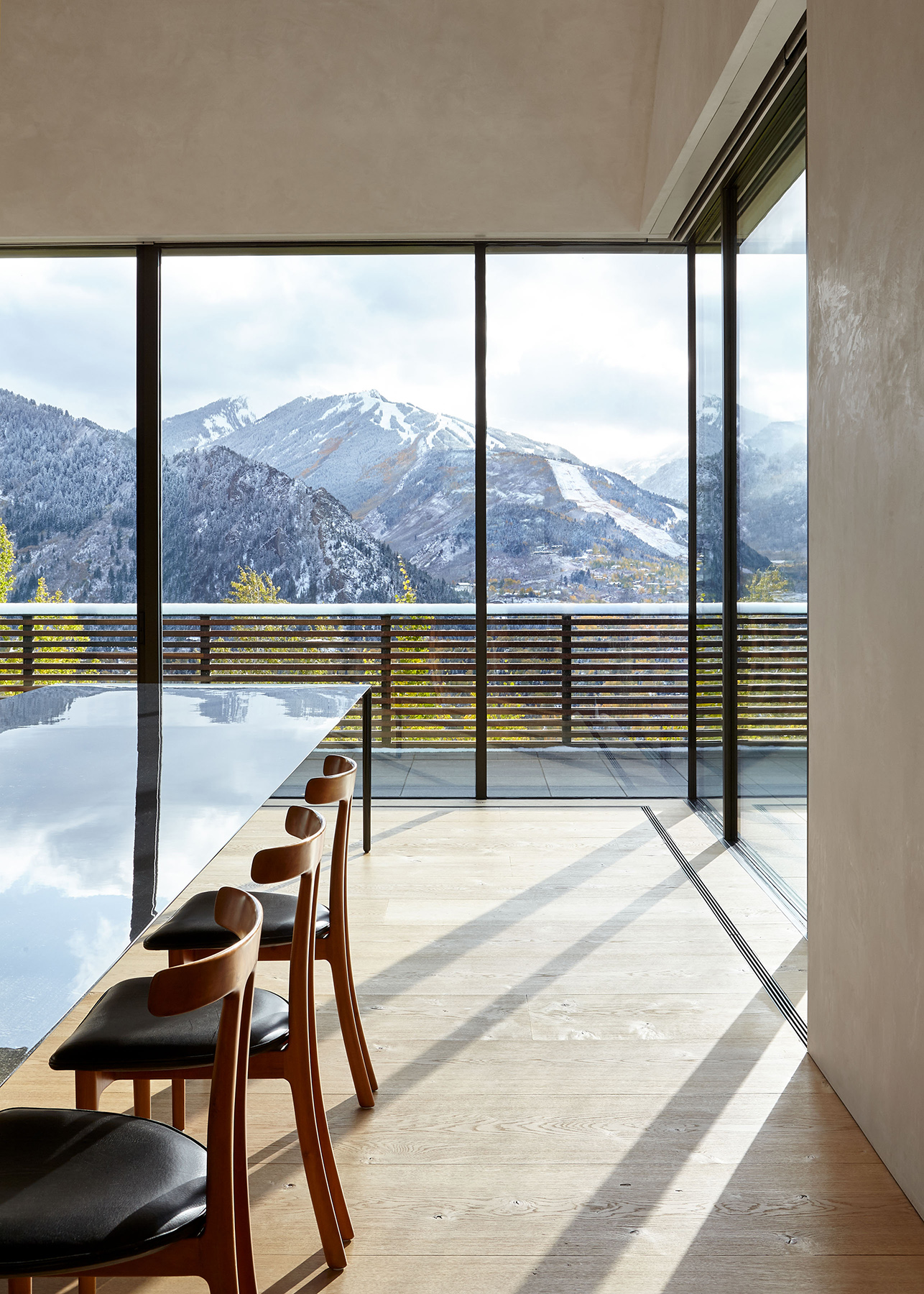
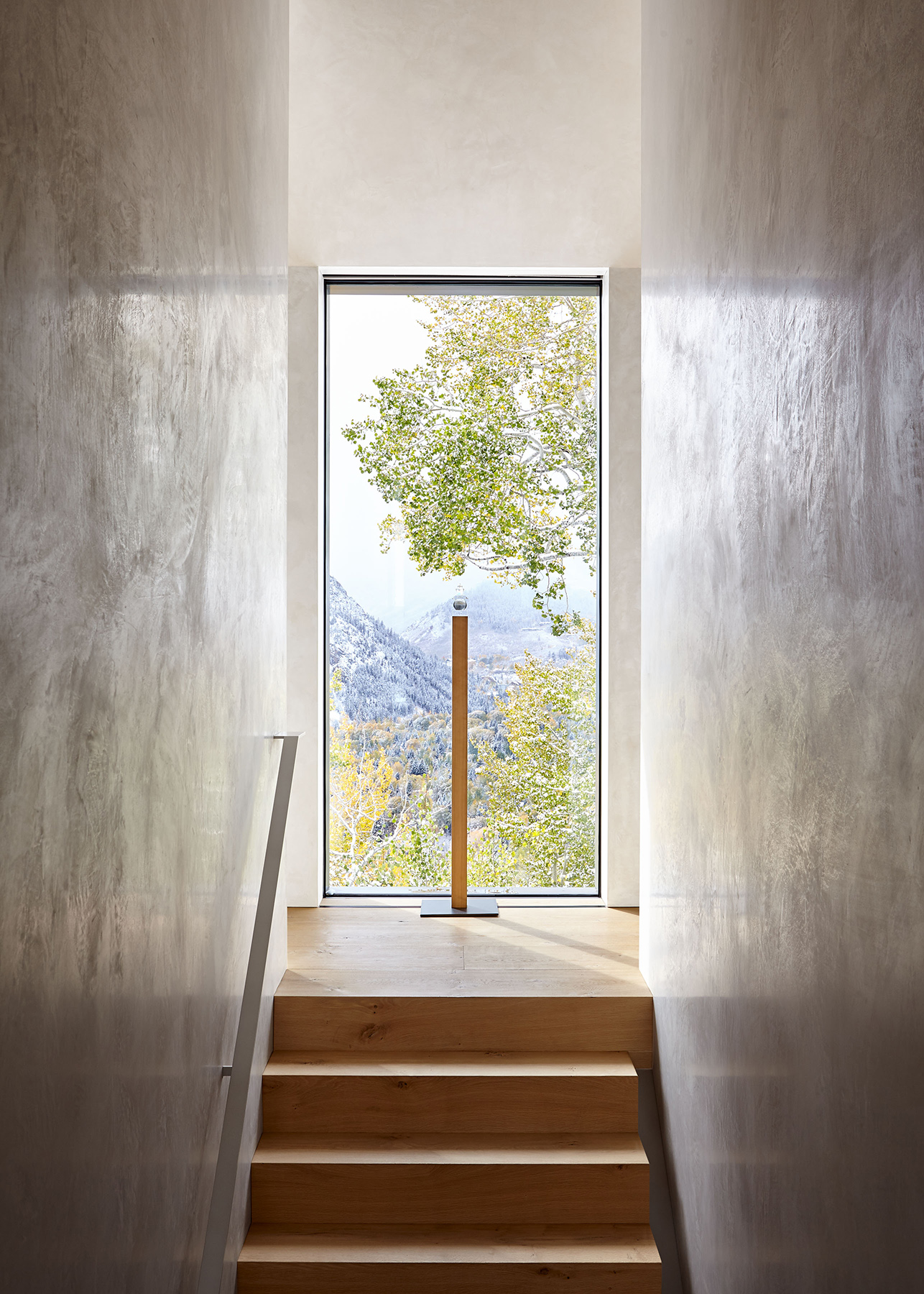
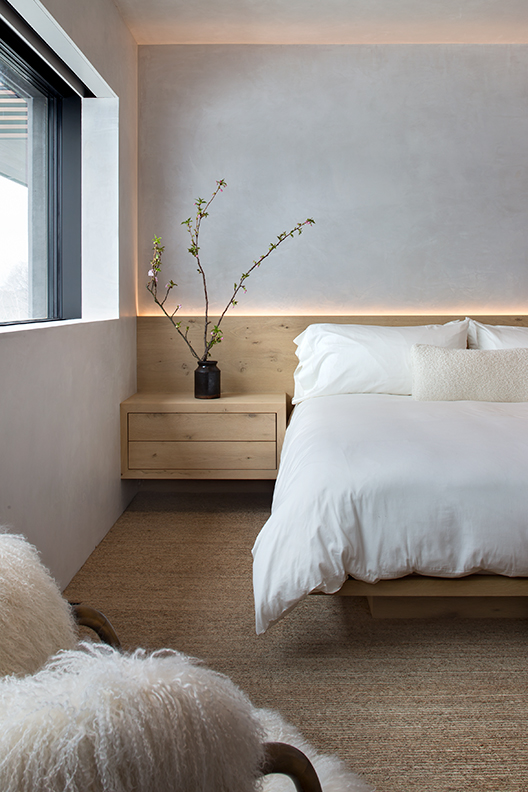
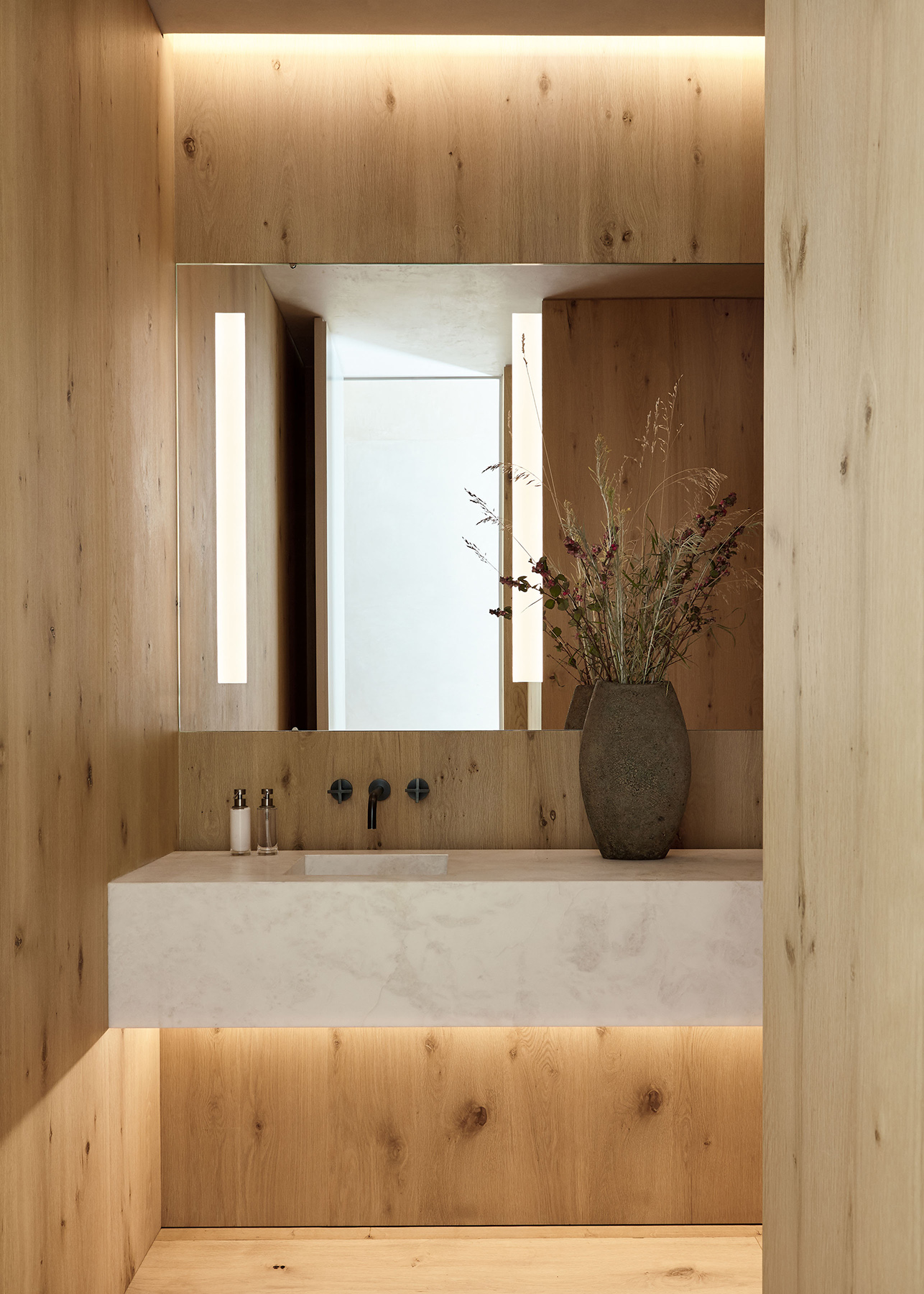
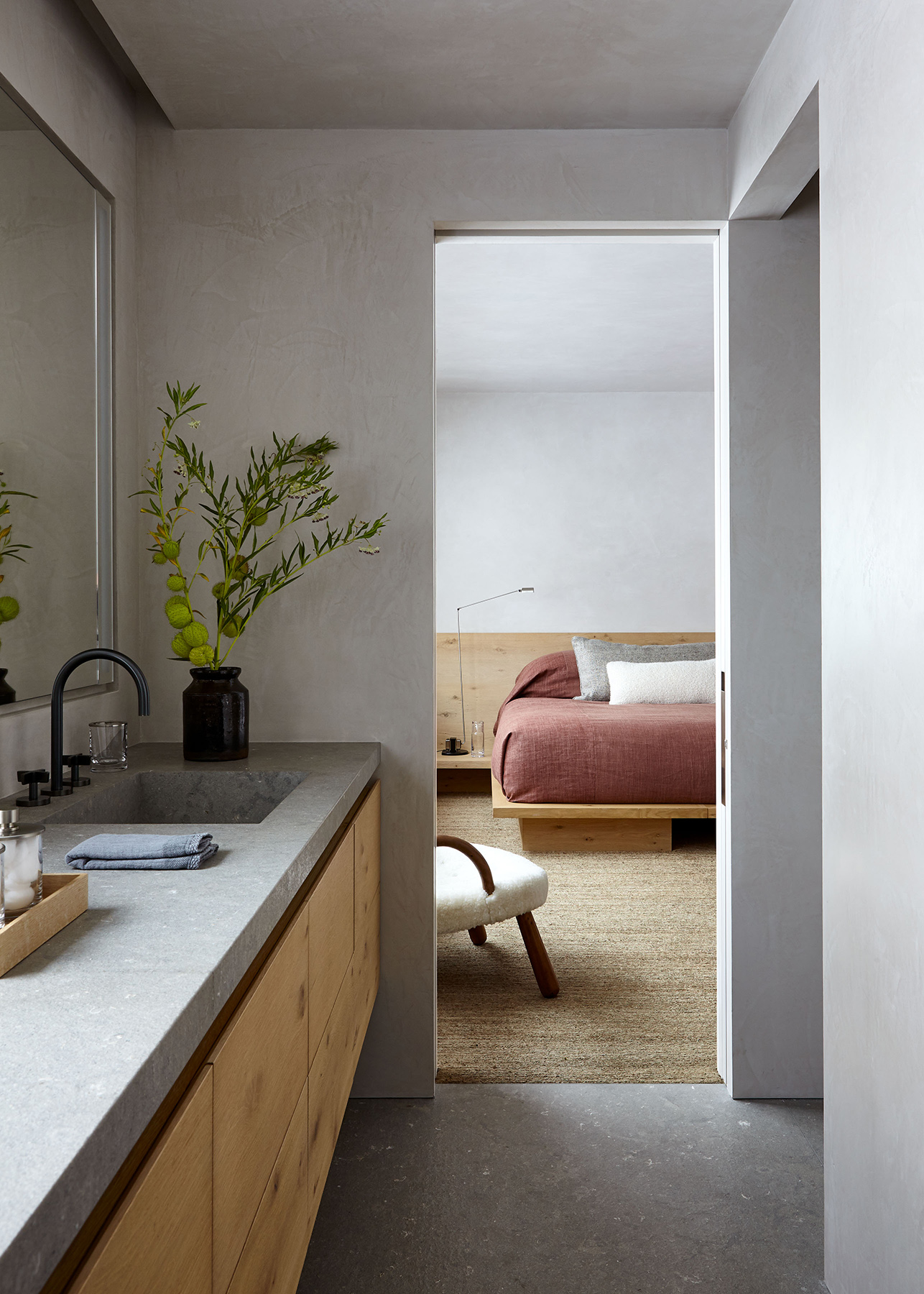
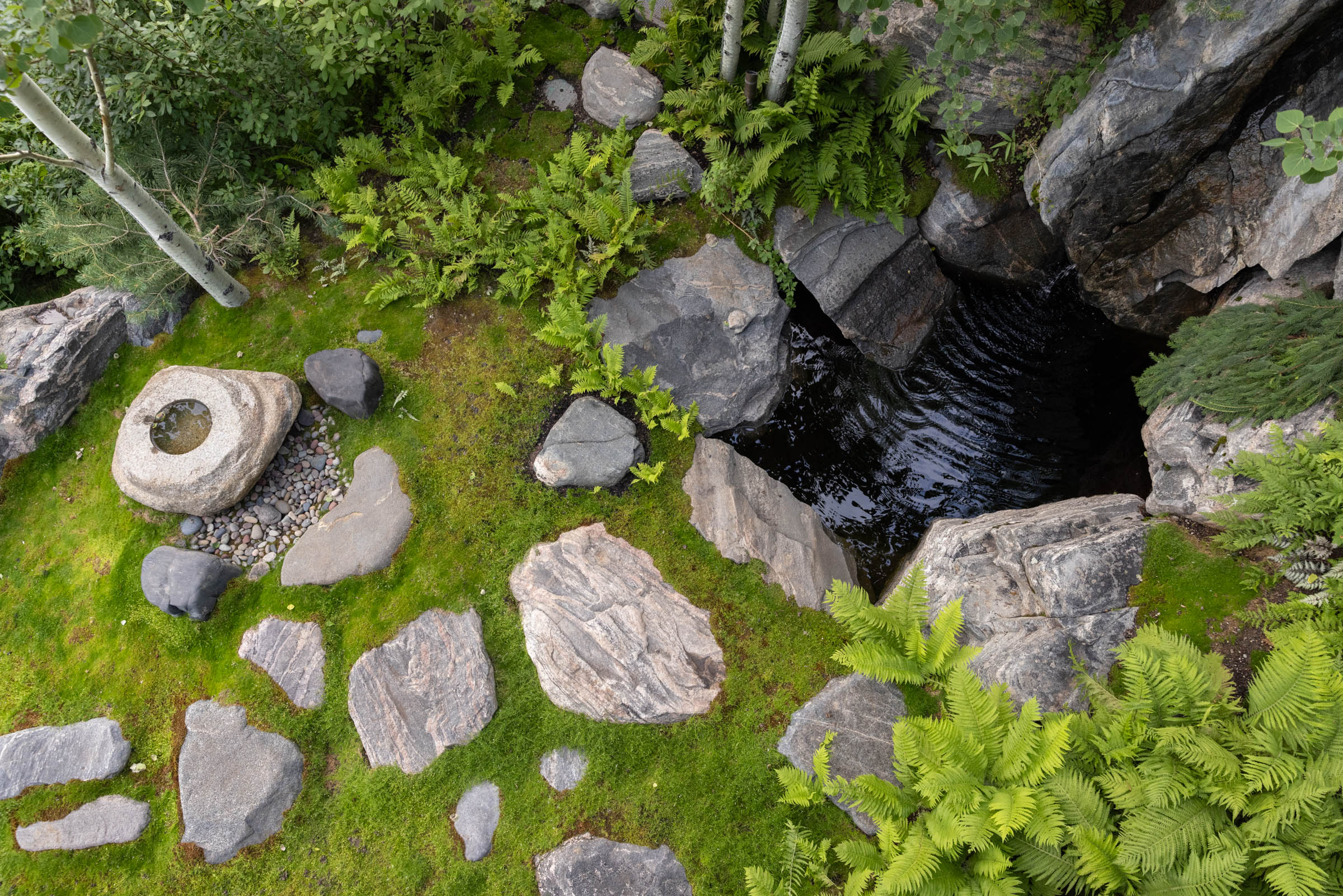
Many of R+B’s projects enjoy spectacular views, and this one, with its panorama of Aspen’s peaks and slopes, is no exception. Yet as regards the world past the windows, Art Barn remains unique. So compelling is the interior that the vista becomes a backdrop. The irony is that the architecture could not be more spare.
Our clients, whose world-class art collection includes not only wall-based works but also sound and video installations, required an environment in which to showcase new pieces. Additionally, the couple needed a place to host get-togethers and events: a combination art and music venue, think tank, and salon. What they had in mind was a rural structure – an ‘intimate and understated, vernacular idea,’ says Rowland.
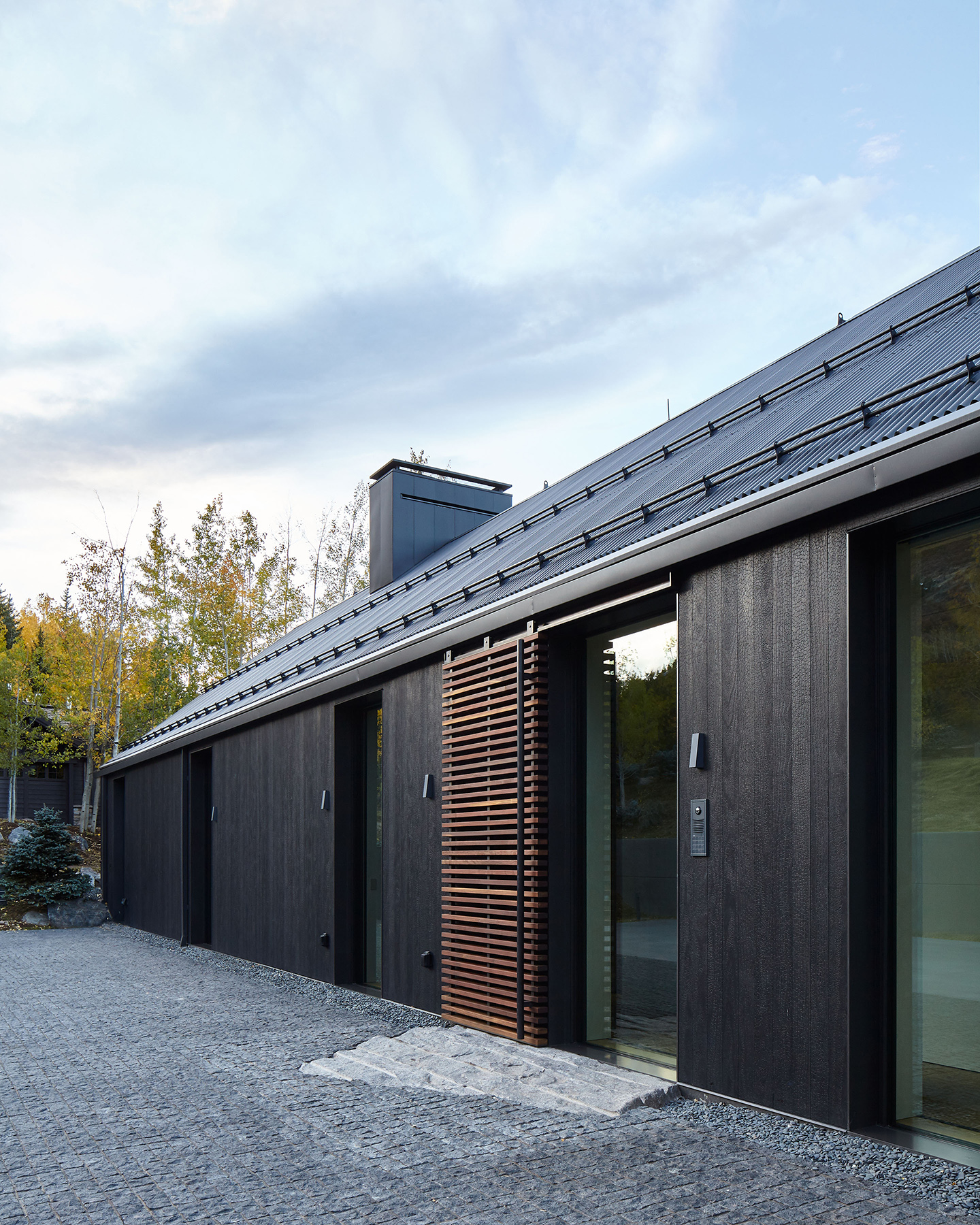
The outcome is a 113-foot-long gable form, topped by a corrugated zinc roof and clad in charred cedar. The front door is signaled by a split rock welcome mat set into the cobblestone motor court and a screen composed of horizontal wood slats, but the façade remains deliberately nonhierarchical: there are four identical sliding glass panels that permit entry into the house at different points along the front elevation.
Art Barn’s interior continues this commitment to the pristine: the sustainable palette is limited to oak, plaster, limestone, and concrete. On the main floor, comprising a great room, video gallery, office, kitchen, and primary suite, eighteen-inch-thick walls allow for oversized pocket window and doors systems. Sixteen-inch-wide wood plank floors align with walls to provide total precision; outlets, switches, and solar shades are tucked away, so as not to distract from the overall experience. On the lower level, the province of two additional discreet bedroom suites and more gallery space, the poured-concrete foundation wall is exposed and finished, creating an expanse of utilitarian elegance.
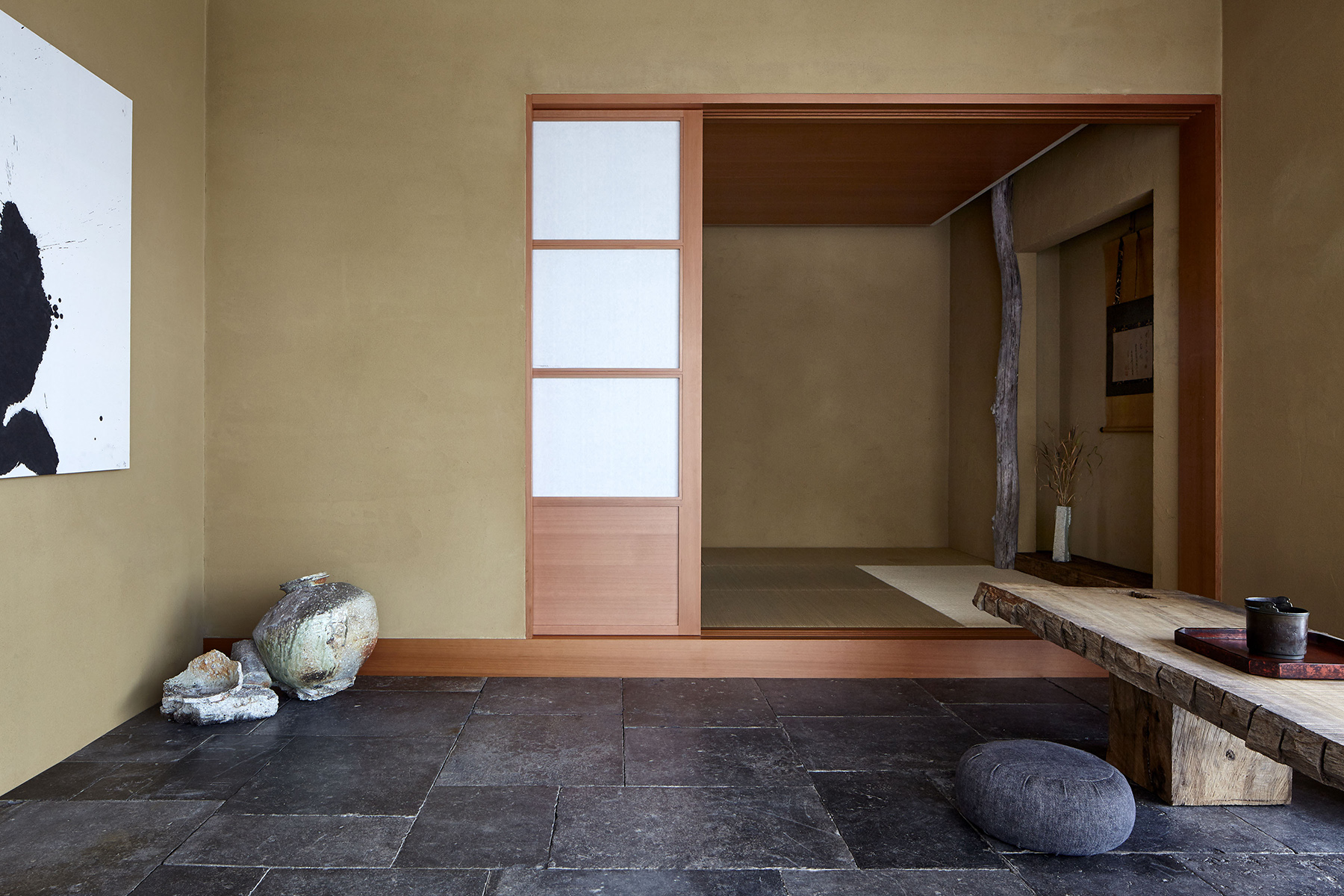
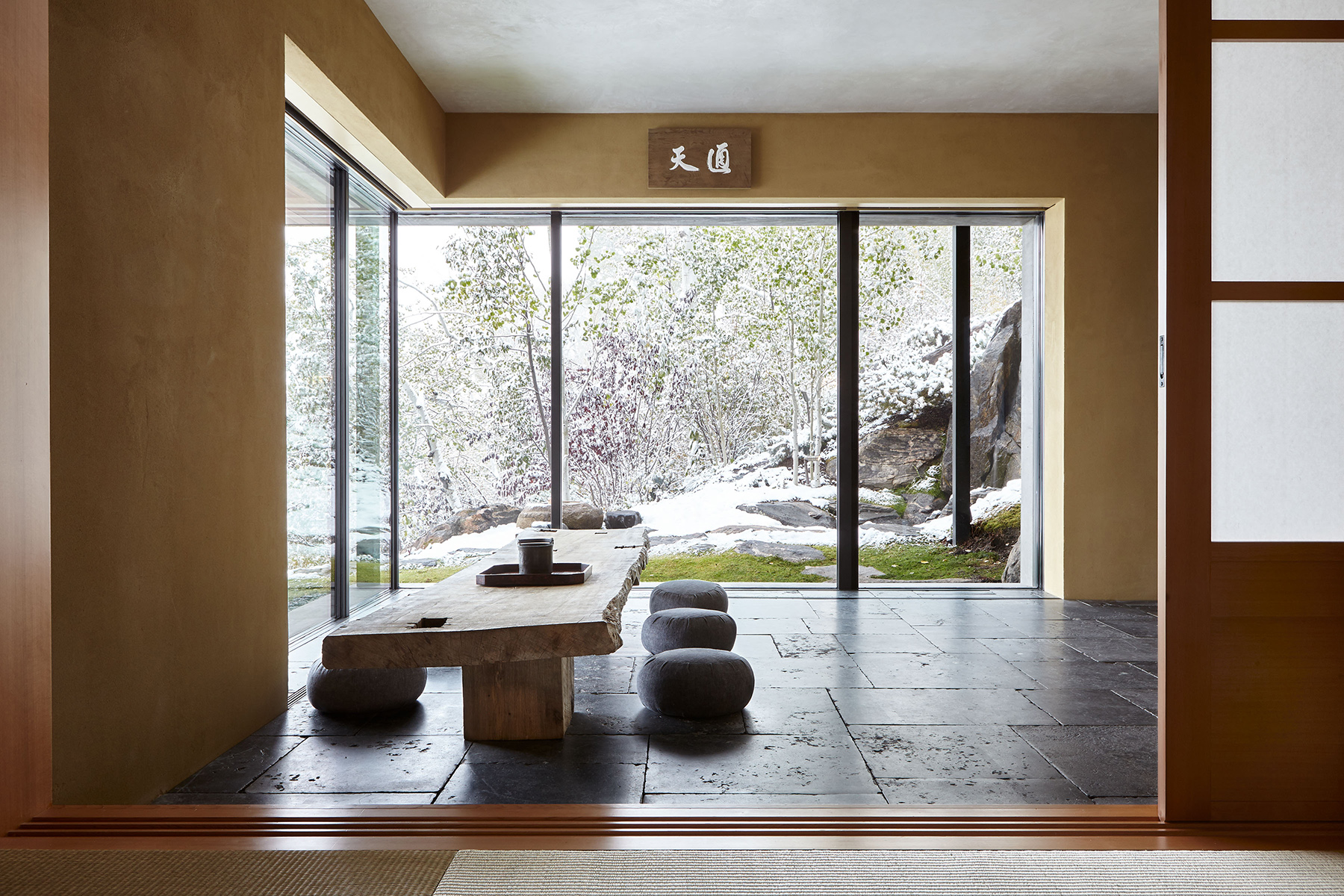
The project’s surprise component is our interpretation of a traditional Japanese tea room, tucked away behind the lower-level video gallery, its full-height sliding-glass corner doors opening the space to an Asian-influenced mountain garden. Consultation with tea masters from University of Kyoto informed the sourcing of traditional Japanese materials, including sliding doors with hand-made shoji inlay, western red cedar paneling, Arakabe plaster walls, and hand-made tatami mats,
If the tea room extends the everyday into the realm of the spiritual, the same might be said of R+B’s design. Our consideration of even the most inconsequential elements, their contribution to the whole, inspires an unusual level of avid attention. The view is always available. But the serenity and simplicity of the interior prompts an awareness of the moment that only deepens with time and experience.
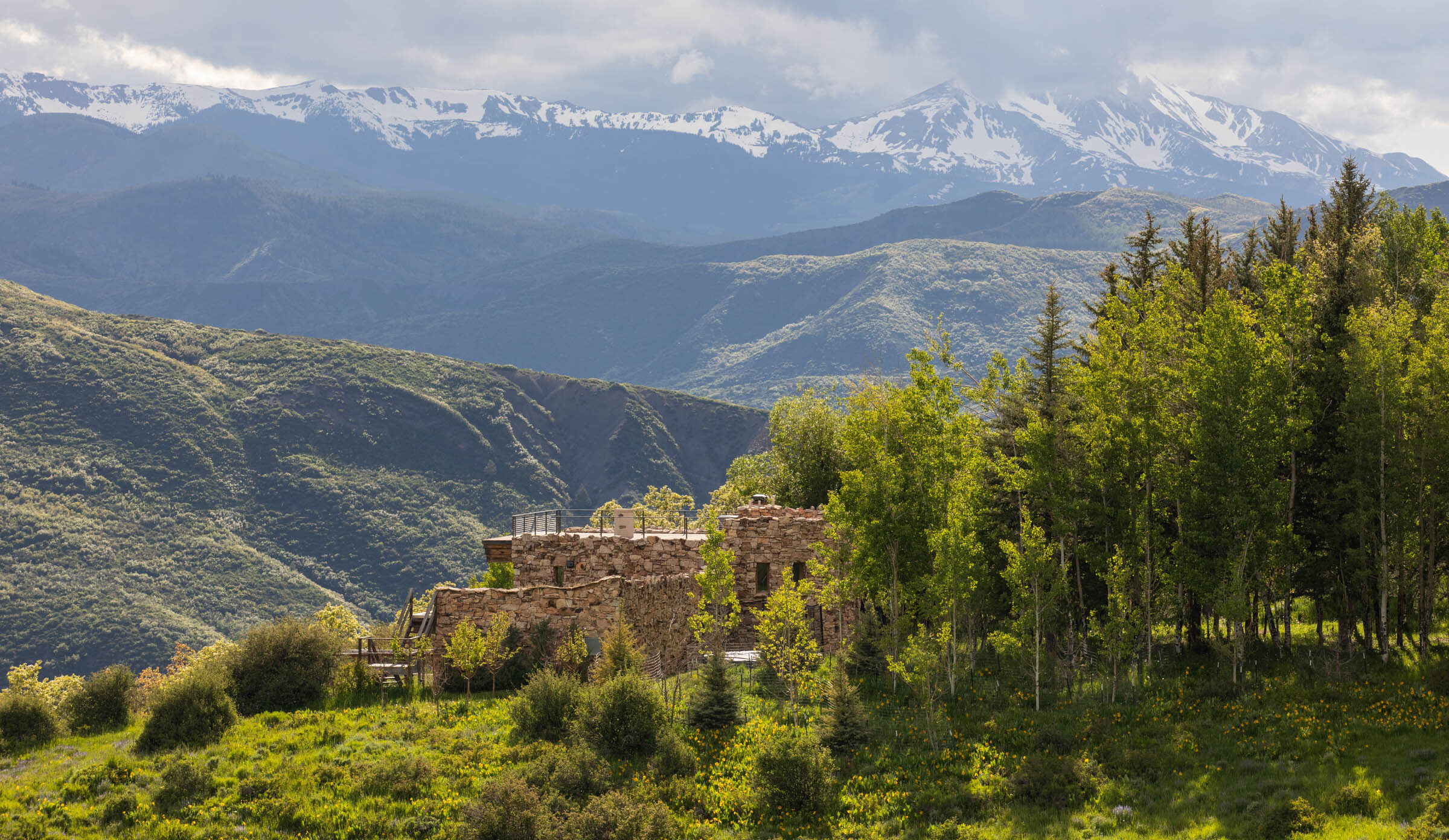
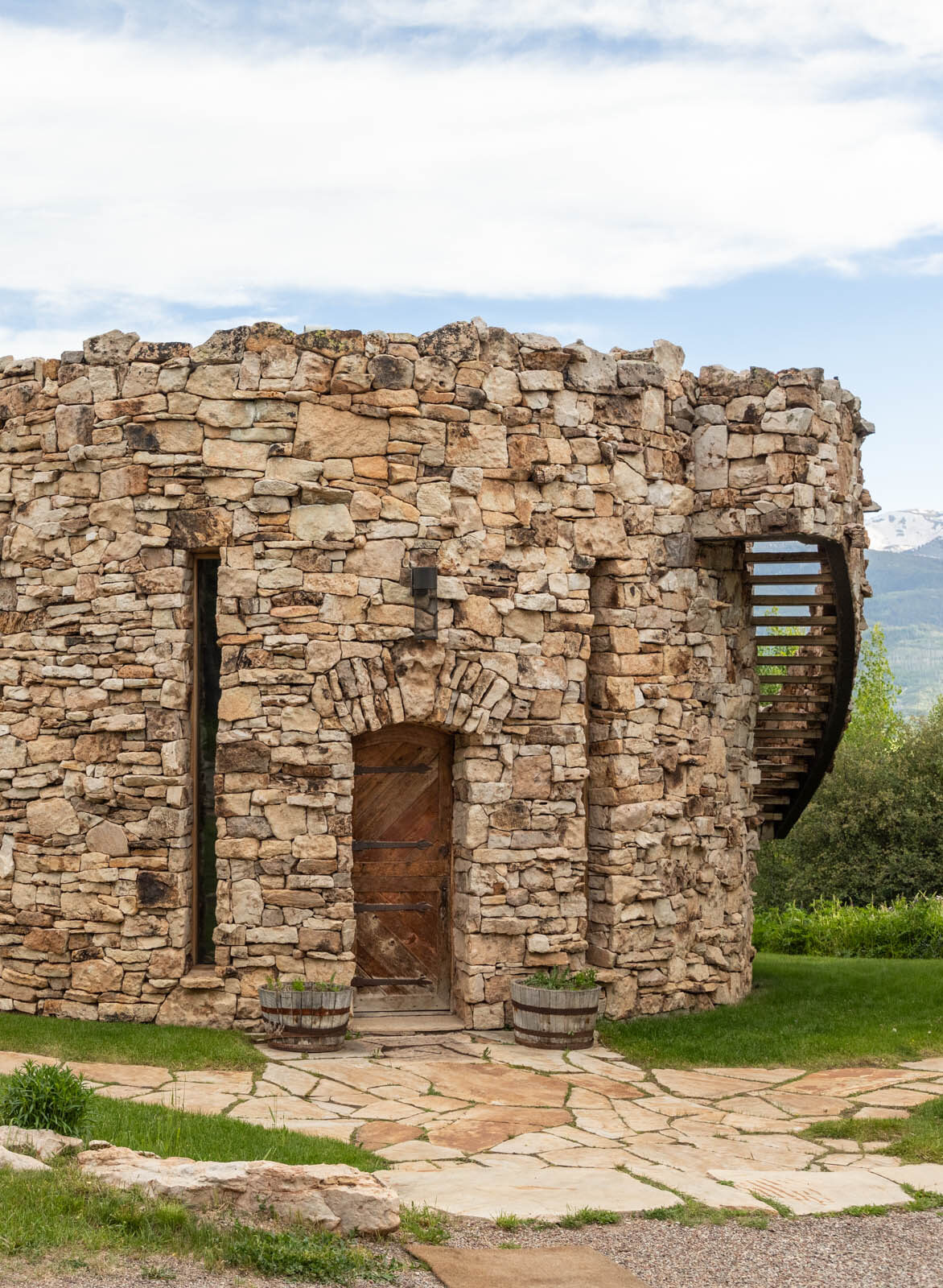
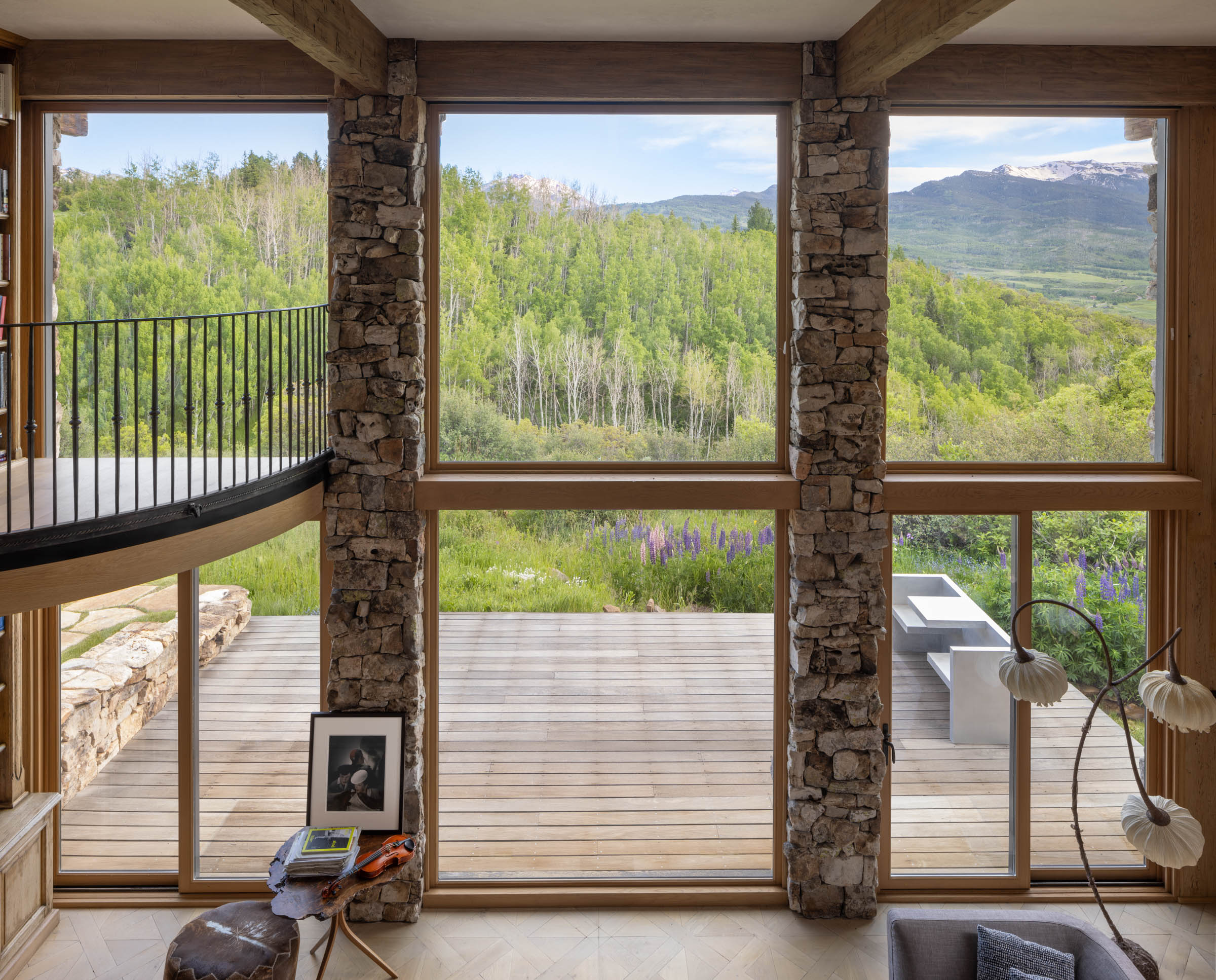
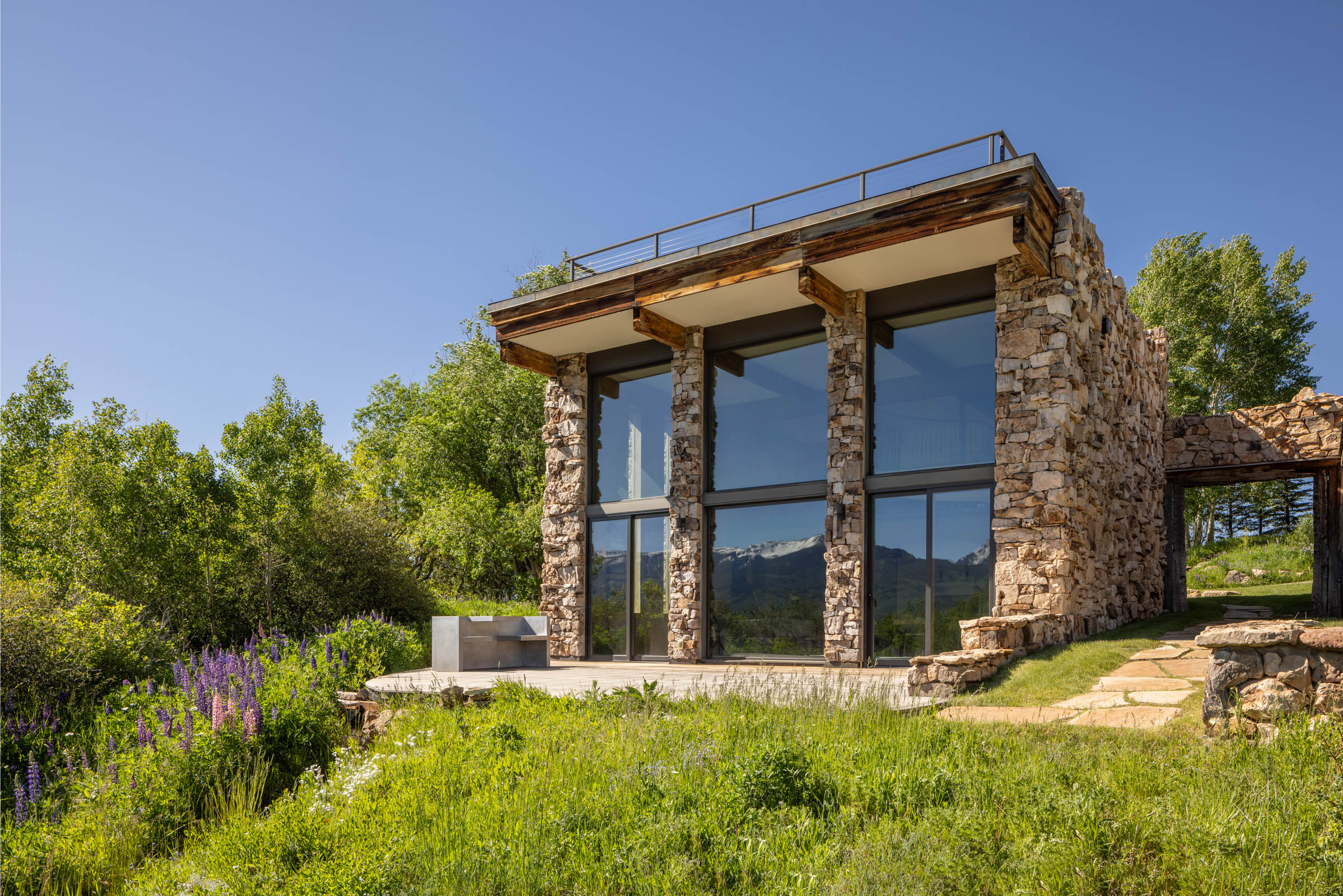
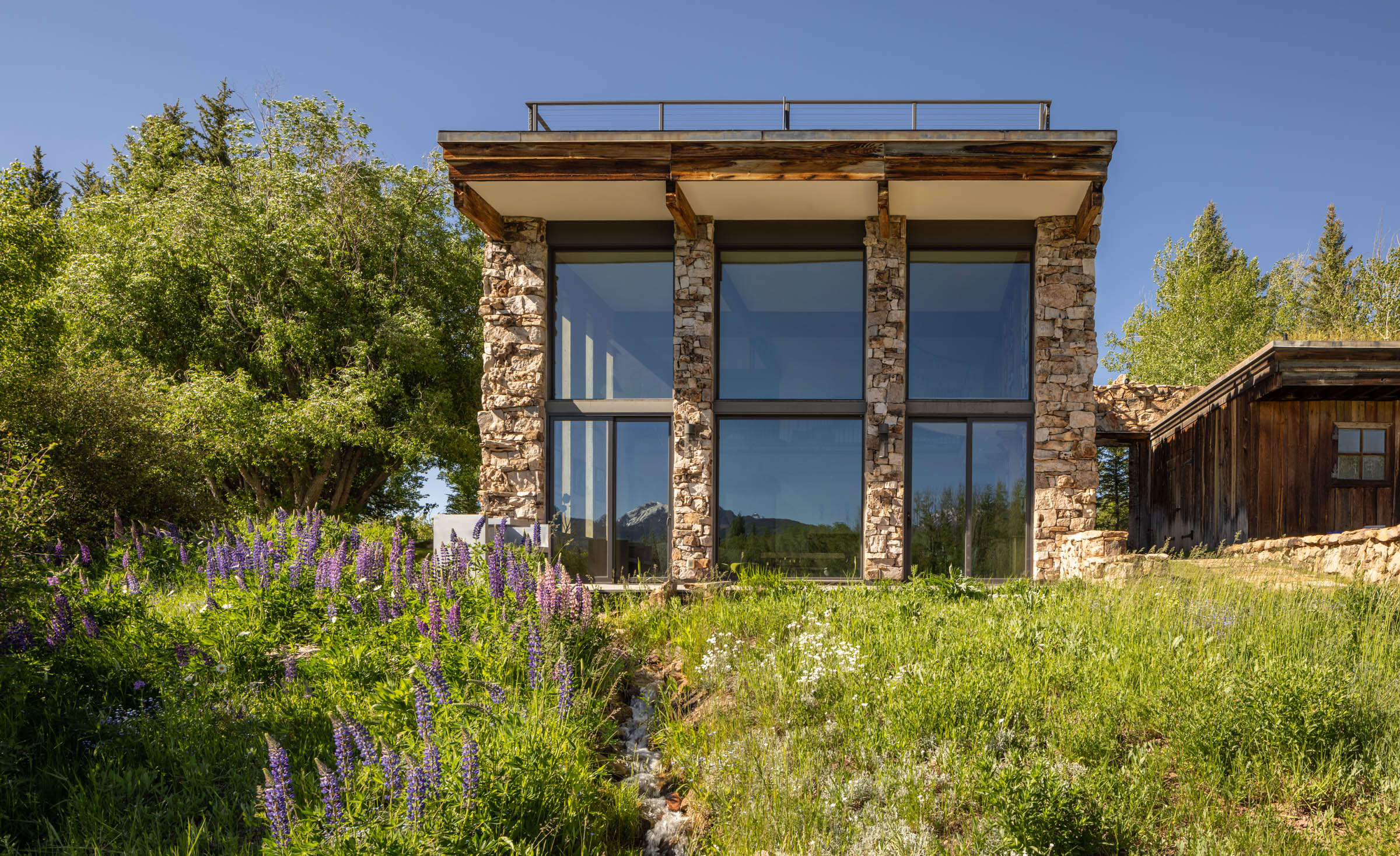
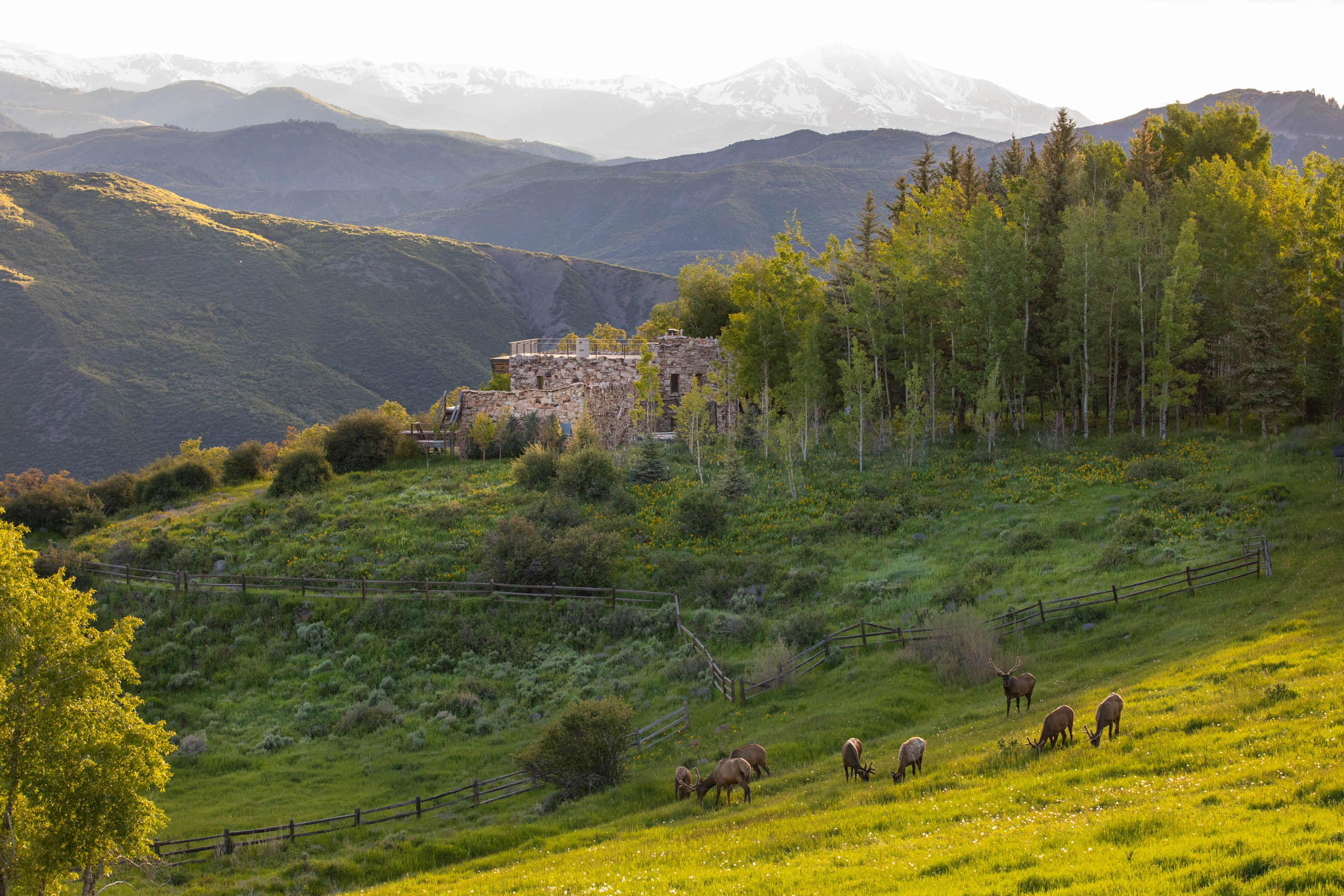
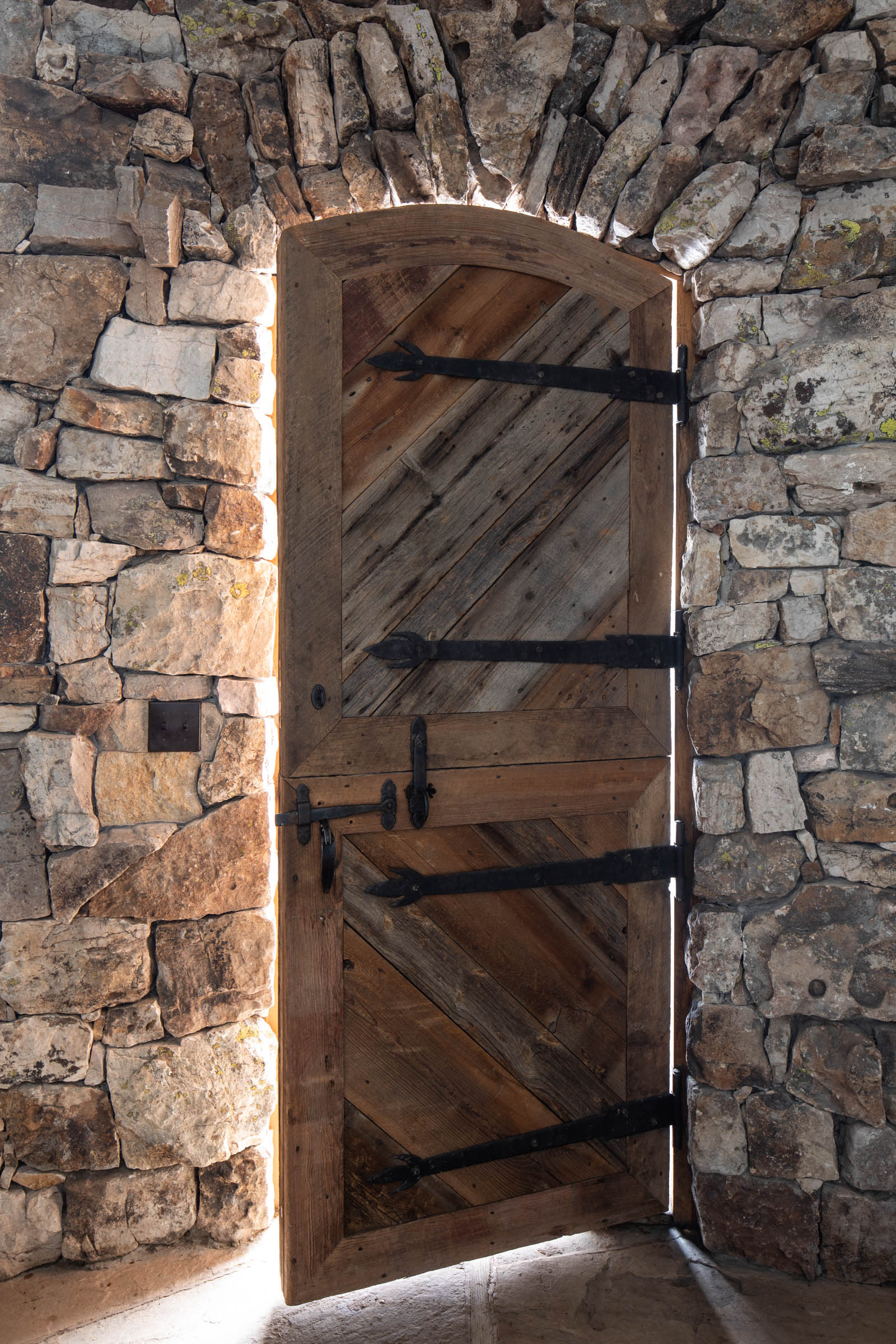
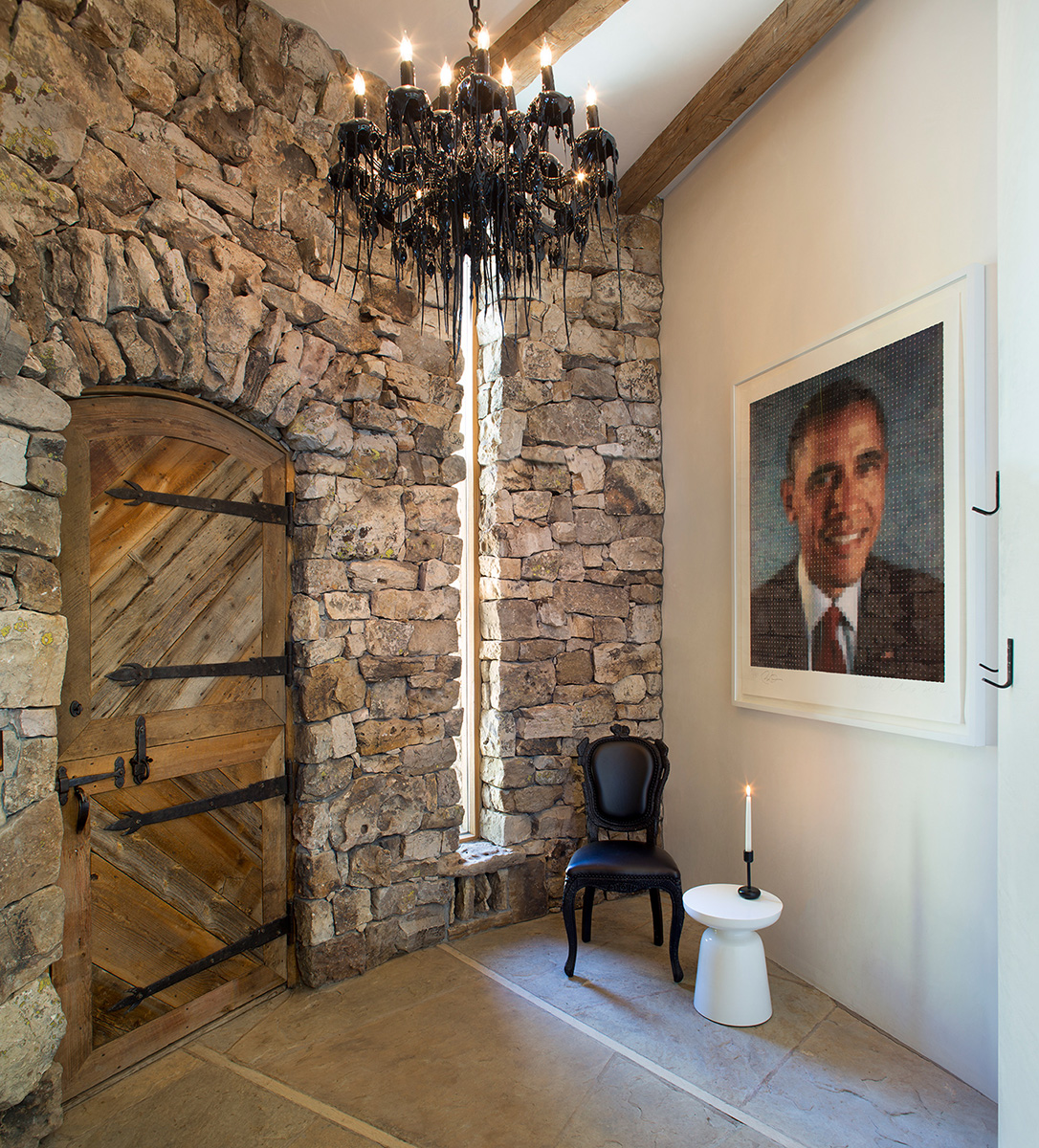
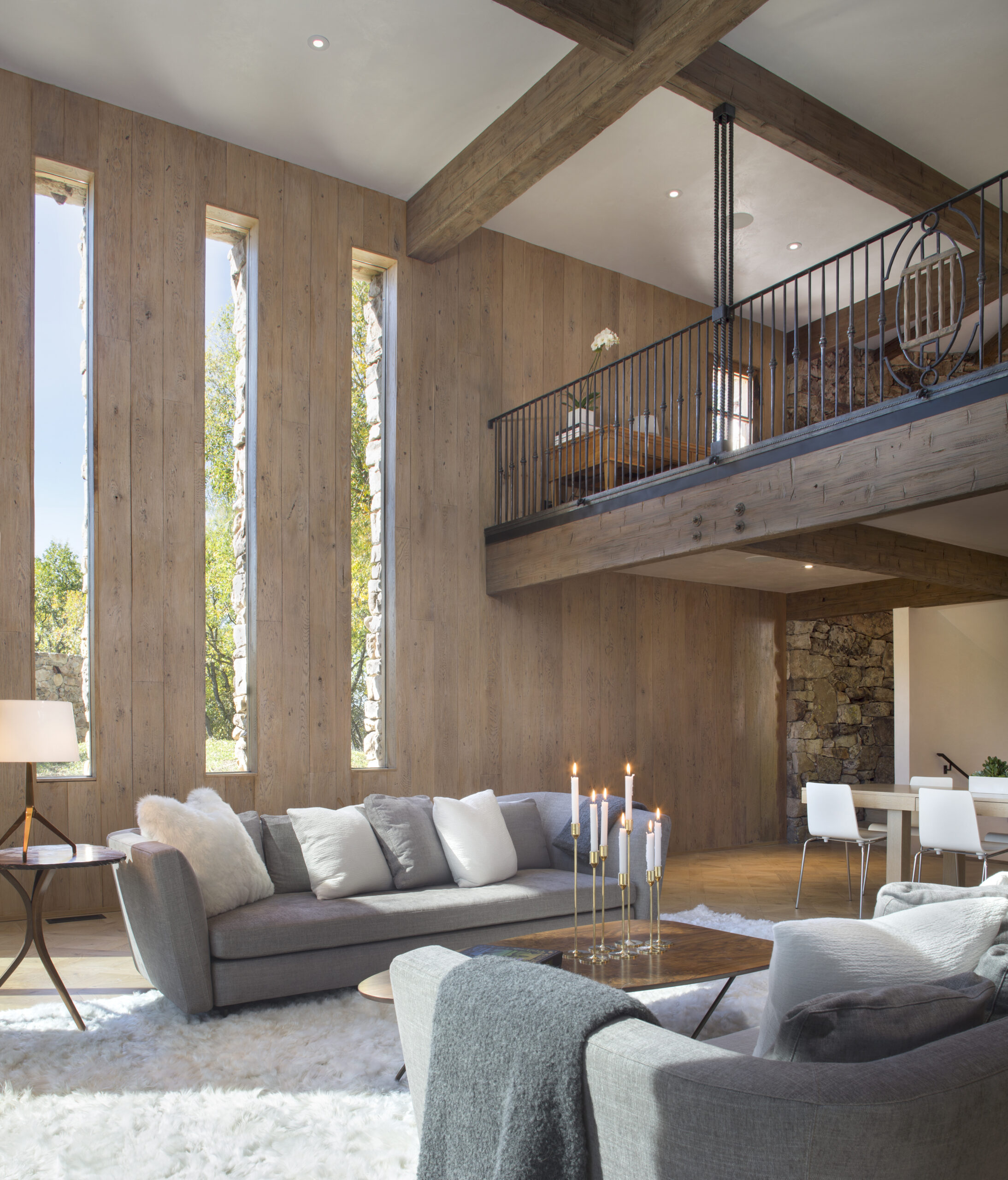
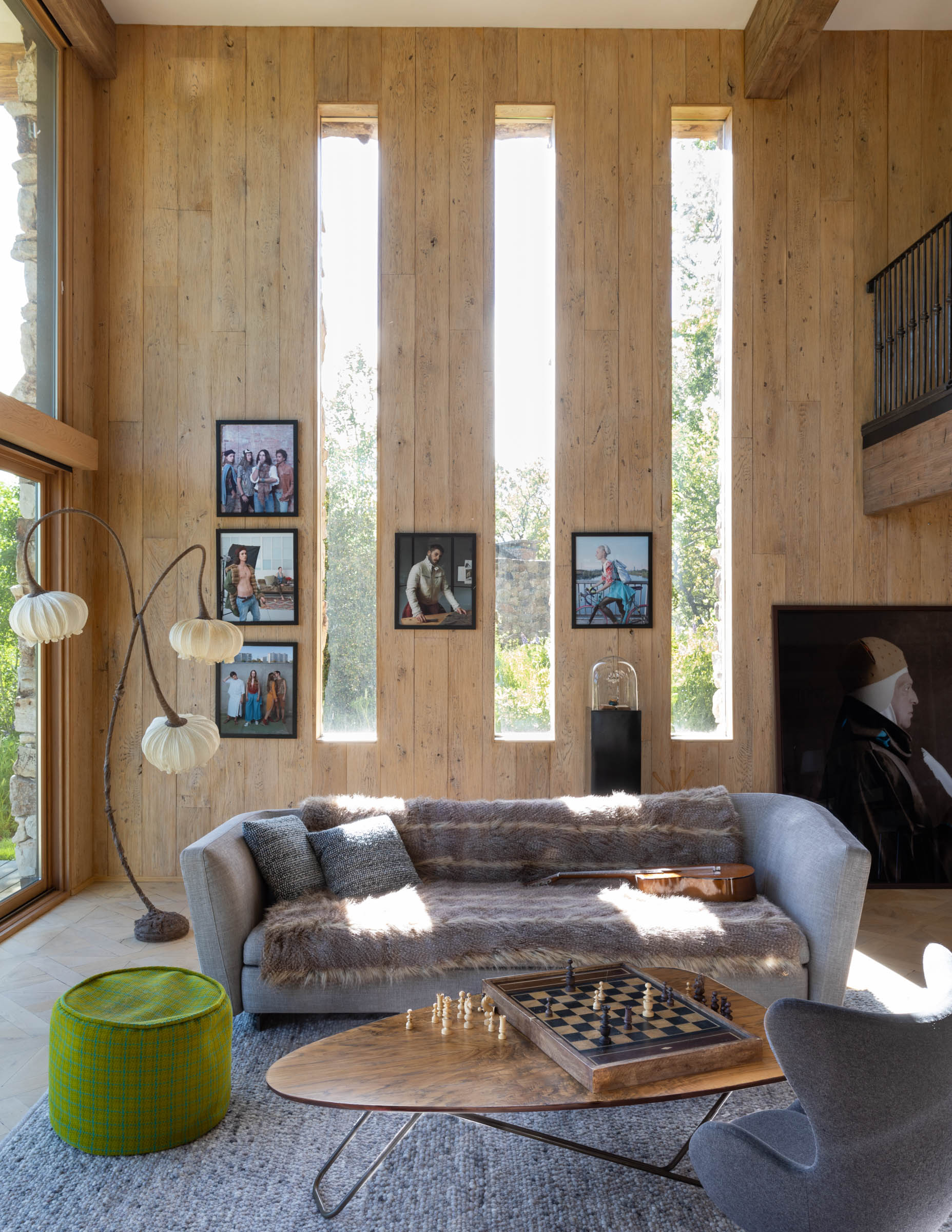
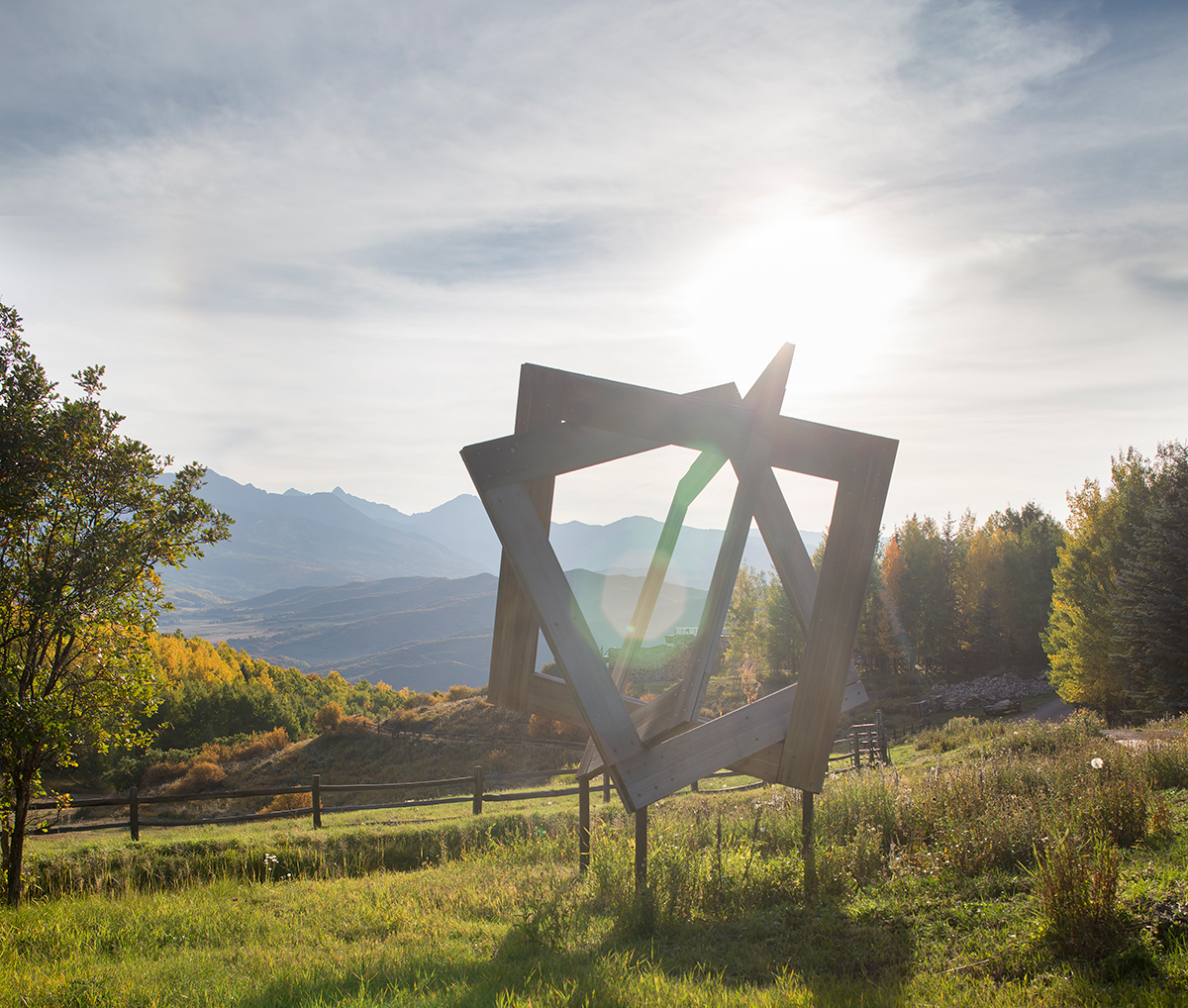
While renovating a building may seem to offer less opportunity than a blank slate, a considerable creative challenge is presented when the preexisting component is picturesque: a relic or ruin, ideally dating from a bygone, colorful age. Then, all manner of possibilities come into play, the most interesting being how the old might become part of something new: the structural and emotional interplay between the vivid past and the practical present.
Our design for Barn Studio, perched on a ridge with picturesque Aspen views, rings an interesting change on the idea of the new-old house. The original building appeared to be a remnant of a mostly collapsed, rubble-stone agrarian structure, reconceived as a residence via the insertion of contemporary living amenities. In fact, it was entirely modern, designed by its owner to resemble a clever meeting of modern life and the golden days of Colorado’s yesteryear.
R+B’s clients, a couple with three young children, purchased this folly and its surrounding acreage, seeing it as the cornerstone of a compound that would ultimately include a range of building types. The idea was to make 3000 square feet livable for five people while the other structures took shape, and to create a paradigm for building on the site, one that respected the area’s rural-agrarian history while extending that legacy into the future.
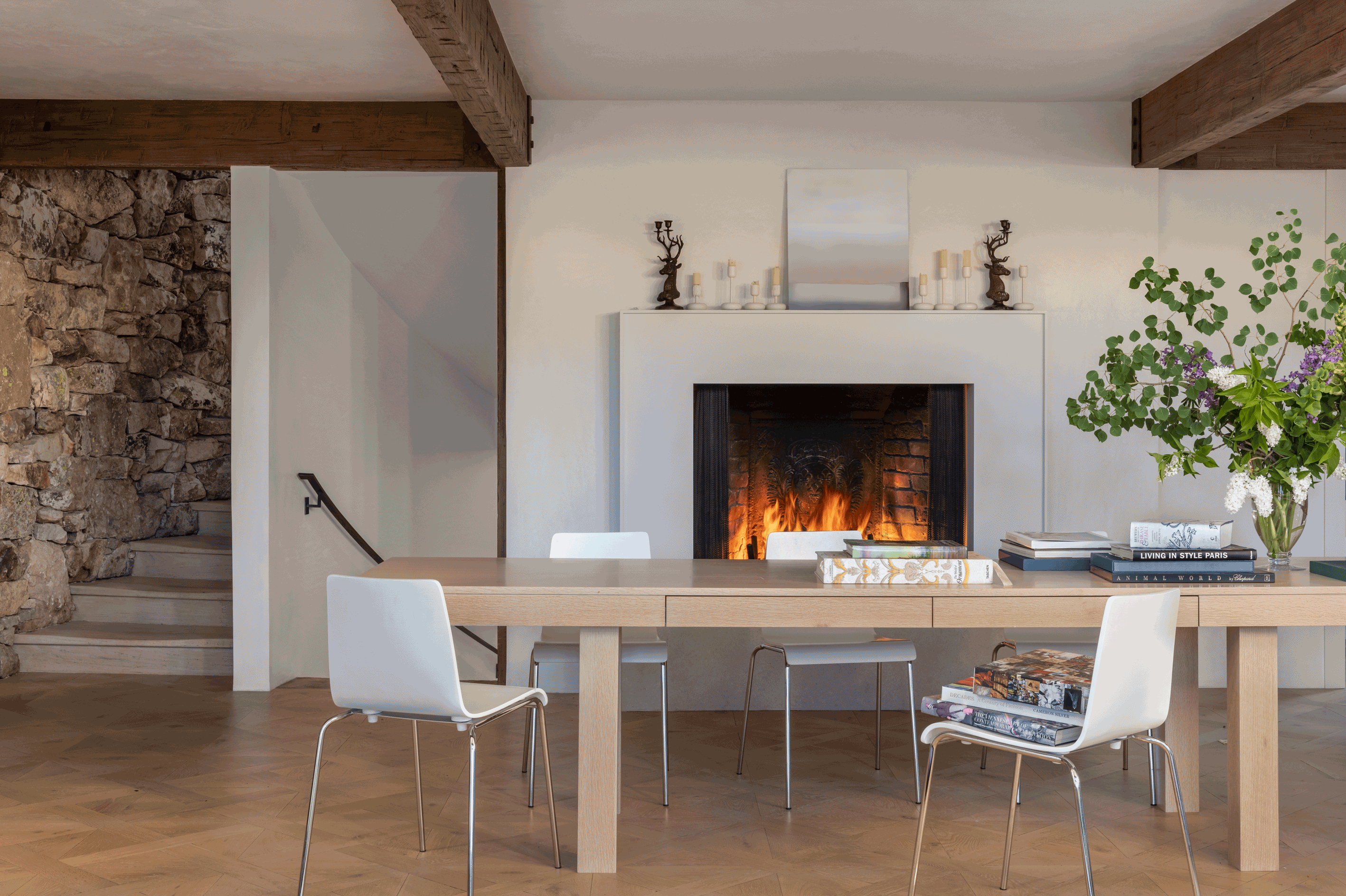
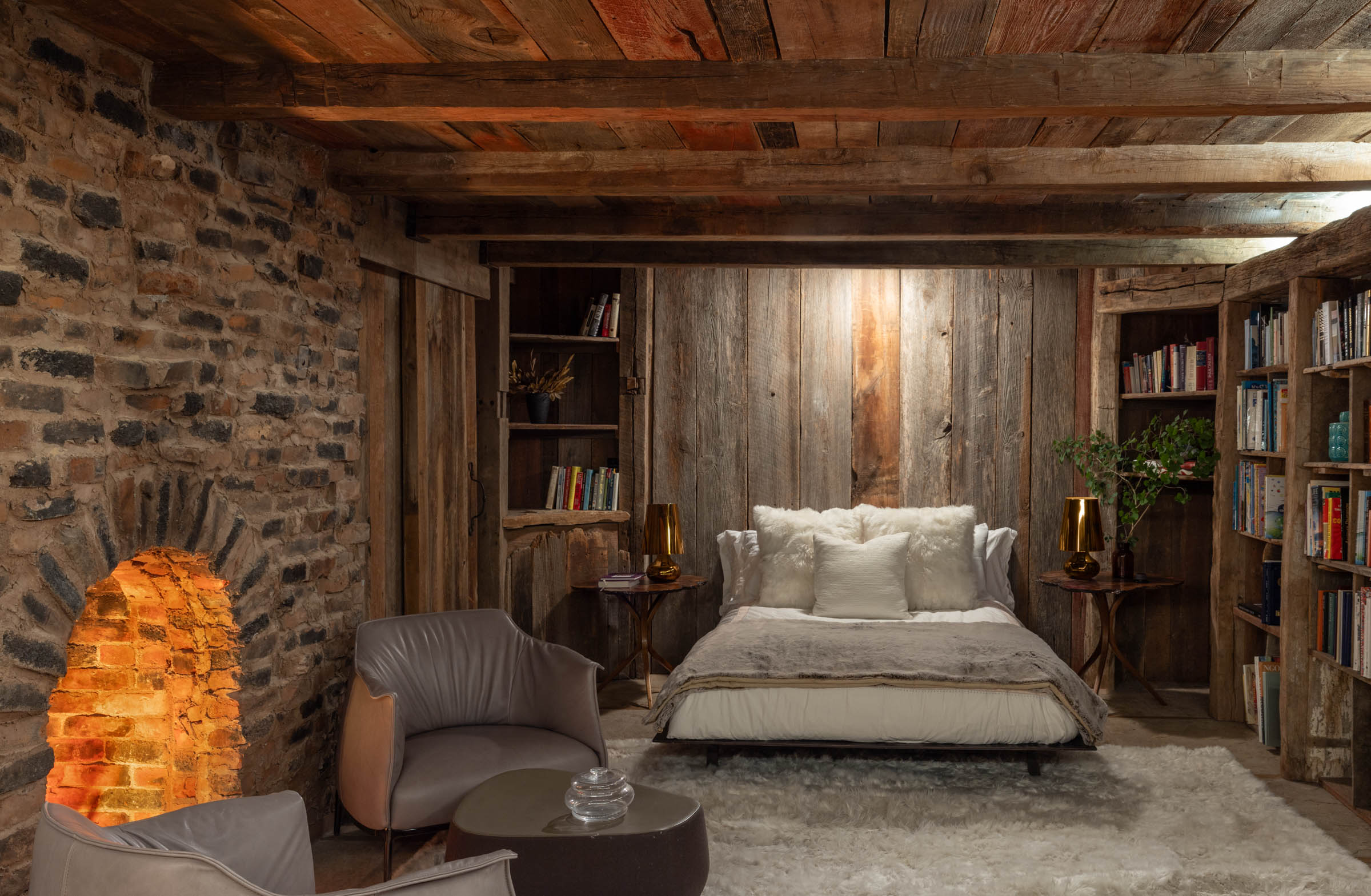
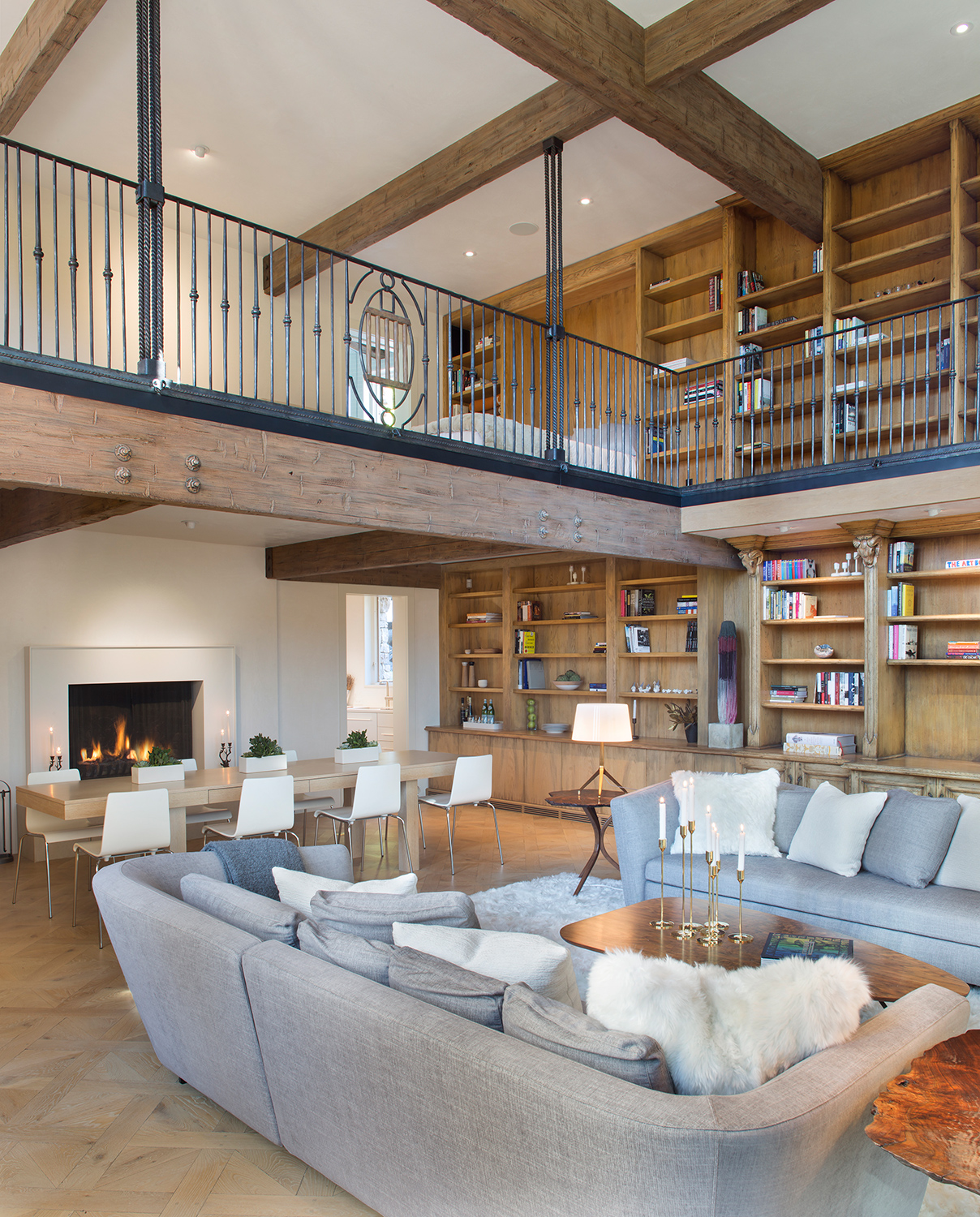
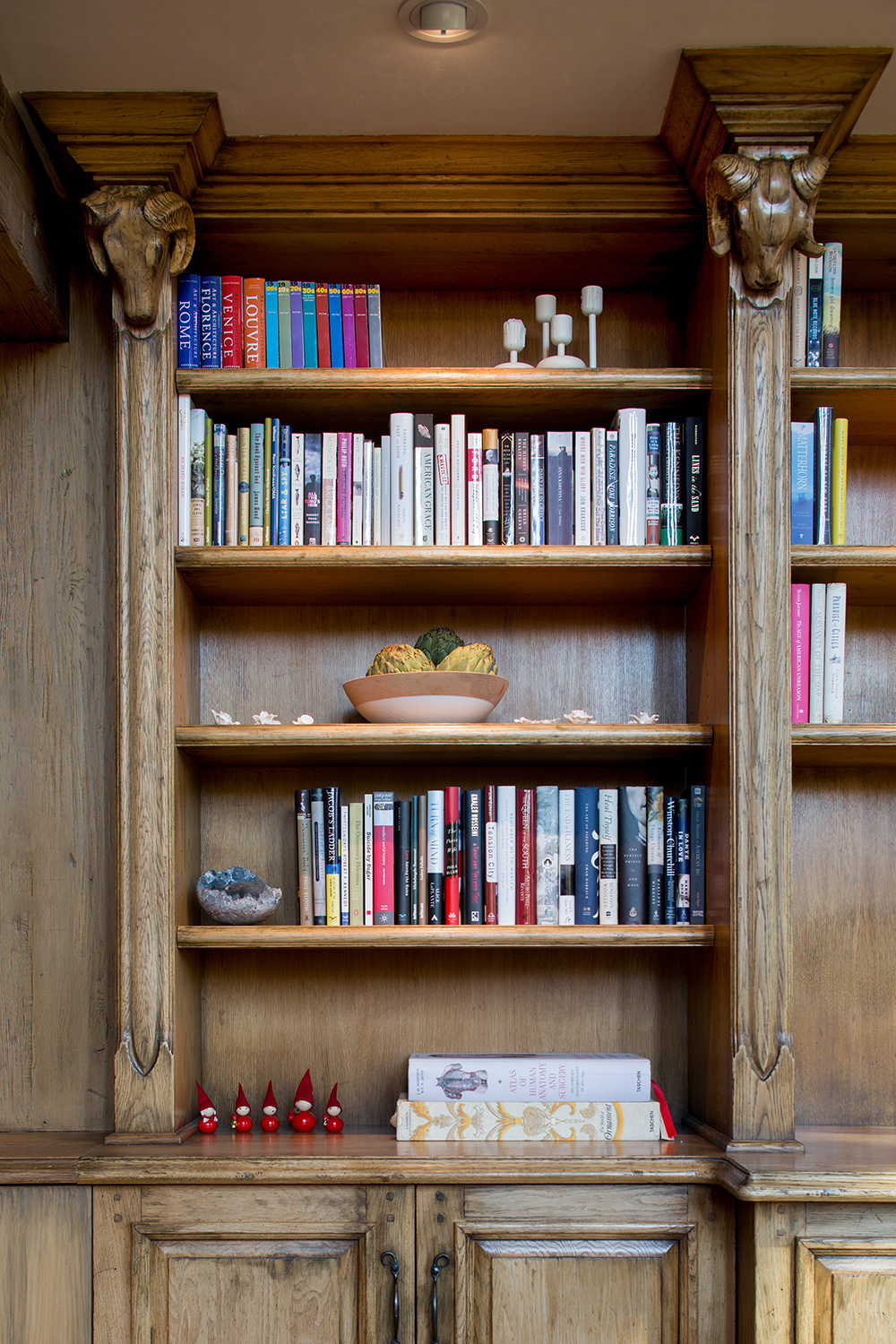
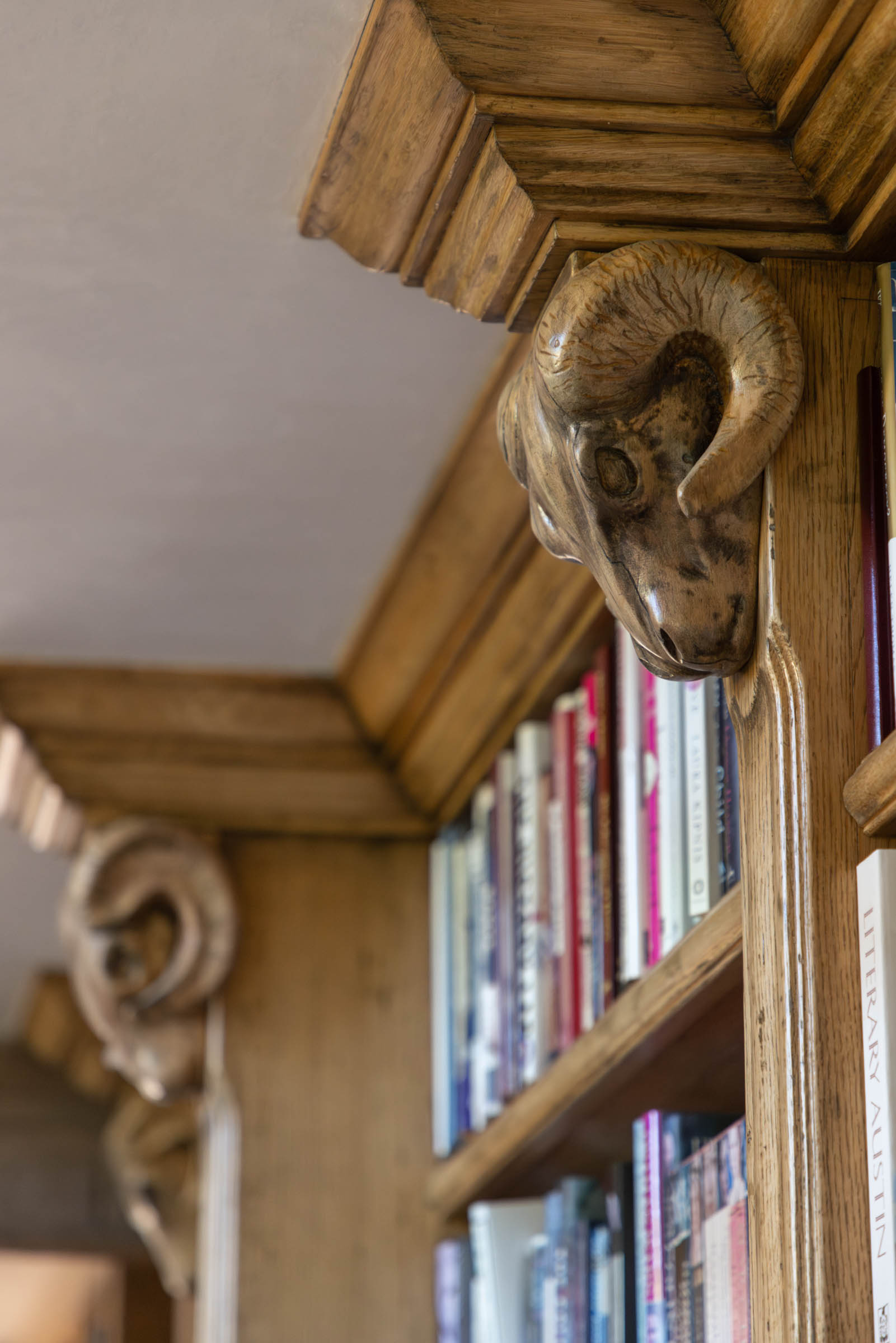
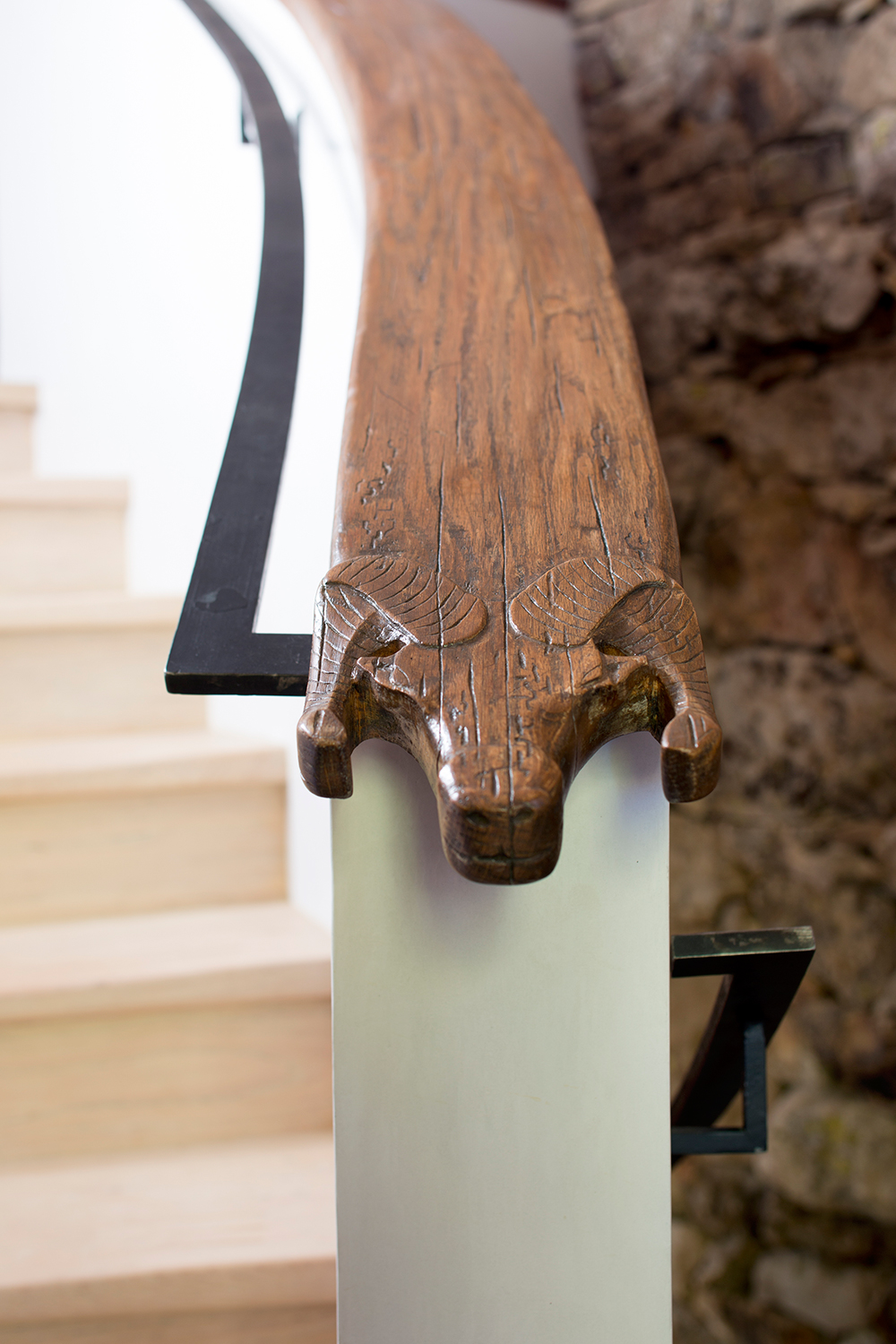
Barn Studio unfolds on three levels: a subterranean space incorporating media and game rooms; a double-height main floor, which we lightened and contemporized; and an L-shaped mezzanine that doubles as a sleeping loft and library. Although there are abundant reminders of the place as it was, notably a distinctive carved ram’s head motif, the design’s reimagining is at once more useful and more cheerful: a welcoming, offbeat hideaway – and elegant, fully-equipped crash pad for a rambunctious family of five – that belongs to the past without being mired in it.
Of the two R+B-designed residences that followed Barn Studio on the property, says Broughton, ‘they’re informed by what we did here first. It’s all about stewardship – uniting the past with today’s processes while respecting and appreciating the people who were here before.’
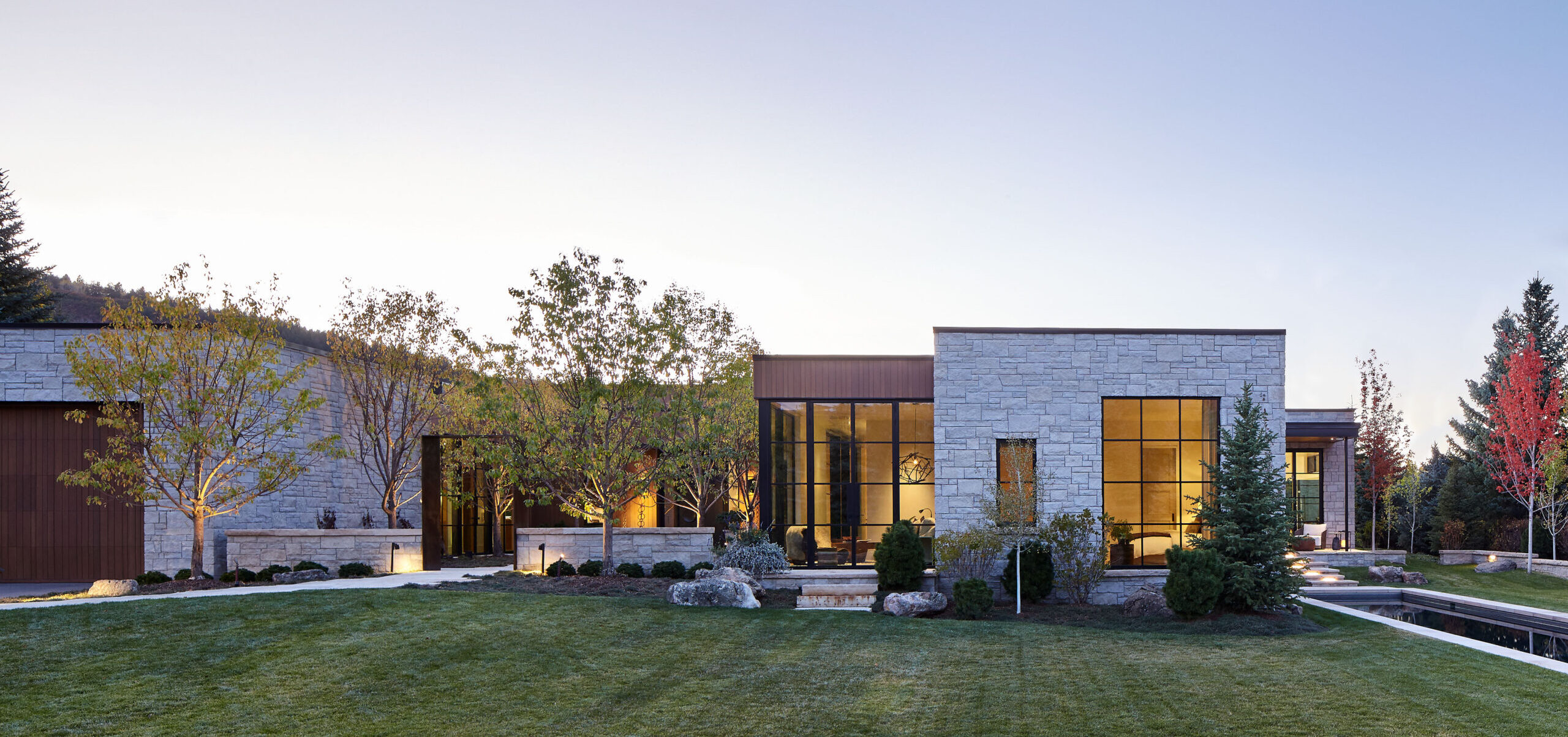
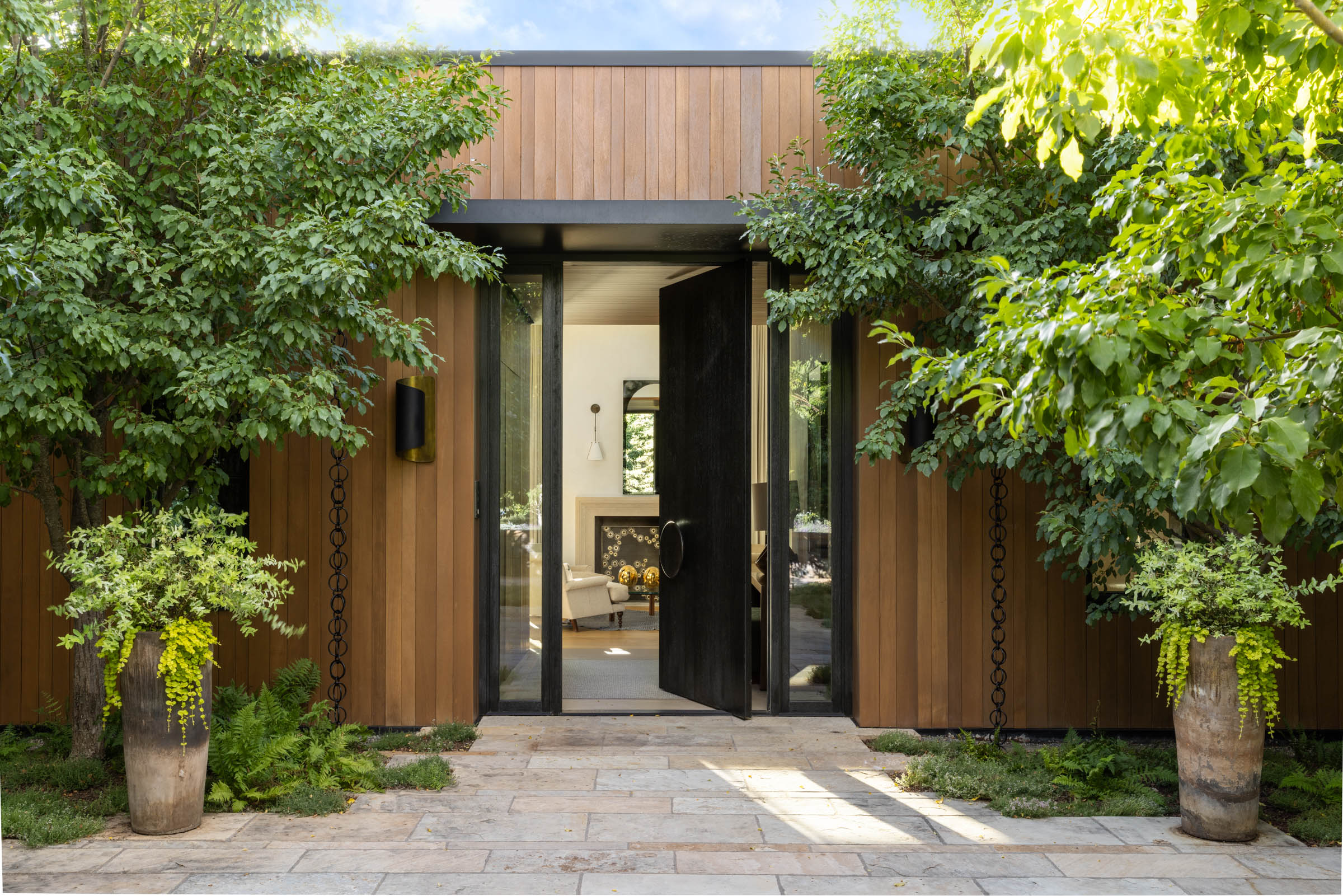
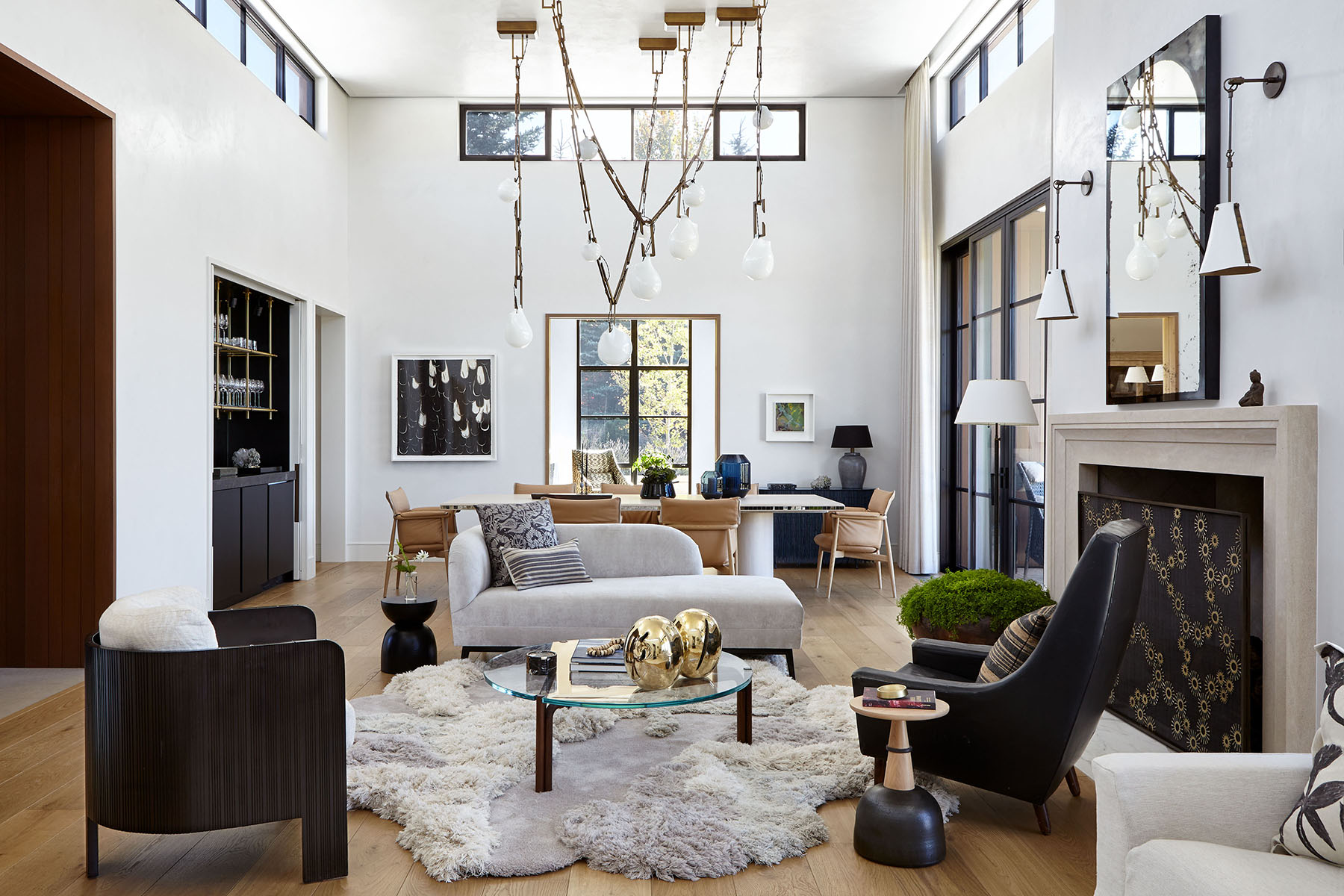
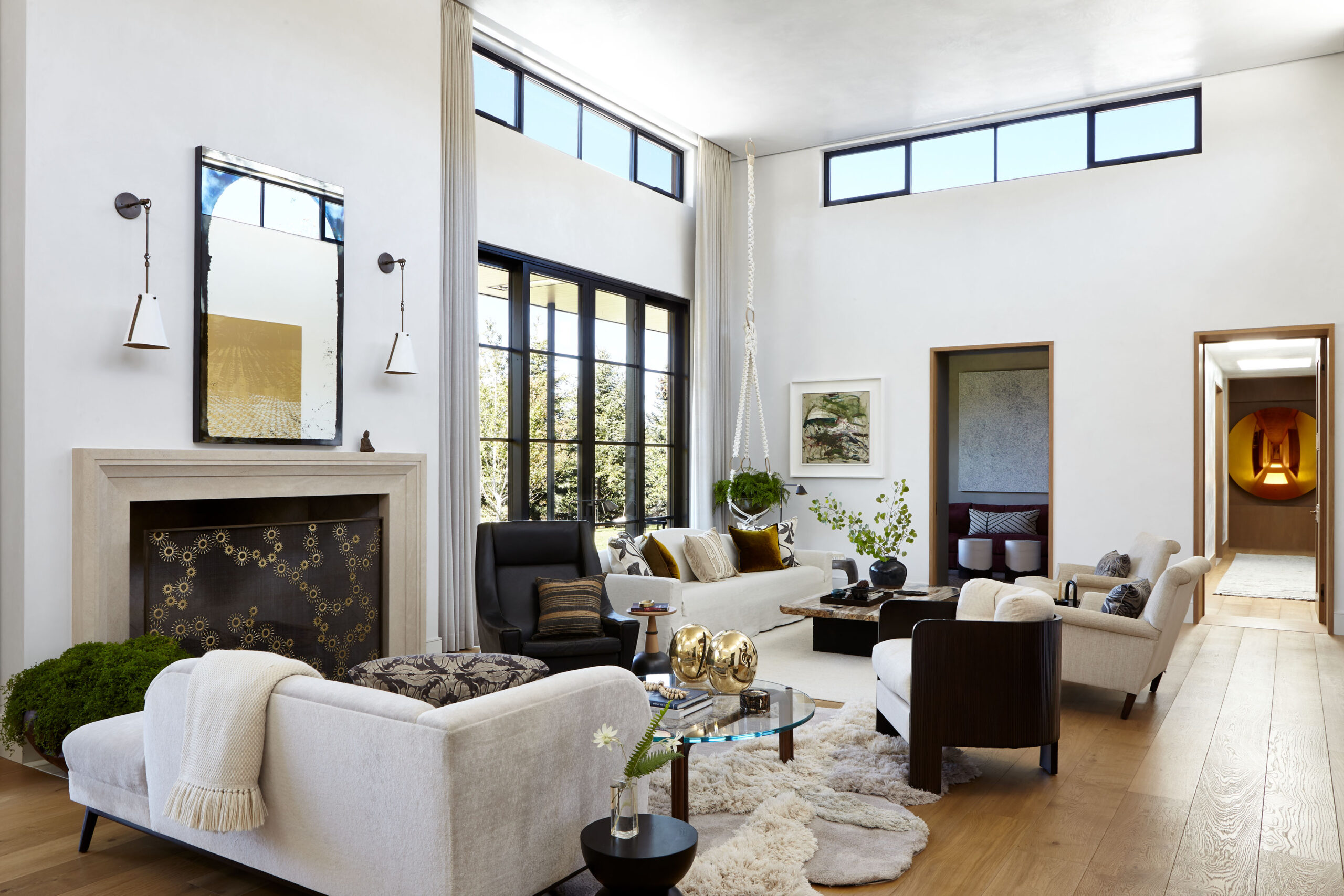
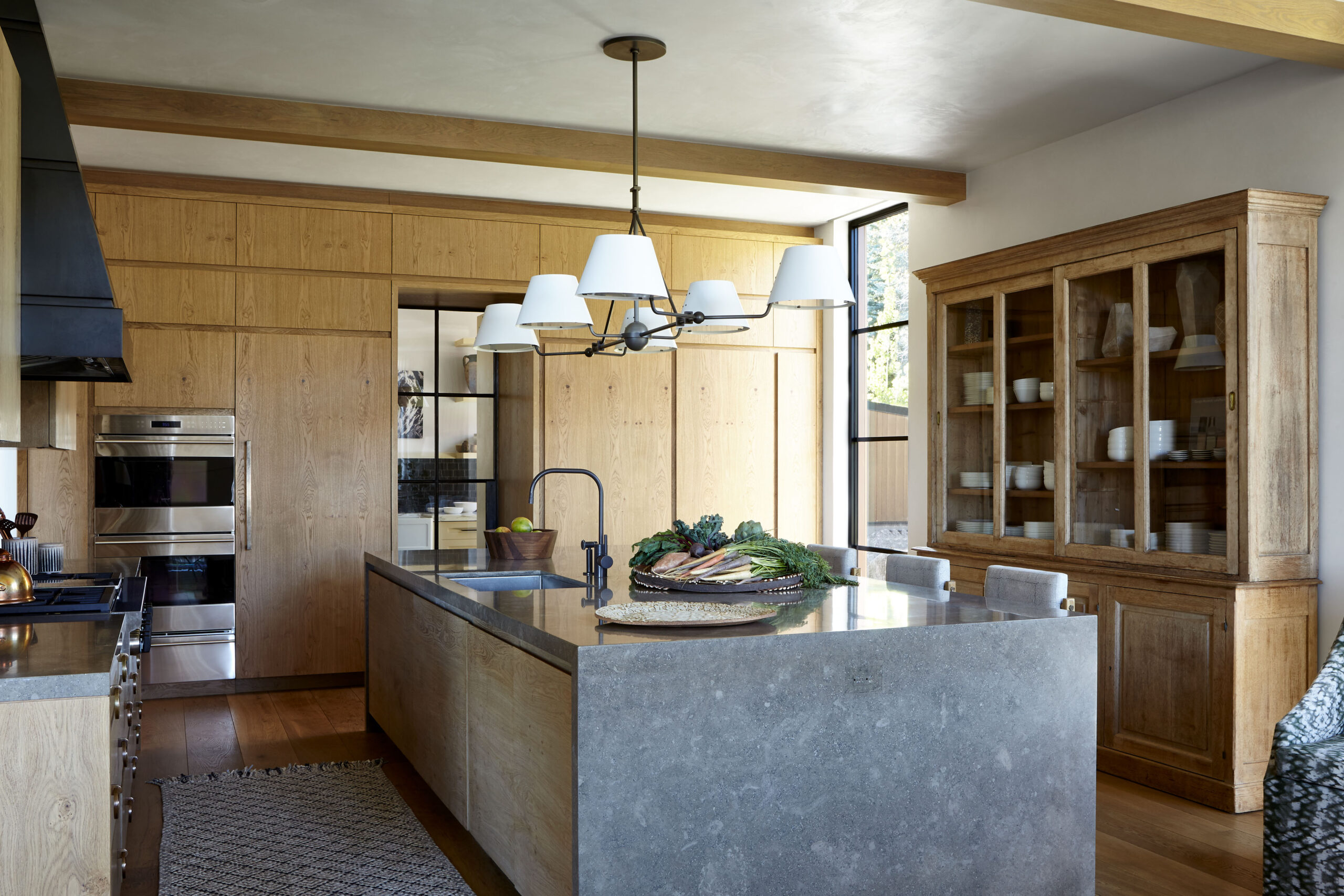
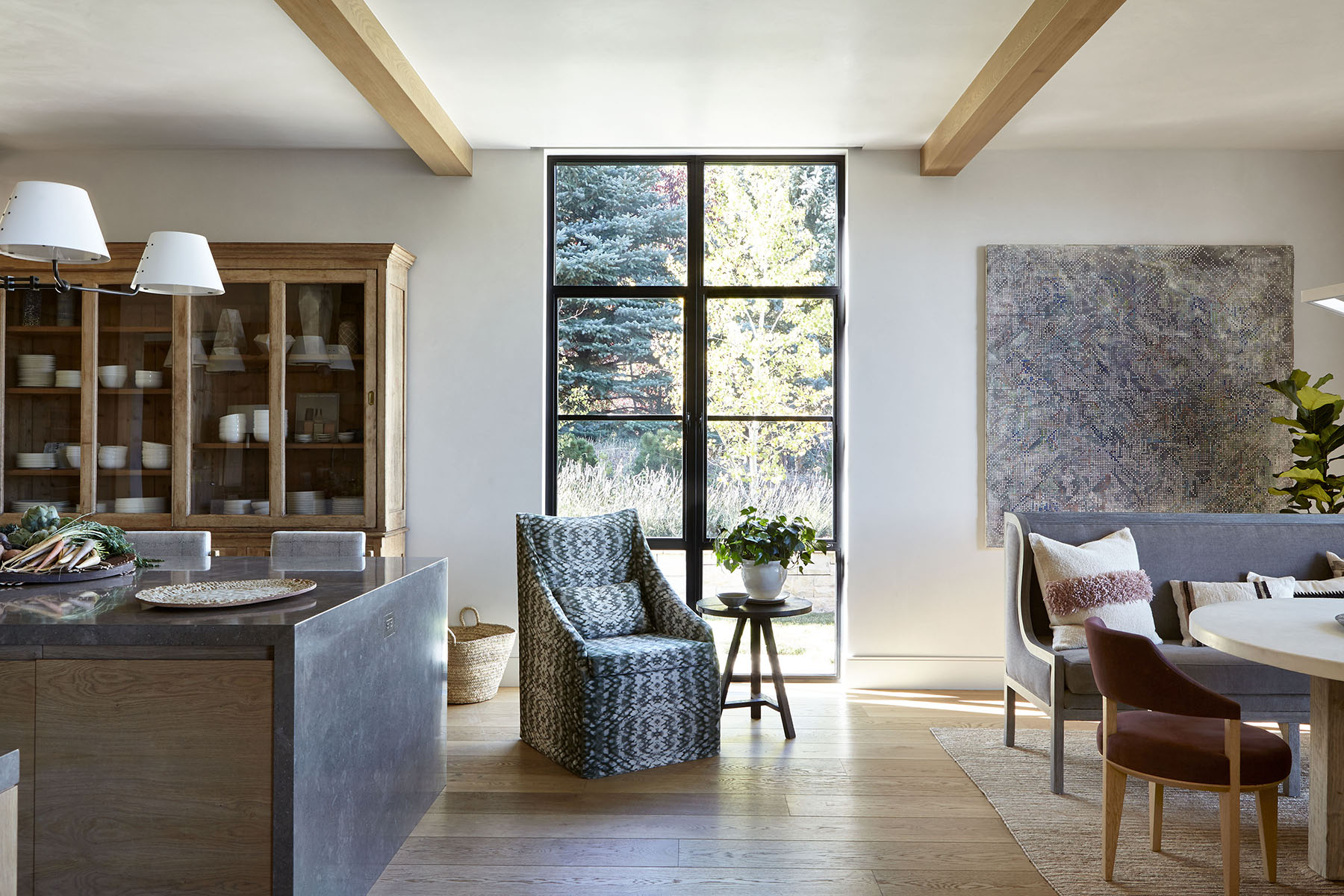
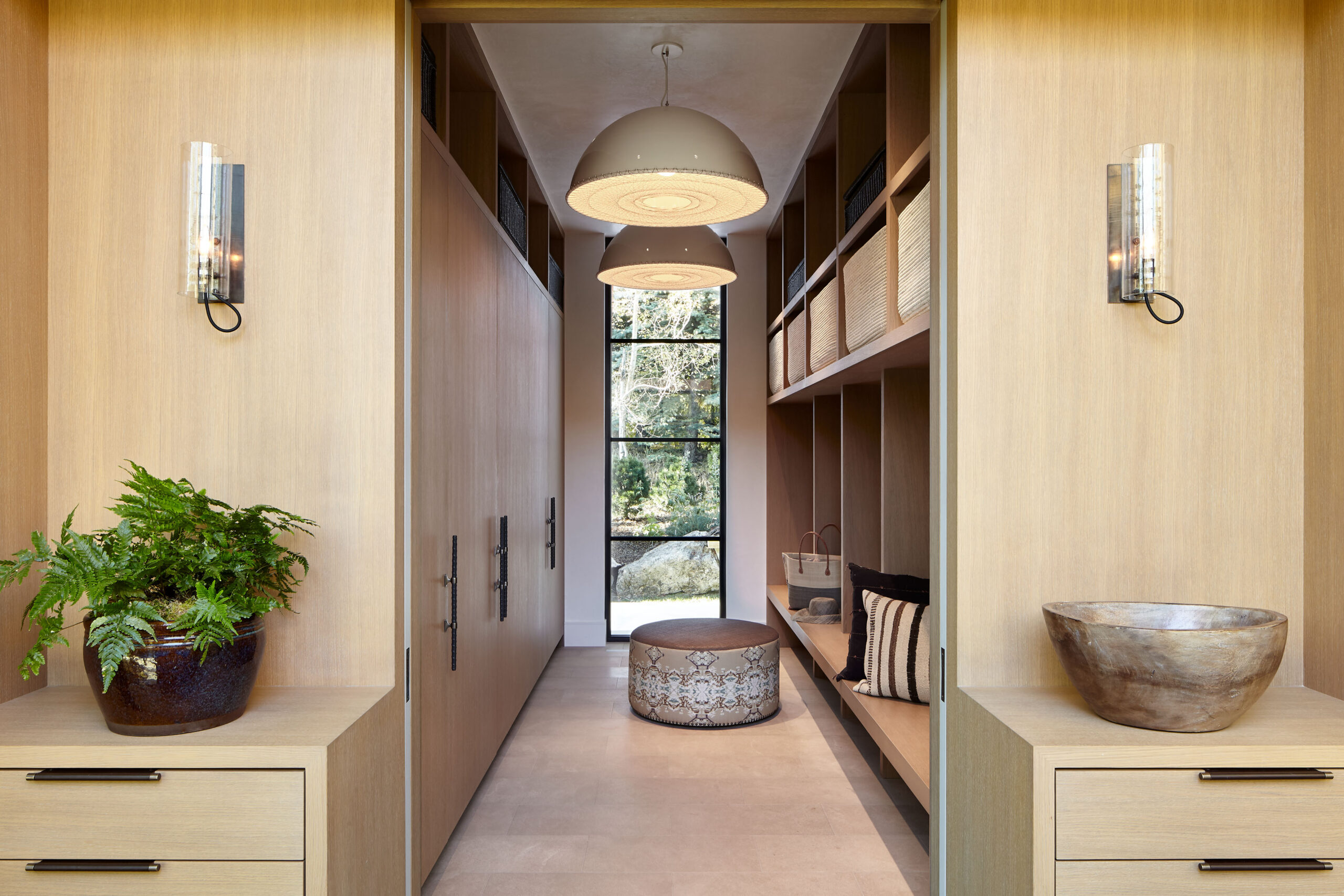
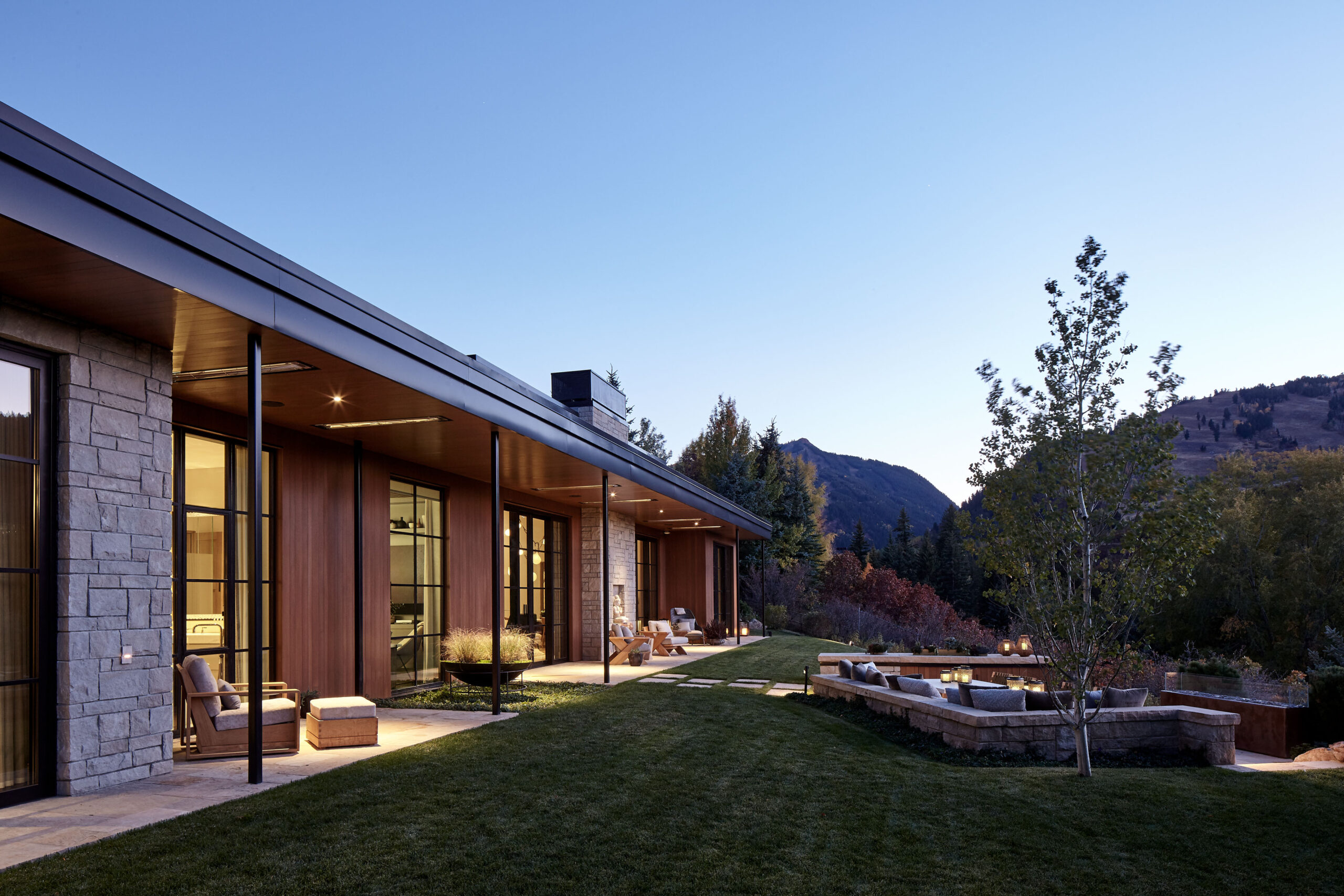
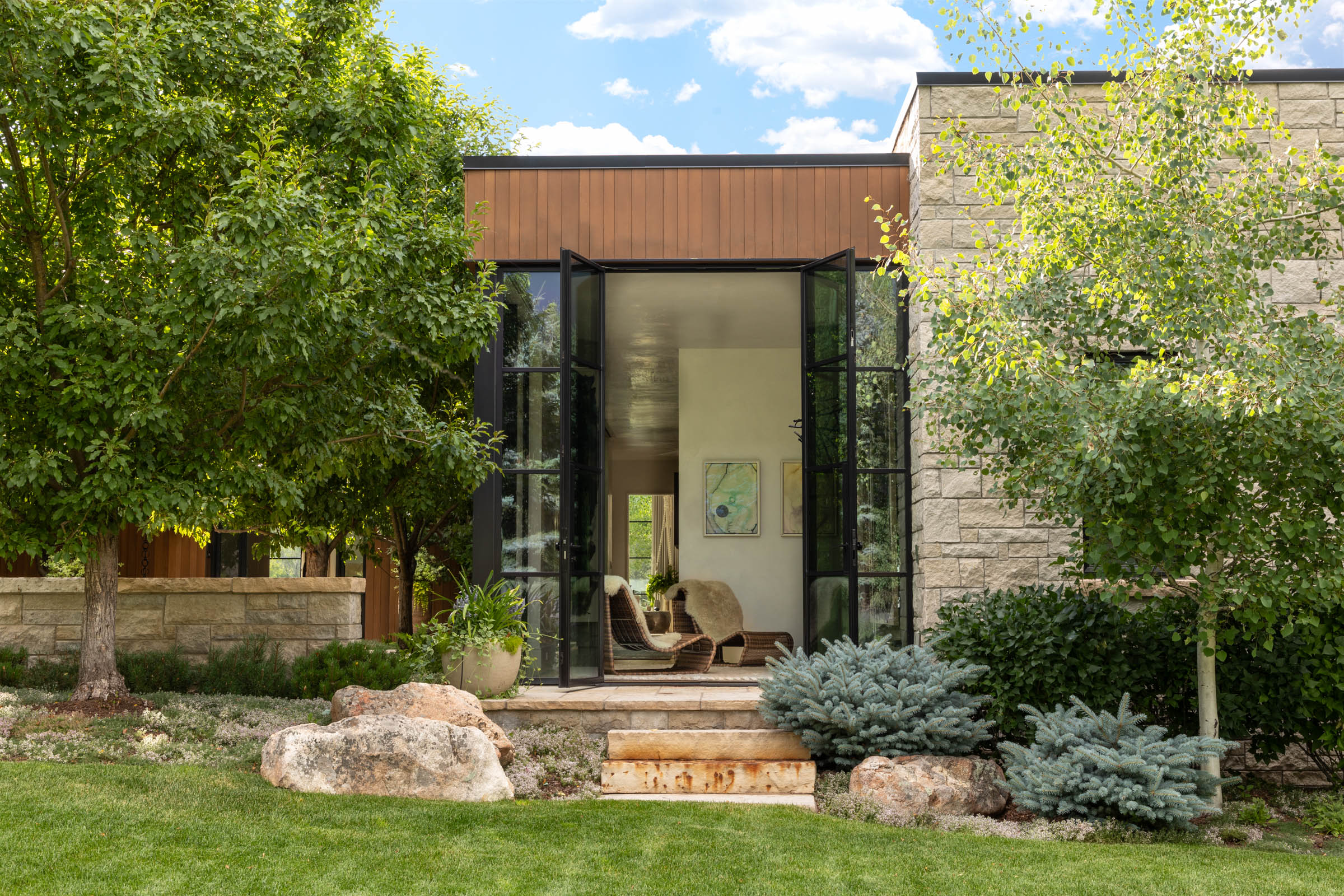
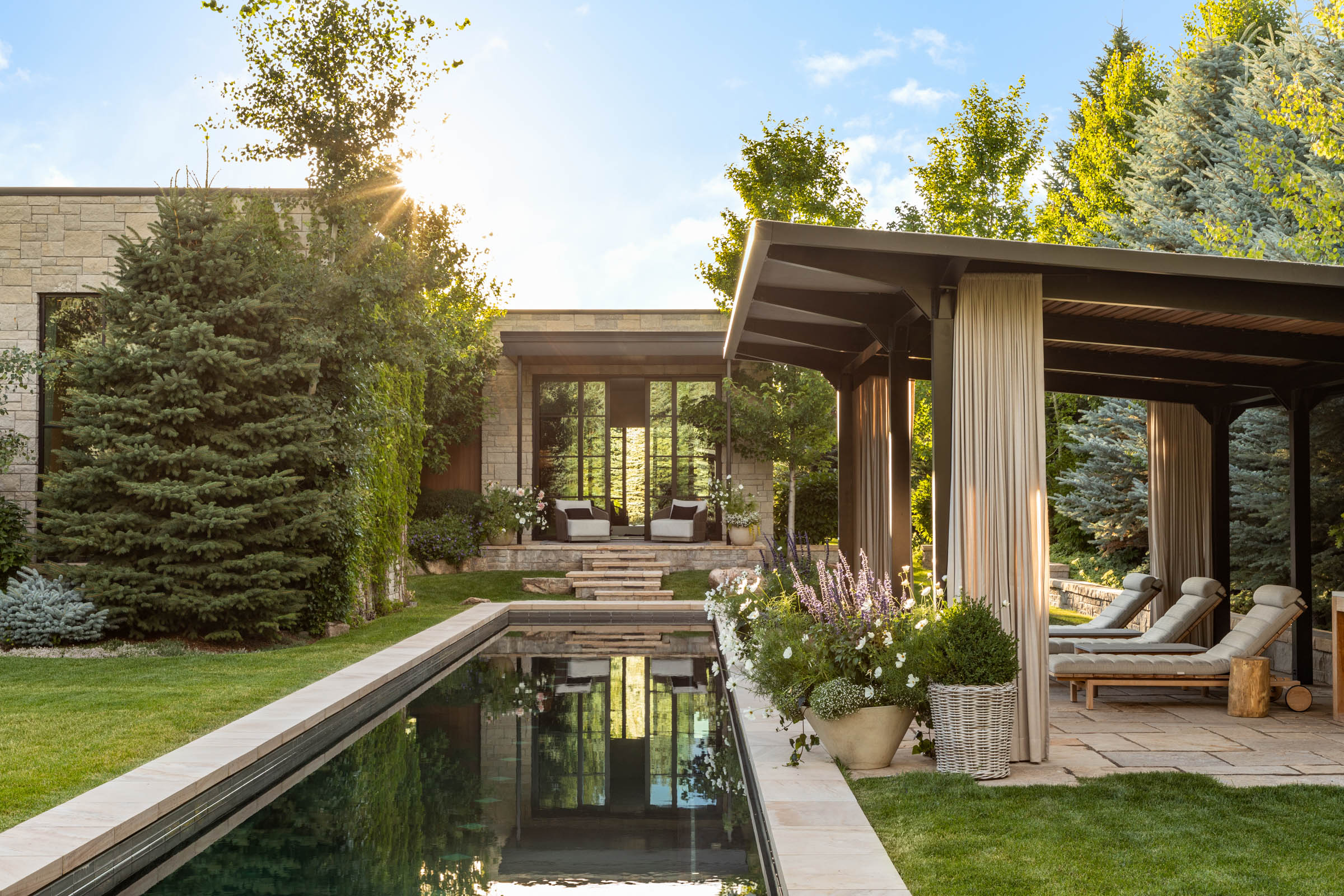
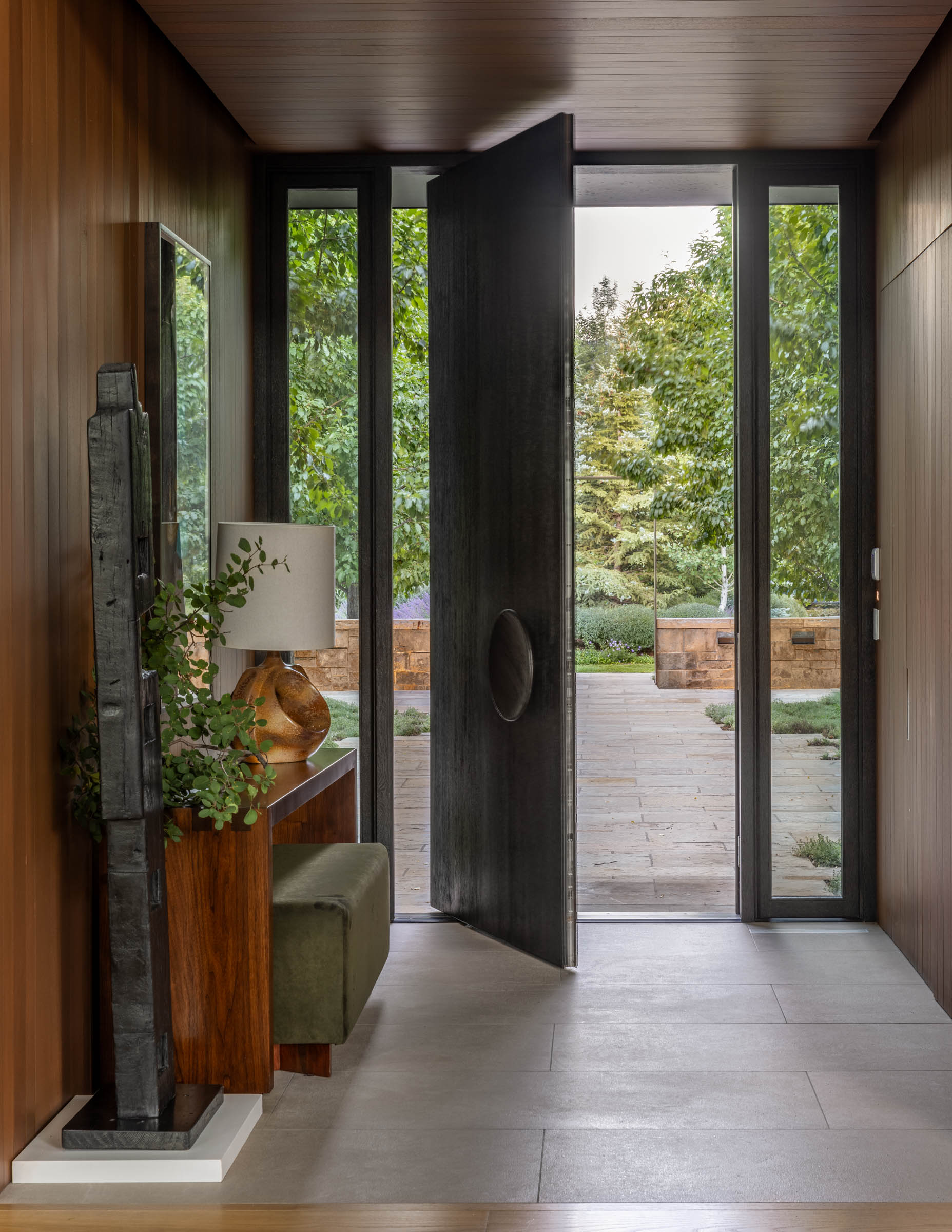
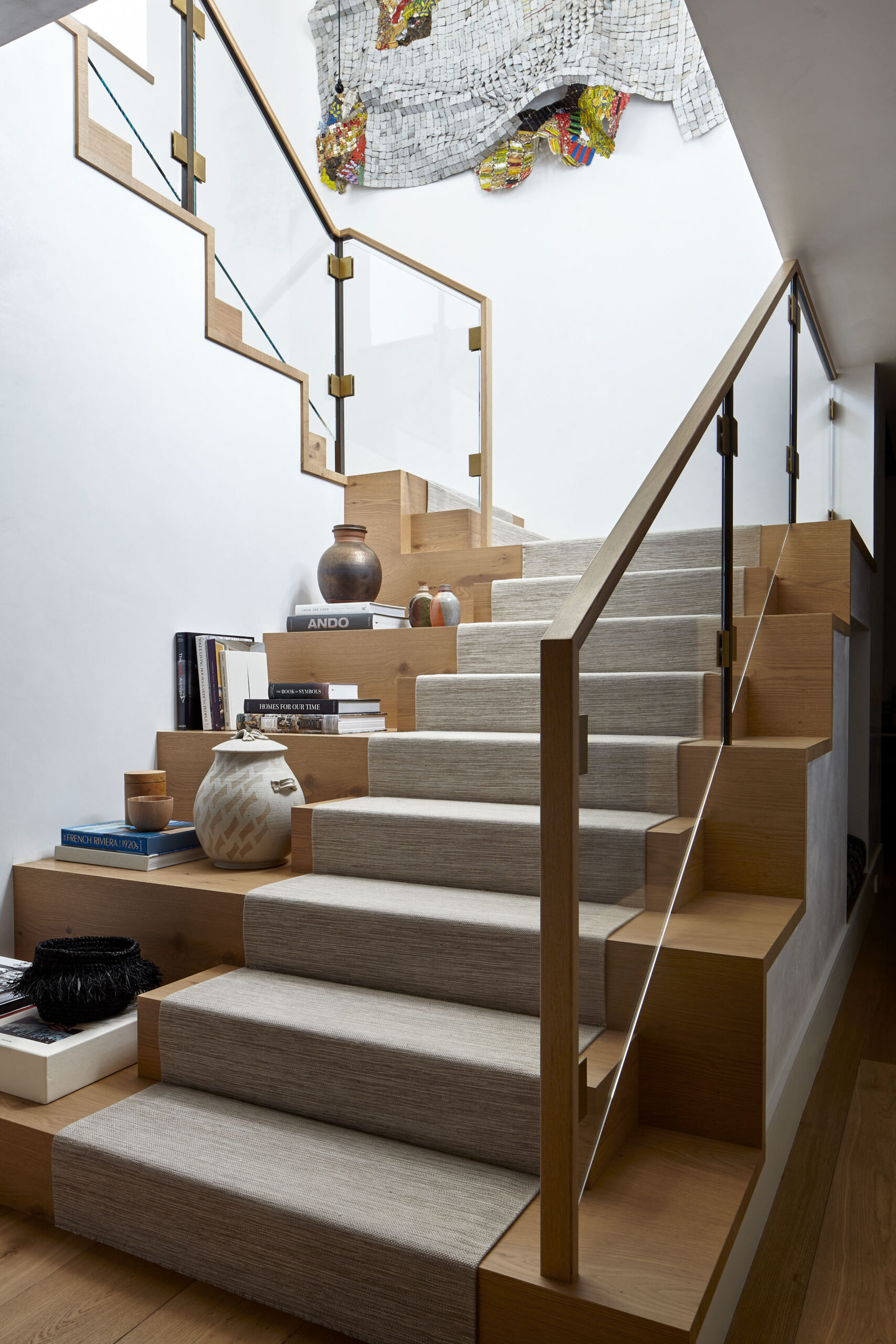
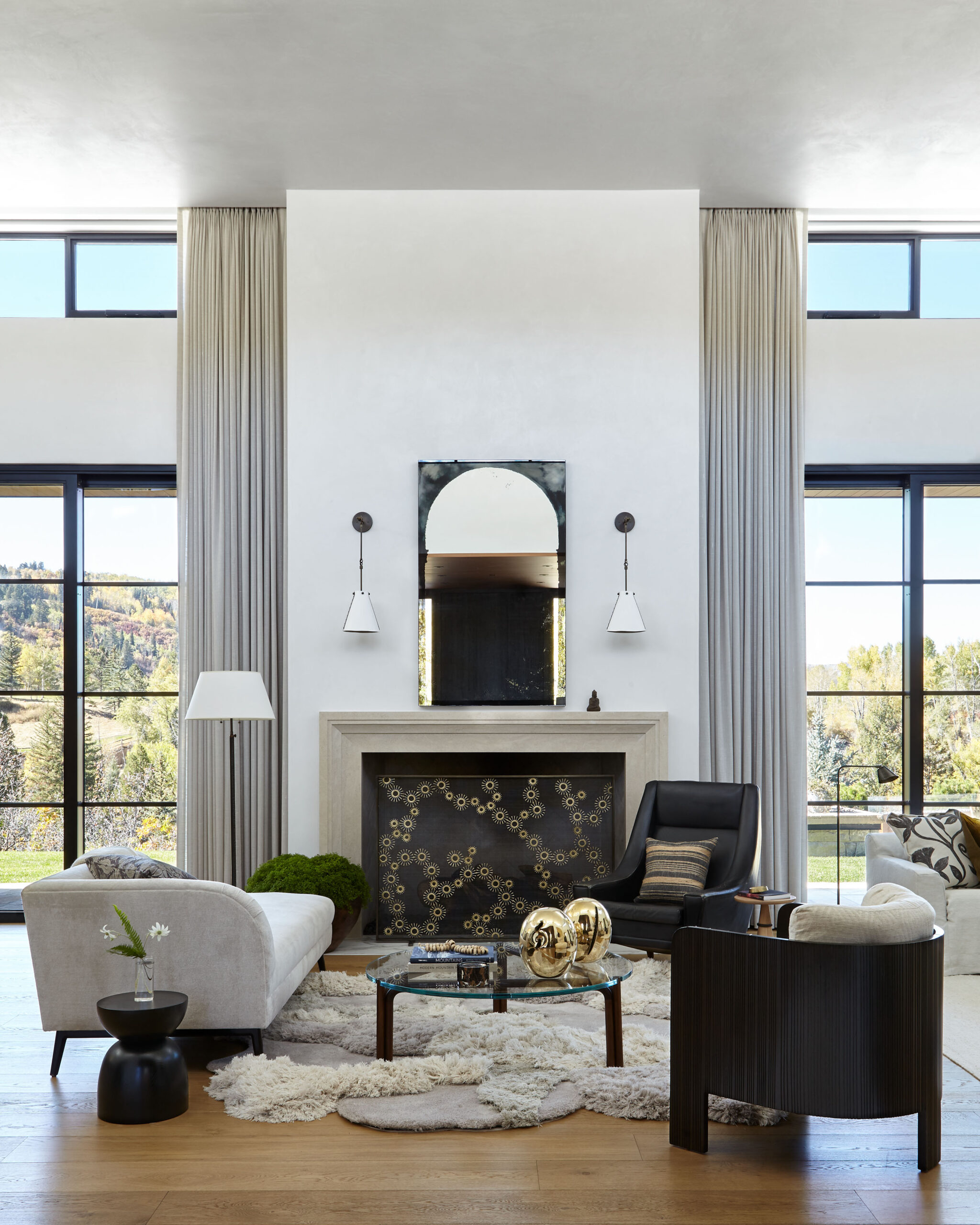
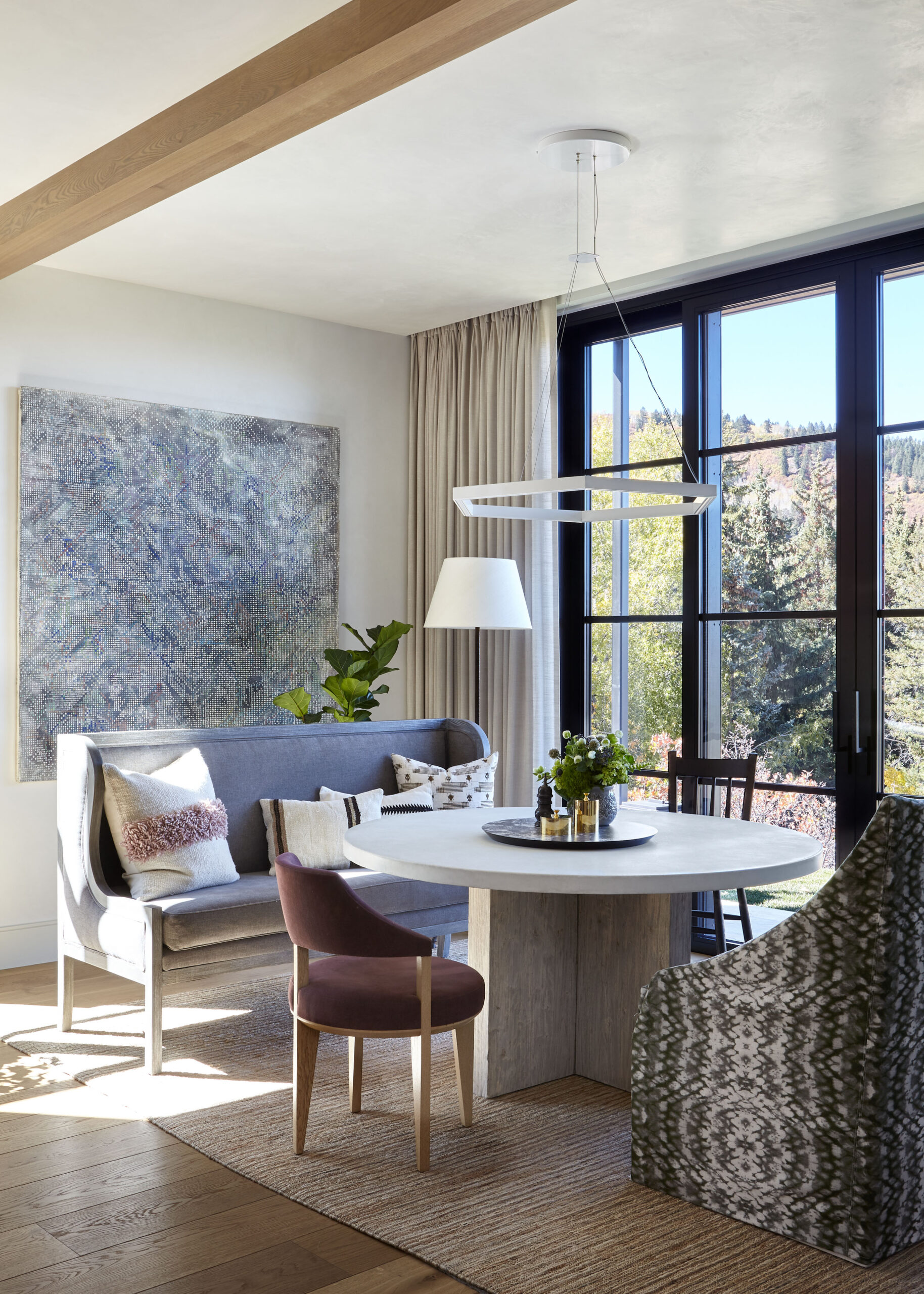
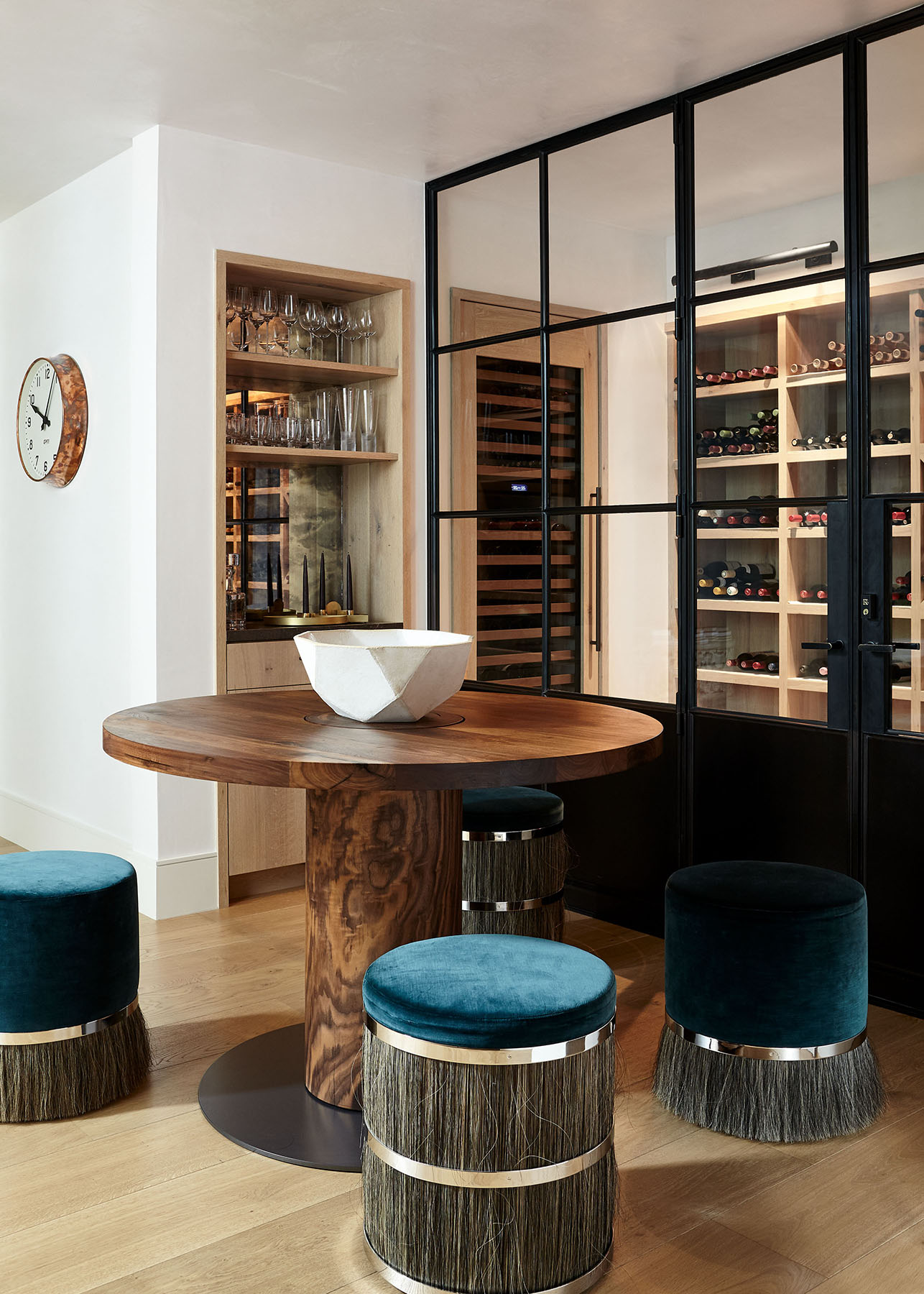
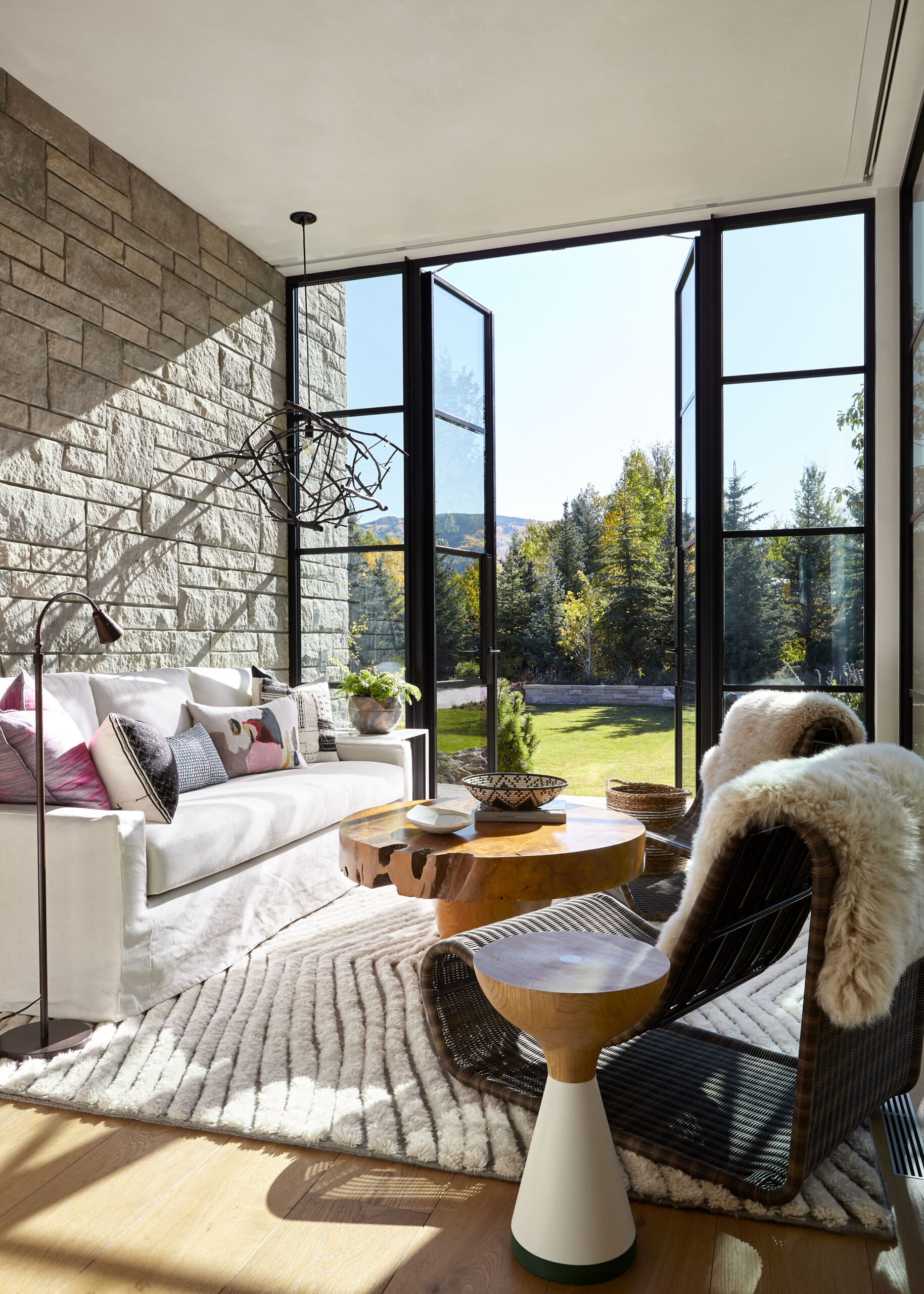
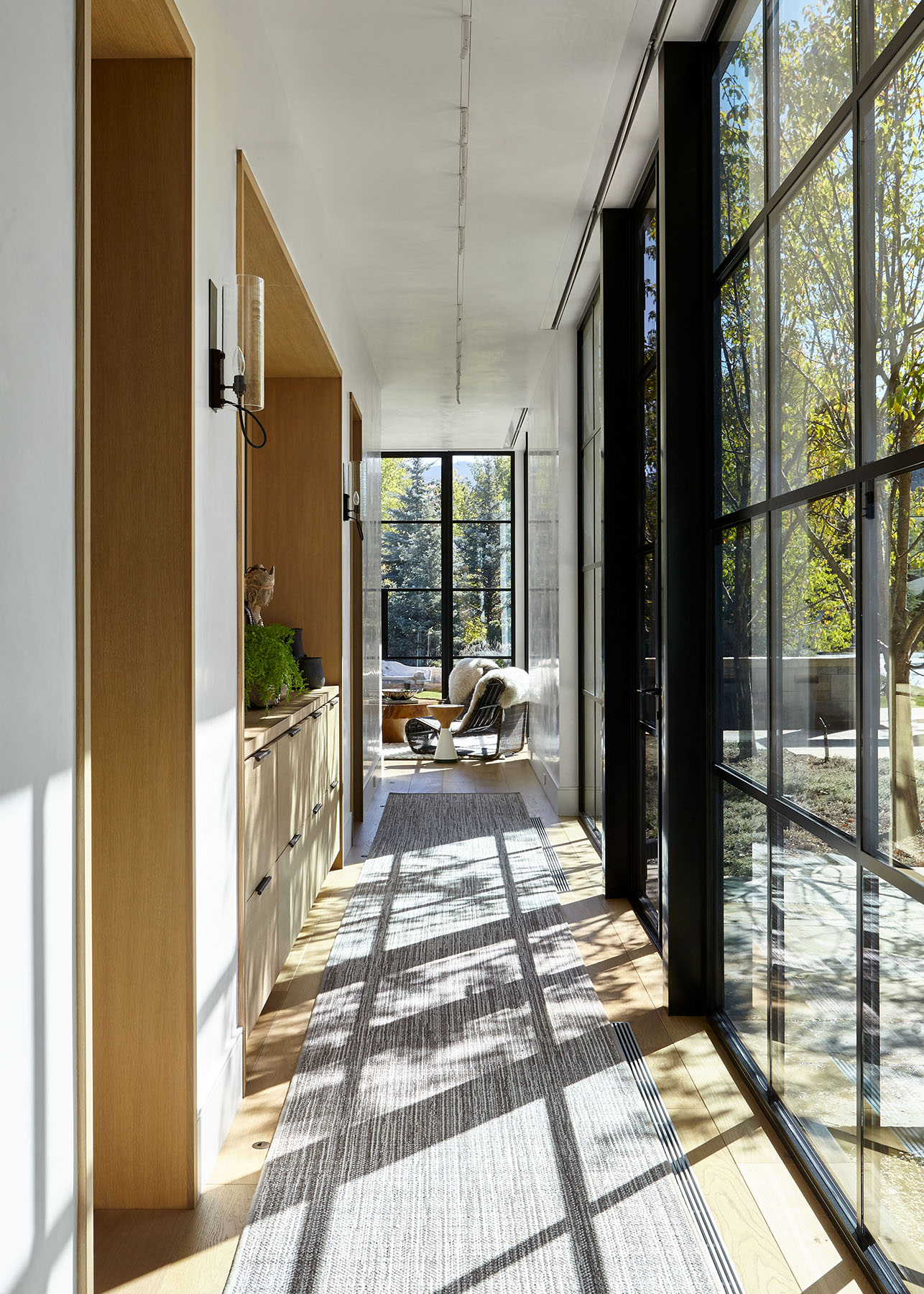
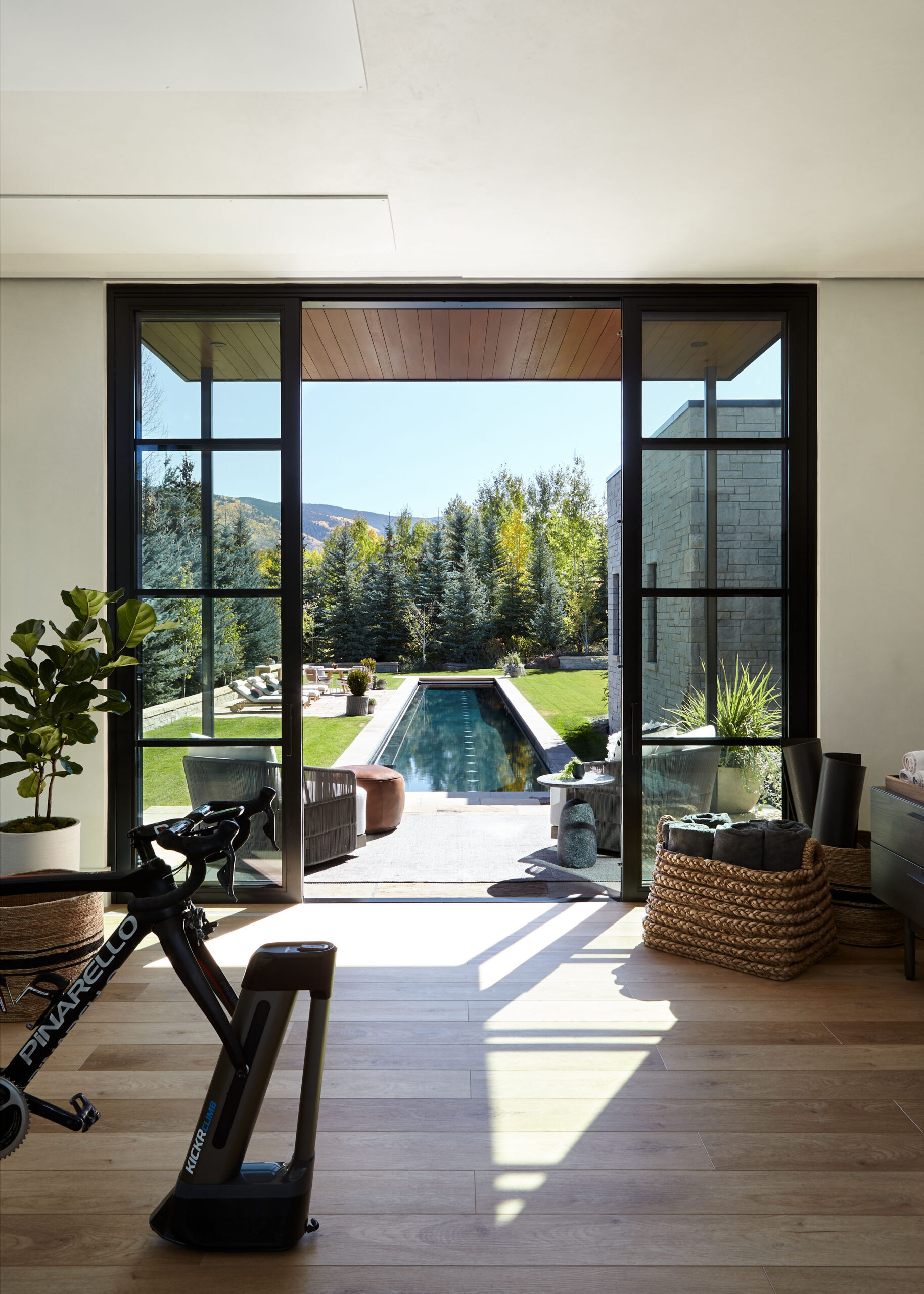
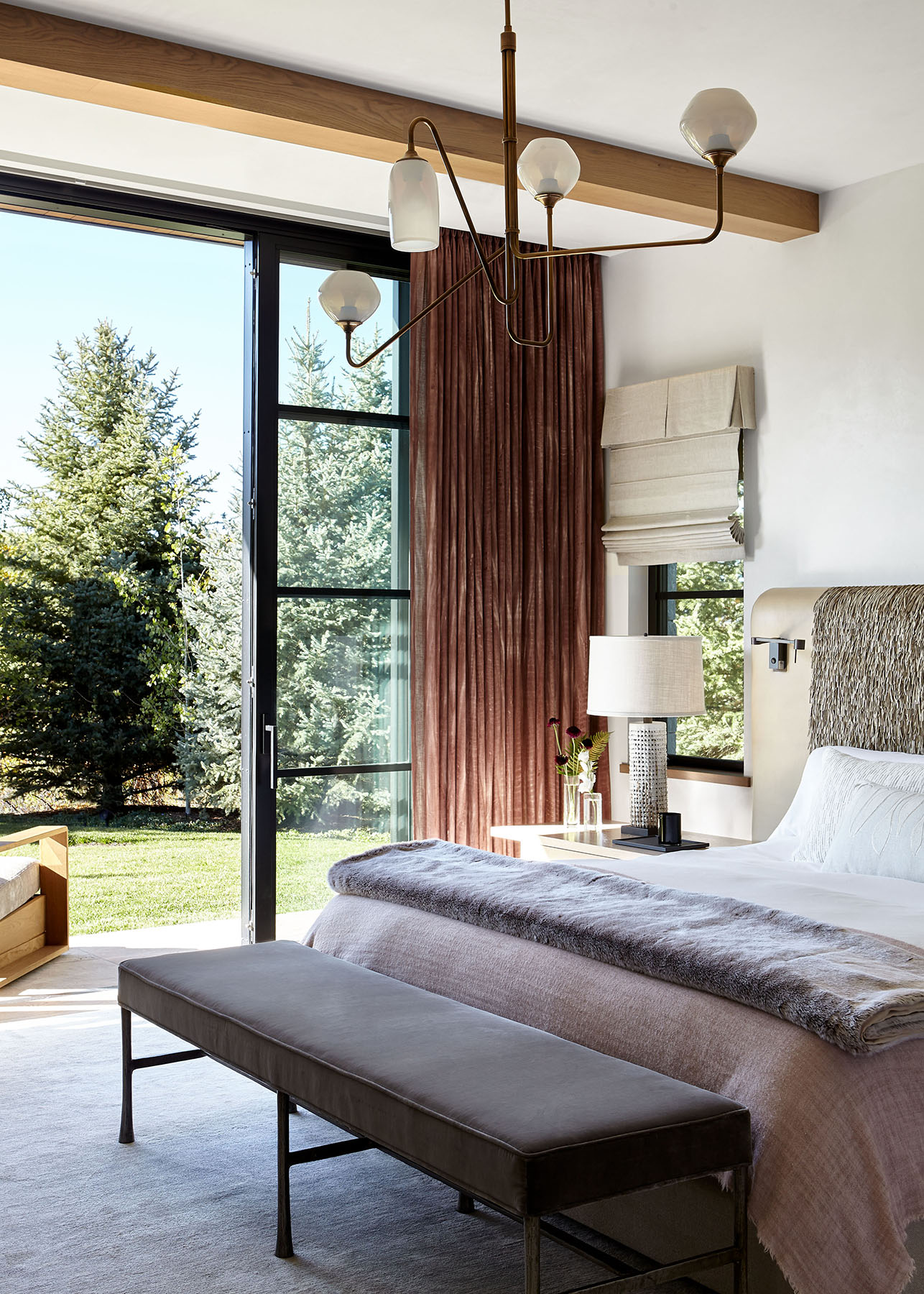
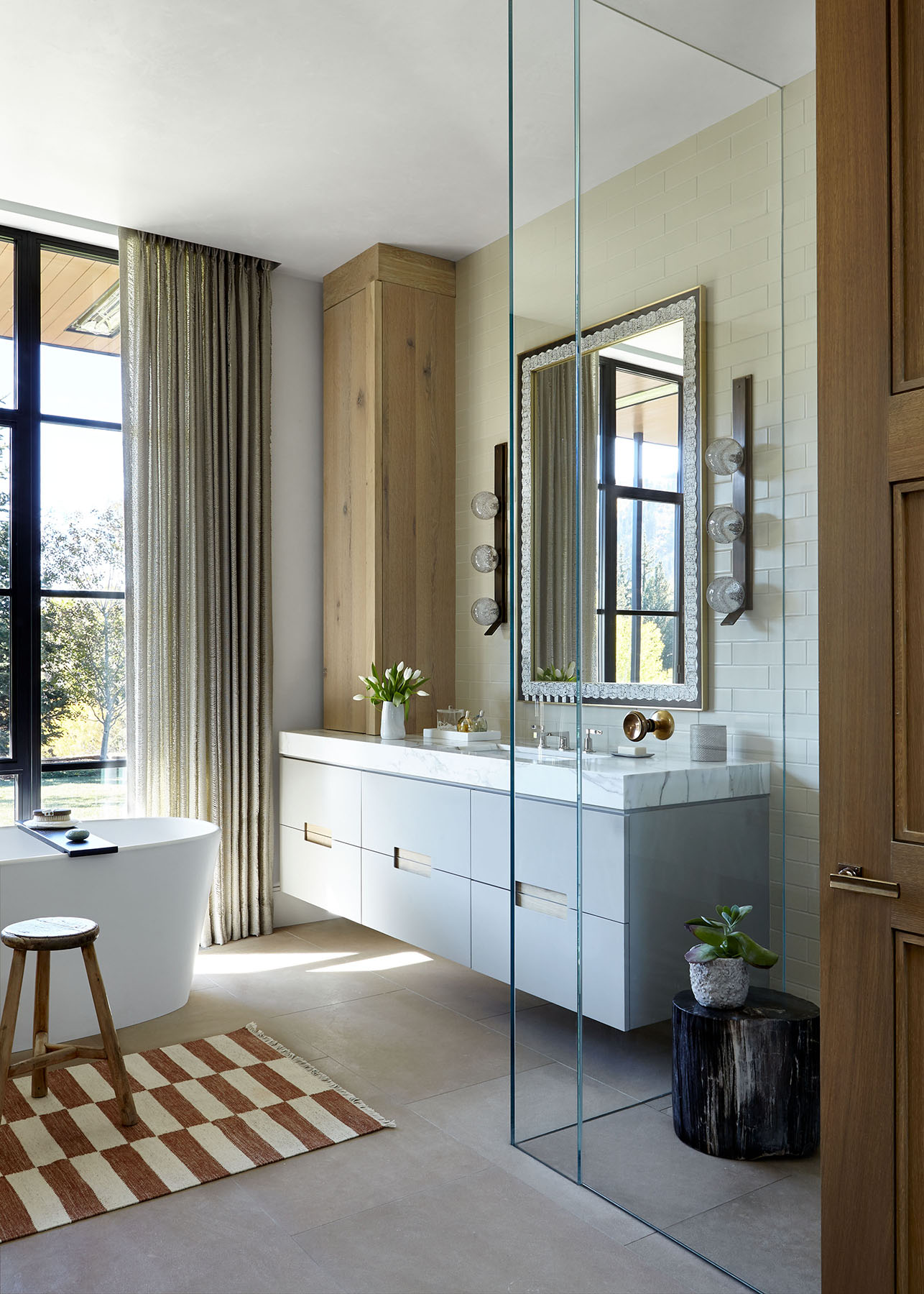
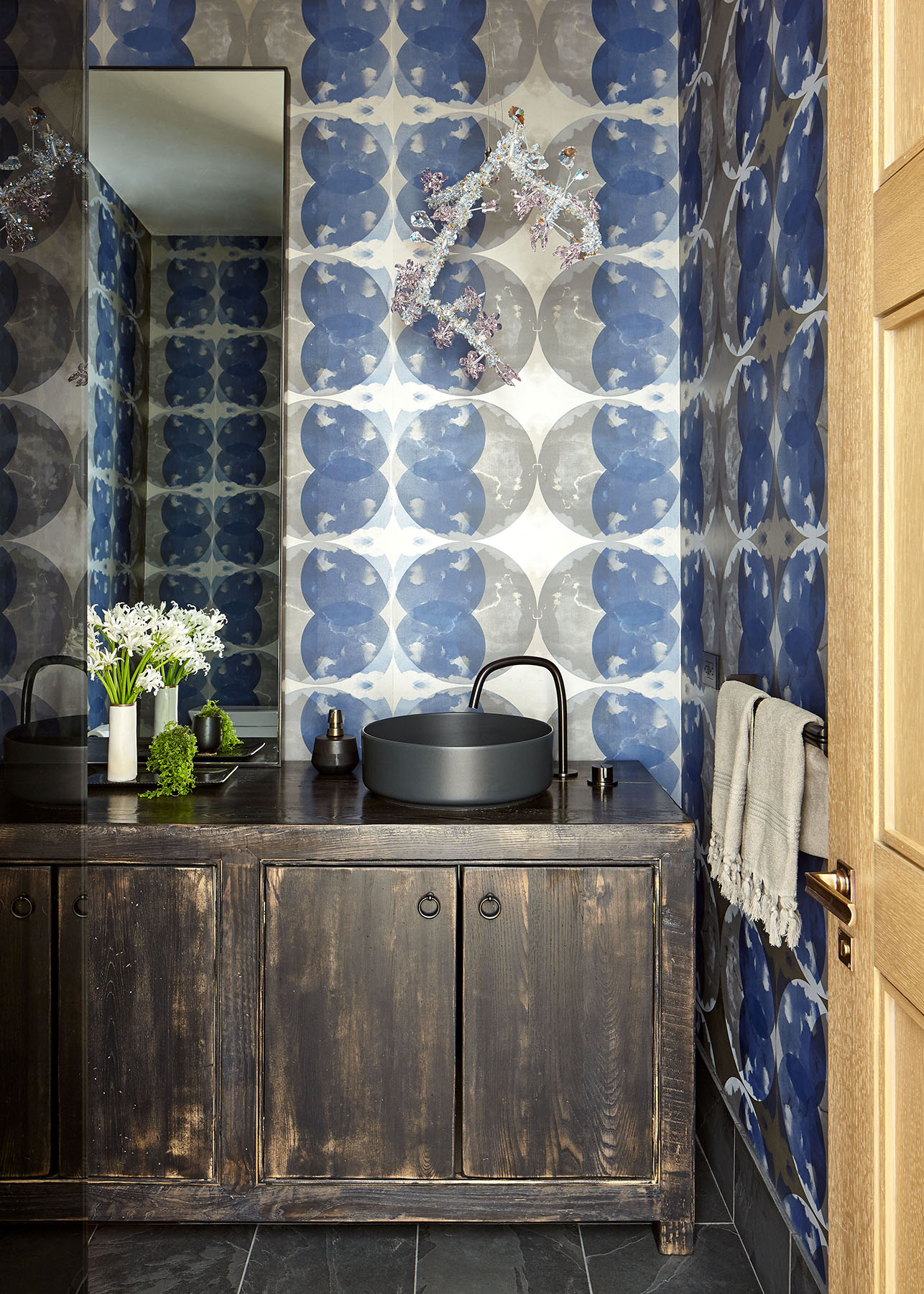
As practiced in the west, feng shui – an ancient Chinese method designed to bring structures into harmony with their surroundings – draws typically on the bagua, a set of eight symbols representing interconnected aspects of existence. At R+B’s art-filled, appropriately named Bagua House, perched atop a steep slope and enjoying expansive Aspen views, feng shui is made manifest in both the U-shaped plan and the house’s relationship to the site. Most of the firm’s designs feature a transparency that connects rooms both internally and to the typically sublime surroundings. Bagua House is different: here, interior spaces connect through exterior rooms. This interleaving of inside and outside creates an exquisite sense of amplitude, one that is as much emotional as actual.
The heart of the experience is the residence’s landscaped entry court, which sits between the three wings of the plan: it serves as the definitive moment of transition, from the wider world to the private experience of the dwelling. Within, a double-height living/dining great room gives way to the more intimate scale of the two wings. To the south, R+B set the intercommunicating family room and kitchen; while the north wing contains the parents’ suite (with an exercise room/hot yoga studio that opens onto a 75-foot-long lap pool), and the children’s bedrooms (with their communal ‘kids corner’).
The modesty of the architecture contributes to the residence’s beauty and unity; set almost entirely on a single level (with a wine cellar and media room, and a habitable stair that serves as a library and art gallery, below), the spaces absorb the shifting character of the light as it transforms throughout the day. But it is the integration into the landscape – the positive flow of energy characteristic of the successful application of feng shui – that gives Bagua House its defining sense of serenity: a commingling of the built, the natural, and the human that feels at once comprehensive and sublime.
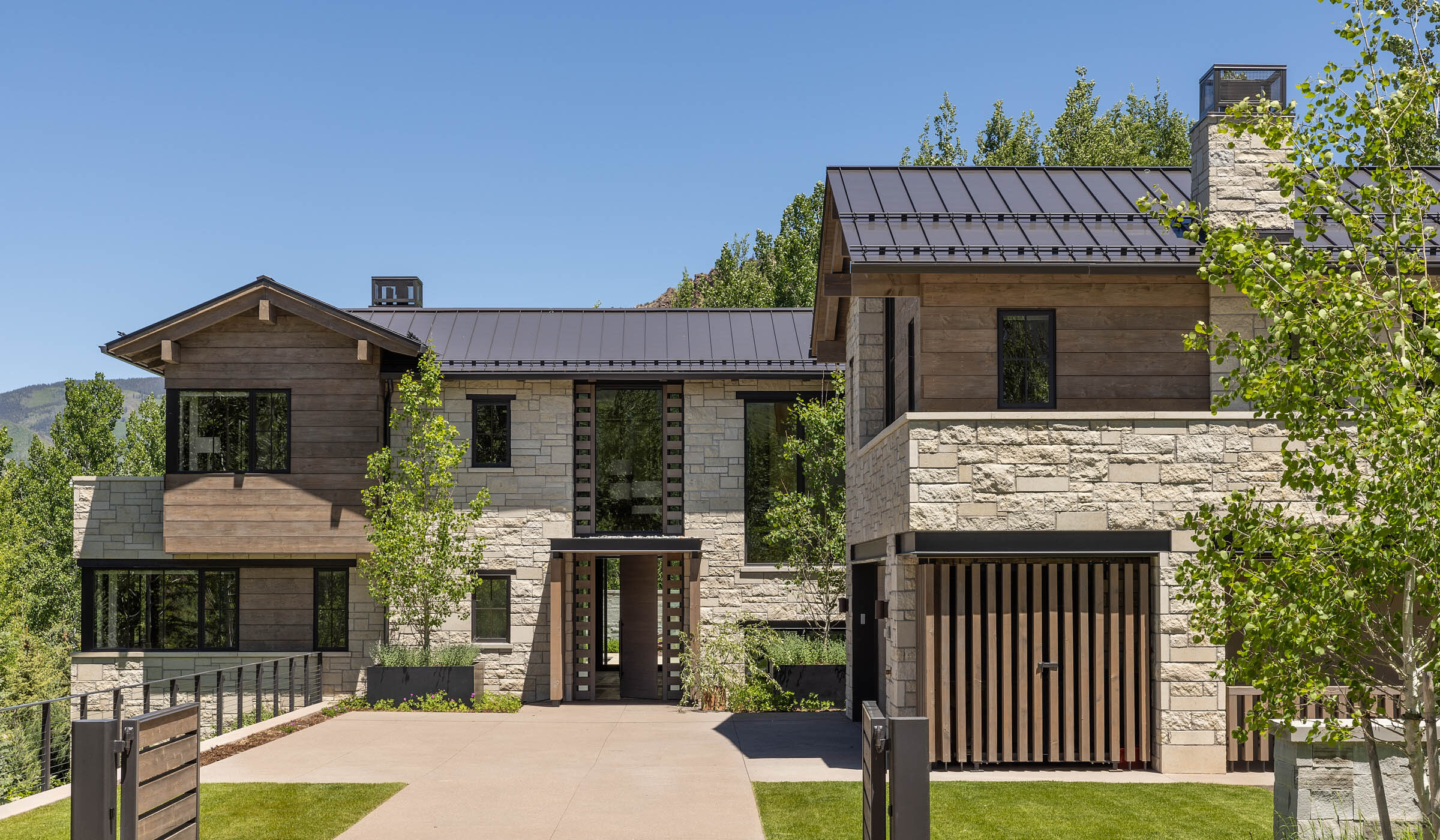
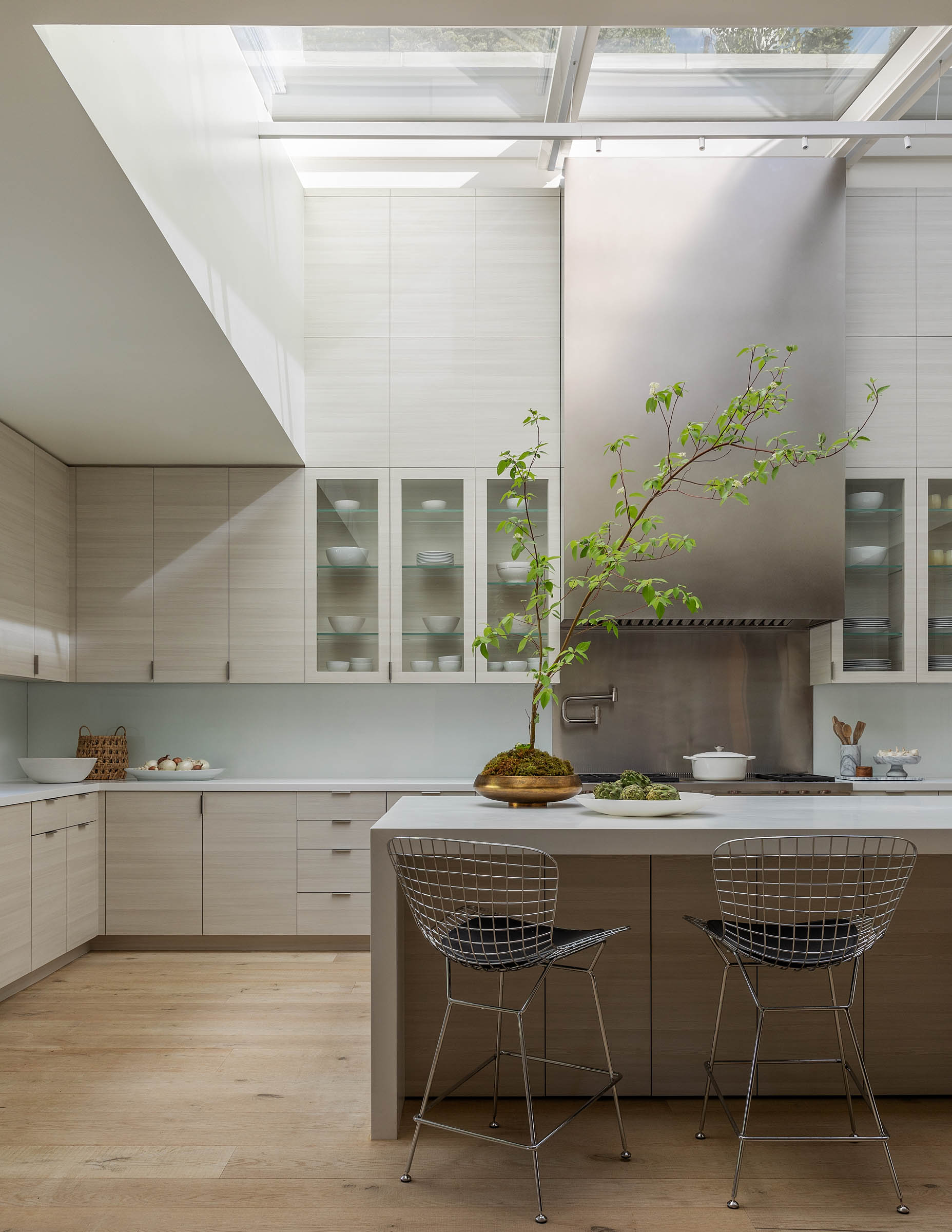
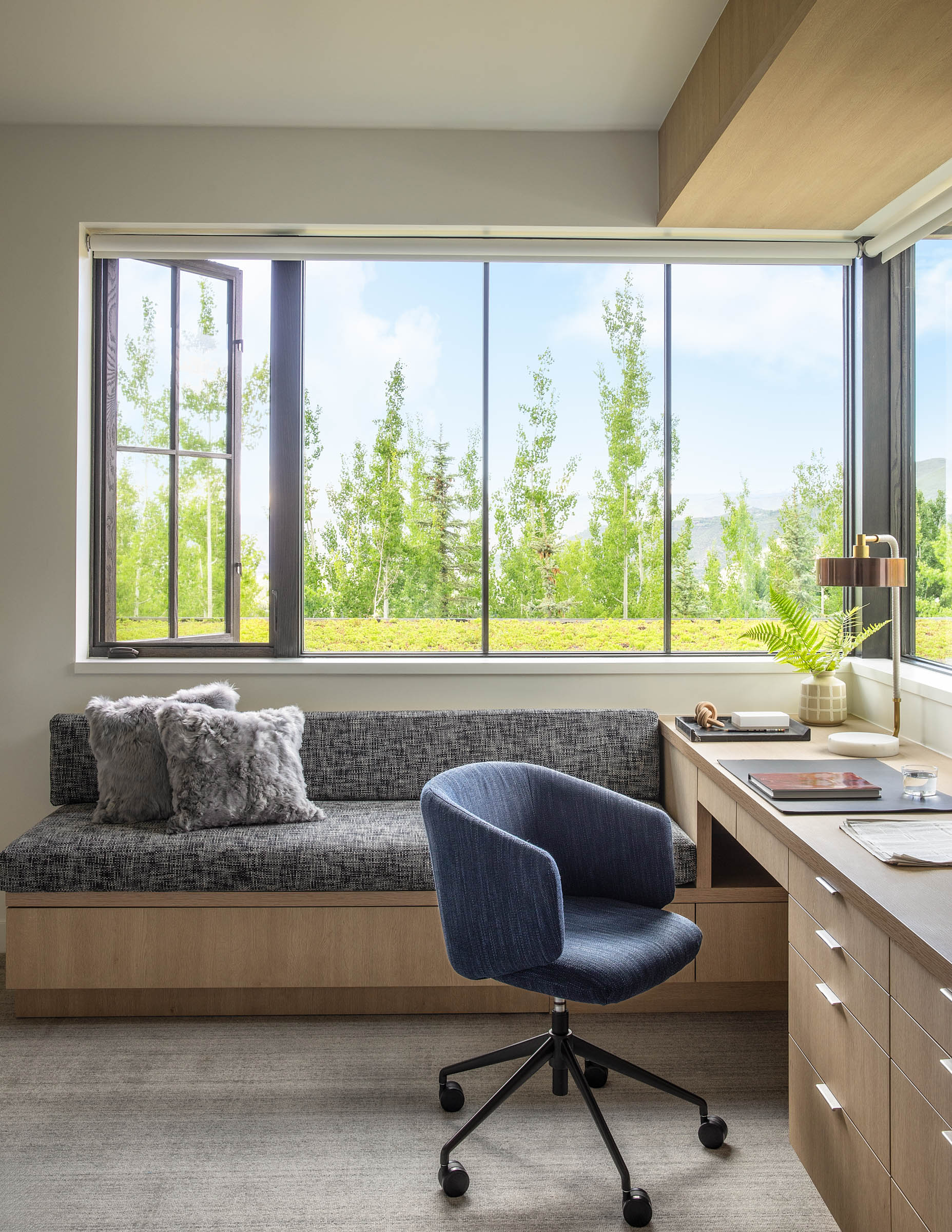
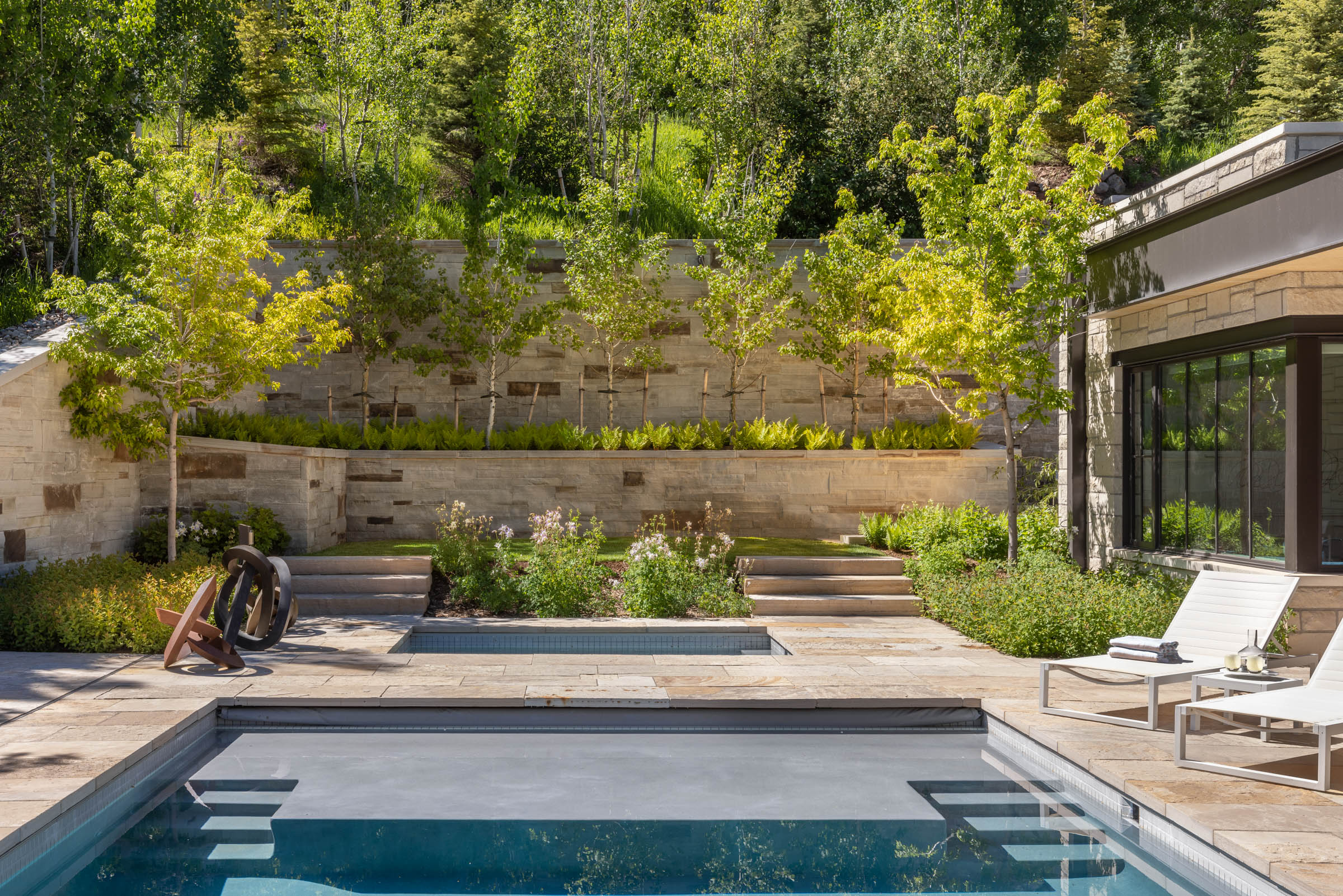
How do you create a glass box in a district that demands a vernacular tradition?
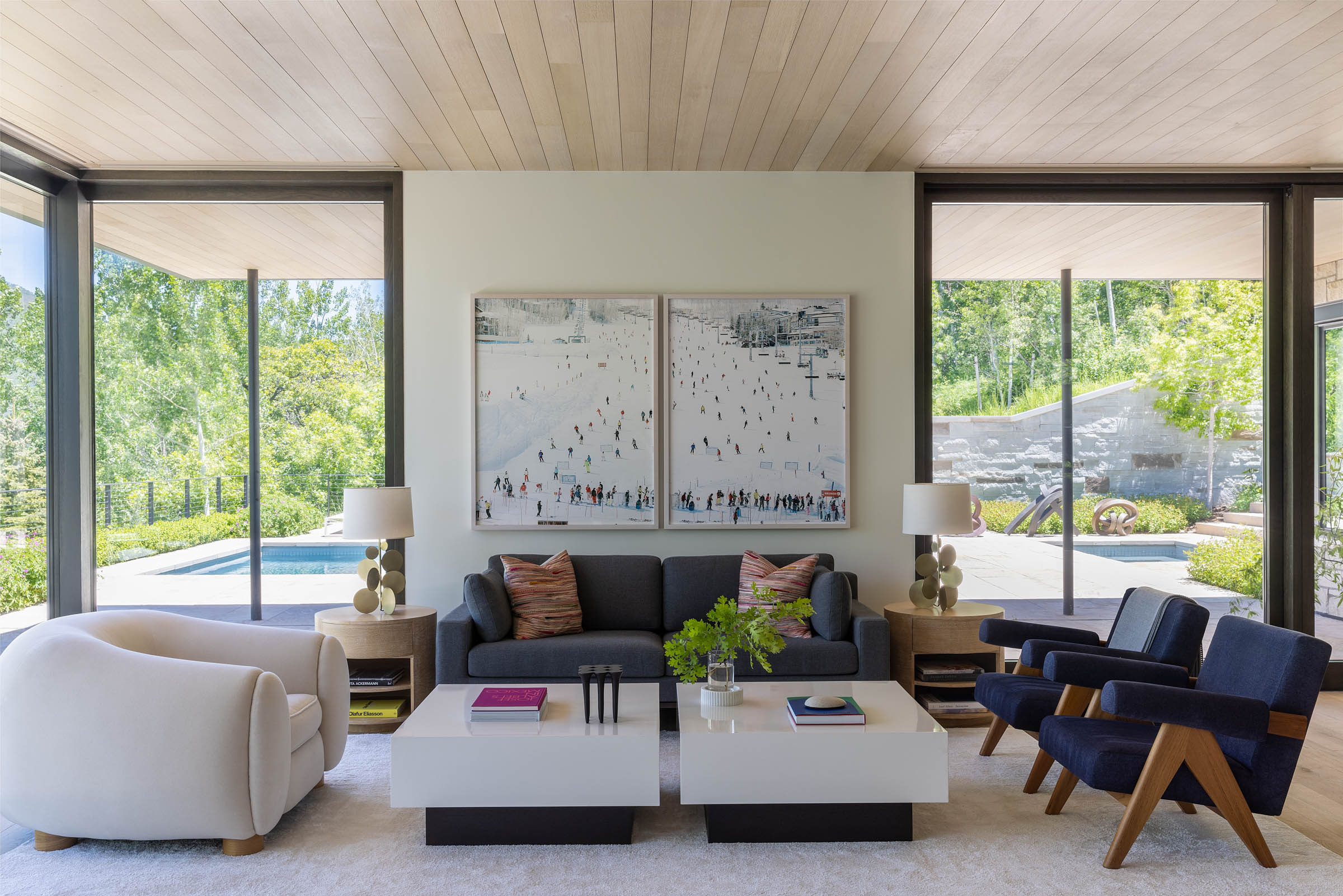
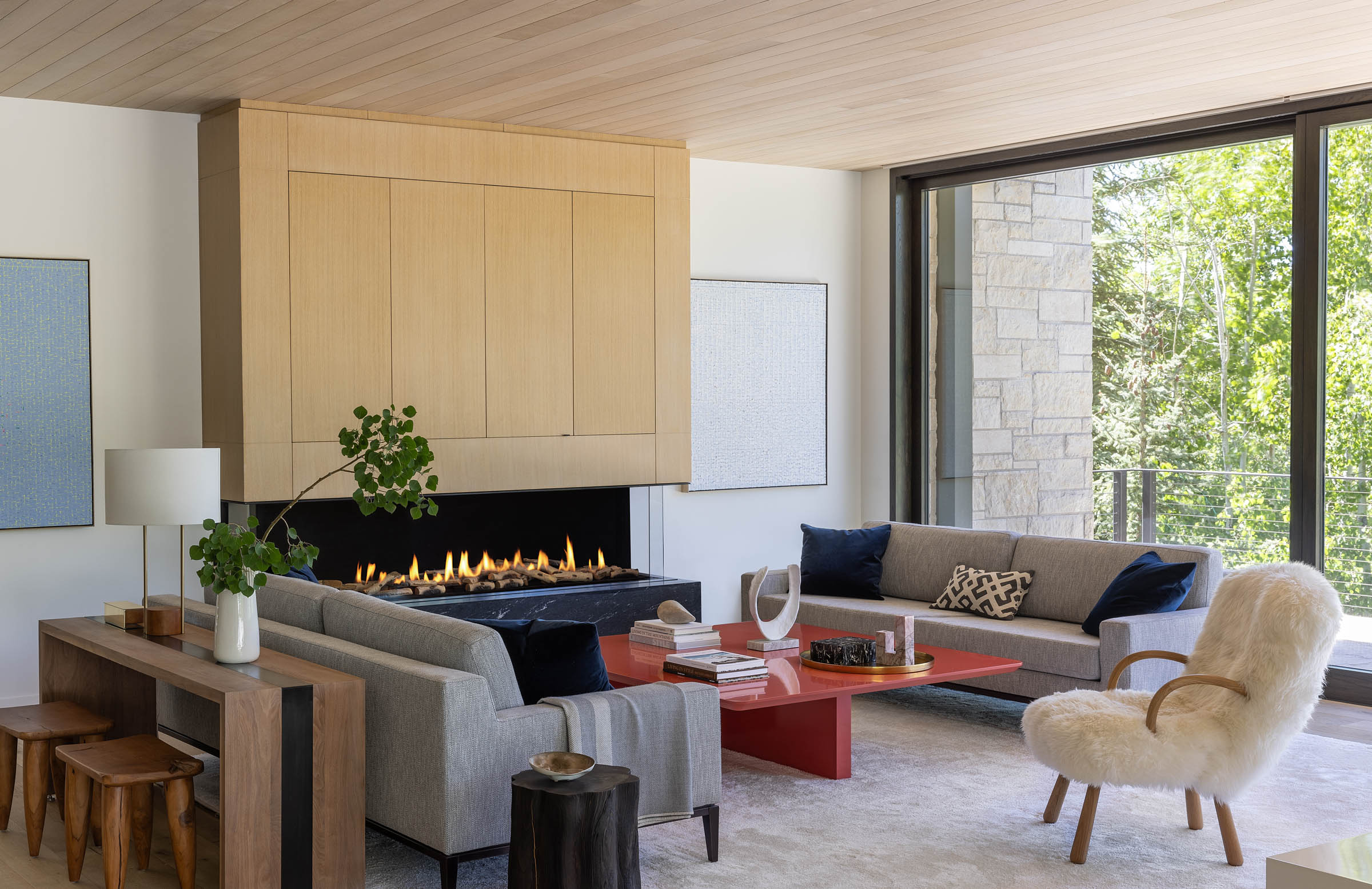
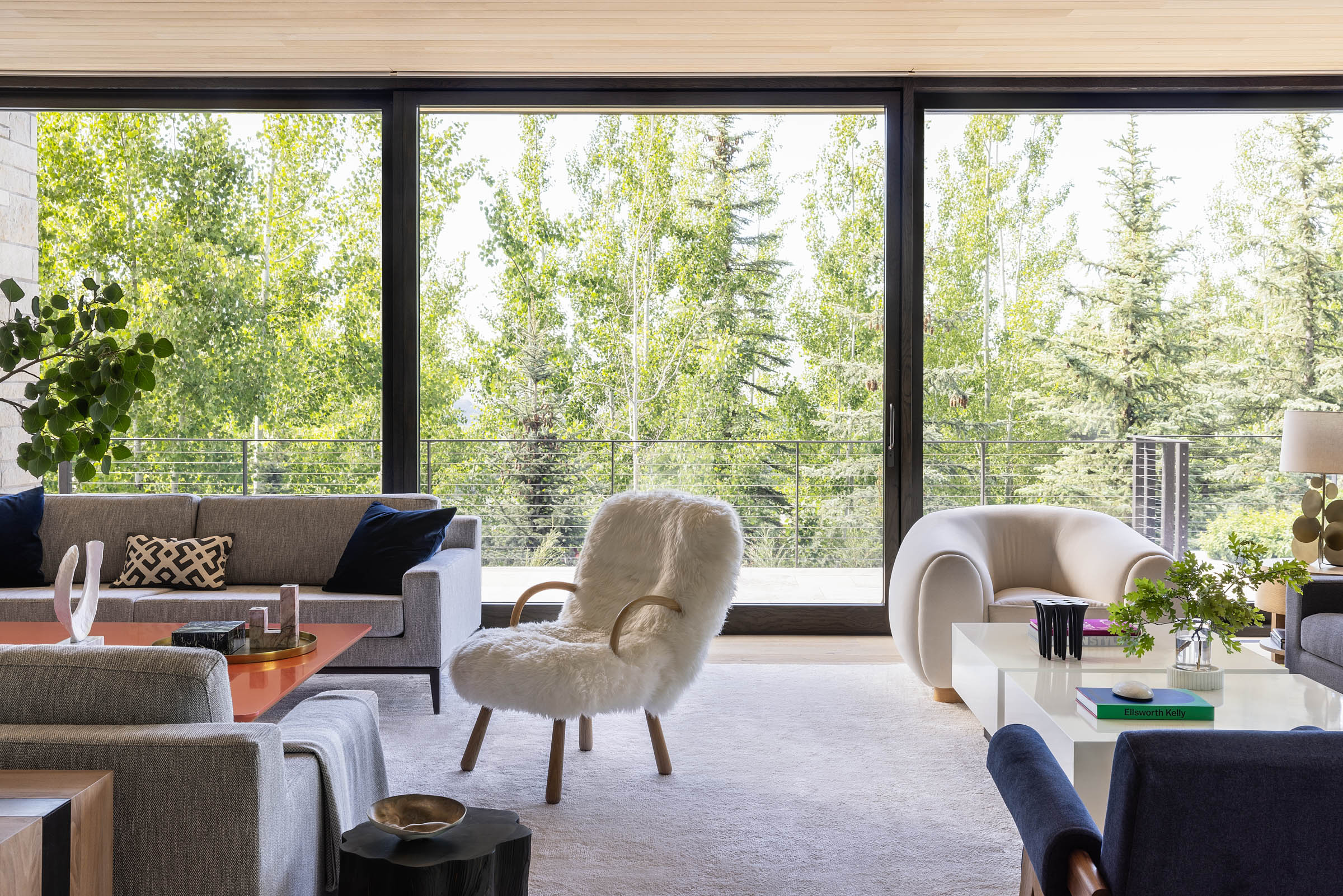
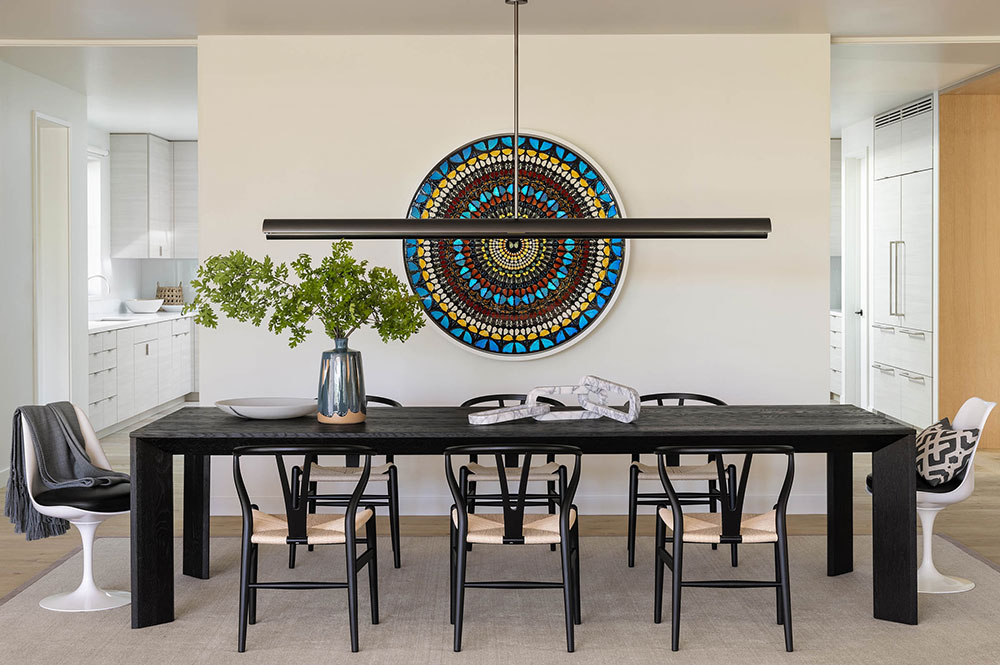
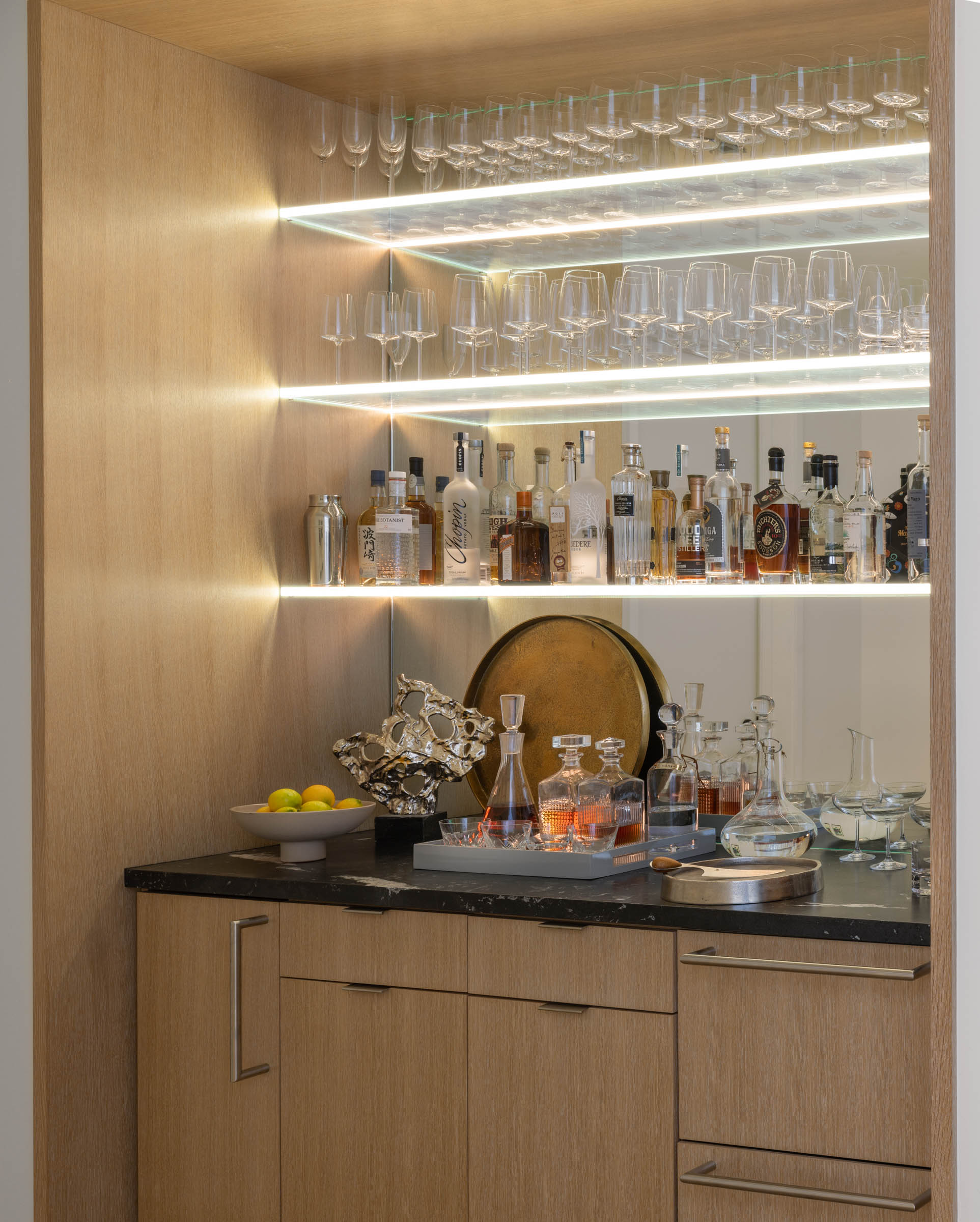
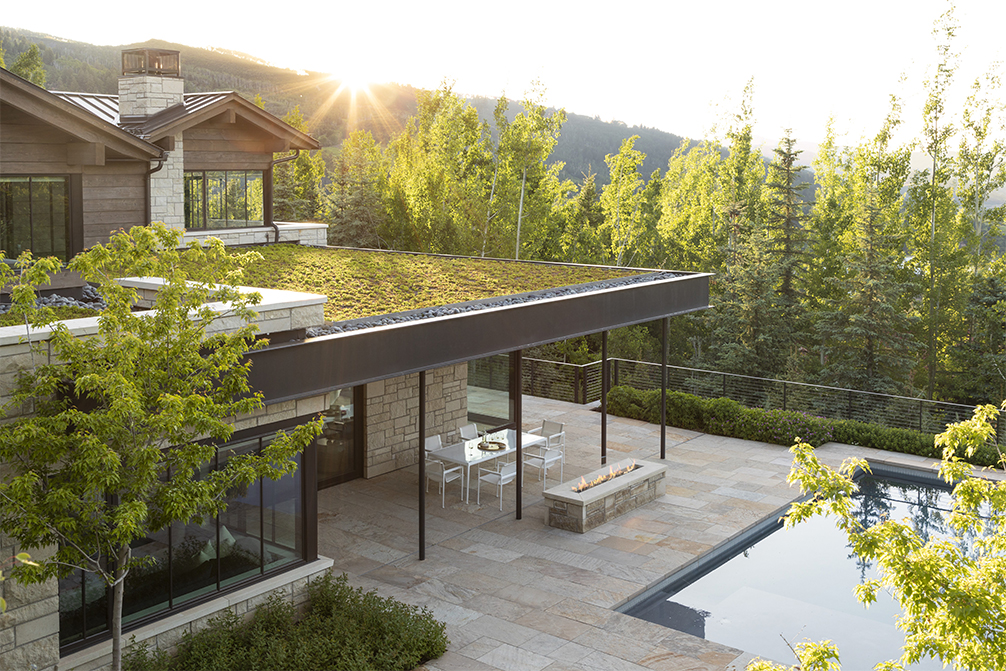
Located in a forest of aspen and fir, with stunning views of Maroon Creek, Roaring Fork, and Hunter Creek valleys, Mountain Retreat was commissioned for an Aspen neighborhood with strict architectural guidelines based on the design of 19th-century national park lodges. Both the residents and R+B wanted a 21st-century house tailored to a contemporary family. Yet the architects recognized that the convivial character of a lodge was not incompatible with the social advantages of open-plan modernism. And not just in the public rooms, but the interstitial zones, which encourage the accidental and the unexpected.
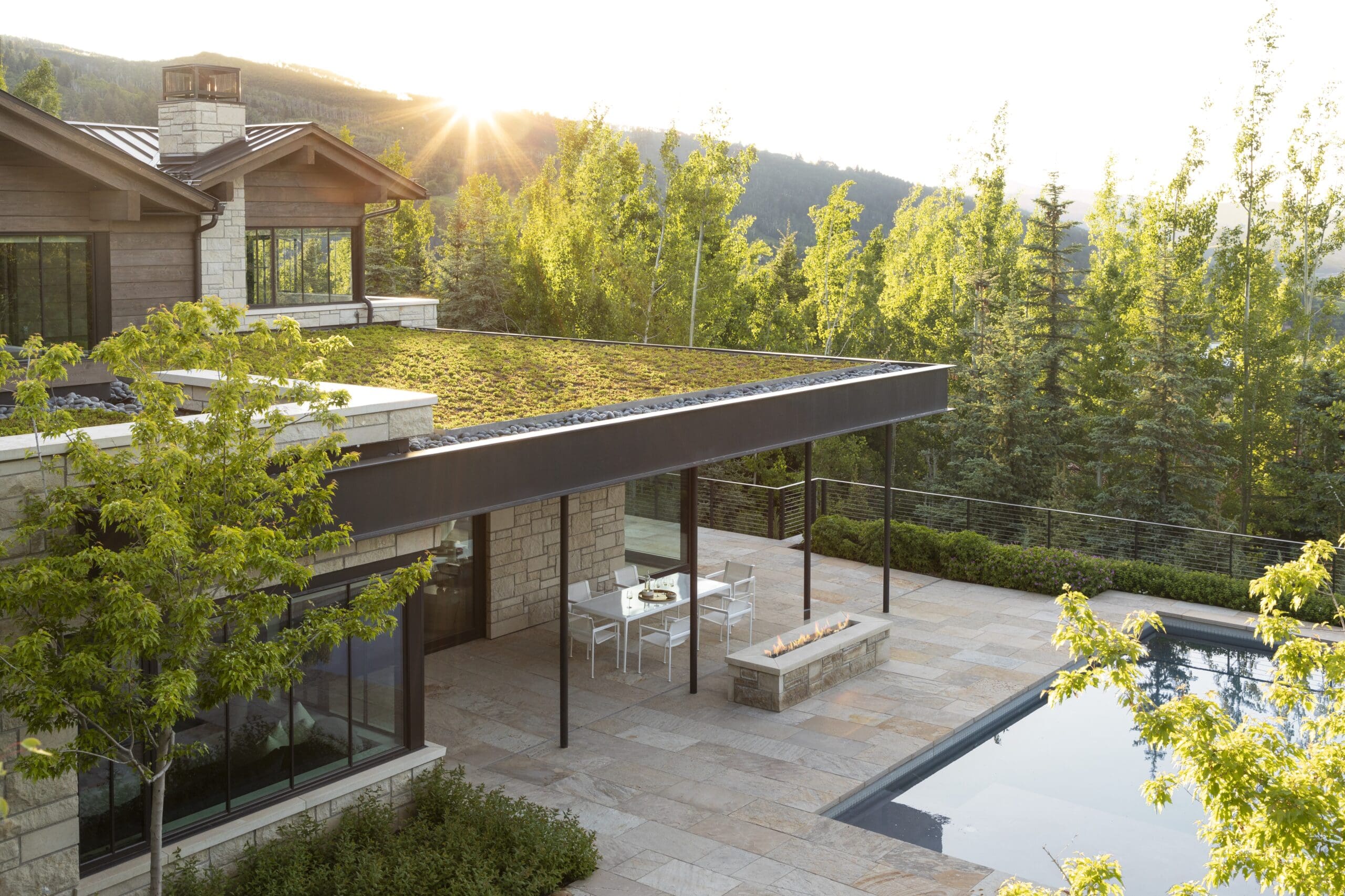
To satisfy district guidelines, R+B deployed a traditional palette of stacked stone, rough-hewn wood siding, and standing-seam metal for the volumes visible from the street. The elevations not on public view, conversely, feature floor-to-ceiling pocketing glass walls, facilitating an indoor/outdoor experience in which exterior spaces, including a covered entertaining terrace and pool, welcome the family and embrace the incomparable surroundings. (The site itself offered an even greater challenge, as the land was steeply sloped: six months were consumed by a monumental shoring effort to create a level building lot and the massive retaining wall on the property’s north side.)
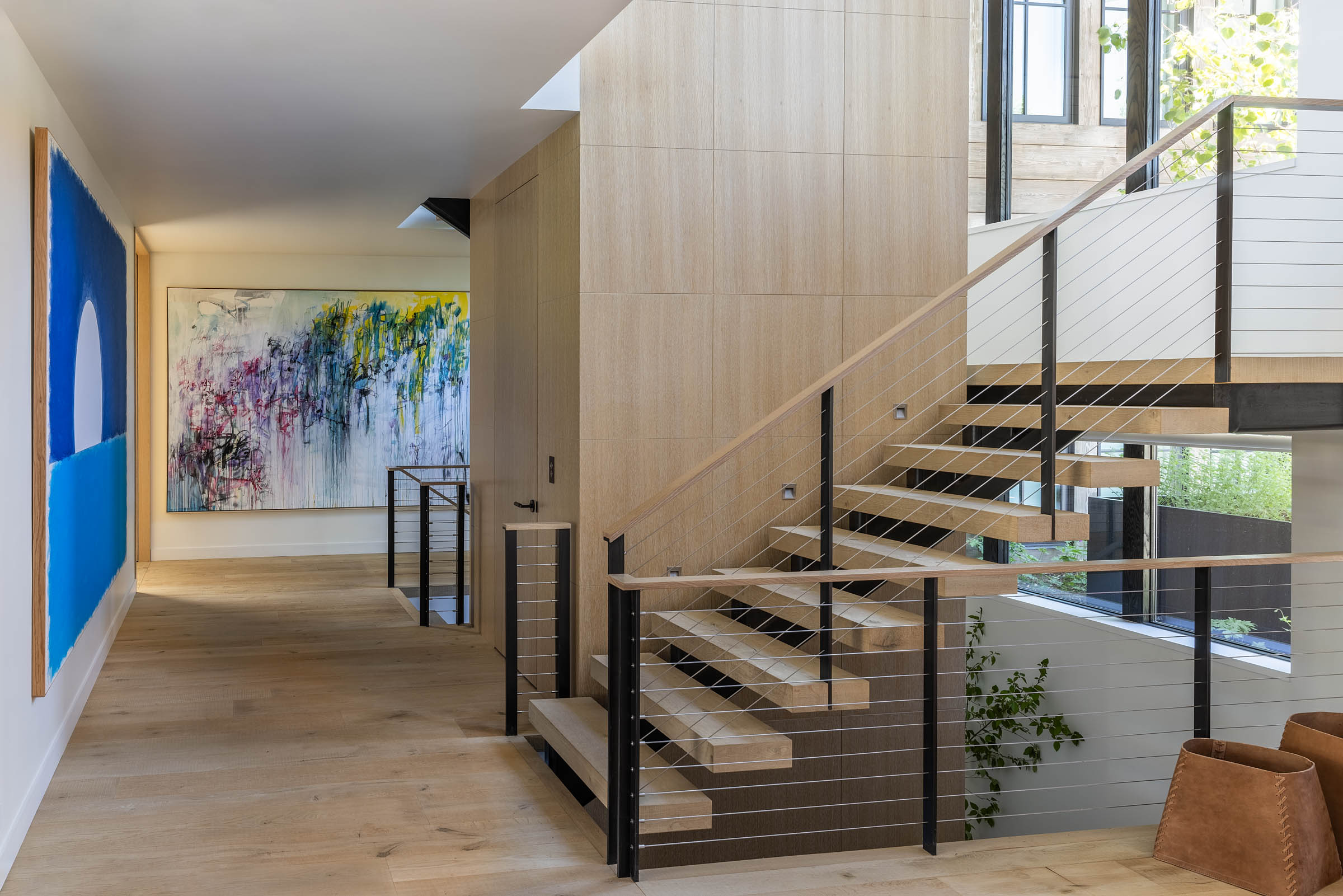
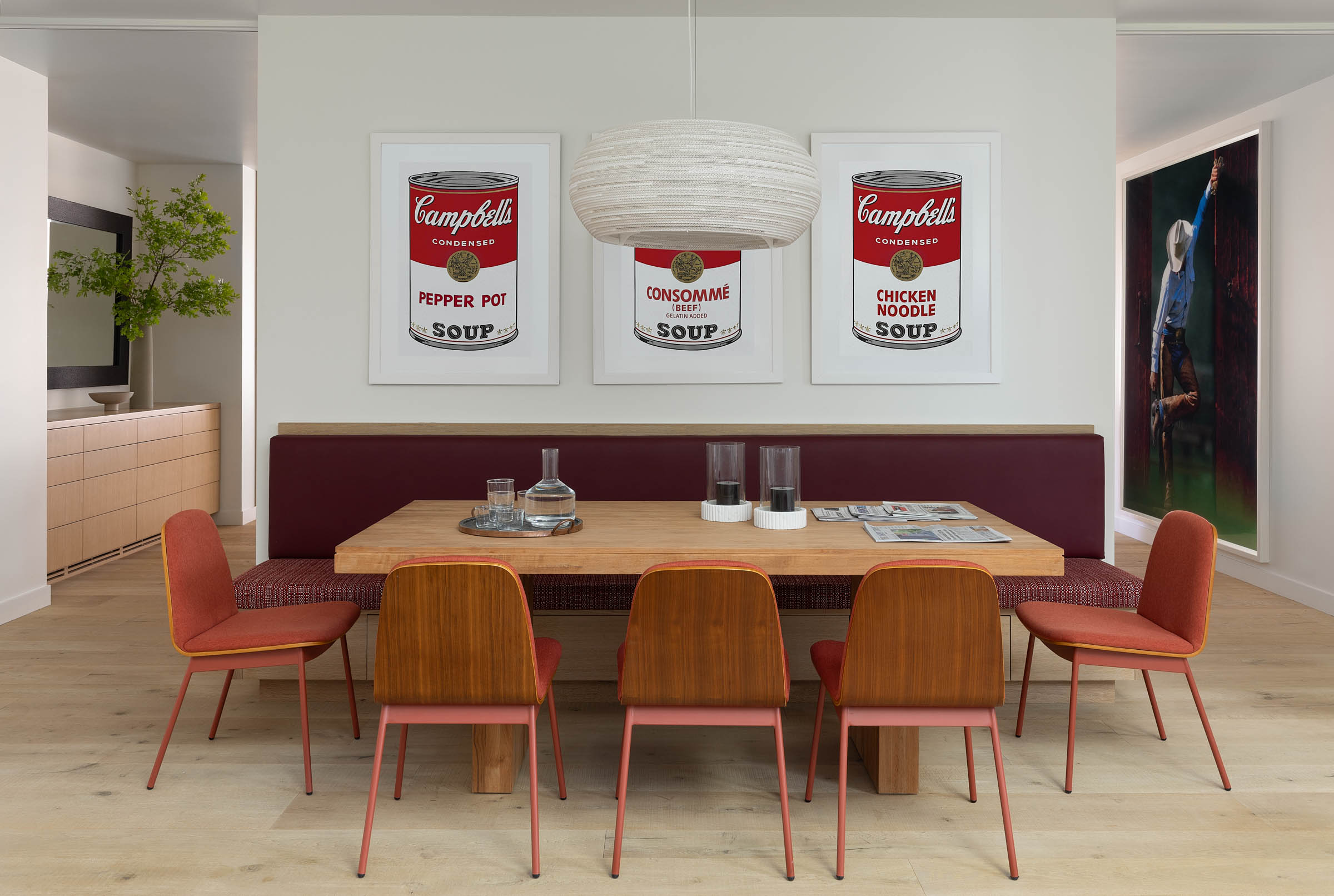
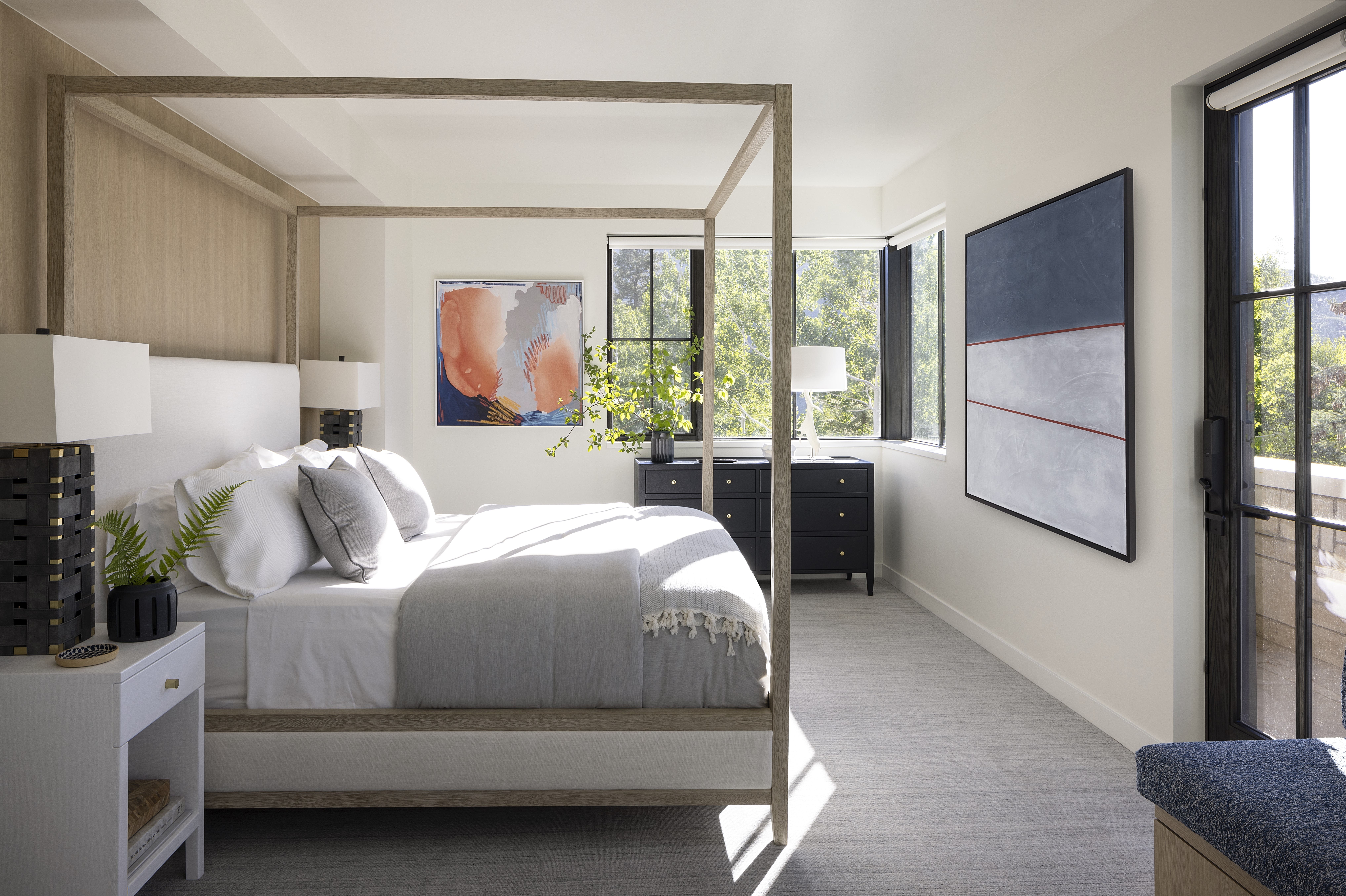
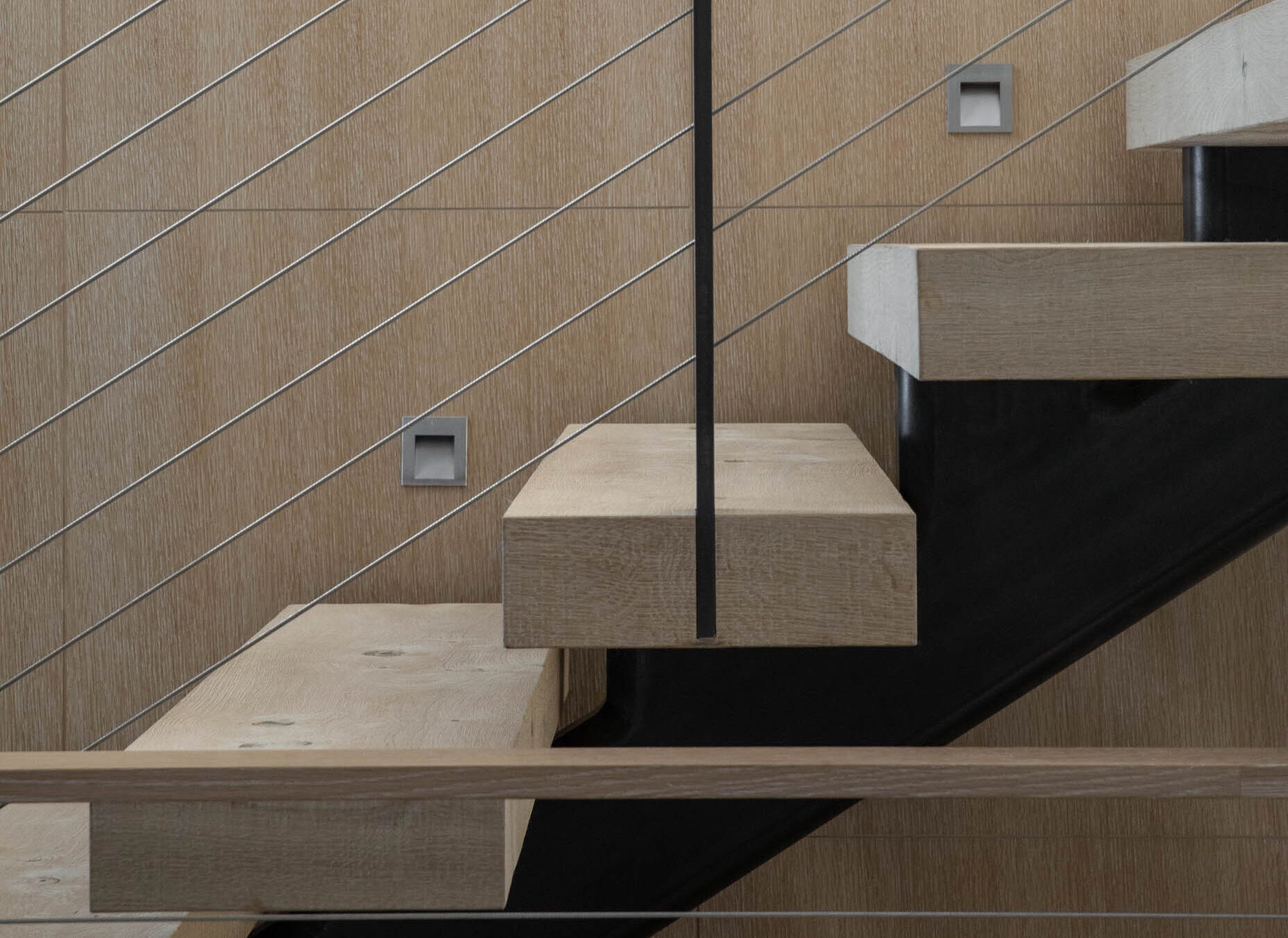
Within, R+B eschewed the usual primary bedroom, opting instead for a program of four ‘equal’ suites and a bunkroom. The self-contained character of these spaces – their well-equipped privacy, augmented by private terraces – makes for an appealing contrast with the communal areas. Regarding the latter, the architects placed unusual focus on the hallways and the grand stair: the halls are wide enough to be comfortably inhabited via seating nooks, and the stair remains an experience unto itself, floating between the three levels, affording views across a realm of changing moods and perspectives. These stand as zones of opportunity: of the unexpected sociability emblematic of the park lodges in their golden age, reinterpreted for a family in the present day.