

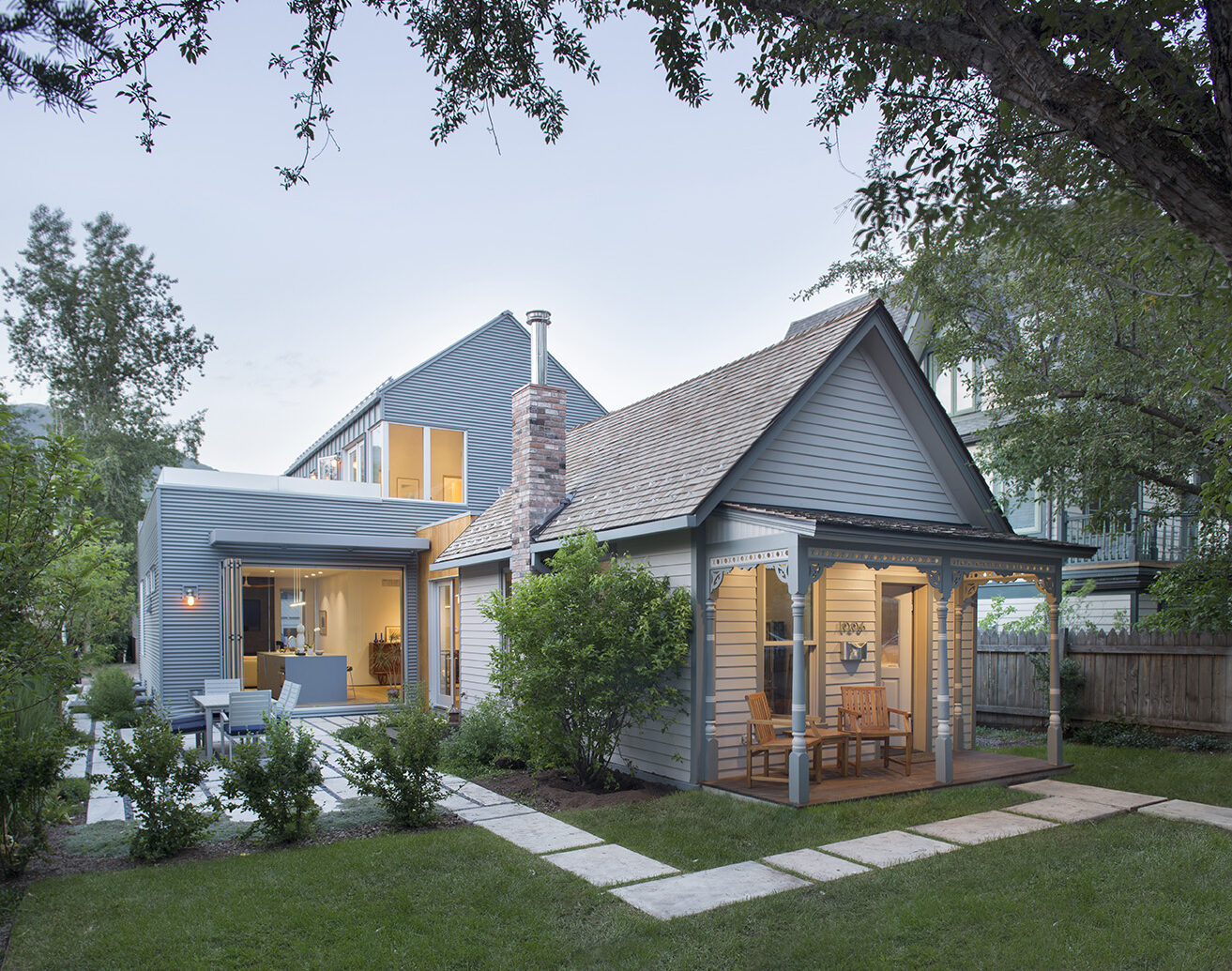
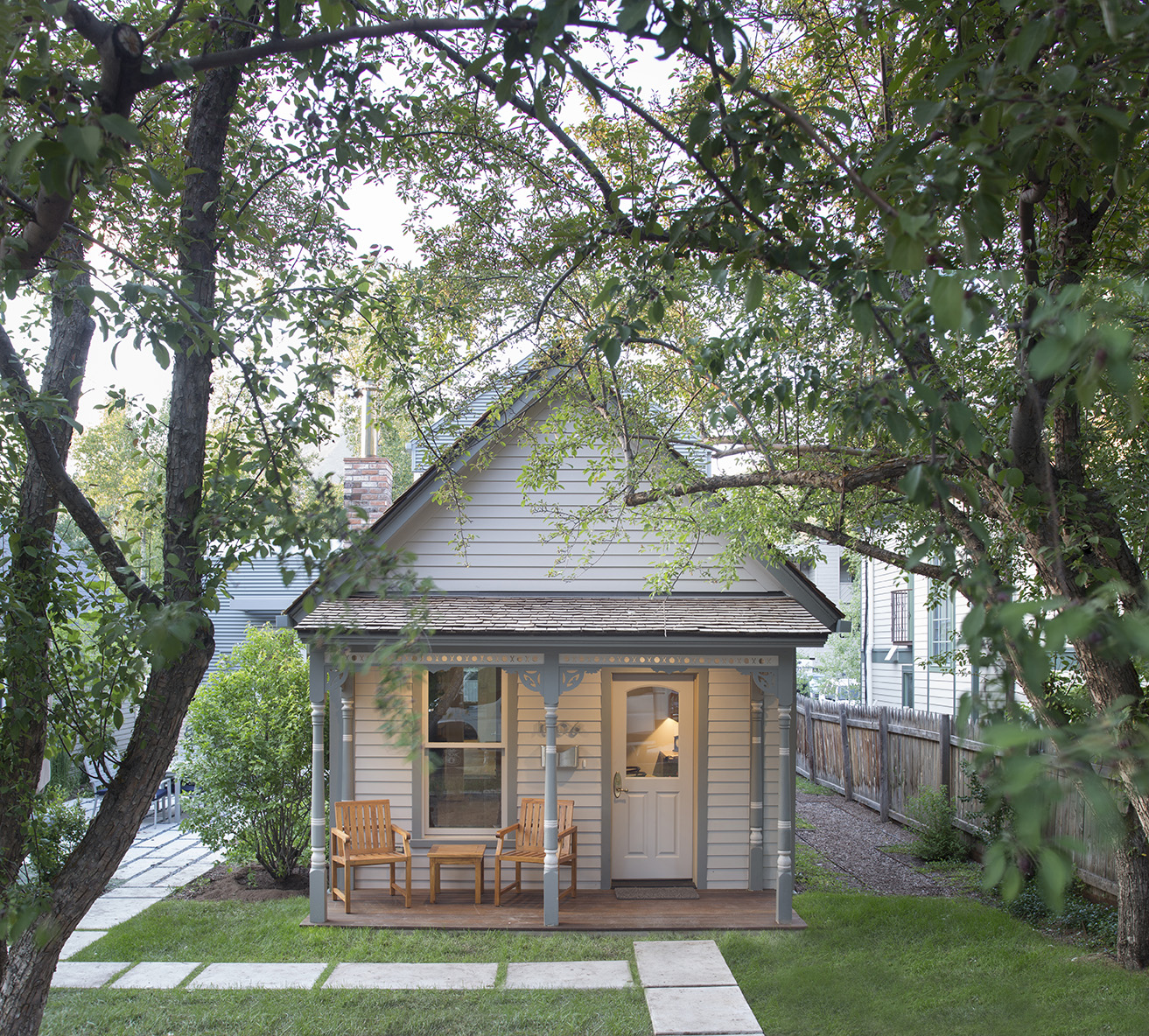
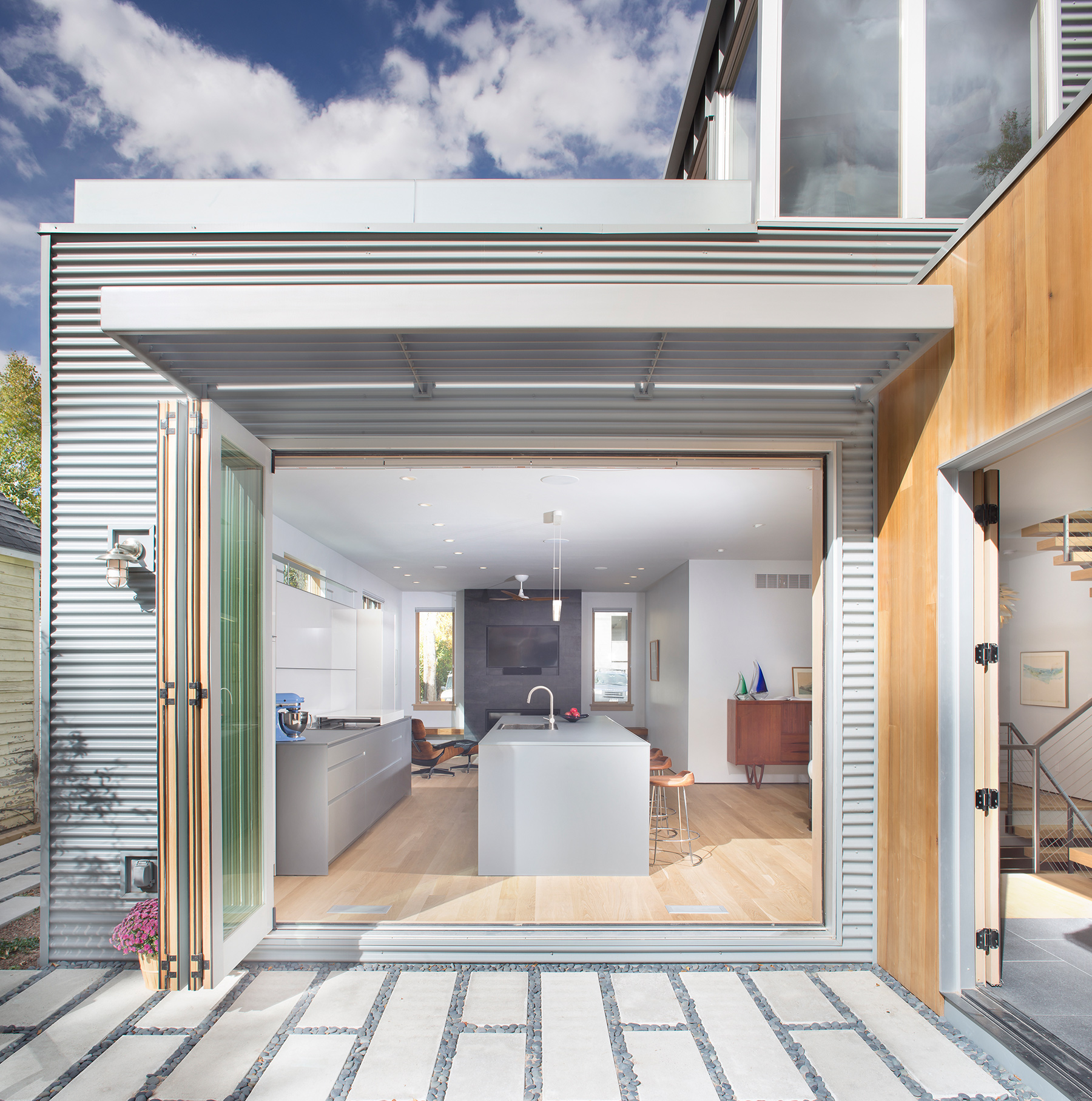
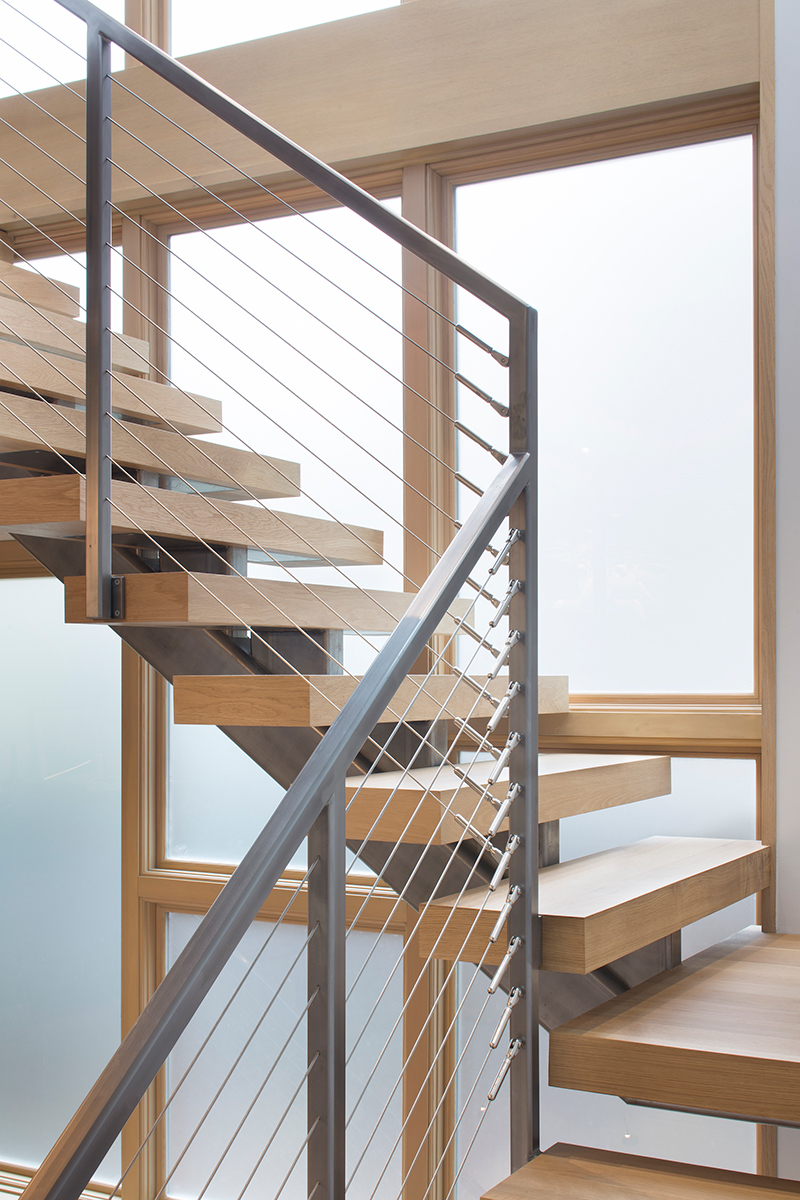
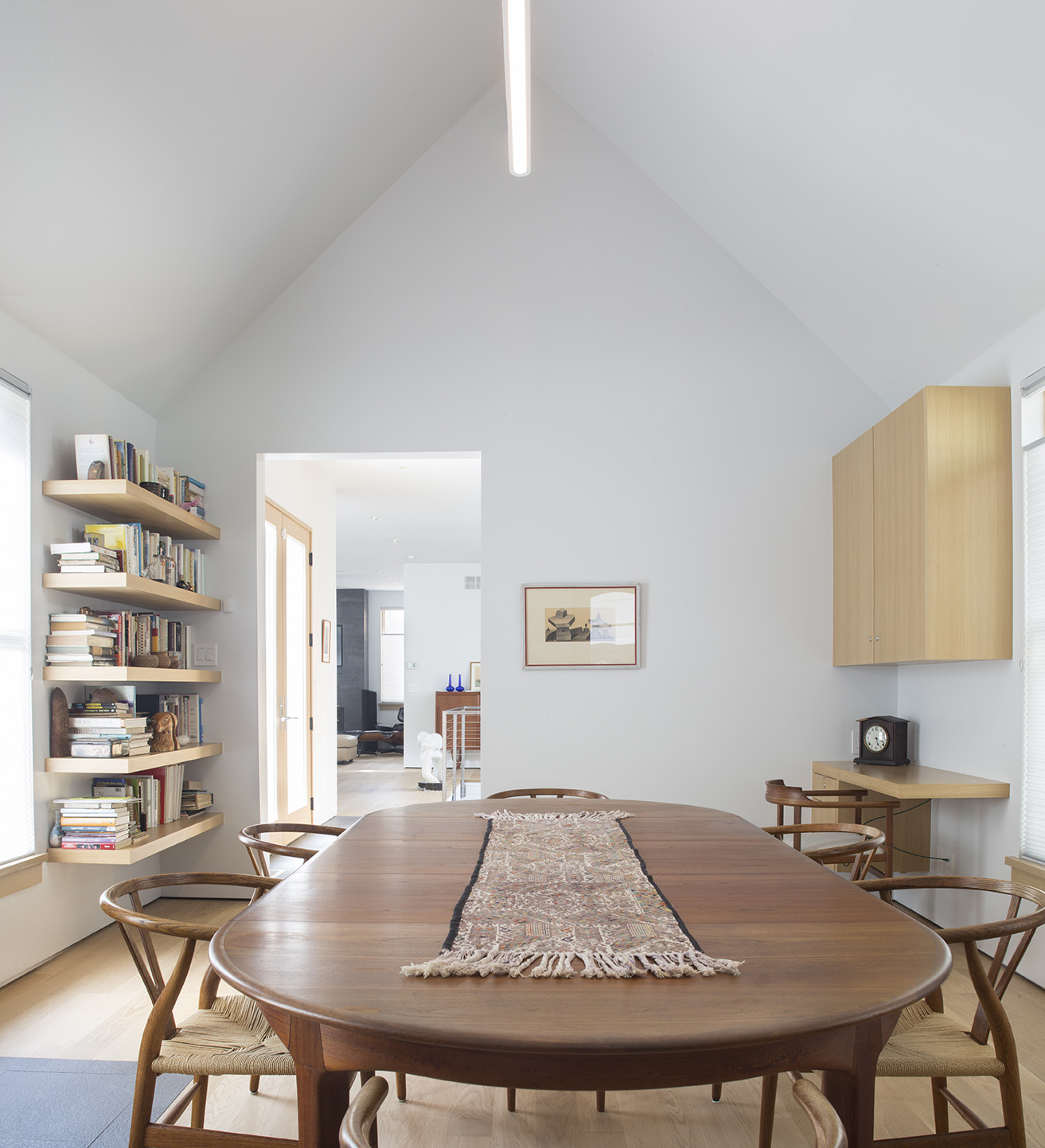
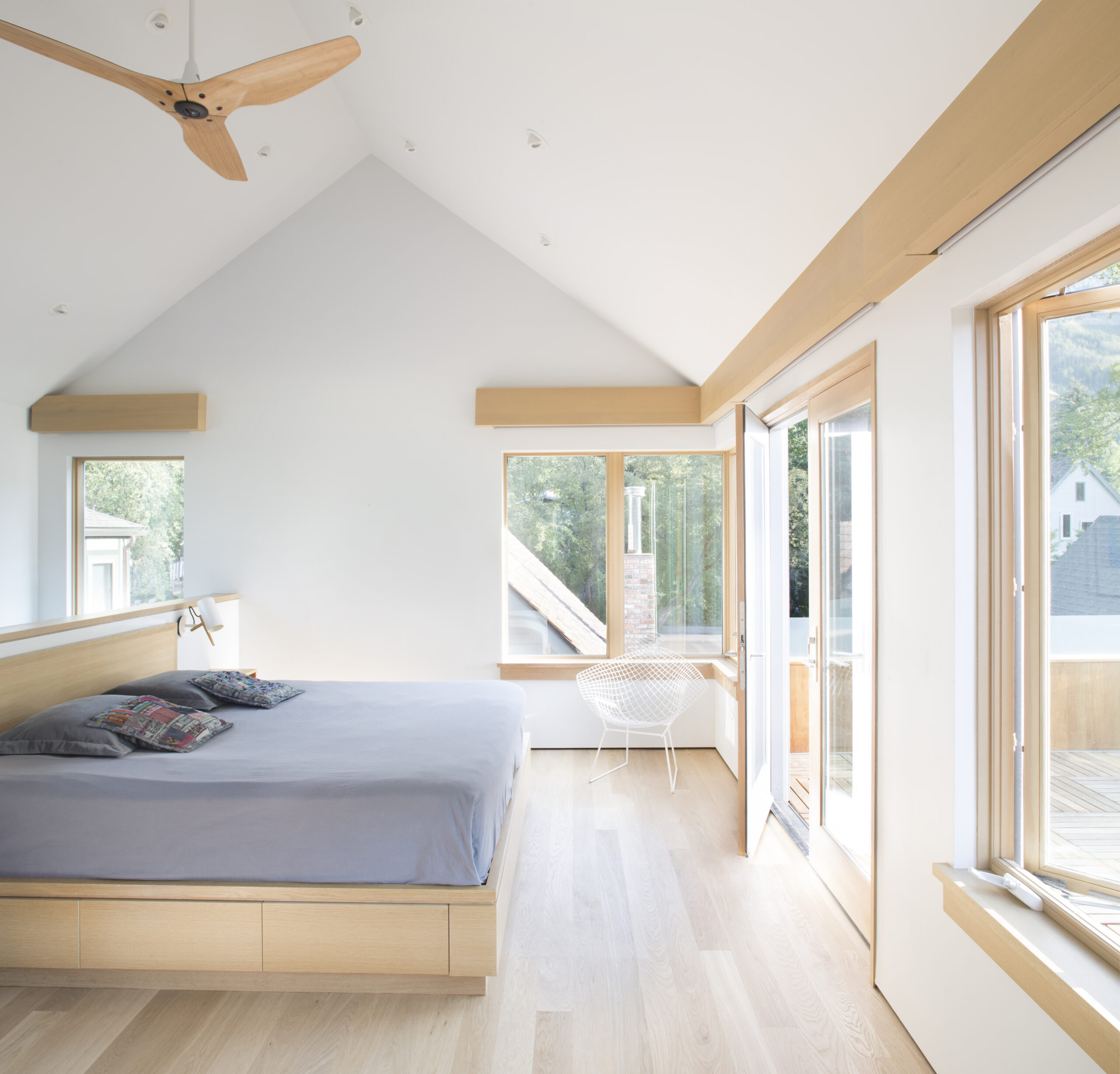
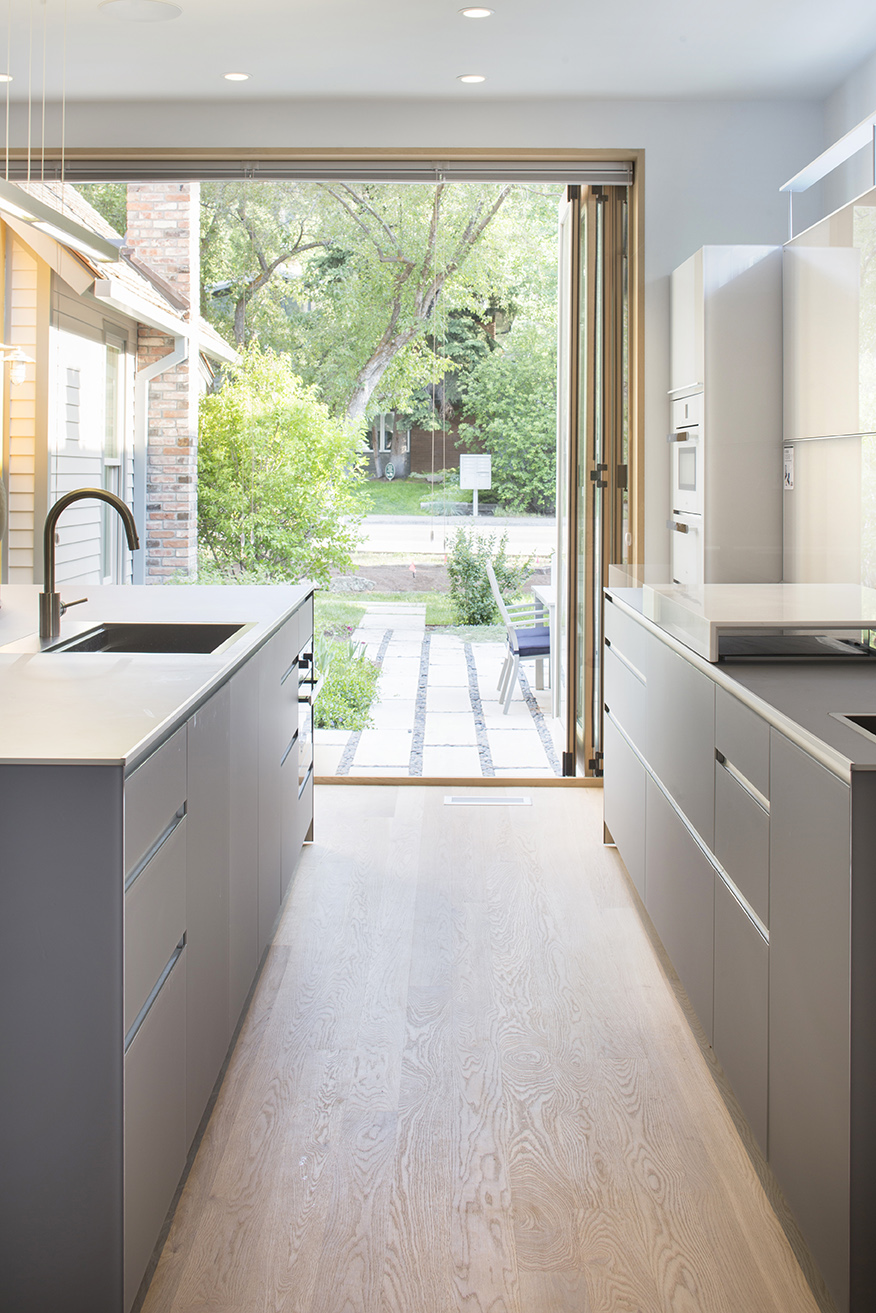
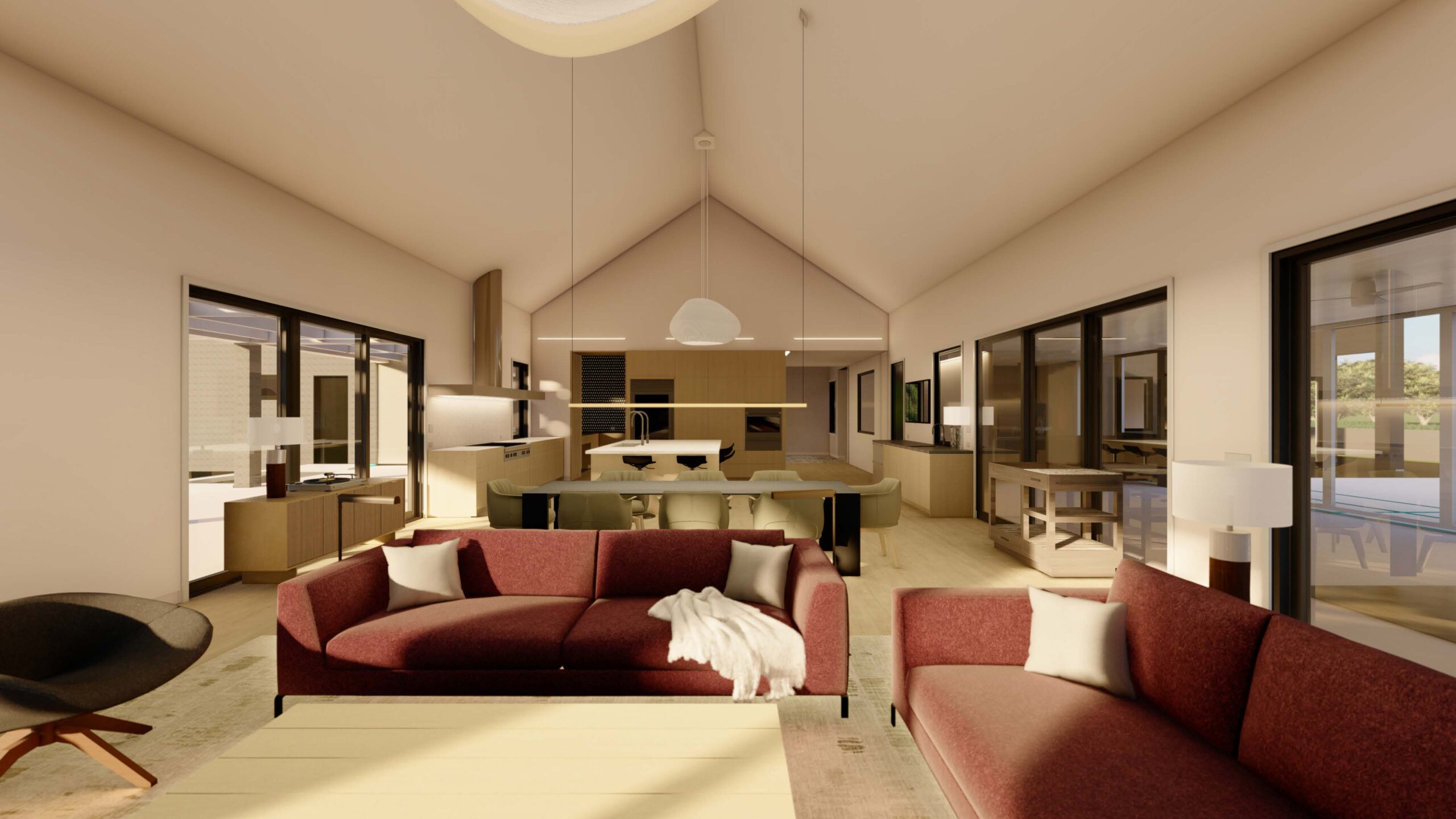
R+B was challenged to surgically remove all the non-historic additions to an 1892 miner’s cabin and perfectly preserve it while complementing it with a new two-story addition. Through the design process, the team worked closely with the owner and Aspen’s Historic Preservation Commission for this sensitive restoration.
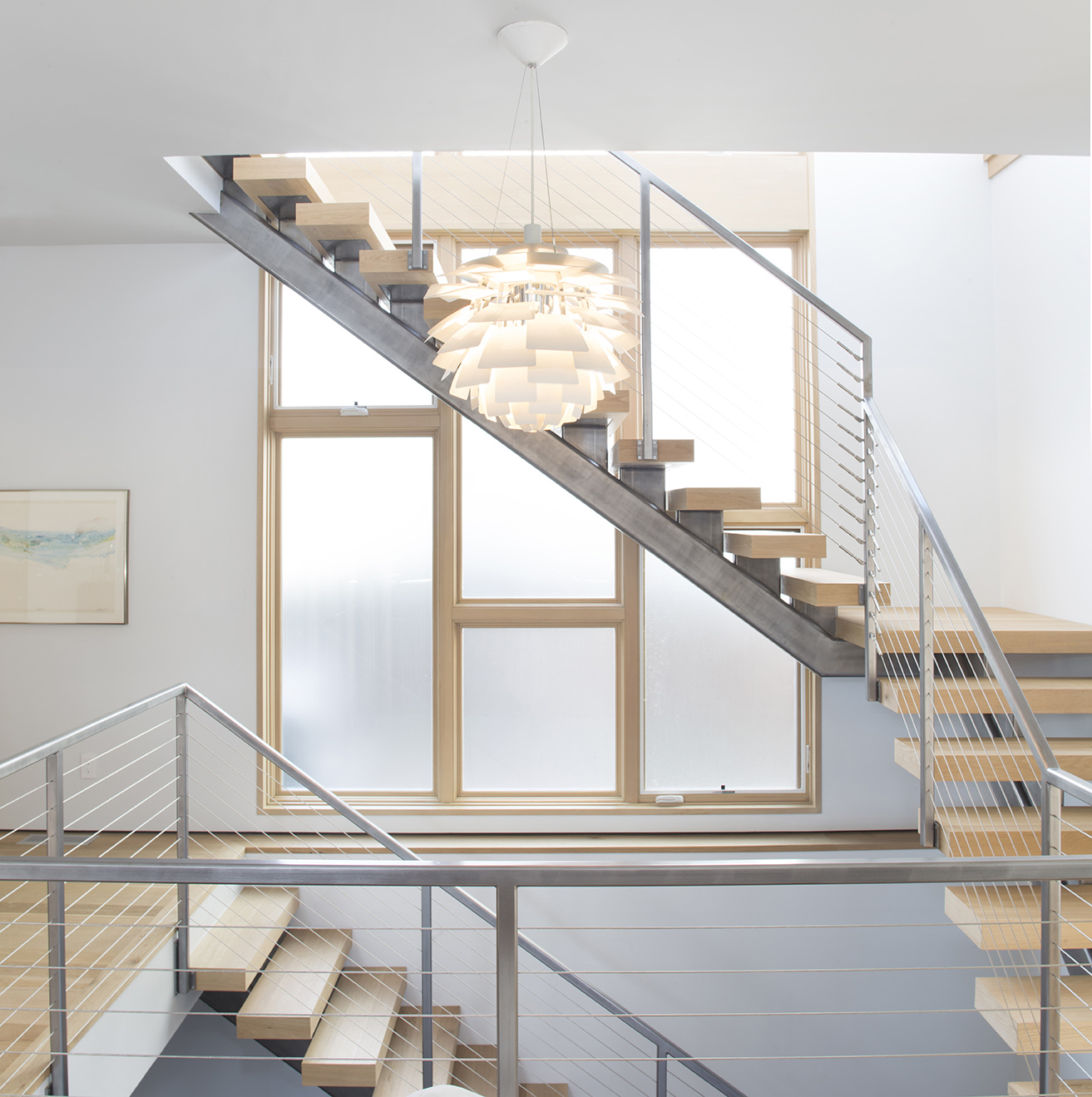
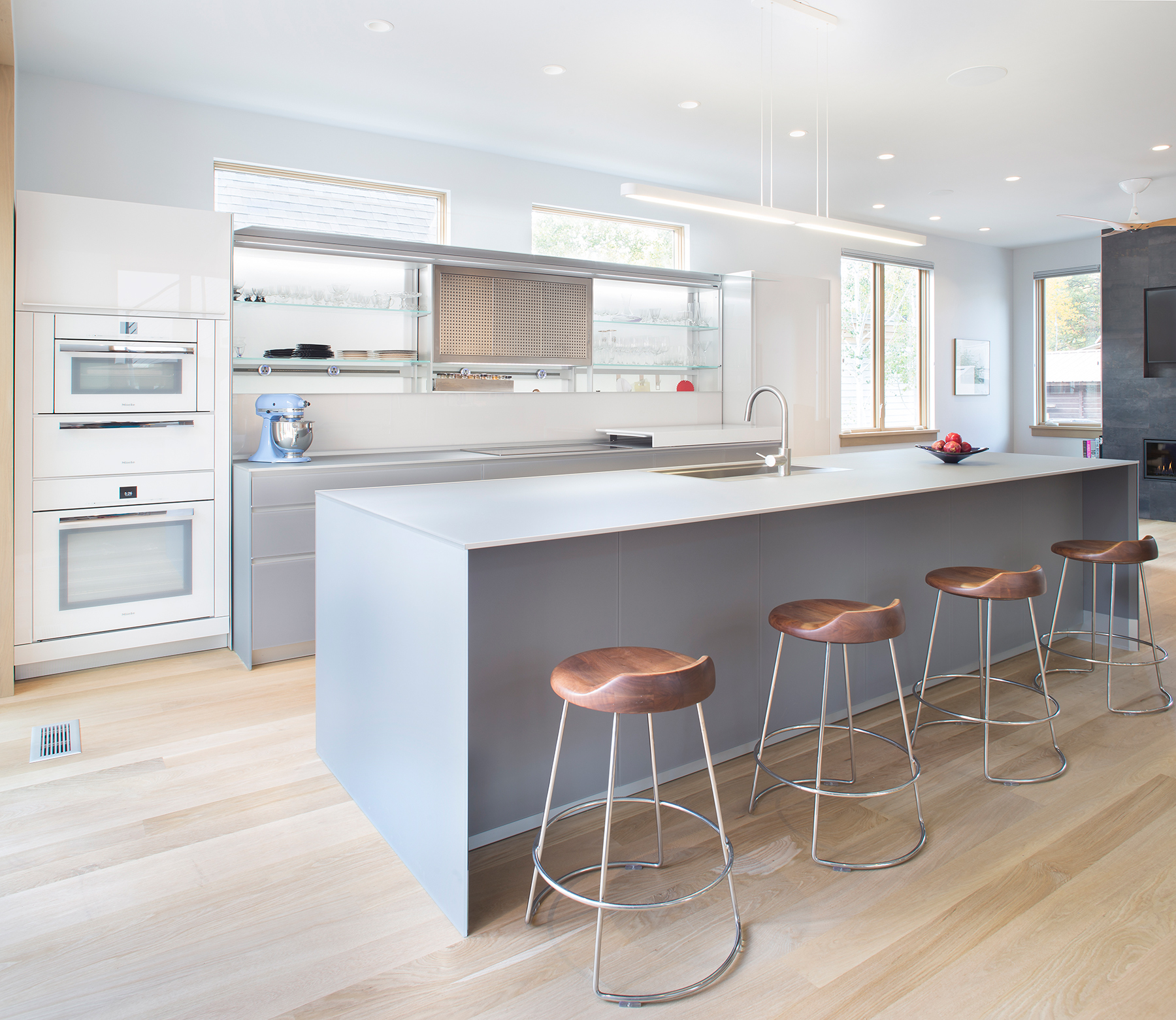
Traditional materials were given new life with contemporary detailing. An efficient, open layout with strategic fenestration provides a seamless connection between indoors and out. Design and space planning consideration was given to the owners’ extensive collection of mid-century Scandinavian furniture. Architectural palette and finishes were juxtaposed with a sleek, modern kitchen from Valcucine.
To me, true creativity, whether in art, technology, or business, is creating something of beauty, function, and joy, while working within inviolable constraints. Rowland+Broughton has managed to accomplish this beyond any reasonable expectations. – Homeowner, Mining Modern
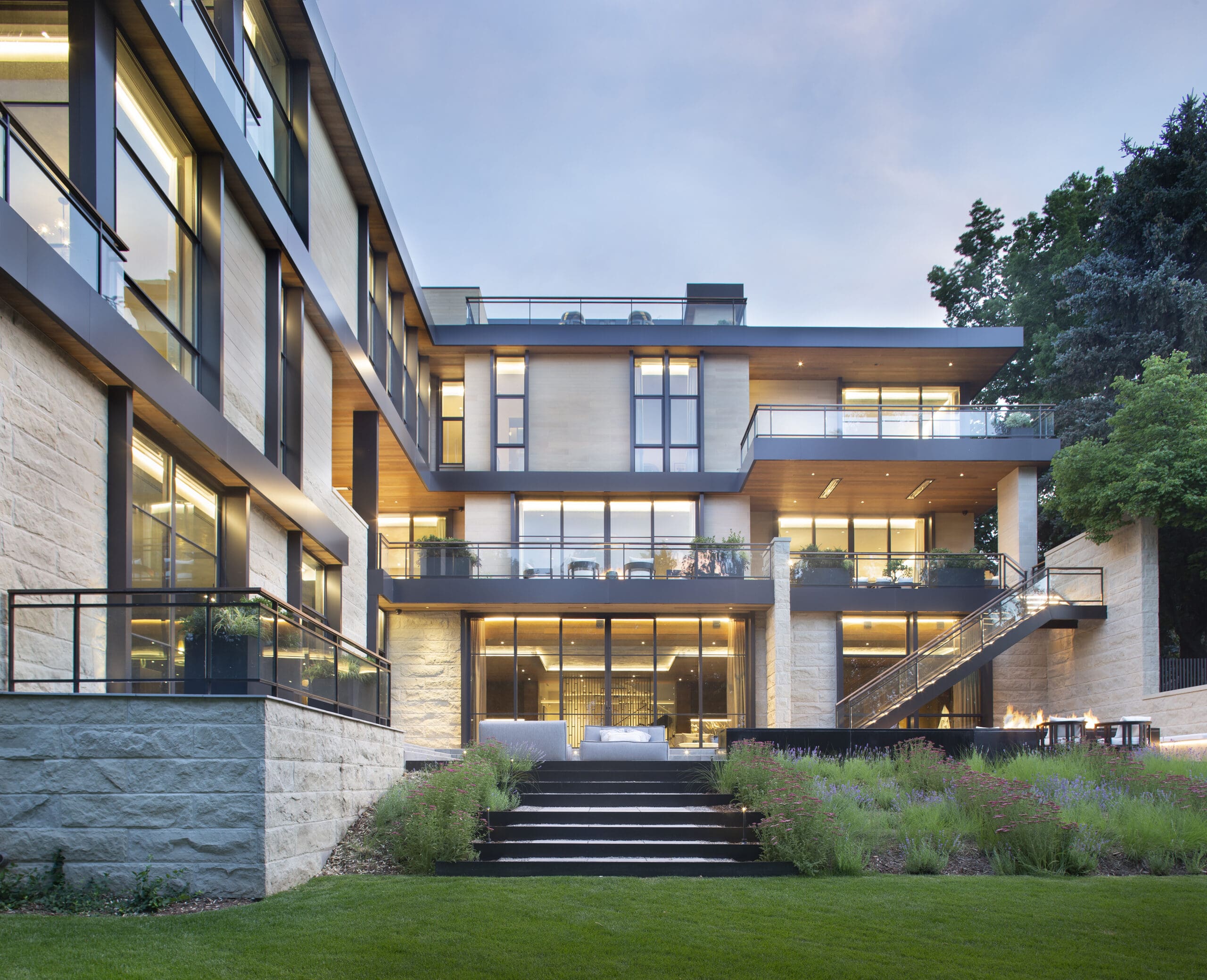
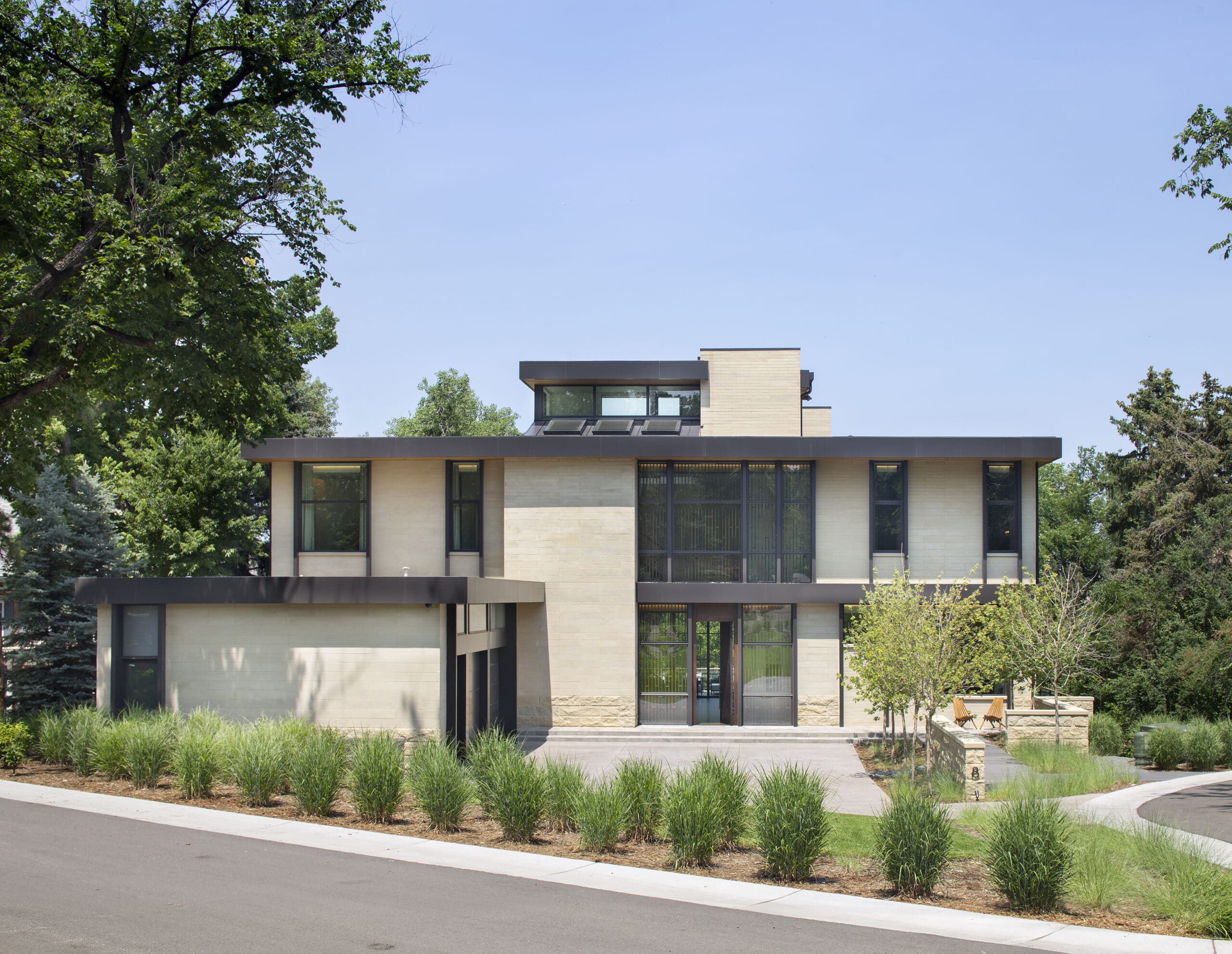
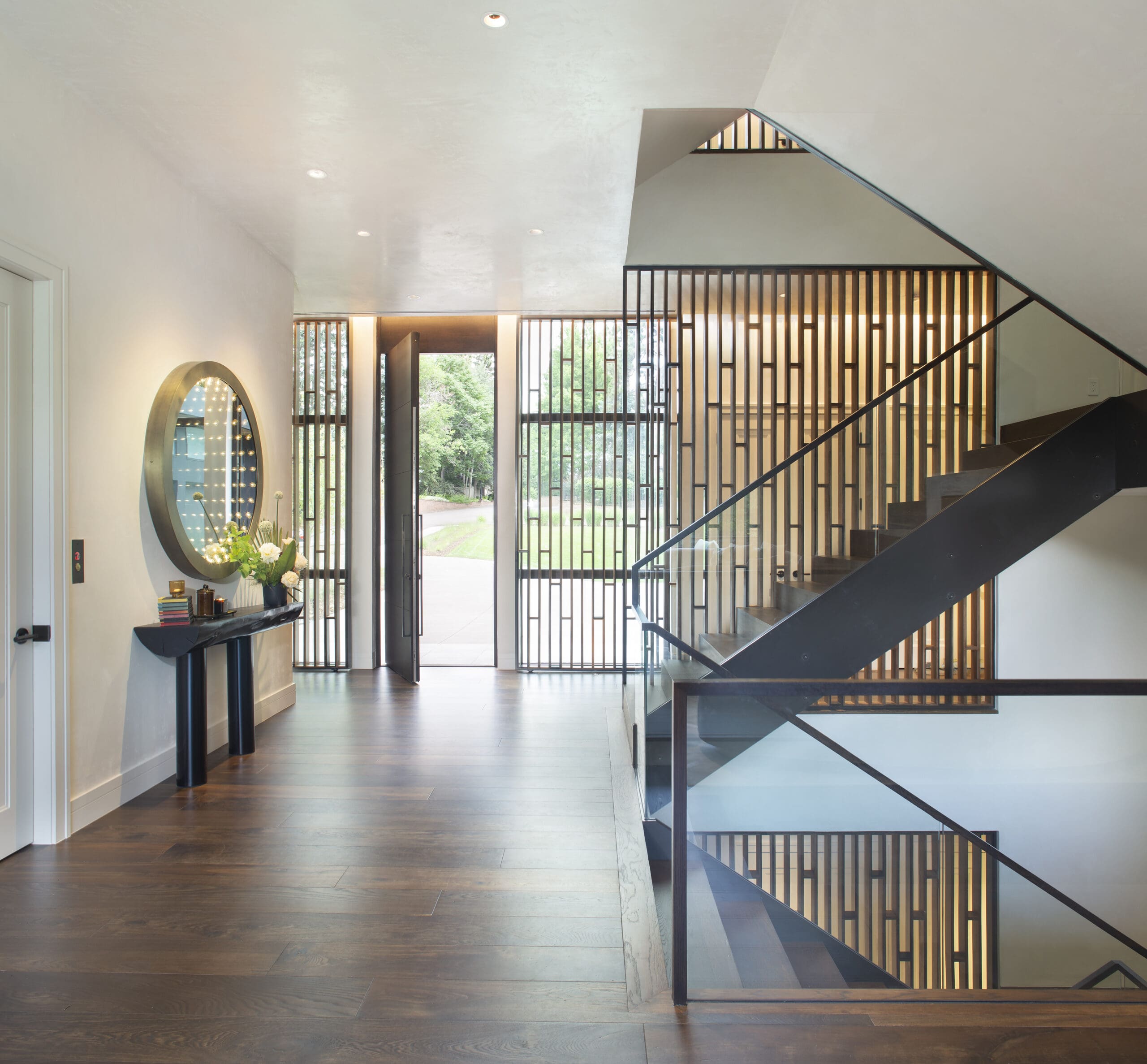
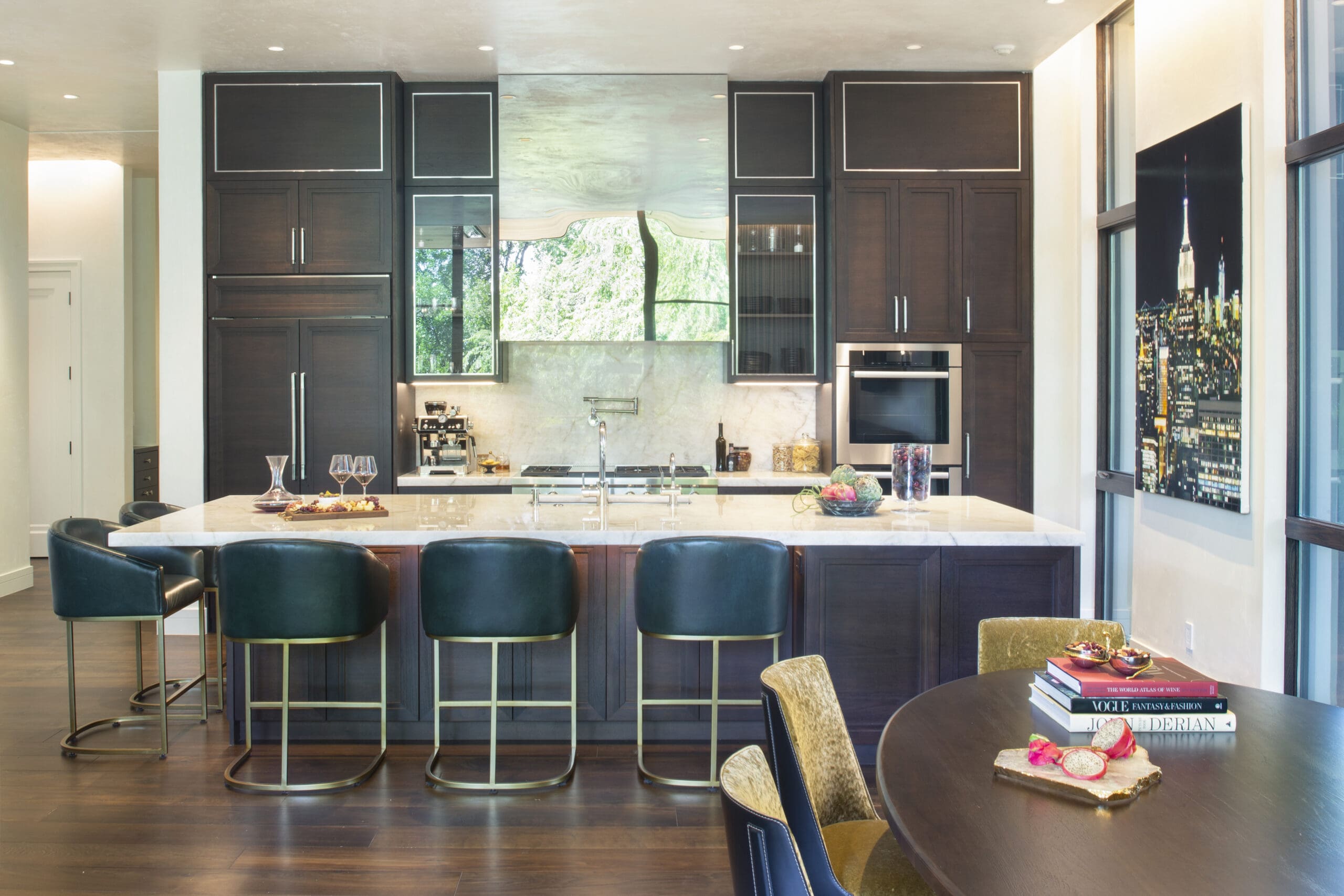
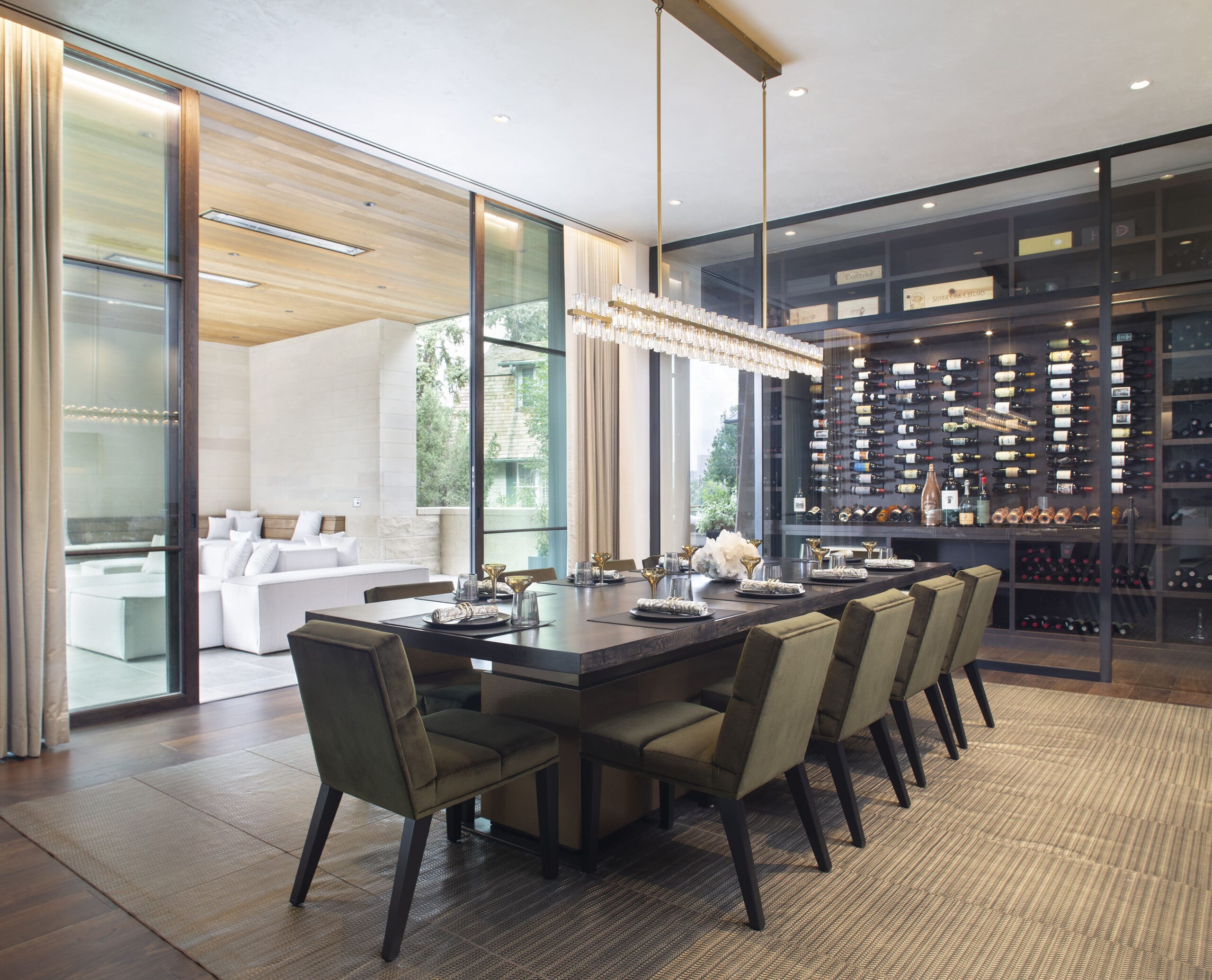
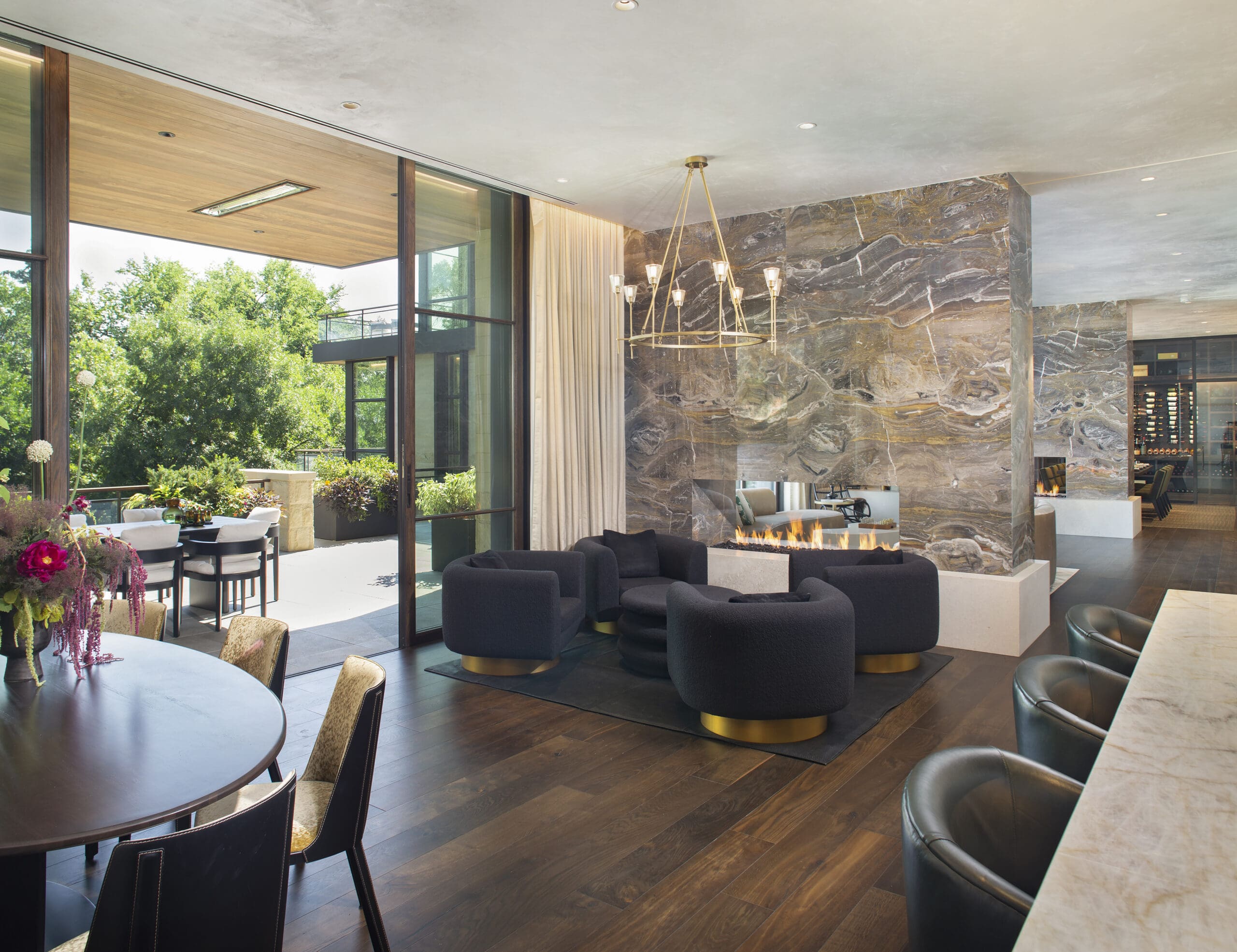
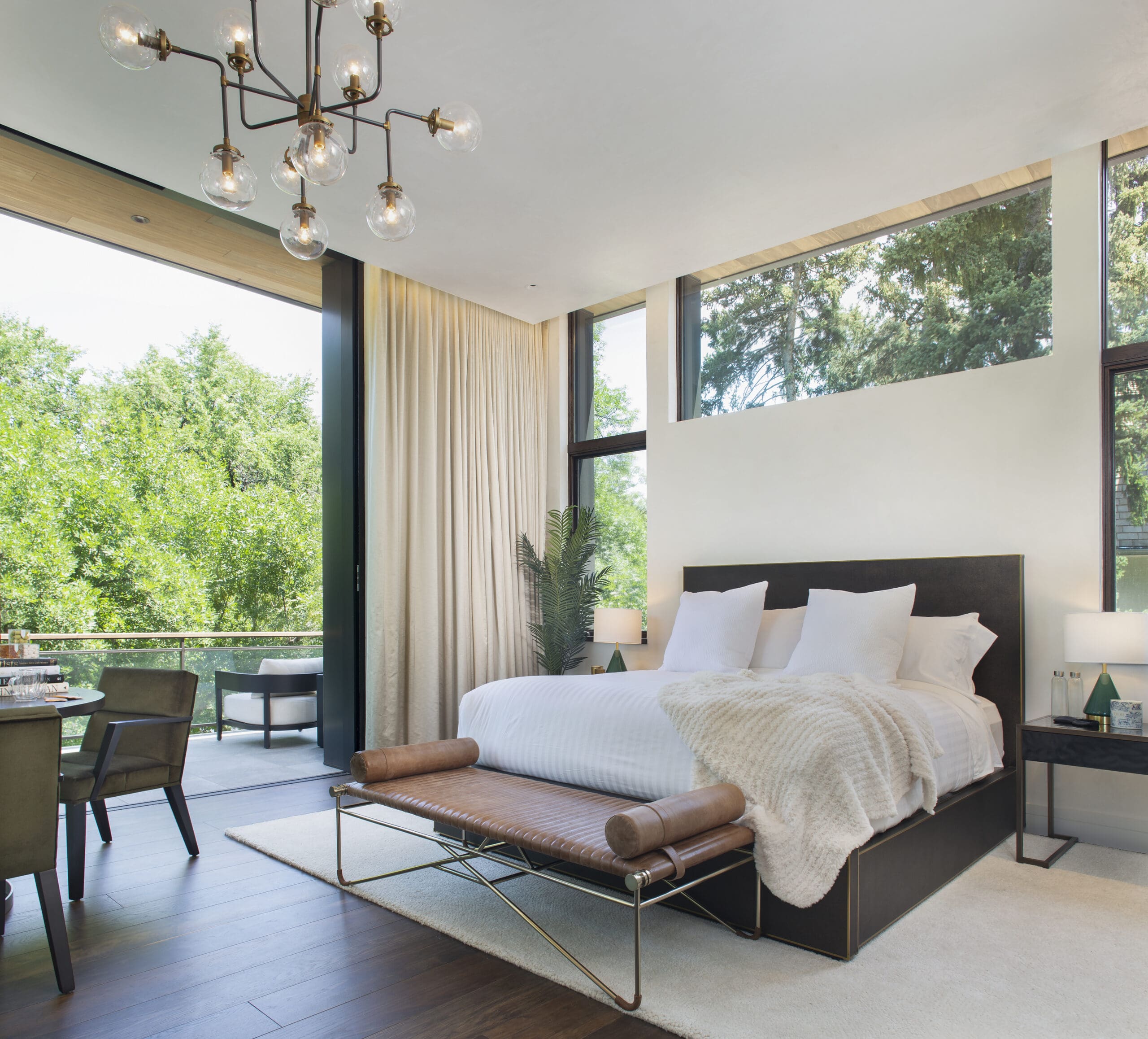
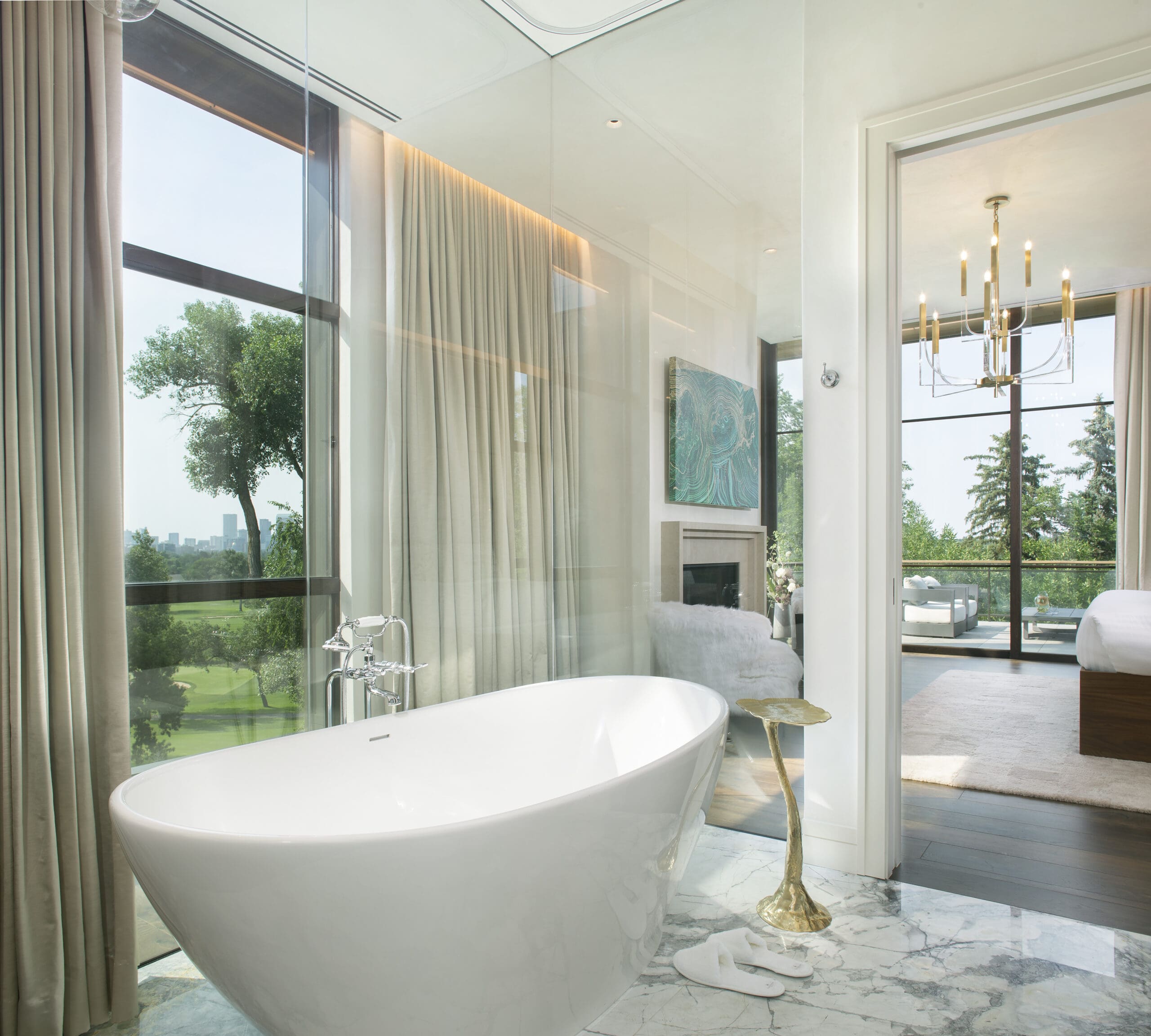
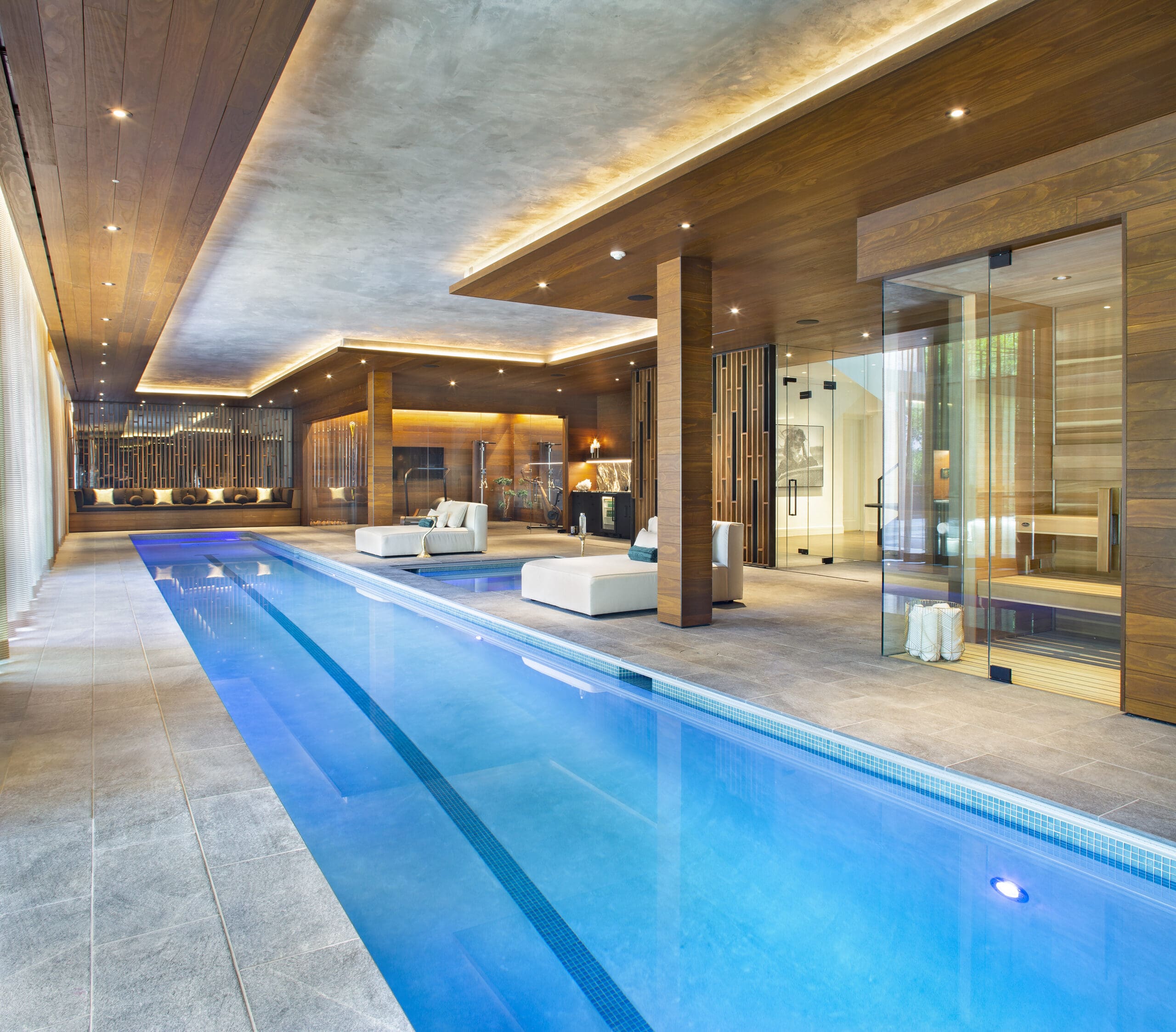
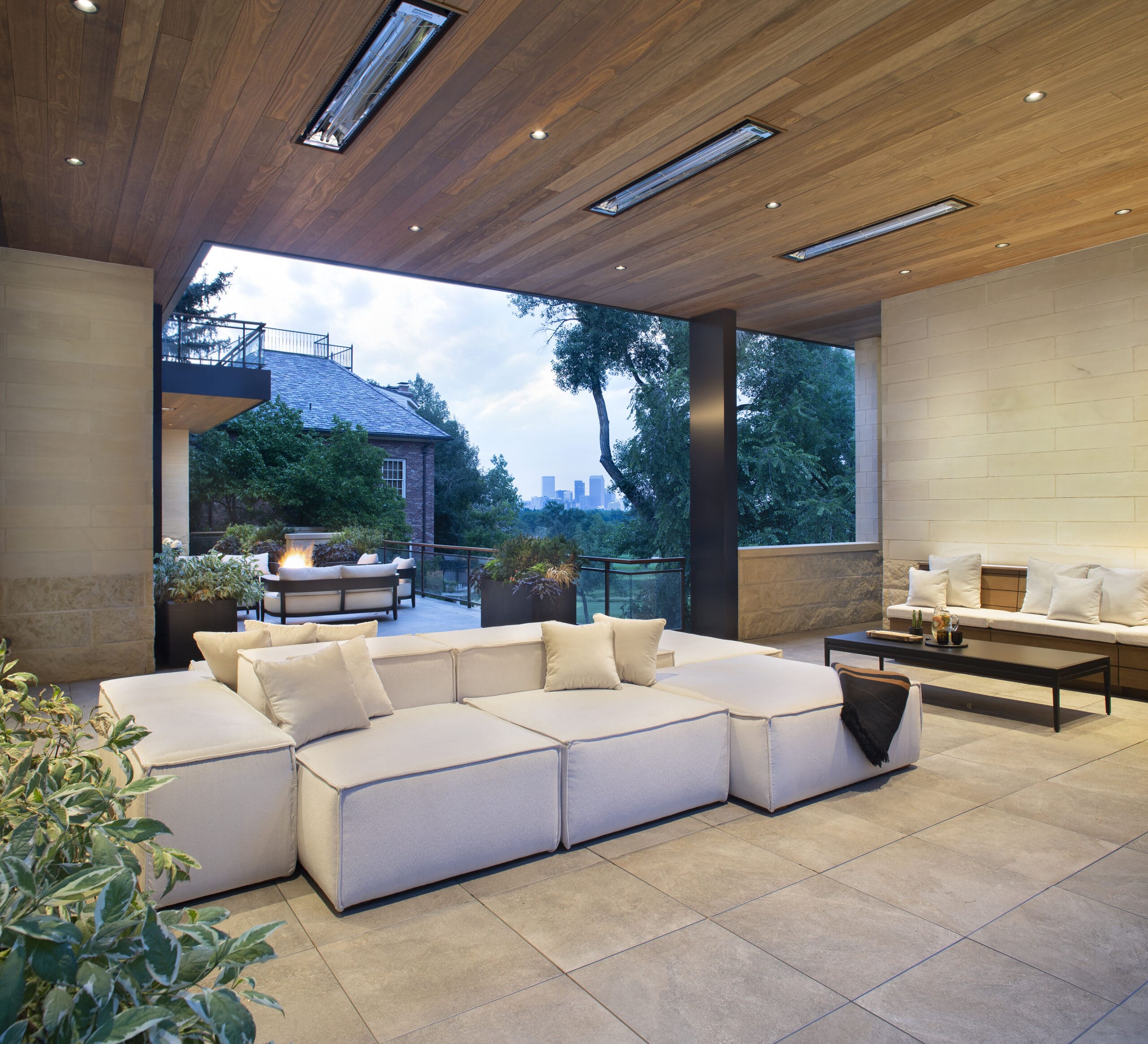
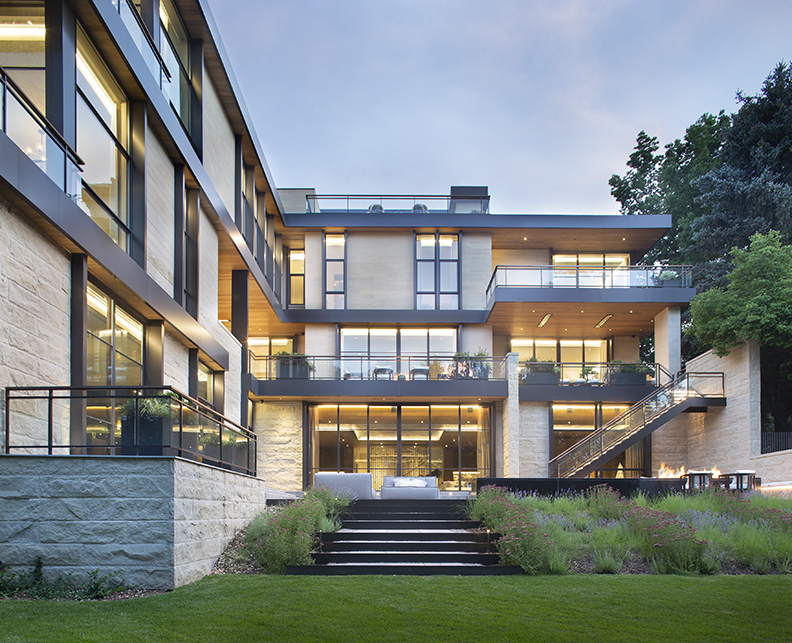
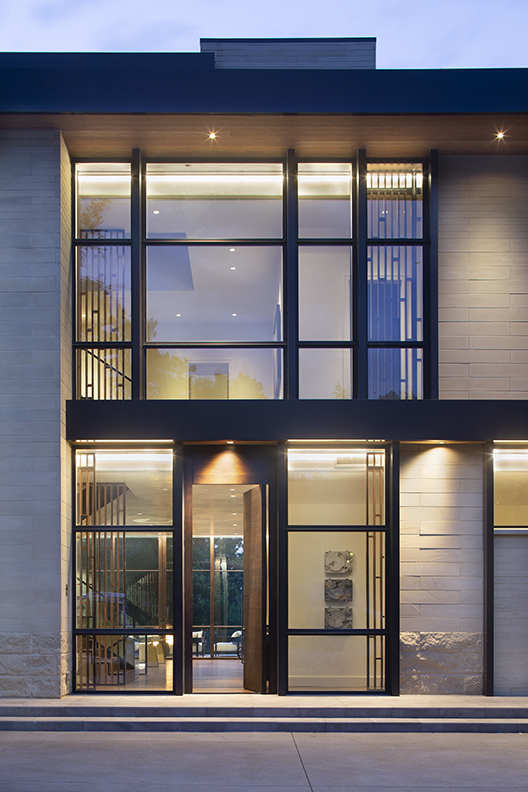
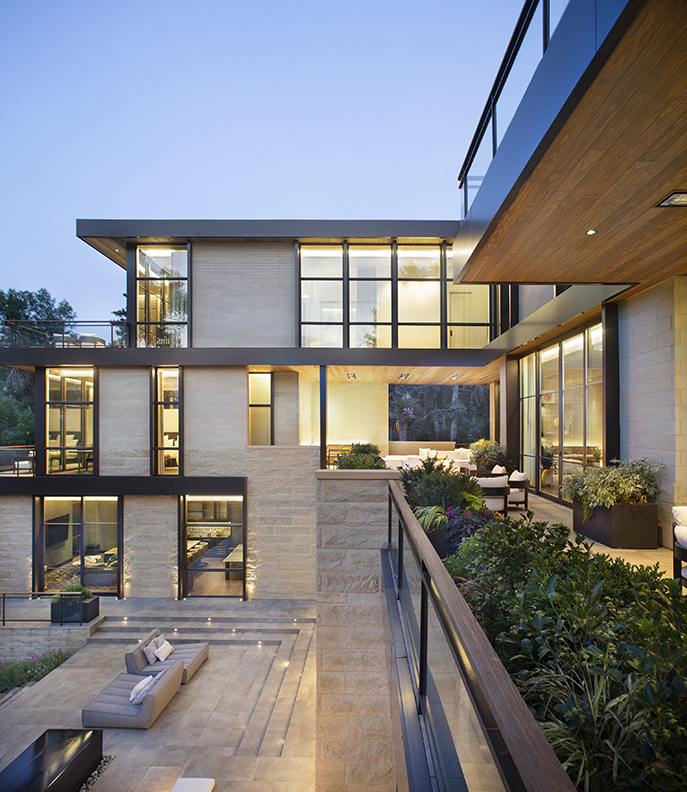
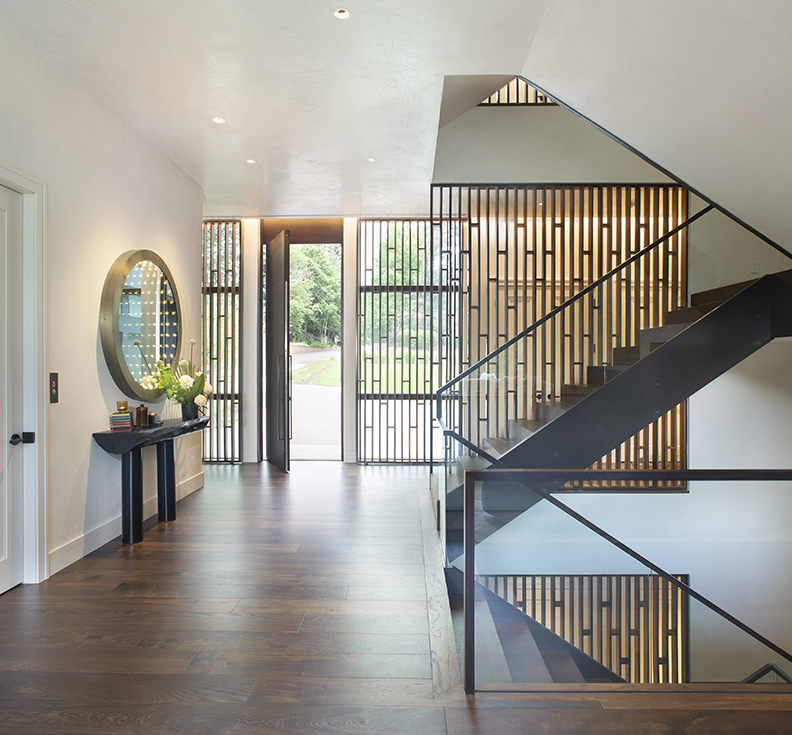
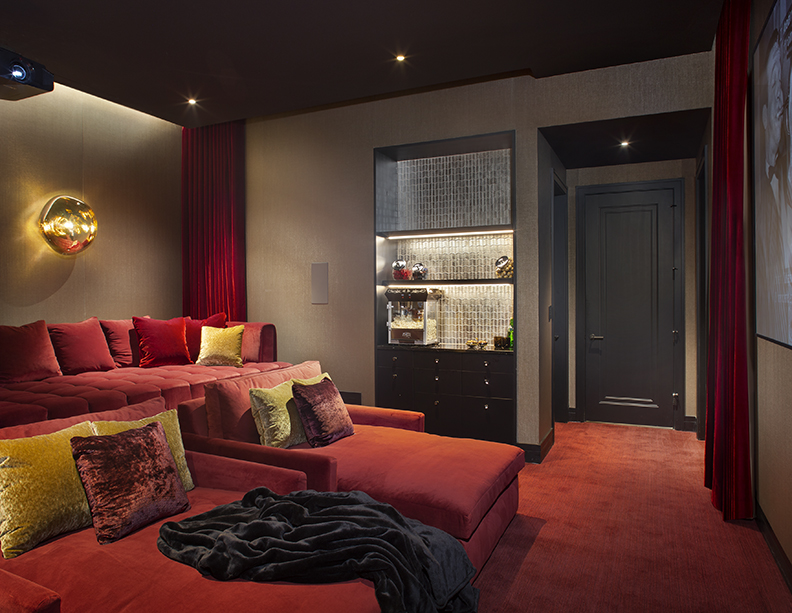
A contemporary take on the Prairie Style of architecture, this modern masterpiece in an exclusive Denver neighborhood is designed to stand the test of time. The modern interpretation of the Prairie Style responds to the historic context of the neighborhood and the surrounding landscape, and also responds to the owner’s musical proclivity and passion. Architectural timelessness is achieved through attention to detail, high quality design and materials, along with expert execution and craftsmanship.
To emphasize the horizontal nature of the home’s design, the team chose a neutral stone palette for the wall surfaces and contrasted it with bands of deep bronze-colored metal. The use of sandblasted-smooth stone and rough cleft-face stone allows for variation of scale and texture, while its coursing emphasizes horizontal lines. The home’s singular fenestration, including floor-to-ceiling windows and doors punctuating the horizontal bands of the façade, was inspired by Musical Instrument Digital Interface (MIDI) wavetables. The end result is an enhancement of the home’s dramatic scale and indoor/outdoor living.
Prevalent during the late 19th and early 20th centuries, and made popular by American Architect Frank Lloyd Wright, the Prairie Style is characterized by use of horizontal lines, broad eave overhangs, flat or low-hipped roofs and high-quality materials. The strong horizontal nature of the structure evokes the expanse of treeless prairie that once dominated the vistas of the Western United States and allows for integration into the landscape.
R+B’s modern take on the Prairie Style reconciles the current-day demand for high ceilings, expansive windows and modern construction techniques with the historic style’s emphasis on craftsmanship, horizontality and sensitivity to the landscape.
Additionally, the landscape design grounds the residence within the established context and aesthetic of the surrounding neighborhood. The chosen planting palette includes mostly native plant species appropriate to the region. In lieu of colorful ornamental plantings, simple massing of ornamental grasses and low deciduous shrubs convey a modern complement to the Prairie Style of architecture.
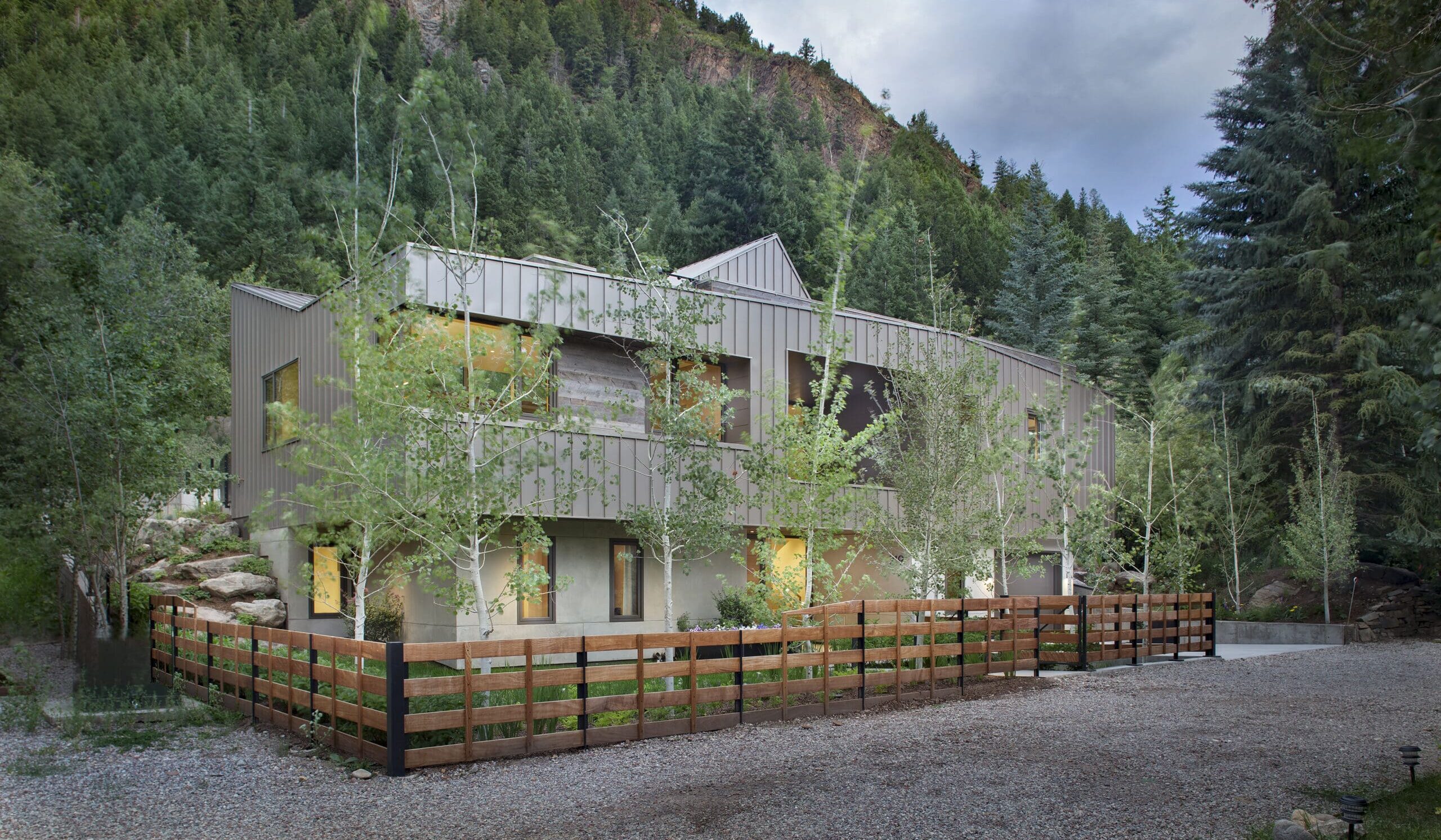
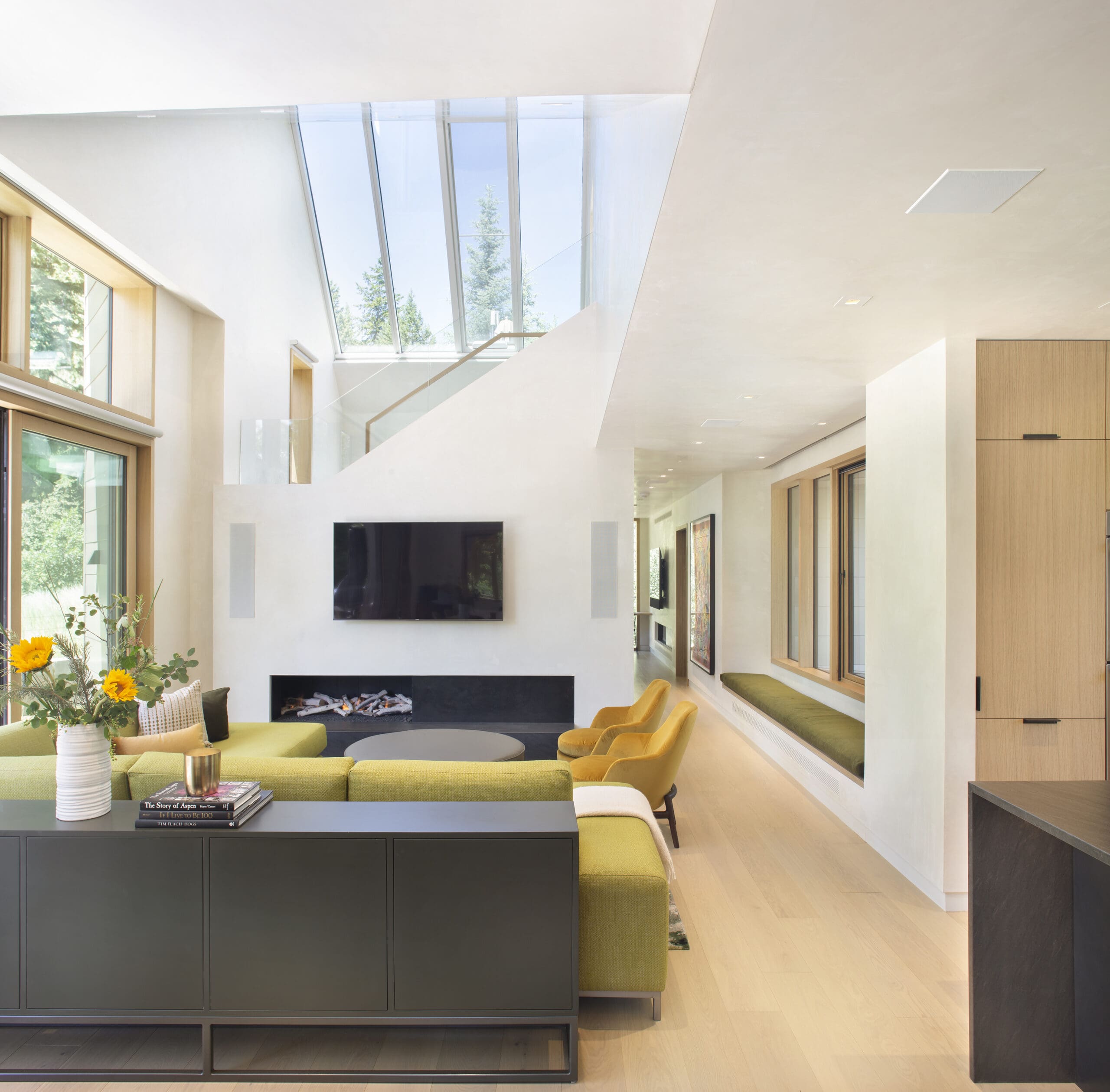
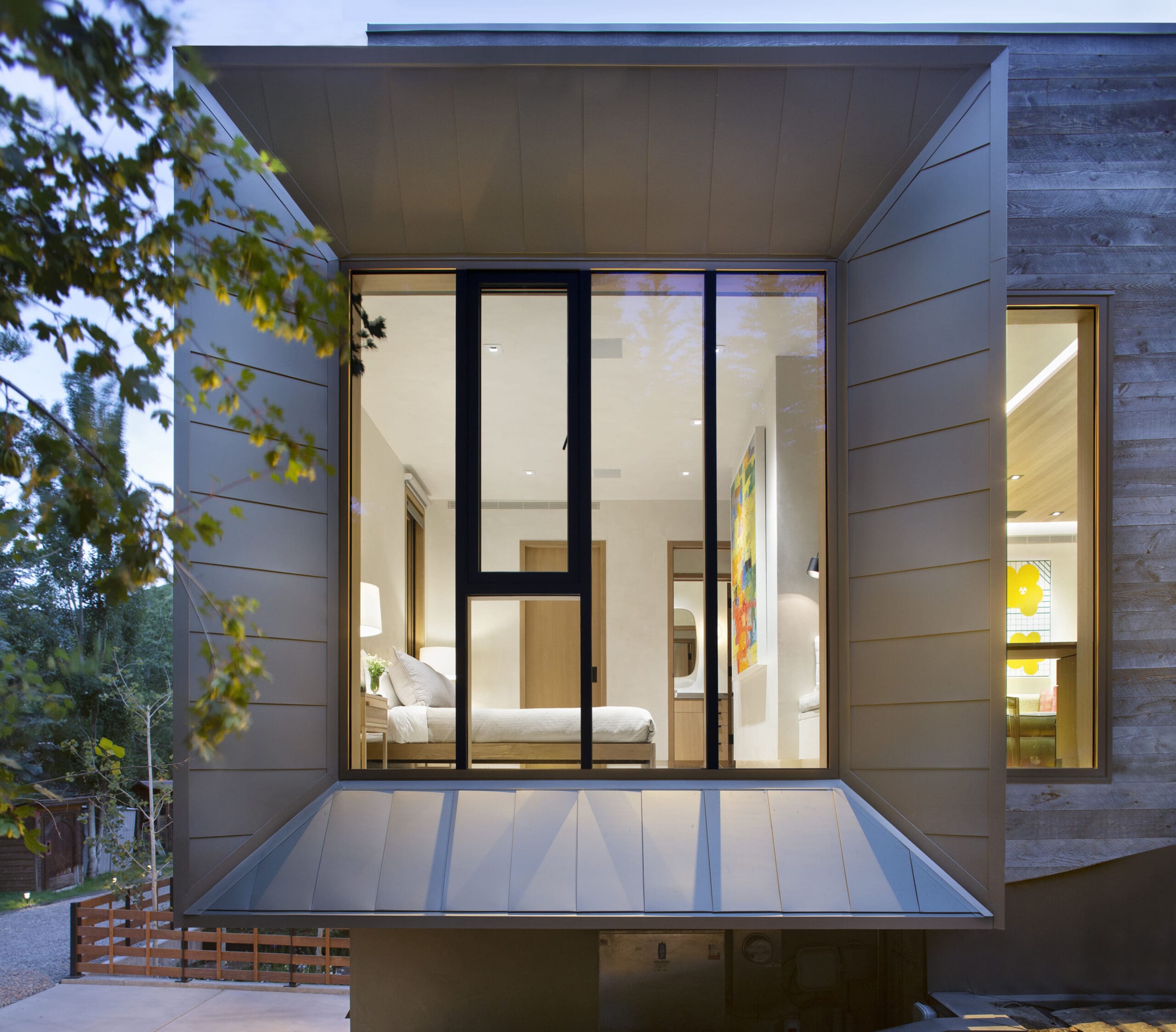
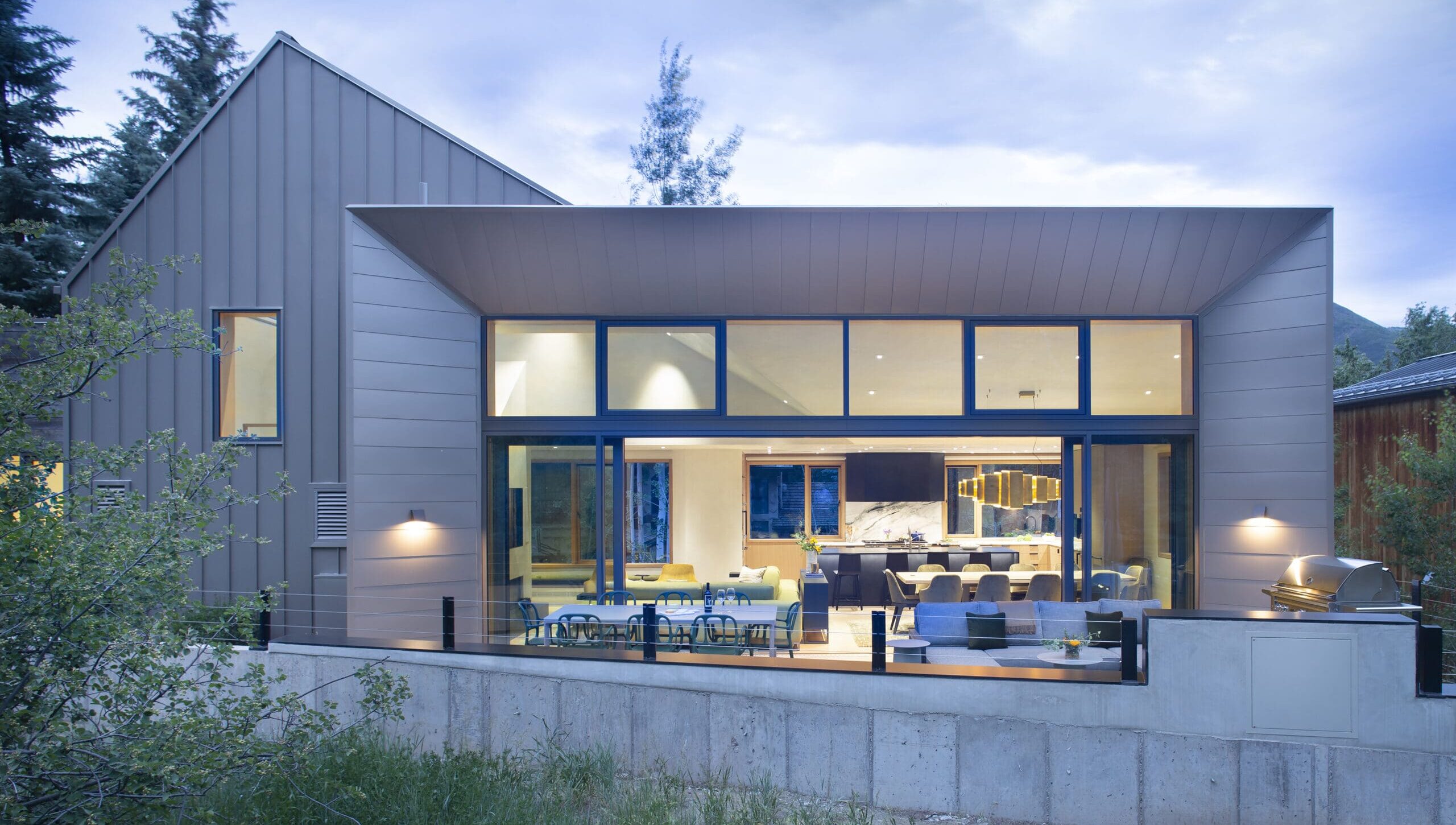
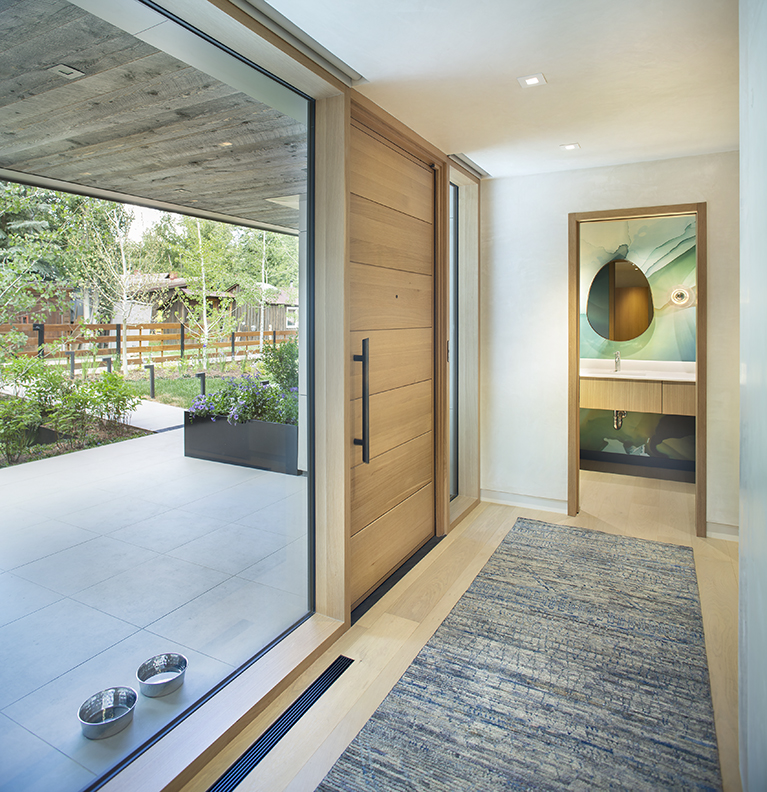
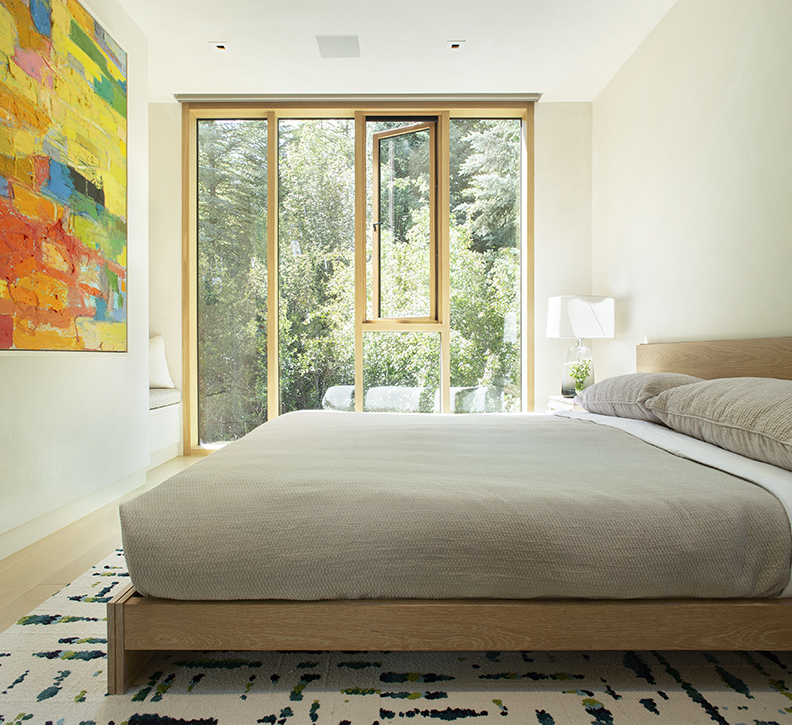
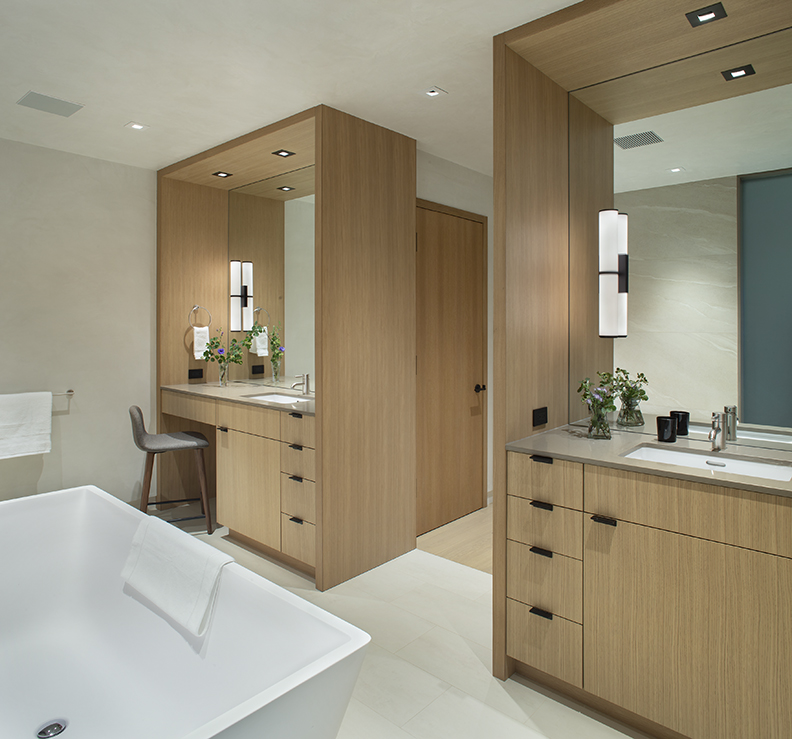
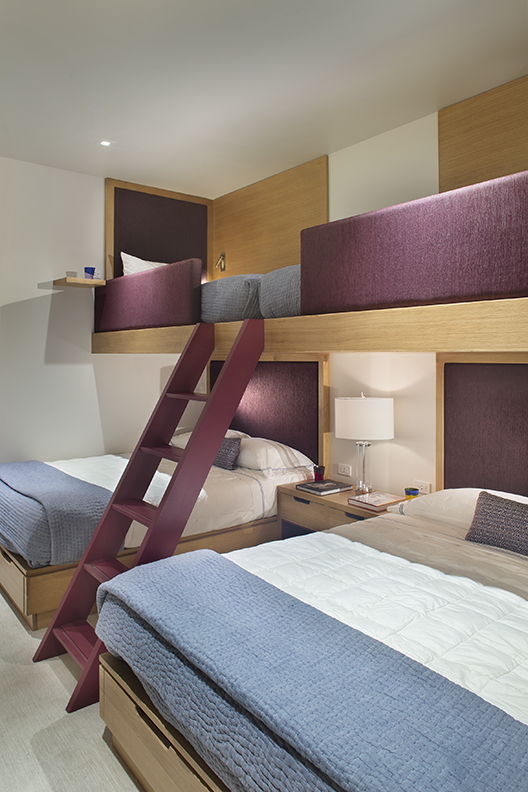
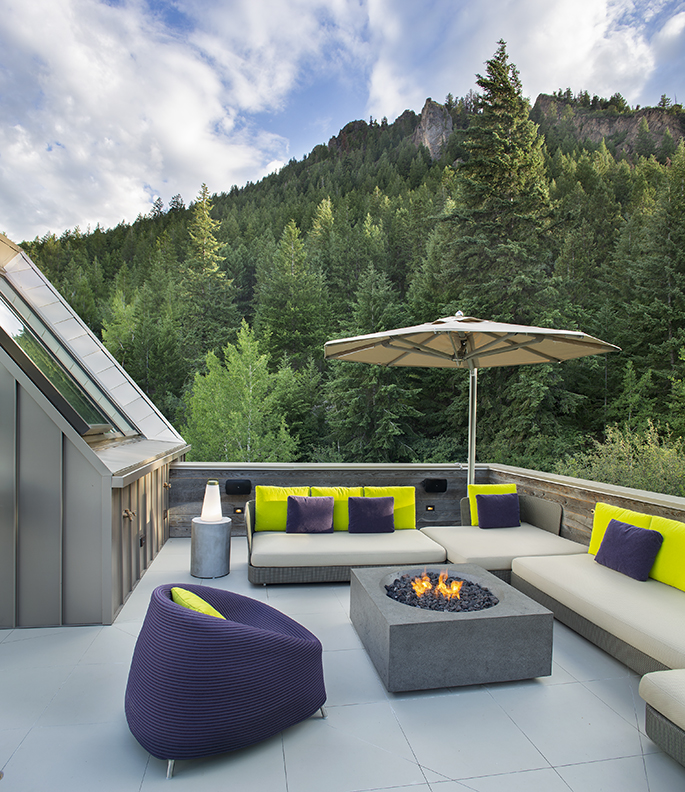
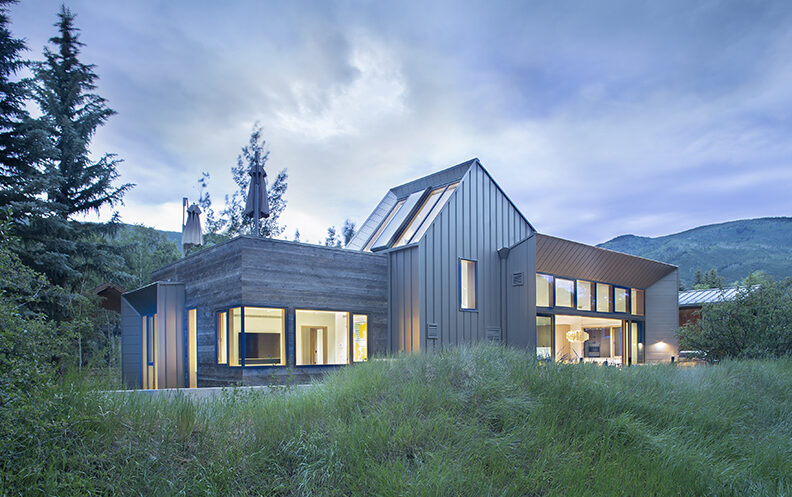
Shadow Mountain House is located on a compact lot at the edge of downtown Aspen, Colorado, within close walking distance of skiing, shops and restaurants. The home is tucked up against the base of iconic Shadow Mountain, which provides unique forested views.
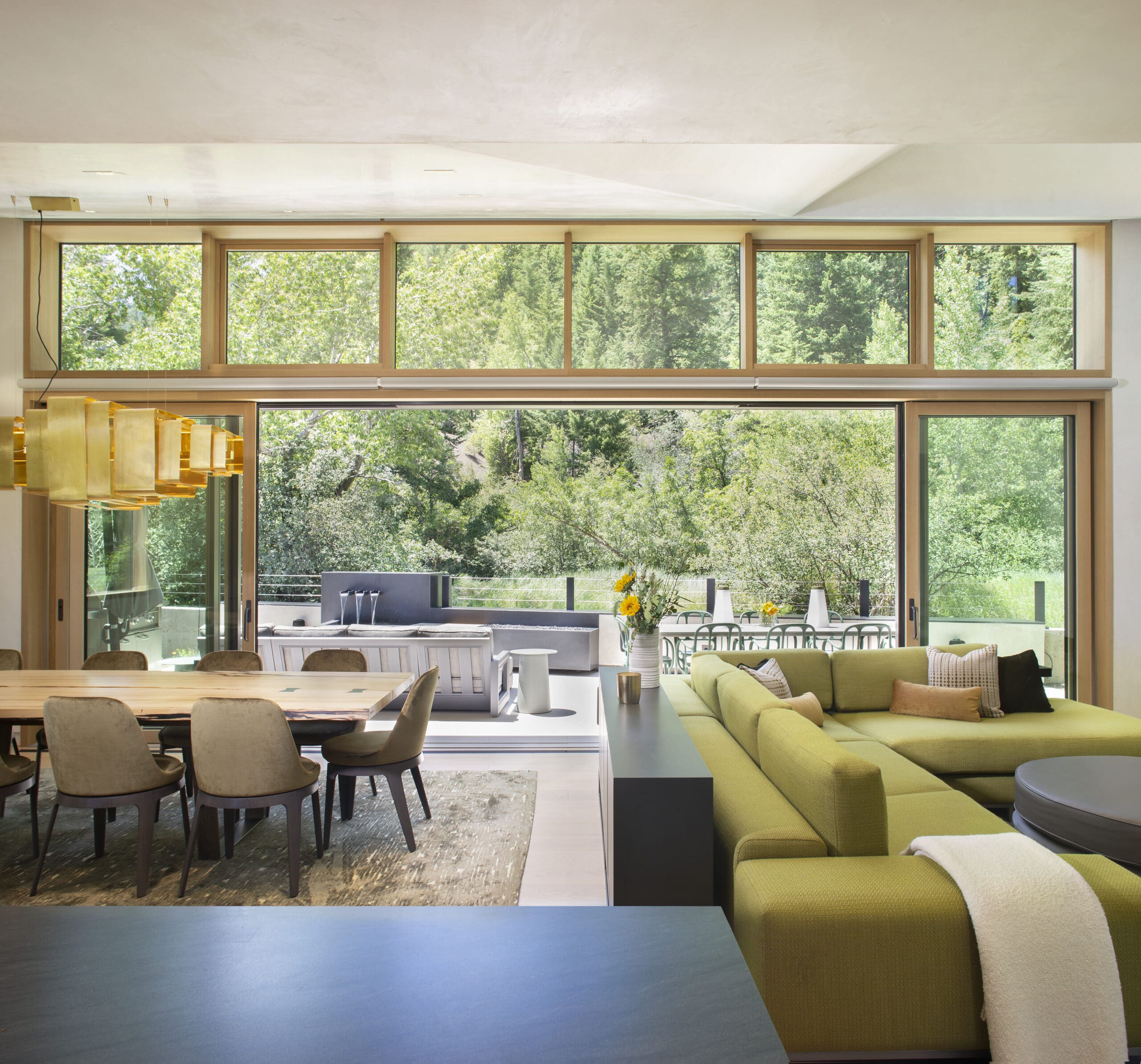
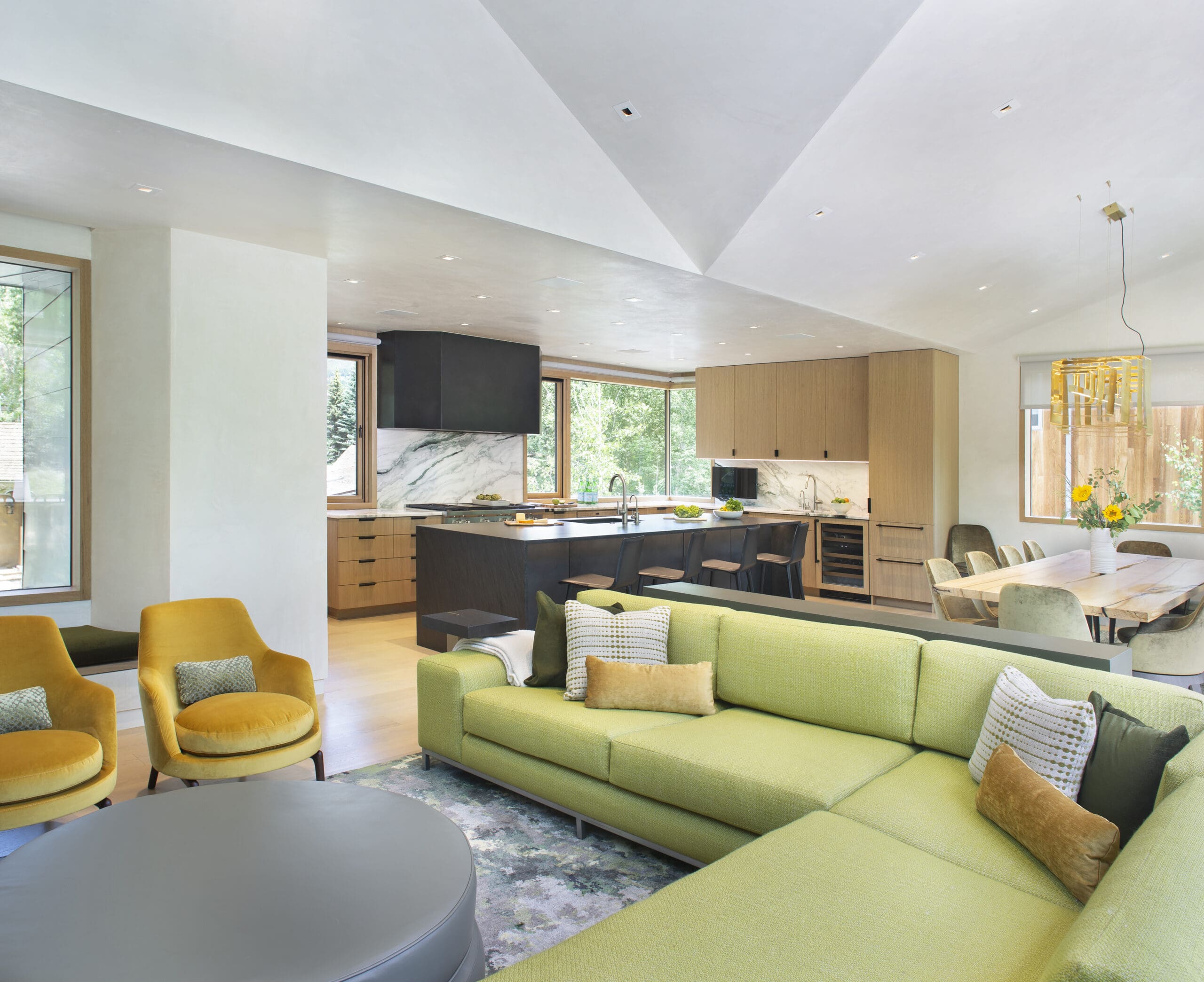
Inside, the furnishings palette was devised to help explore and embrace the owner’s love of bold colors. Each level was provided a central color on which an analogous color palette was developed.
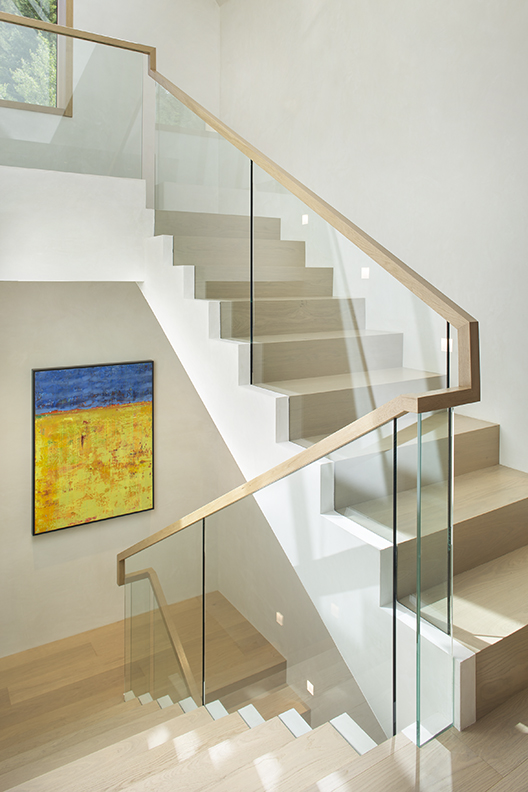
Accordingly, the lower level is purple, the main floor is blue and the upper level is green. Green was chosen for the upper level to pull the rich greens of the surrounding forested views inside. Throughout the home, bold and expressive artwork was located in areas that allow them to be celebrated independently of the views.
Ensuring that the views were the primary focal points from the interior of the home was a singular challenge. In a compact footprint, essential programmatic elements vie for attention compositionally. So as not to divert attention from the views, a neutral palette of plaster, white oak and minimal detailing was chosen.
As the form is tucked into the mountainside, the upper level offers a gracious walk-out terrace for outdoor entertaining. A “form follows function” parti was created to incorporate large picture windows aimed directly at primary views. These picture windows informed ceiling slopes and the treatment of other focal features, such as keeping the fireplace volume low to allow the treetops to be viewed through a living room skylight. Another opening provides expansive Shadow Mountain views, and also provides for seamless indoor-outdoor entertainment opportunities in the privacy of the backyard.
Glass guardrails on the stairs were selected to allow for more natural light to filter uninhibited to the lower levels and for the transparency they provided. Another design challenge was the detailing required for the unique angles driven by the aperture windows. Rainscreen cladding techniques and internal gutters were employed so that the standing seam metal was siding used consistently around the openings.
For our design team, a primary goal was addressing the owners’ desire to capture the best views possible, including of the overhead treetops and the mountains across the valley. Combined with a compact lot size, the goal drove the architecture vertically, with main living spaces placed on the upper level and rooftop, and the bedrooms on the lower levels.
A second design goal was to unify the angular form, emphasizing predominant views within a singular volume. Standing seam metal siding was used as the building’s skin for its ability to be applied on both vertical and horizontal surfaces. The building skin was pulled and stretched, creating aperture-style picture windows that strongly emphasize each opening. Stucco was used on the exterior of the main level as a subdued, monolithic base that recedes from the expressive upper level.
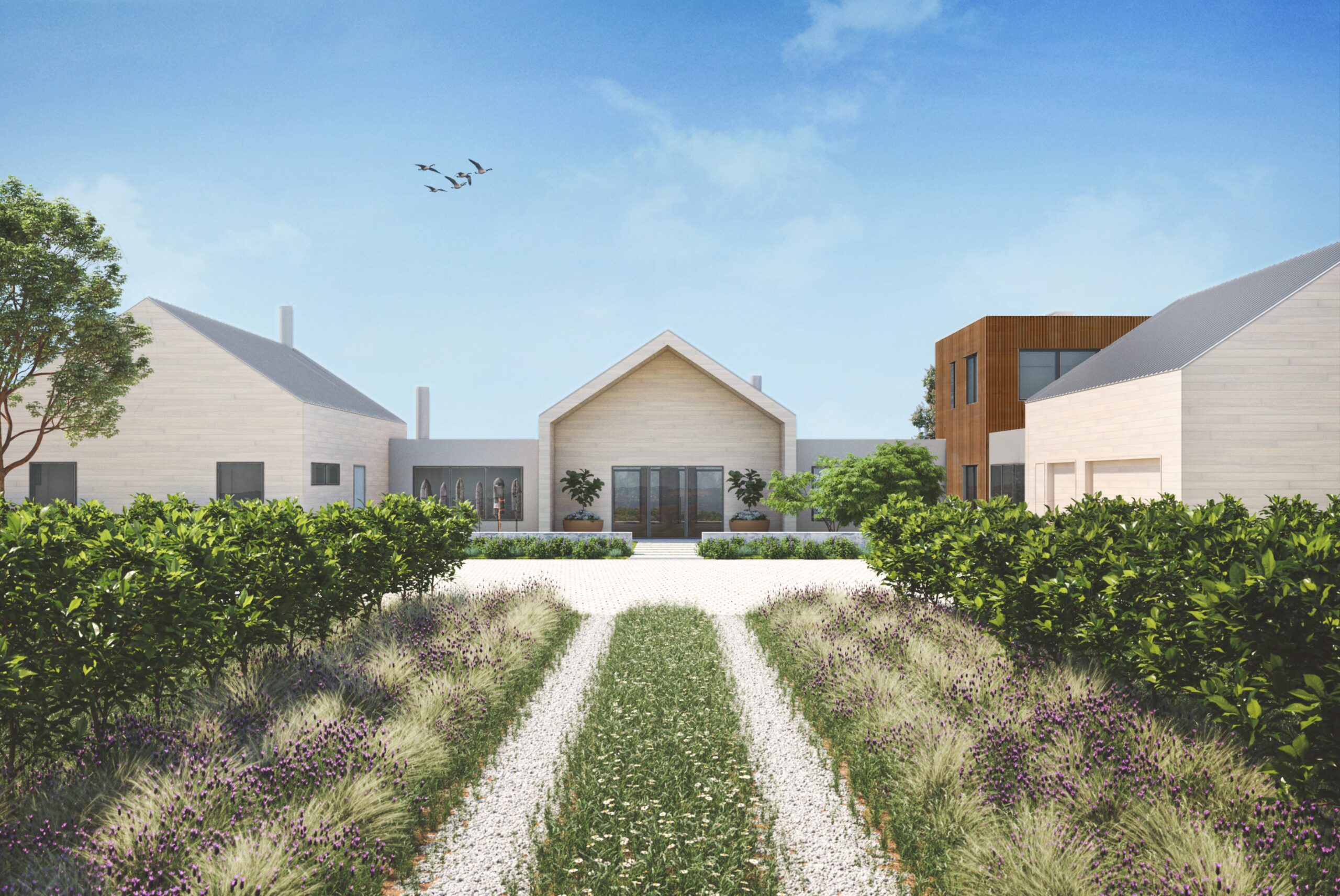
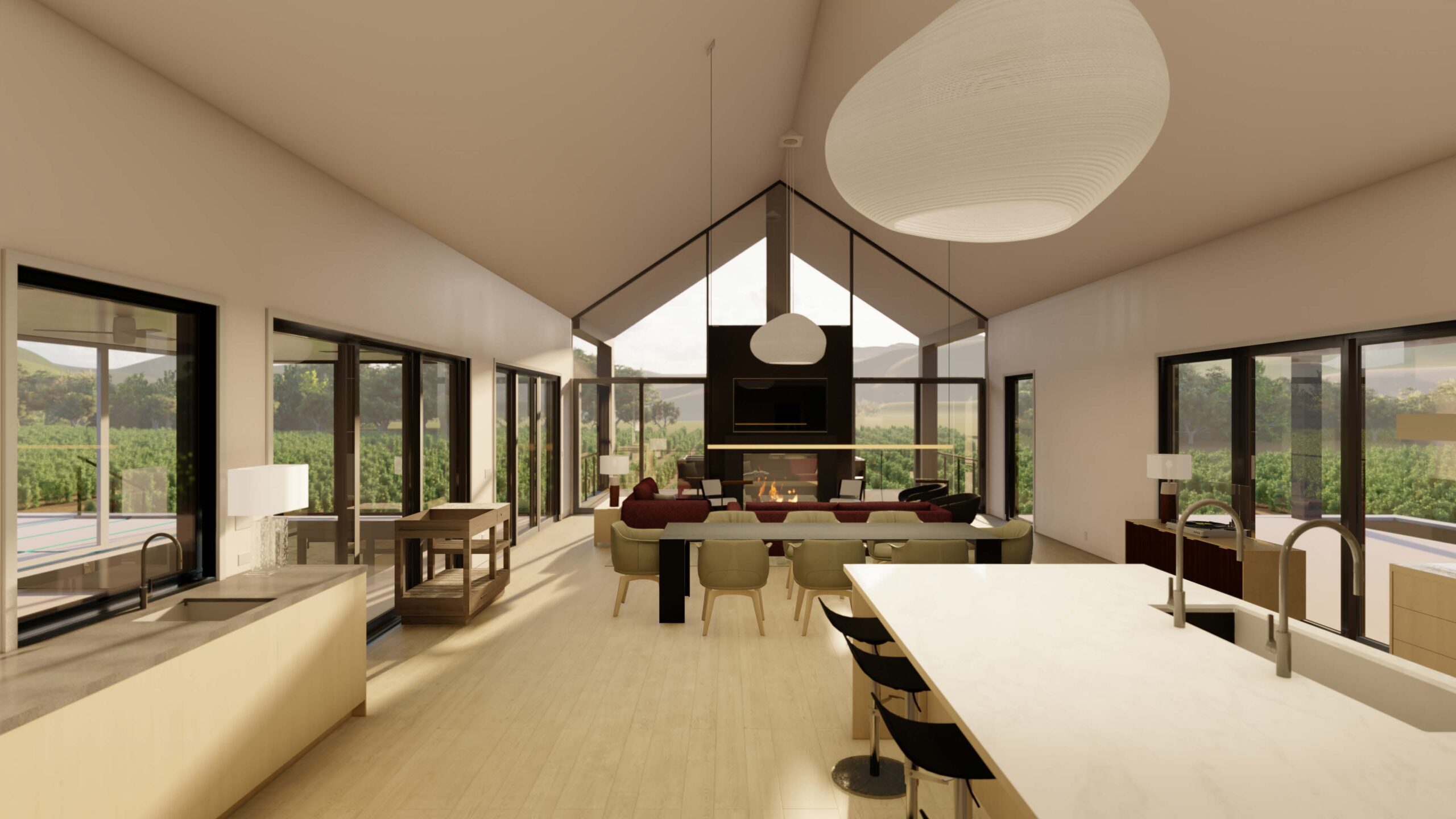
Set within the Walla Walla Valley, one of the State of Washington’s most prolific wine regions, this contemporary residence for a repeat client (passionate wine enthusiasts) is rooted in and responds to the surrounding agrarian landscape. Progressive yet contextual in design for the area, the clean, refined lines of the overall structure ensures that it settles unobtrusively onto the gently sloping ten–acre site.
Primary materials were purposefully specified. Dark gray stone emulates the abundant basalt rock indigenous to the area (and that contributes to the quality of grapes used for winemaking). Cedar recalls the color of wood stakes supporting grapevines in the surrounding vineyard.
Sensitive to the intended lifestyle of the client-family and with the intent of capturing views of the Blue Mountains to the east, multiple structures were integrated into the surrounding landscape. Anchored by a new two-level volume reminiscent of historic buildings inherent to the area, three new extruded gable structures appear to emerge from the vineyard. The gable structures were pushed and pulled around the site to meet programmatic needs, and smaller blocks were extruded to link the four structures together.
Two of the gable structures, encompassing kitchen, dining, and living areas in one and the primary bed and spa-like bathroom suite in the other, encourage single-level living. The third functions as a garage. The two-level metal building accommodates a pair of guest suites on the ground level and a gym and office on the upper level. Wine storage and mechanical areas are below grade.
Outdoor rooms, green space, a sculpture garden and a pool area are thoughtfully designed between the structures, taking sun, wind and views into consideration. Access is through the surrounding vineyard via a pebbled drive, on axis with the main gable volume, and a central courtyard designed for outdoor gatherings and food trucks.
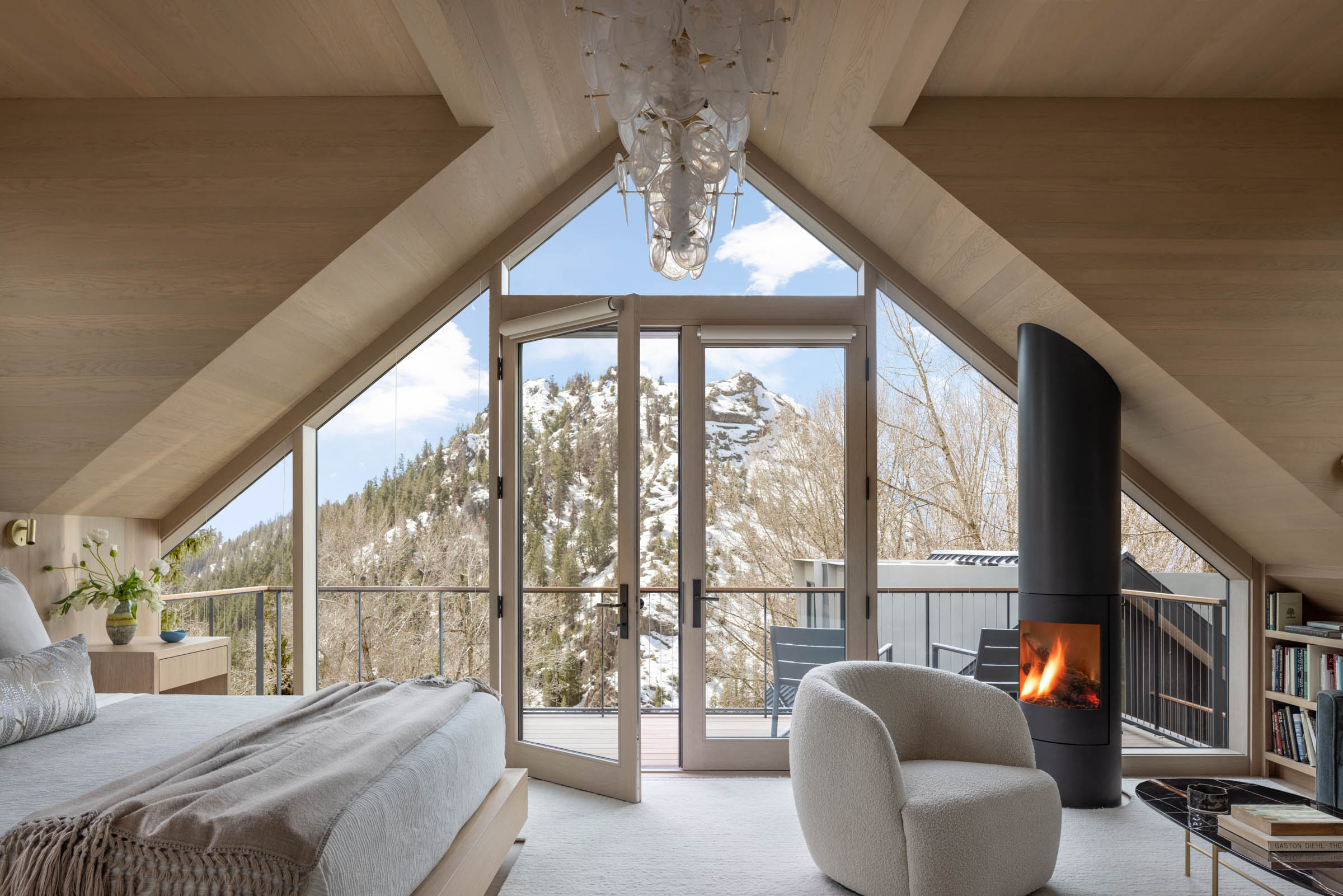
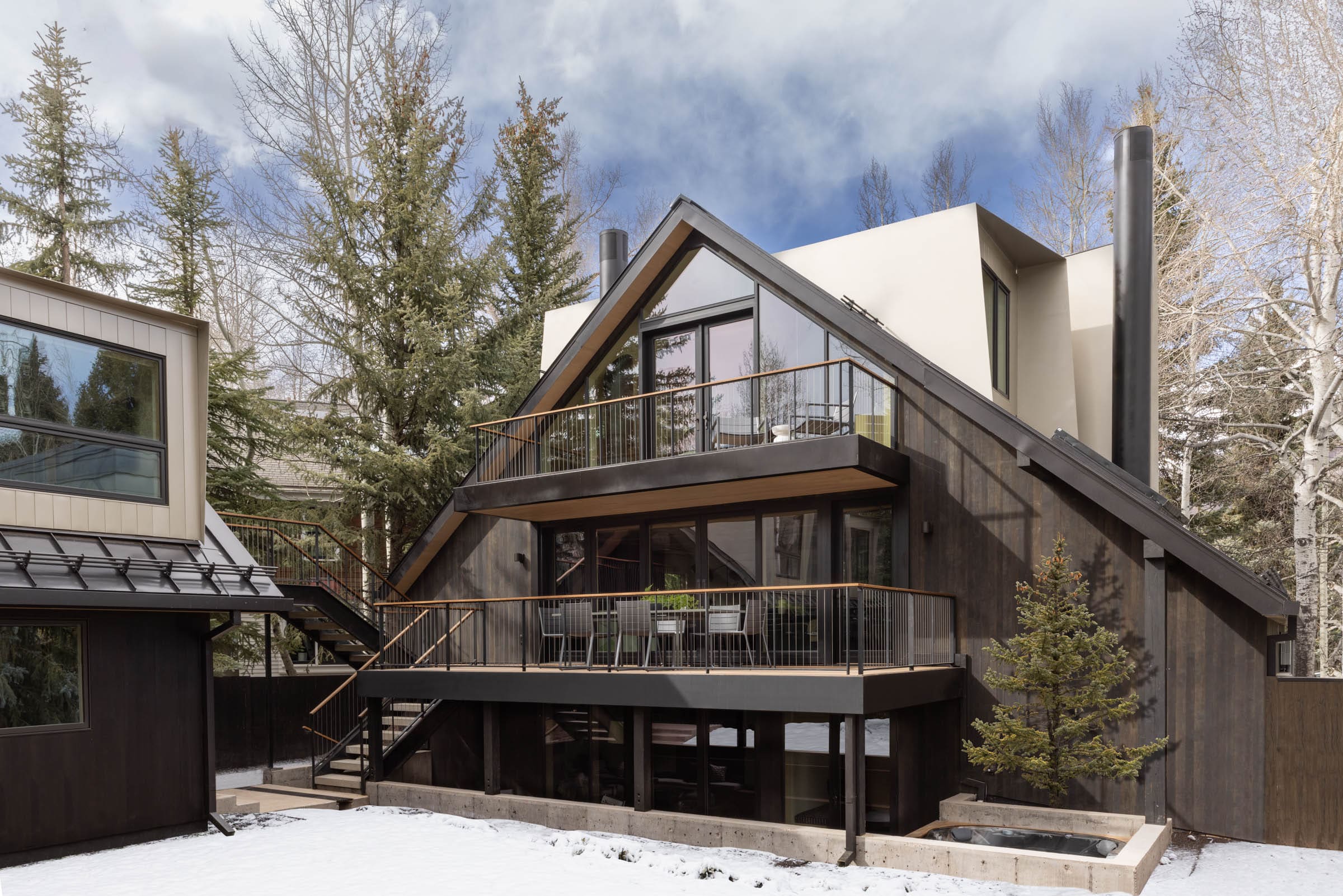
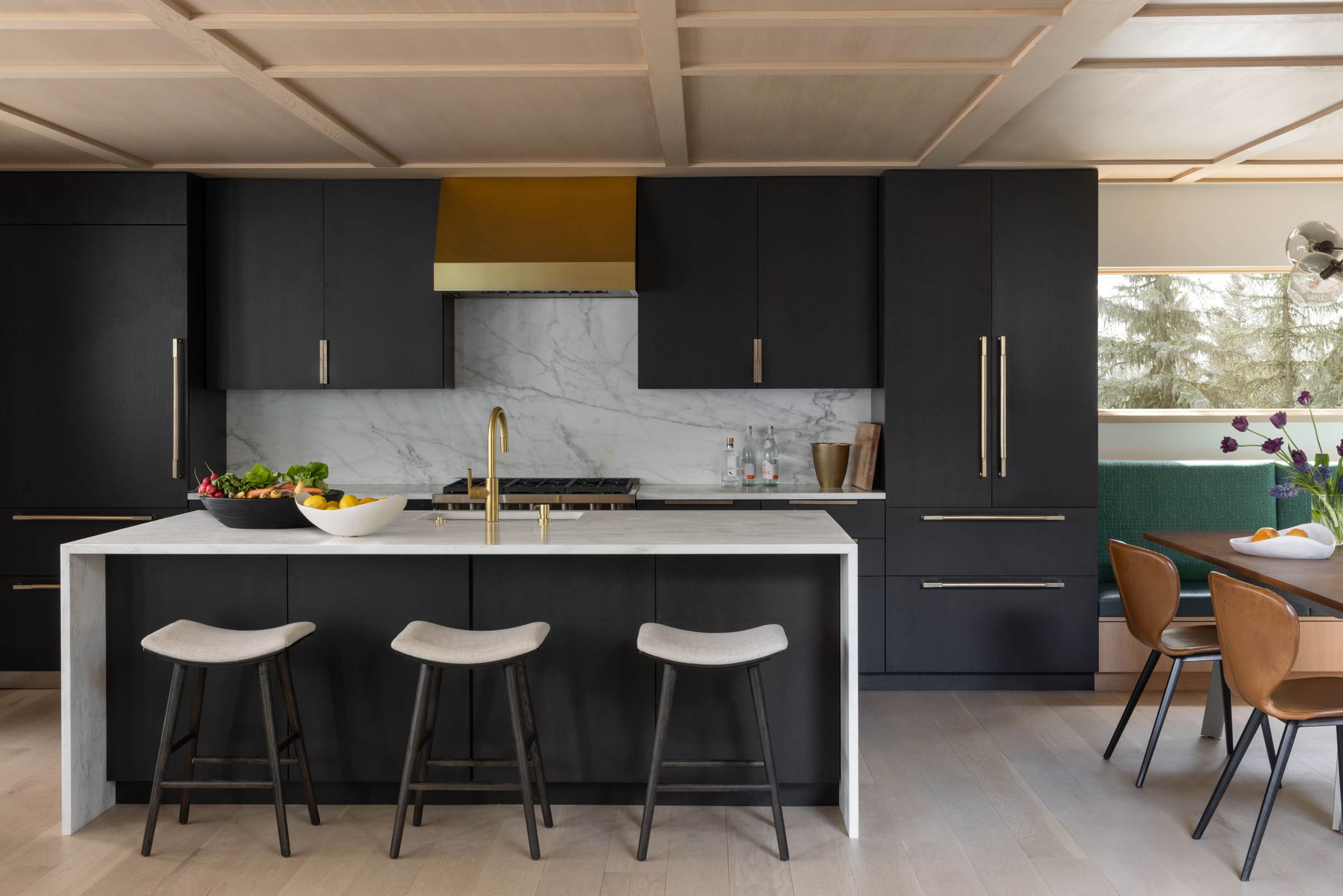
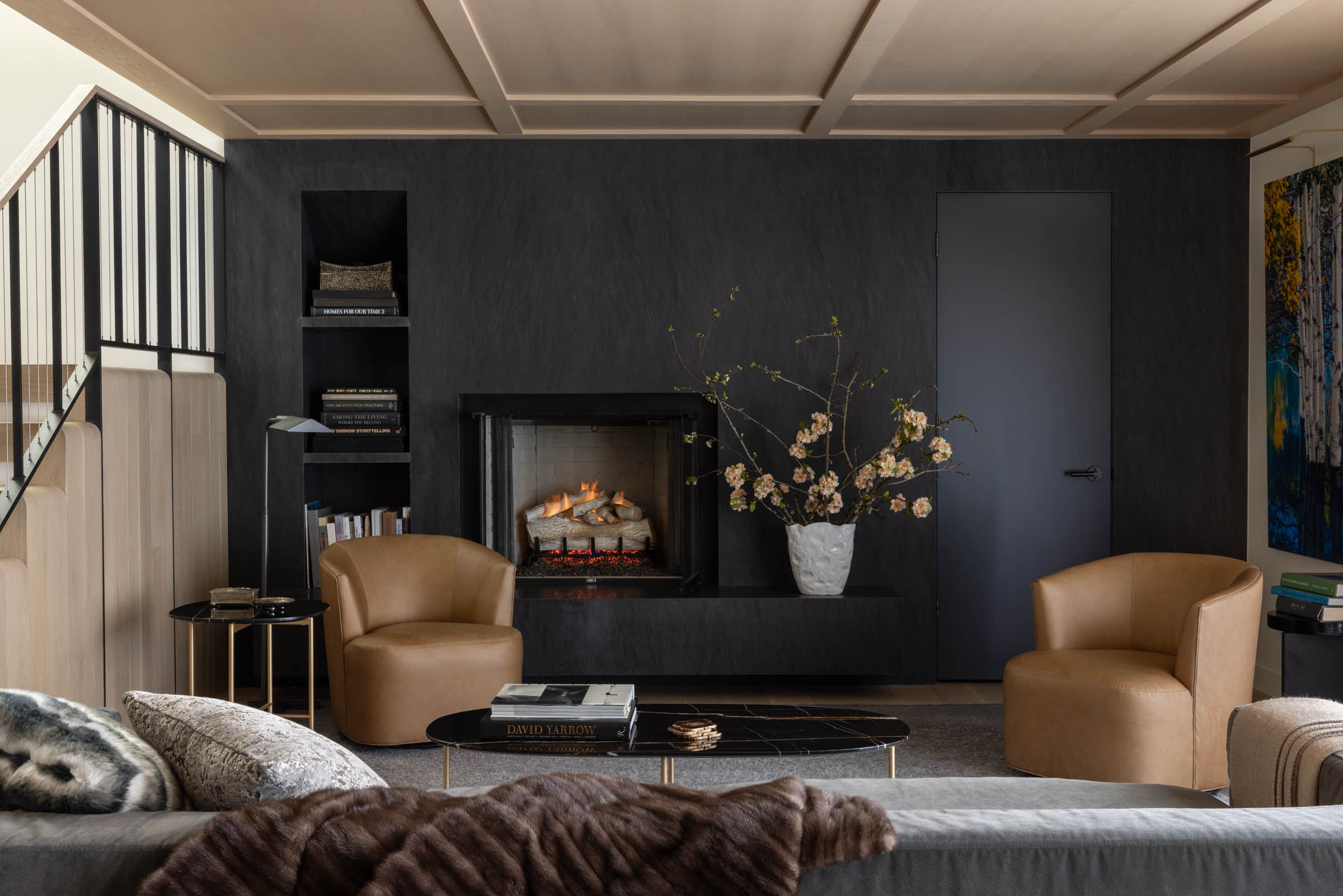
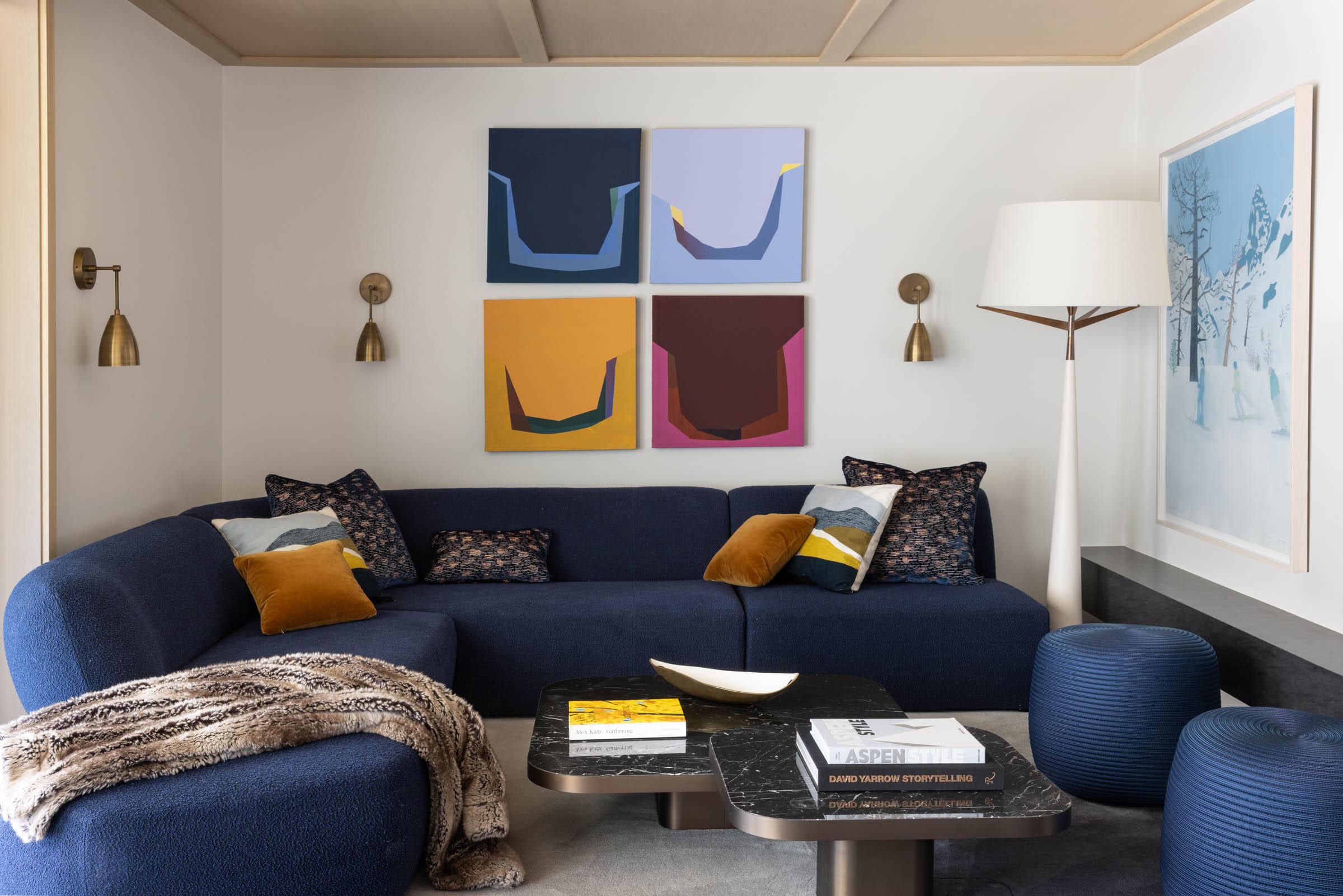
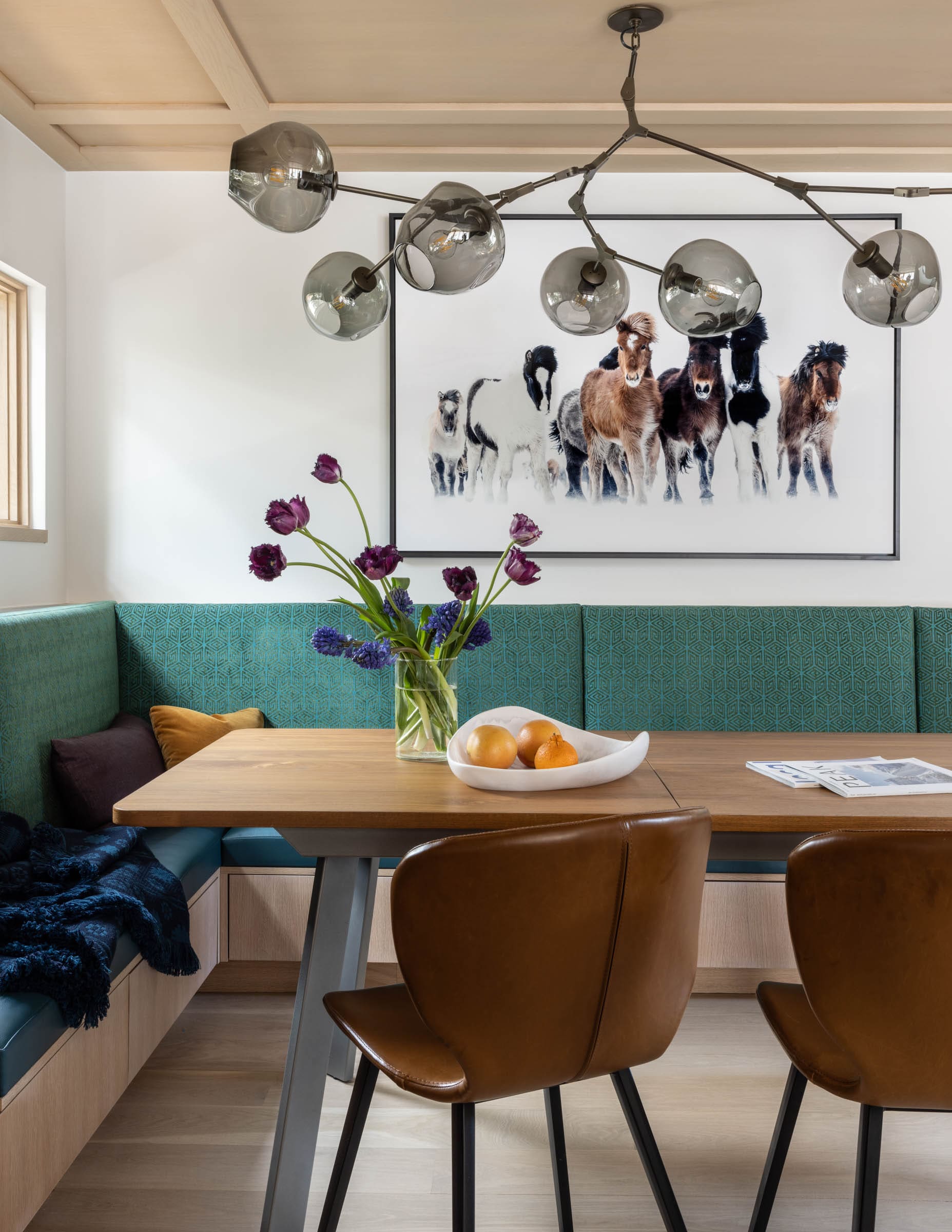
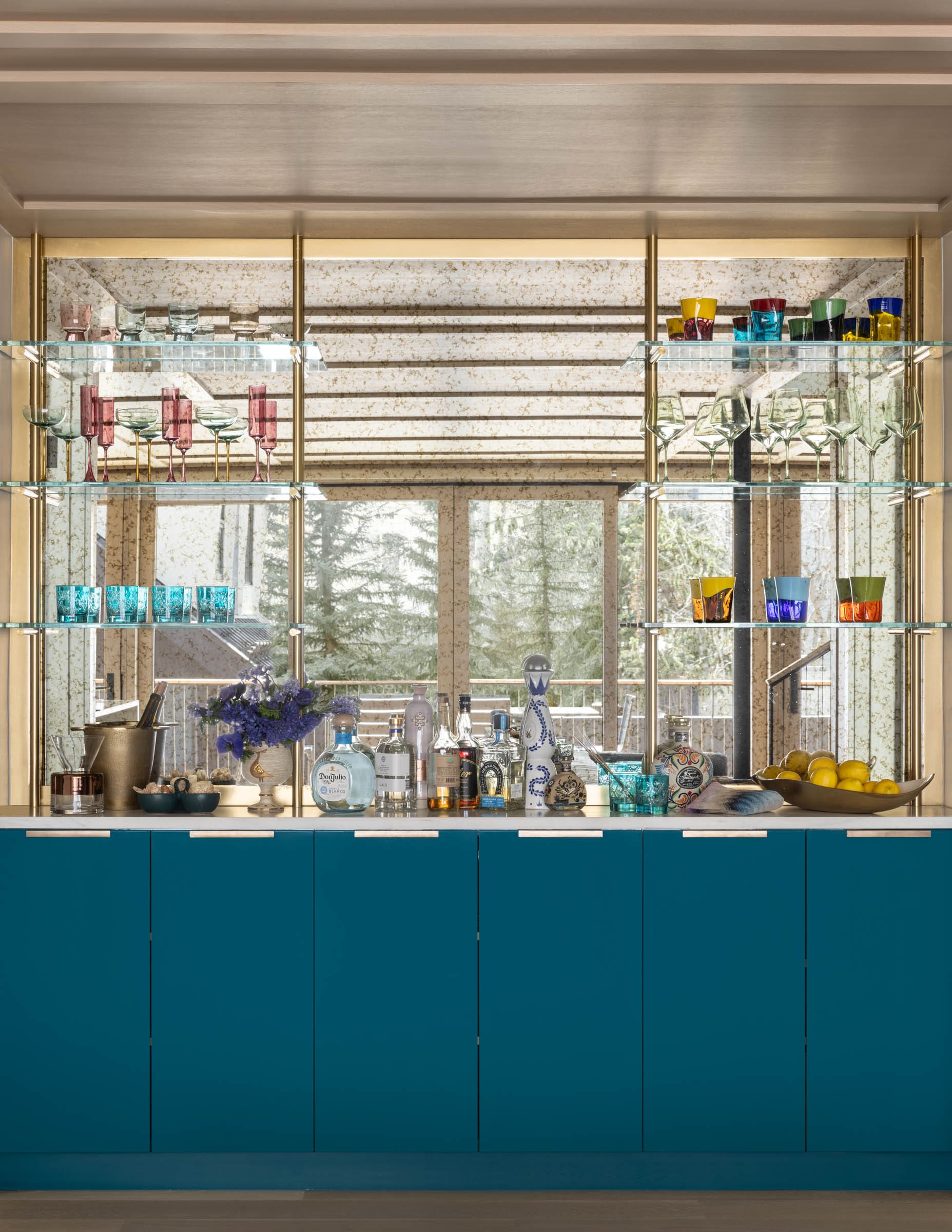
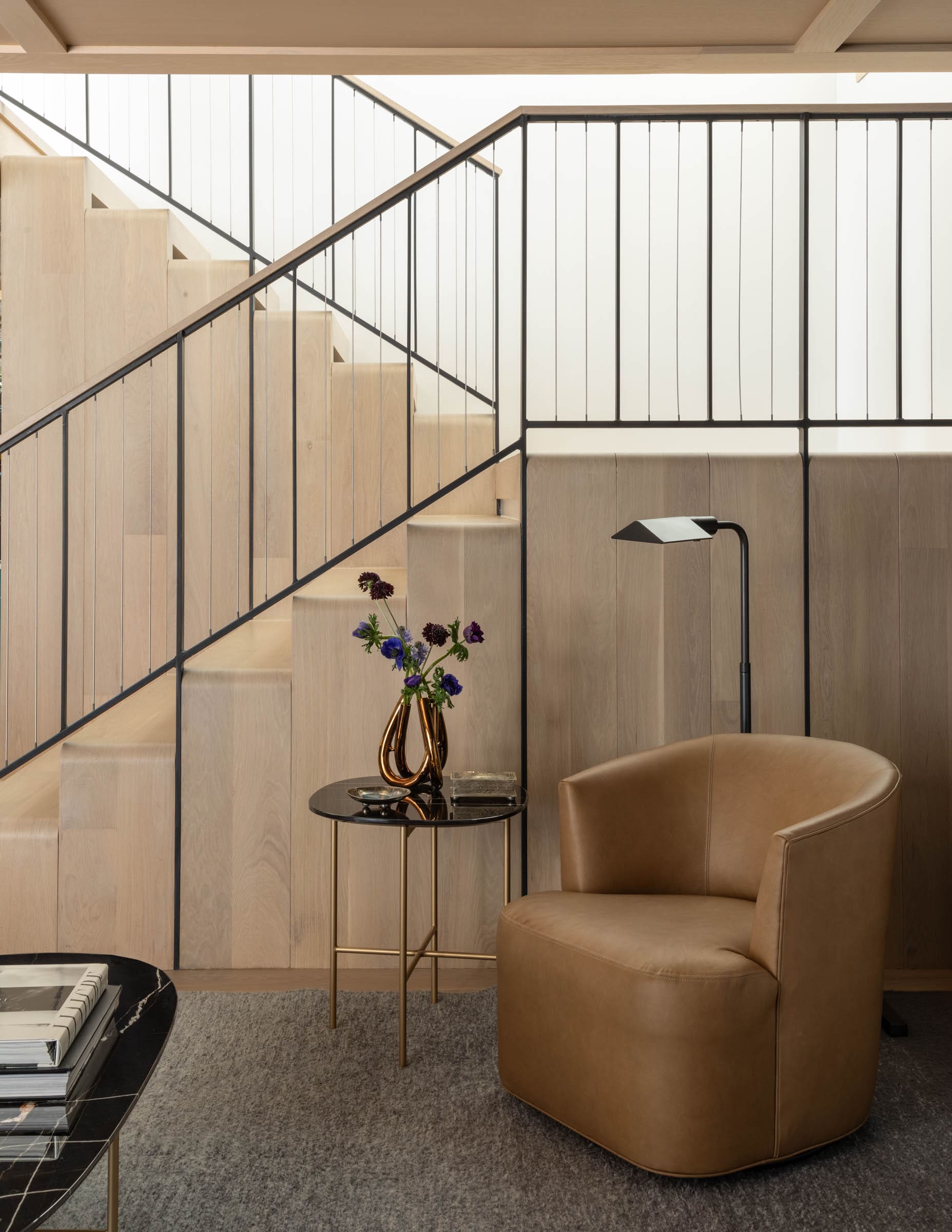
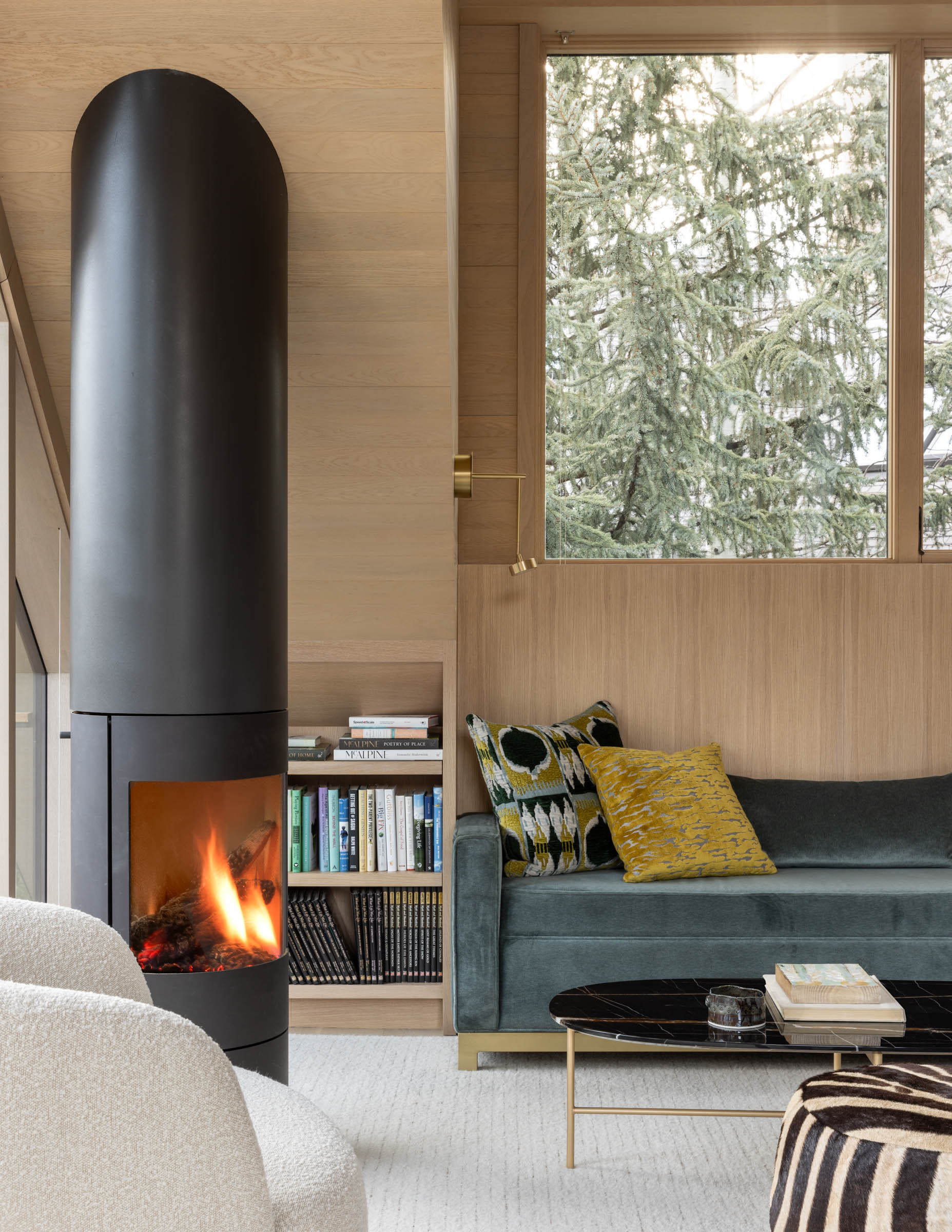
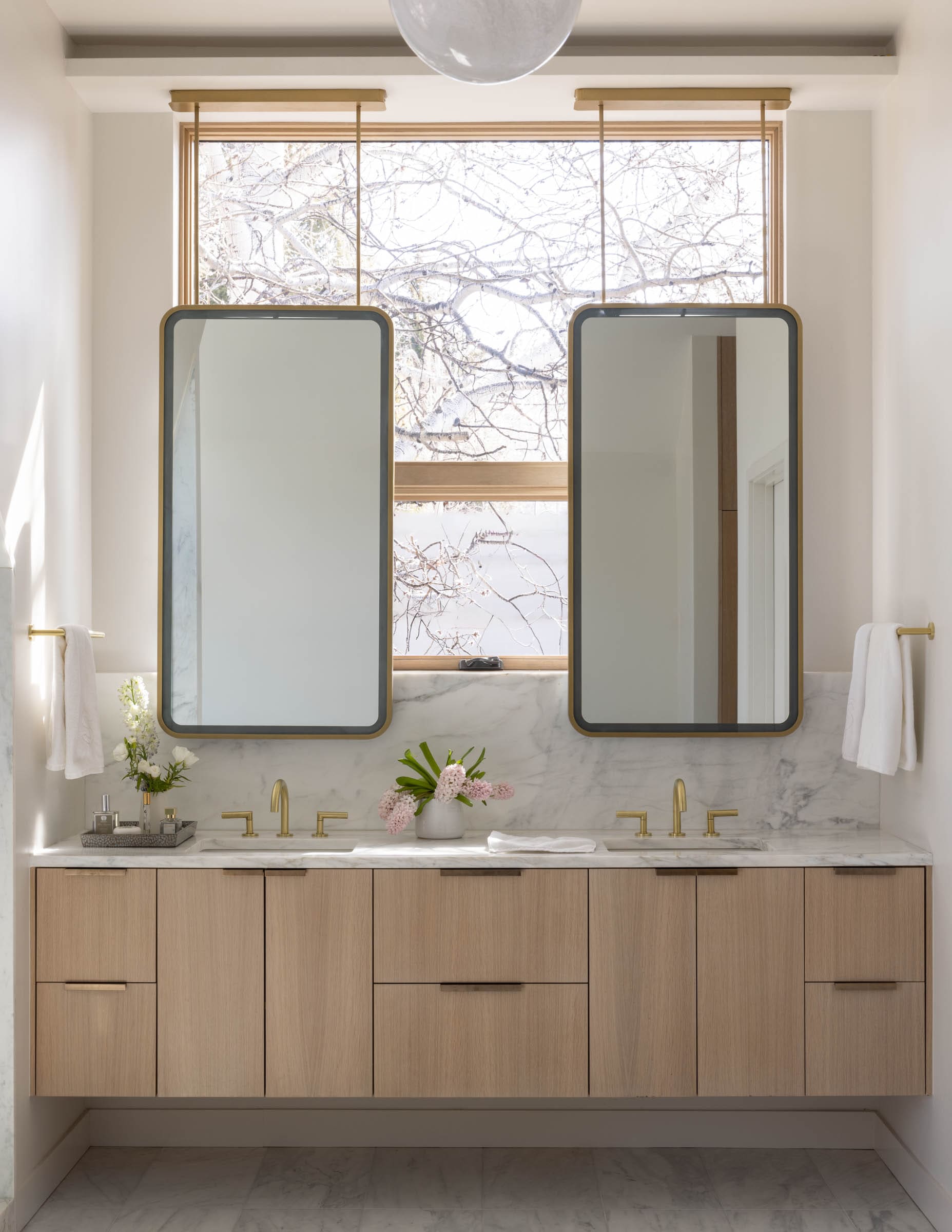
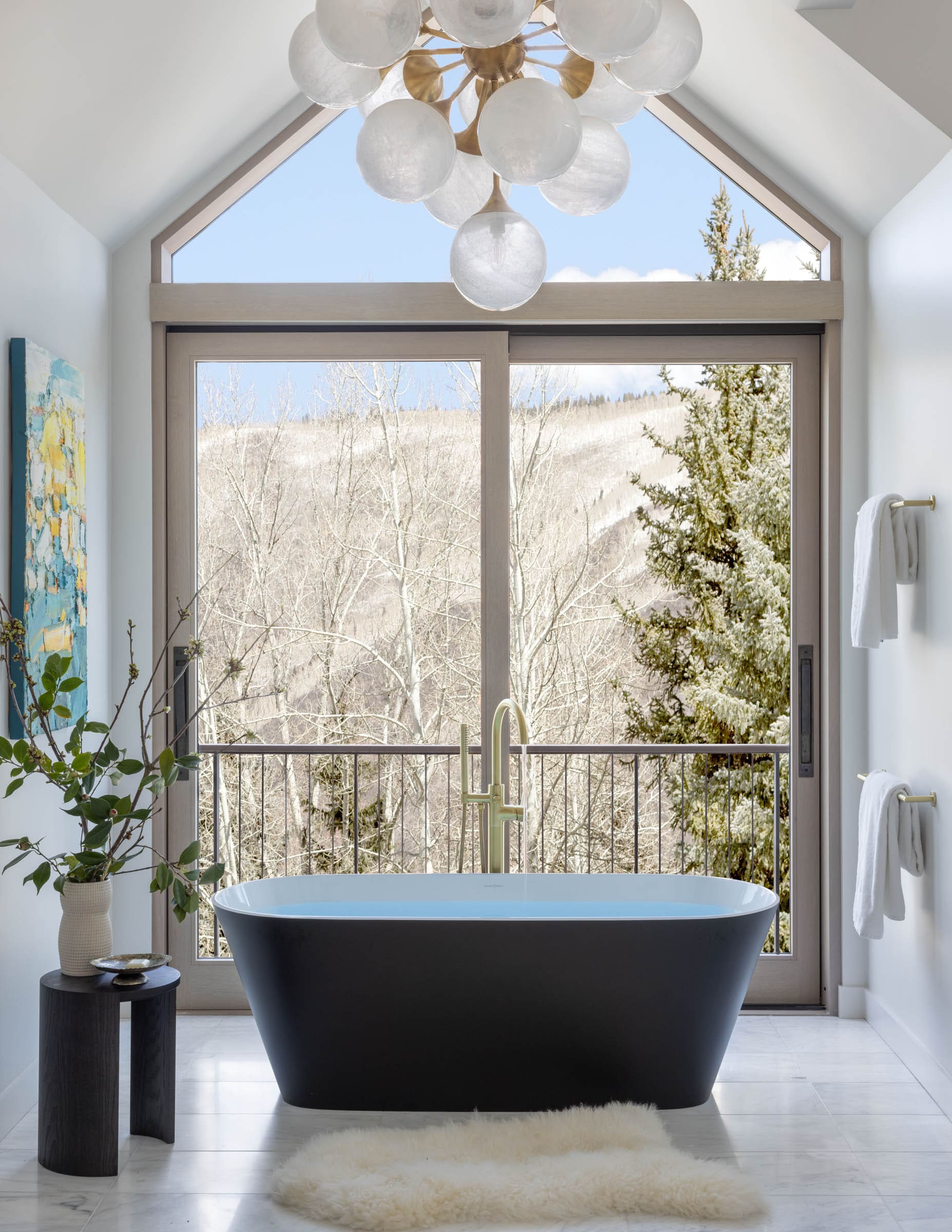
Harkening back to Aspen’s earlier days, this quintessential tri-level mountain chalet is set on a densely treed lot in town’s historic West End neighborhood. Built in the 1960s and reminiscent of classic ski chalets prevalent in the area at the time, the traditional A-frame form both provided contextual character and presented singular design challenges.
Addressing the goal of embracing mountain views to the east and west, formerly thwarted by the structure’s north-south orientation, the design team repurposed and reconfigured underutilized space at the top level. Specially crafted dormers, purposefully placed to redirect views, feature perforated steel detailing that allows for naturally dappled light to be filtered inside. The dormers also enhance the livability of the chalet, allowing the main bedroom and bath to be tucked within the expanded private space.
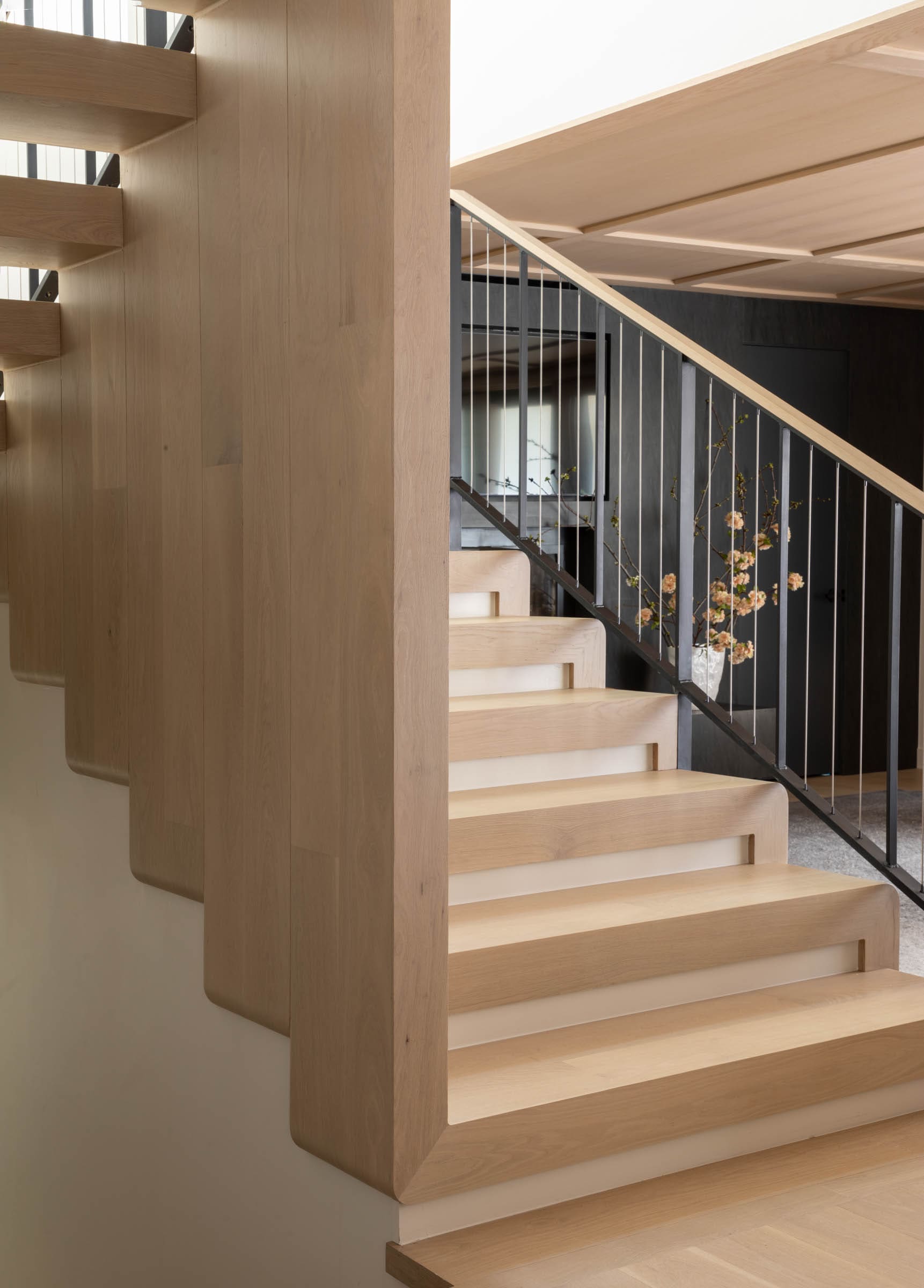
A new open wood stair allows light to circulate throughout the home. In addition to the stair, custom detailing on elements such as wood ceilings give a nod to the vernacular of earlier ski chalets, while introducing a more modern aesthetic.
Connected to the house by a bridge at mid-level, a secondary structure on the site functions as a garage and provides office/yoga studio space. Exterior materials for both structures include dark vertical siding. Flat and standing seam metal roofing (with an intentionally lighter color at the dormers) allow the structure to recede into the surrounding trees. Outdoor spaces, including a deck off the upper bedroom and a sunken garden, allow additional light to flow into the home and encourage an indoor-outdoor lifestyle.
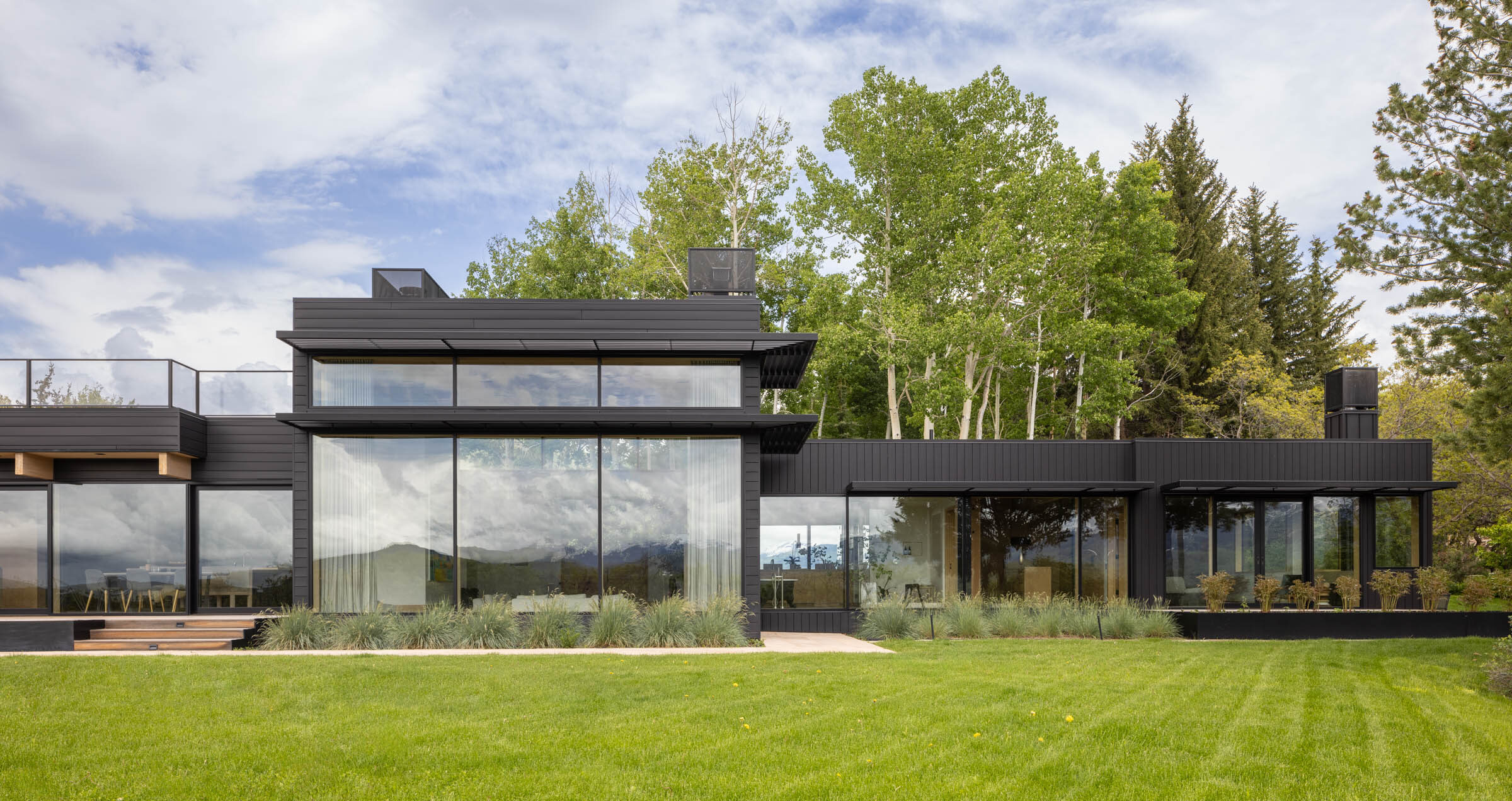
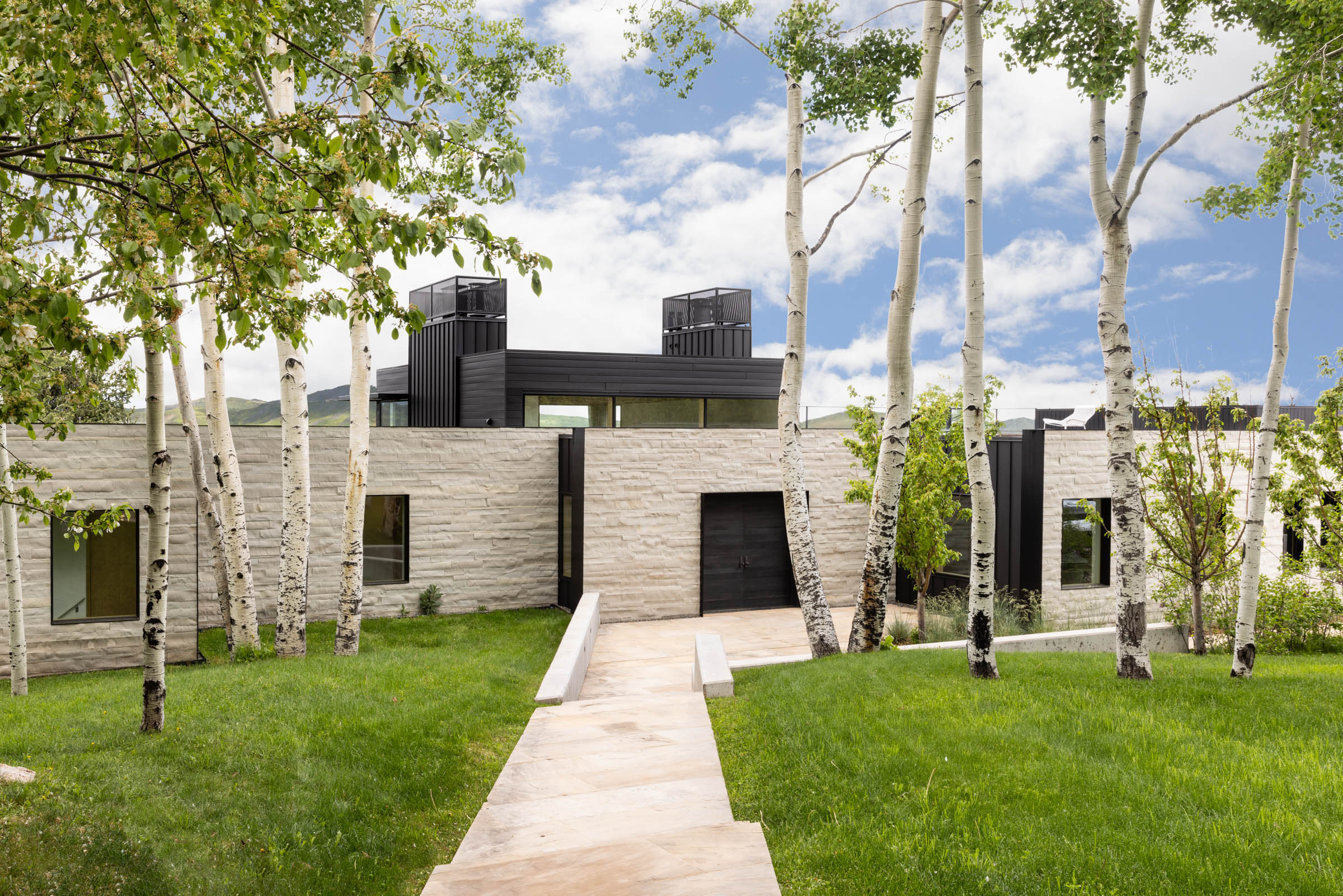
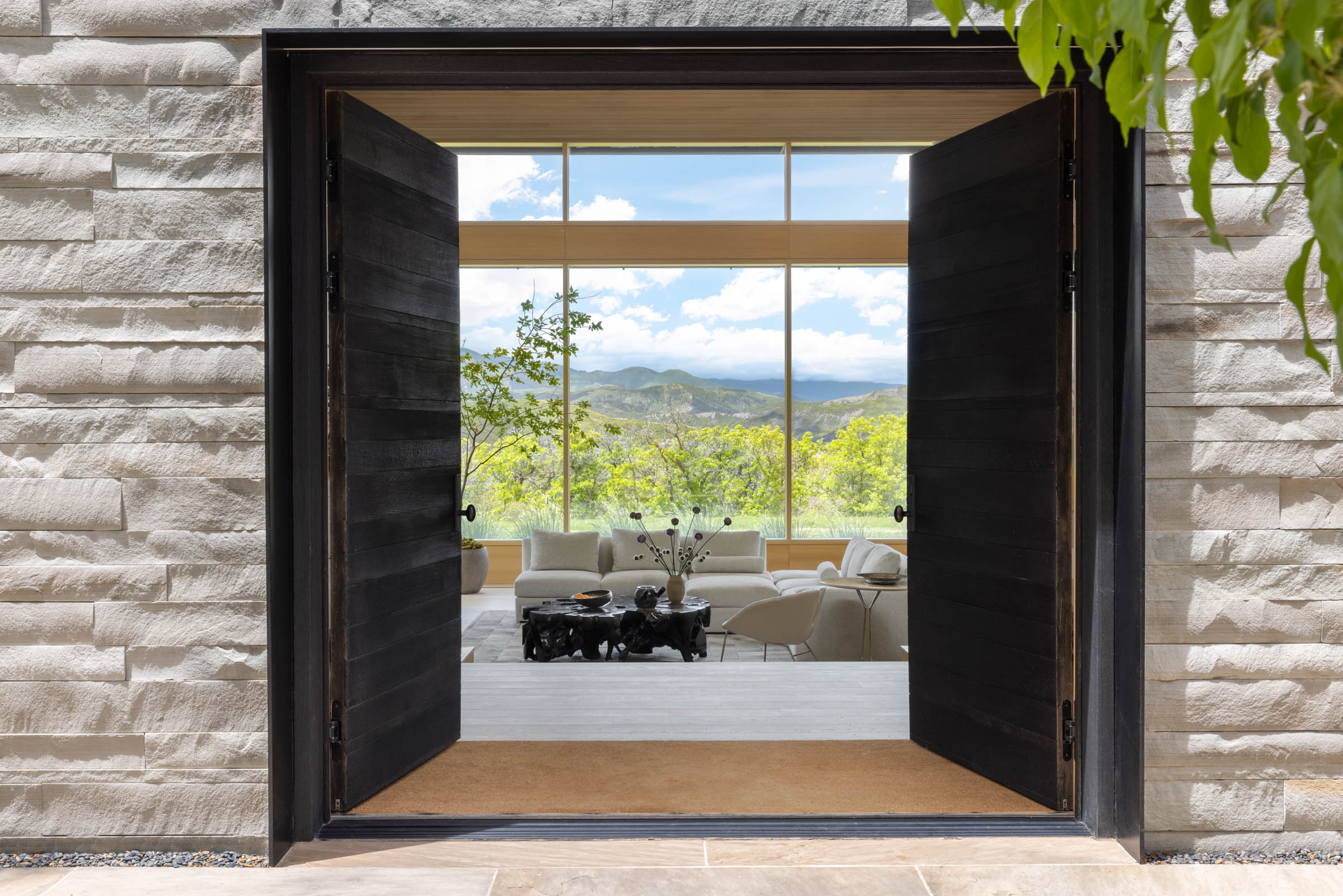
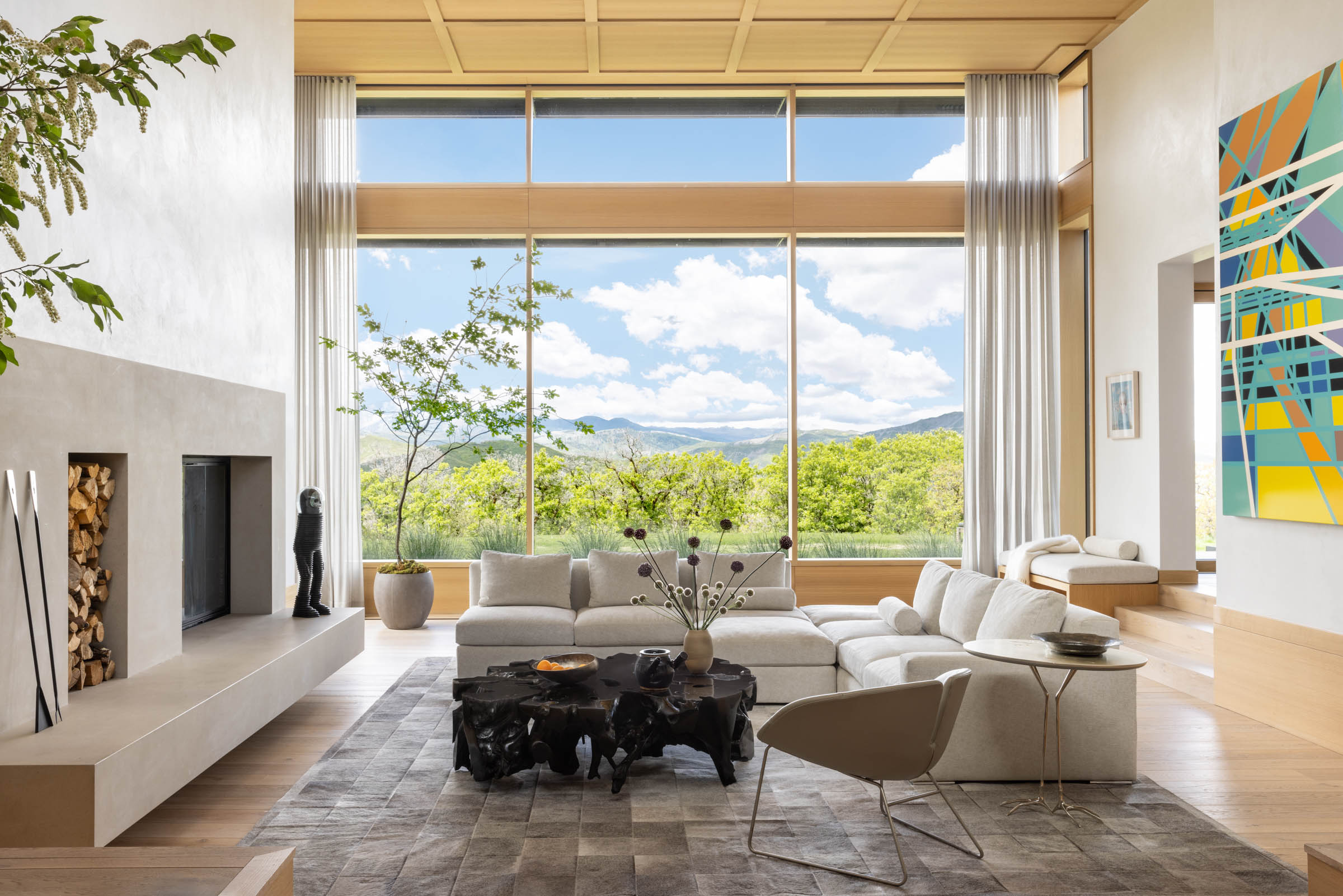
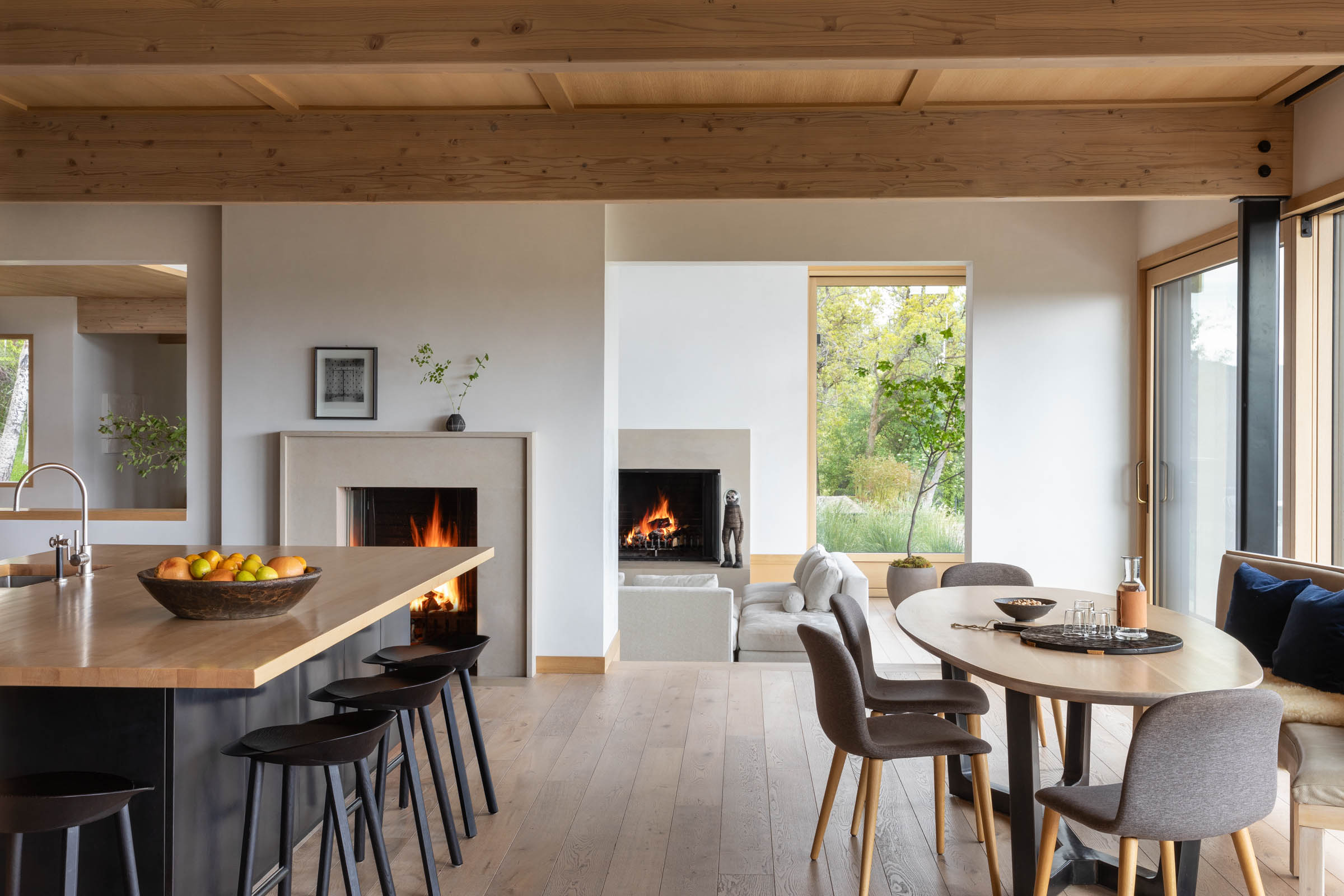
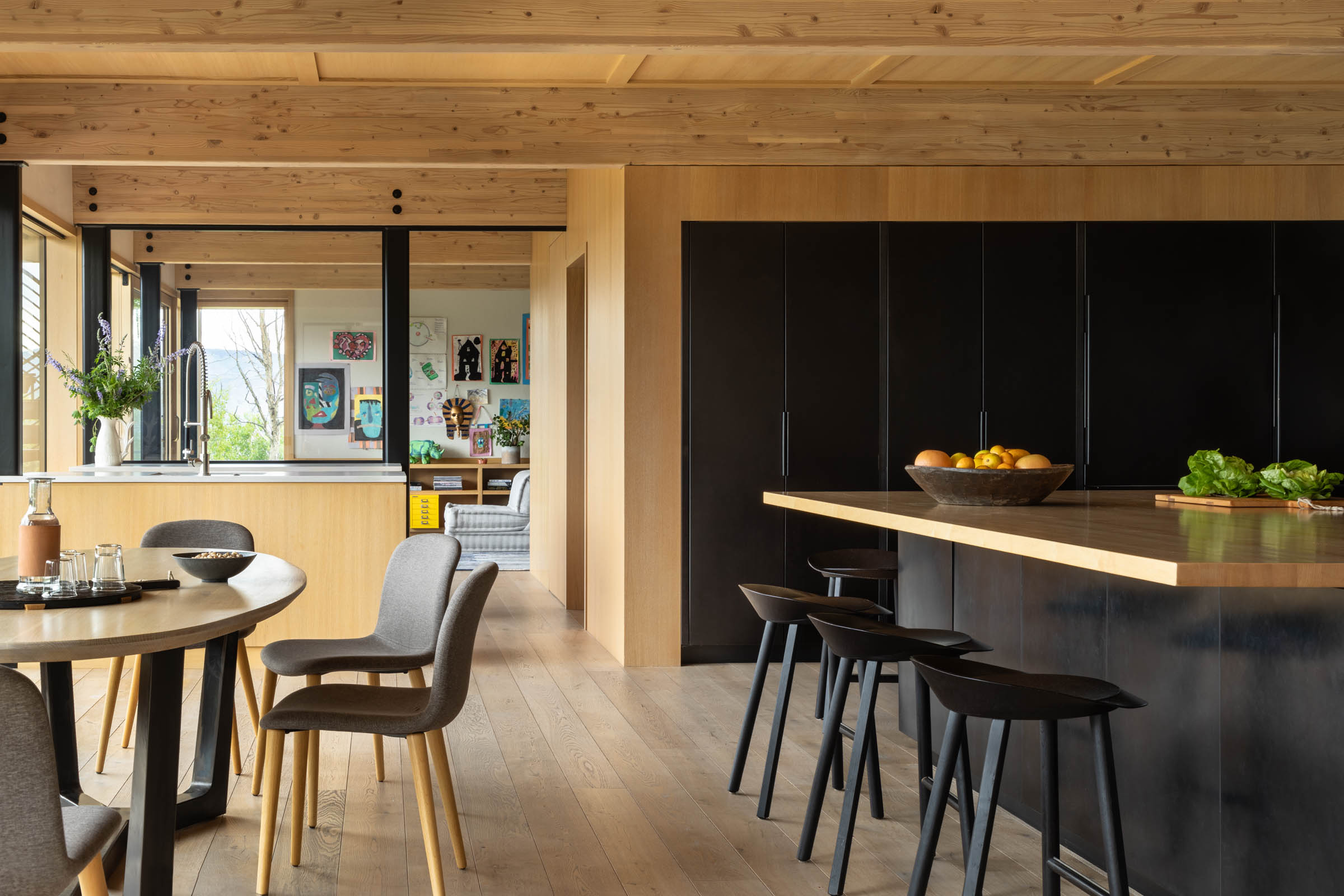
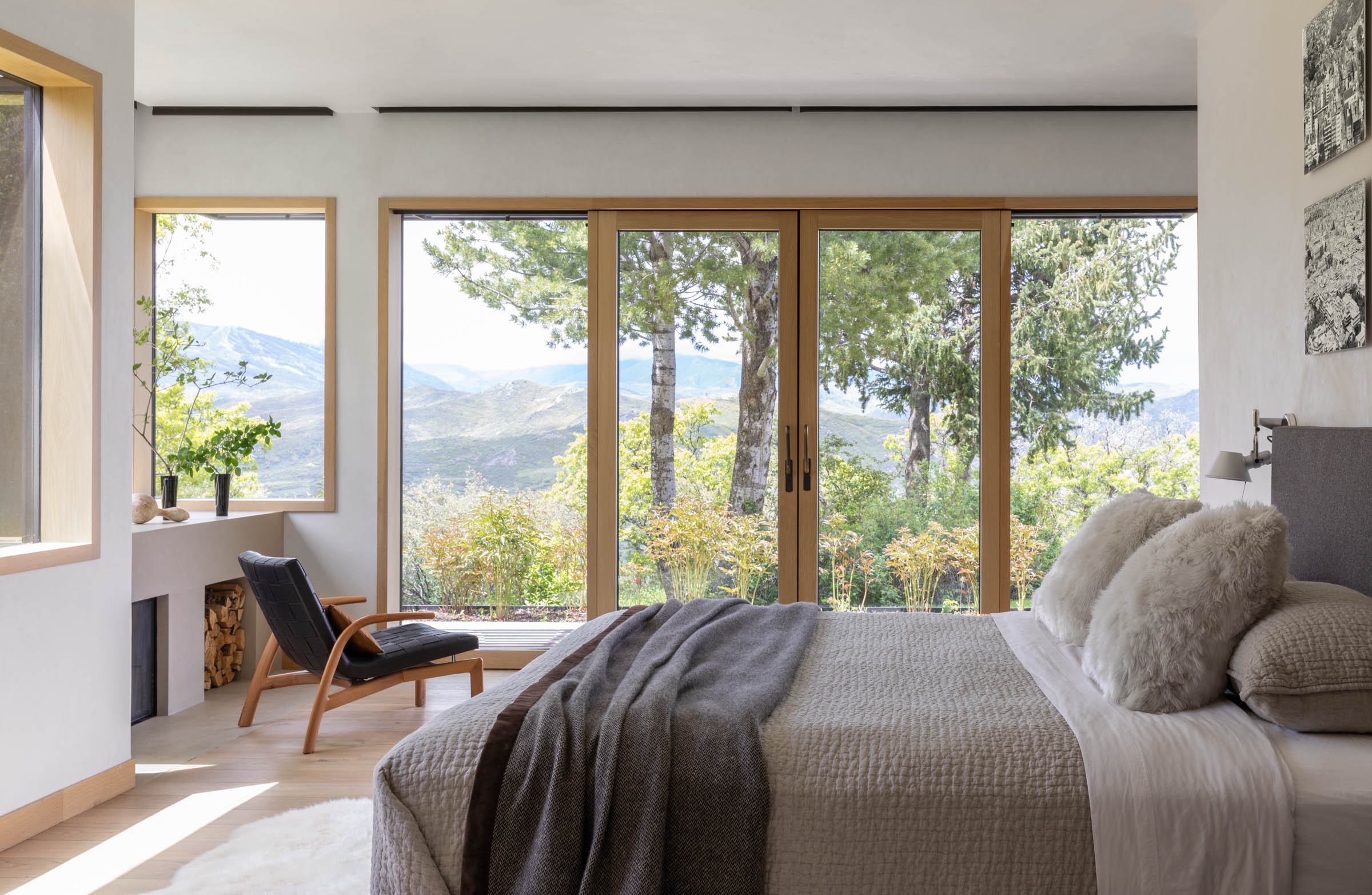
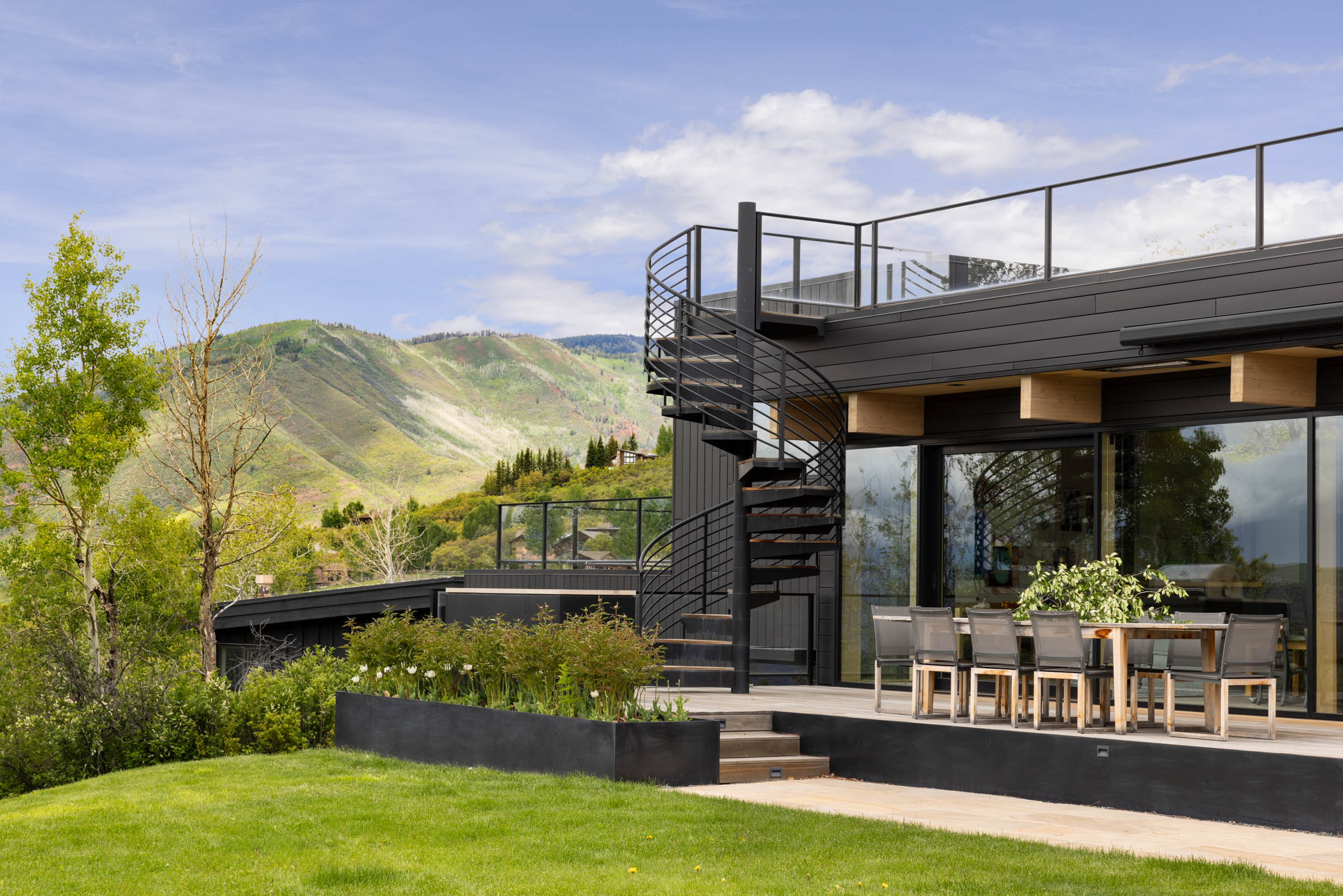
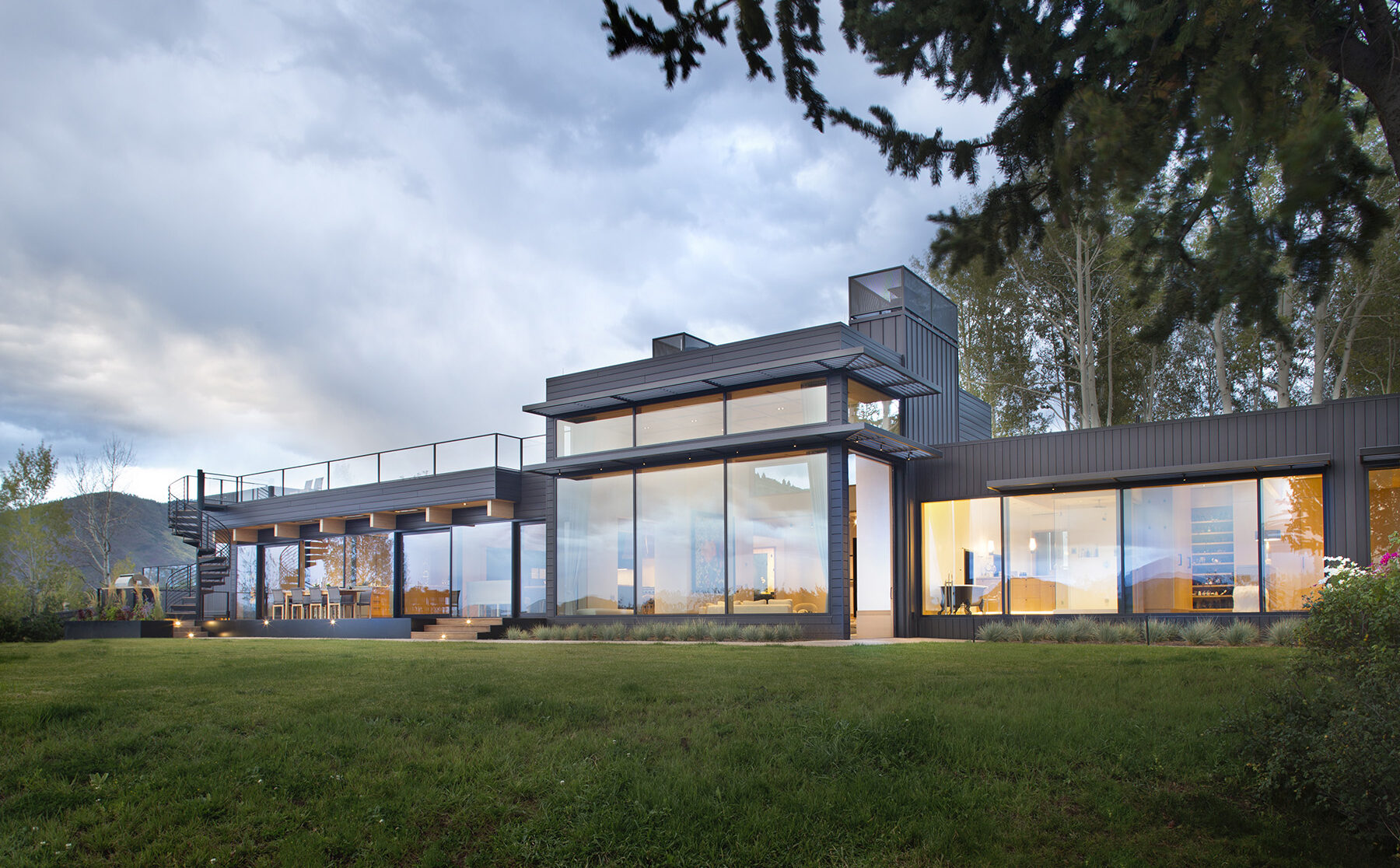
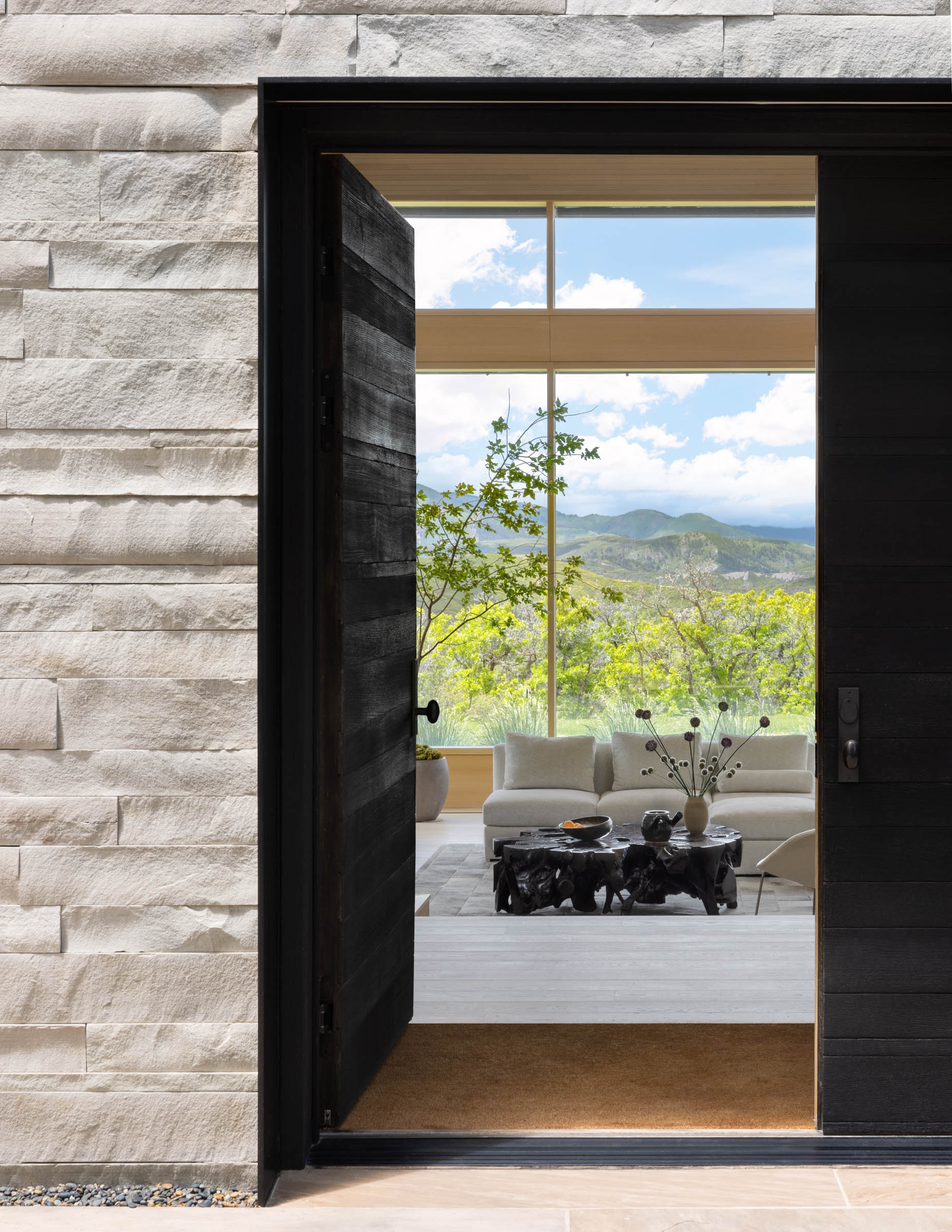
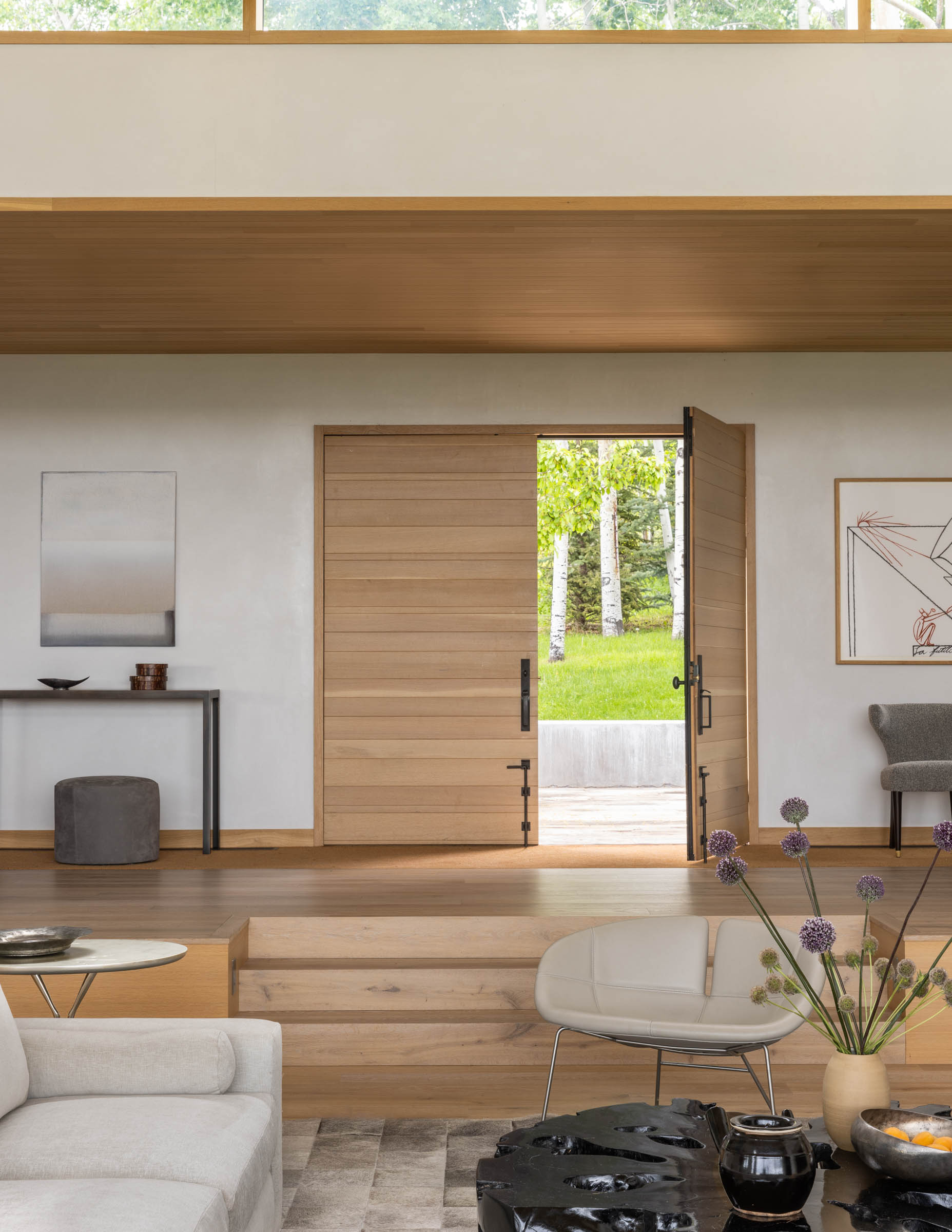
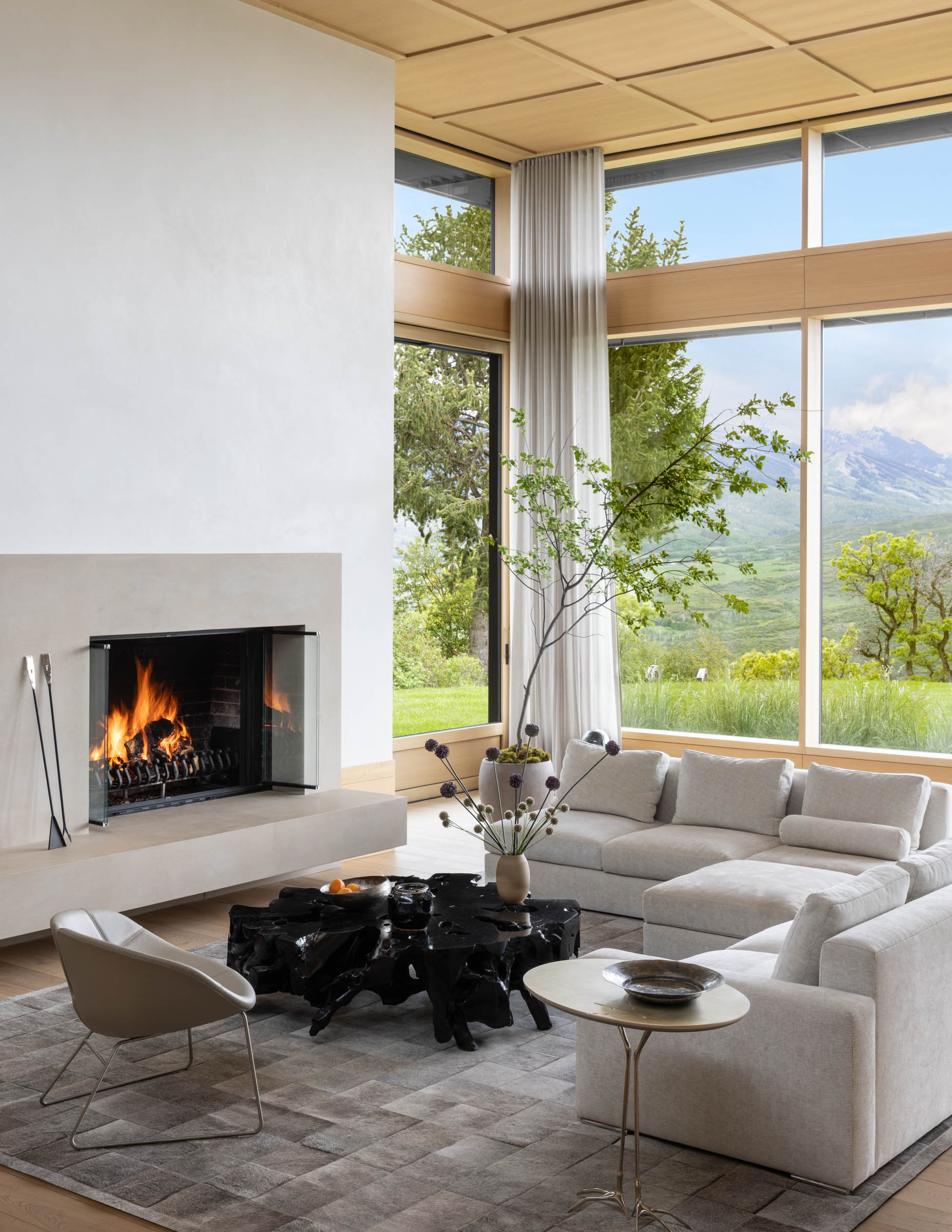
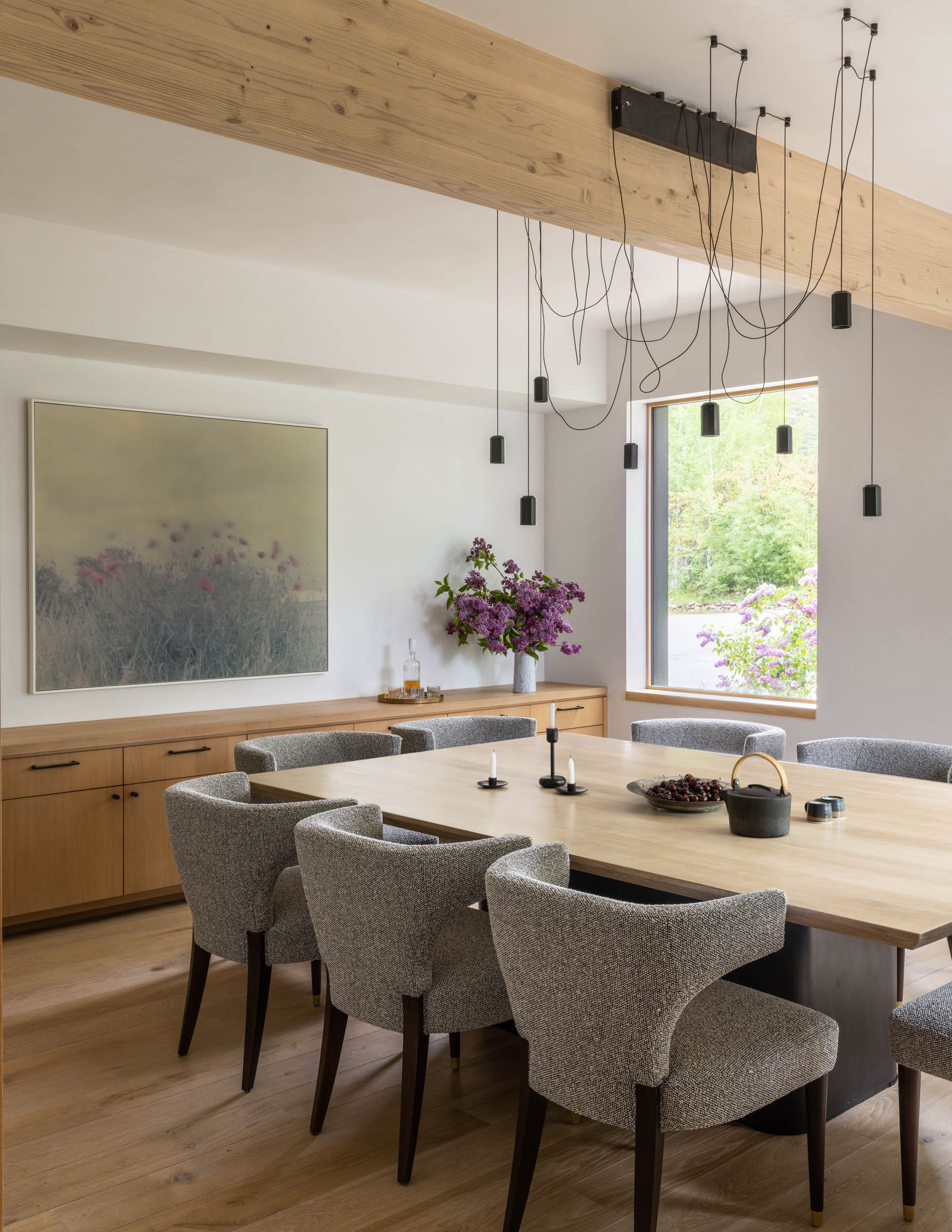
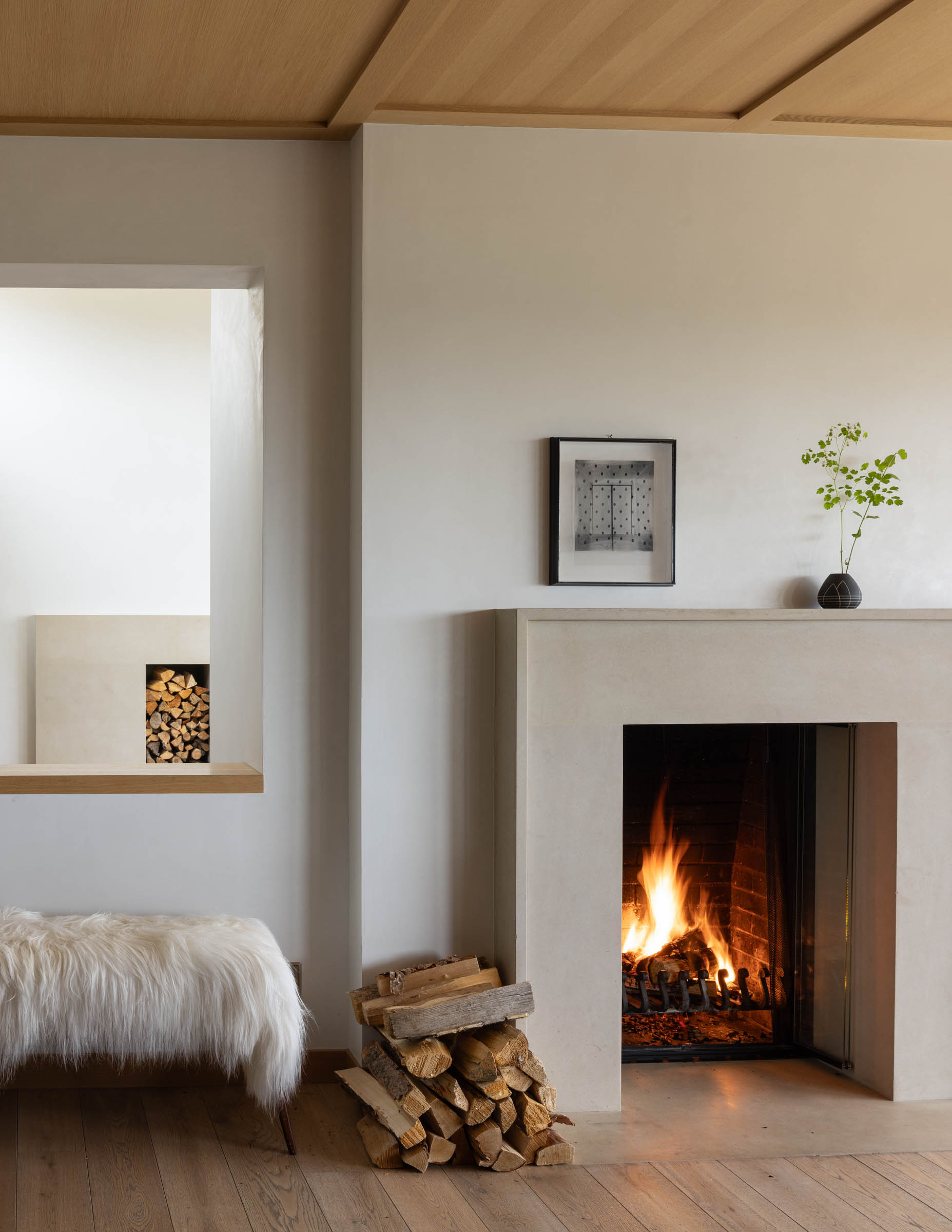
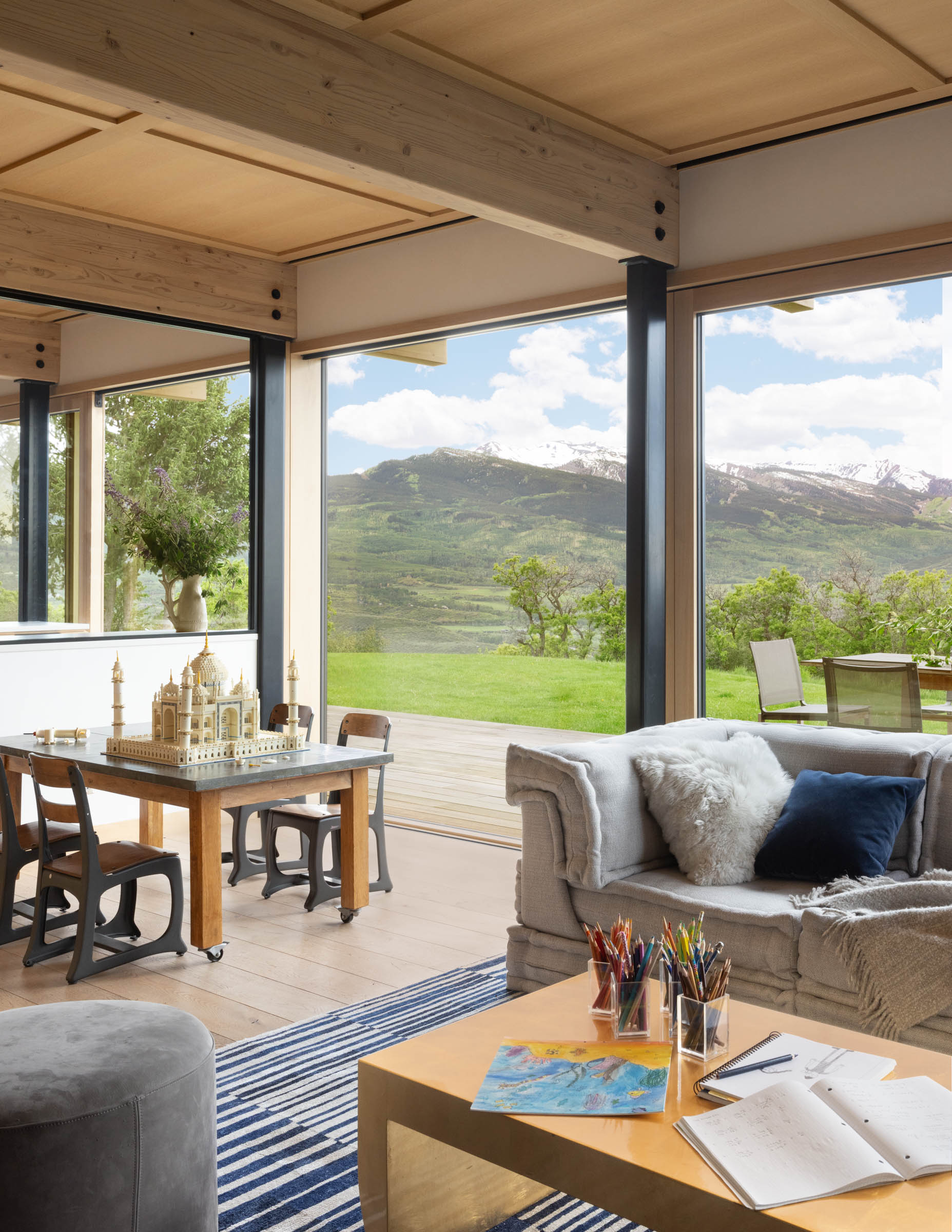
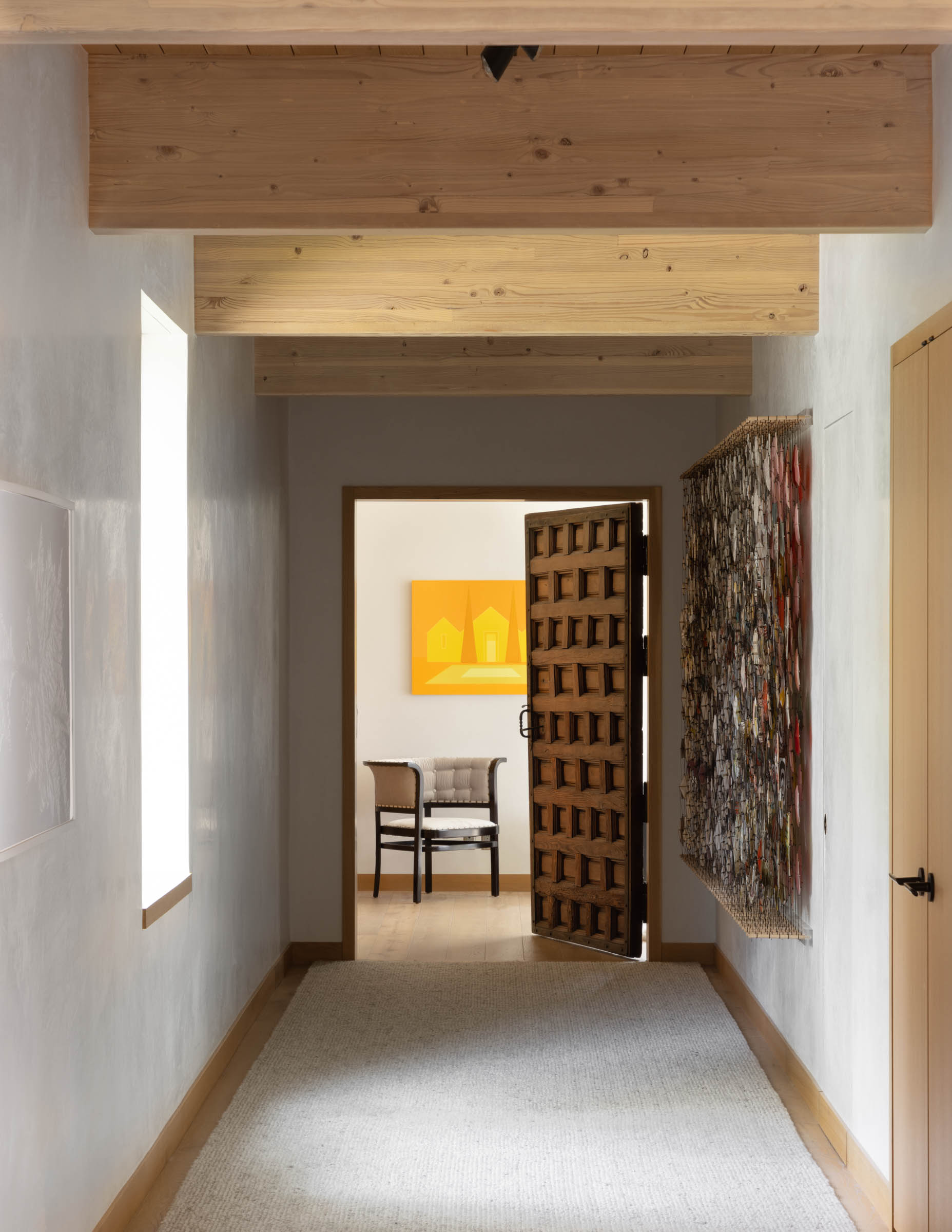
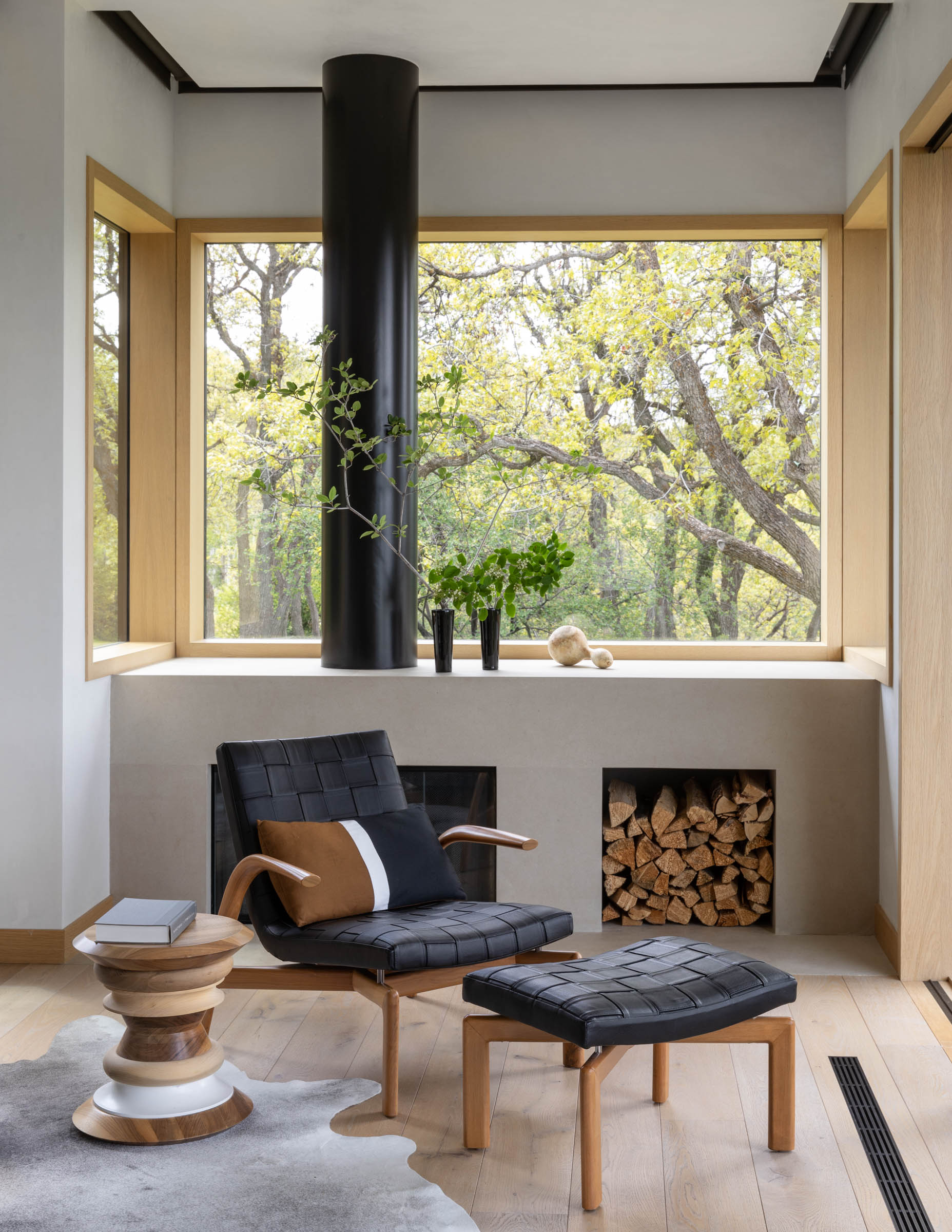
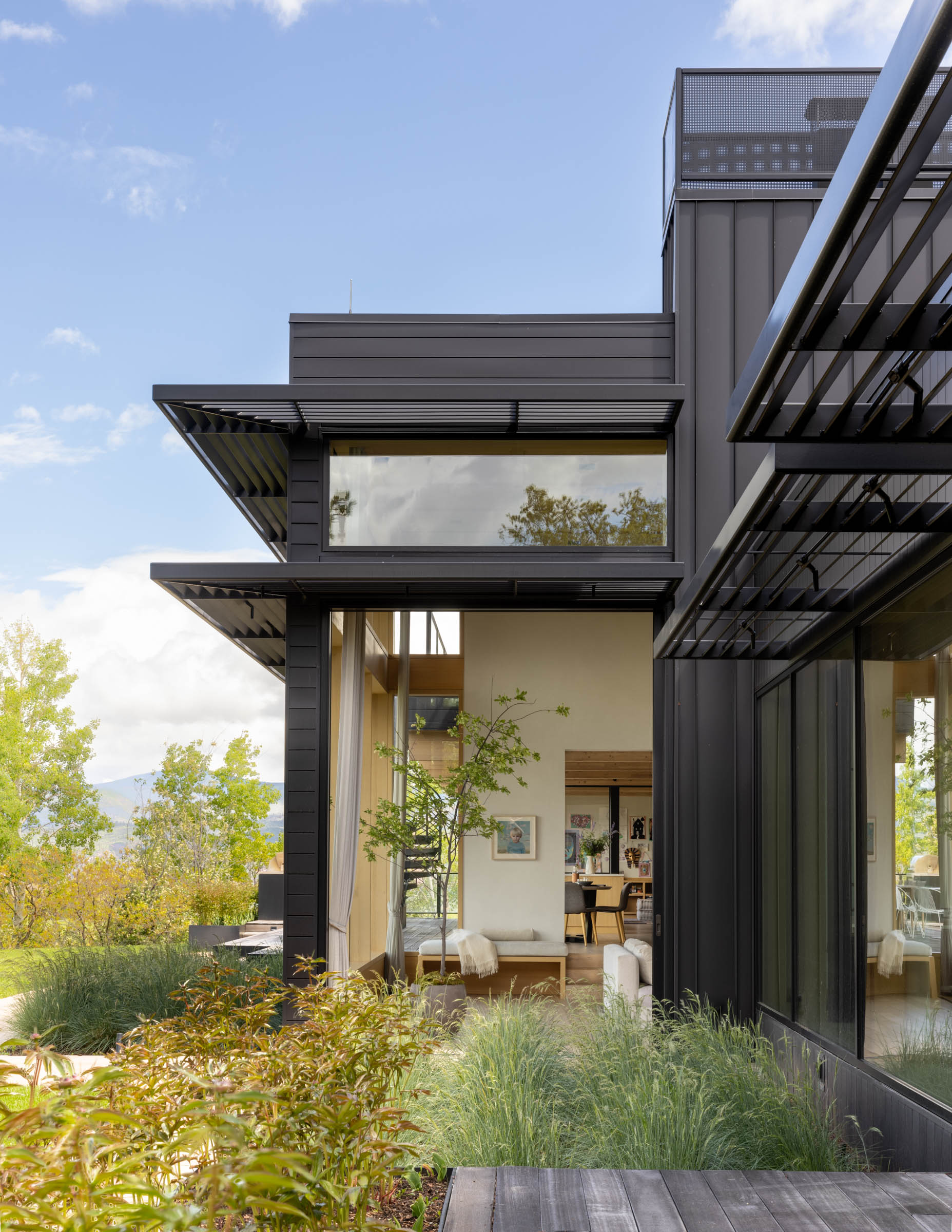
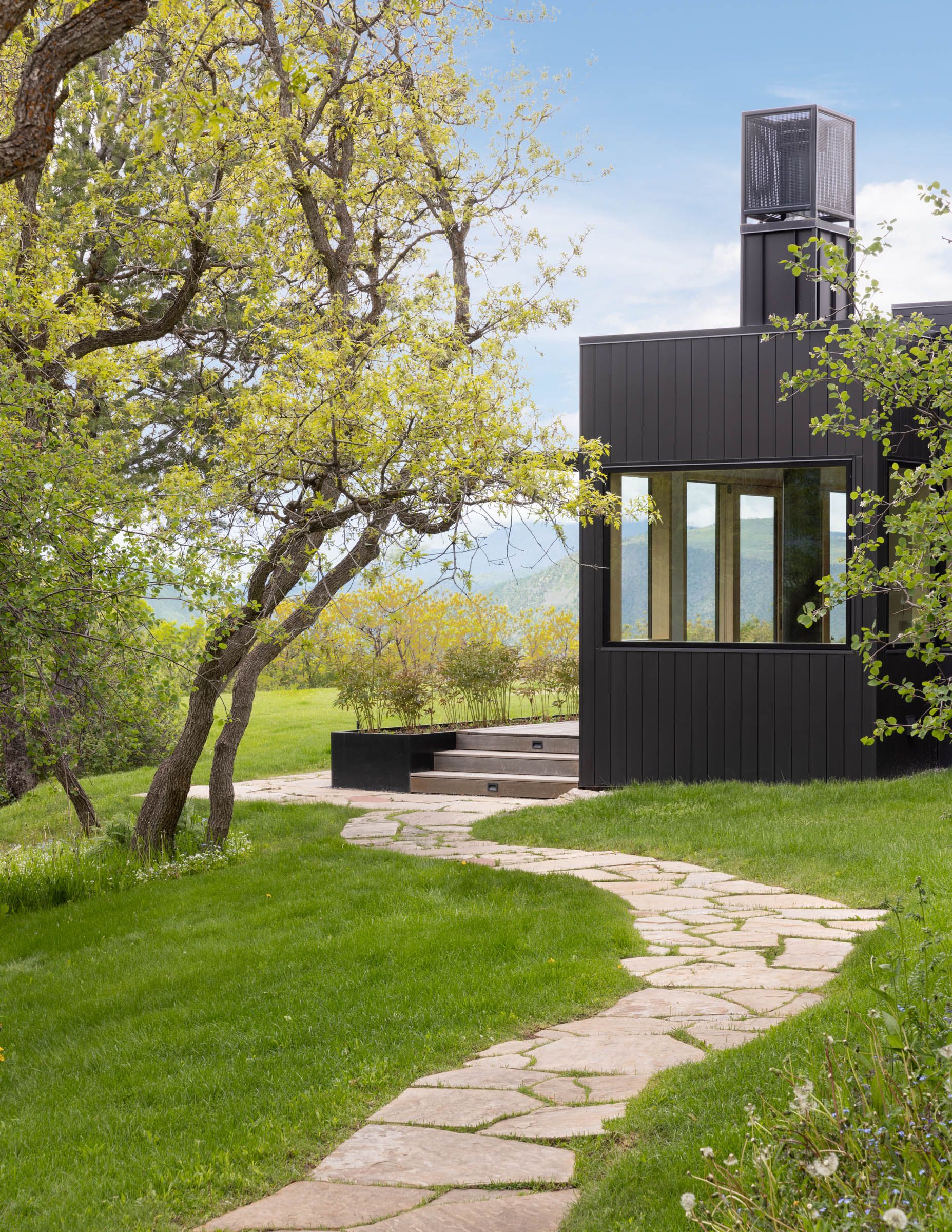
Ridge House began life in the 1960s, as the Aspen residence of the Norwegian-born Olympic gold medalist Stein Eriksen, and was designed by Ellie Brickham, the town’s first practicing female architect; the house sits on some 35 unspoiled acres (one of a compound of R+B-designed buildings) and overlooks all four ski mountains. The architects, as committed preservationists, understood the significance of Brickham’s Aspen Modern design, yet the structure was deteriorating and no longer conformed to local building codes. Consequently, R+B’s solutions preserved the spirit, if not the letter, of the original.
The entry façade, comprised of ‘found’ cut-stone walls, combines the region’s building traditions with a modernist sensibility. The obverse – the western, view-facing façade – does precisely the opposite: fully glazed with full-height doors and windows, it showcases the remarkable view in its entirety.
Within, R+B transformed what had been Brickham’s organizing hallway into a 126-foot-long, eight-foot-wide, end-to-end north-south axis that constitutes, for all of the architecture’s neo-Scandinavian modesty, a celebratory event that feels almost palatial. Entering through the front door, one is greeted by a sunken double-height living room, which conveys both a midcentury swank and the grandeur of the west; the primary suite occupies the entirety of the structure to the south; the living, dining, and media rooms, and the kitchen/breakfast area, sit in the center; and the children’s zone, with craft and game rooms, lies to the north.
Though utterly transformed, Ridge House retains the alternation between opacity and transparency that had been the original’s essence, remains nearly within the preexisting footprint, and maintains the former house’s four wood-burning fireplaces, which, as they predated the current code, were allowed to remain. Thus did R+B preserve the presiding spirit of the past within the pristine precincts of the new.
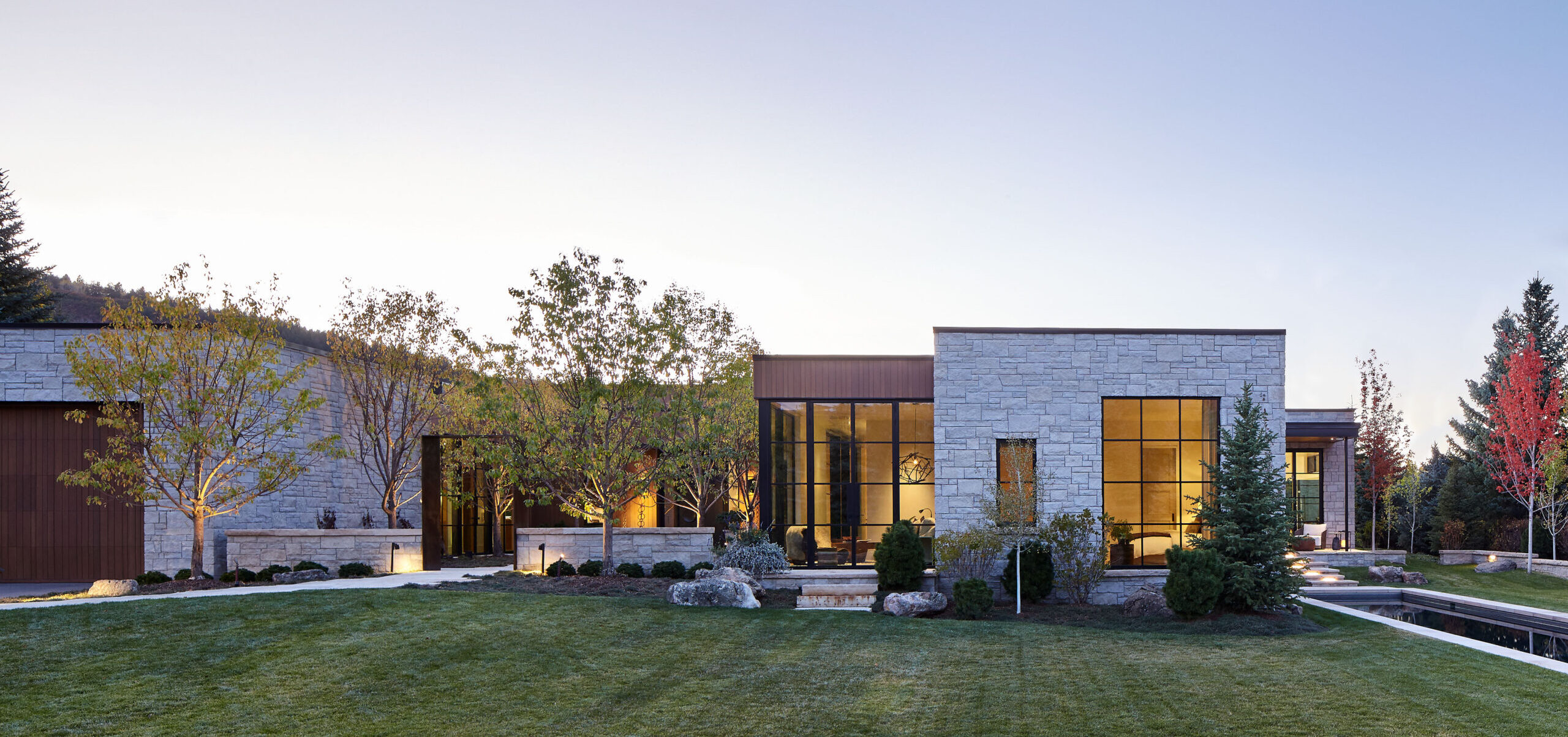
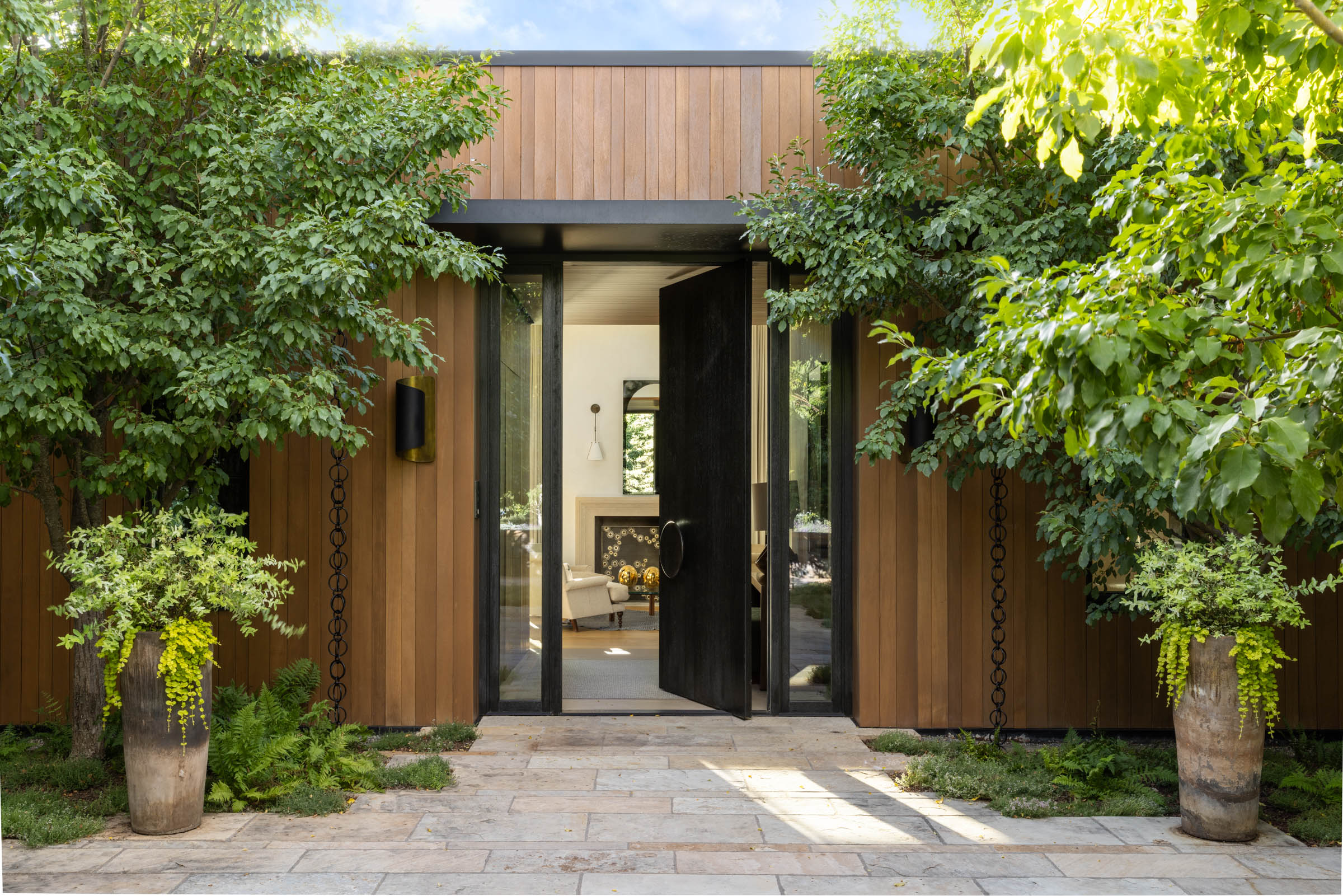
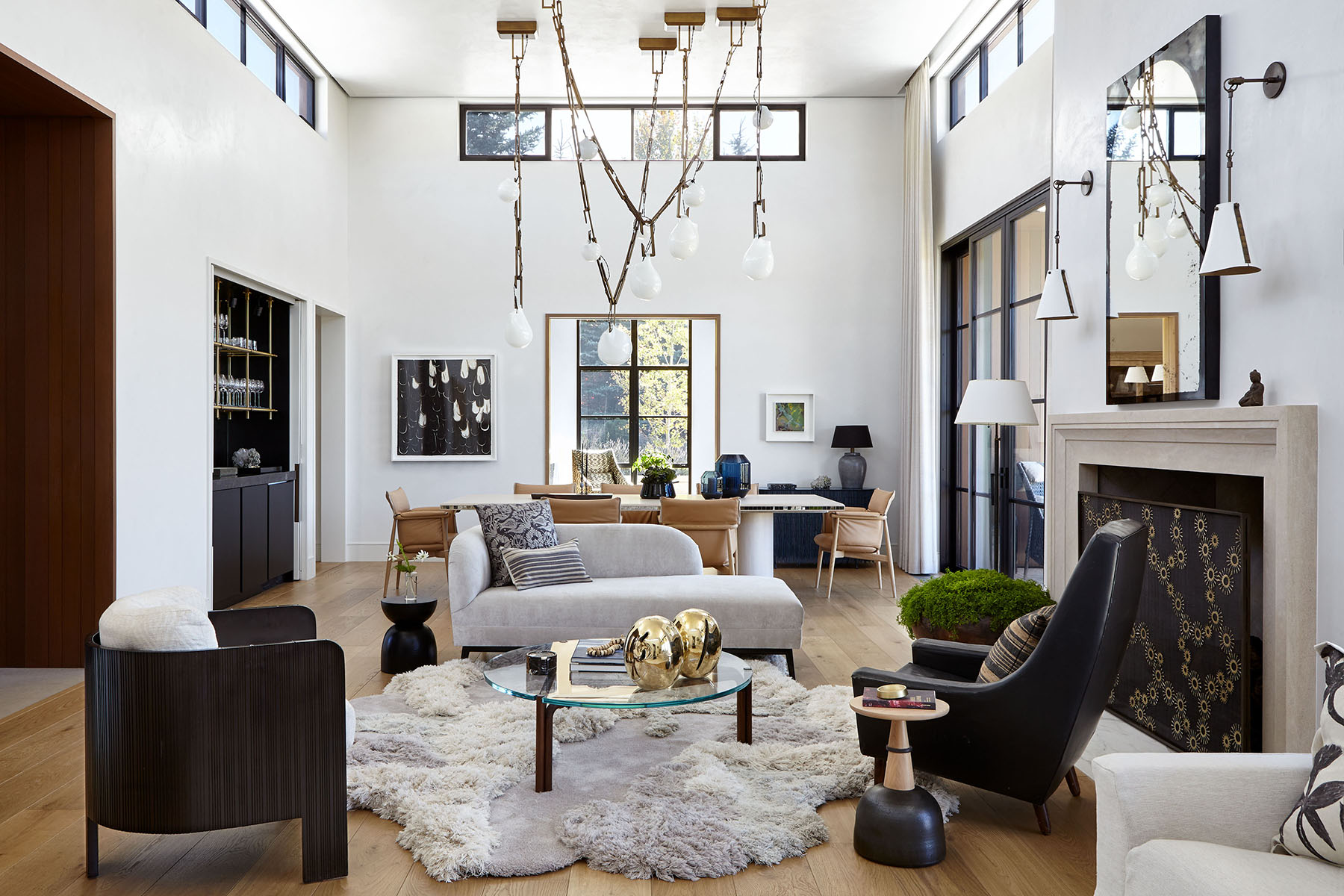
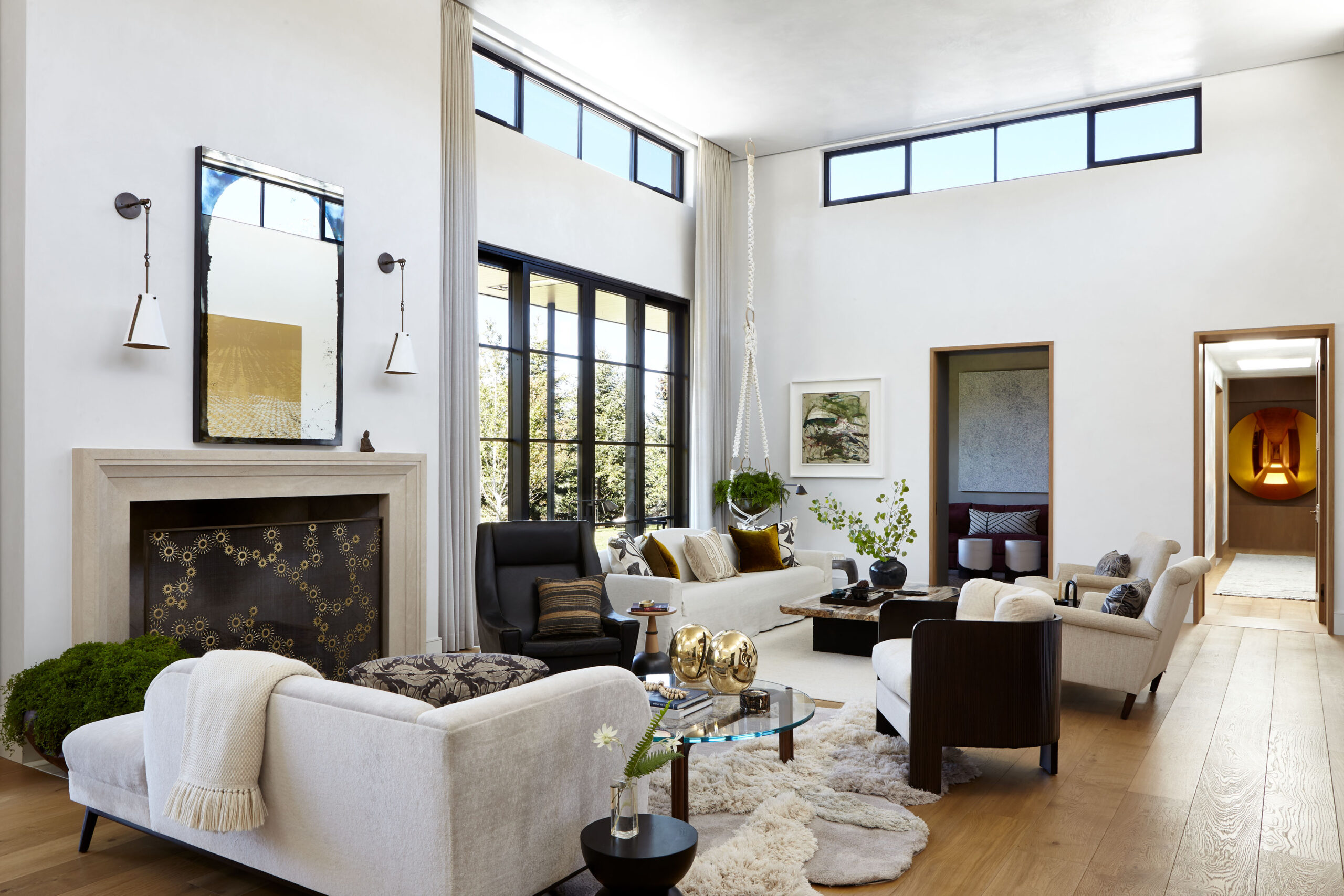
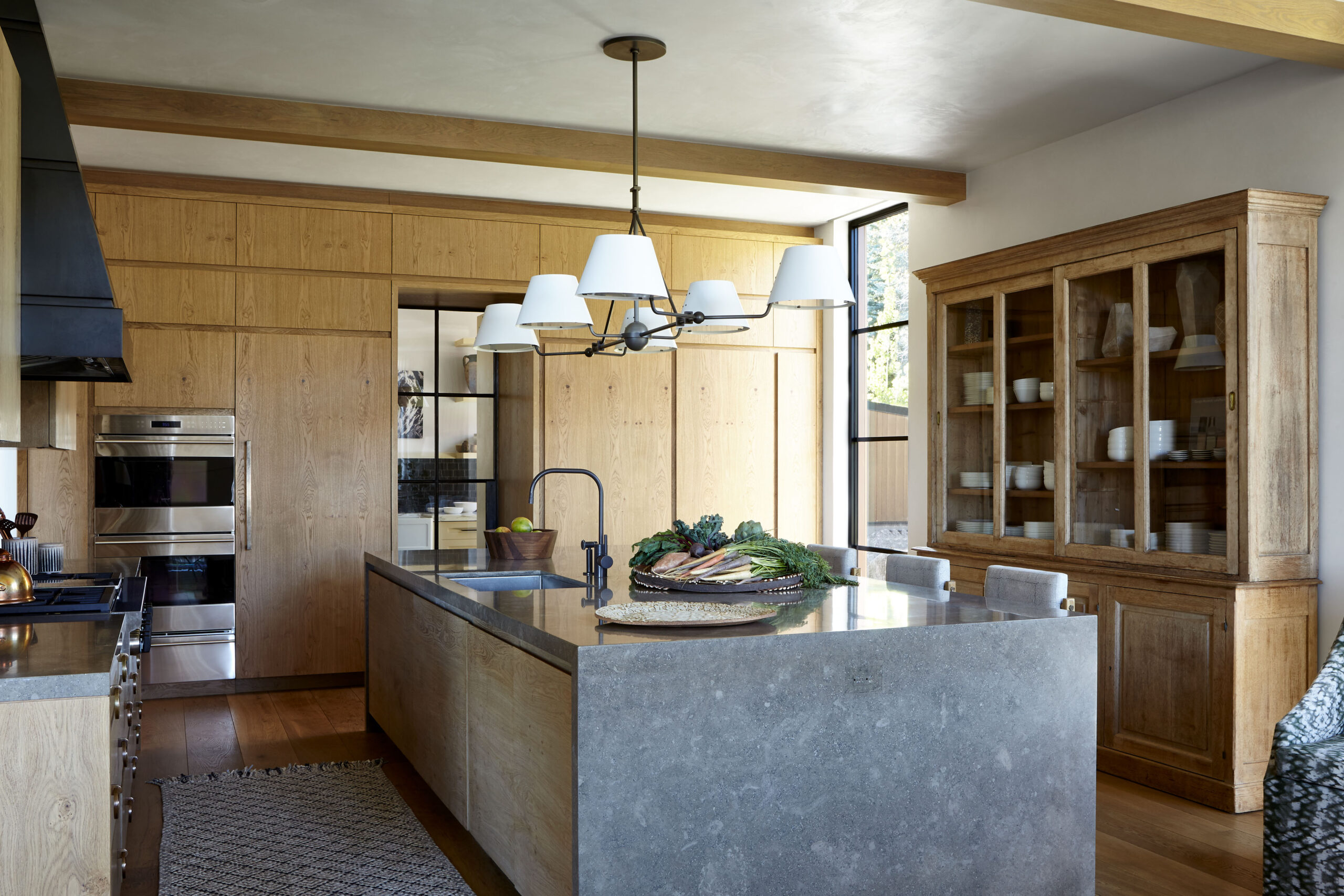
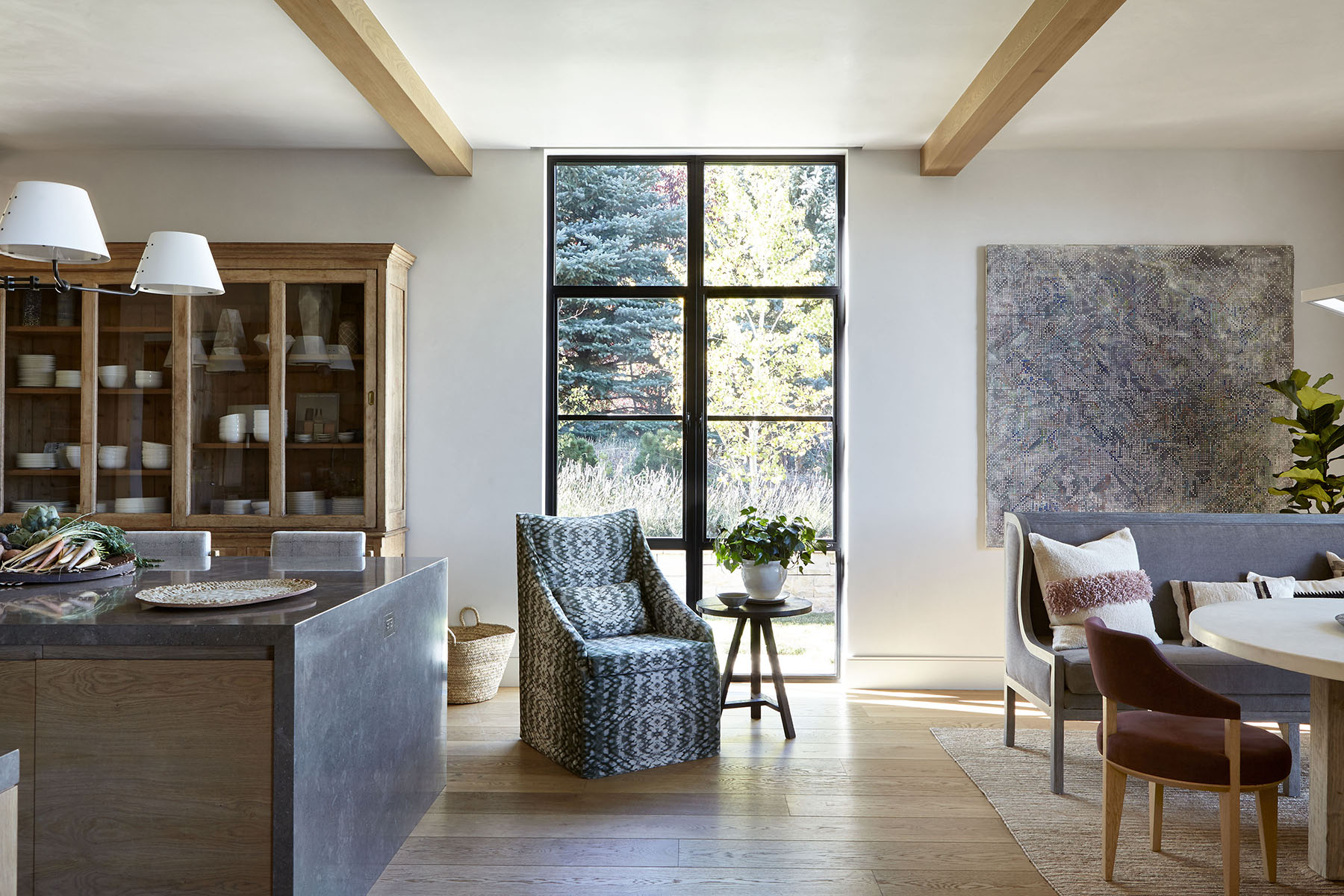
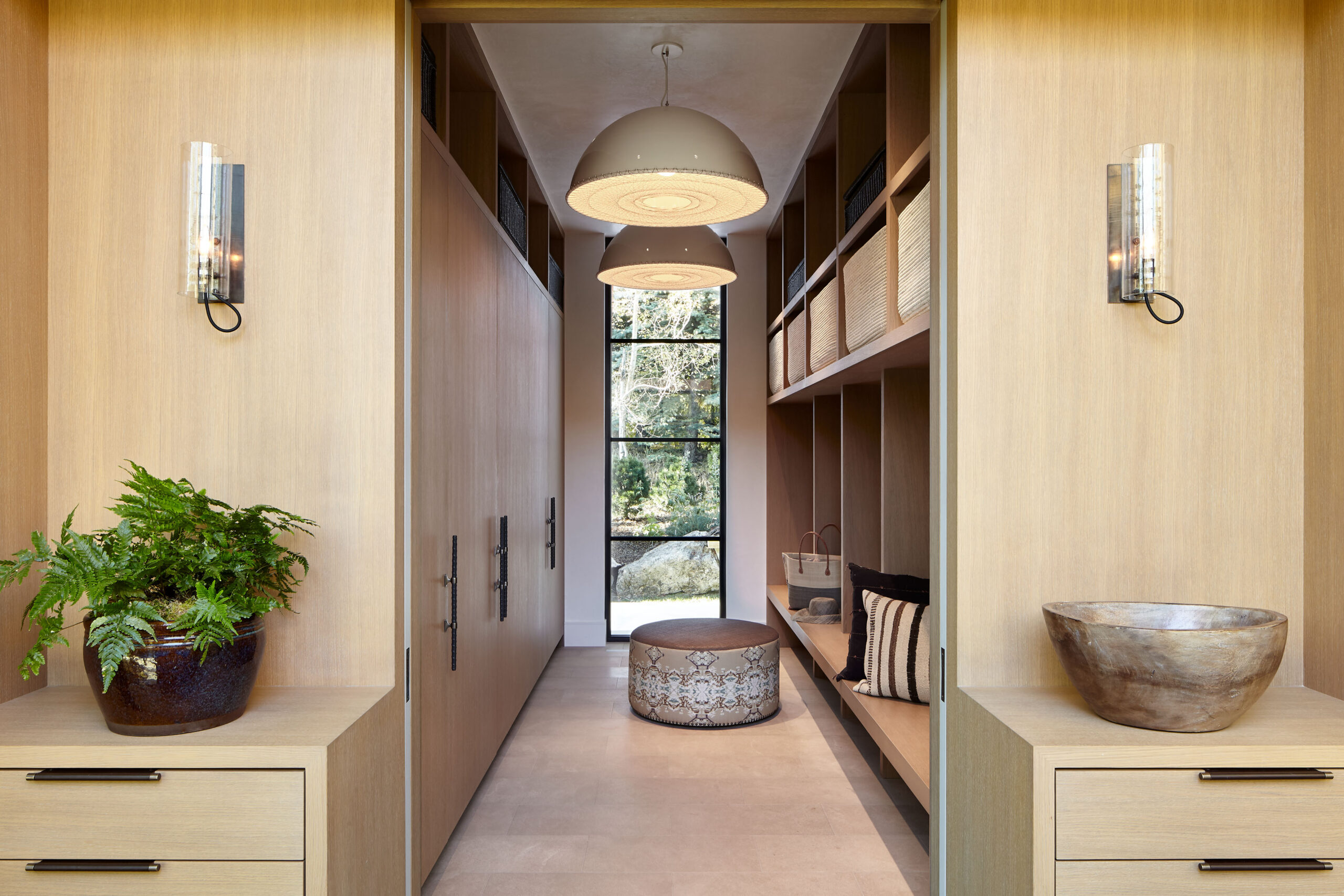
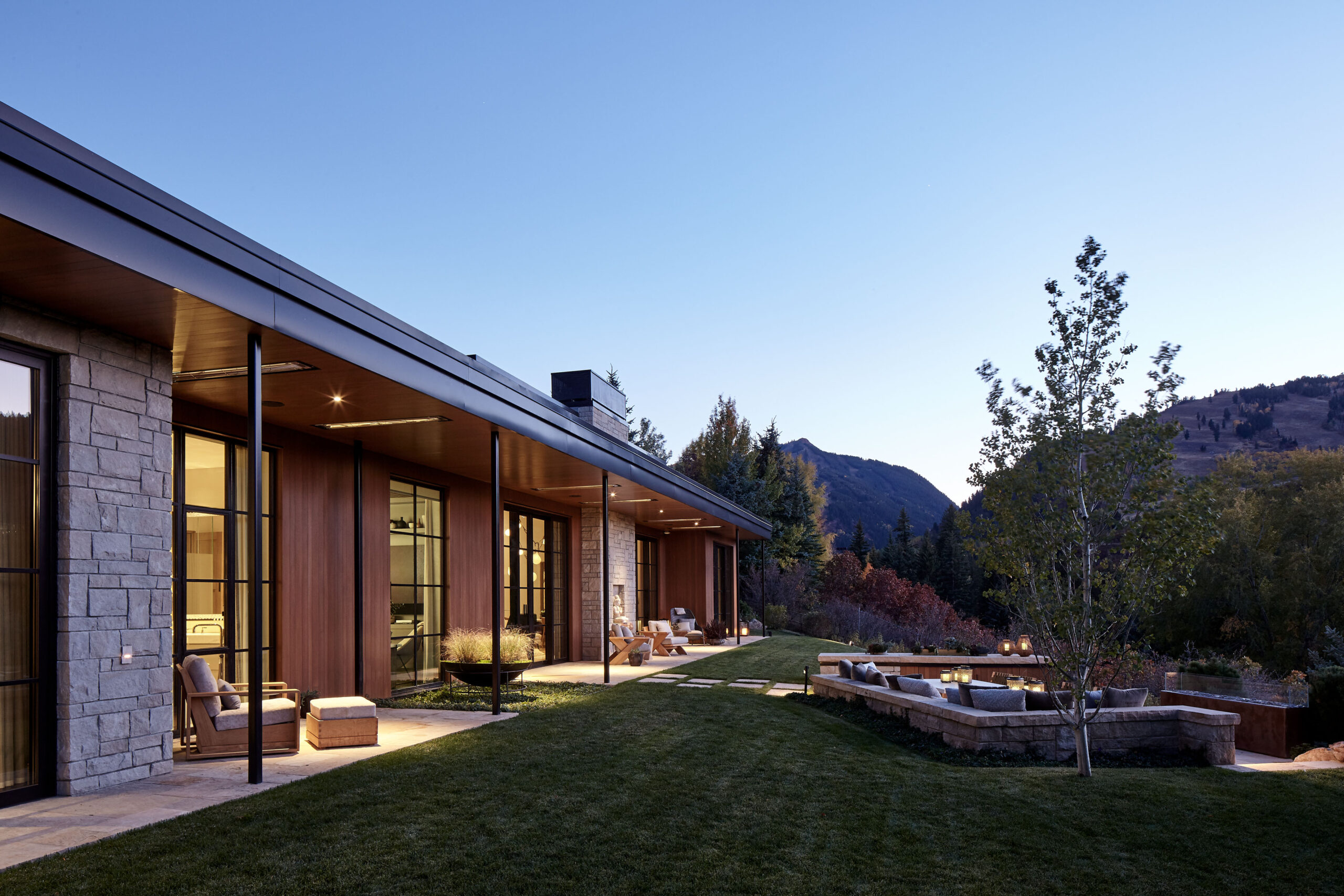
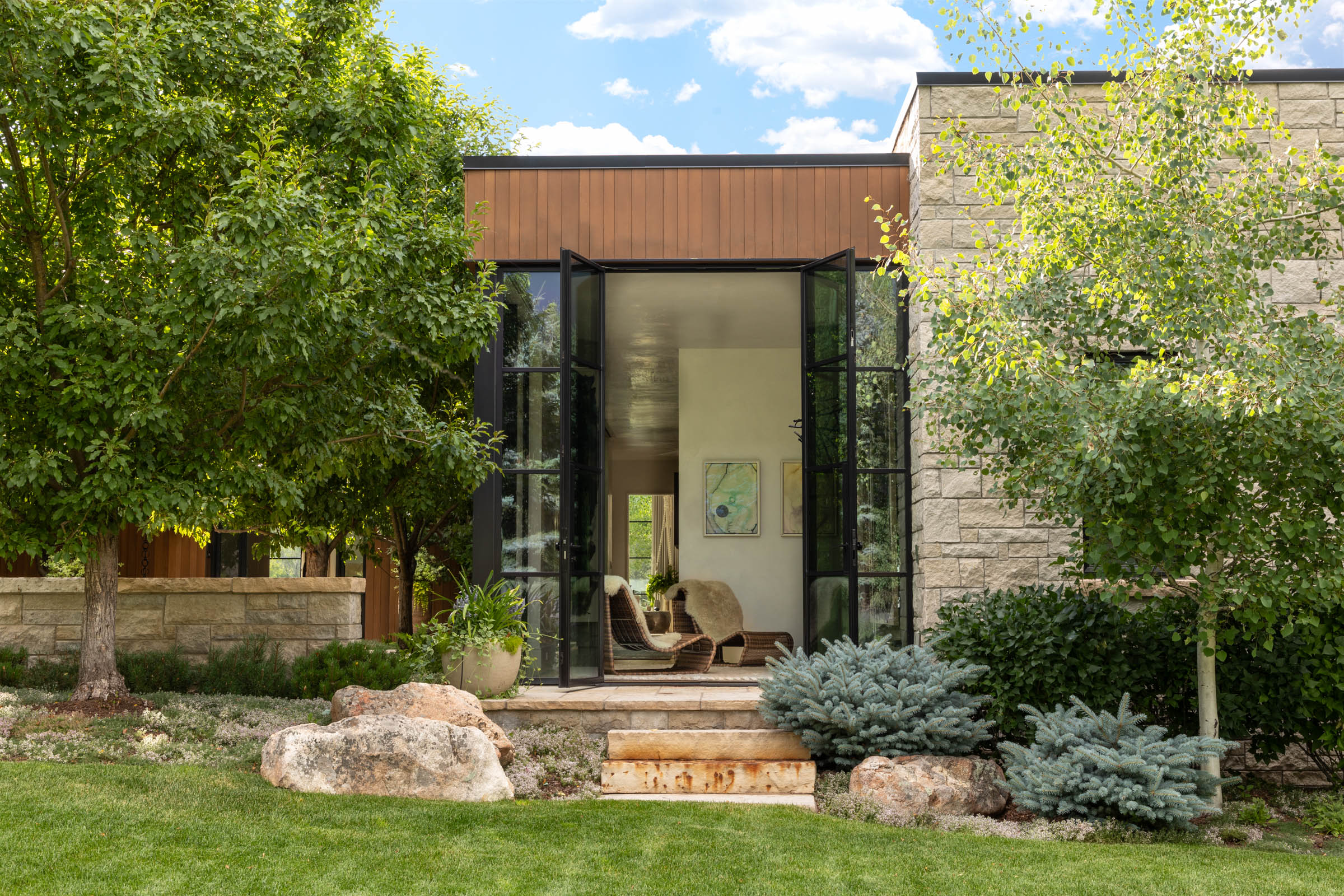
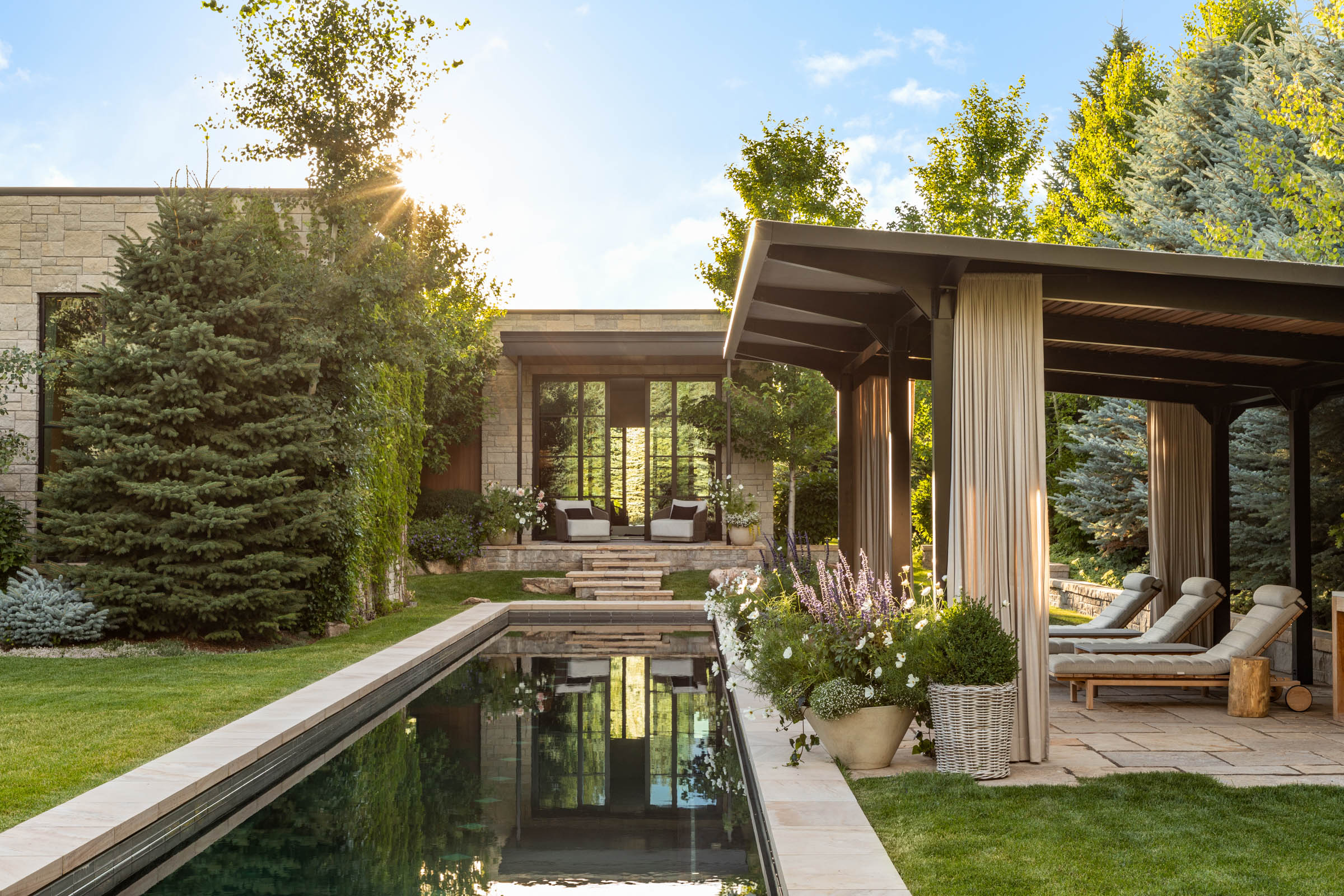
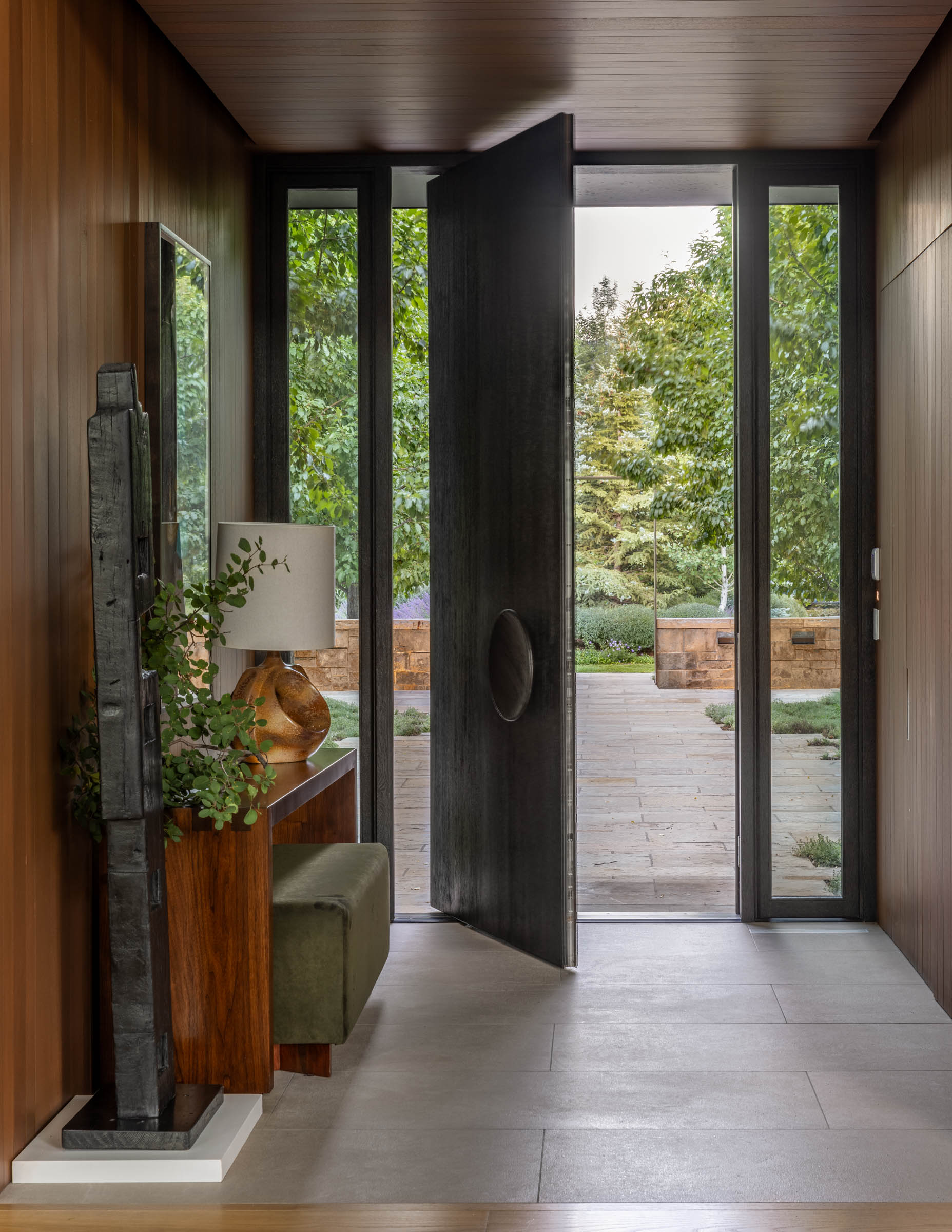
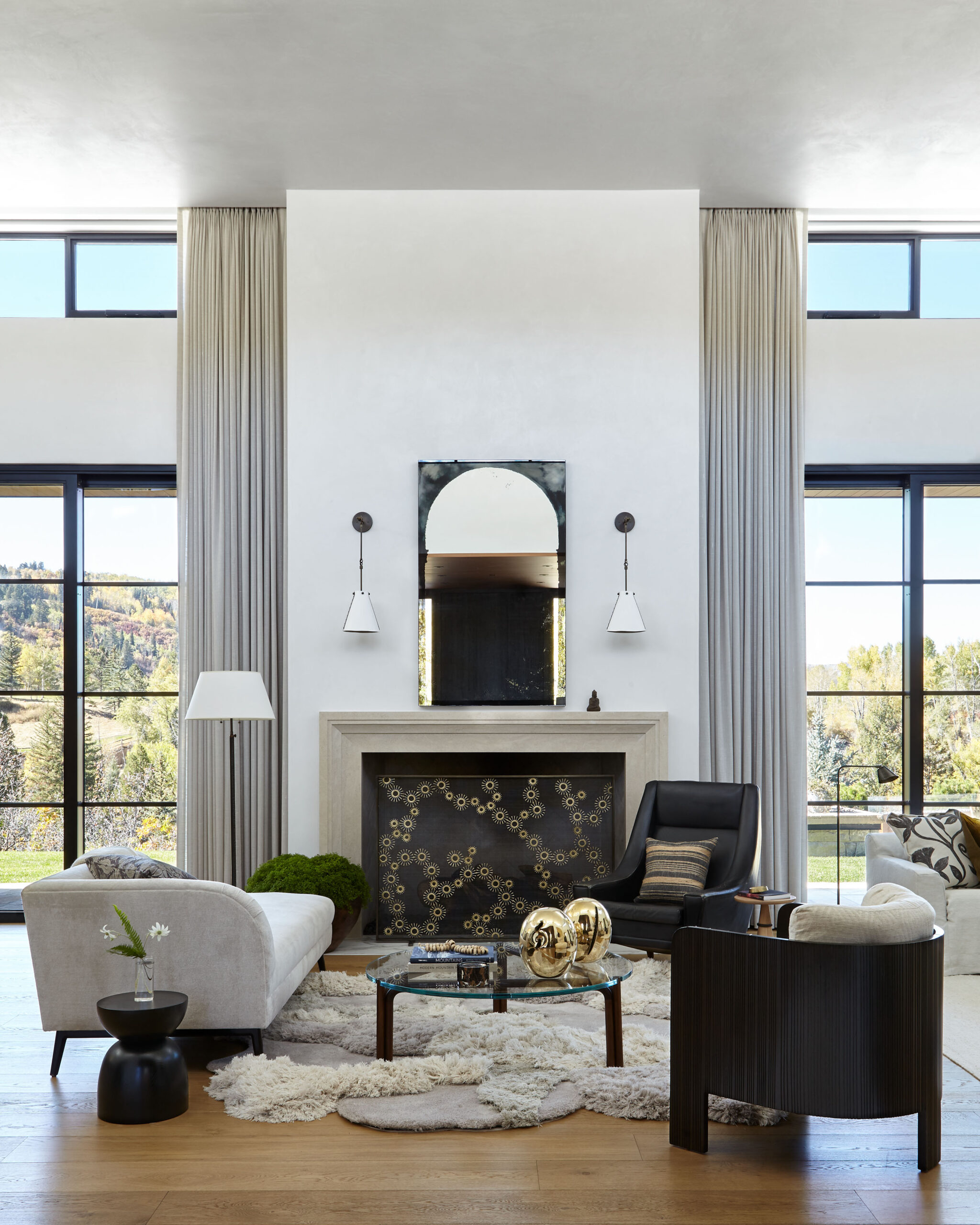
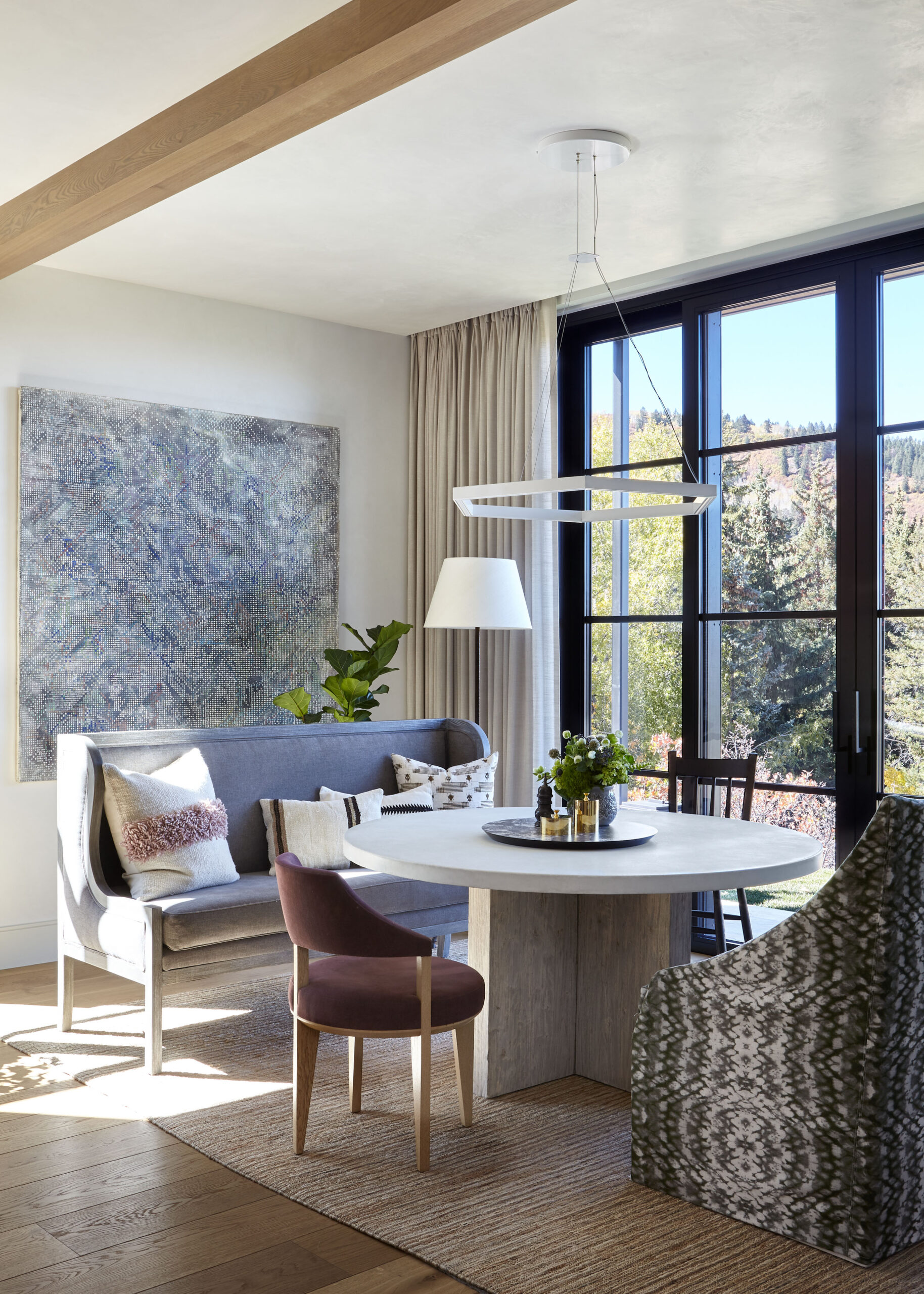
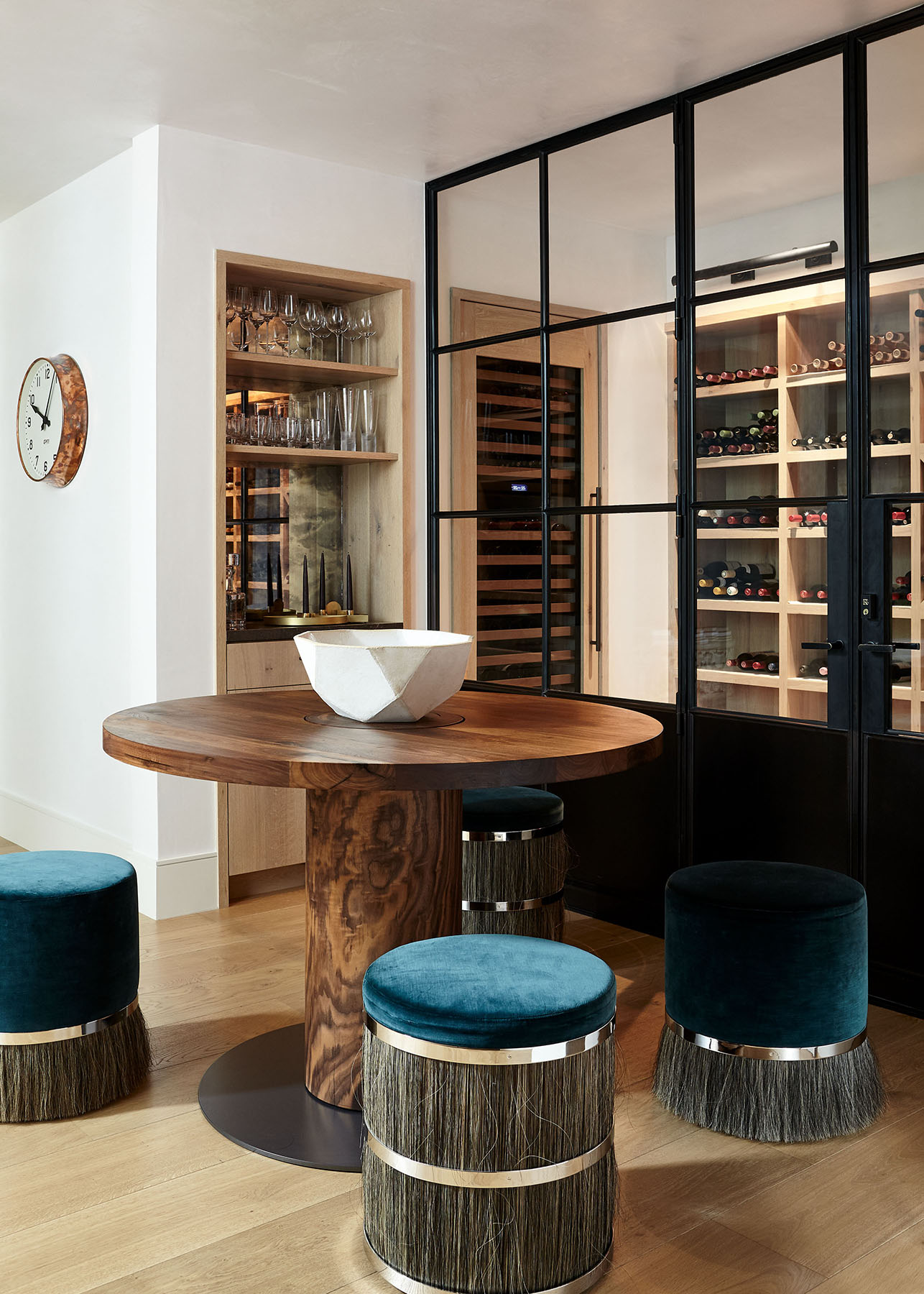
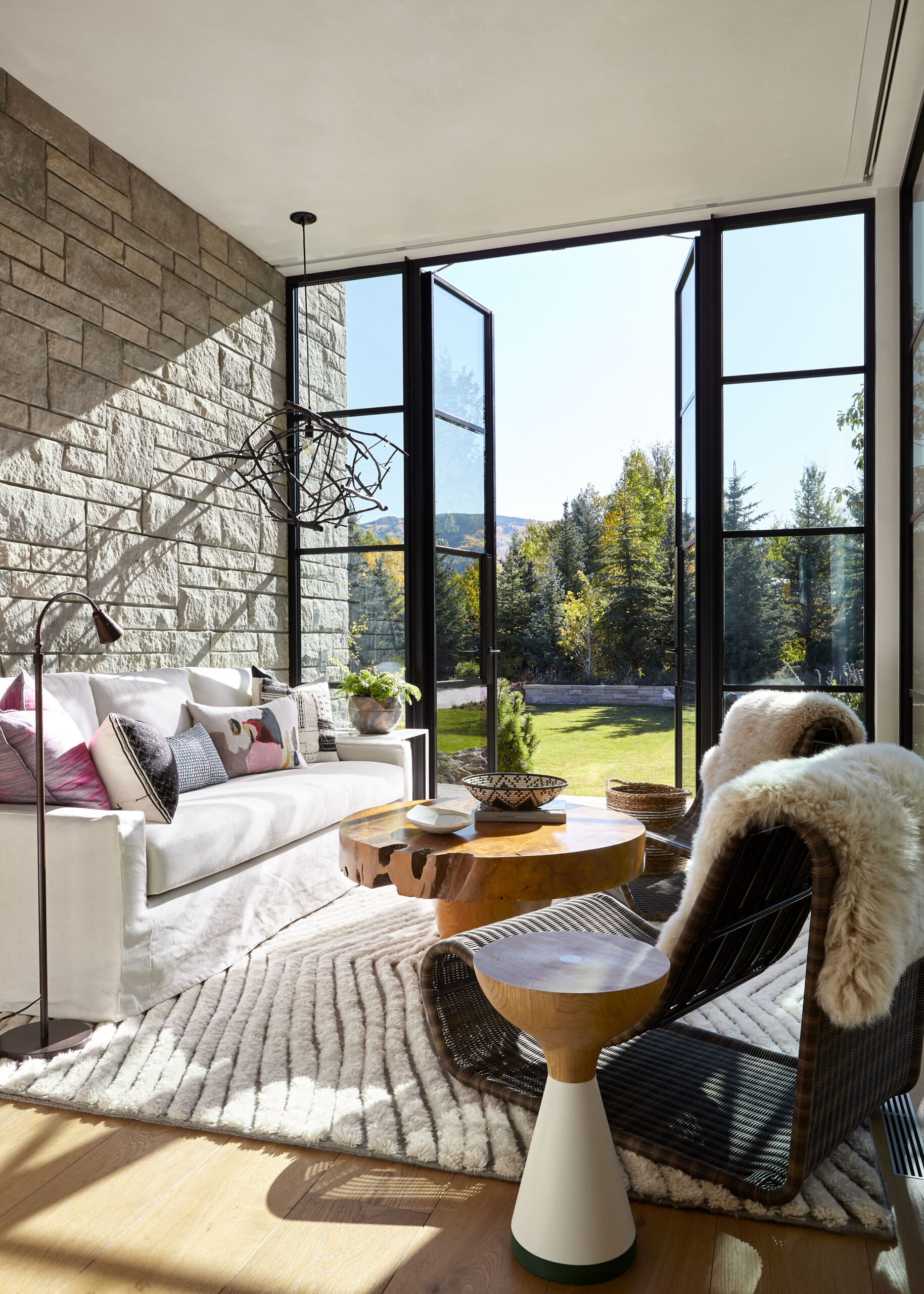
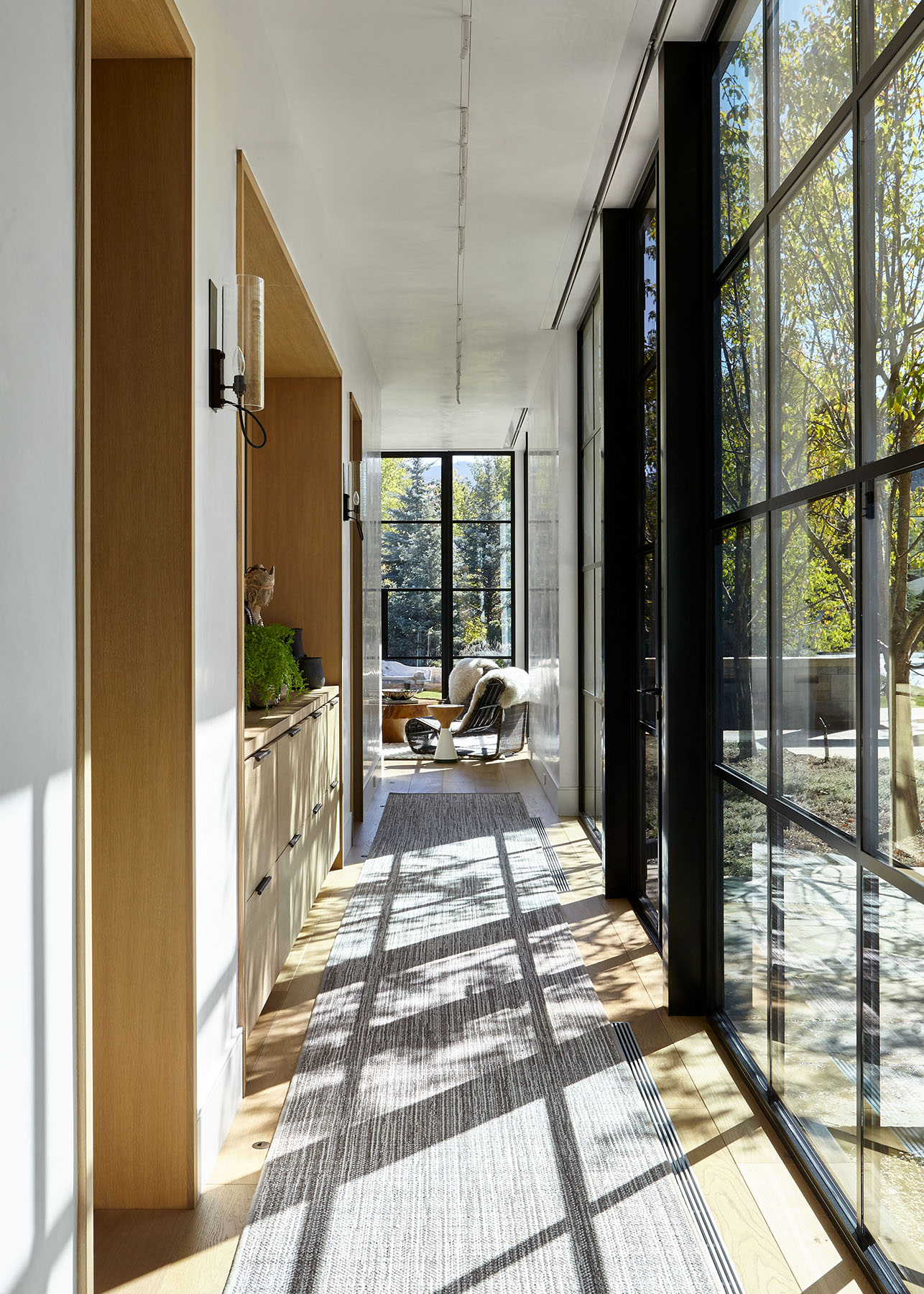
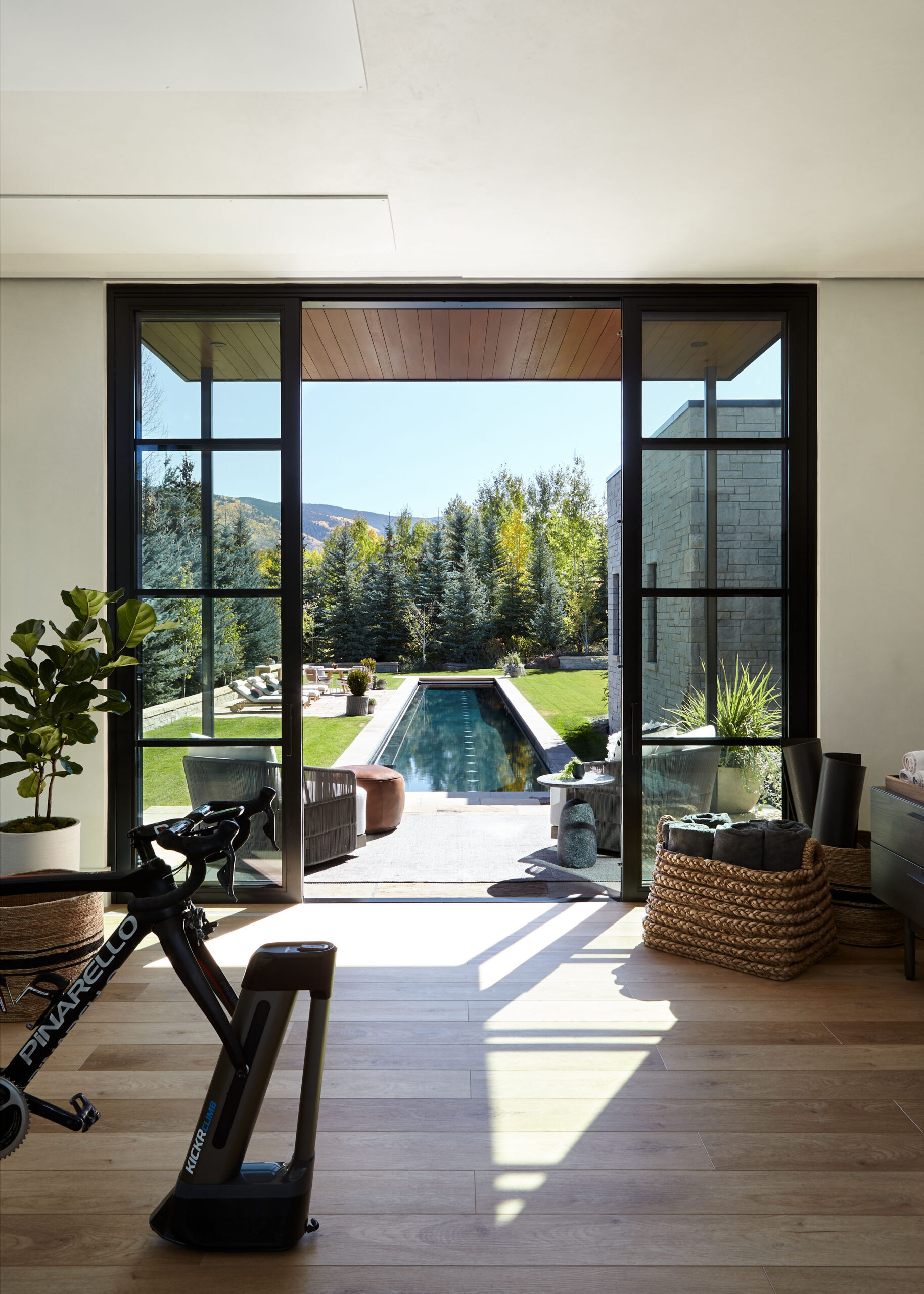
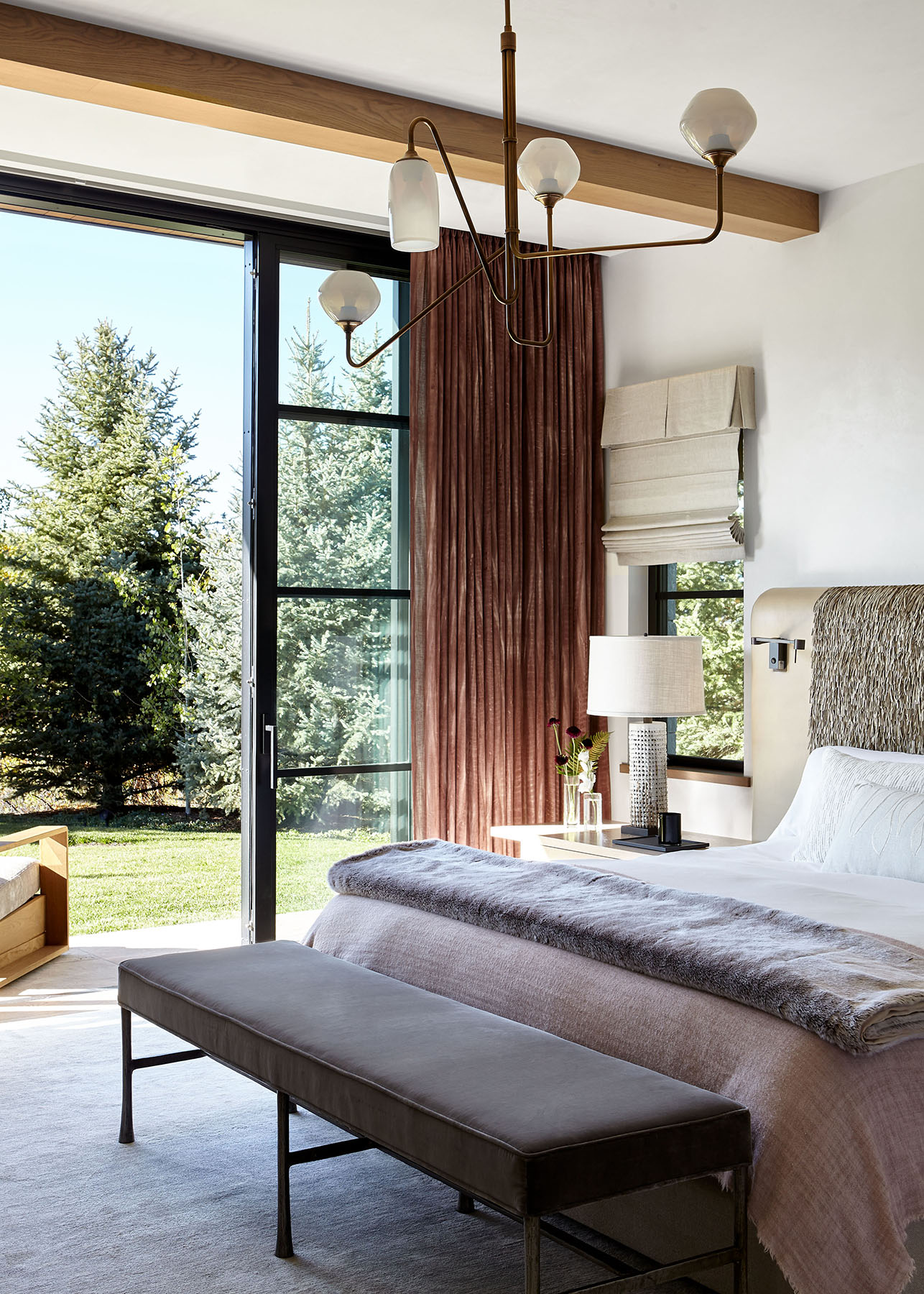
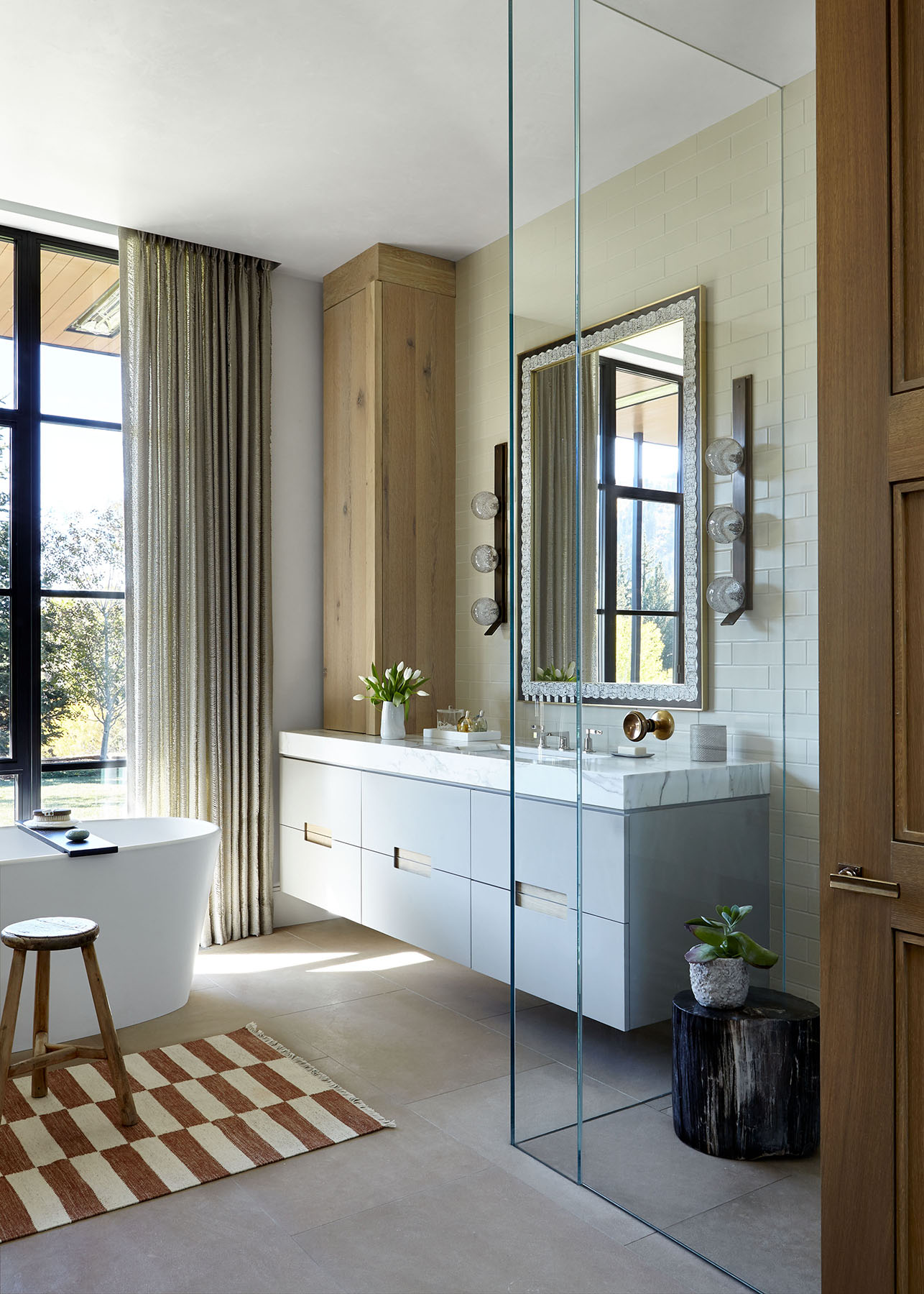
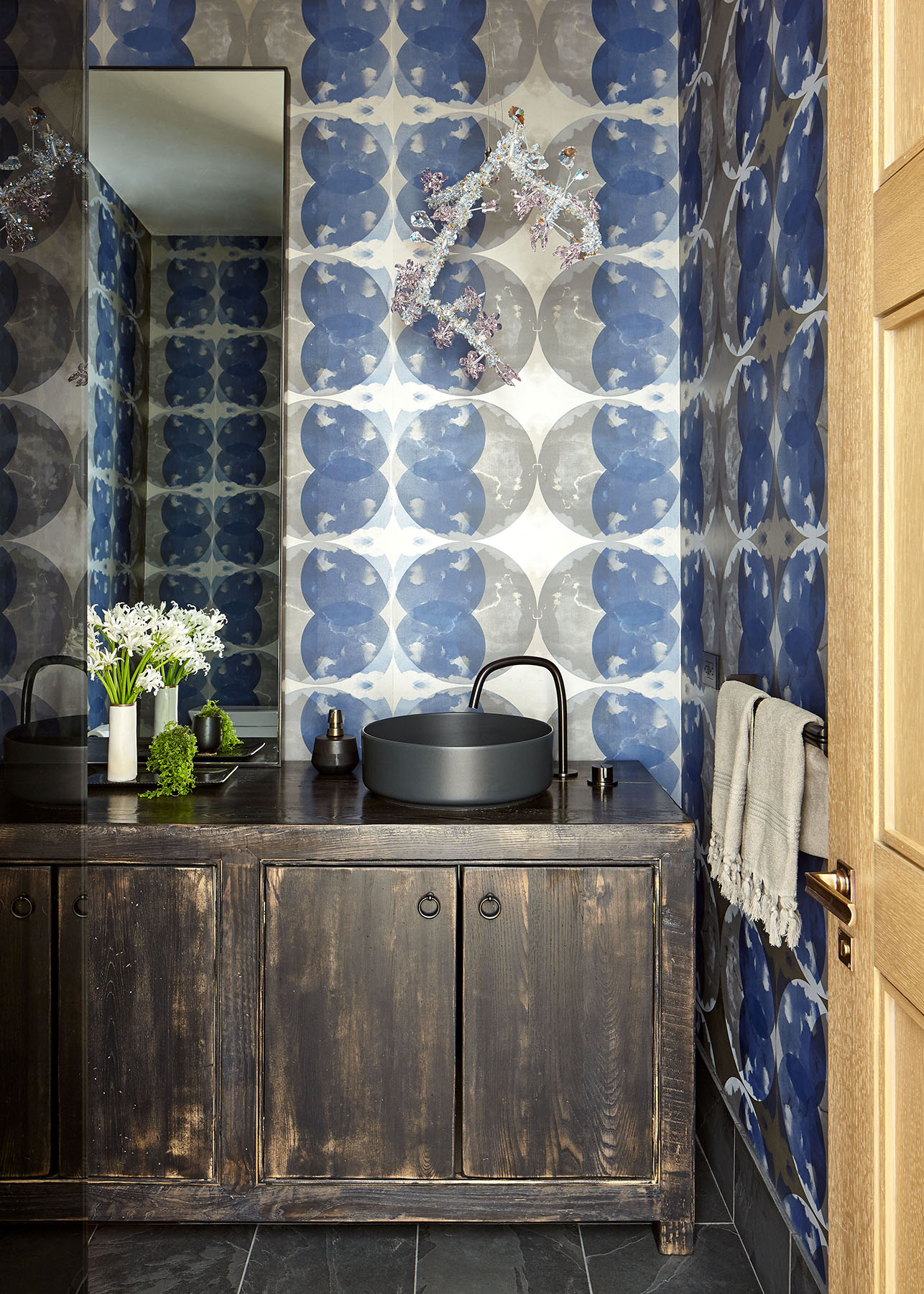
As practiced in the west, feng shui – an ancient Chinese method designed to bring structures into harmony with their surroundings – draws typically on the bagua, a set of eight symbols representing interconnected aspects of existence. At R+B’s art-filled, appropriately named Bagua House, perched atop a steep slope and enjoying expansive Aspen views, feng shui is made manifest in both the U-shaped plan and the house’s relationship to the site. Most of the firm’s designs feature a transparency that connects rooms both internally and to the typically sublime surroundings. Bagua House is different: here, interior spaces connect through exterior rooms. This interleaving of inside and outside creates an exquisite sense of amplitude, one that is as much emotional as actual.
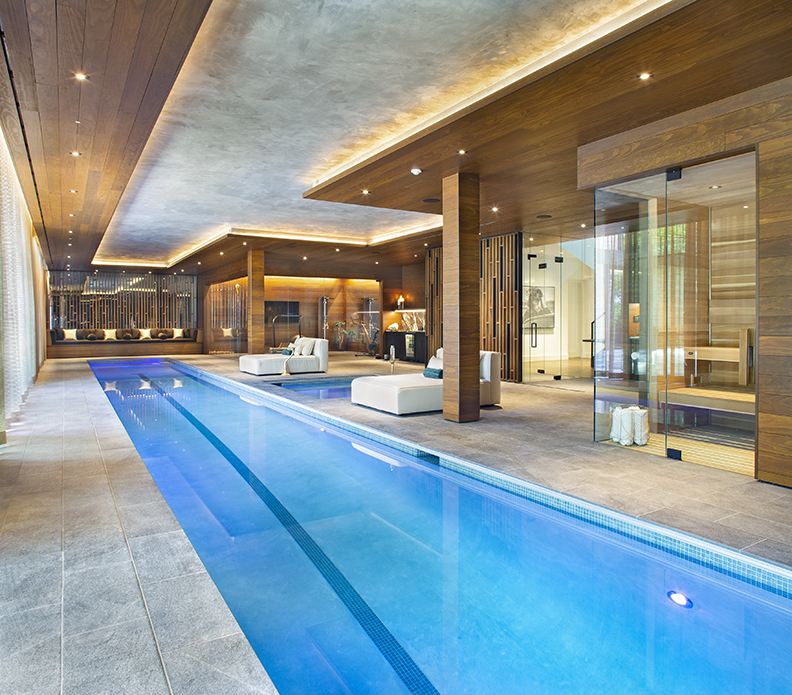
The heart of the experience is the residence’s landscaped entry court, which sits between the three wings of the plan: it serves as the definitive moment of transition, from the wider world to the private experience of the dwelling. Within, a double-height living/dining great room gives way to the more intimate scale of the two wings. To the south, R+B set the intercommunicating family room and kitchen; while the north wing contains the parents’ suite (with an exercise room/hot yoga studio that opens onto a 75-foot-long lap pool), and the children’s bedrooms (with their communal ‘kids corner’).
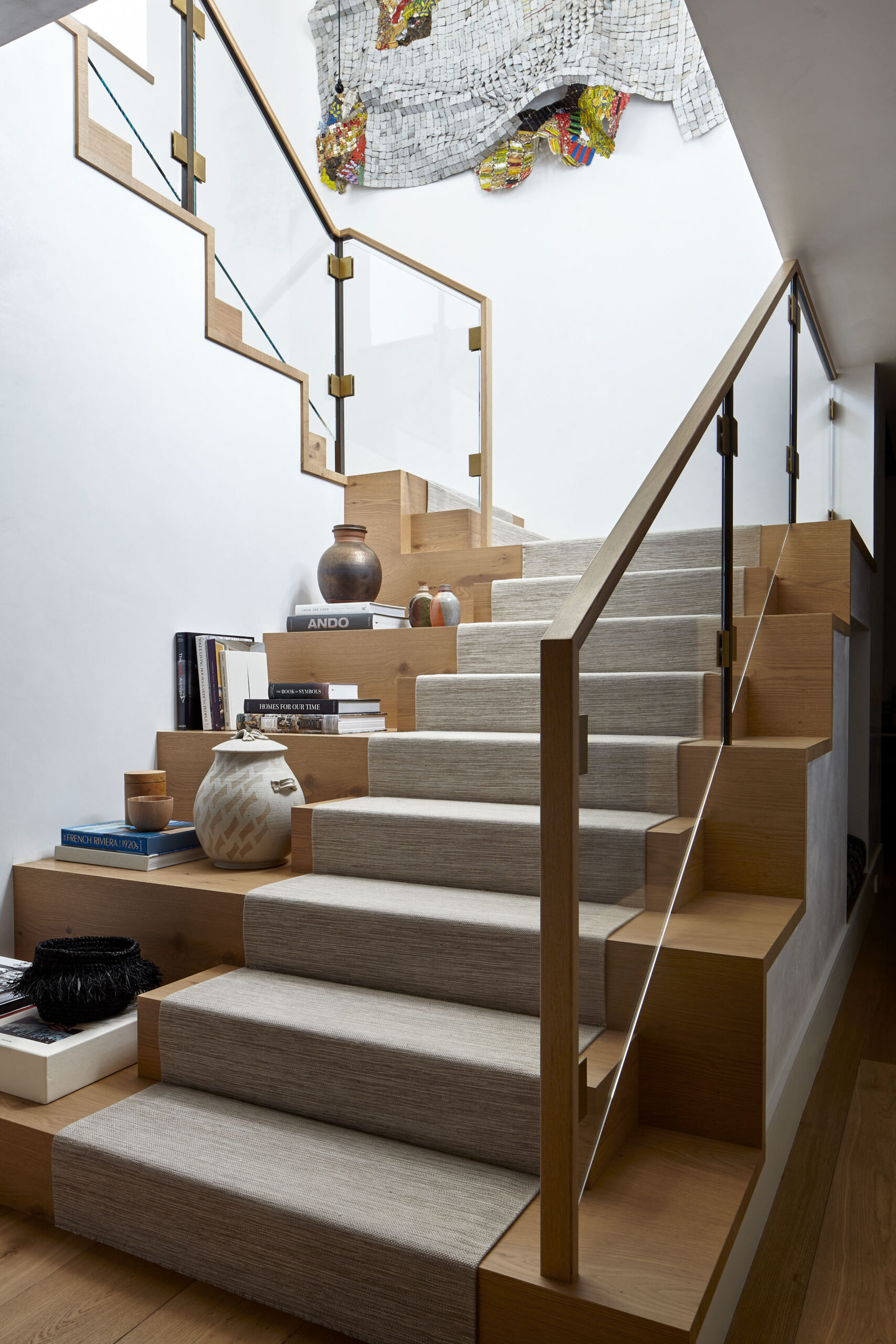
The modesty of the architecture contributes to the residence’s beauty and unity; set almost entirely on a single level (with a wine cellar and media room, and a habitable stair that serves as a library and art gallery, below), the spaces absorb the shifting character of the light as it transforms throughout the day. But it is the integration into the landscape – the positive flow of energy characteristic of the successful application of feng shui – that gives Bagua House its defining sense of serenity: a commingling of the built, the natural, and the human that feels at once comprehensive and sublime.
How do you create a glass box in a district that demands a vernacular tradition?
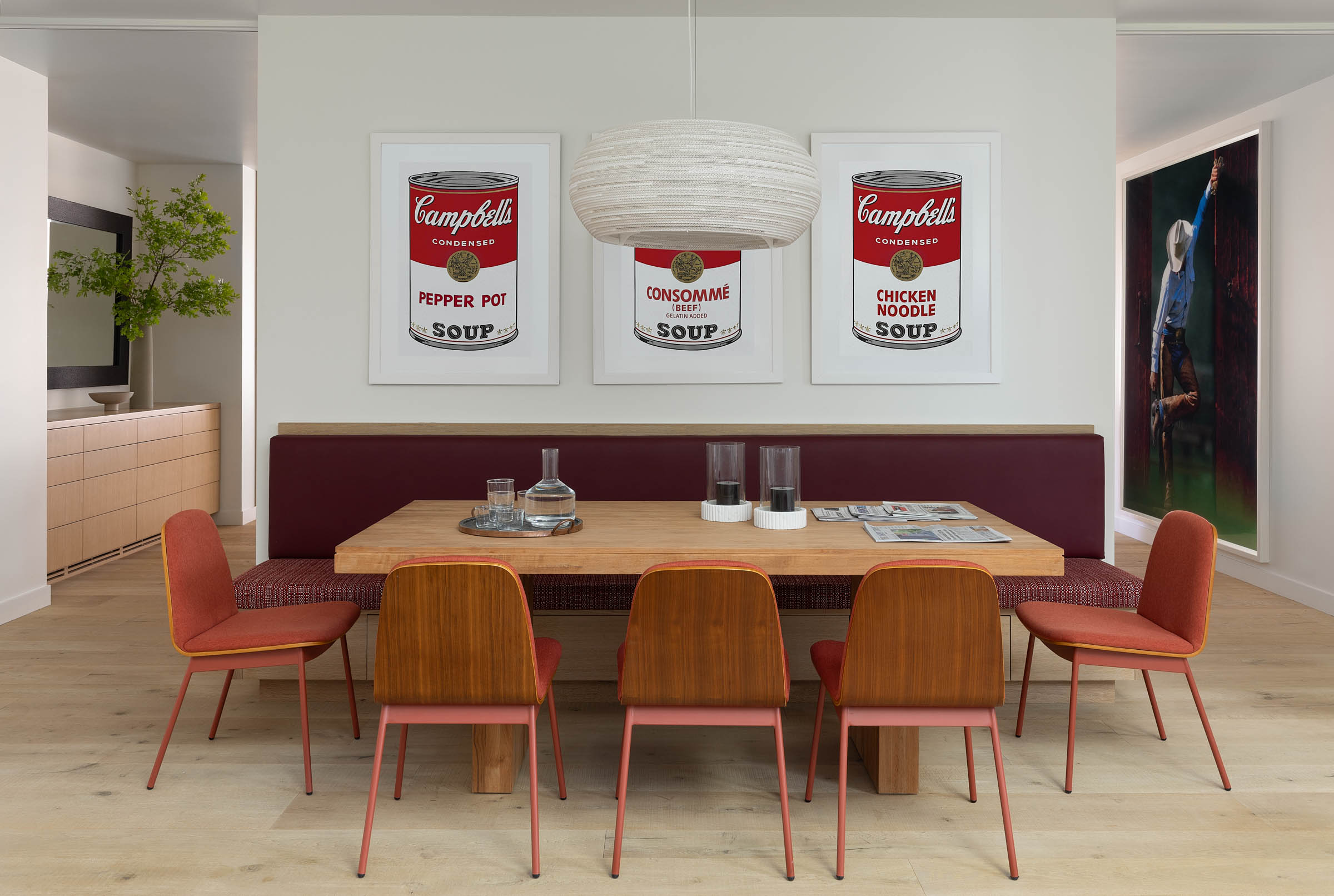
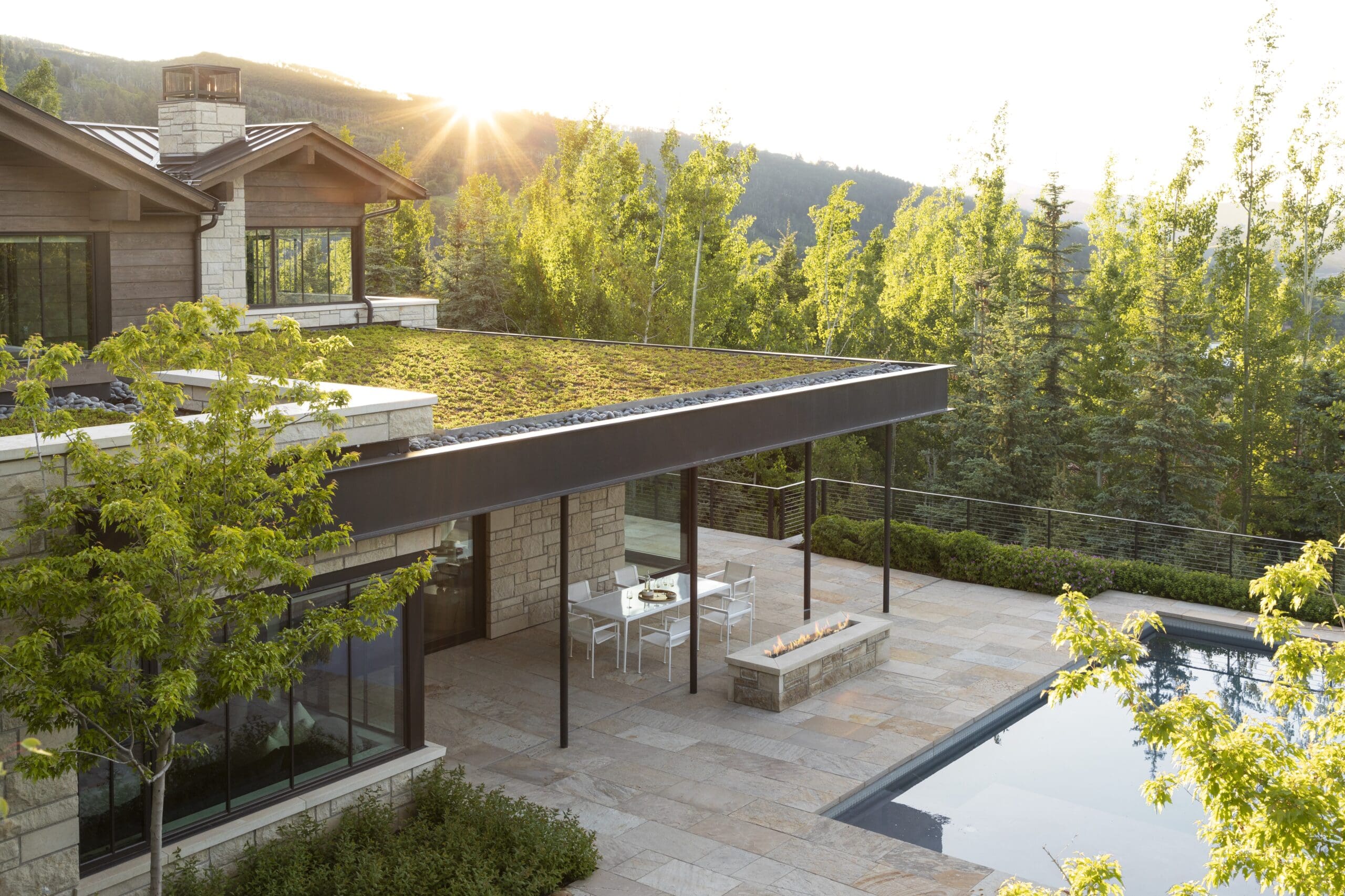
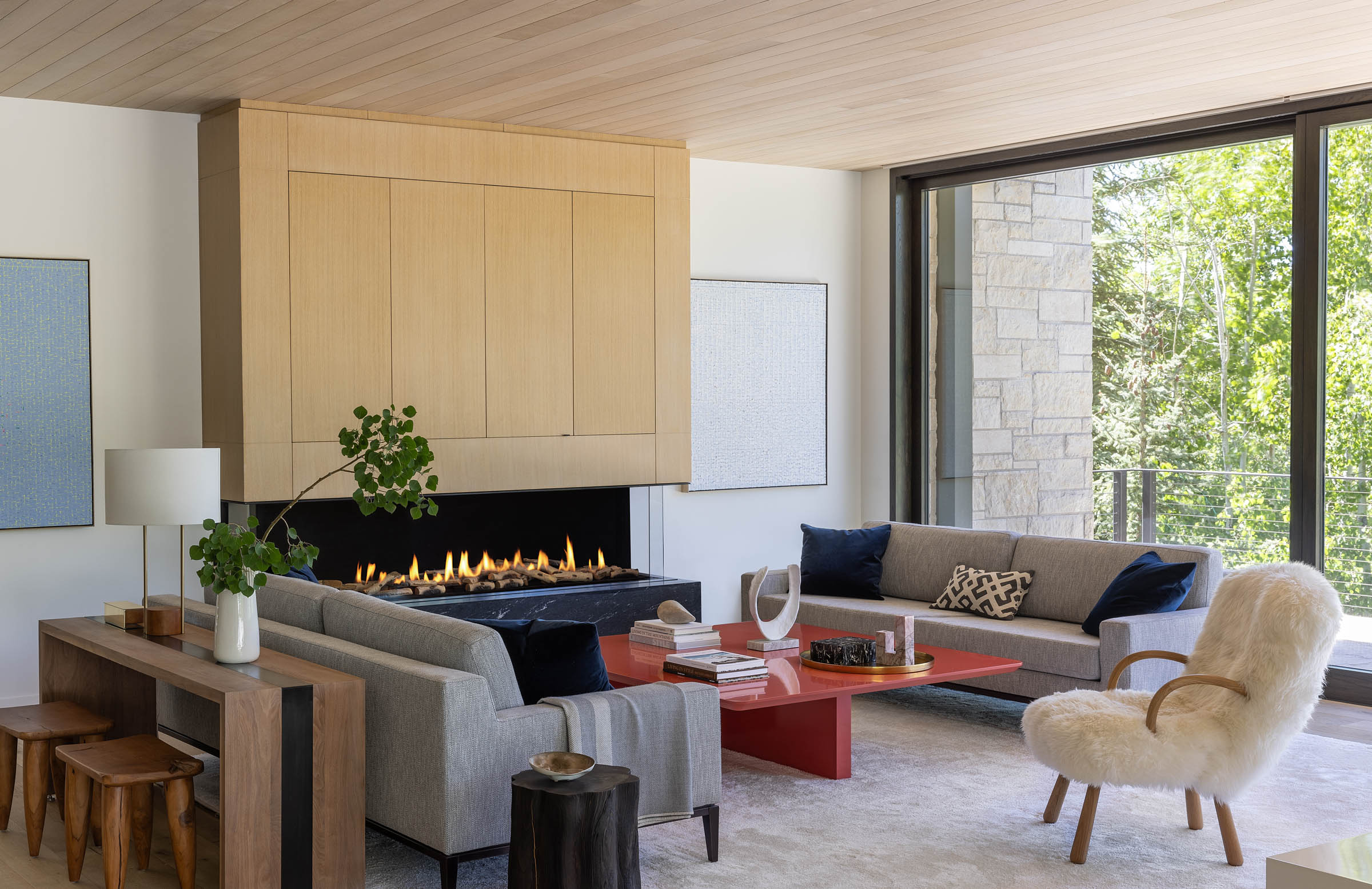
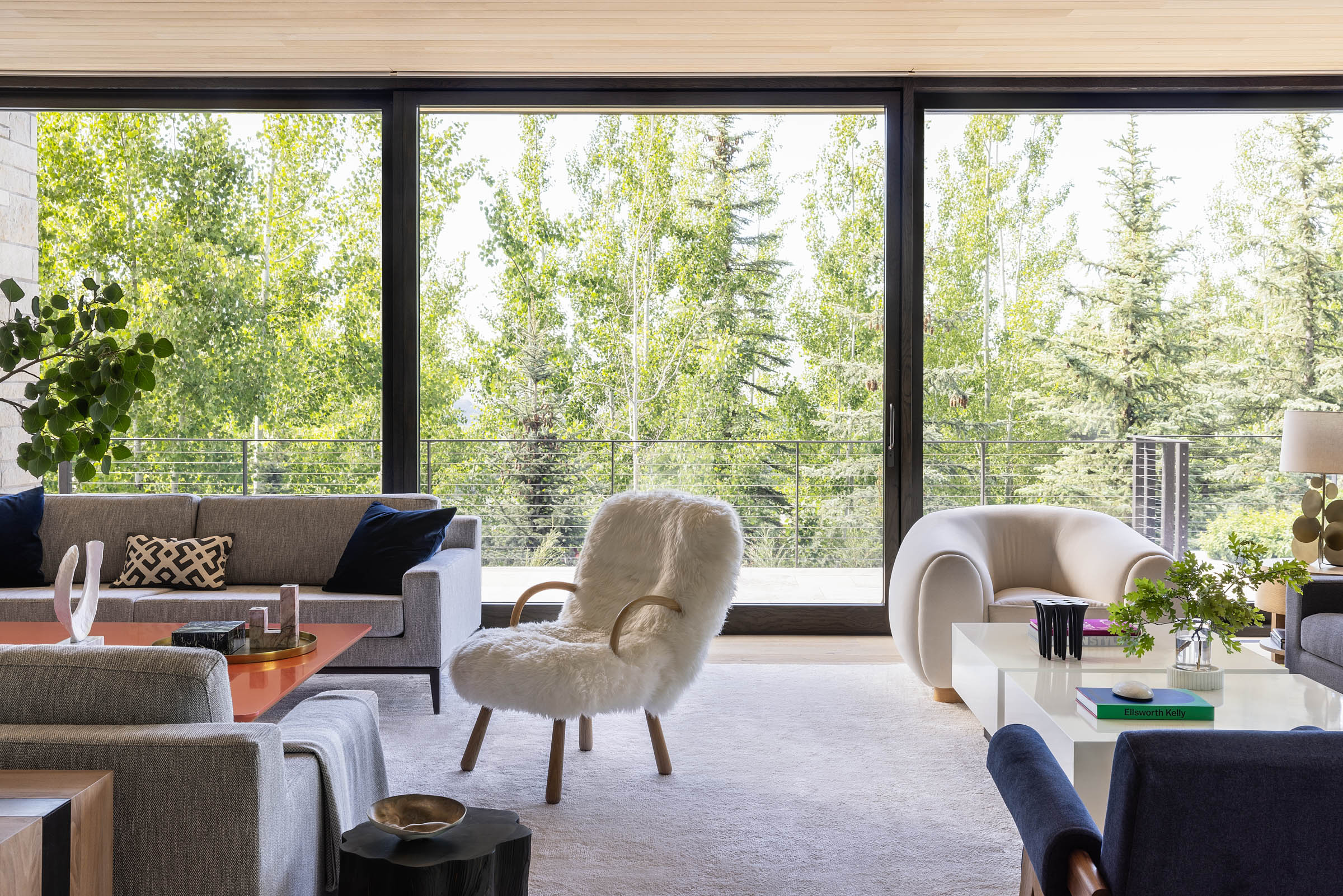
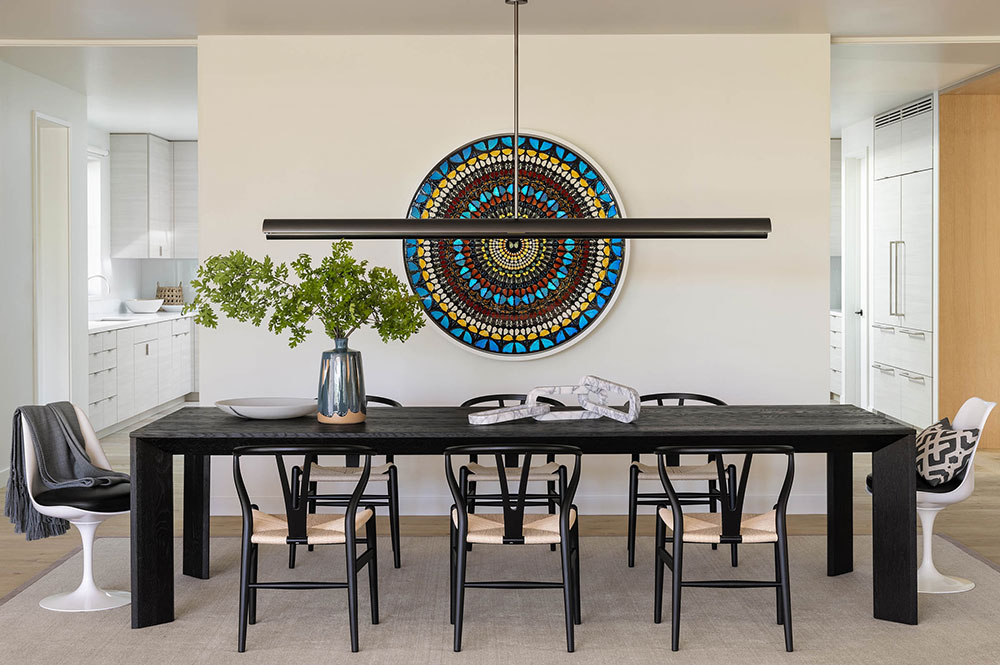
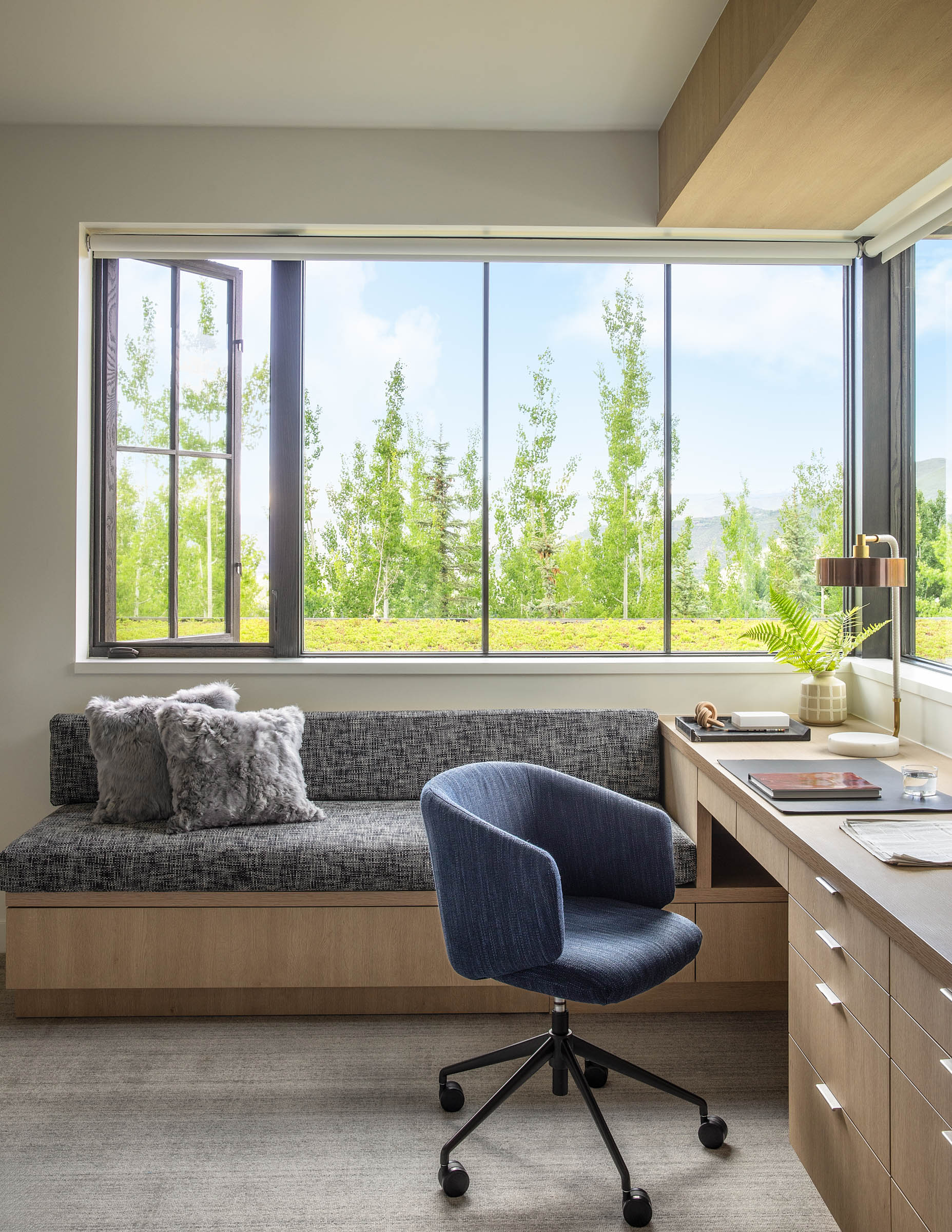
Located in a forest of aspen and fir, with stunning views of Maroon Creek, Roaring Fork, and Hunter Creek valleys, Mountain Retreat was commissioned for an Aspen neighborhood with strict architectural guidelines based on the design of 19th-century national park lodges. Both the residents and R+B wanted a 21st-century house tailored to a contemporary family. Yet the architects recognized that the convivial character of a lodge was not incompatible with the social advantages of open-plan modernism. And not just in the public rooms, but the interstitial zones, which encourage the accidental and the unexpected.
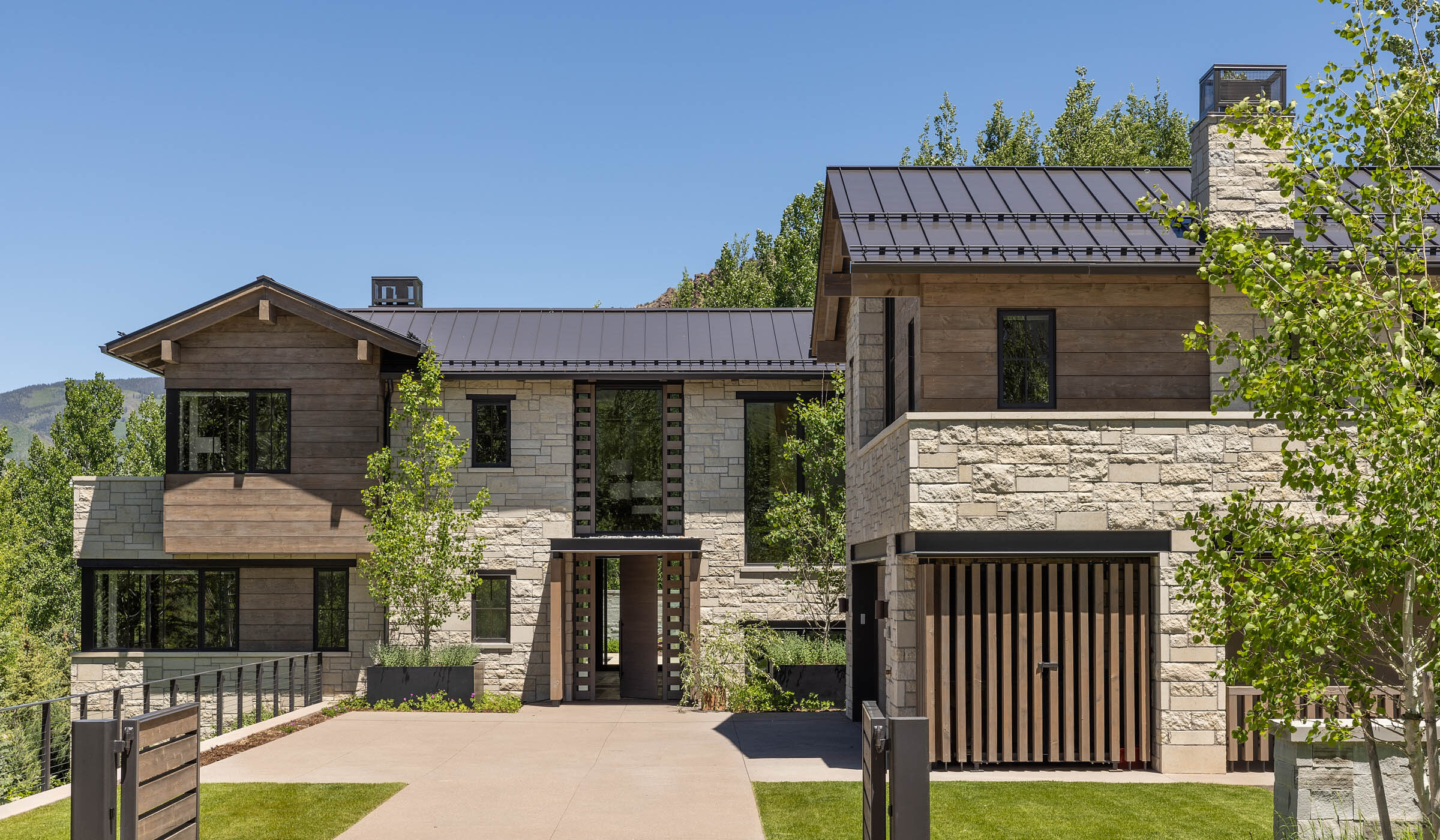
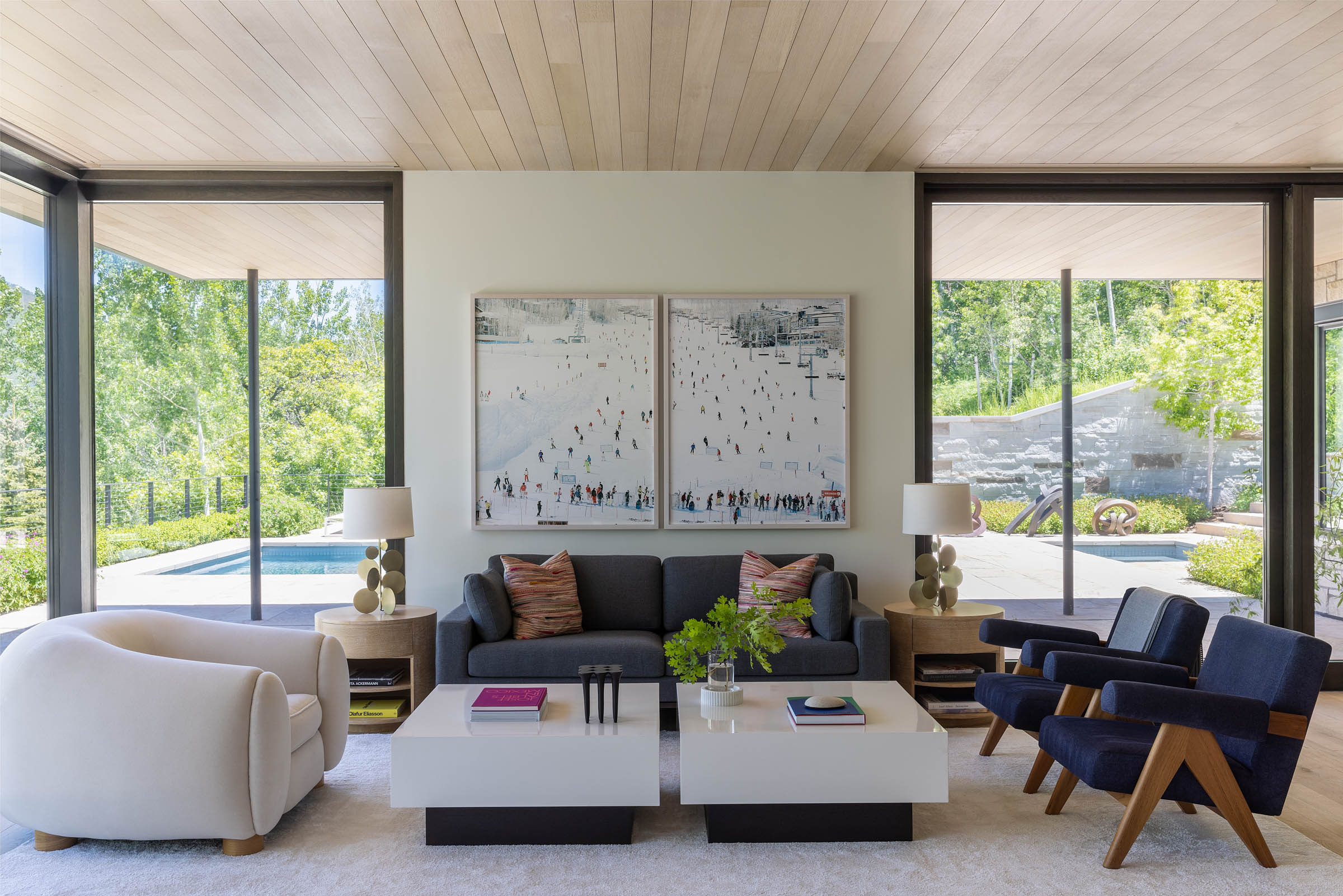
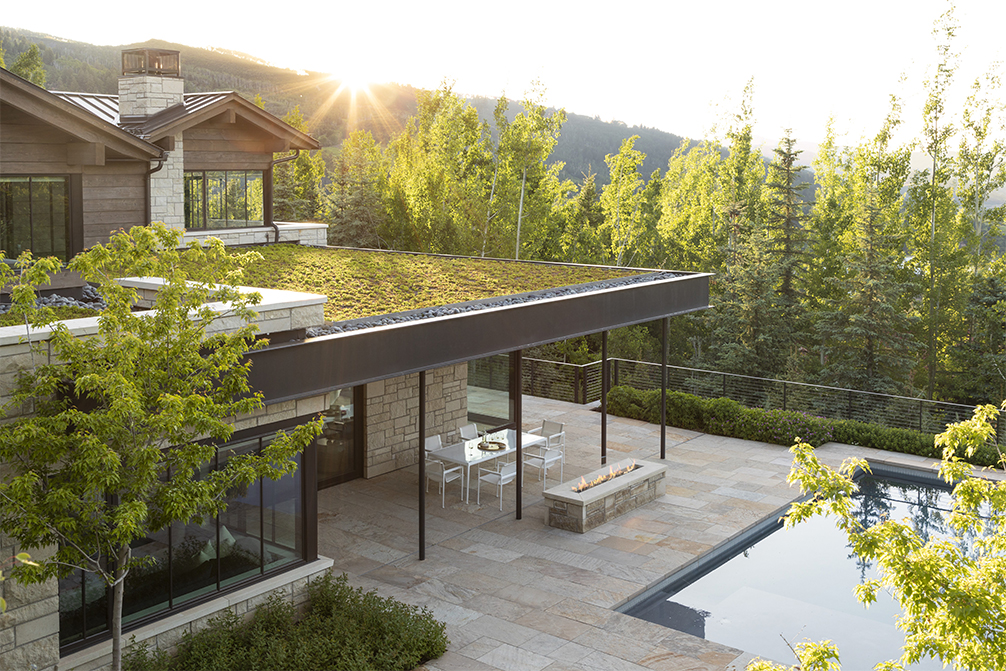
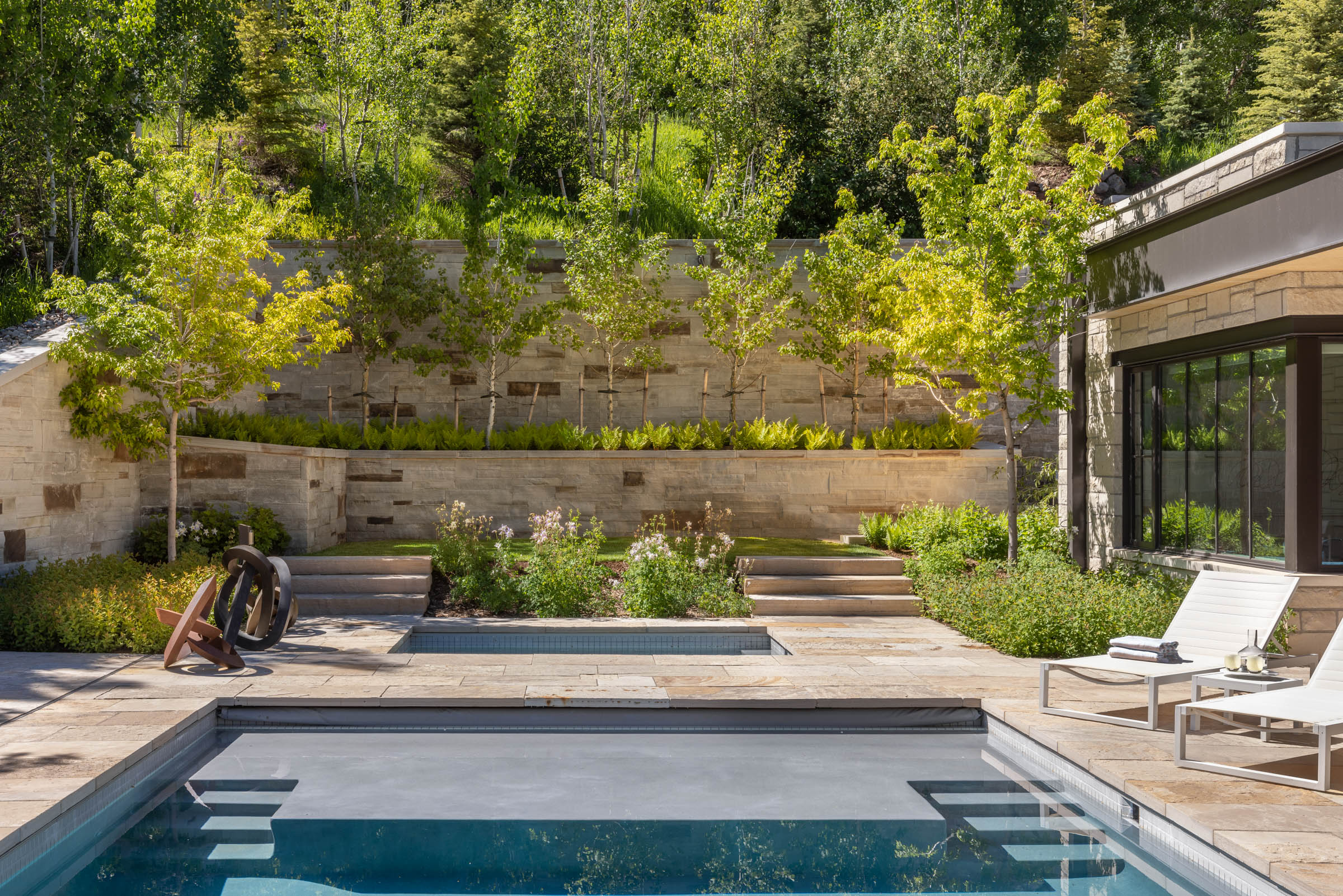
To satisfy district guidelines, R+B deployed a traditional palette of stacked stone, rough-hewn wood siding, and standing-seam metal for the volumes visible from the street. The elevations not on public view, conversely, feature floor-to-ceiling pocketing glass walls, facilitating an indoor/outdoor experience in which exterior spaces, including a covered entertaining terrace and pool, welcome the family and embrace the incomparable surroundings. (The site itself offered an even greater challenge, as the land was steeply sloped: six months were consumed by a monumental shoring effort to create a level building lot and the massive retaining wall on the property’s north side.)
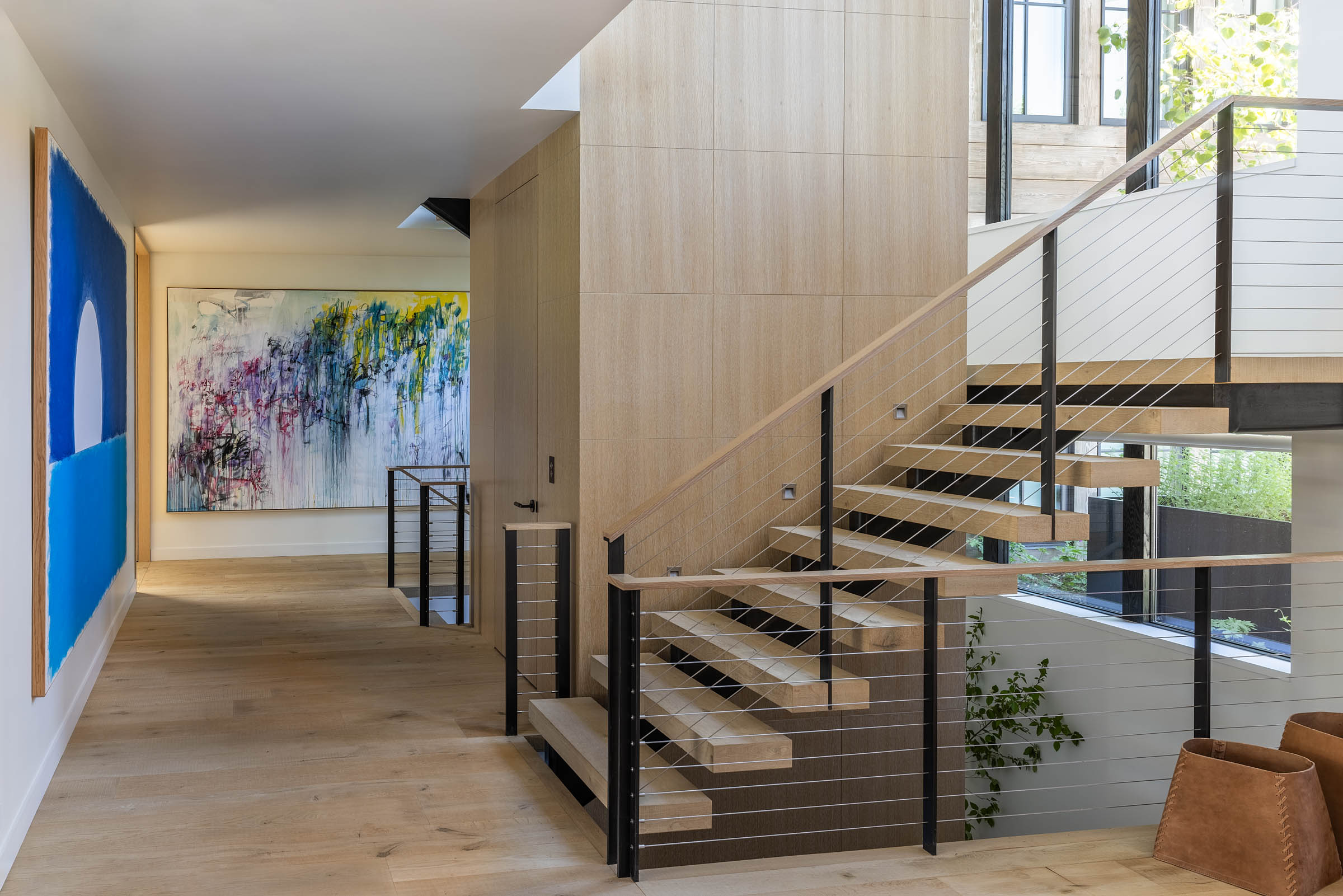
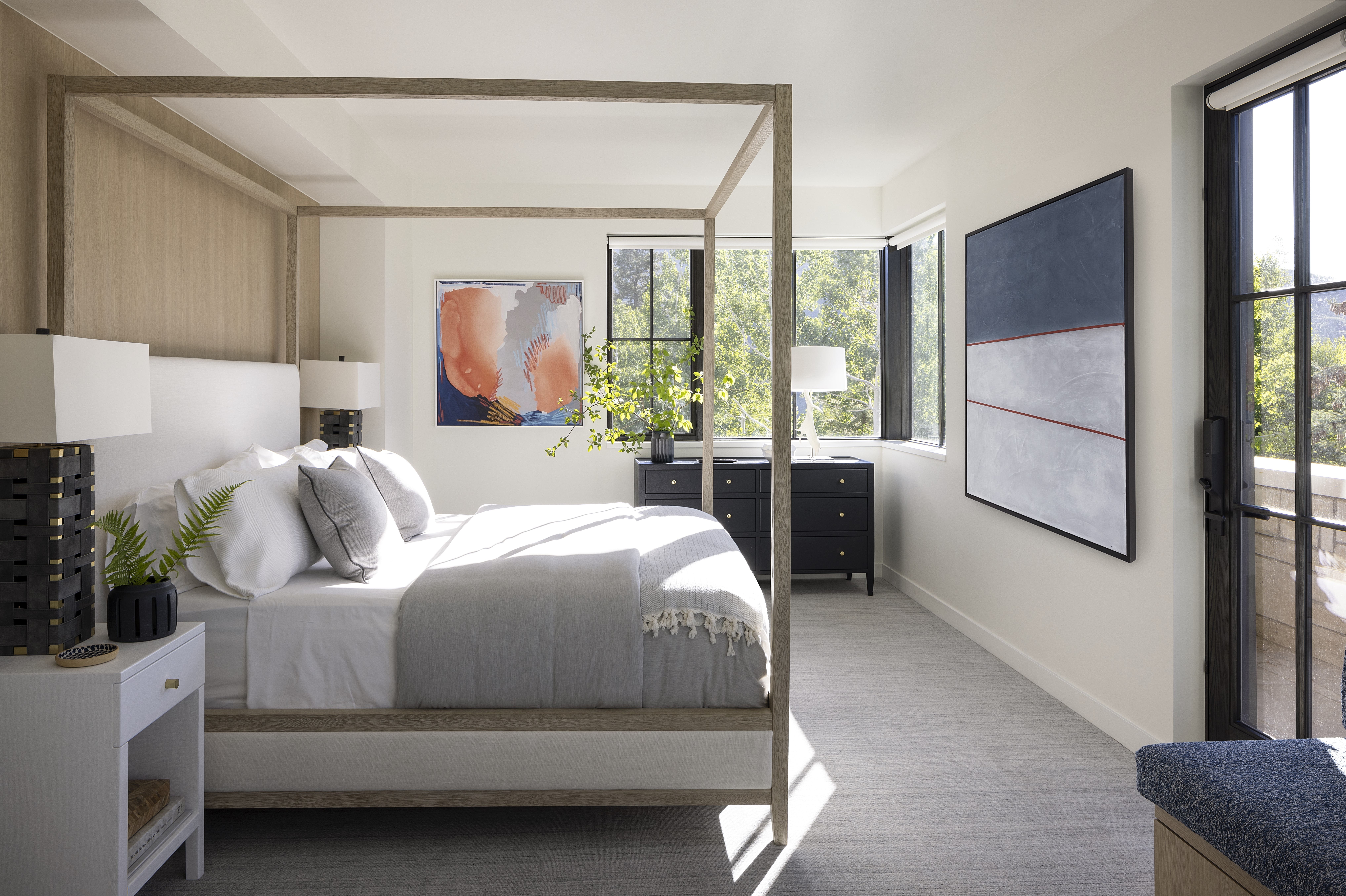
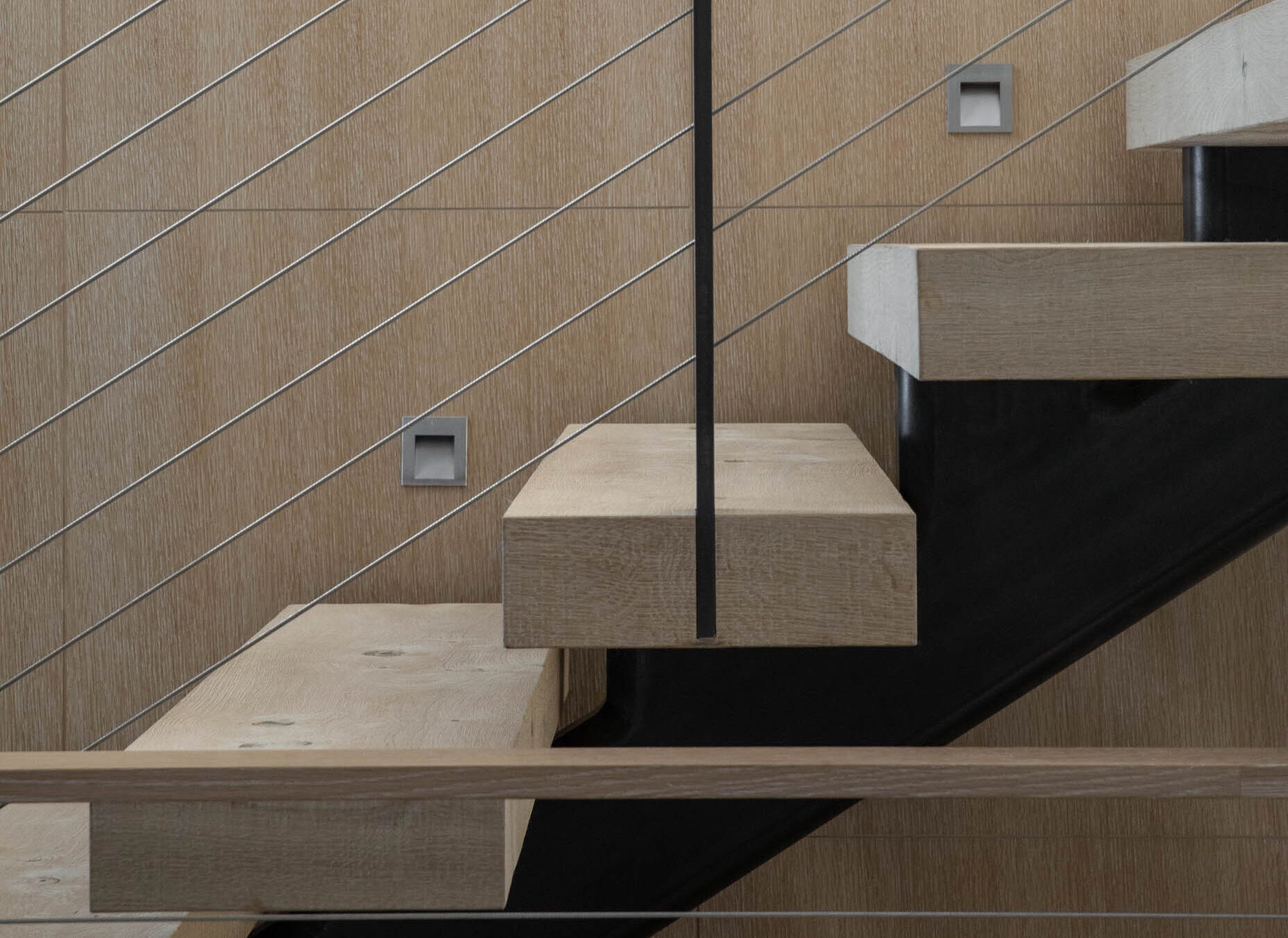
Within, R+B eschewed the usual primary bedroom, opting instead for a program of four ‘equal’ suites and a bunkroom. The self-contained character of these spaces – their well-equipped privacy, augmented by private terraces – makes for an appealing contrast with the communal areas. Regarding the latter, the architects placed unusual focus on the hallways and the grand stair: the halls are wide enough to be comfortably inhabited via seating nooks, and the stair remains an experience unto itself, floating between the three levels, affording views across a realm of changing moods and perspectives. These stand as zones of opportunity: of the unexpected sociability emblematic of the park lodges in their golden age, reinterpreted for a family in the present day.