

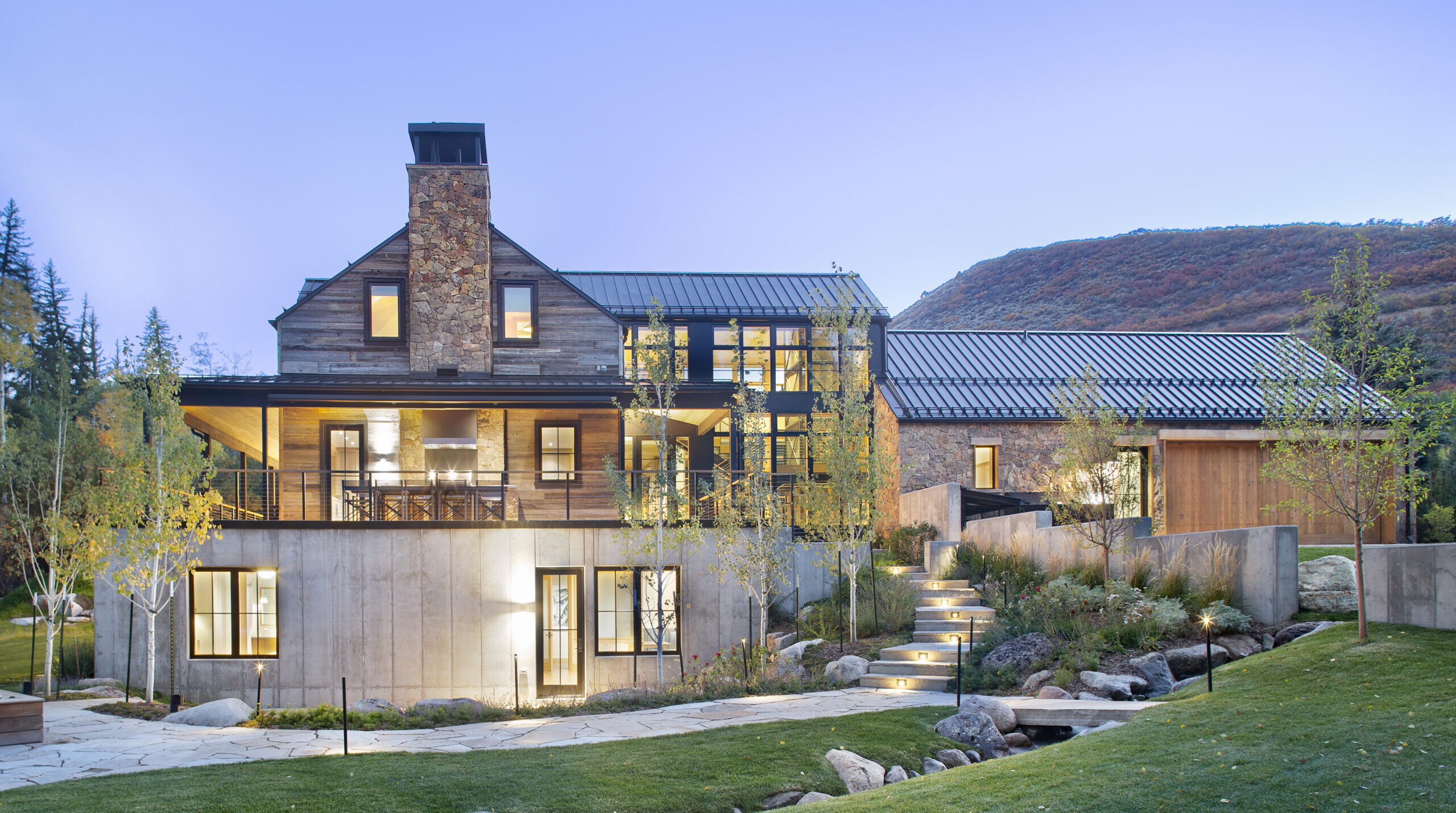
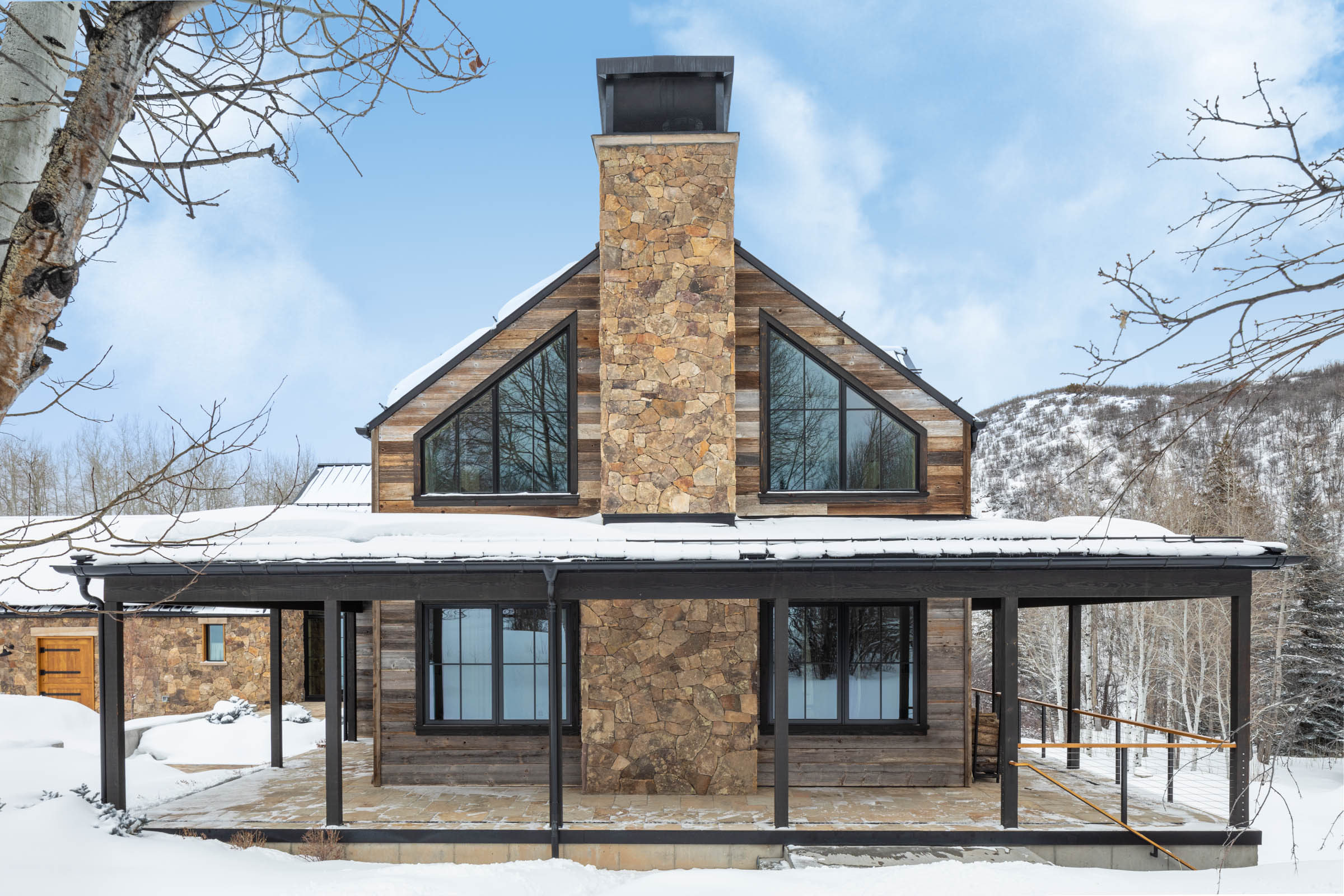
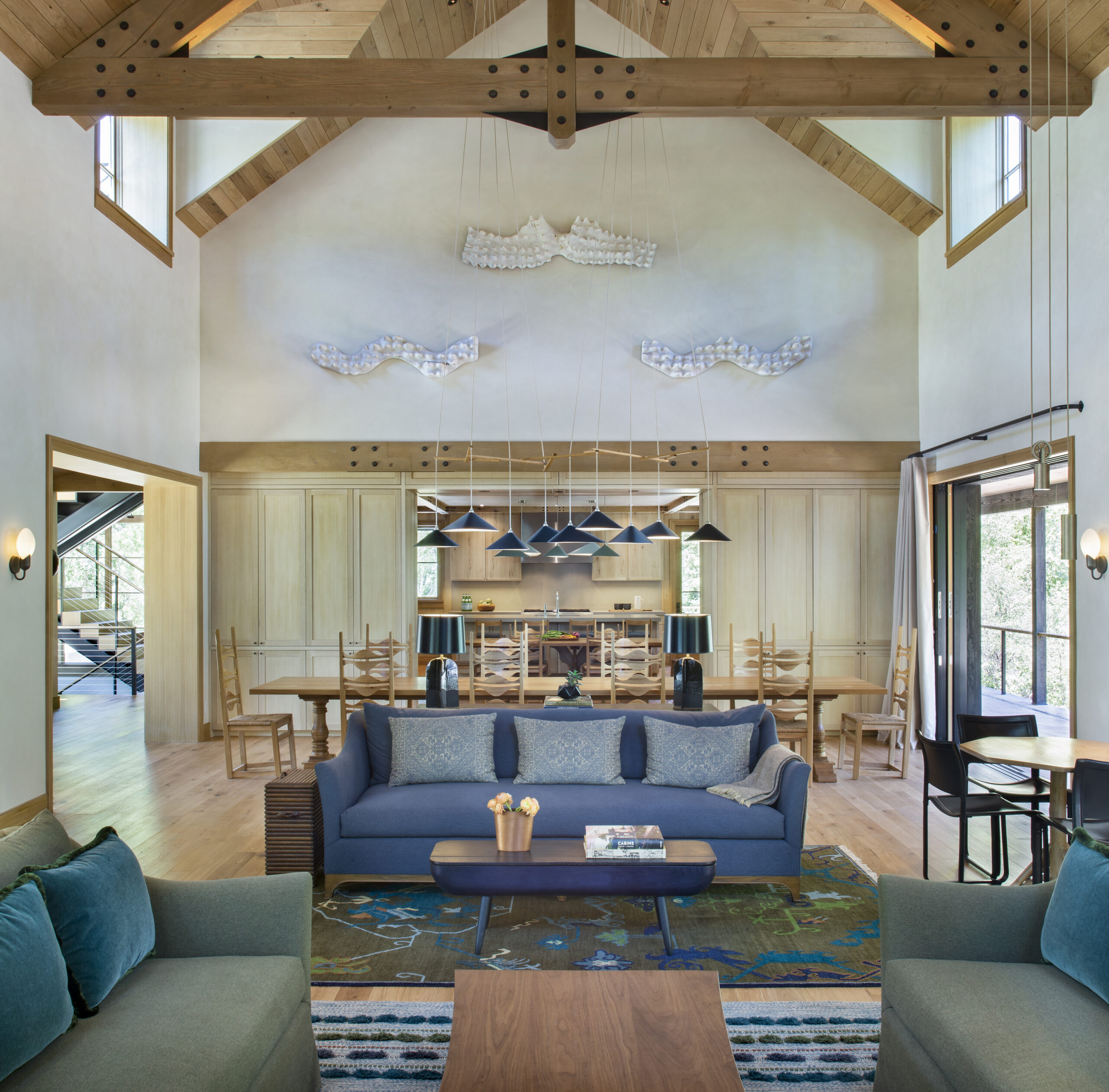
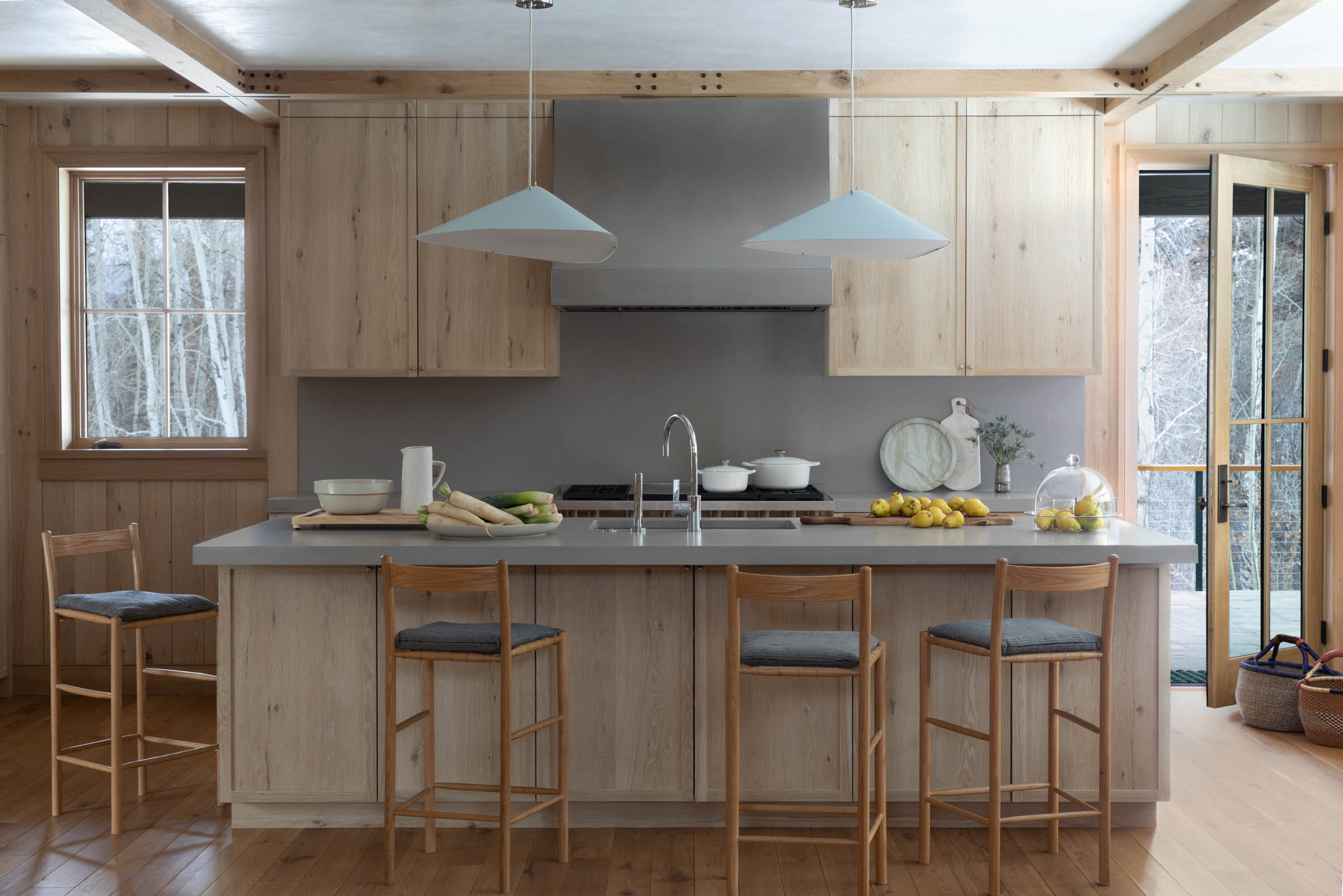
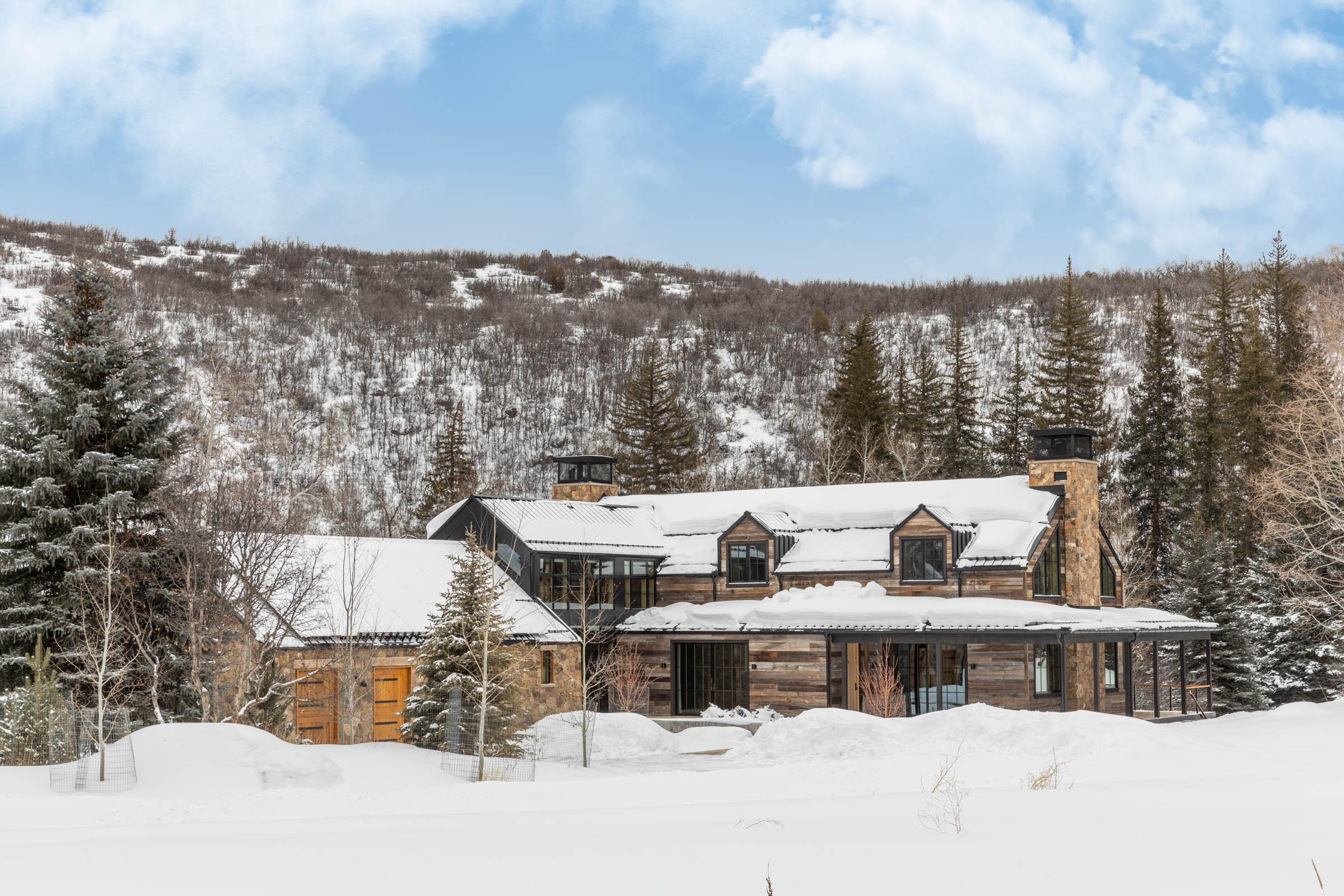
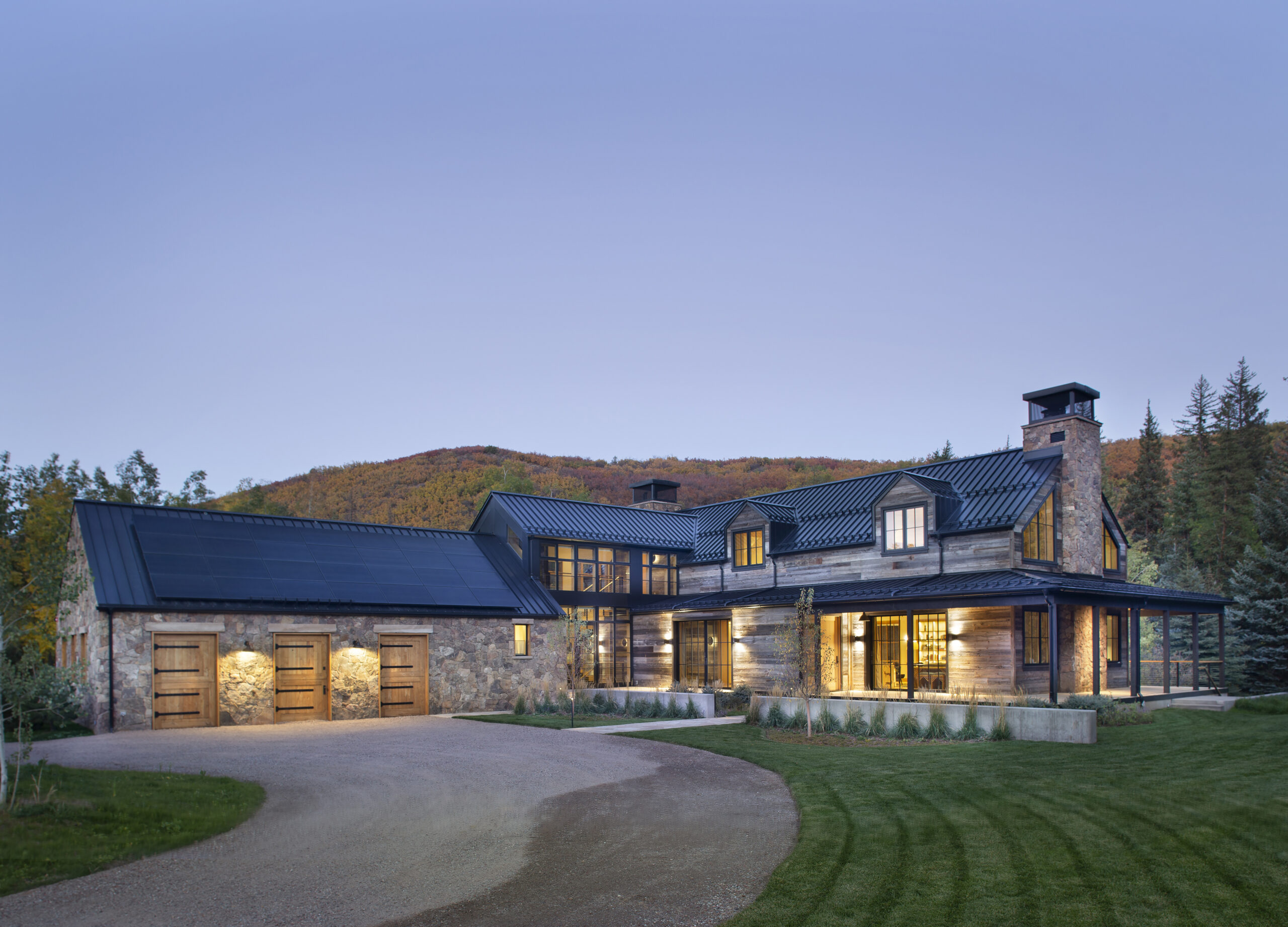
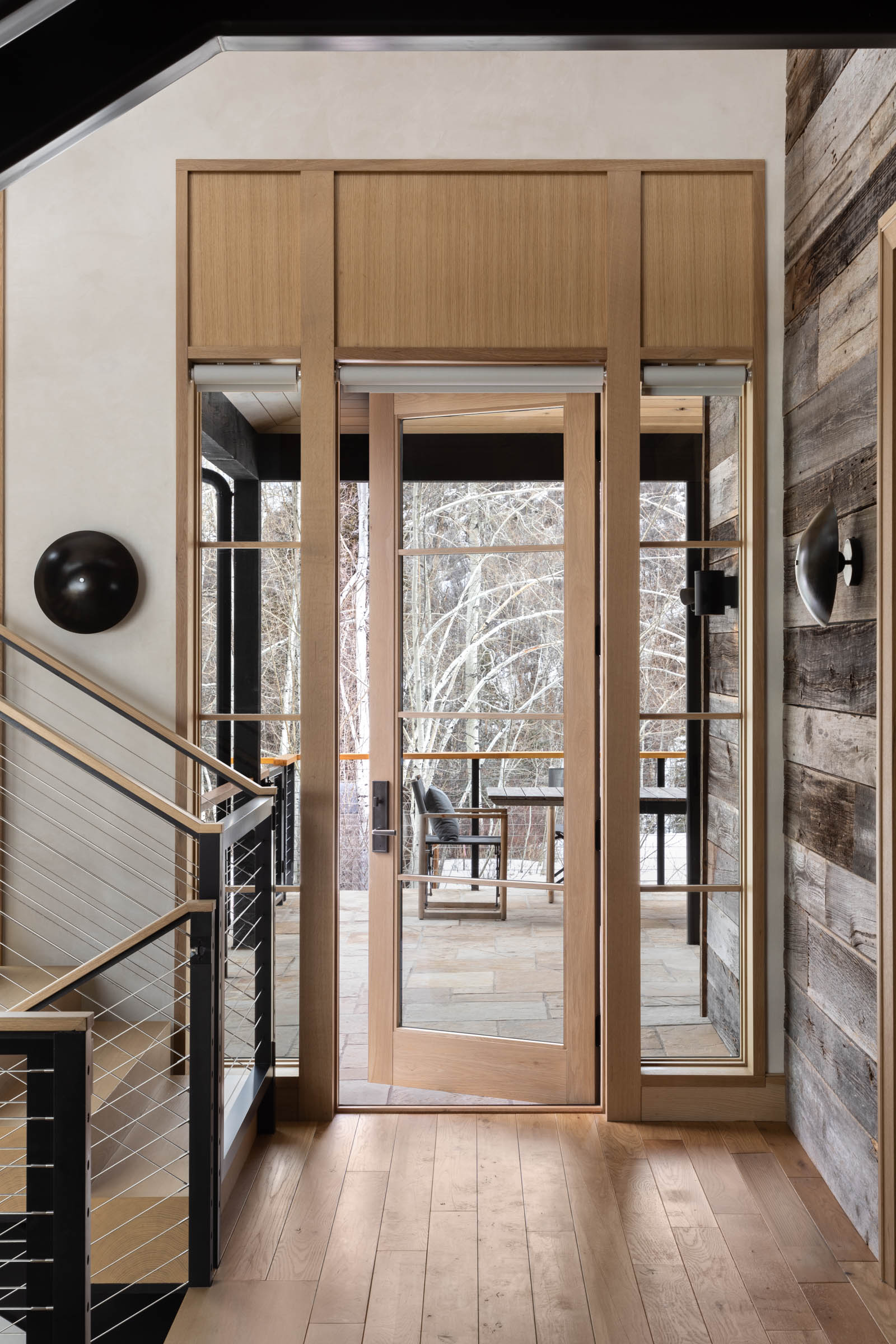
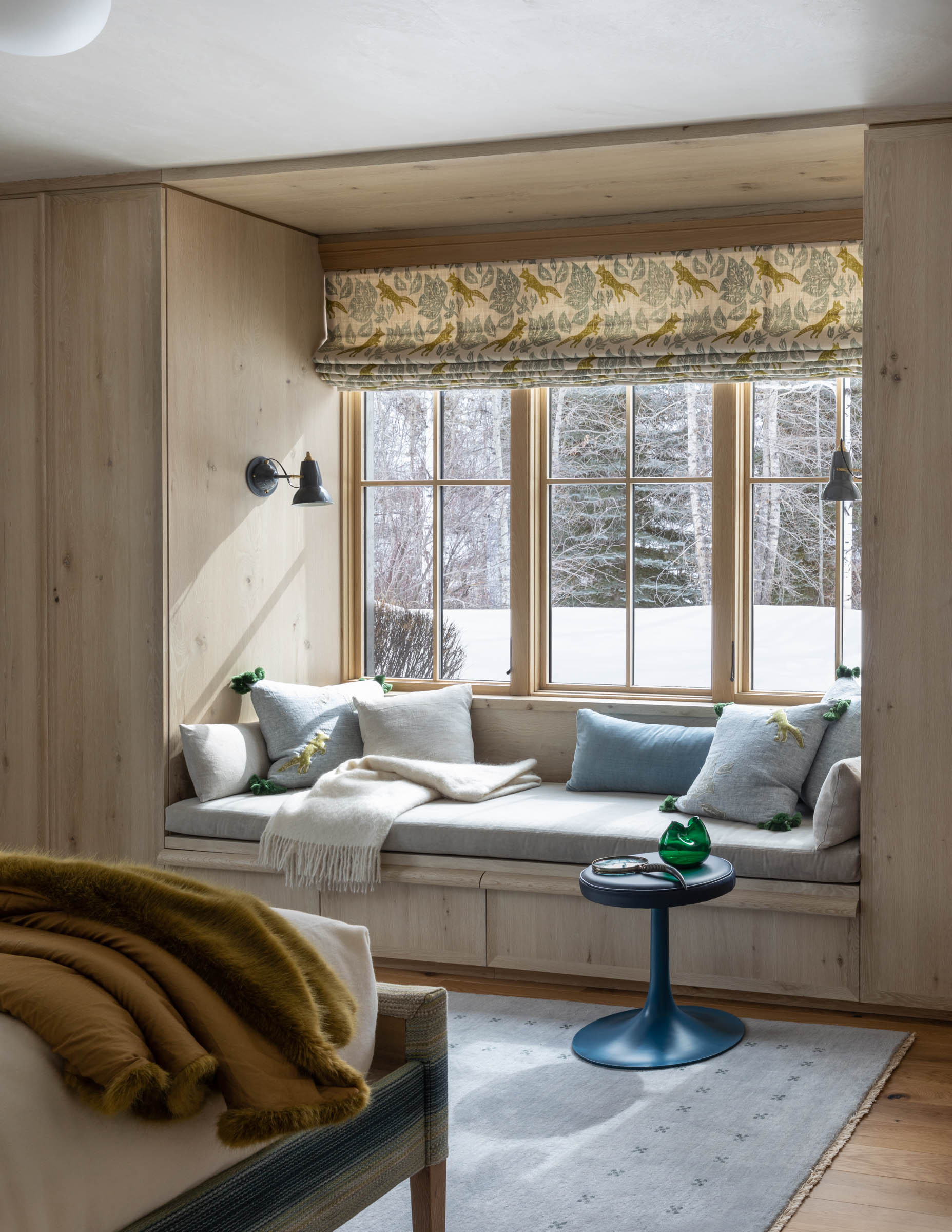
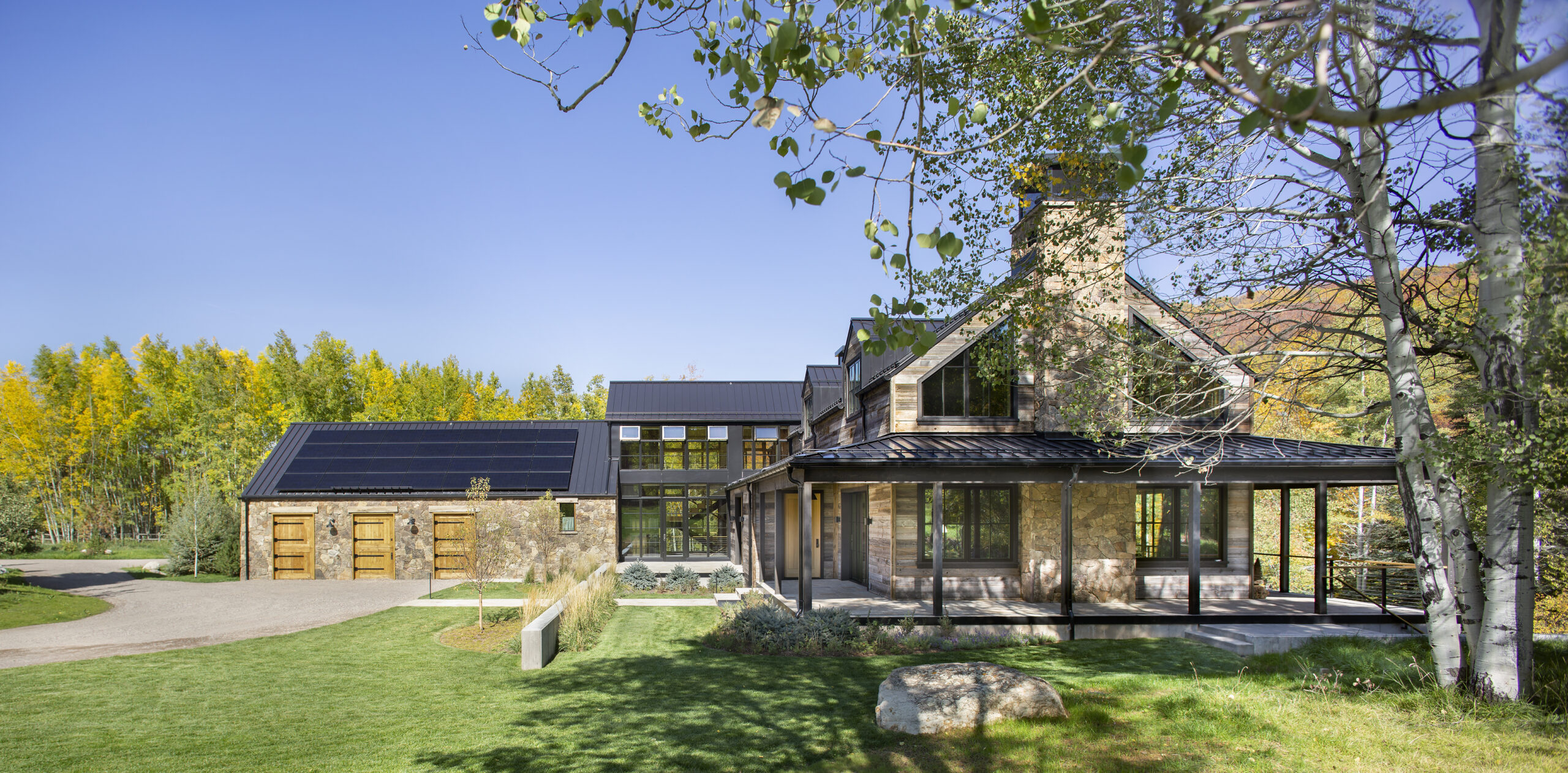
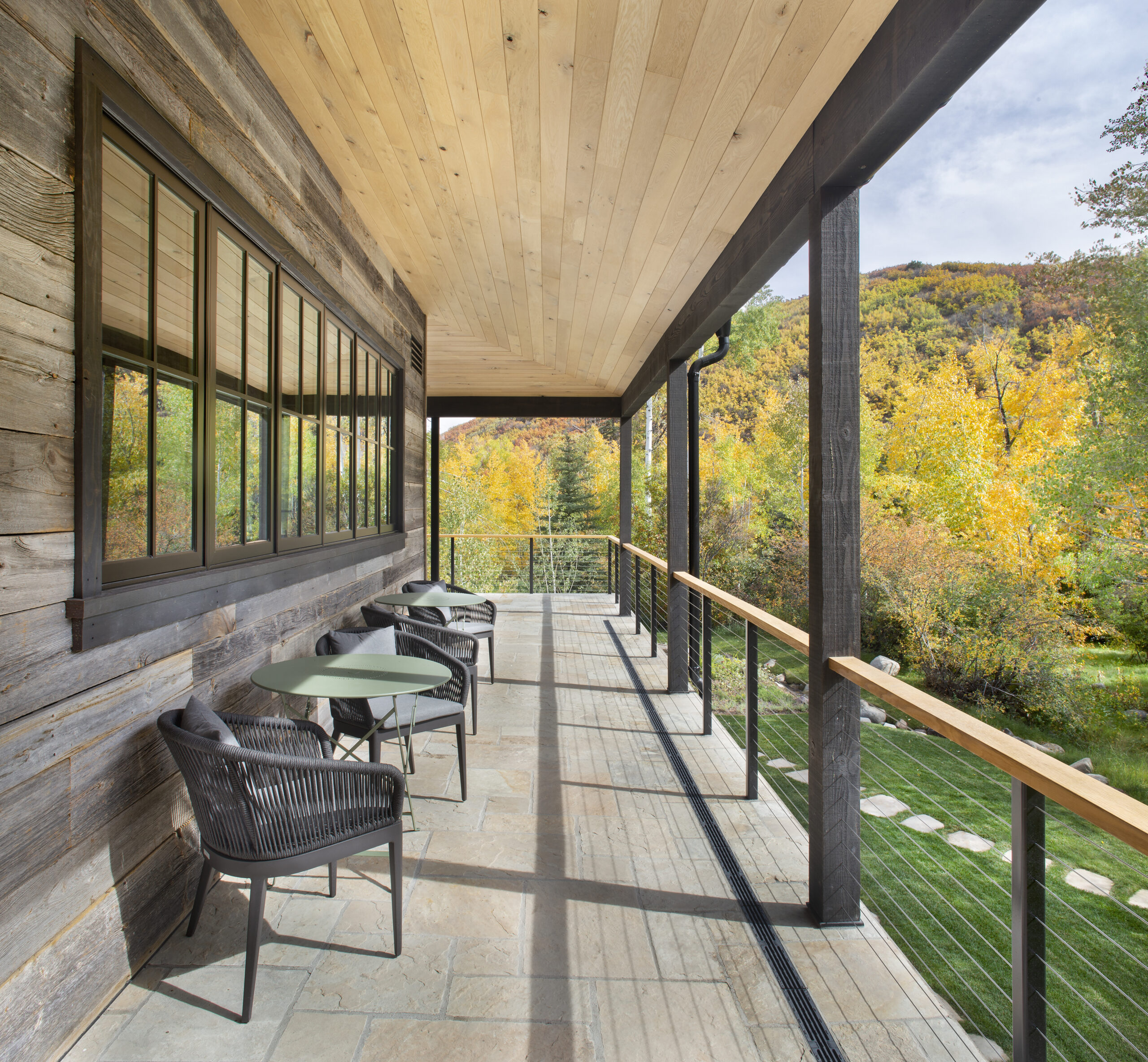
As families get bigger, the notion of ‘a place for all’ escalates in appeal: a retreat that fosters community and interaction, facilitates multi-generational gathering, and supports aging in place. Creek House grew out of precisely this impulse.
‘There are thirty family members, so we solicited feedback for what everyone wanted the house to be,’ Broughton relates. From this research, R+B discovered that the optimal way to strengthen intergenerational connections was via a paradigm of unforced togetherness: to design spaces with specific uses, but to enable the people within them to participate in collective activities, break off into smaller groups, or enjoy solitary pursuits.
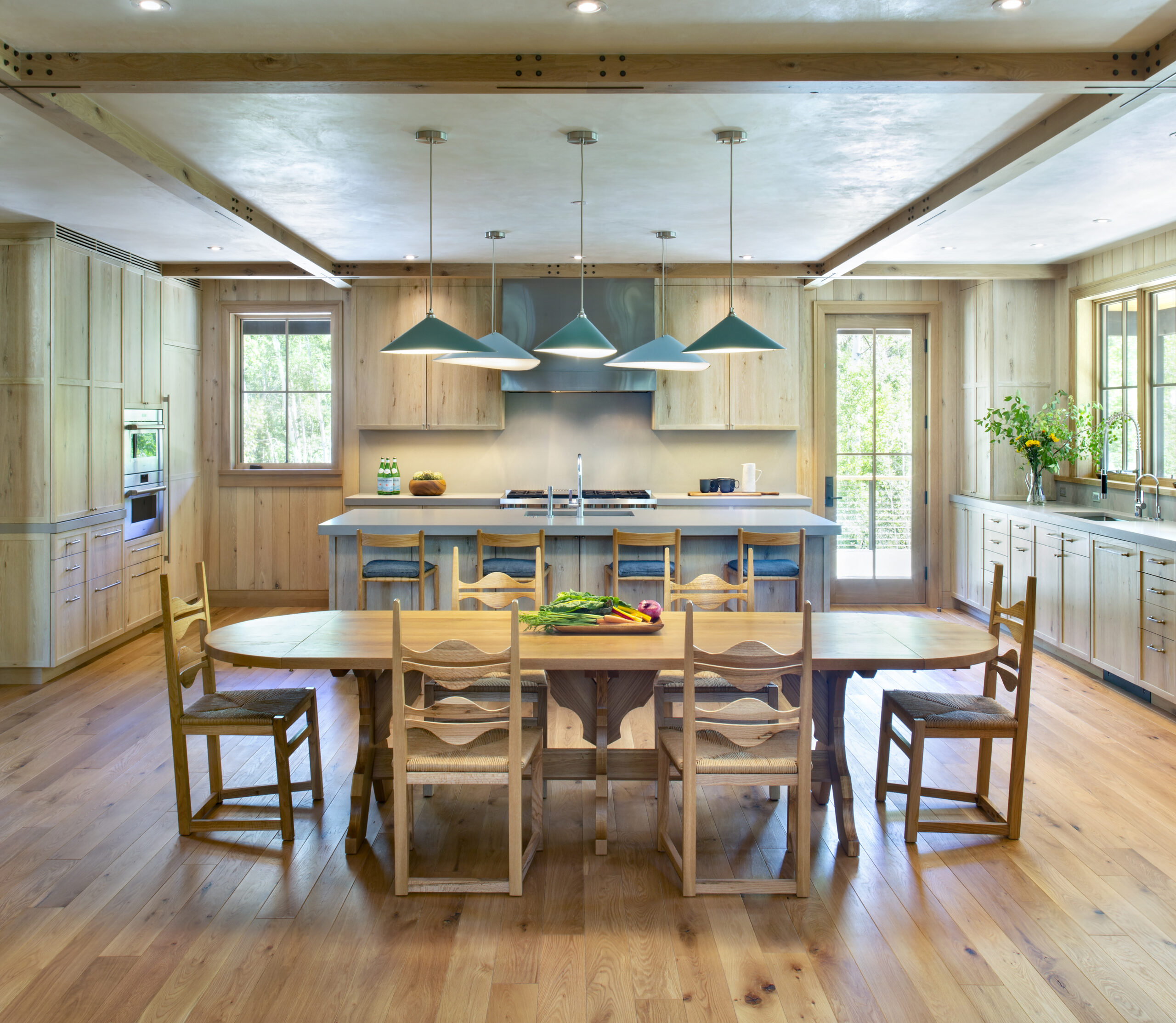
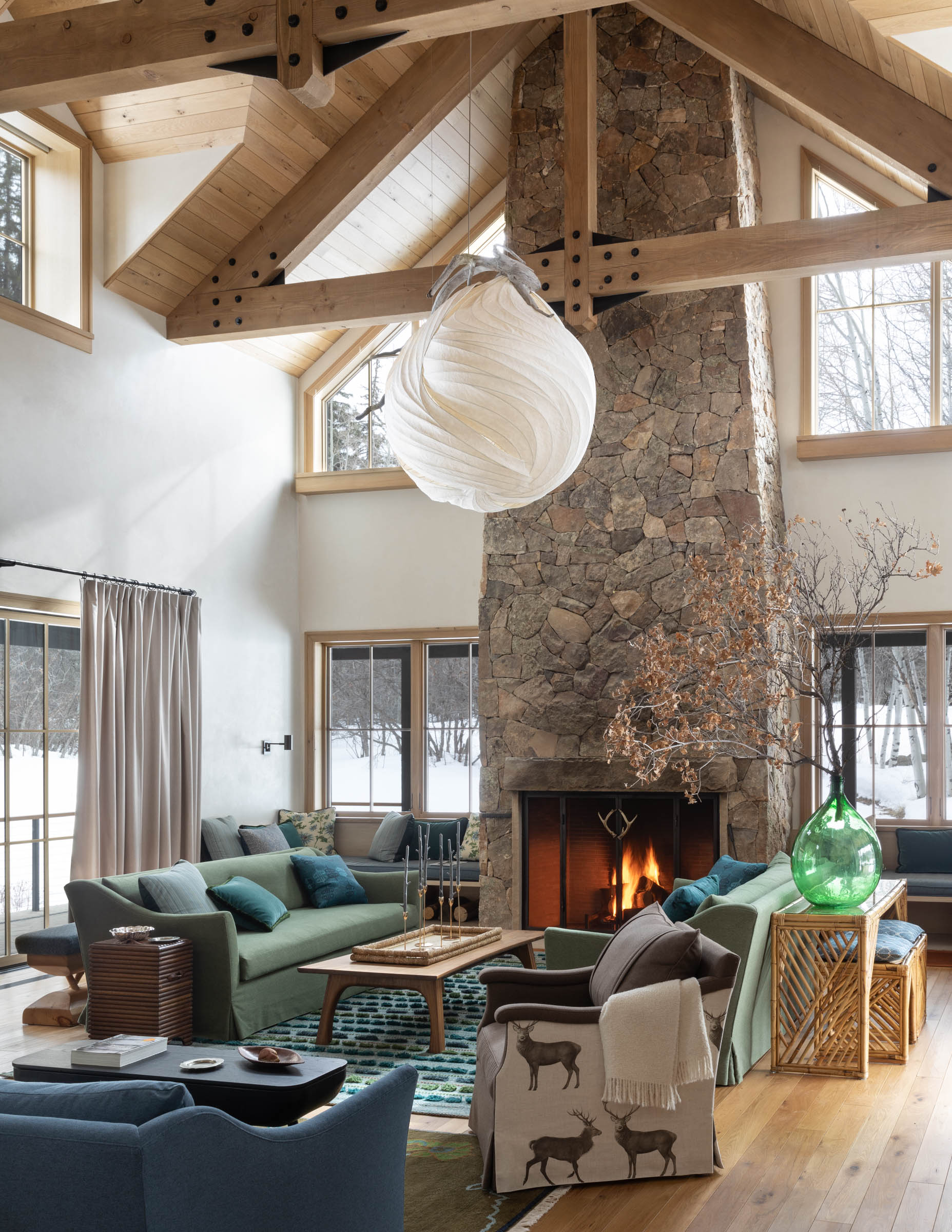
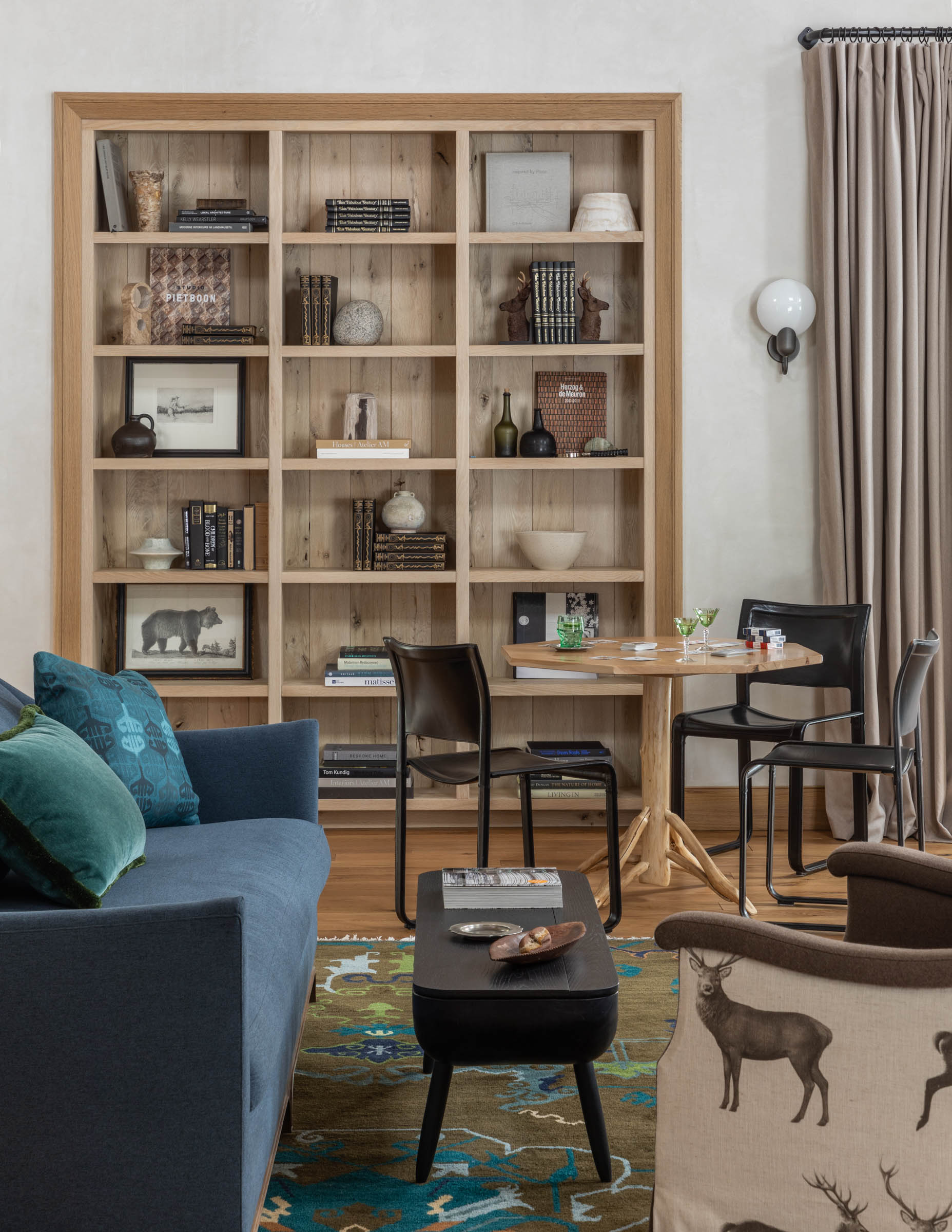
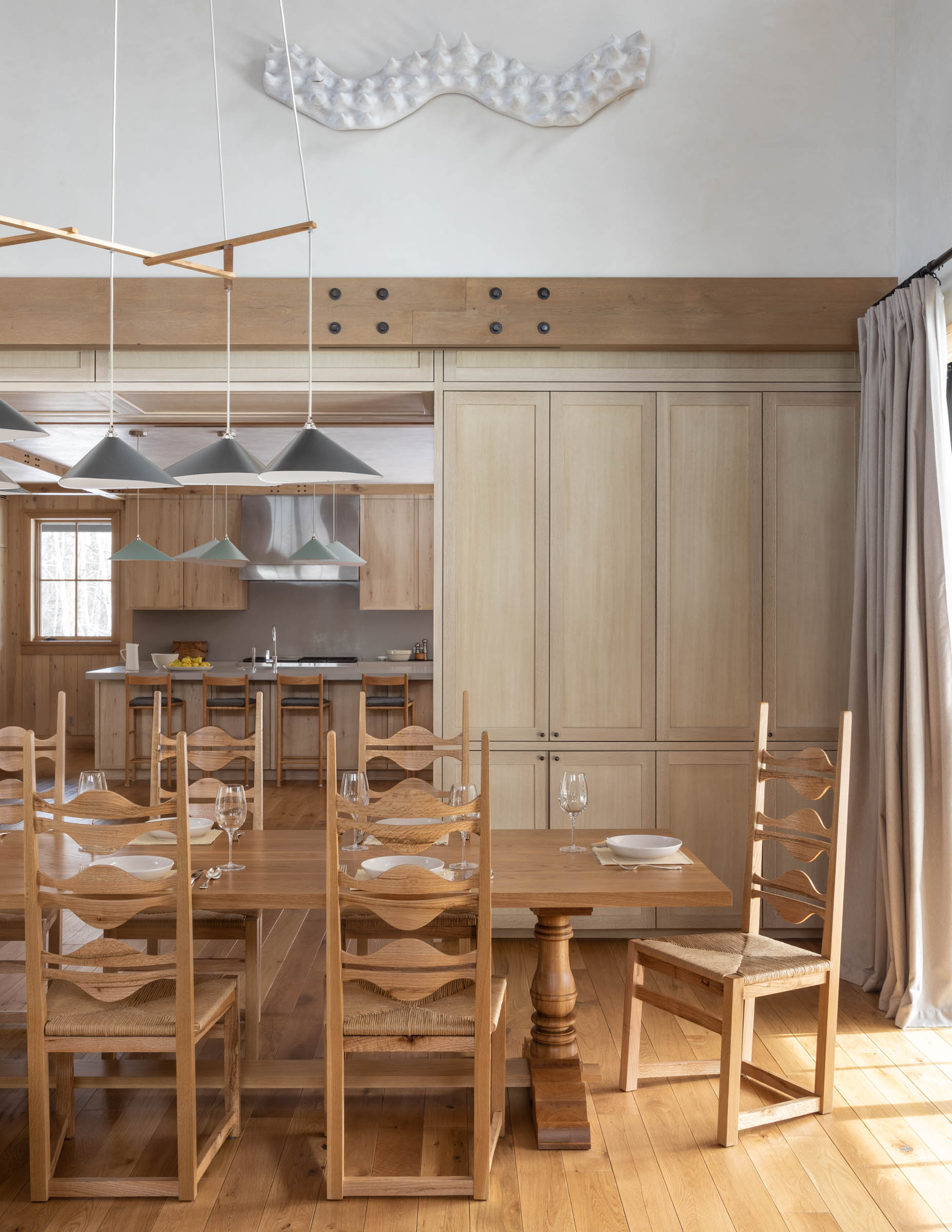
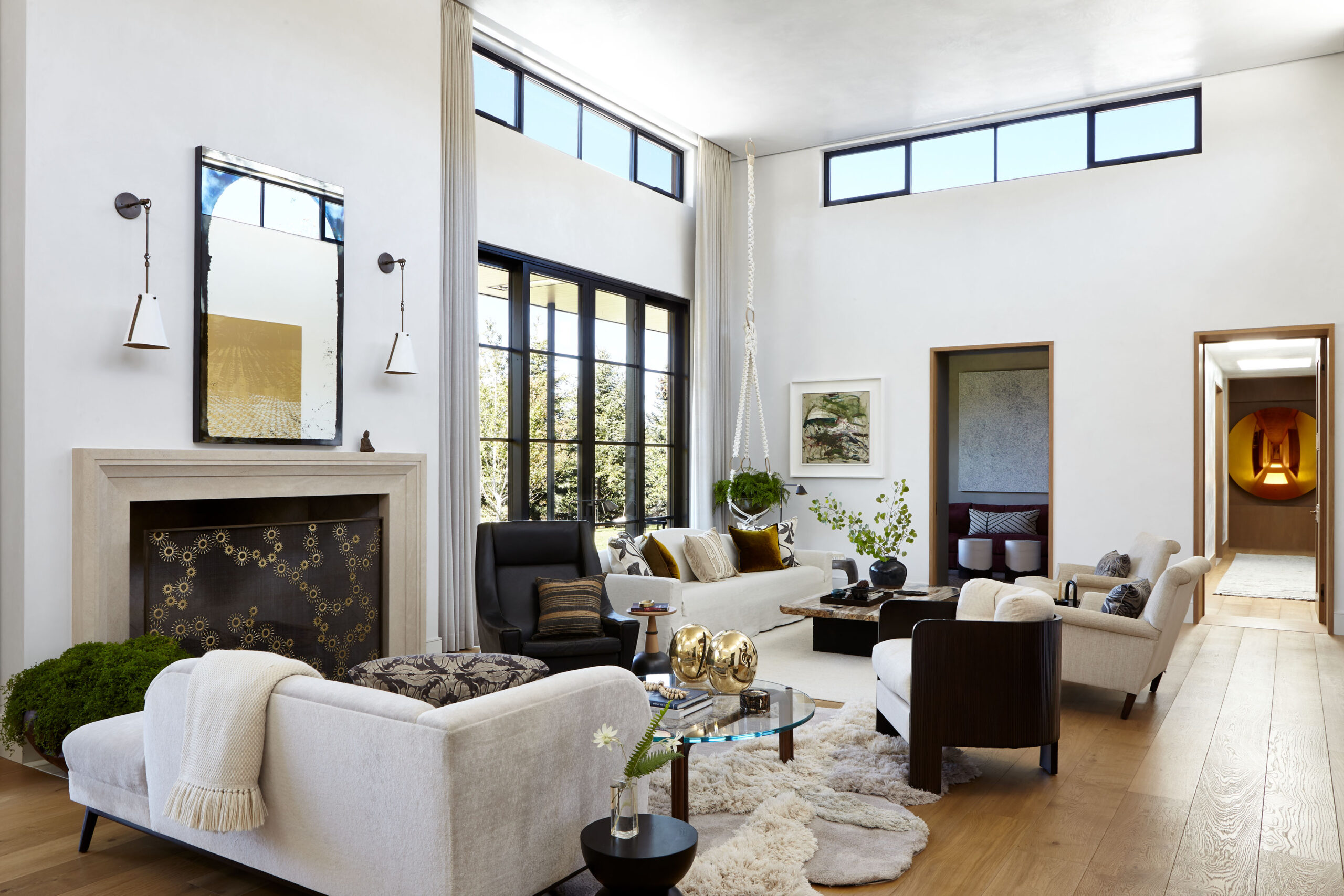
There are multiple bedrooms, as well as play and media rooms, but the principal multigenerational appeal lies in the great room, which soars to a height of twenty-three feet. The fireplace is flanked by reading nooks; there are two primary sitting areas, one before the fireplace, one at the room’s midpoint; a gaming table, in front of a bookcase; and an expanding feasting table for all thirty family members at the room’s far end. The sense of home is palpable, in an environment that can be savored in multiple ways.
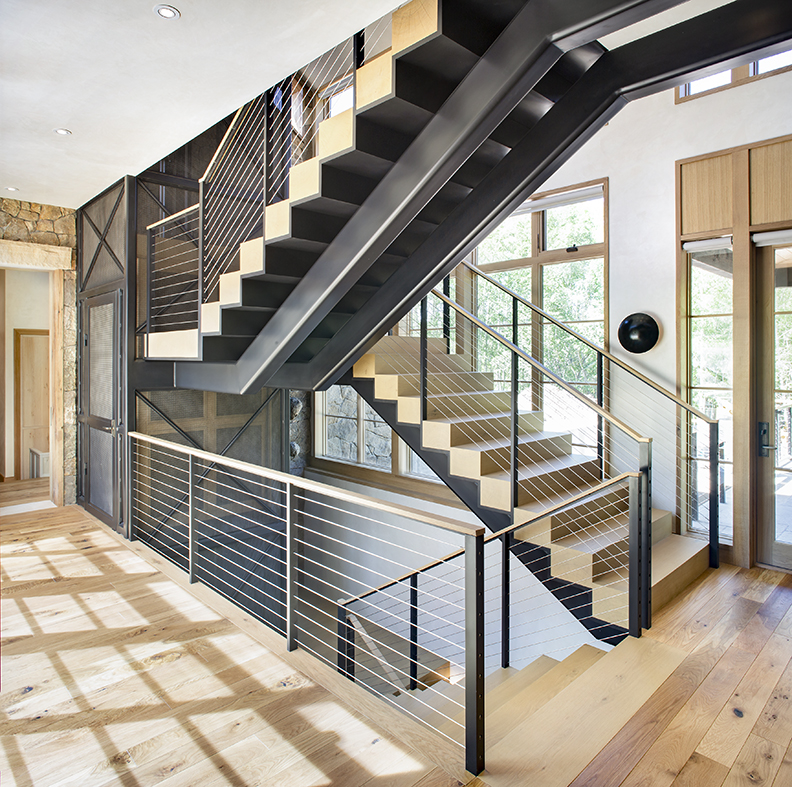
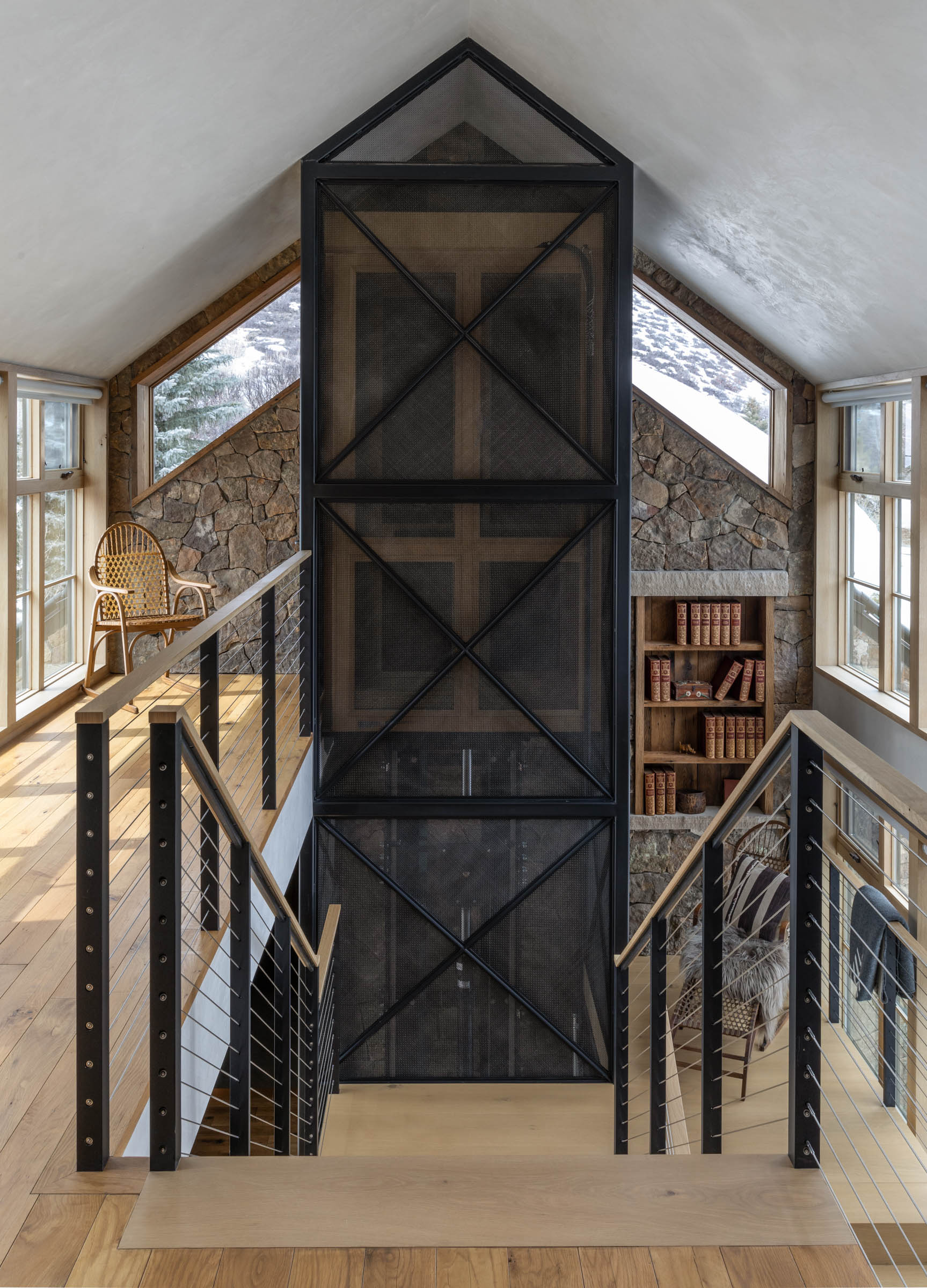
Though the residence calls to mind a Western vernacular ranch, it remains grander than one would have seen in the past. To reconcile the difference, R+B developed a narrative about how Creek House could be both contemporary and authentic. ‘We decided that we’d found a stone barn on the land, and a farmhouse close by it, and connected these two old buildings with a modern glass link,’ Broughton says. ‘And in the link we put the stair and the elevator.’
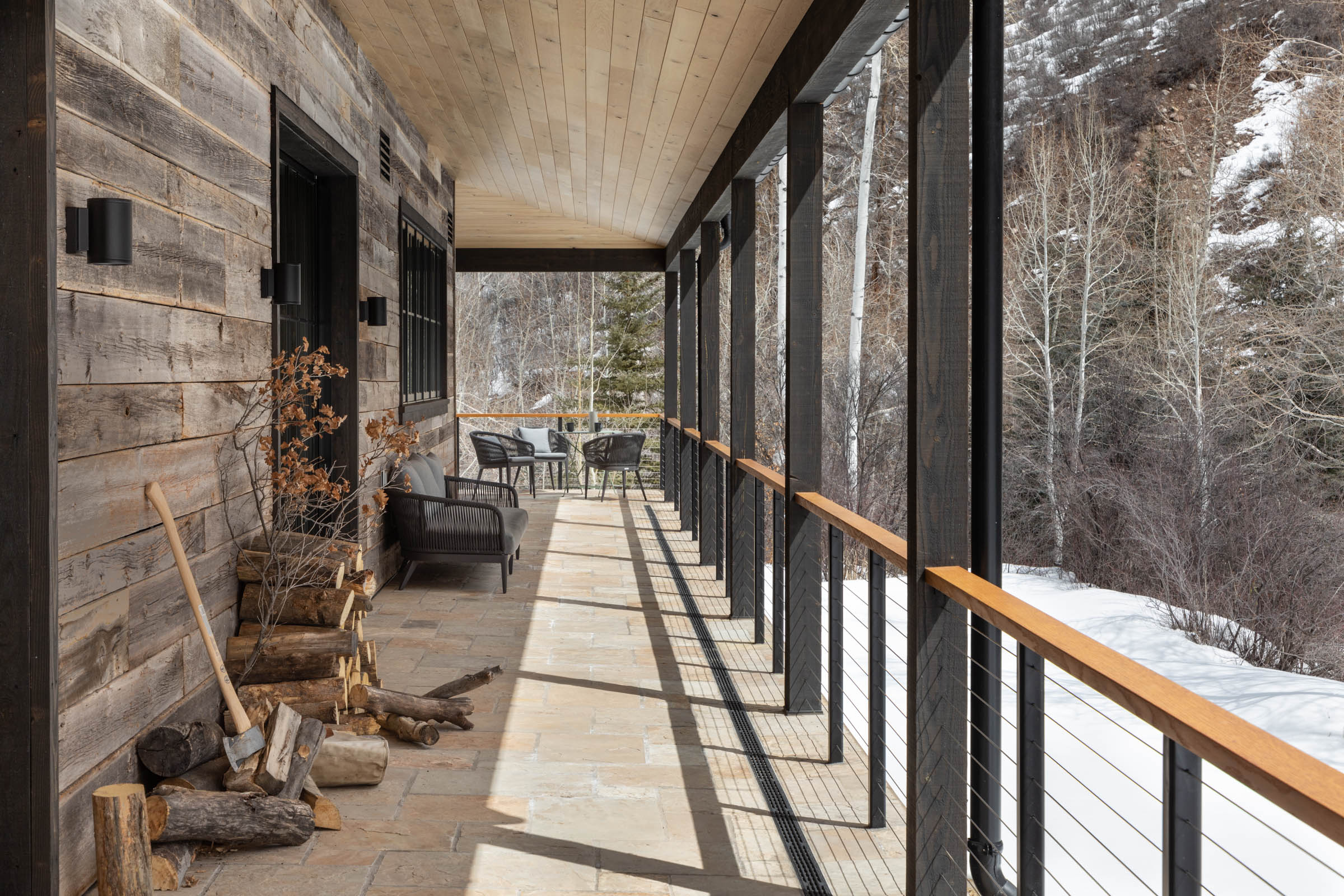
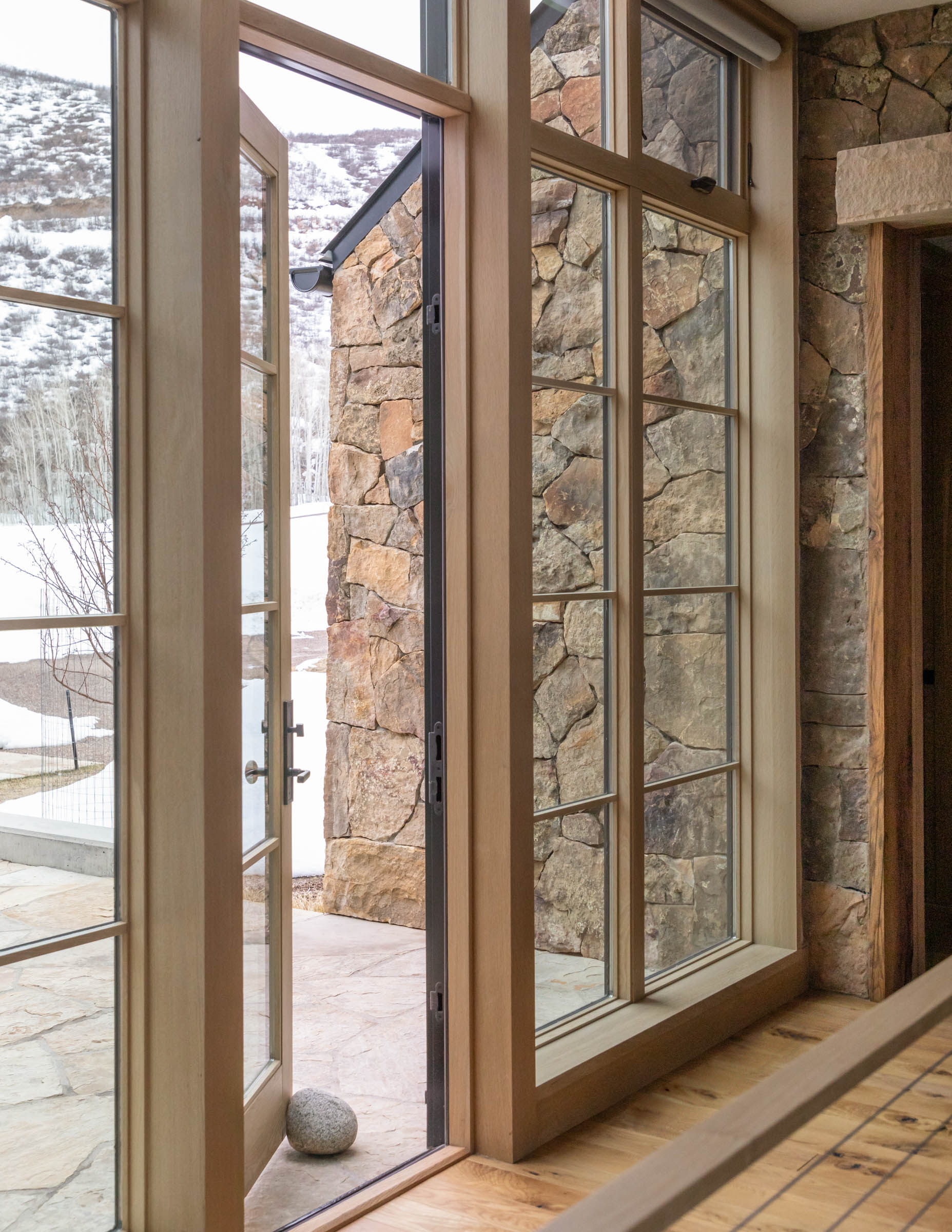
From the front, the stone volume, which contains the garage and mudroom, reveals three wood plank doors, each capped with a roughly chiseled stone lintel and held in place by wrought-iron strap hinges. The glass link incorporates the exterior walls of the stone barn on one side and the wood-clad main house on the other. As for the residence, the weathered horizontal boards, towering stone chimney, and standing-seam metal roof place it indelibly in style and in time. A wraparound covered porch, which touches four elevations, proves inviting even in the cold months.
Ensuring the maintenance of the property’s natural beauty, and ecological health, was a critical part of the mission. To exceed our clients’ expectations for energy performance, and incorporate active and passive systems to reduce the home’s carbon footprint, we chose to re-use the site of a pre-existing house; rotated the new building to move it out of the 100-year floodplain setback; and provided every living space a visual and auditory connection to the adjacent creek – from which the house takes its name.
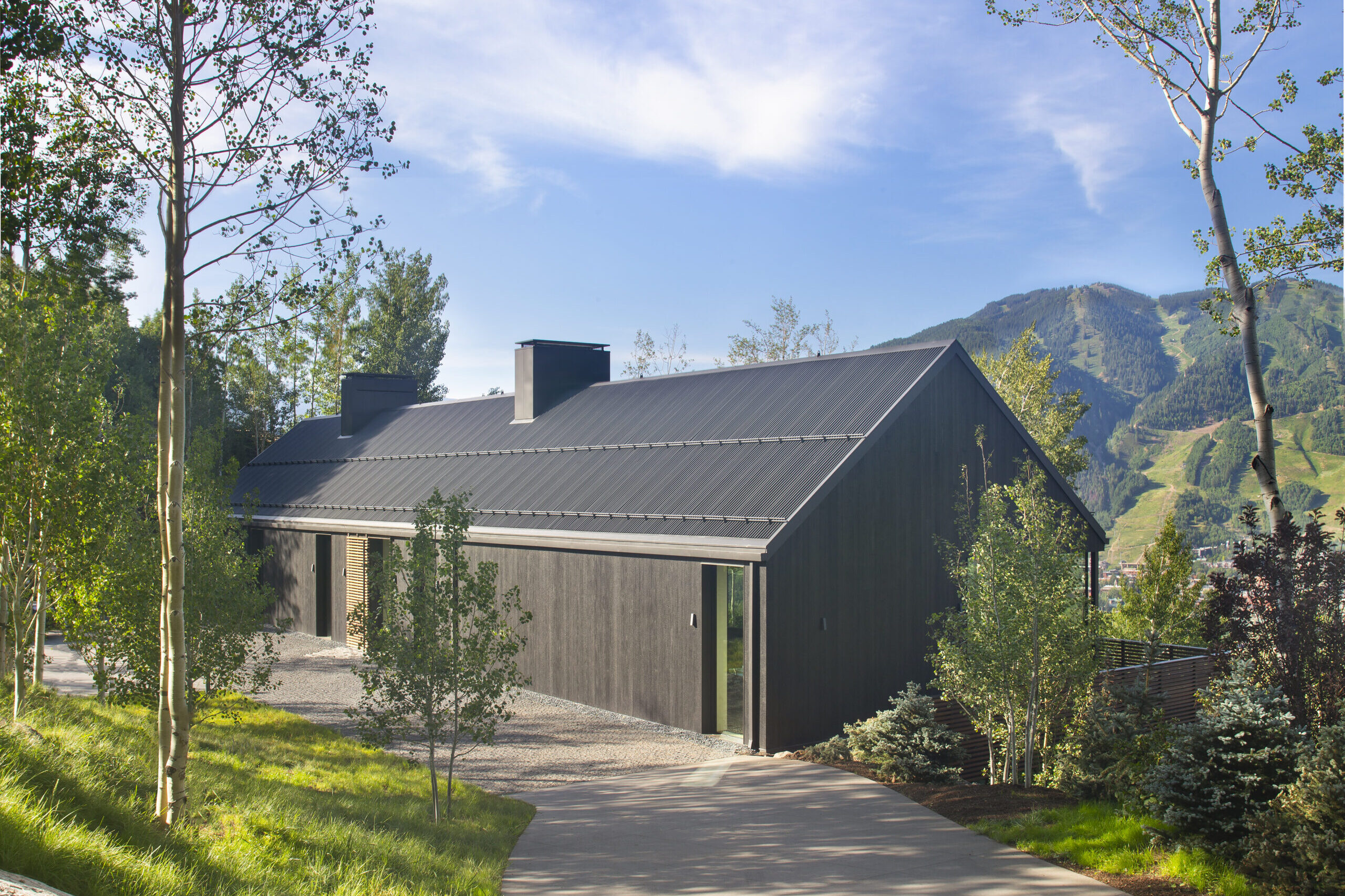
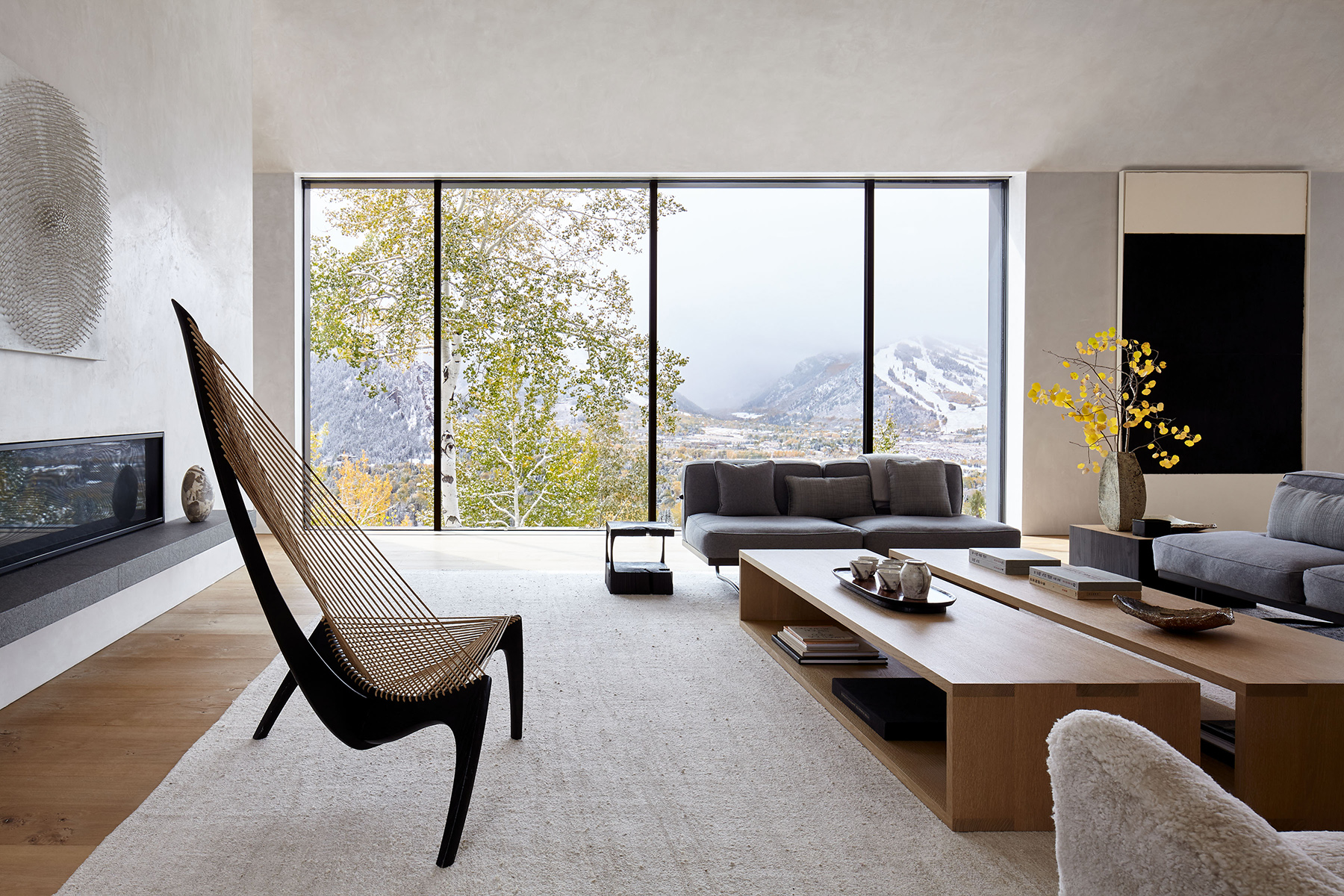
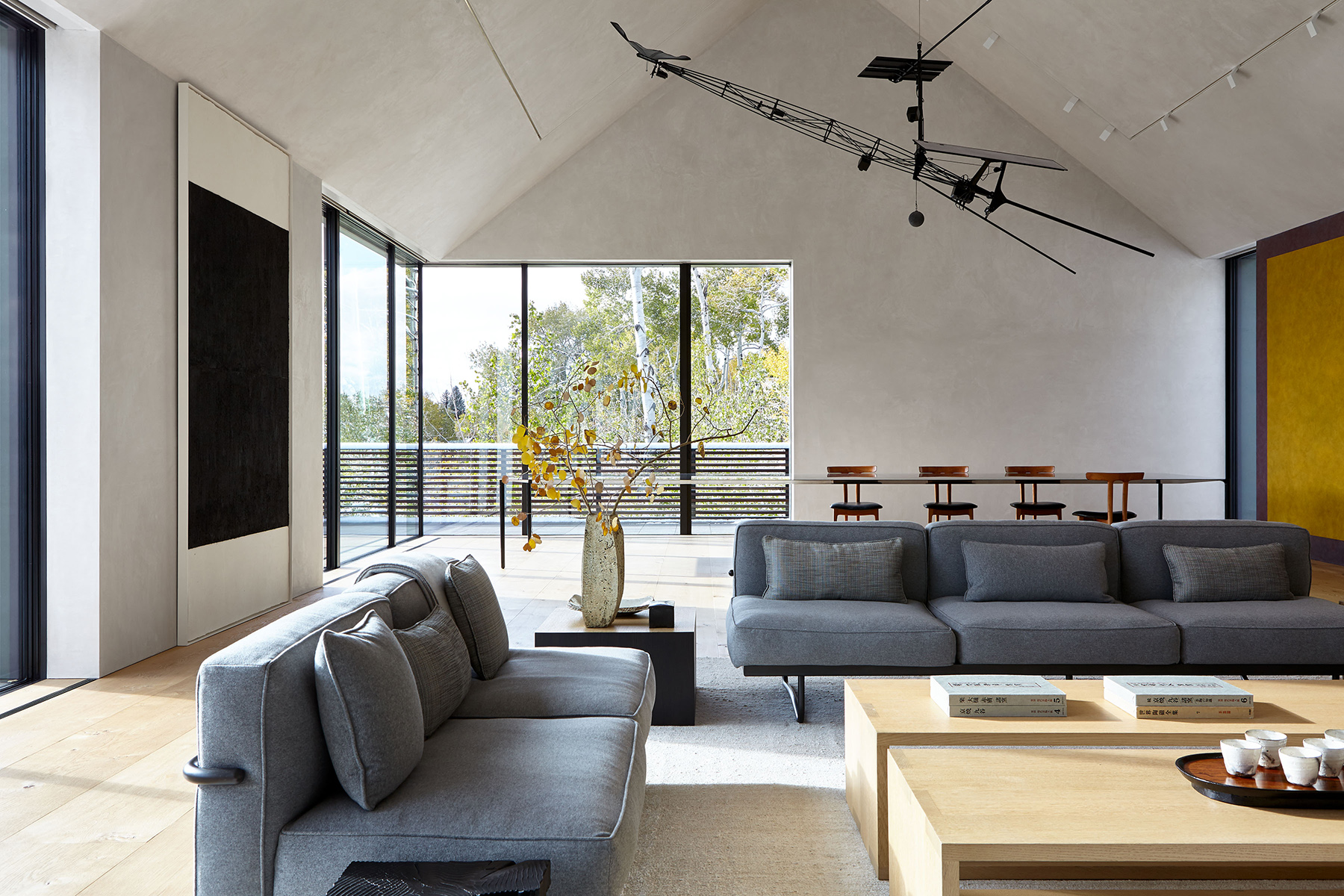
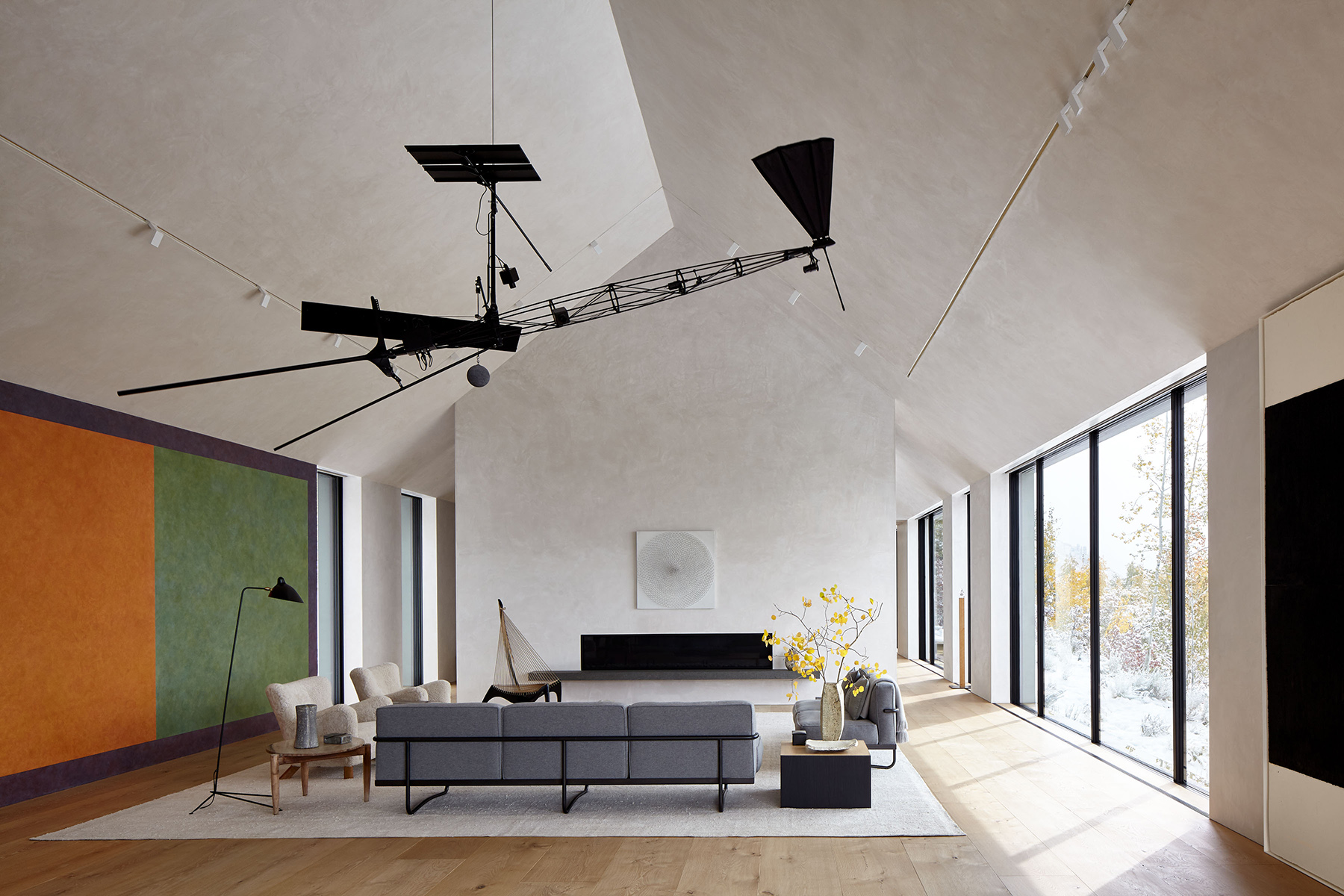
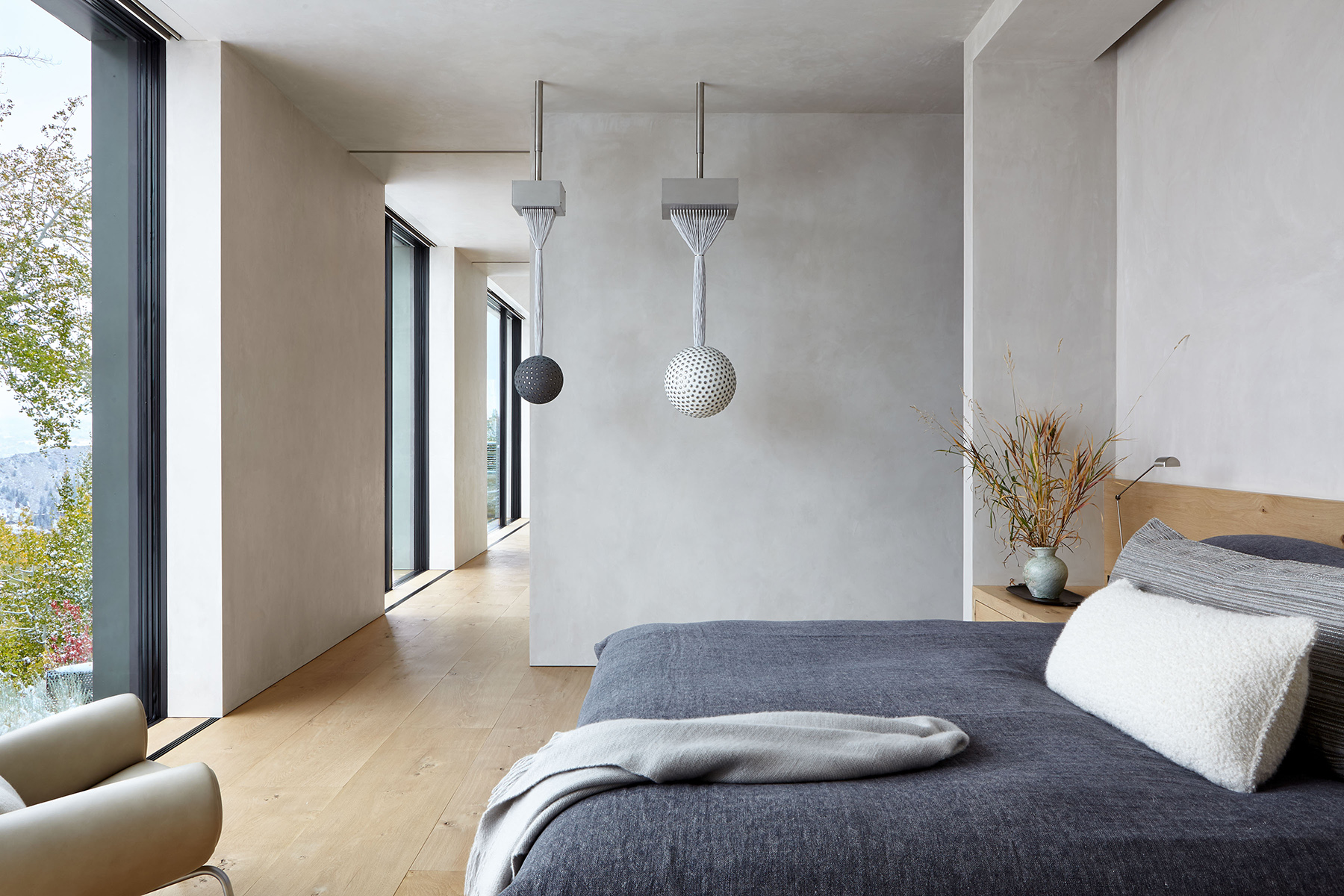
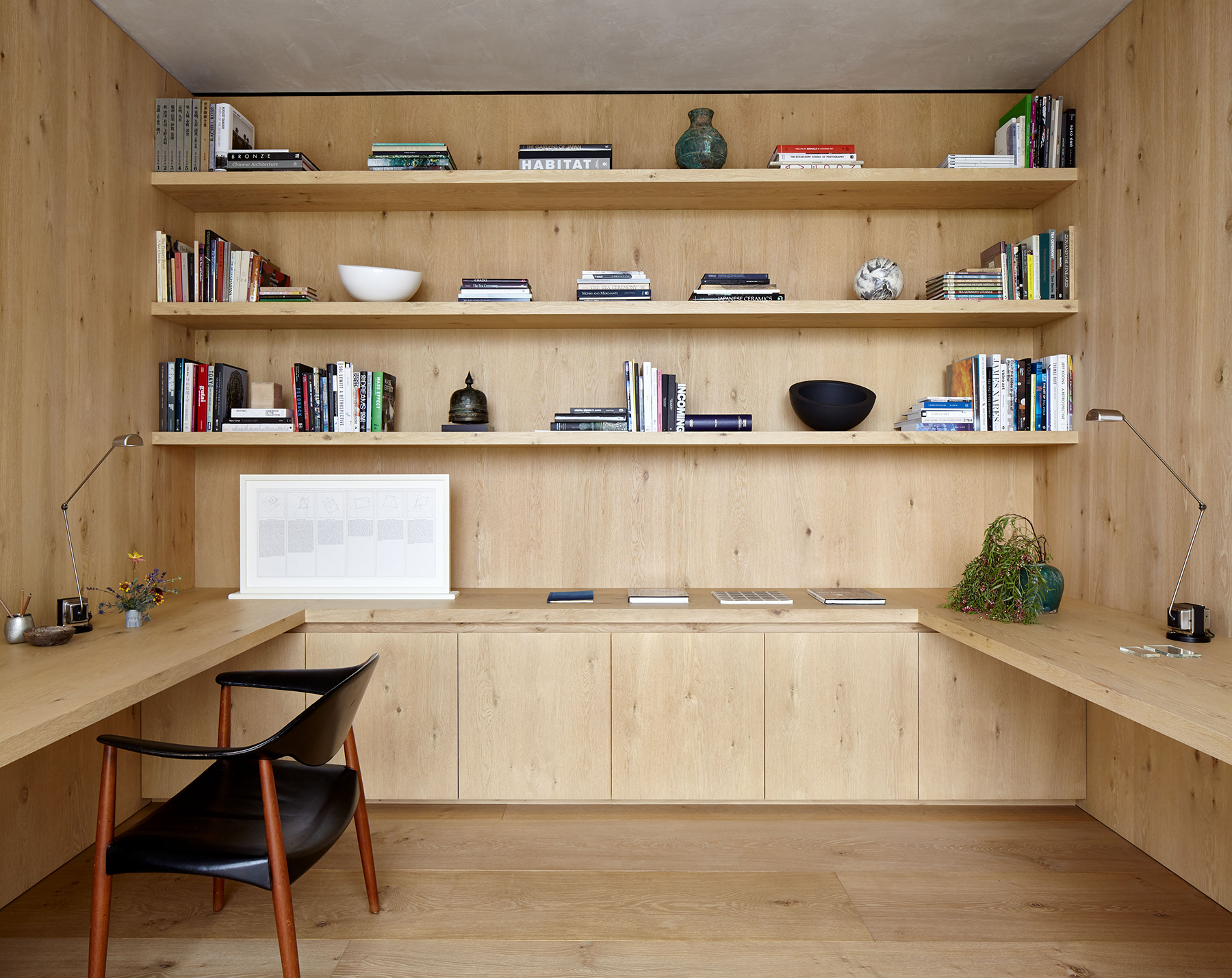
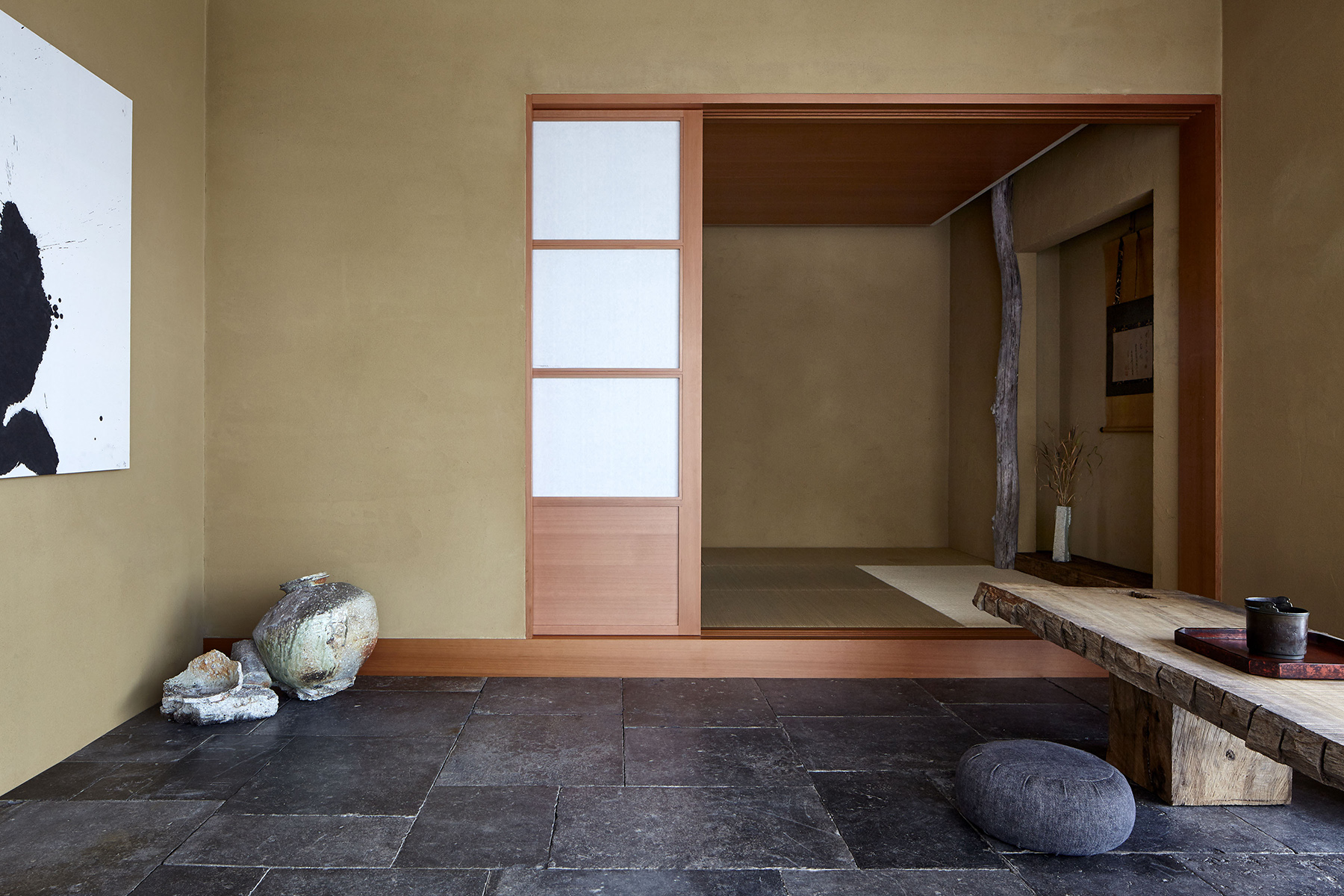
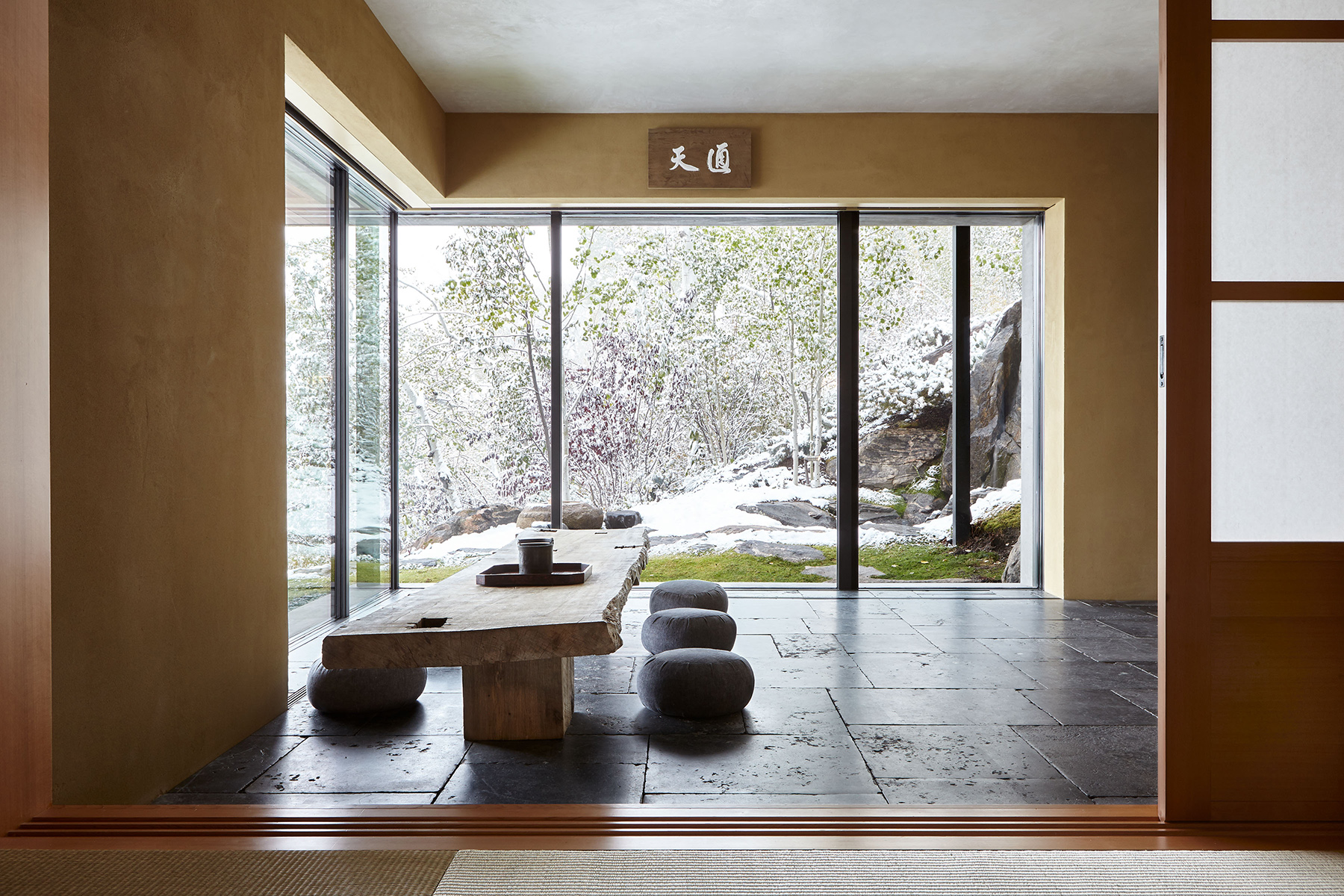
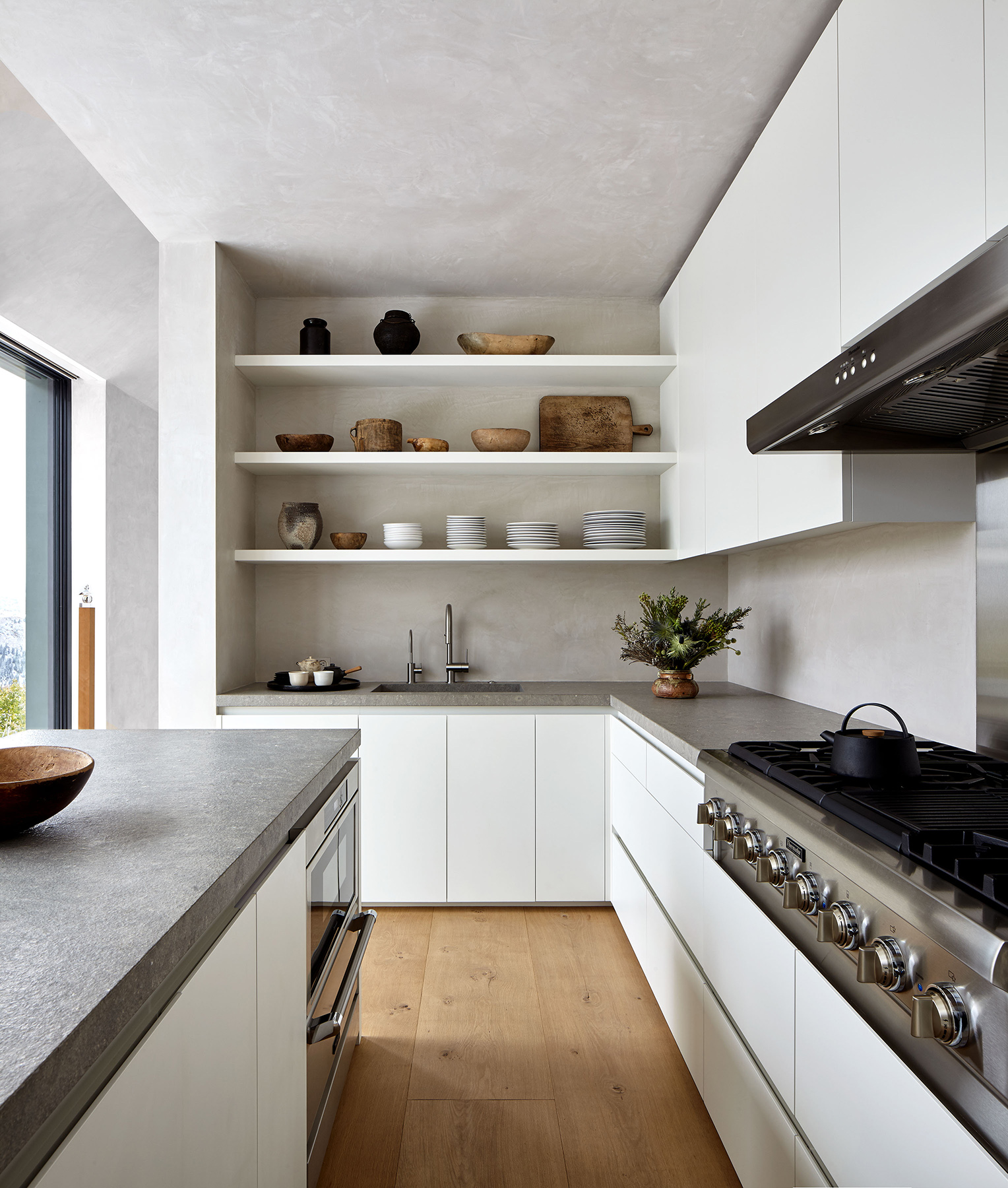
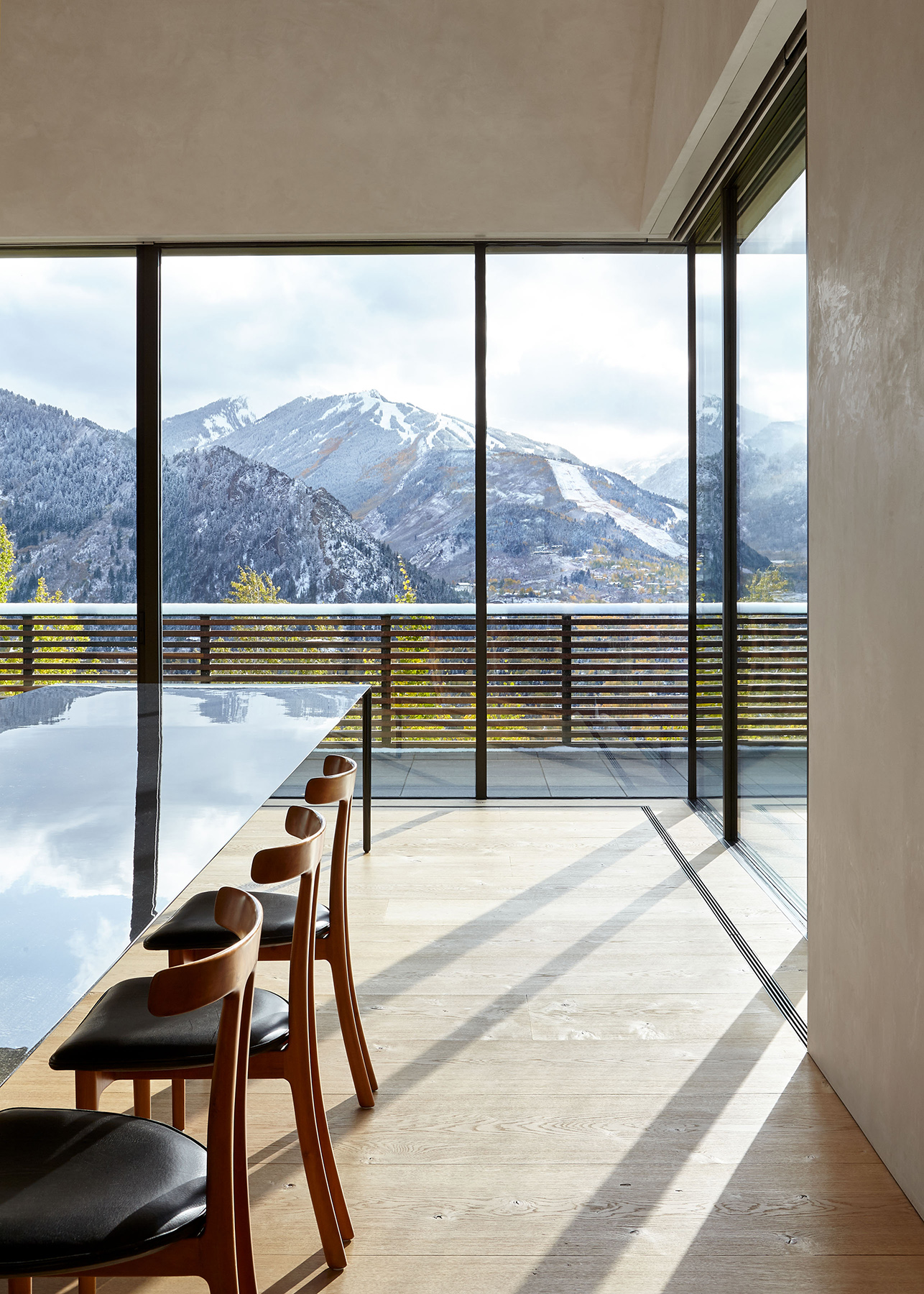
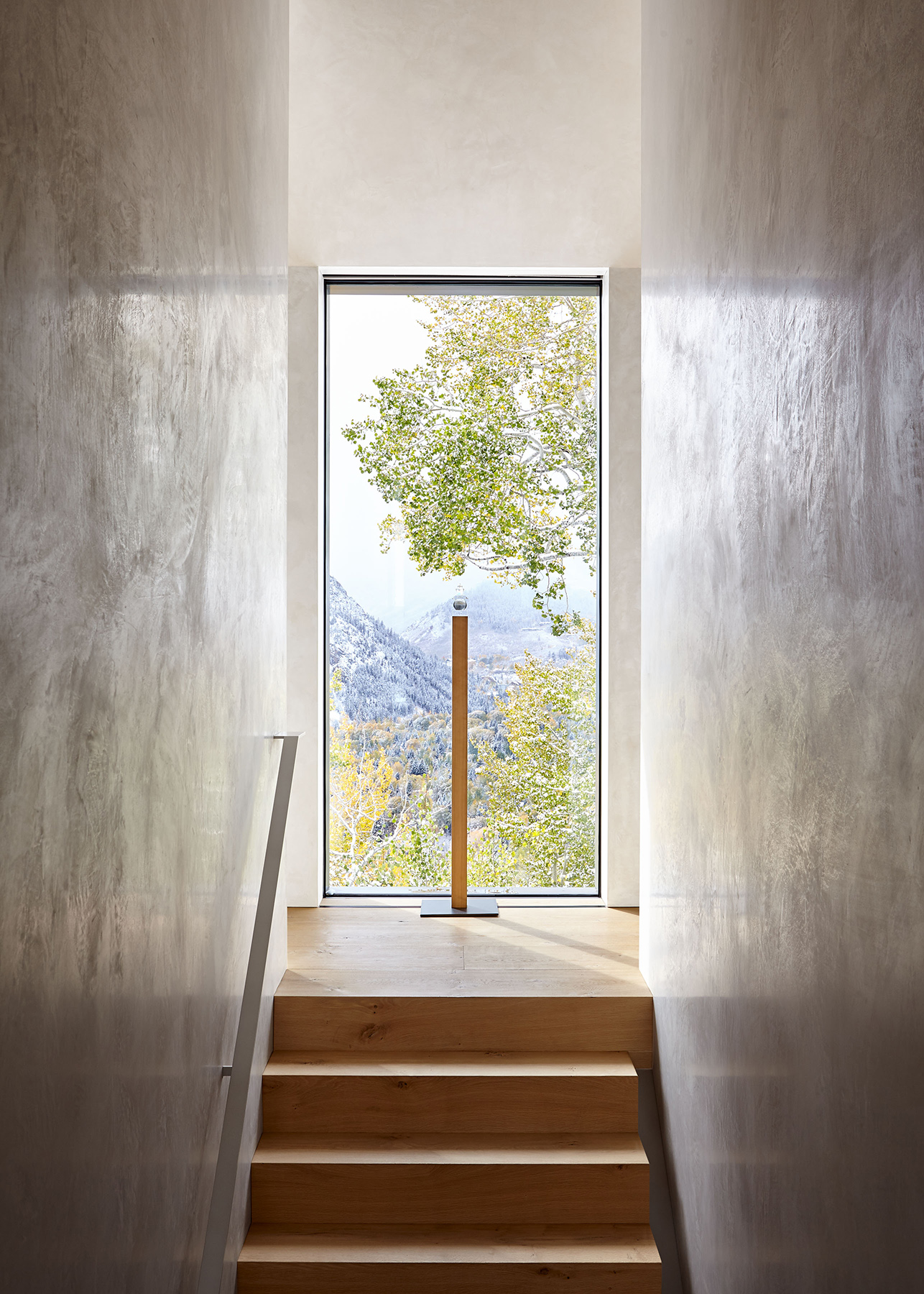
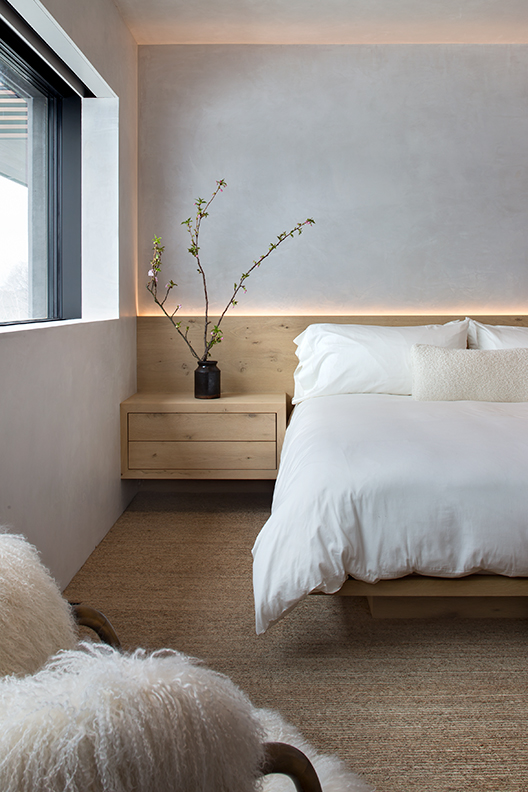
Many of R+B’s projects enjoy spectacular views, and this one, with its panorama of Aspen’s peaks and slopes, is no exception. Yet as regards the world past the windows, Art Barn remains unique. So compelling is the interior that the vista becomes a backdrop. The irony is that the architecture could not be more spare.
Our clients, whose world-class art collection includes not only wall-based works but also sound and video installations, required an environment in which to showcase new pieces. Additionally, the couple needed a place to host get-togethers and events: a combination art and music venue, think tank, and salon. What they had in mind was a rural structure – an ‘intimate and understated, vernacular idea,’ says Rowland.
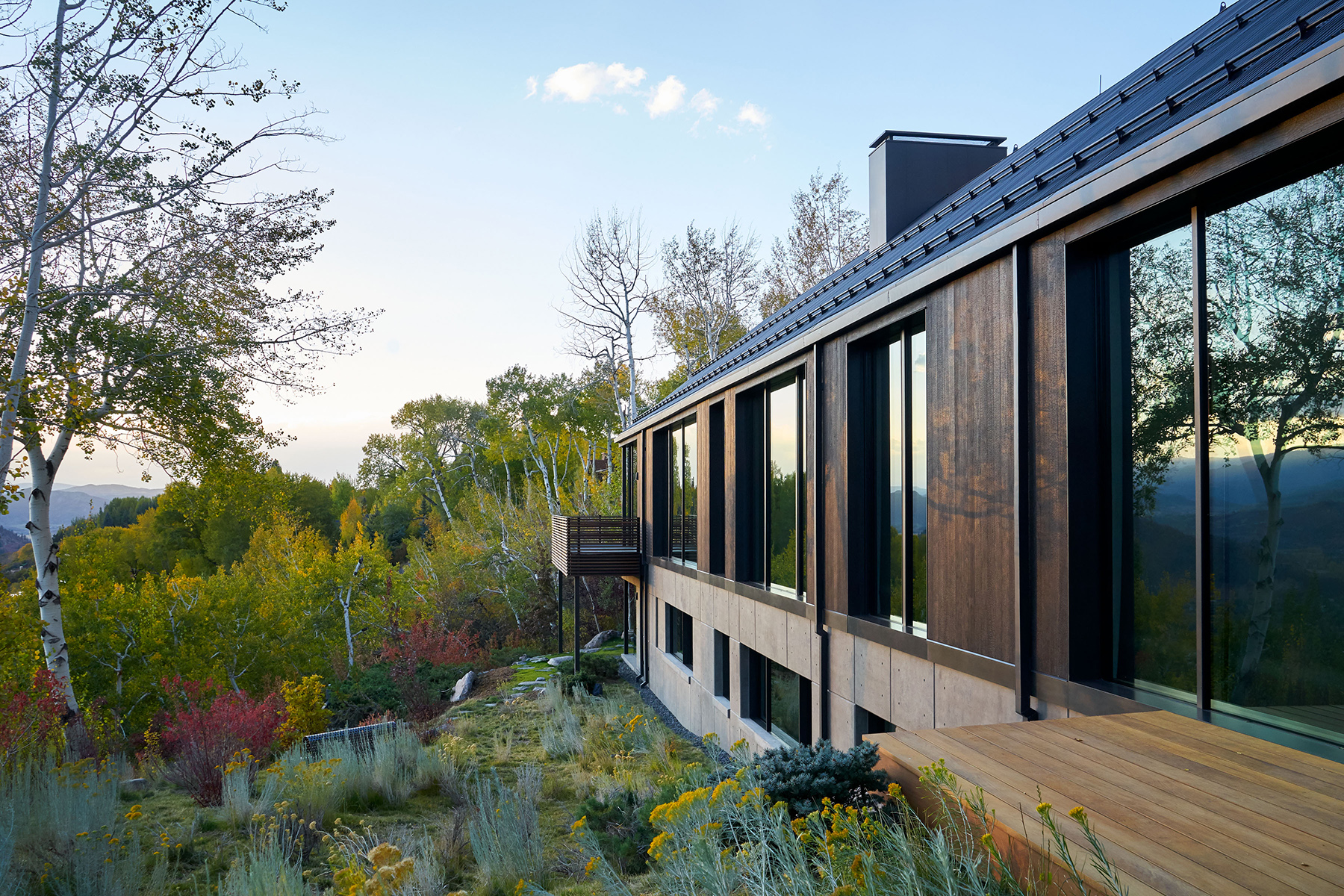
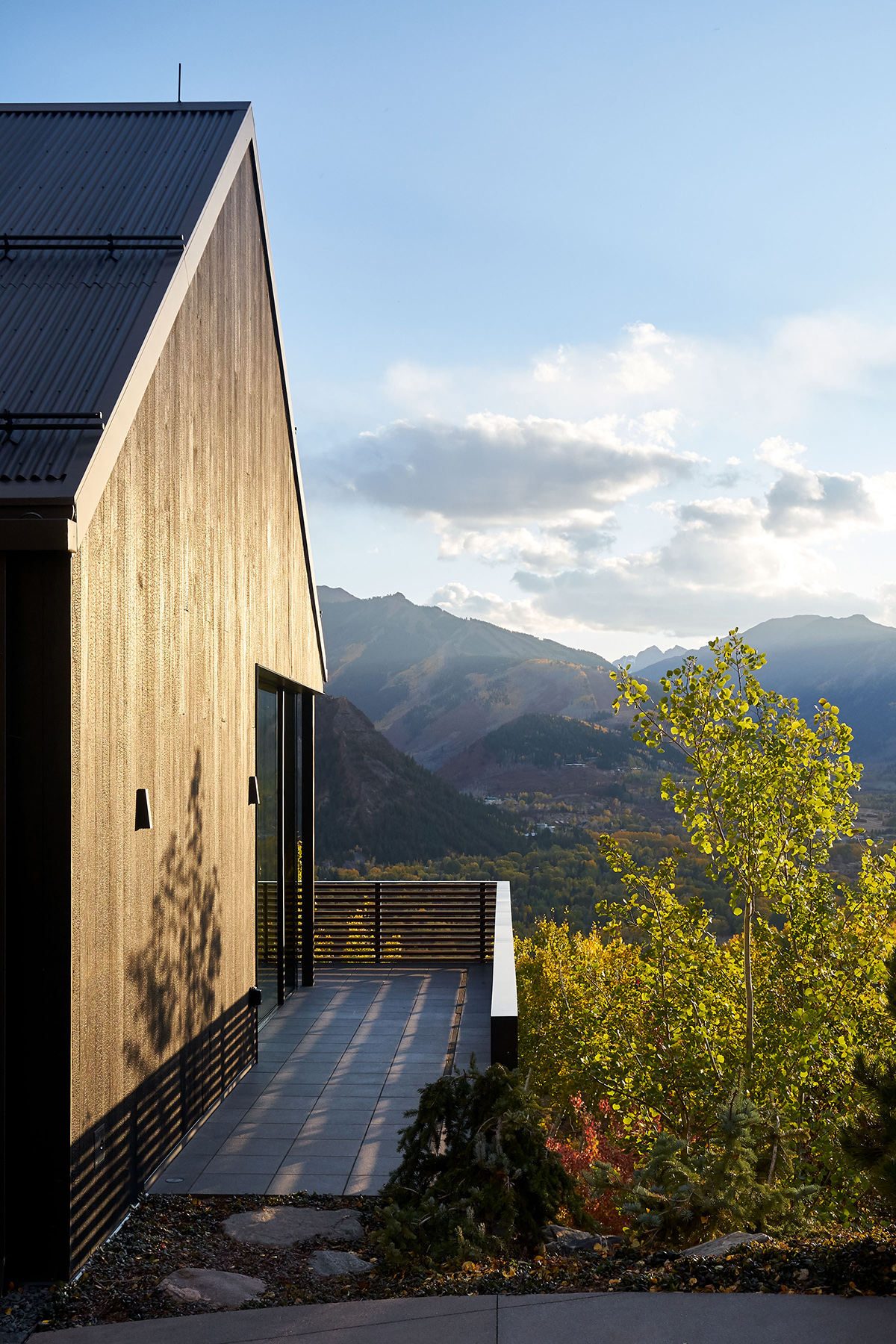
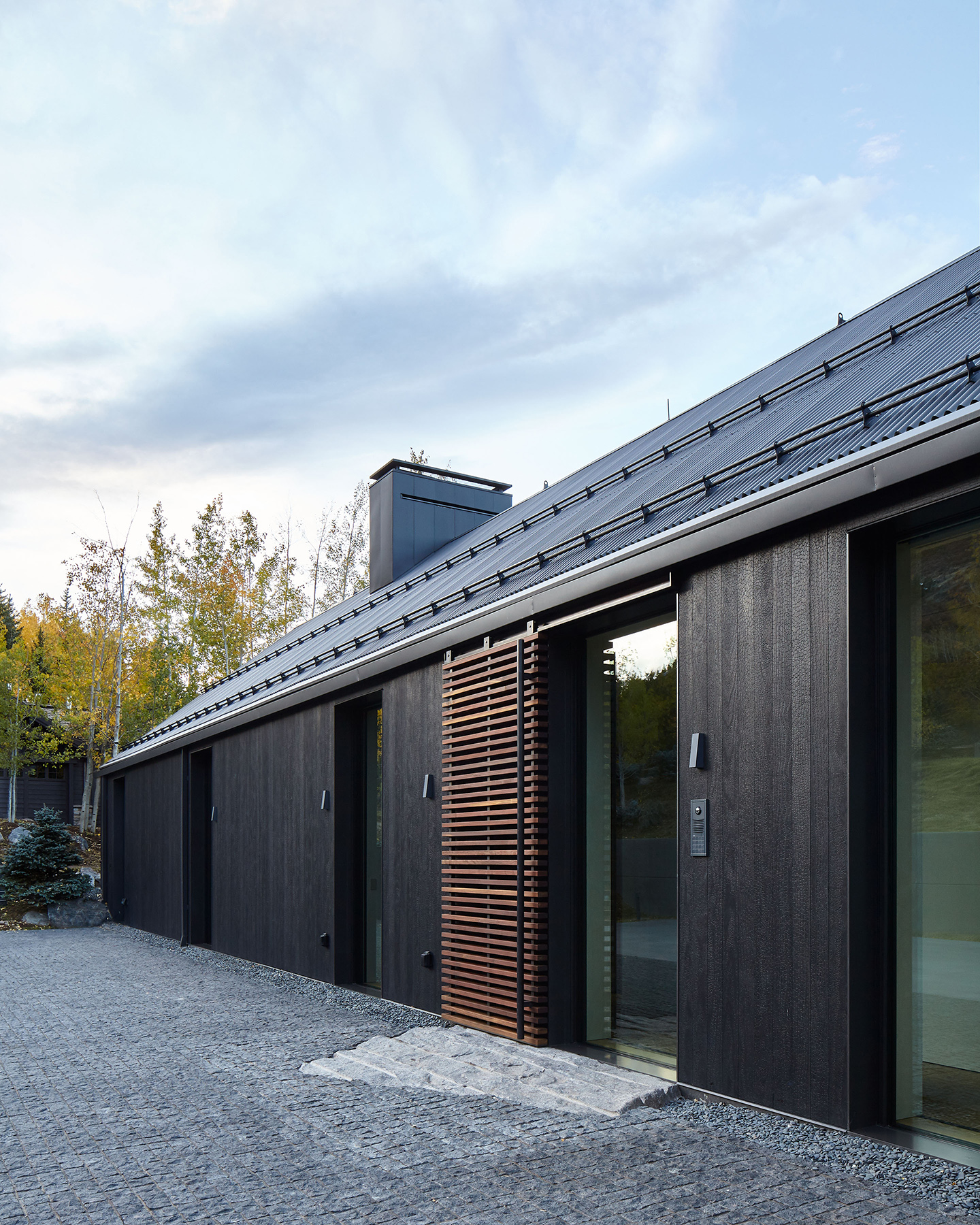
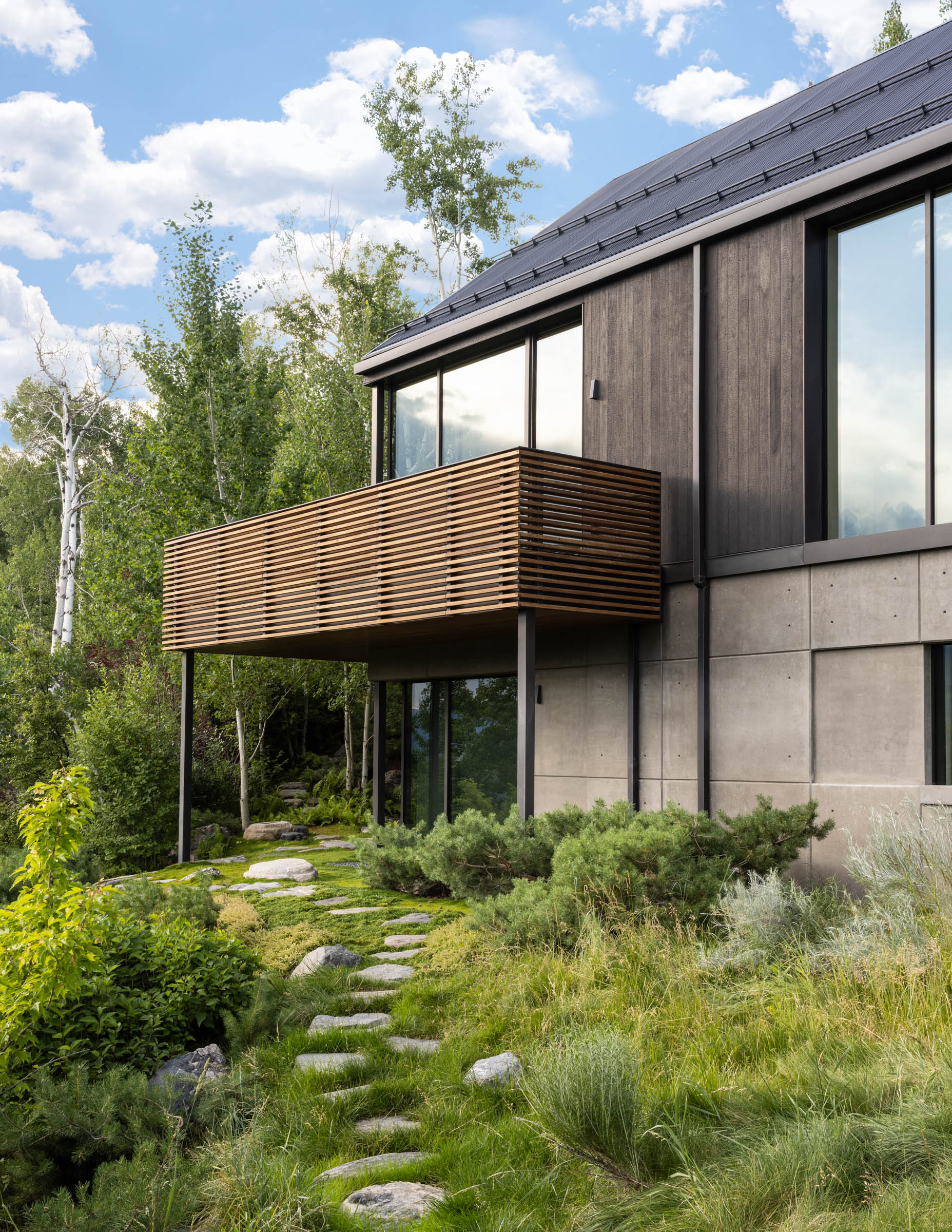
The outcome is a 113-foot-long gable form, topped by a corrugated zinc roof and clad in charred cedar. The front door is signaled by a split rock welcome mat set into the cobblestone motor court and a screen composed of horizontal wood slats, but the façade remains deliberately nonhierarchical: there are four identical sliding glass panels that permit entry into the house at different points along the front elevation.
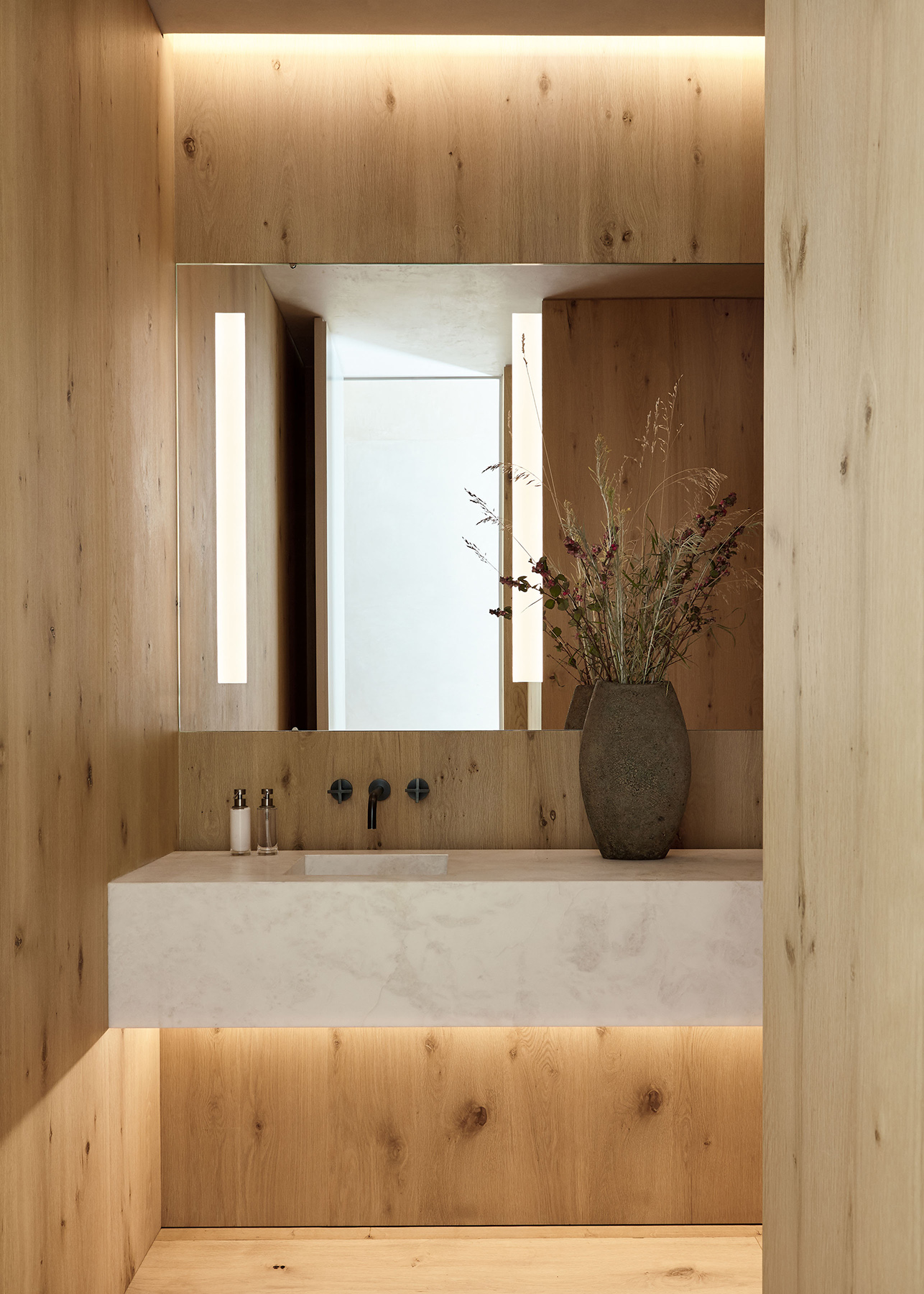
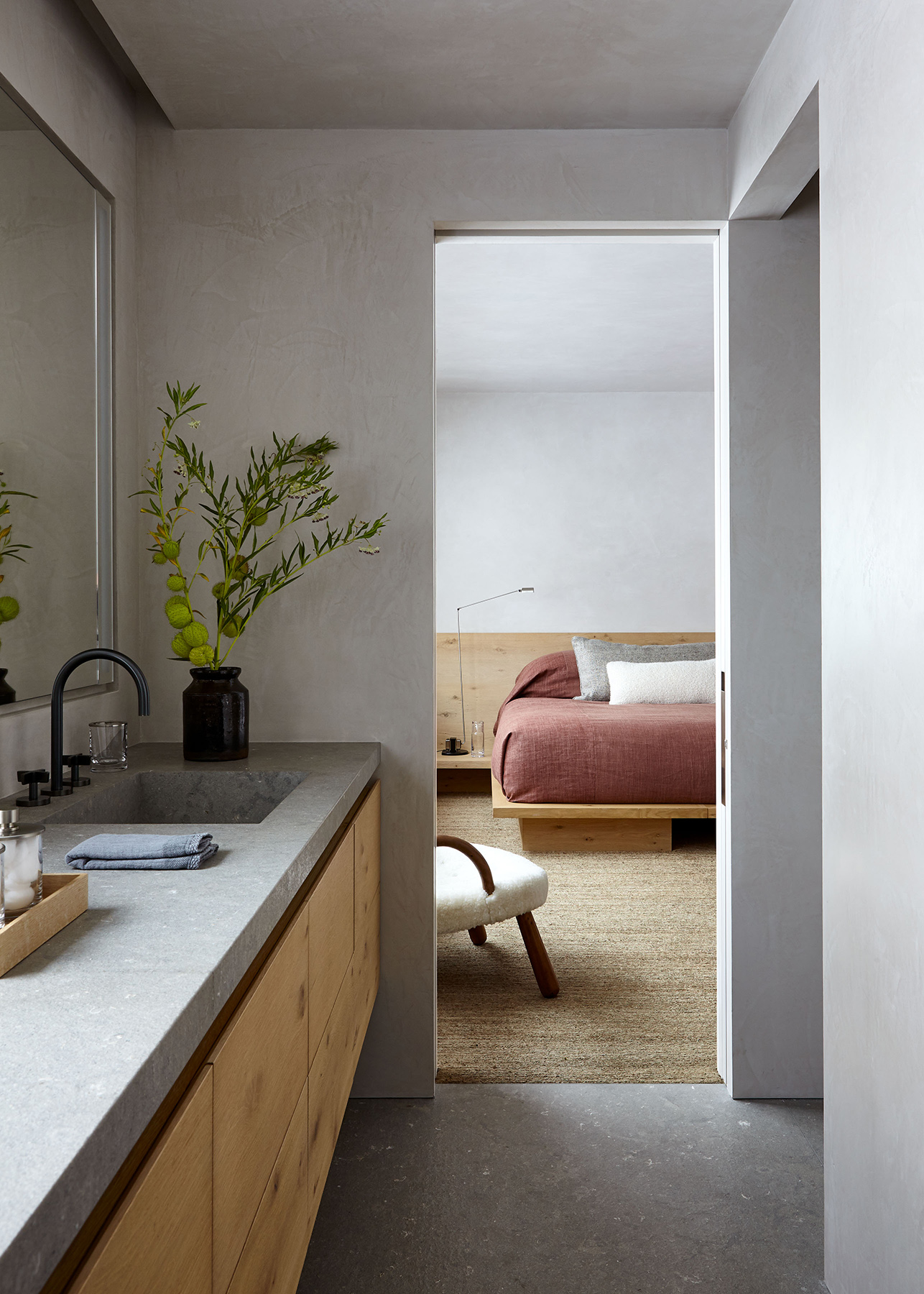
Art Barn’s interior continues this commitment to the pristine: the sustainable palette is limited to oak, plaster, limestone, and concrete. On the main floor, comprising a great room, video gallery, office, kitchen, and primary suite, eighteen-inch-thick walls allow for oversized pocket window and doors systems. Sixteen-inch-wide wood plank floors align with walls to provide total precision; outlets, switches, and solar shades are tucked away, so as not to distract from the overall experience. On the lower level, the province of two additional discreet bedroom suites and more gallery space, the poured-concrete foundation wall is exposed and finished, creating an expanse of utilitarian elegance.
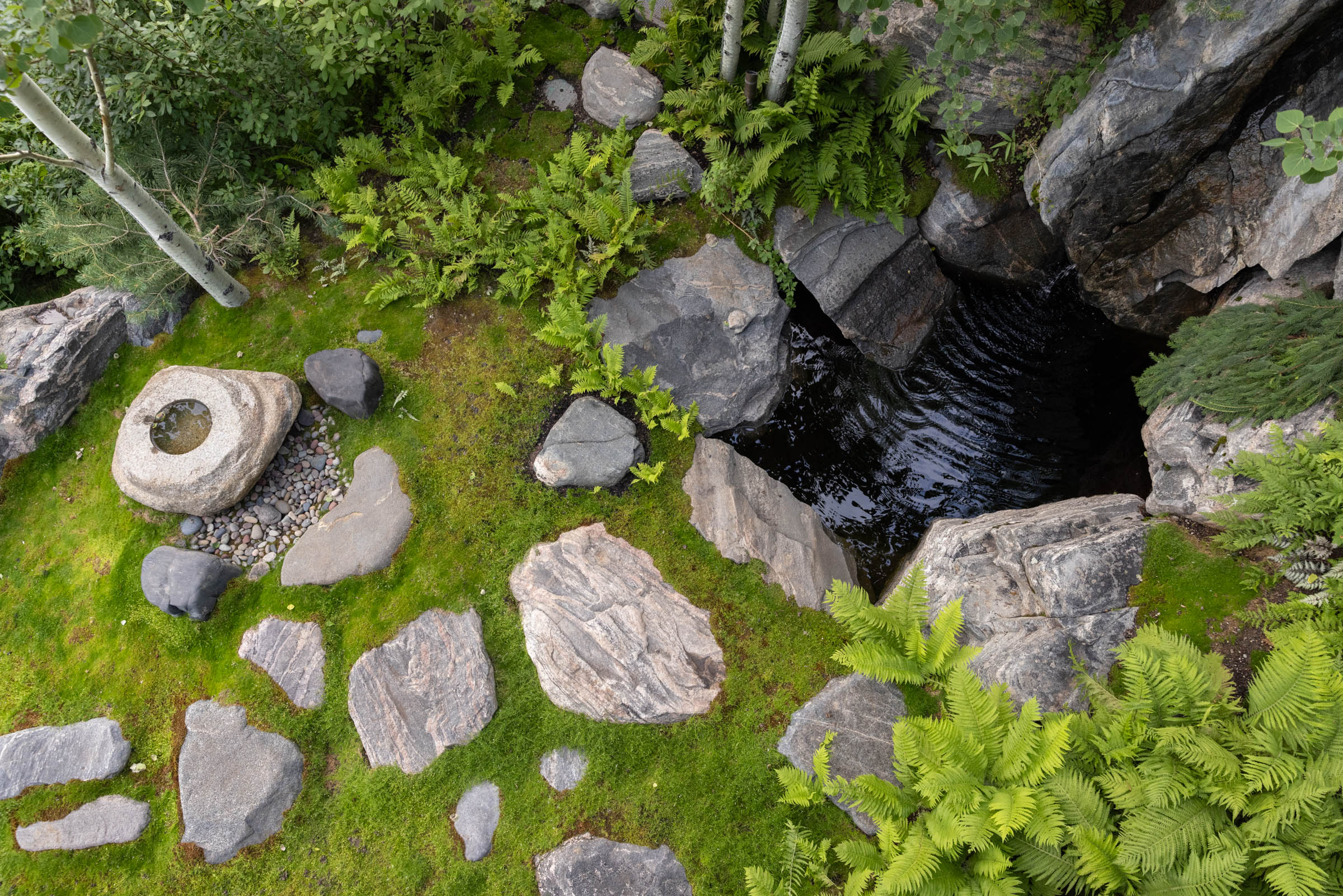
The project’s surprise component is our interpretation of a traditional Japanese tea room, tucked away behind the lower-level video gallery, its full-height sliding-glass corner doors opening the space to an Asian-influenced mountain garden. Consultation with tea masters from University of Kyoto informed the sourcing of traditional Japanese materials, including sliding doors with hand-made shoji inlay, western red cedar paneling, Arakabe plaster walls, and hand-made tatami mats,
If the tea room extends the everyday into the realm of the spiritual, the same might be said of R+B’s design. Our consideration of even the most inconsequential elements, their contribution to the whole, inspires an unusual level of avid attention. The view is always available. But the serenity and simplicity of the interior prompts an awareness of the moment that only deepens with time and experience.
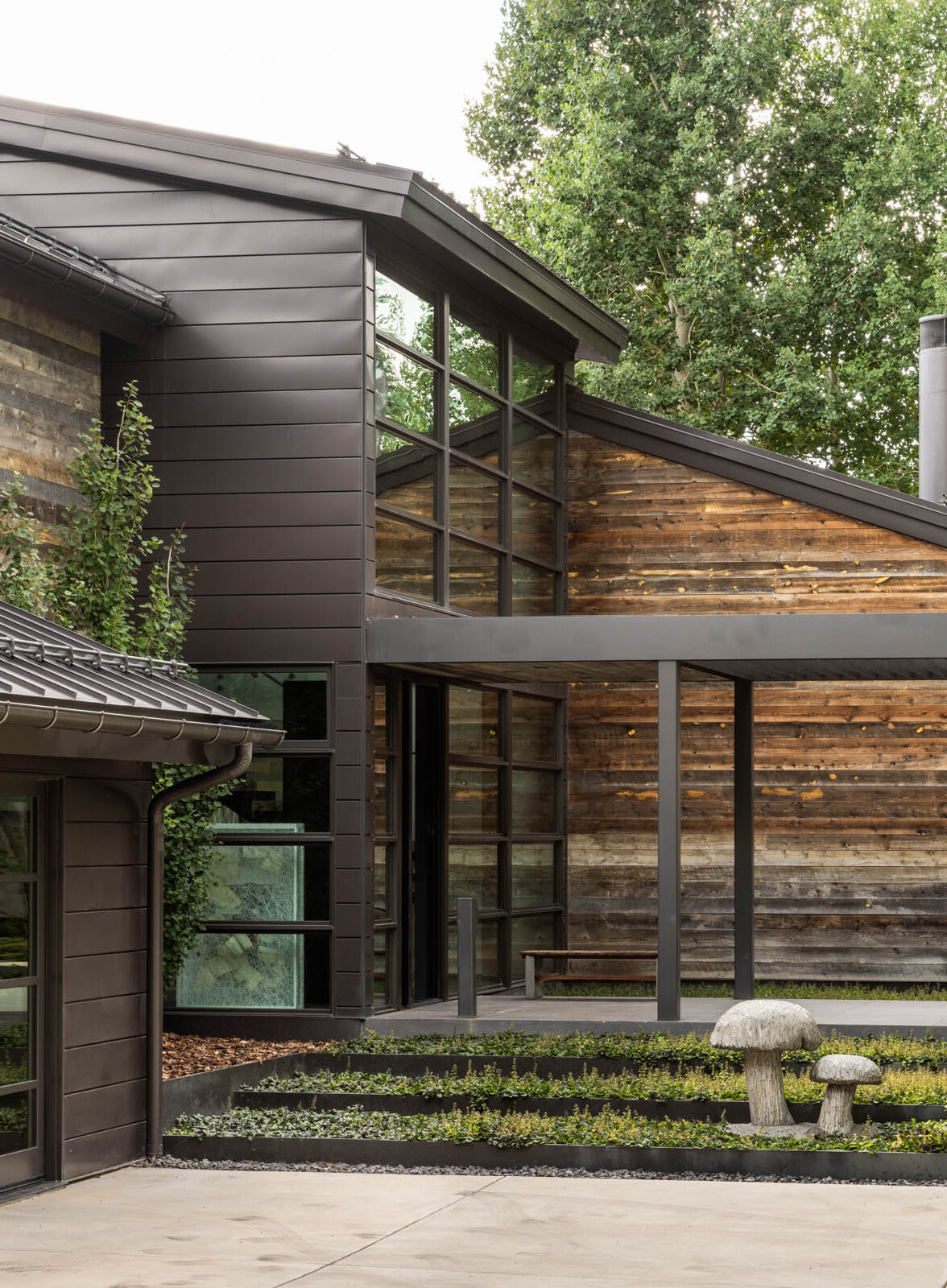
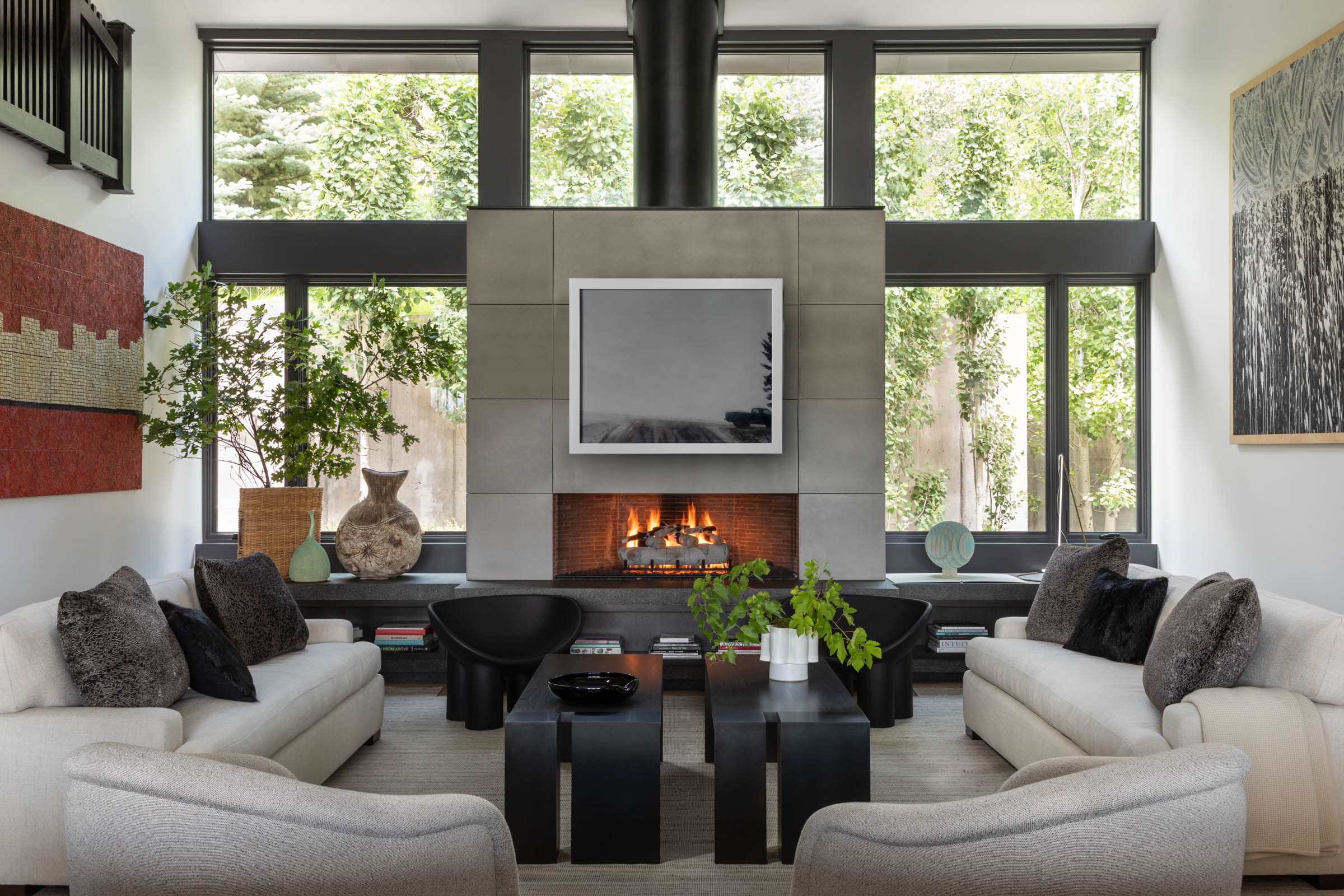
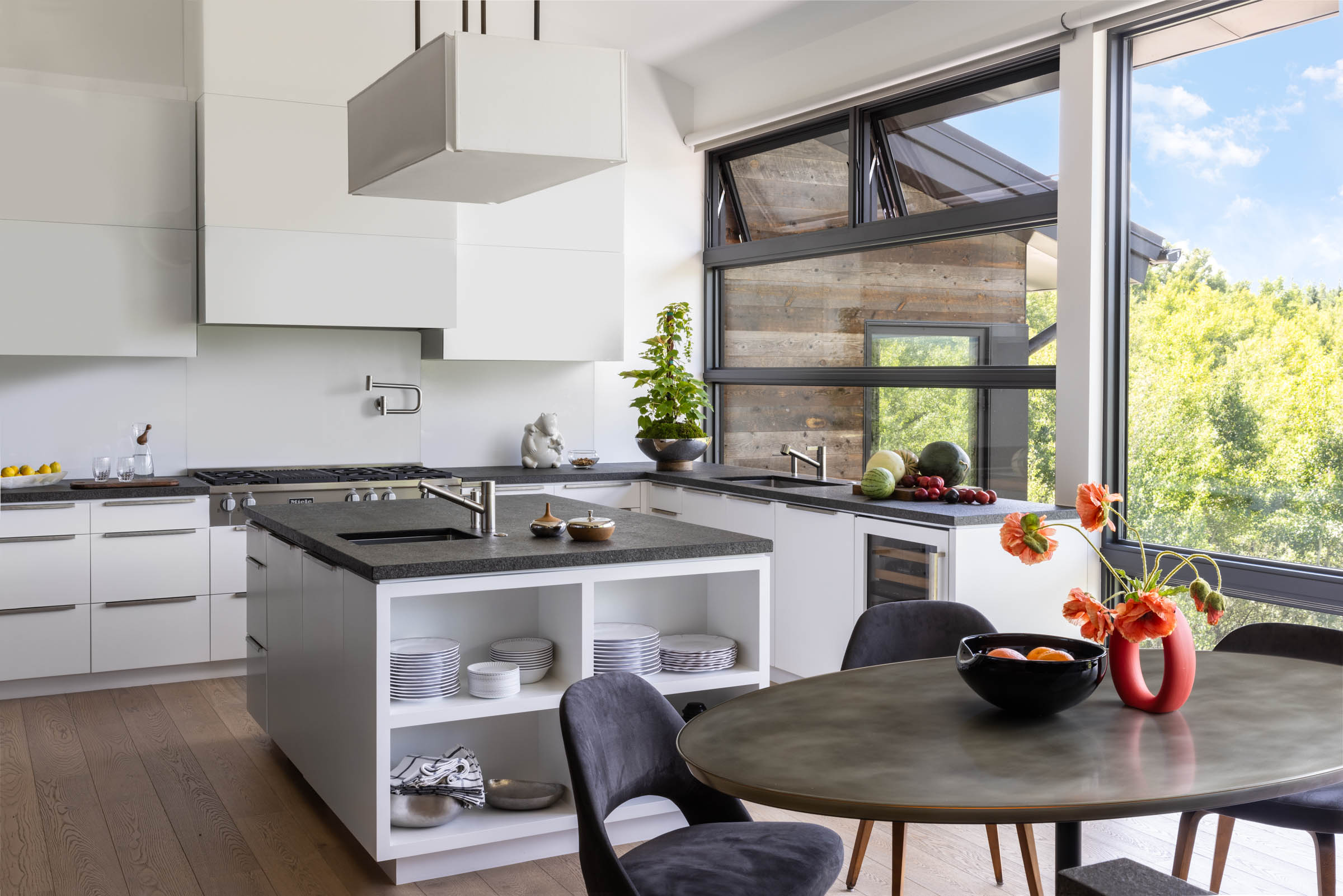
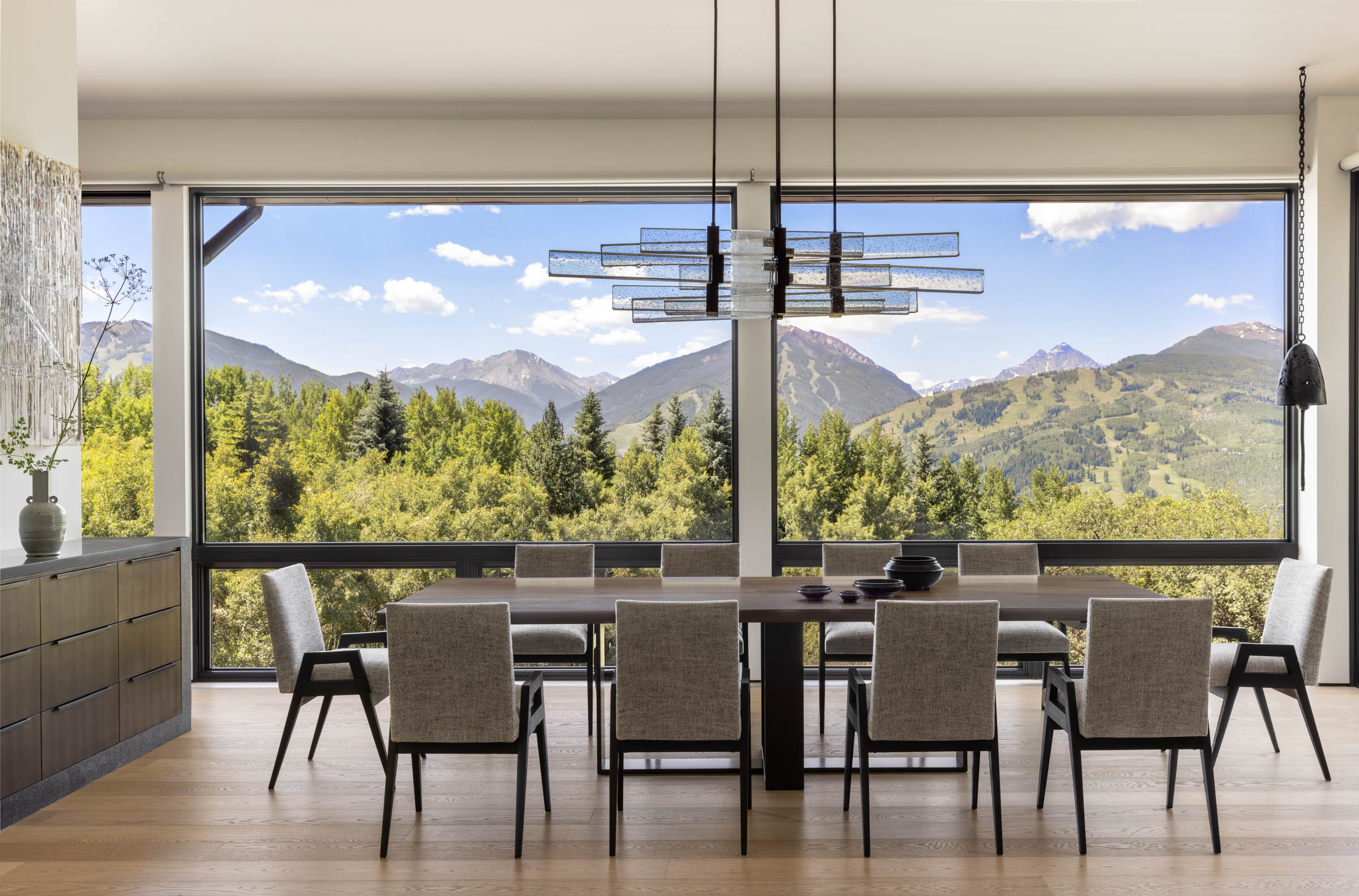
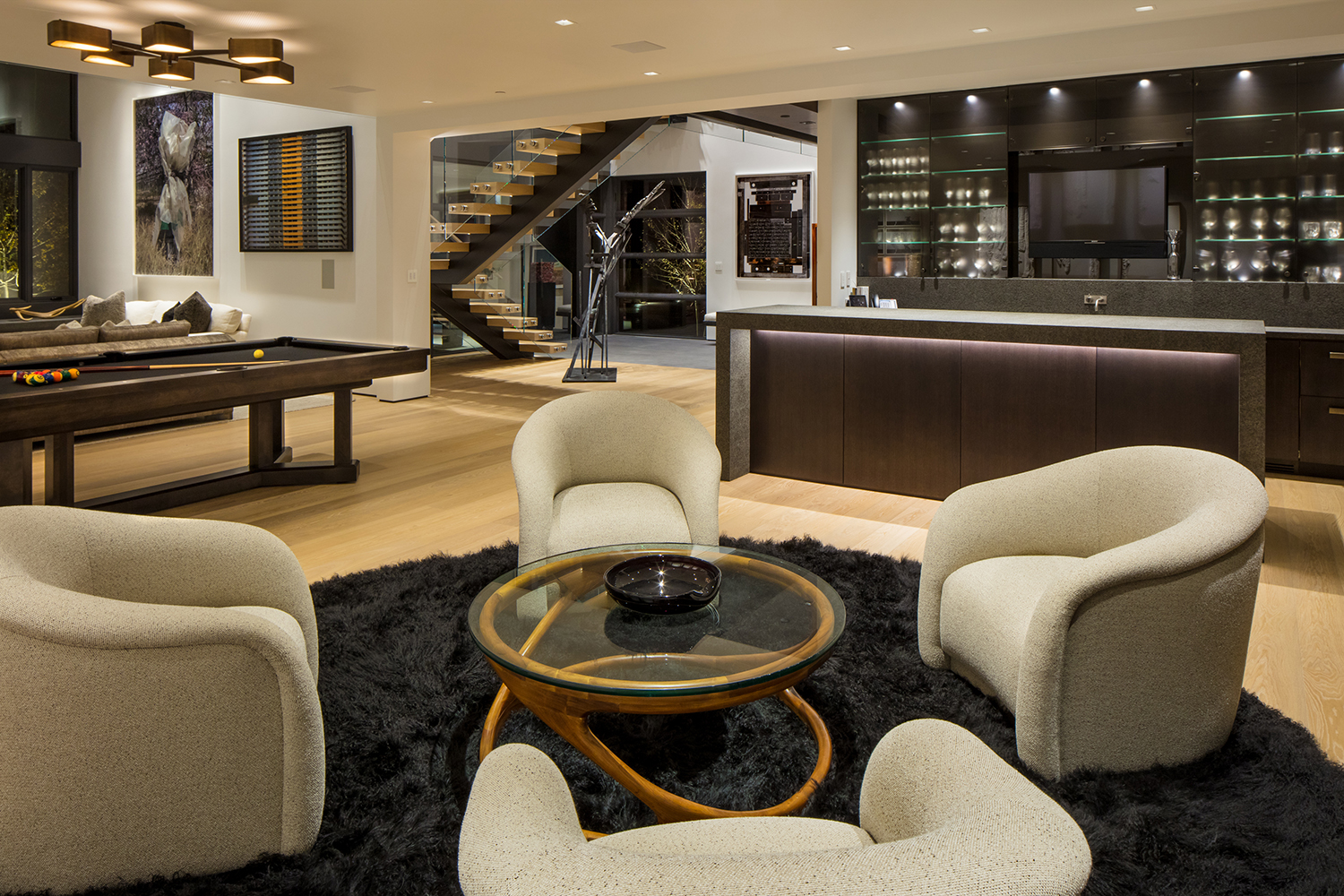
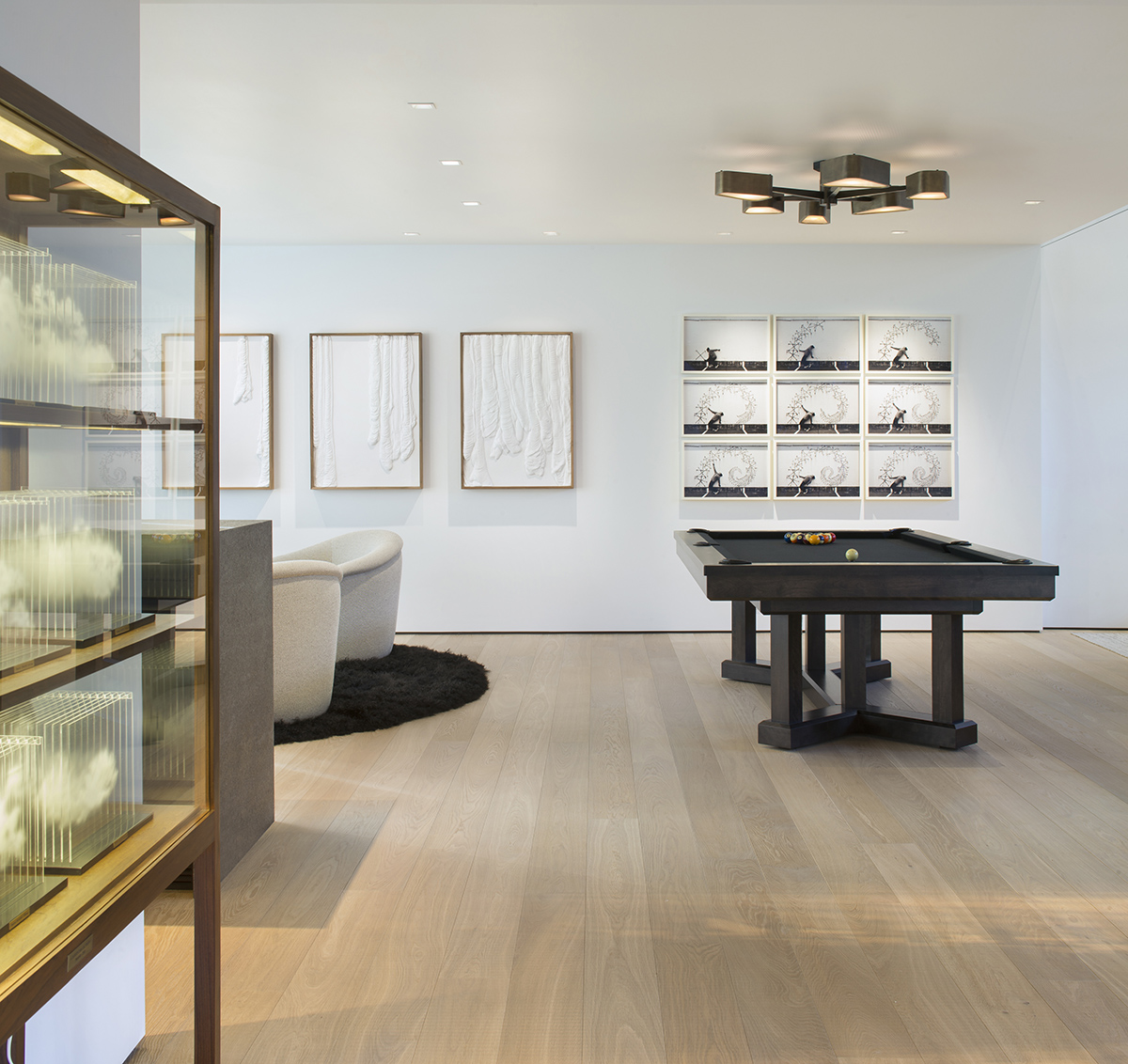
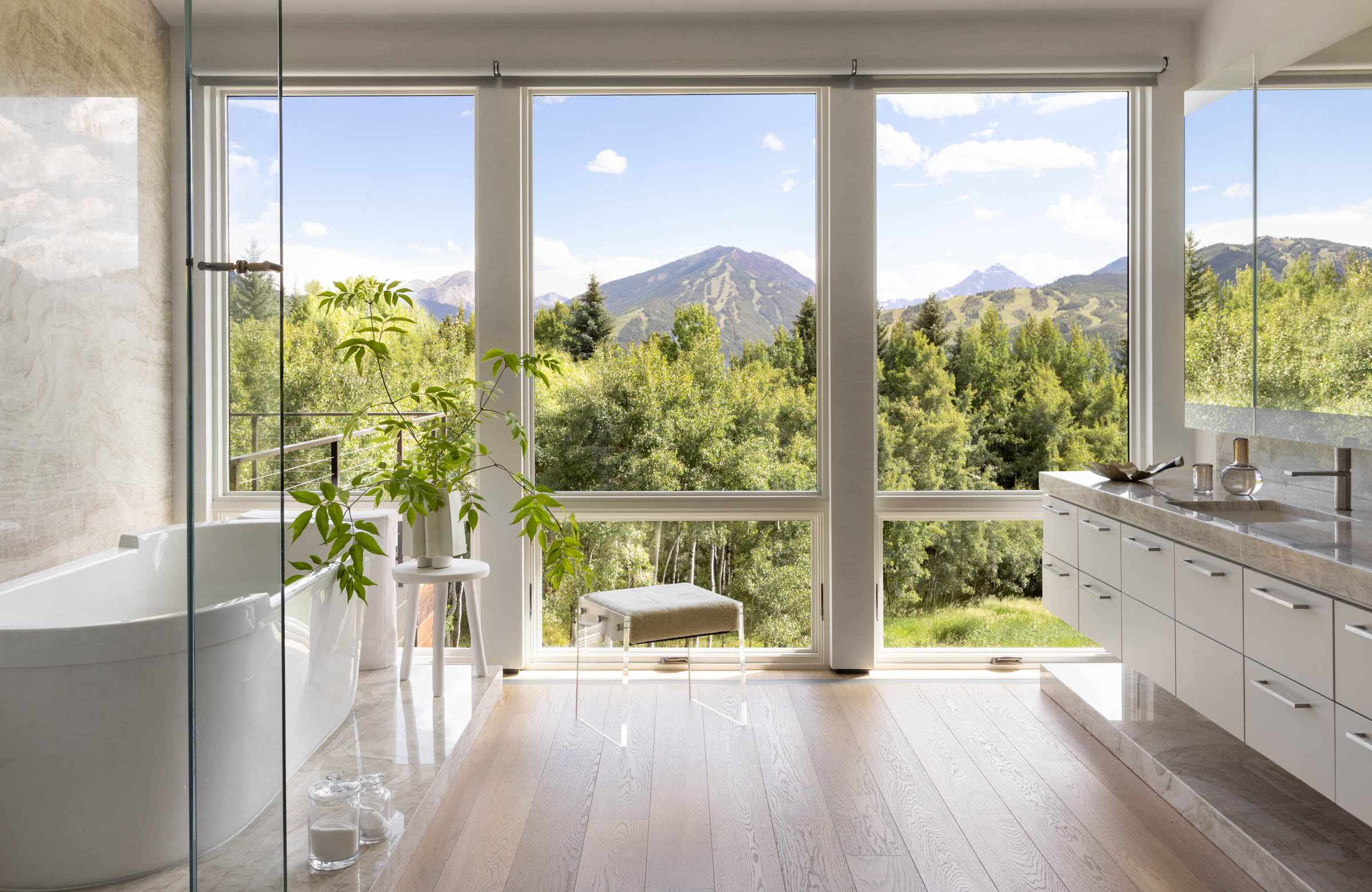
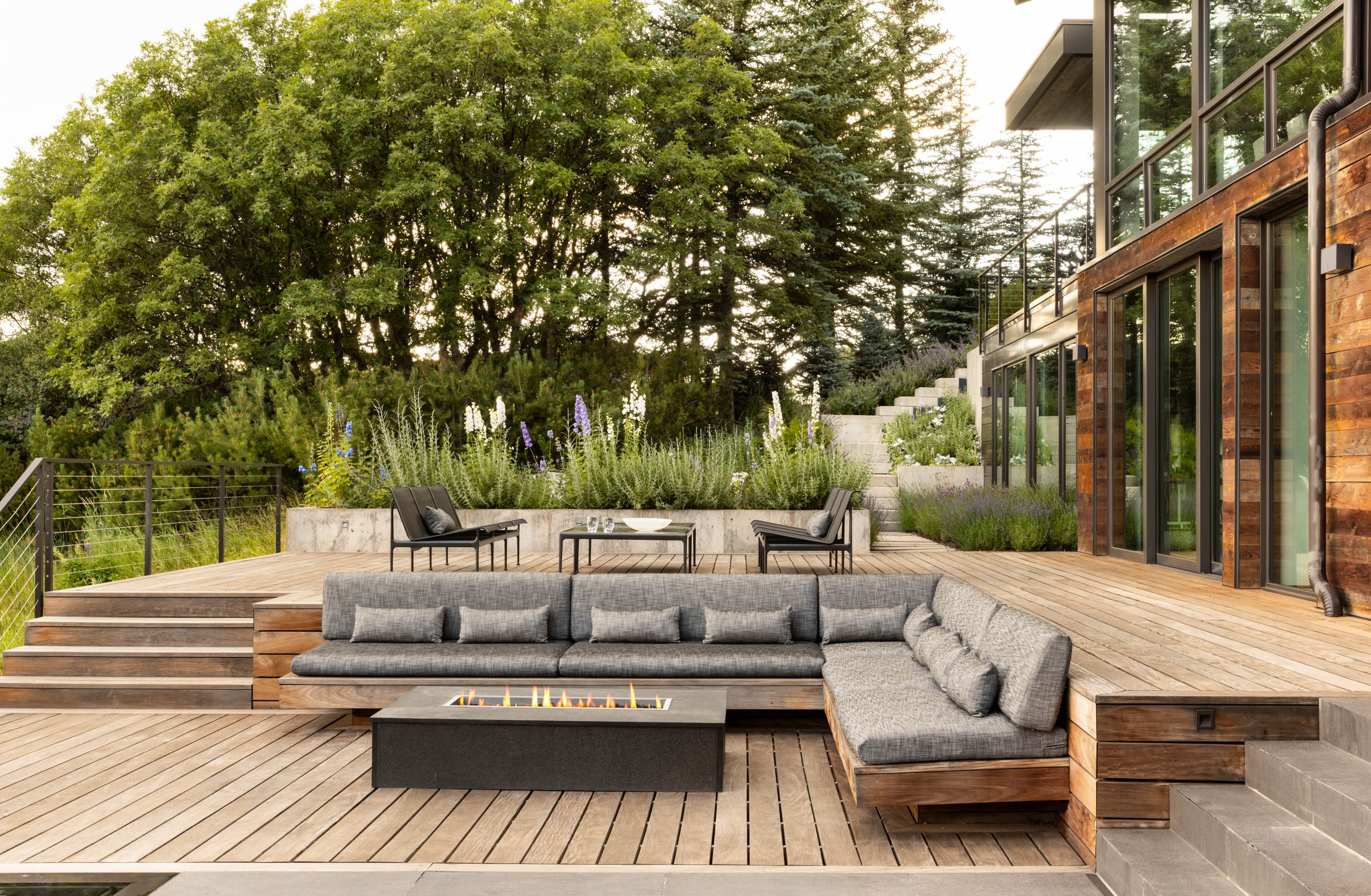
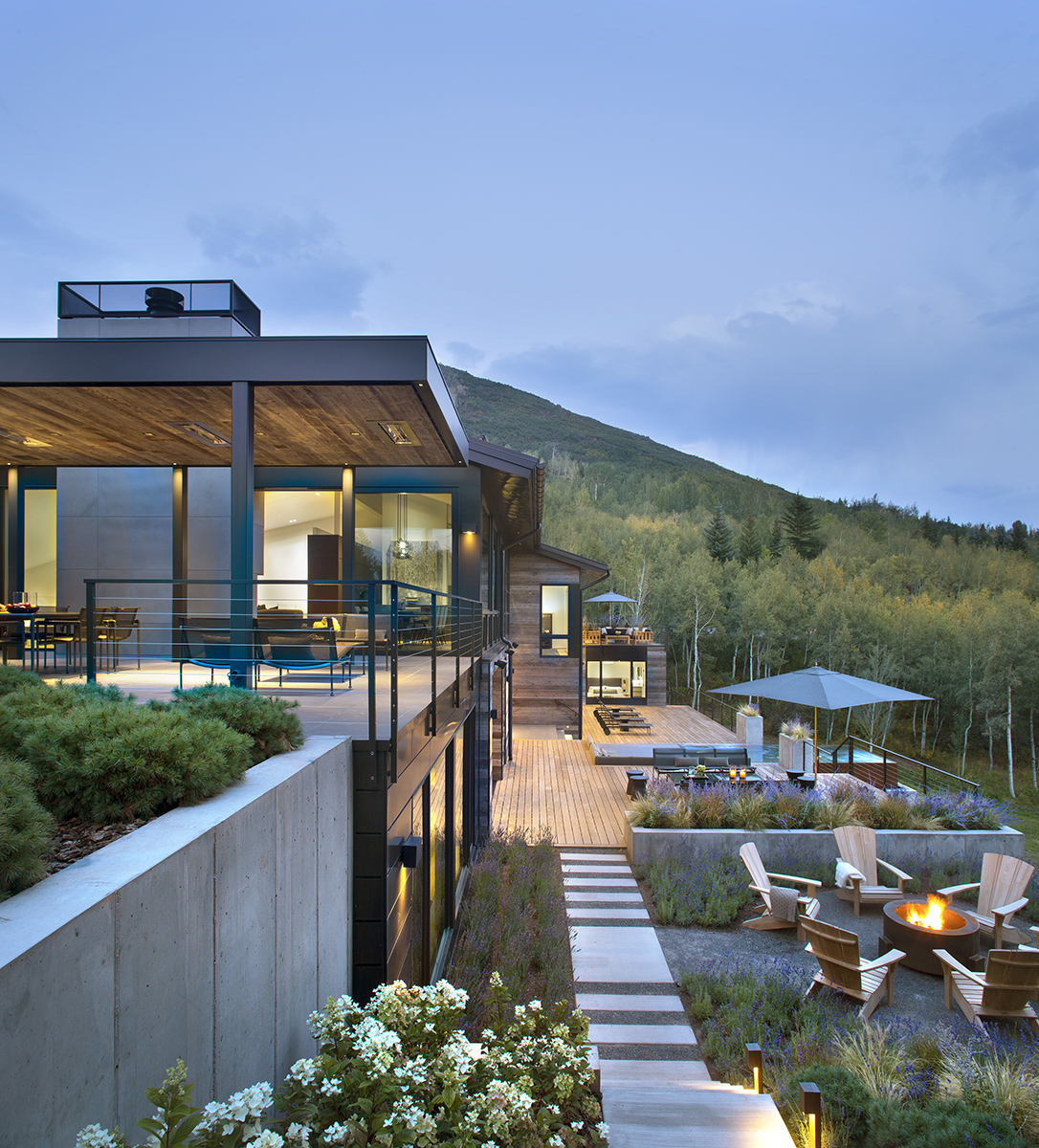
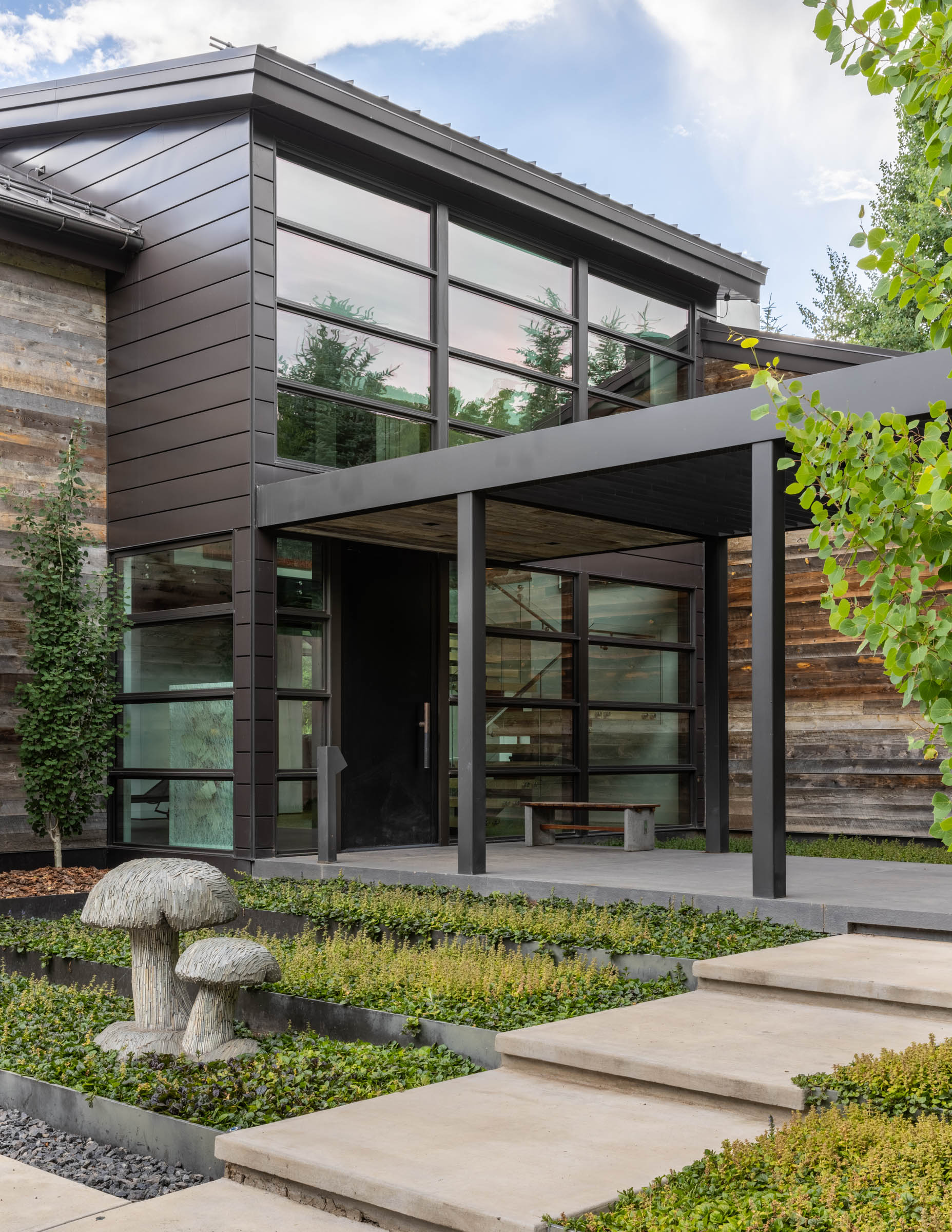
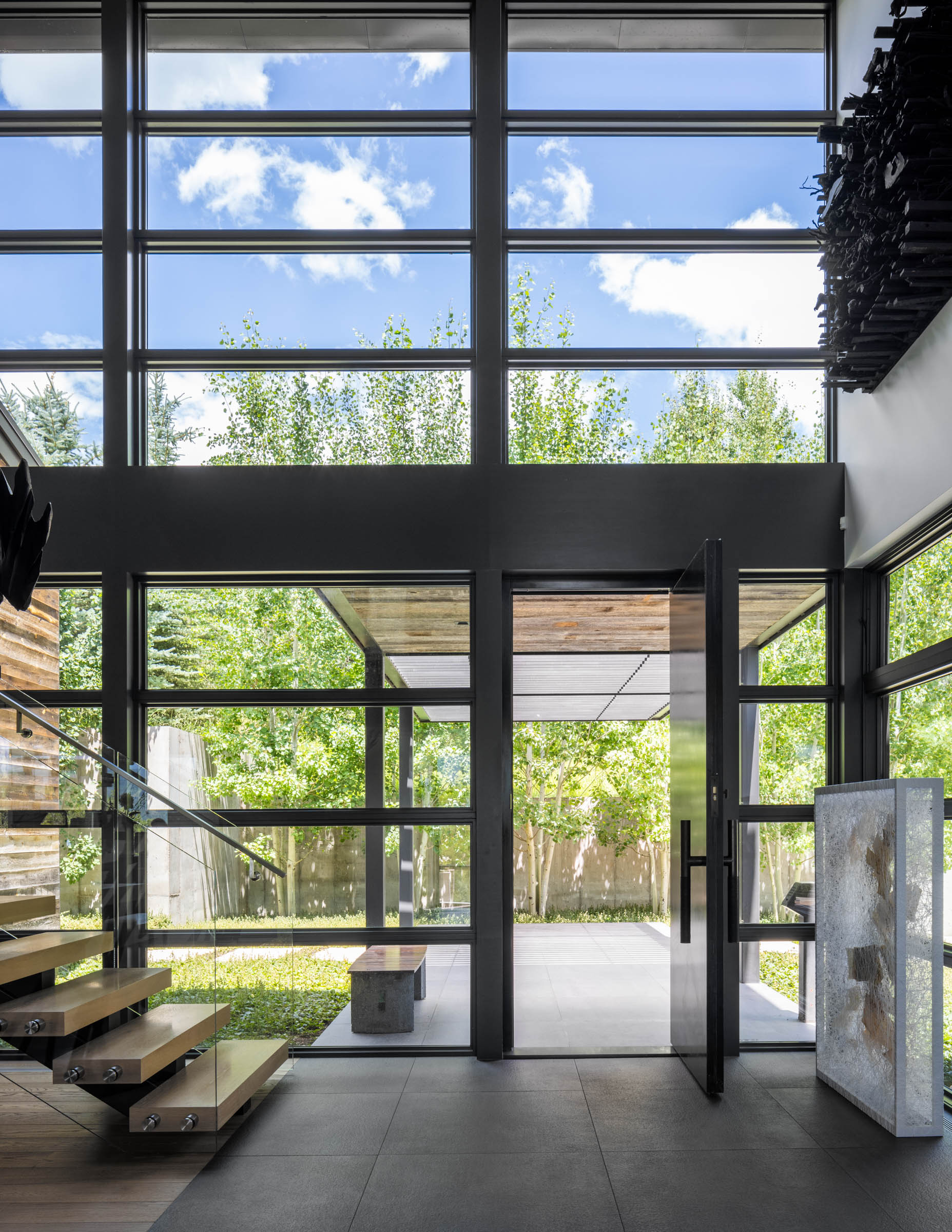
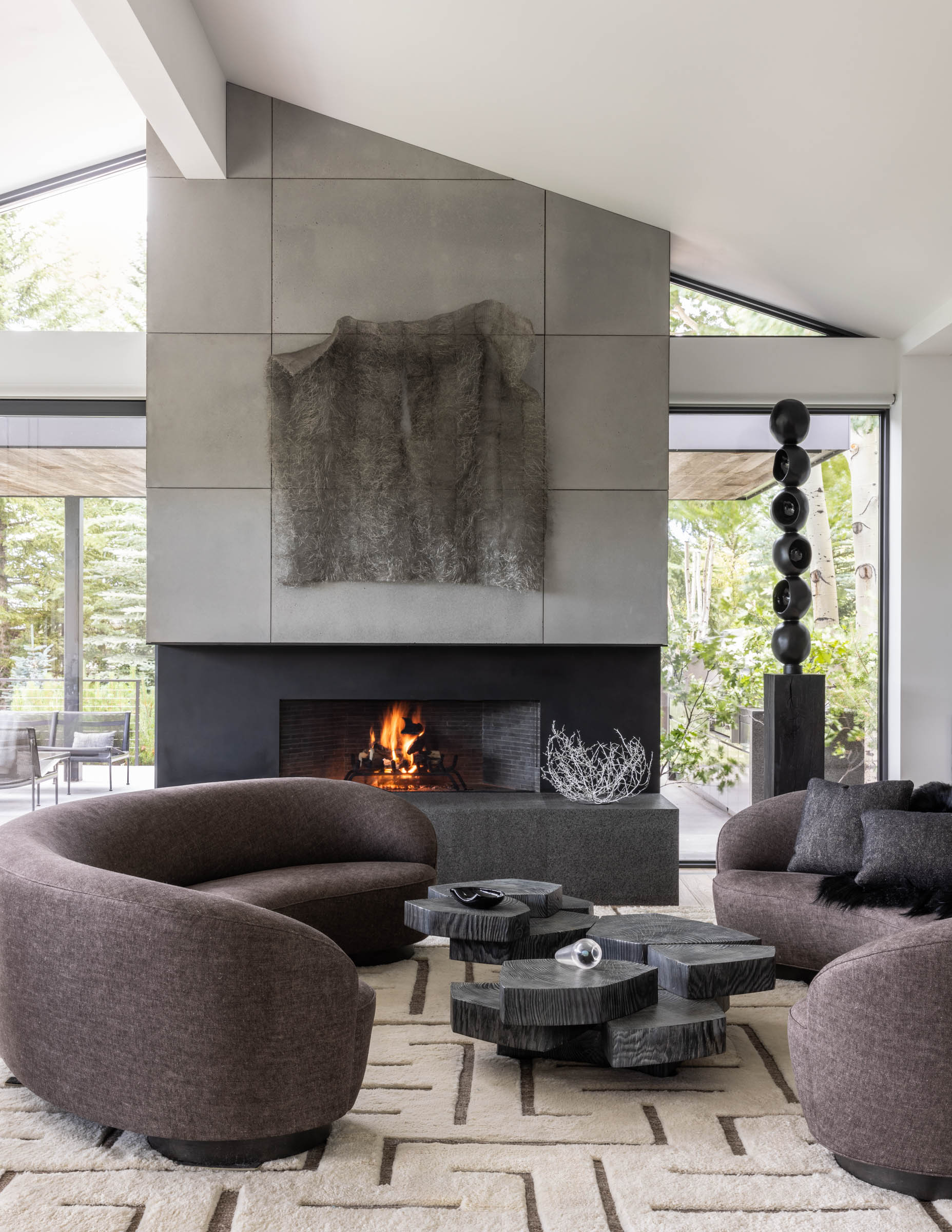
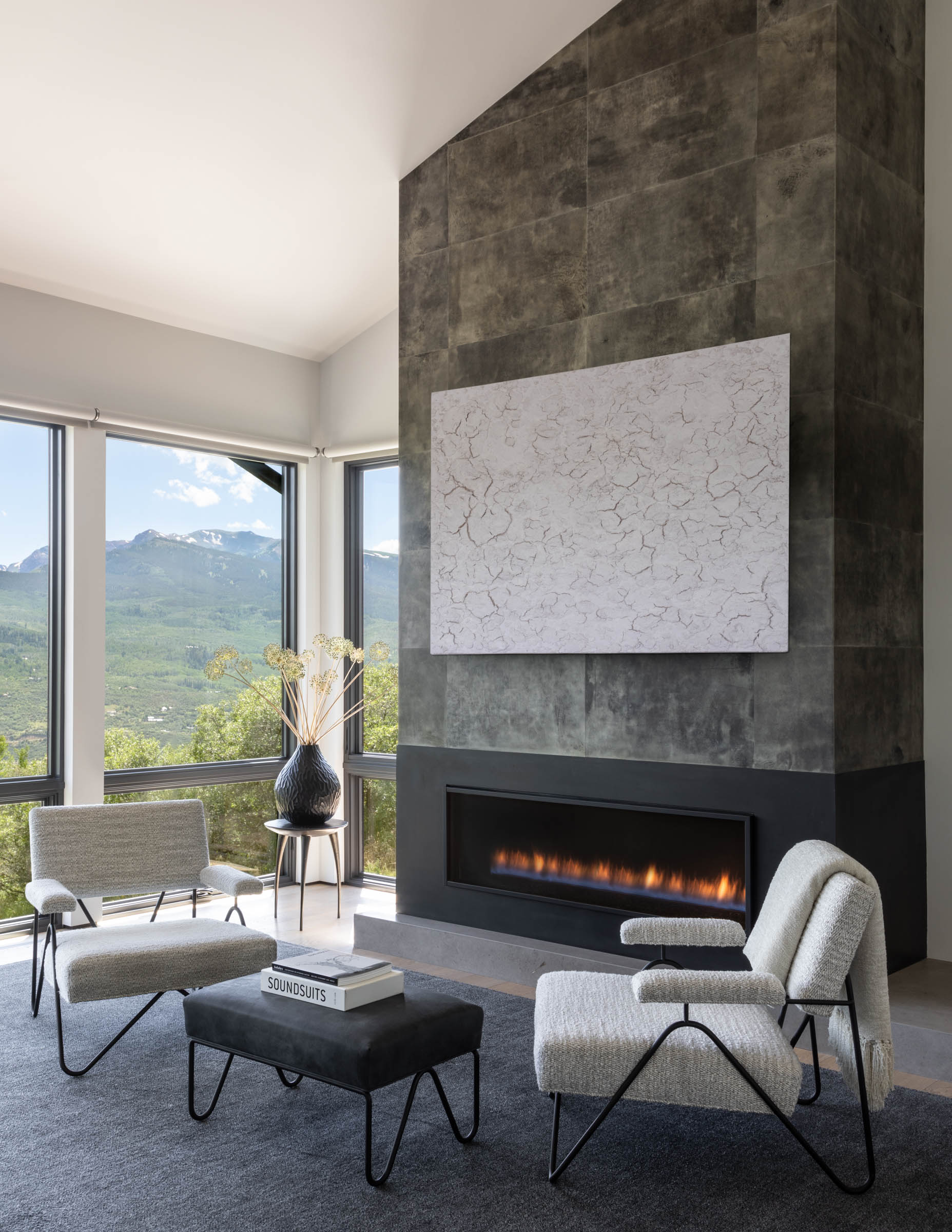
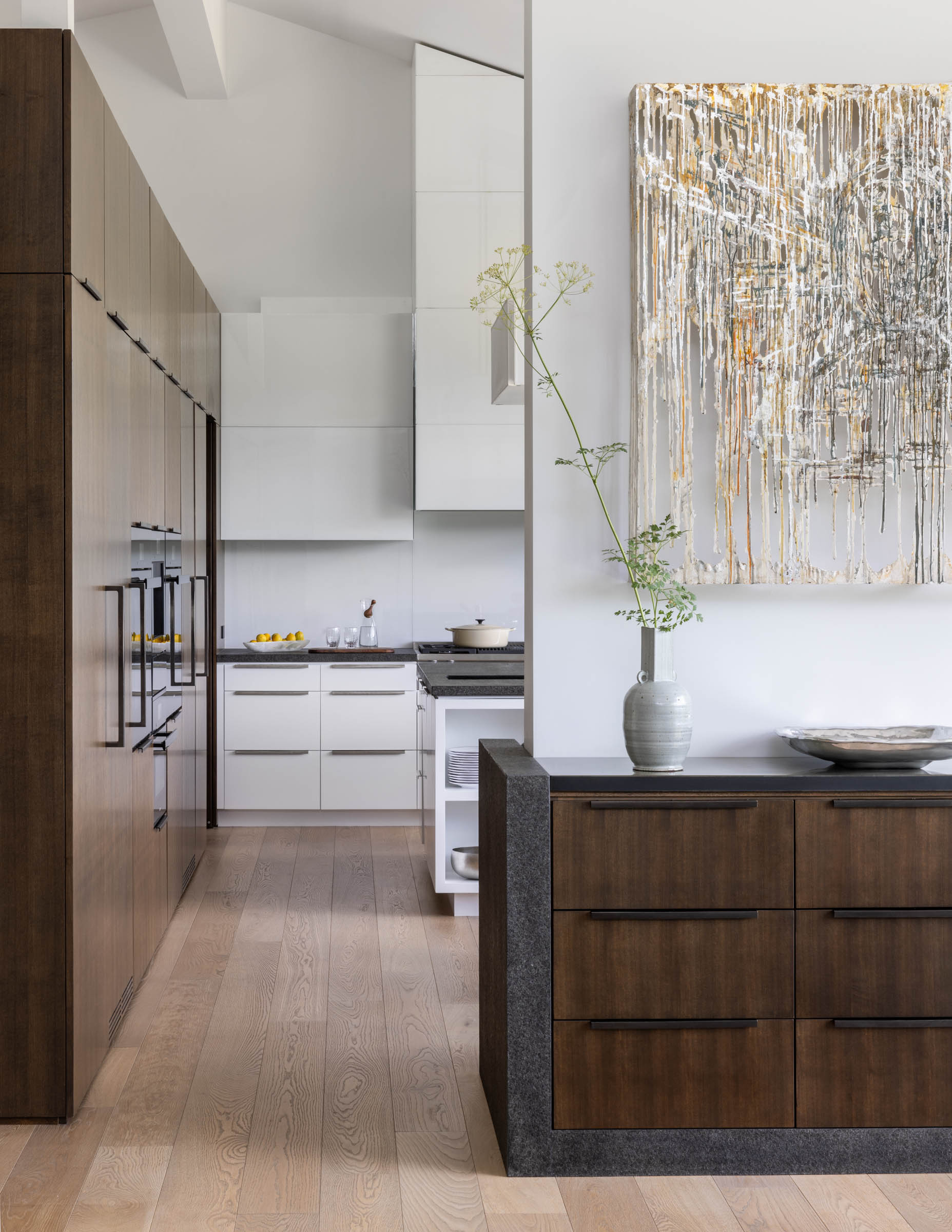
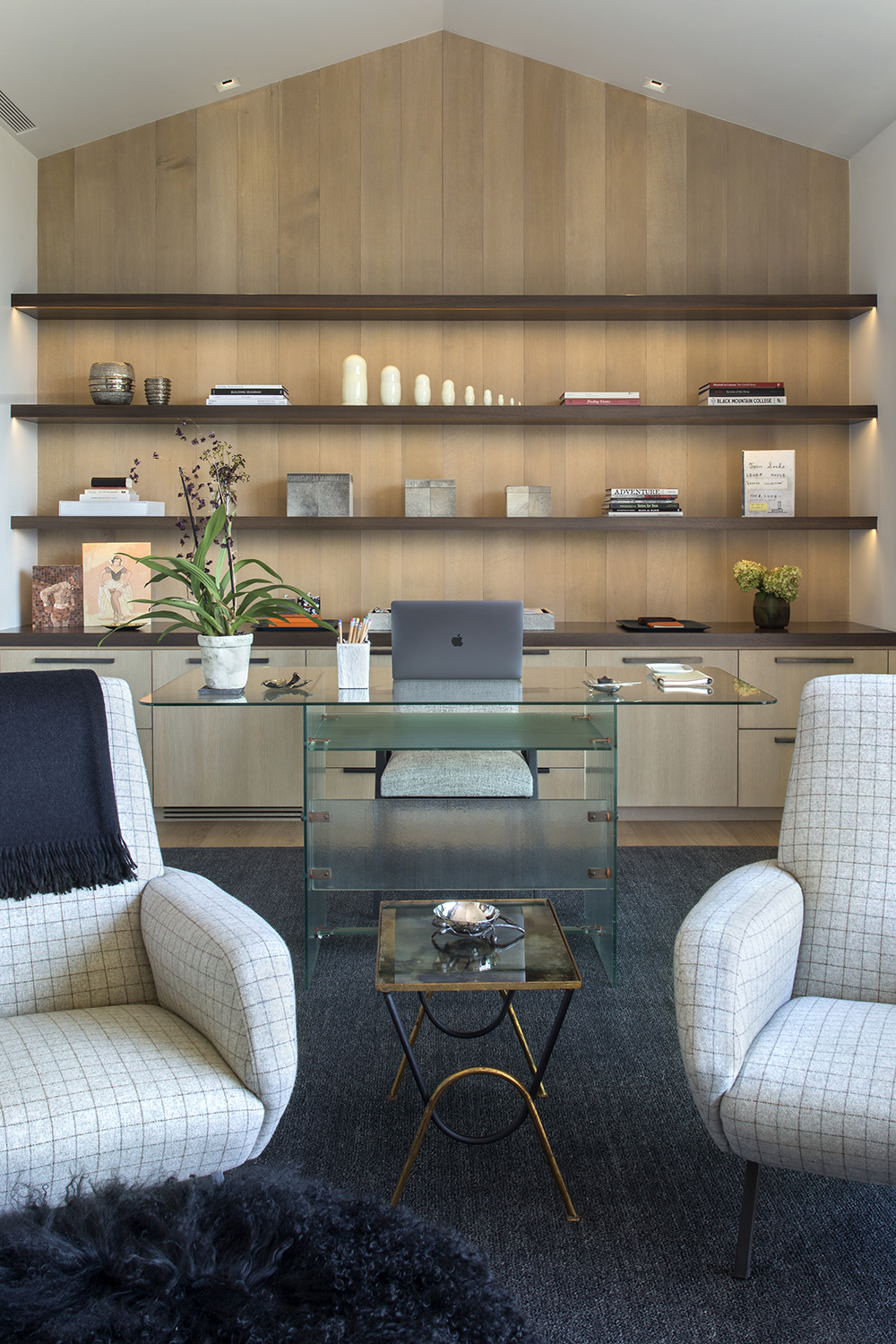
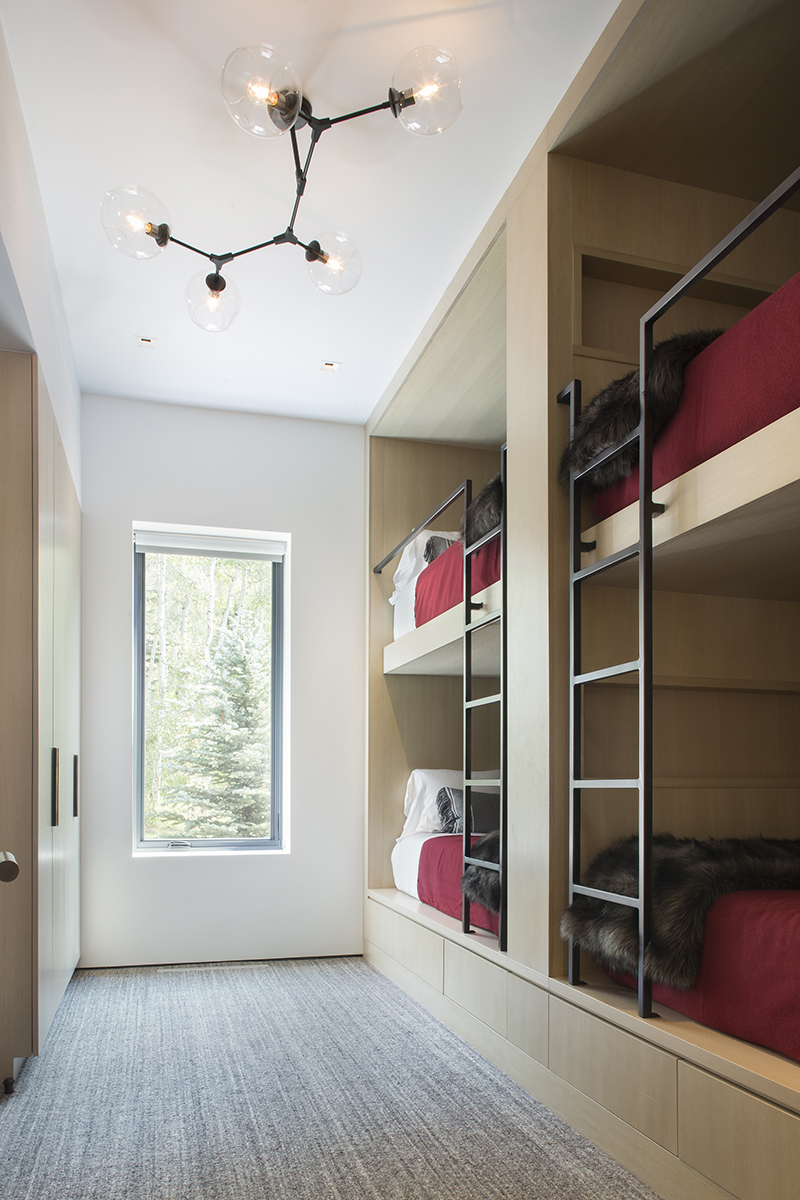
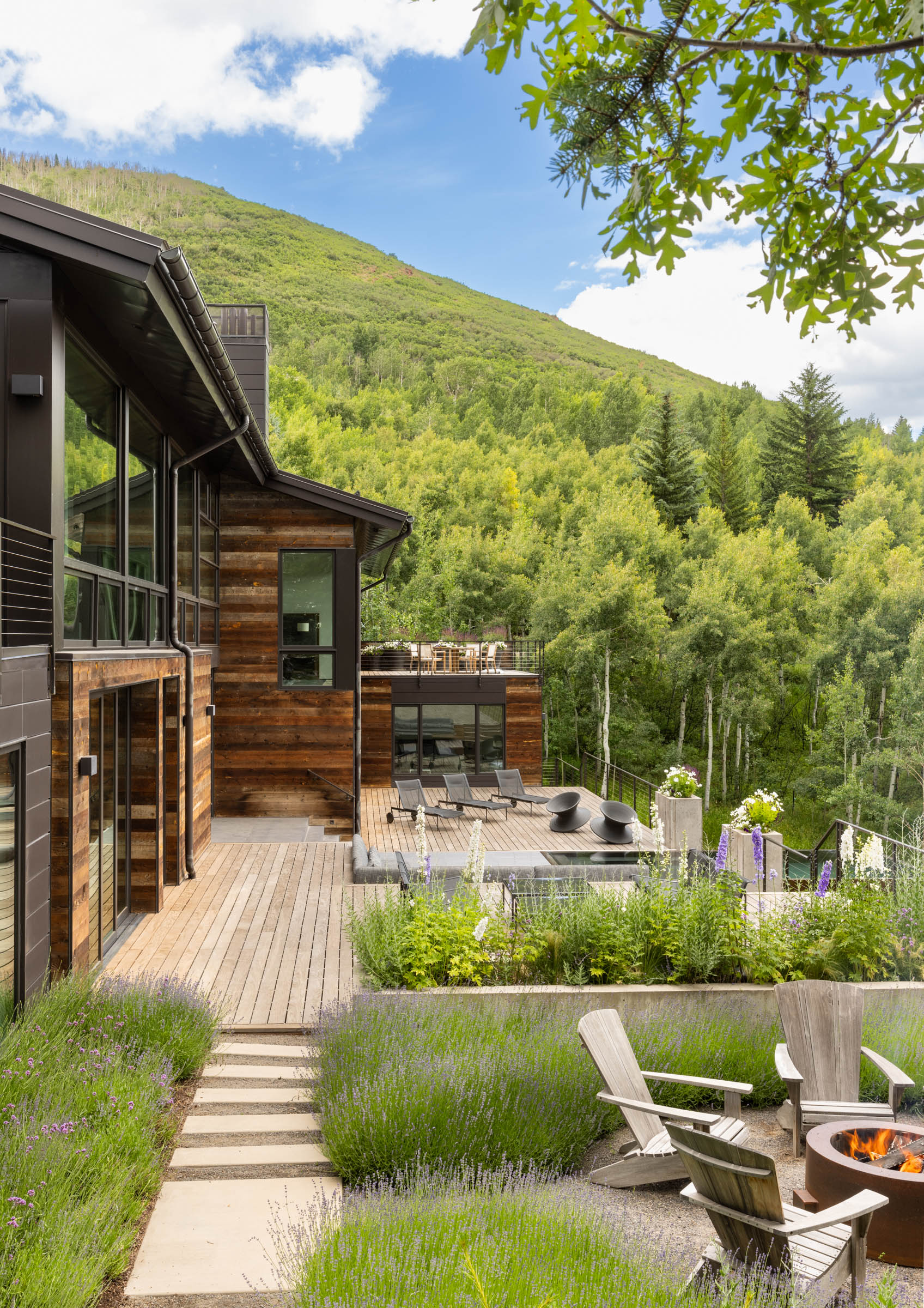
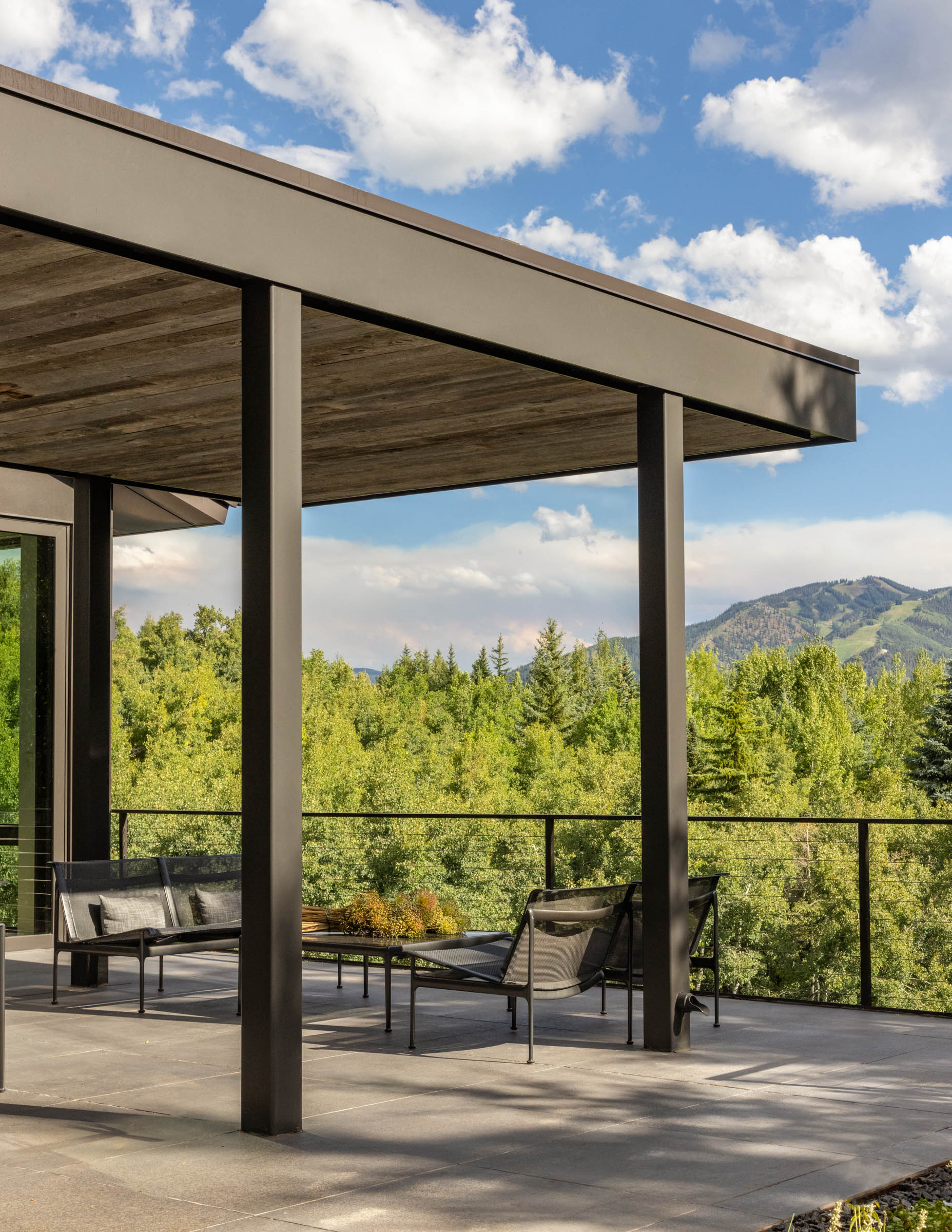
Lookout House, a grand dwelling enjoying sweeping views of Aspen’s Elk Mountains, occupies the footprint of the owners’ previous residence and is roughly the same size. But in its responses to the character of the location and the needs of the residents, Lookout House could not be more different from its predecessor.
The site overlooks a dramatically down-sloping meadow that, as it is densely forested on each side, remains invisible to the neighbors. Given the circumstances, we perceived two opportunities: to make the house a portal to the meadow, and to maximize the building’s visual engagement with its surroundings.
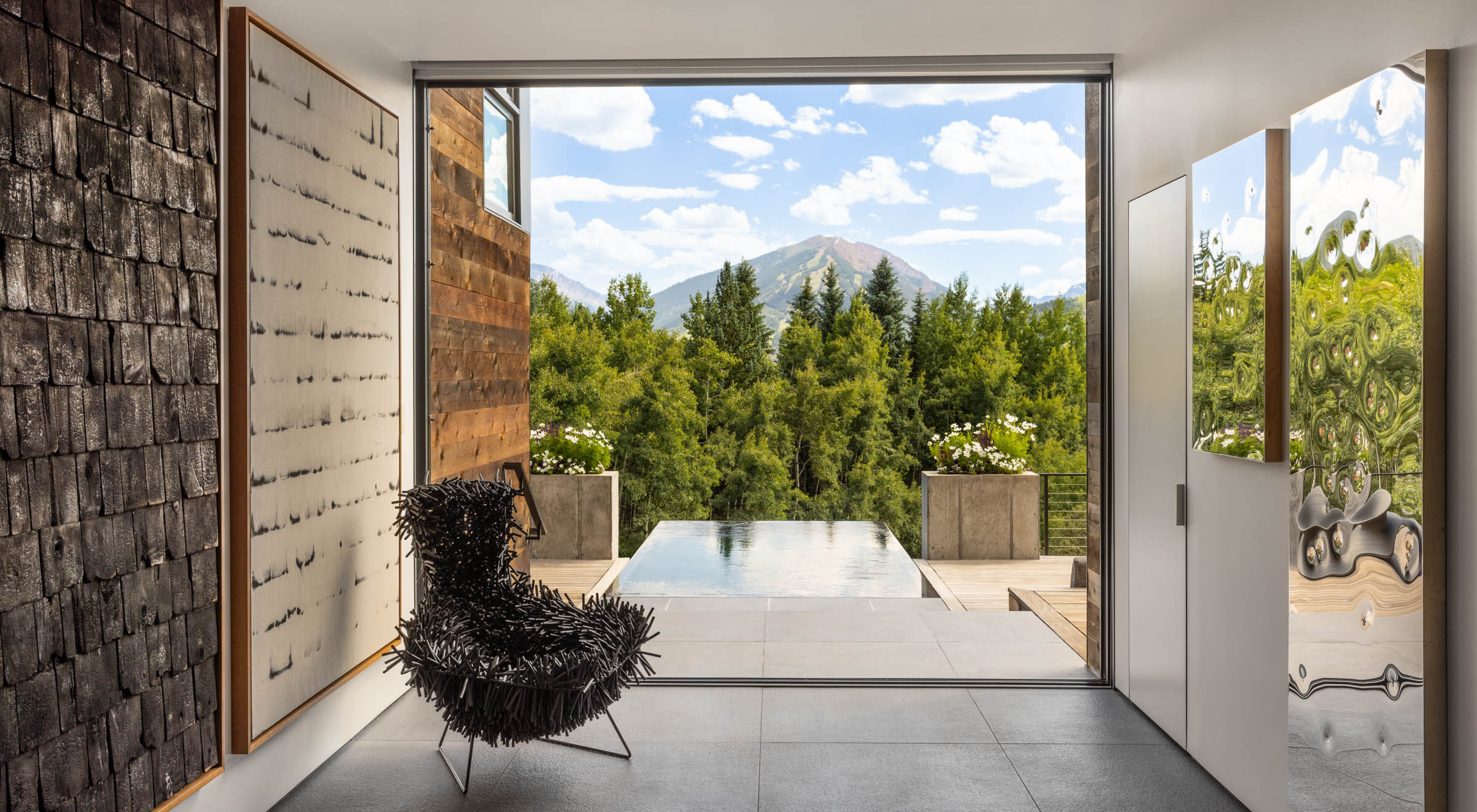
Regarding the former, R+B chose to directly connect the north-facing entry façade to the house’s southern elevation, which overlooks the view. An axis beginning at the covered entry, and continuing through the overscaled pivoting front door, extends directly through the house to a pocketing glazed panel on the south facade, a window that opens onto a mountain-filled vista and, a few steps below on the deck, a copper spa pool.
As for the latter challenge—capturing the slope—we set the secondary rooms on the lower level and the primary spaces upstairs, where they enjoy views that, beginning far below at the bottom of the meadow and traveling up to the mountain peaks, are pleasurably commanding.
Unusually for Aspen, a place in which the mountain-lodge vernacular predominates, the house’s sensibility is akin to the modernist grandeur of postwar urban architecture. Given the abundance of the owners’ contemporary art holdings, the choice remains entirely appropriate. If there is a dominant design motif, it is horizontality: Floating planes and layered plinths transform in function and character as they slip from space to space, defining rooms as discrete entities and uniting them into a single interlocking experience.
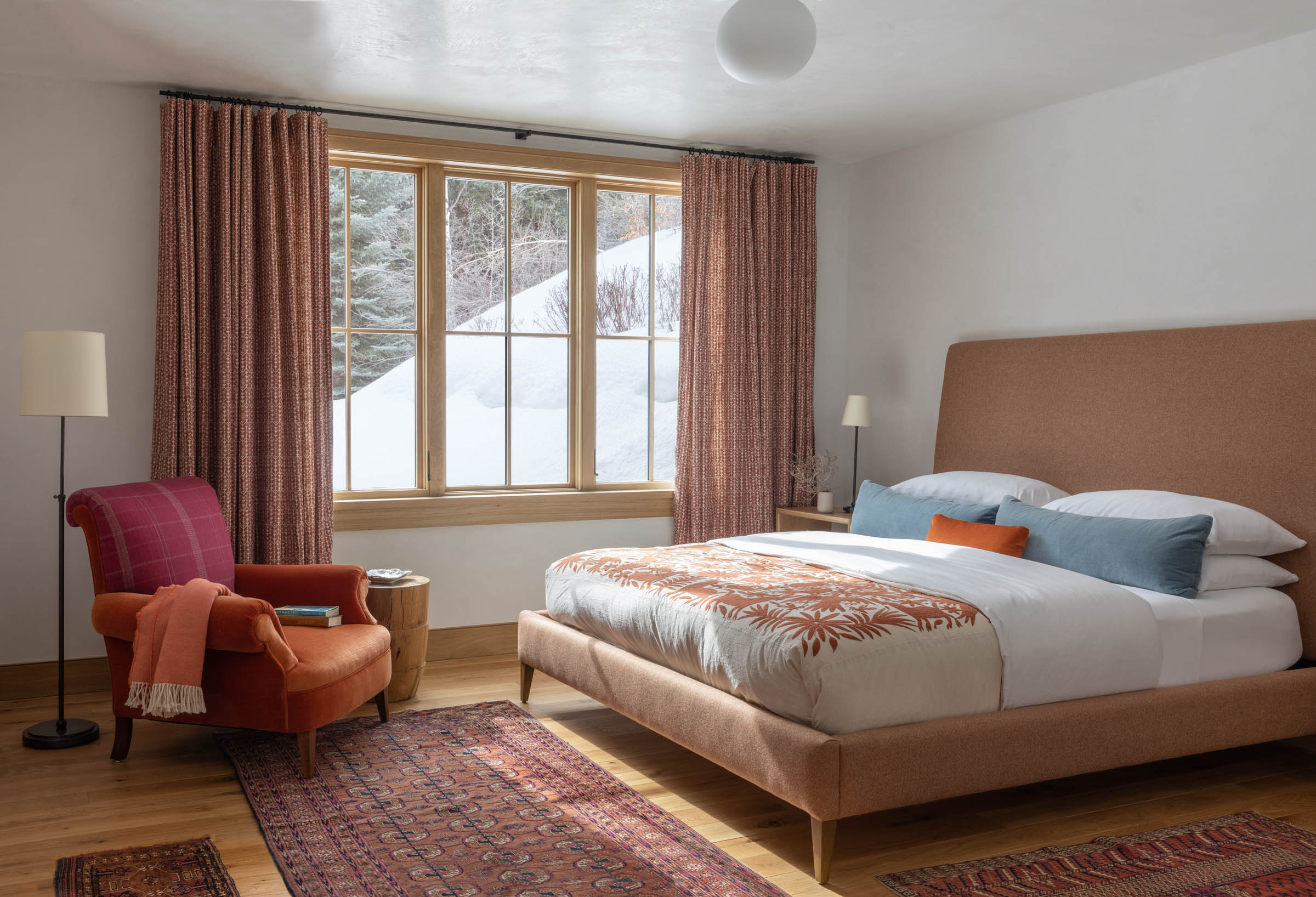
Various of the design’s qualities support an innovative way of enjoying a near-museum scale collection in a relaxed domestic setting. The first is a high level of visual connectivity from room to room and floor to floor. Lookout House is also made welcoming by the fluidity of its palette, which morphs from concrete to oak to limestone to leather as it flows from space to space, connecting to the house’s exterior materials and the natural world beyond. Above all the dwelling conveys an overwhelming sense of craft. ‘Everything in this house was custom-designed,’ Broughton observes. ‘Not only did we design the beds, we even made the pillows. It was an incredible opportunity.’
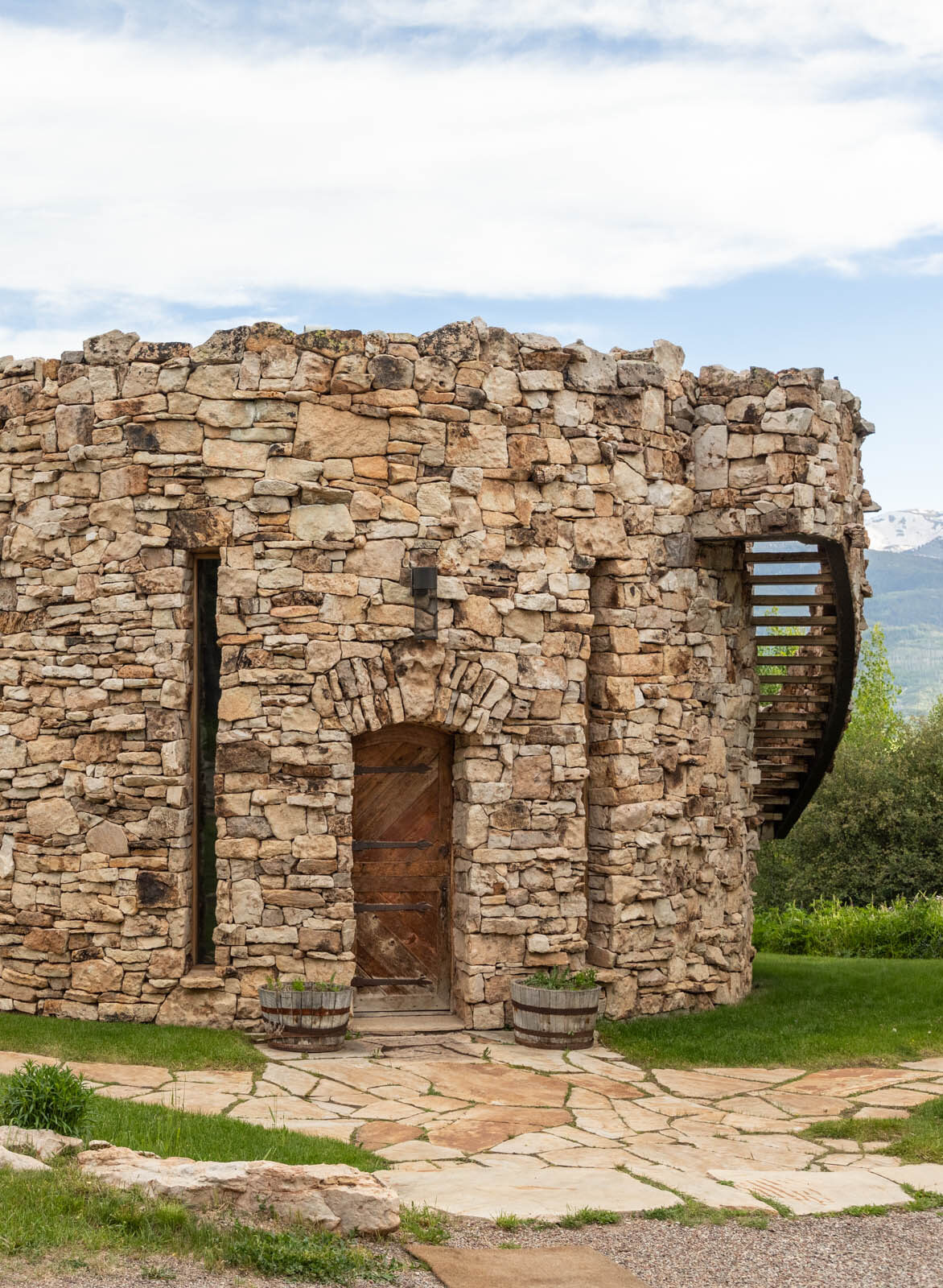
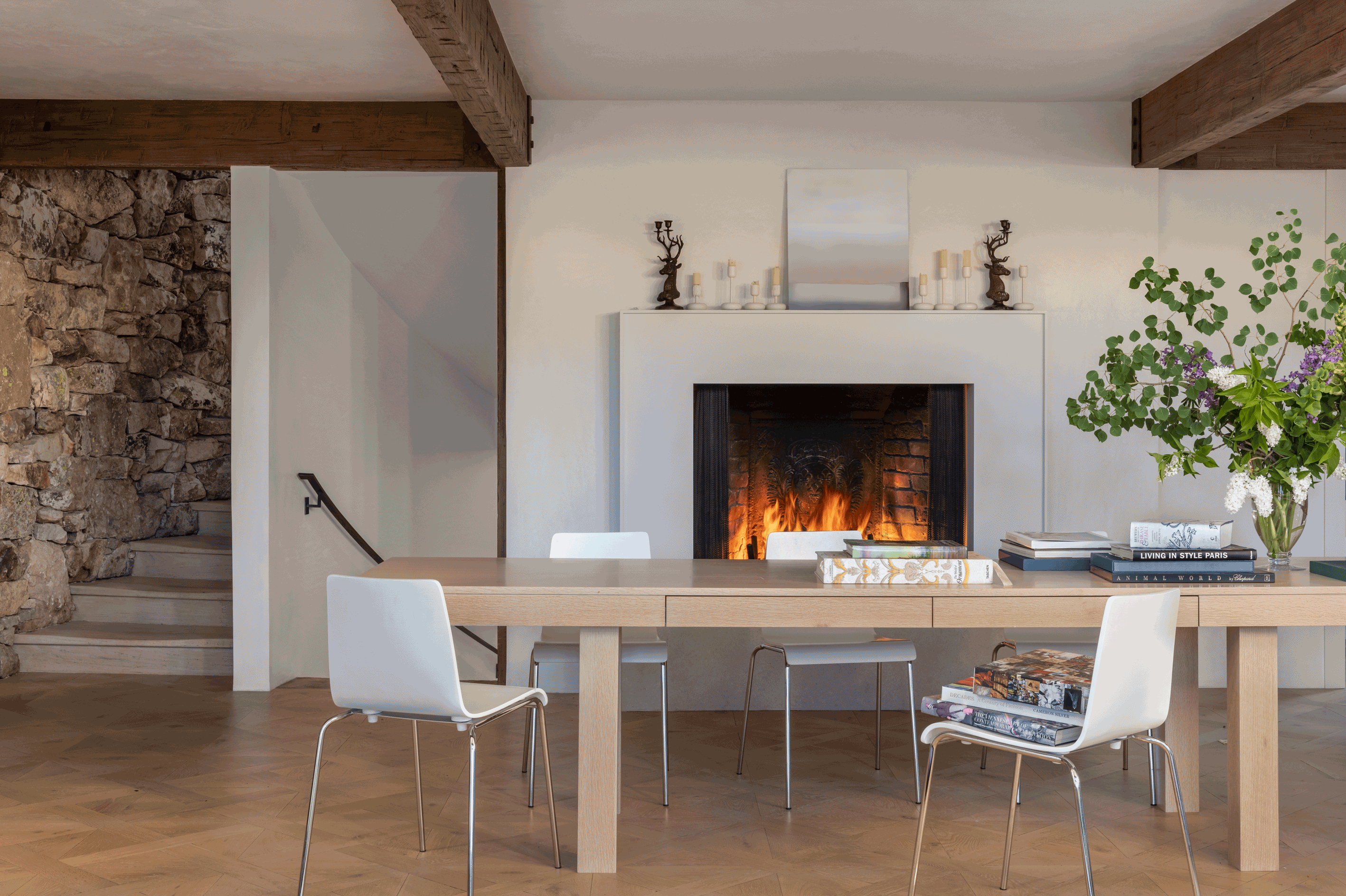
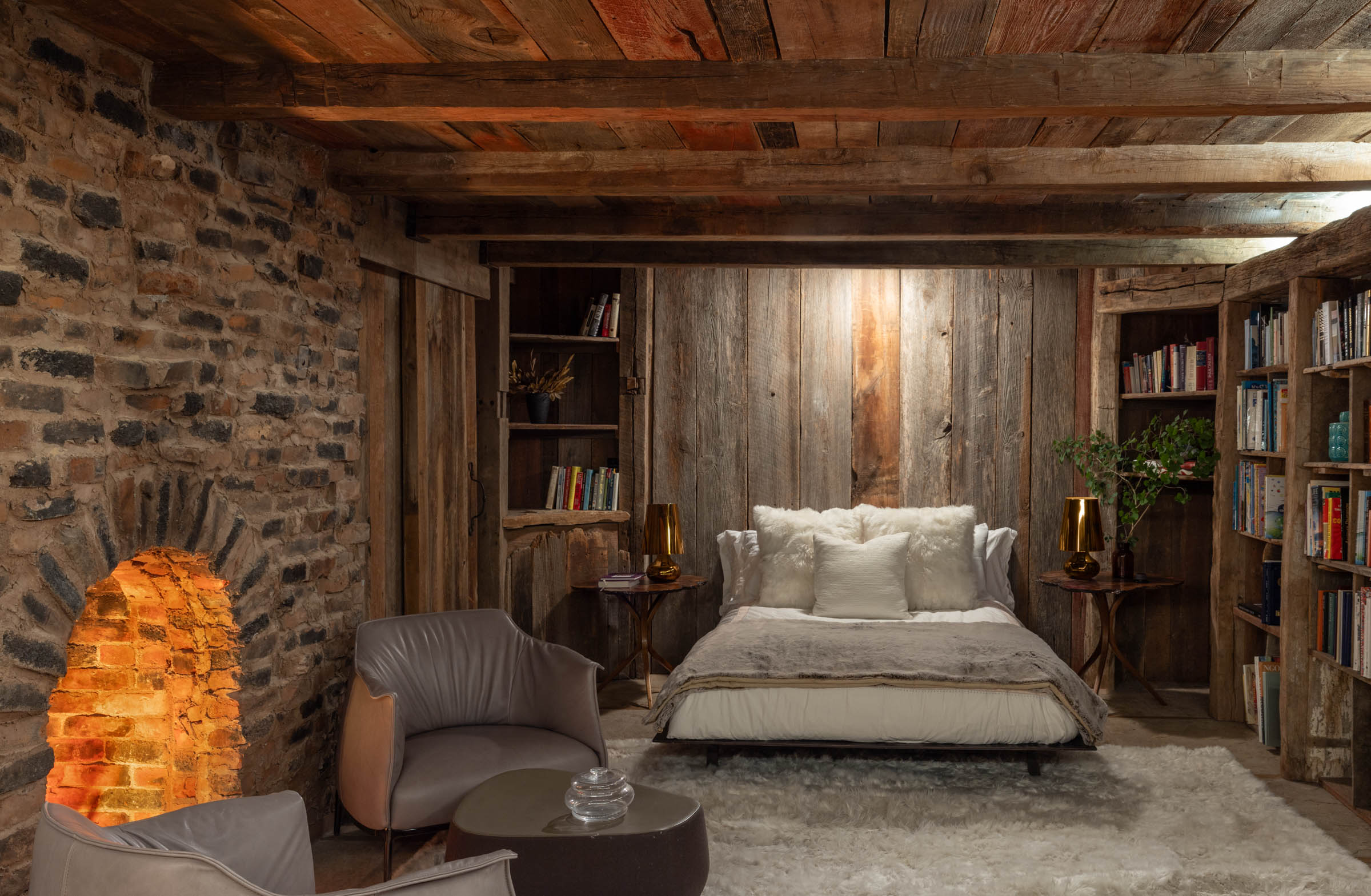
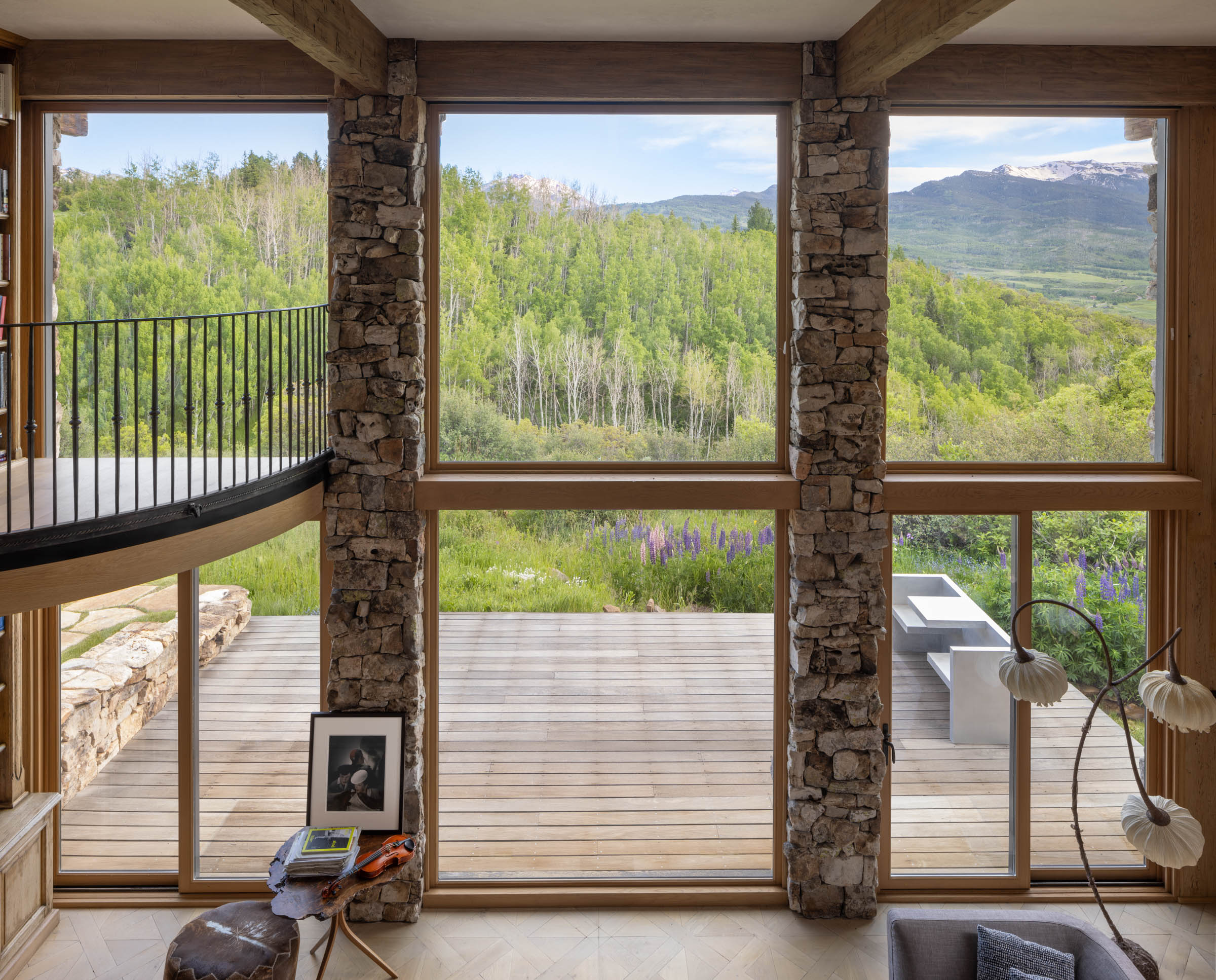
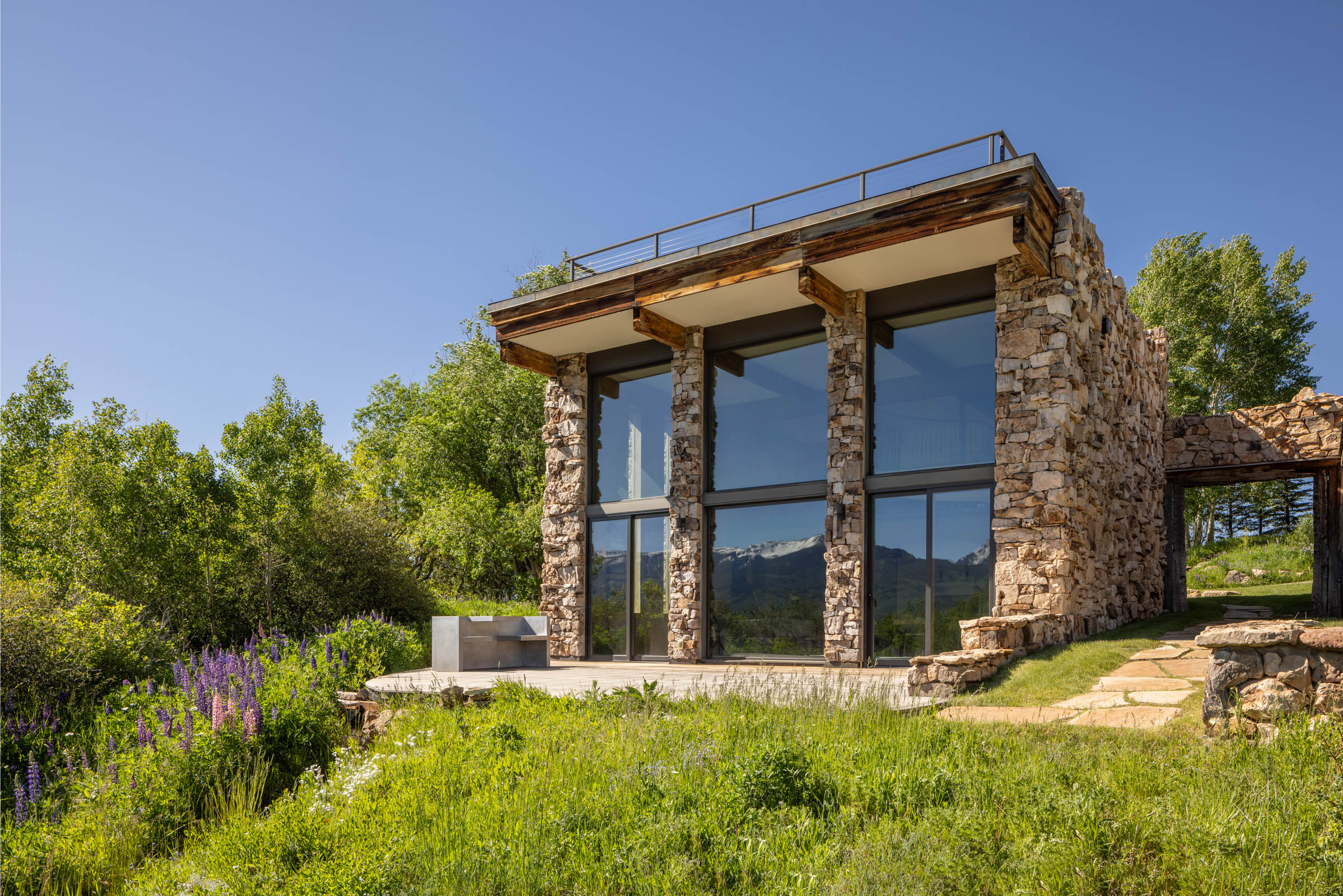
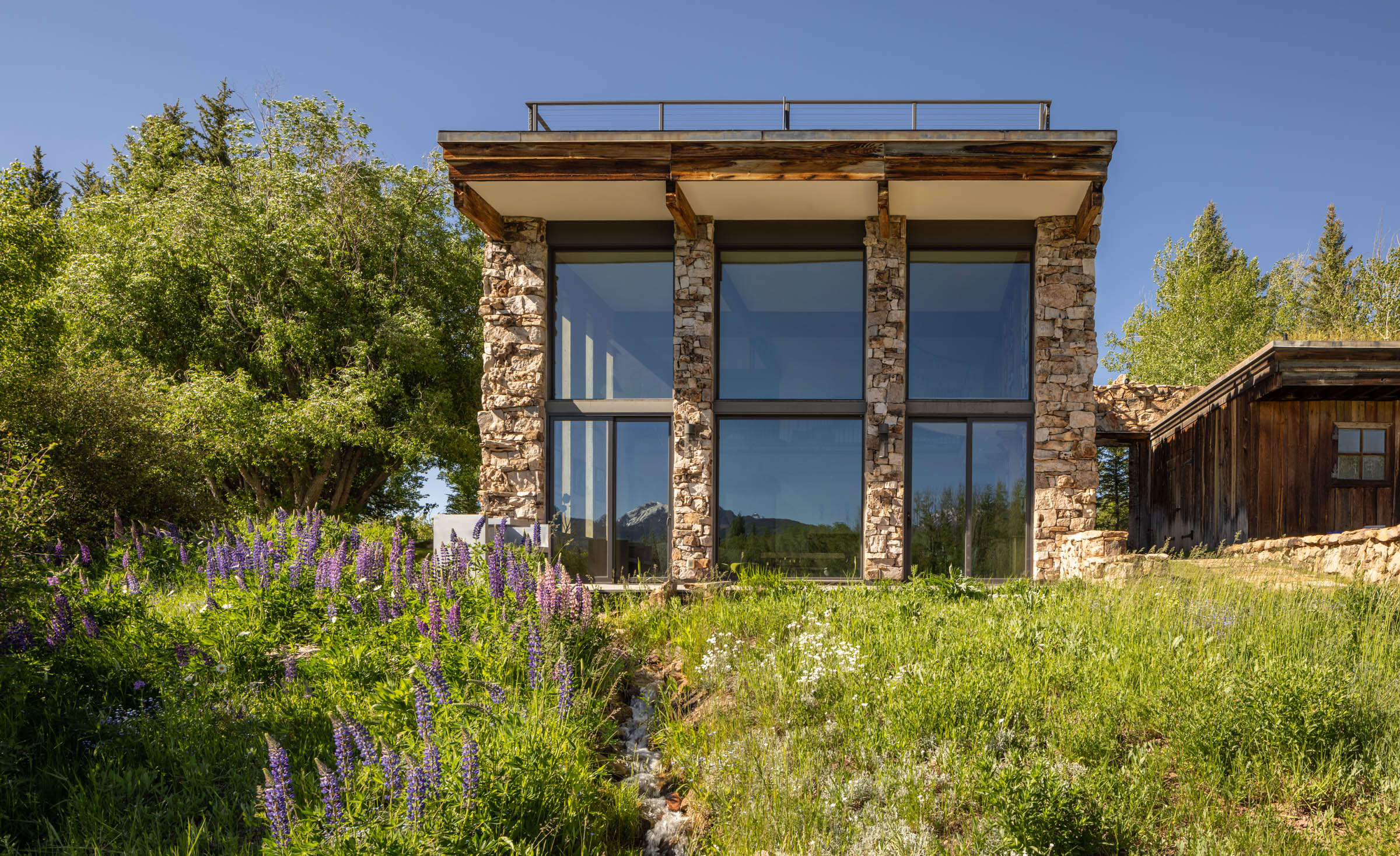
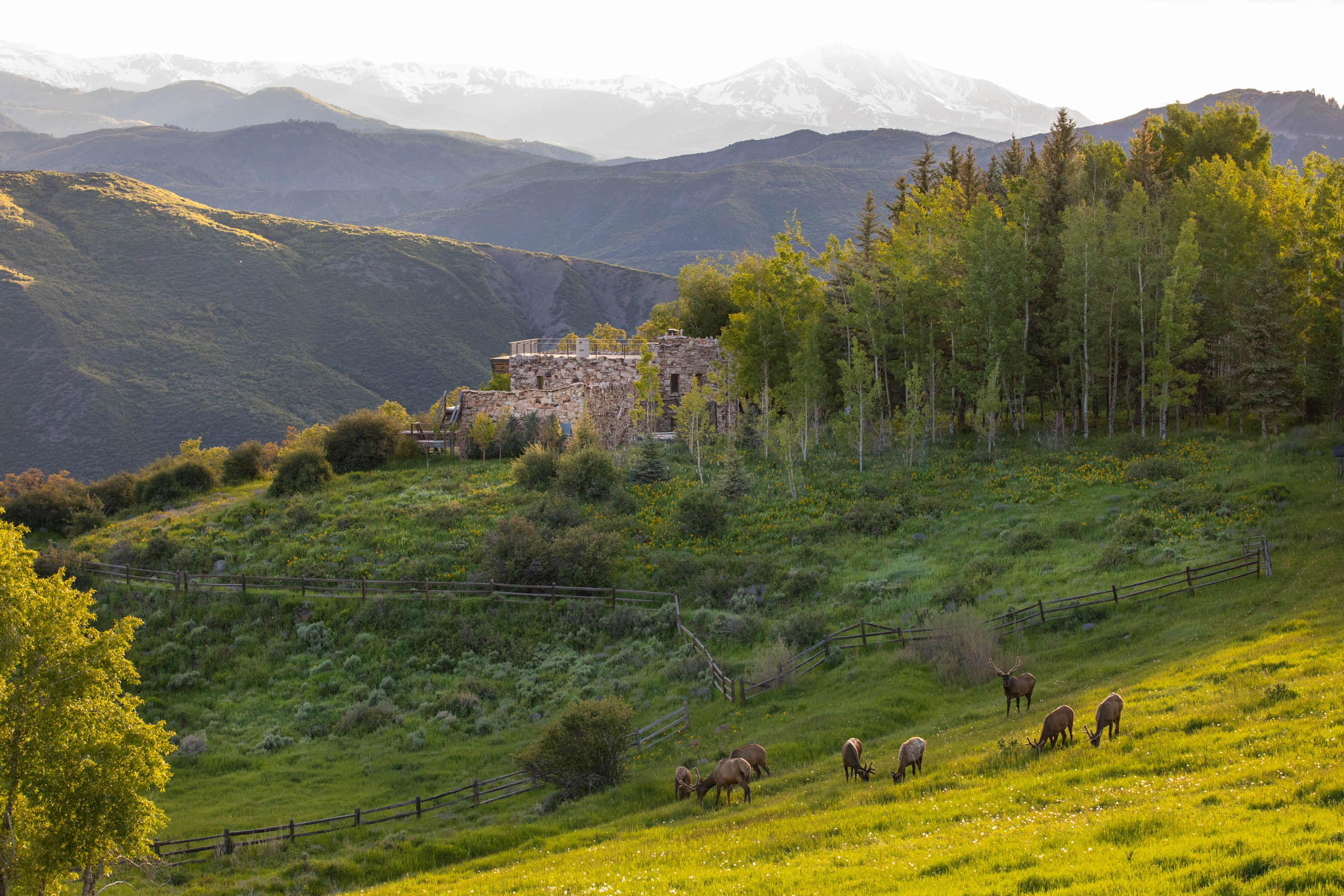
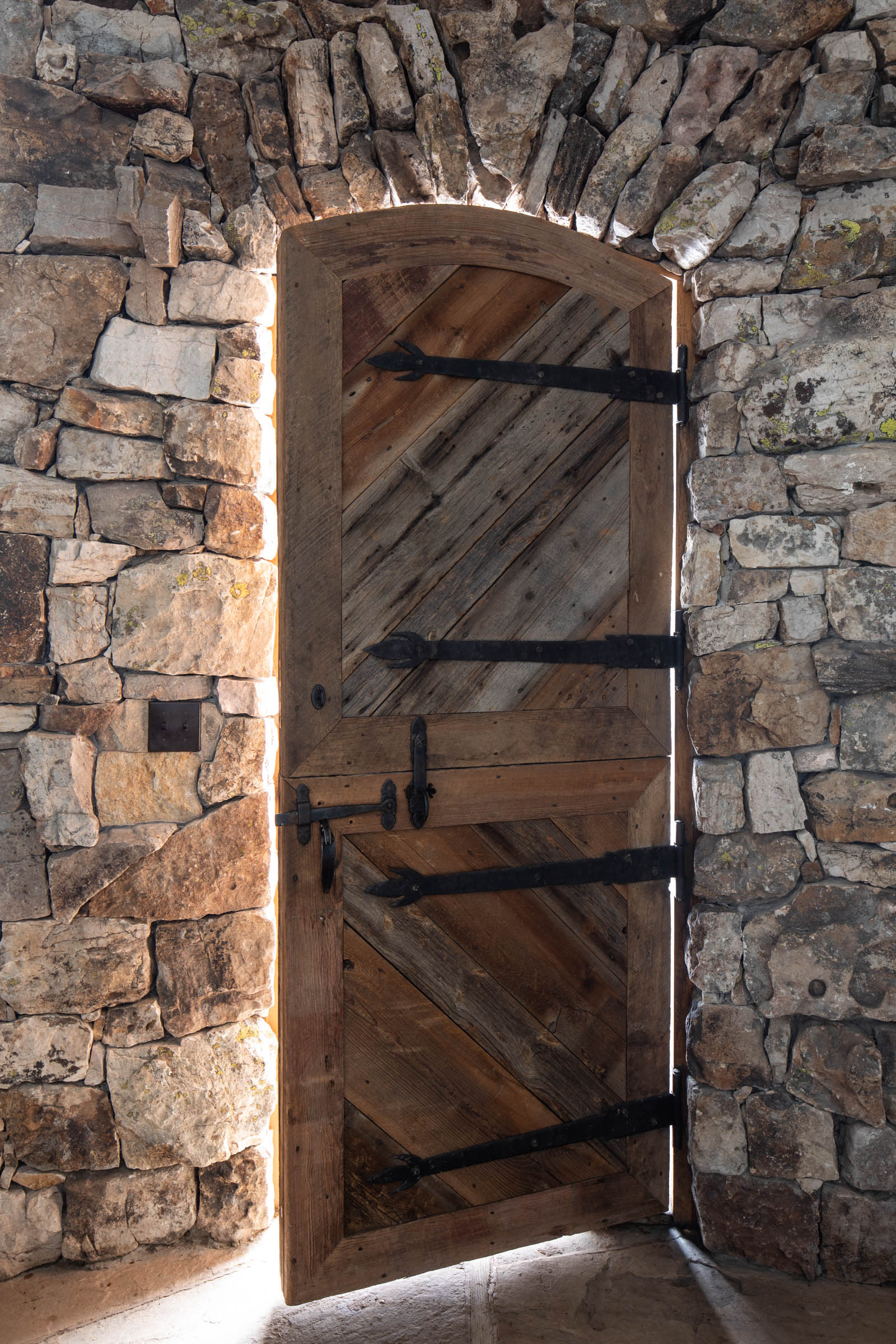
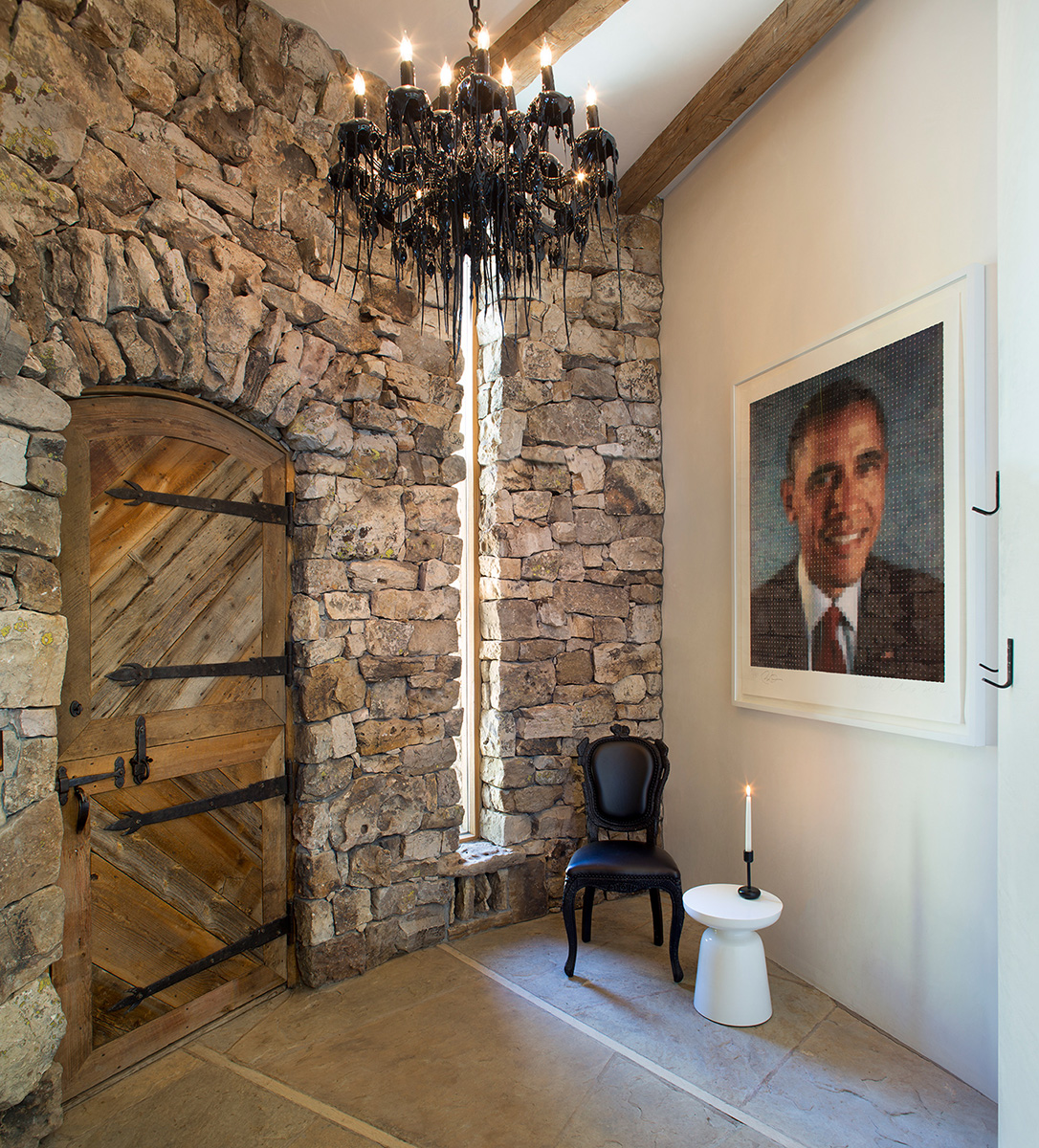
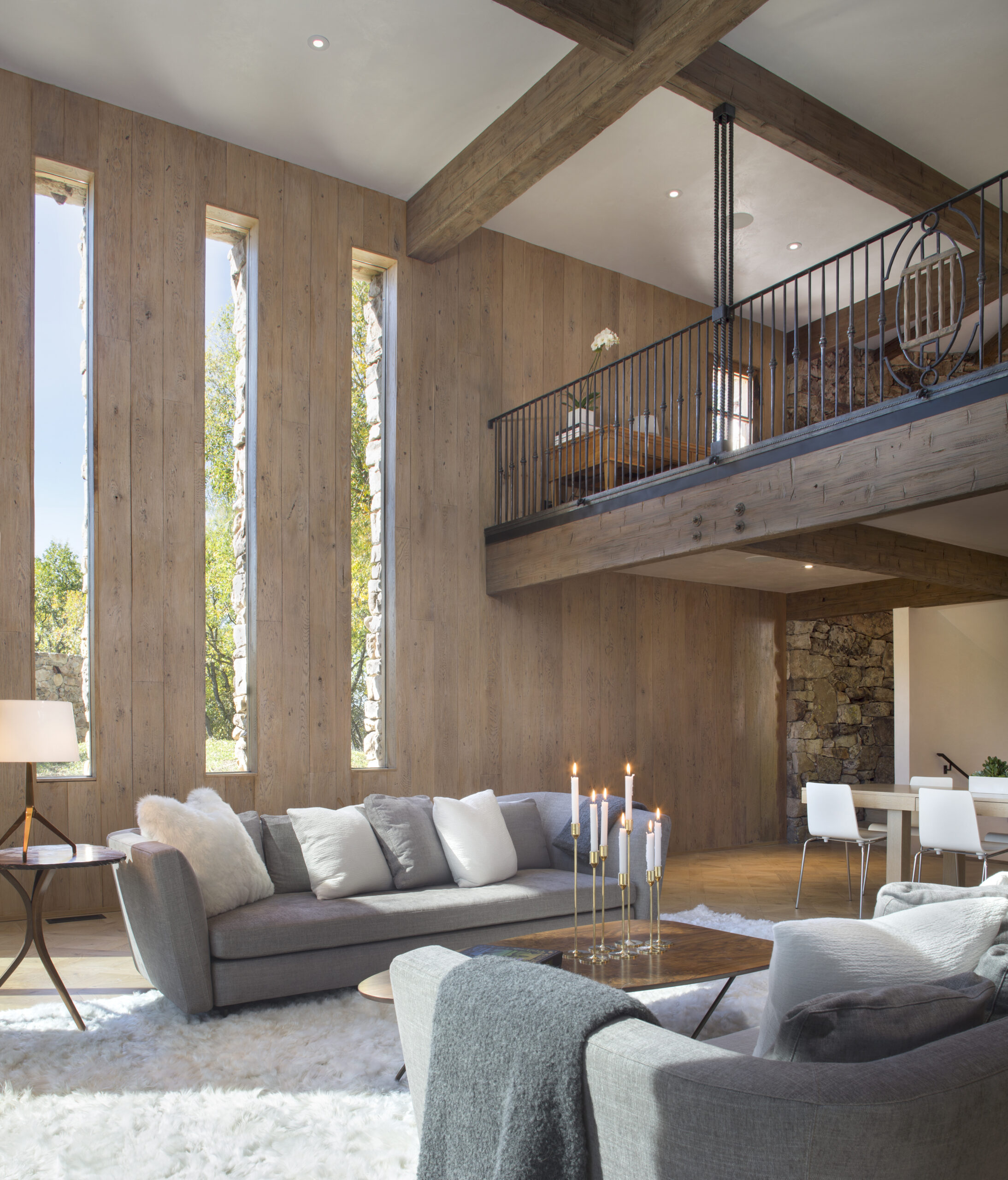
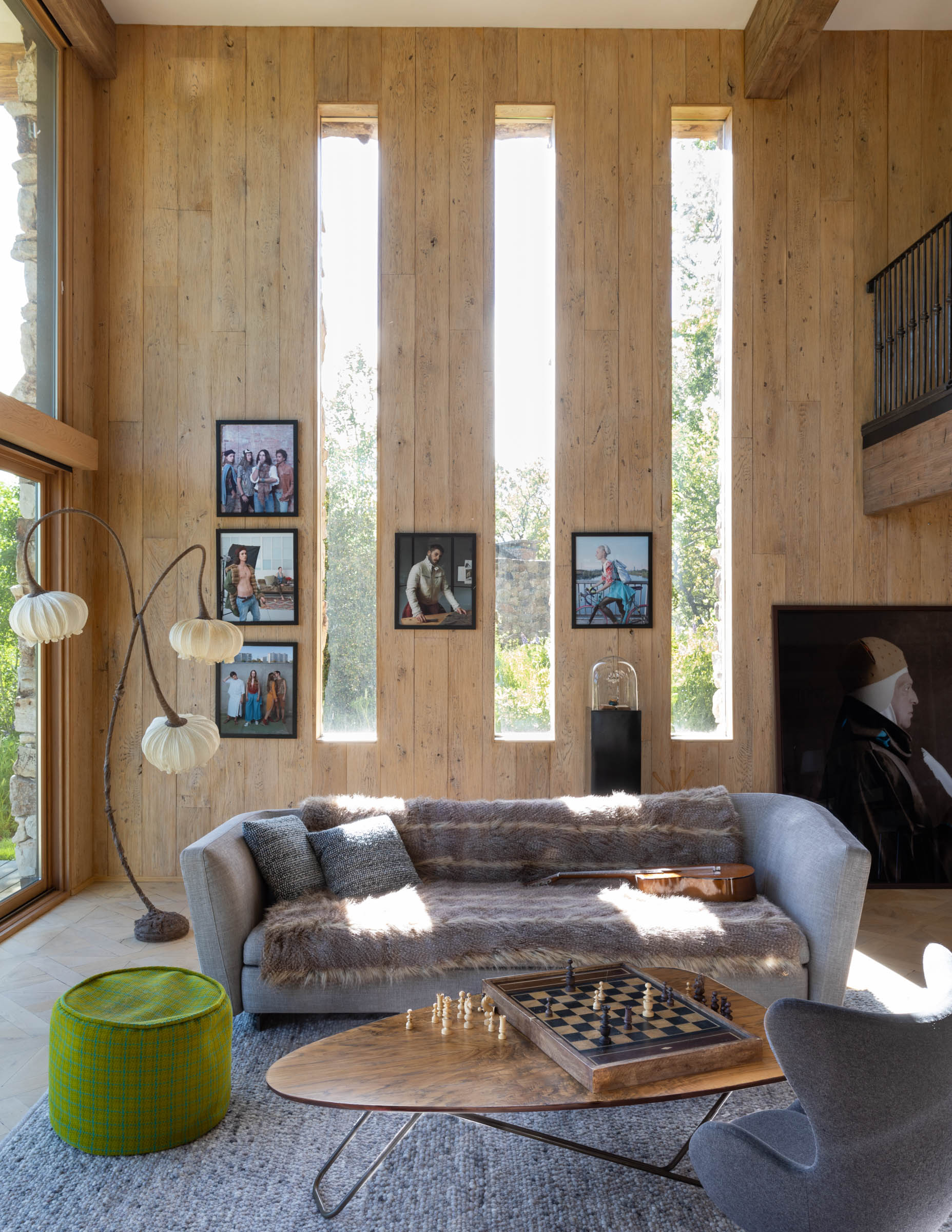
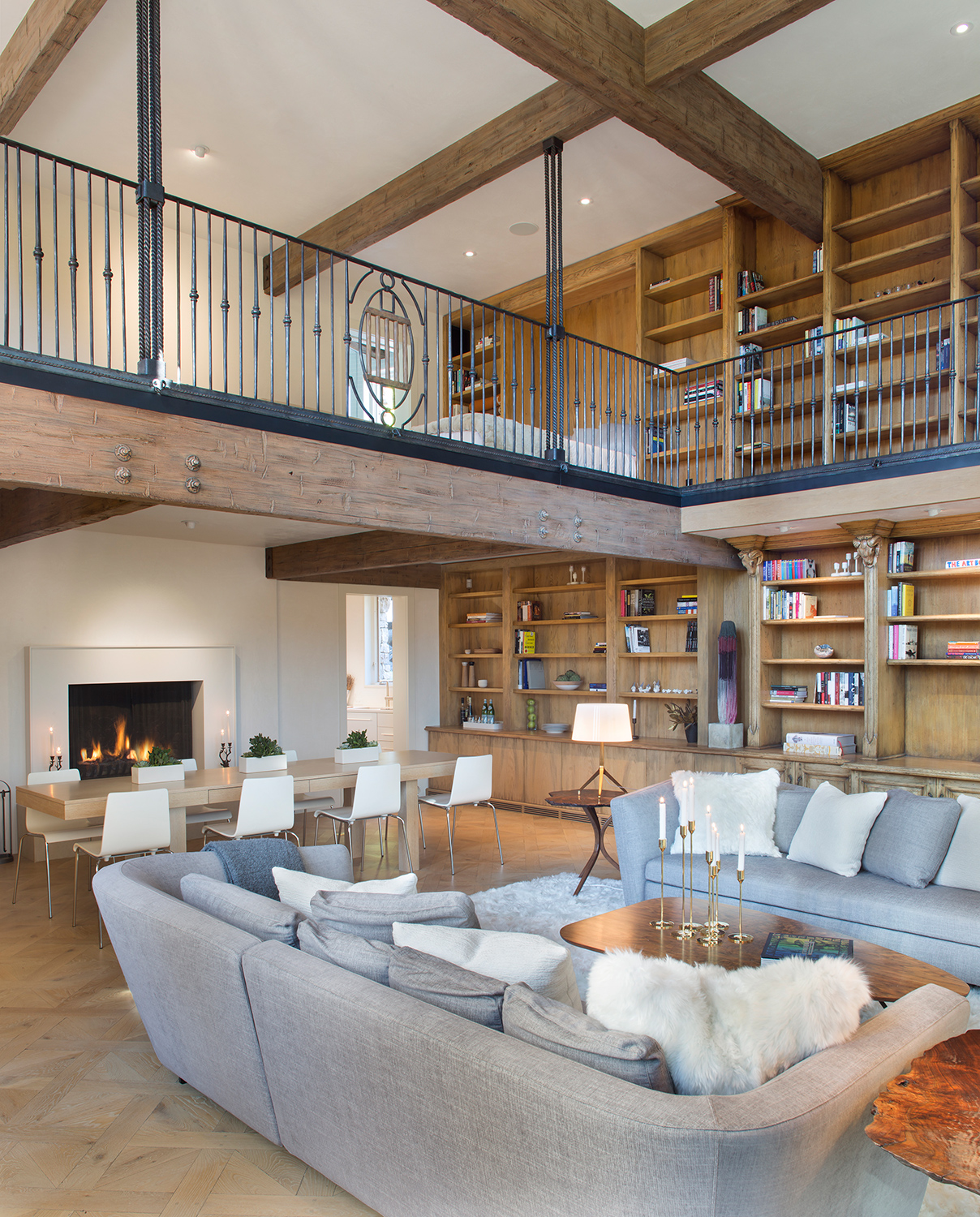
While renovating a building may seem to offer less opportunity than a blank slate, a considerable creative challenge is presented when the preexisting component is picturesque: a relic or ruin, ideally dating from a bygone, colorful age. Then, all manner of possibilities come into play, the most interesting being how the old might become part of something new: the structural and emotional interplay between the vivid past and the practical present.
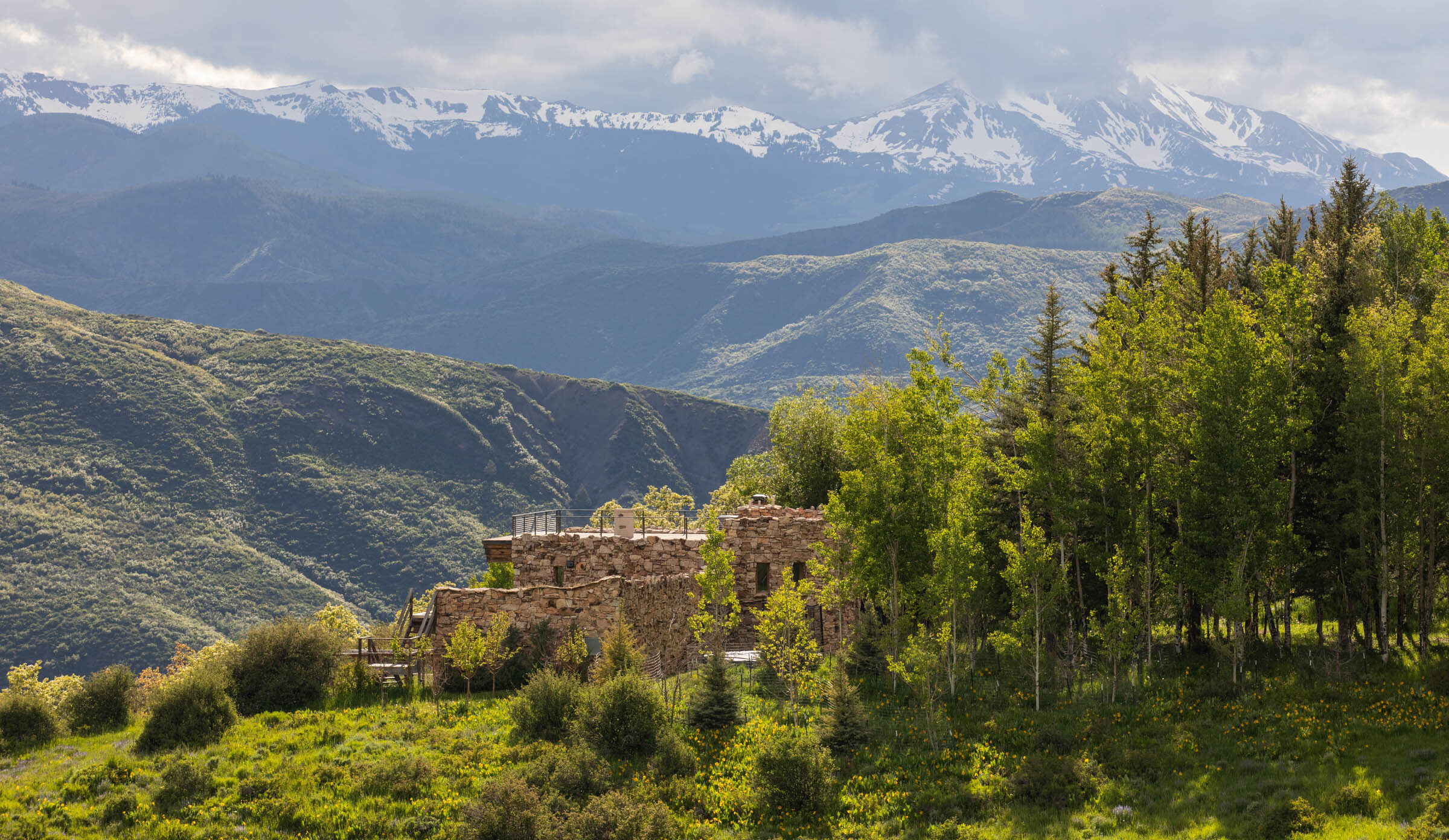
Our design for Barn Studio, perched on a ridge with picturesque Aspen views, rings an interesting change on the idea of the new-old house. The original building appeared to be a remnant of a mostly collapsed, rubble-stone agrarian structure, reconceived as a residence via the insertion of contemporary living amenities. In fact, it was entirely modern, designed by its owner to resemble a clever meeting of modern life and the golden days of Colorado’s yesteryear.
R+B’s clients, a couple with three young children, purchased this folly and its surrounding acreage, seeing it as the cornerstone of a compound that would ultimately include a range of building types. The idea was to make 3000 square feet livable for five people while the other structures took shape, and to create a paradigm for building on the site, one that respected the area’s rural-agrarian history while extending that legacy into the future.
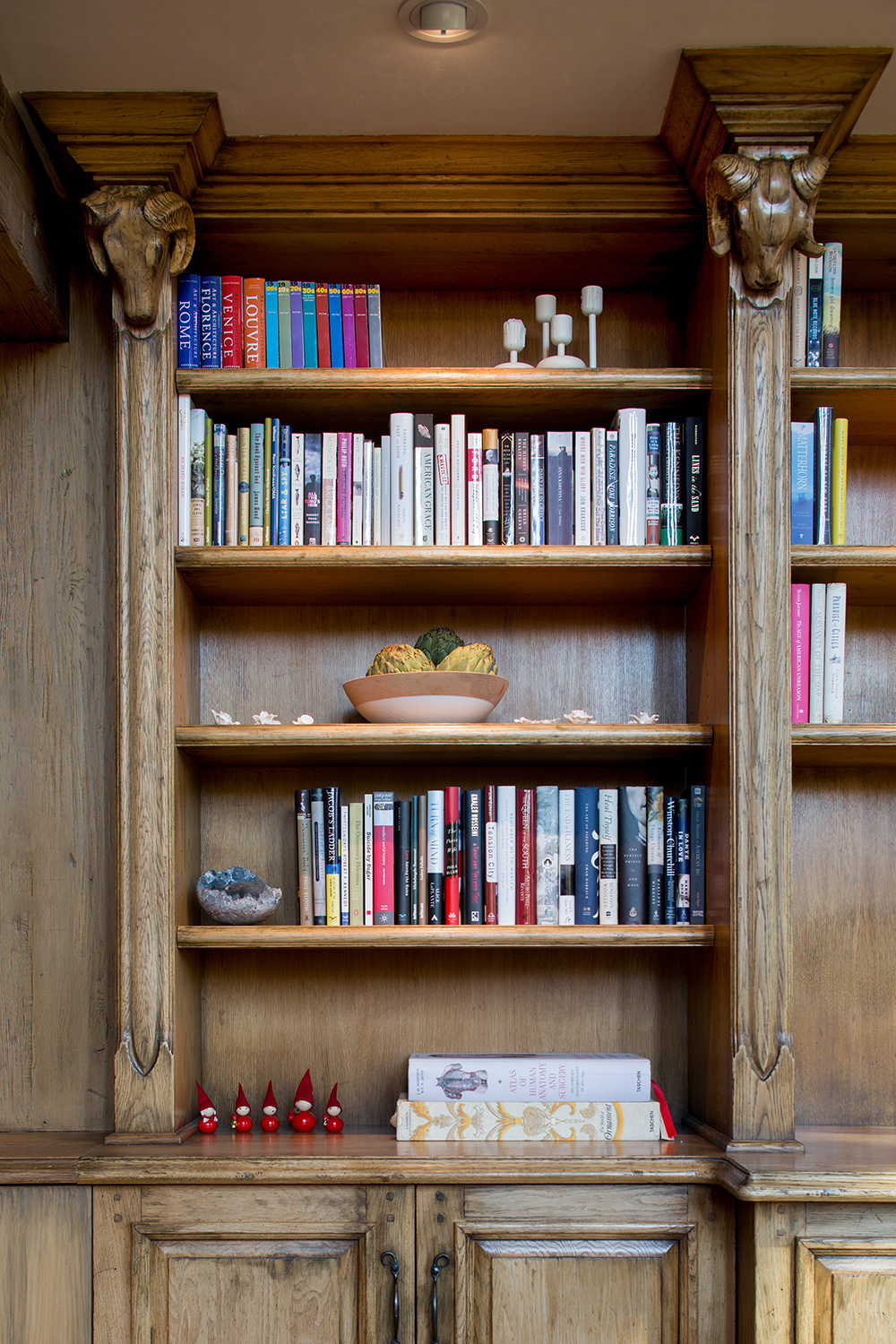
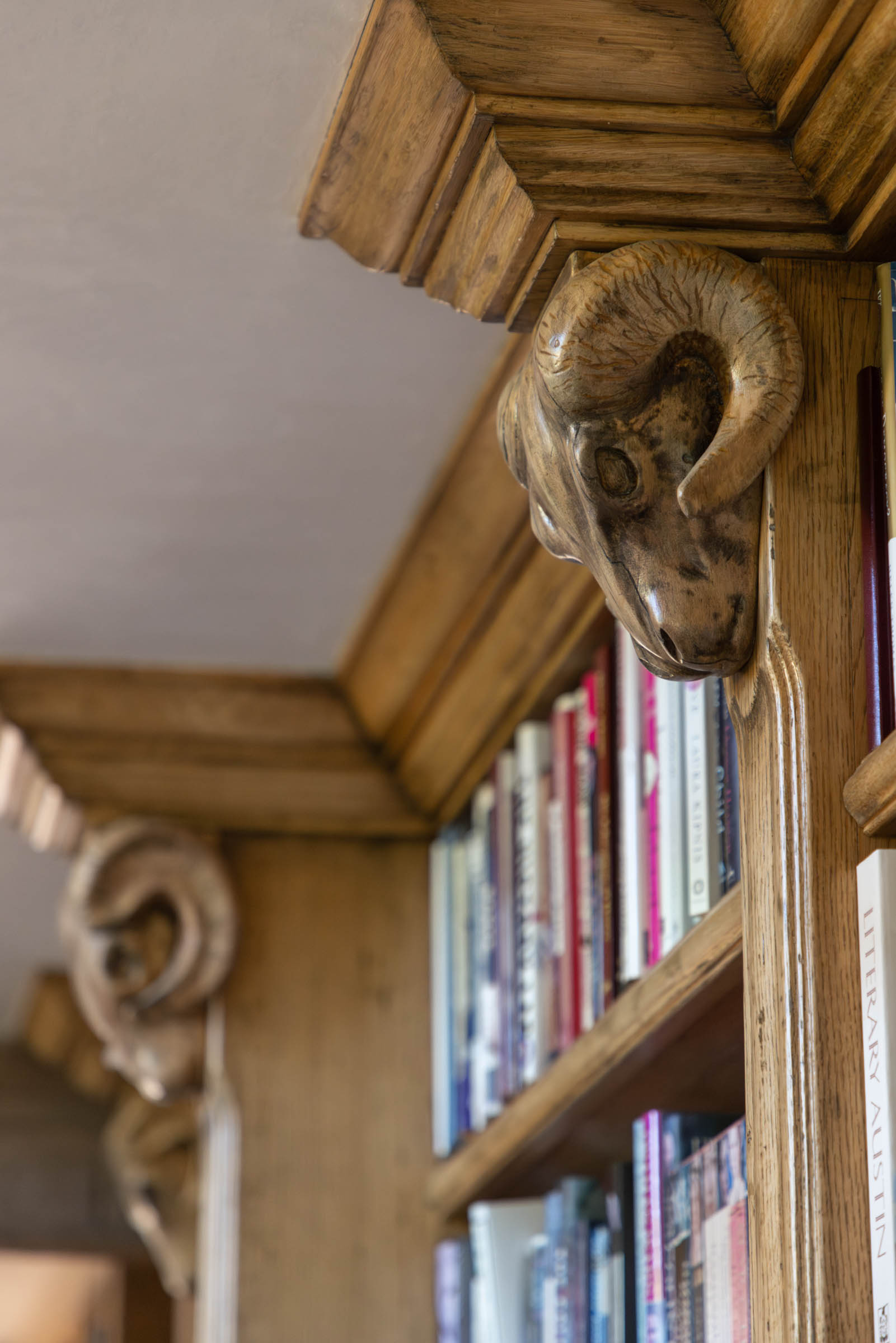
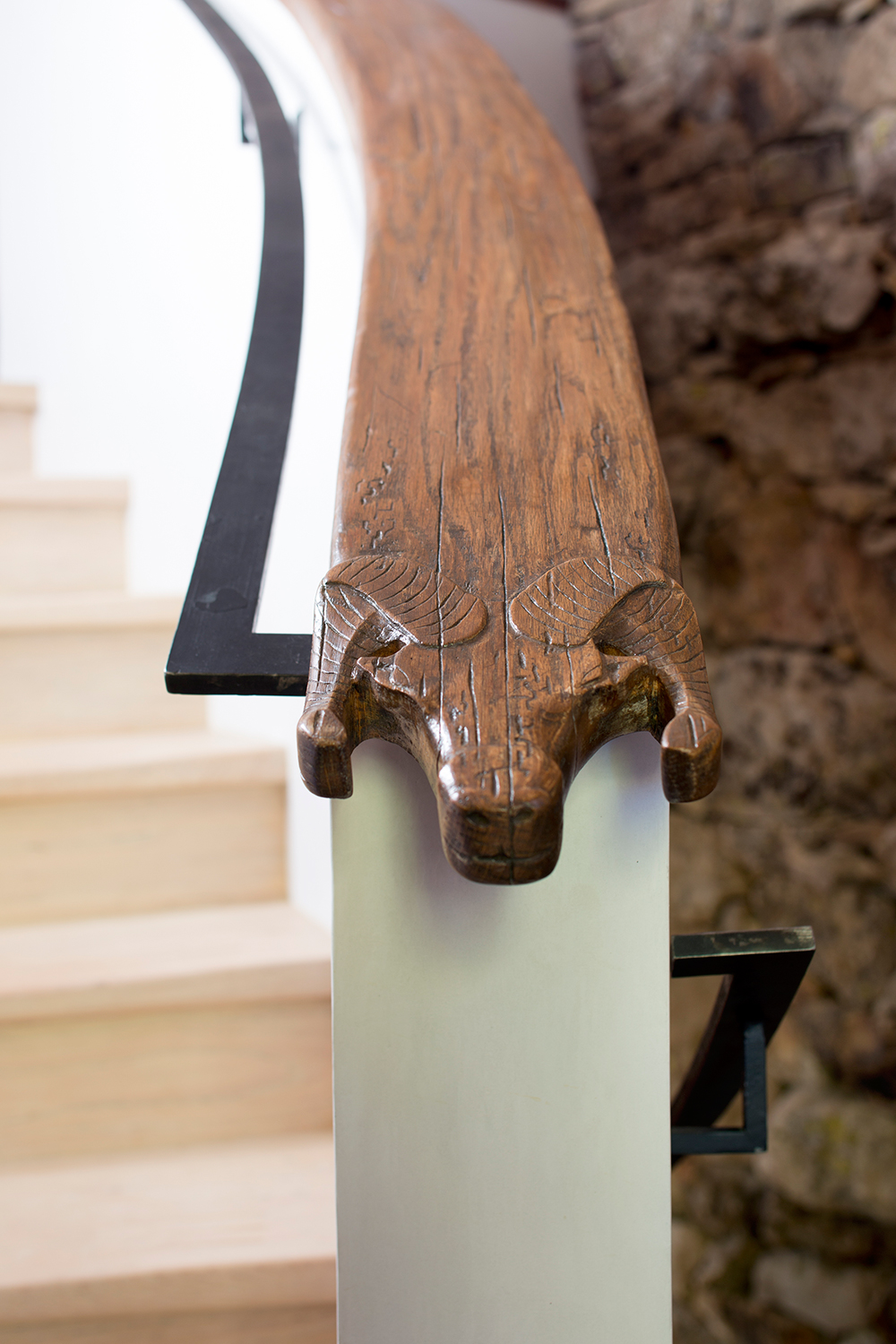
Barn Studio unfolds on three levels: a subterranean space incorporating media and game rooms; a double-height main floor, which we lightened and contemporized; and an L-shaped mezzanine that doubles as a sleeping loft and library. Although there are abundant reminders of the place as it was, notably a distinctive carved ram’s head motif, the design’s reimagining is at once more useful and more cheerful: a welcoming, offbeat hideaway – and elegant, fully-equipped crash pad for a rambunctious family of five – that belongs to the past without being mired in it.
Of the two R+B-designed residences that followed Barn Studio on the property, says Broughton, ‘they’re informed by what we did here first. It’s all about stewardship – uniting the past with today’s processes while respecting and appreciating the people who were here before.’
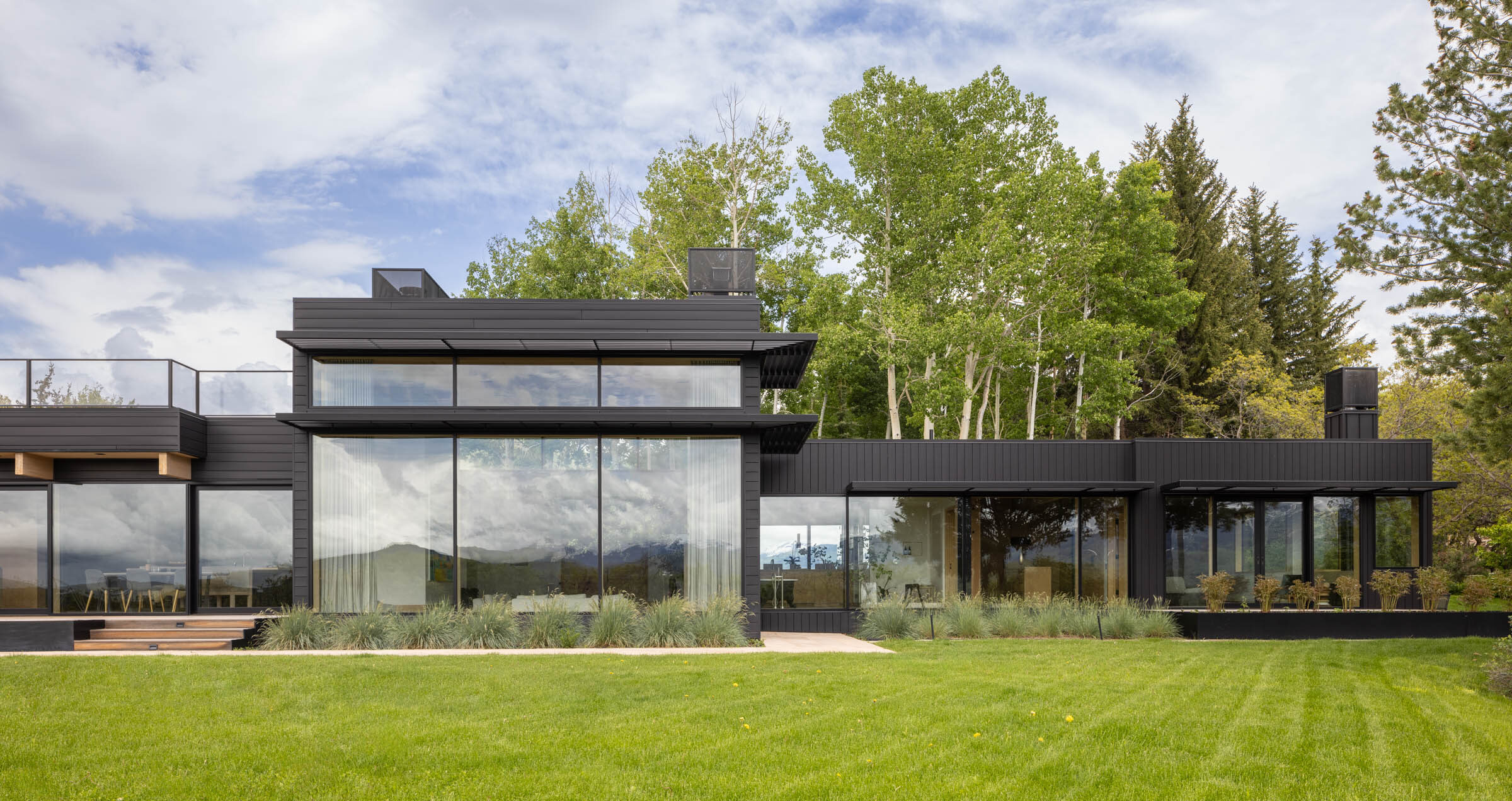
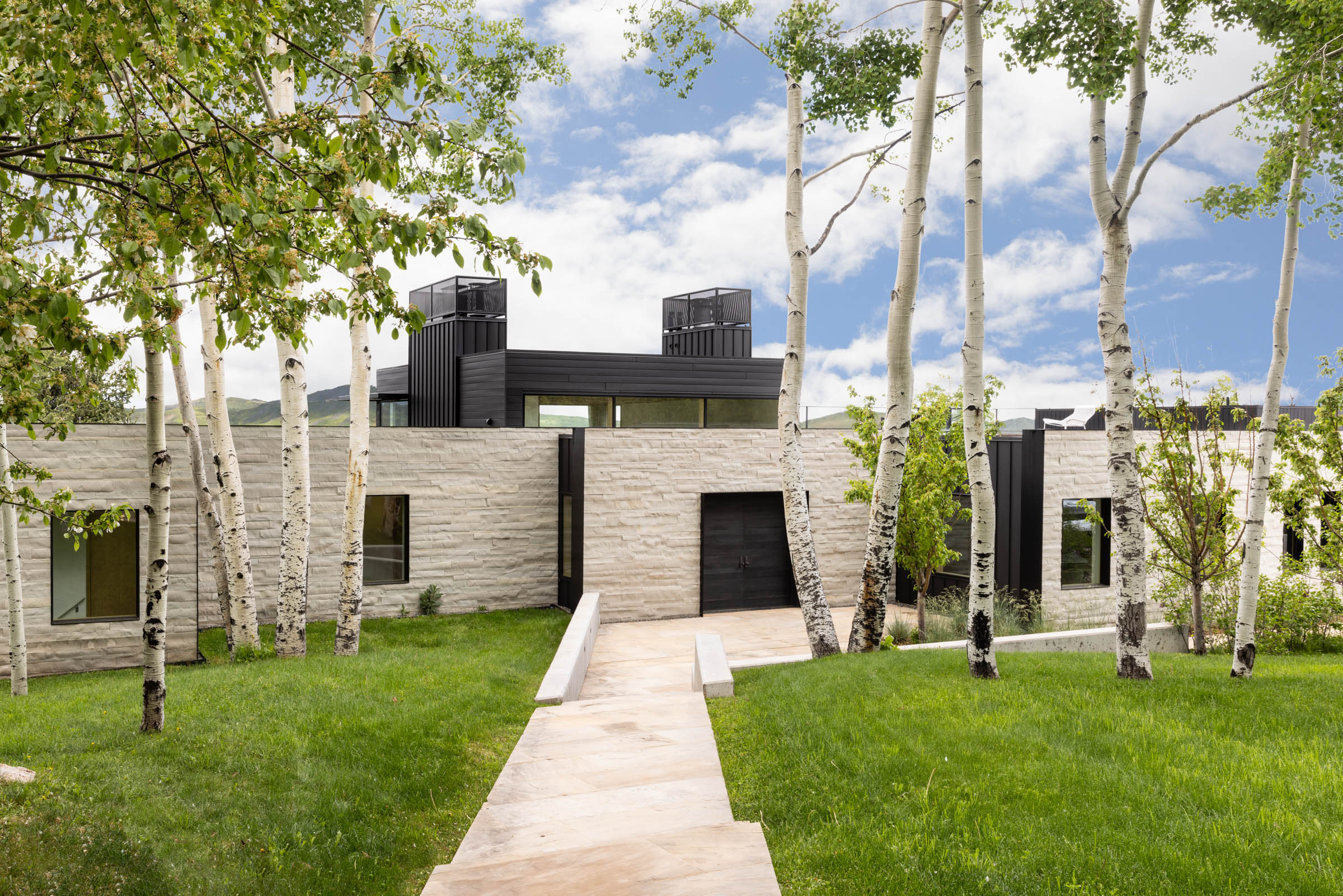
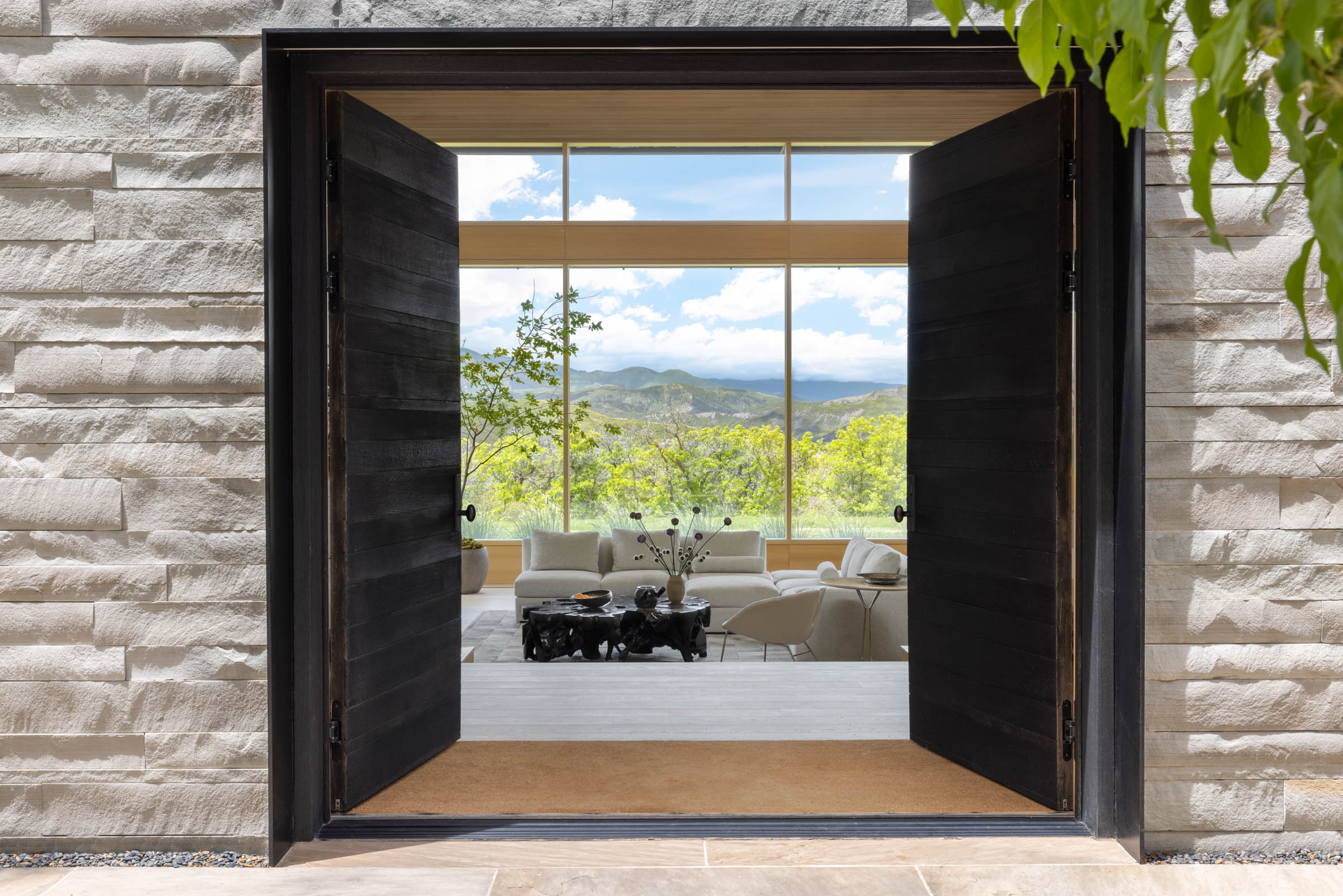
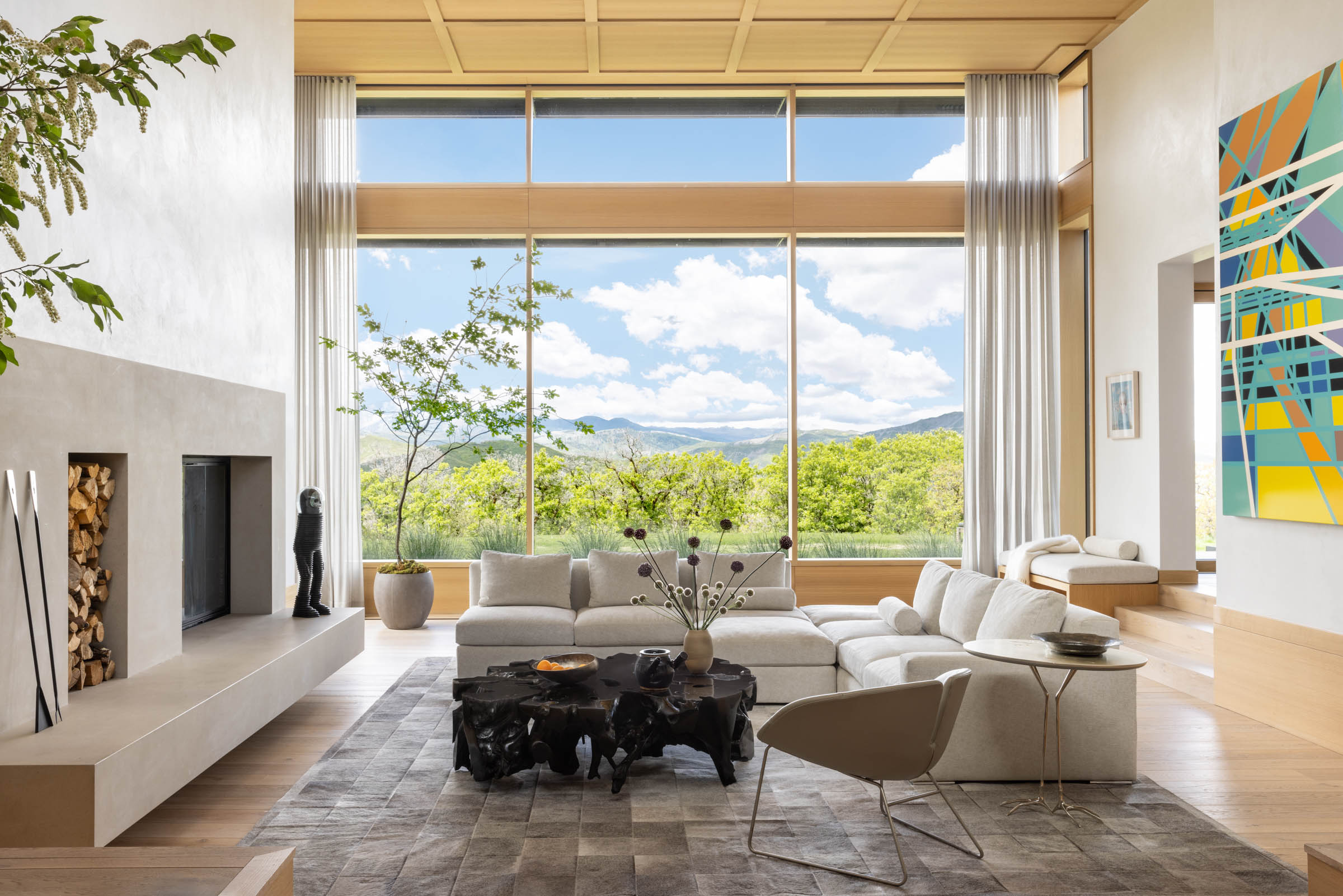
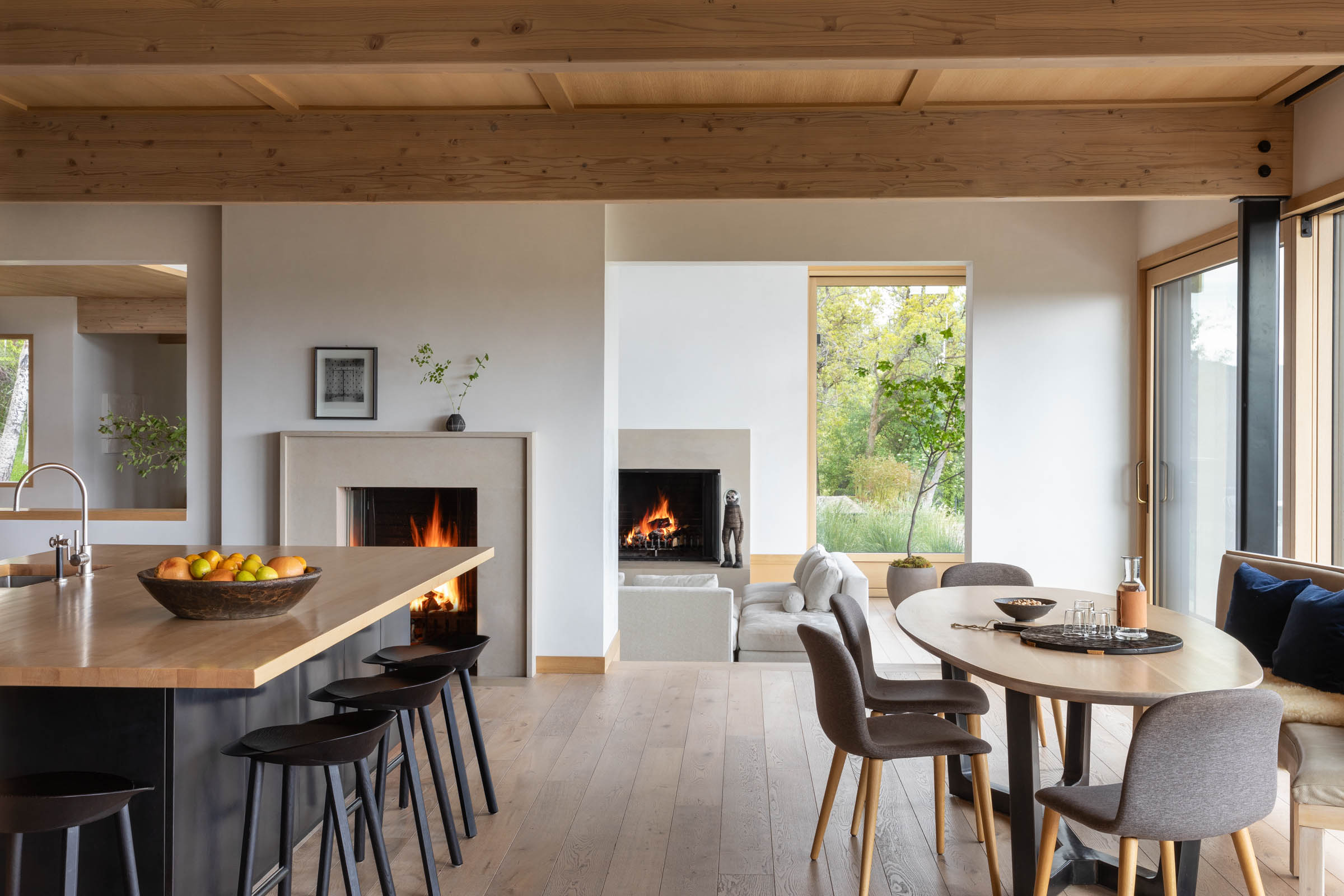
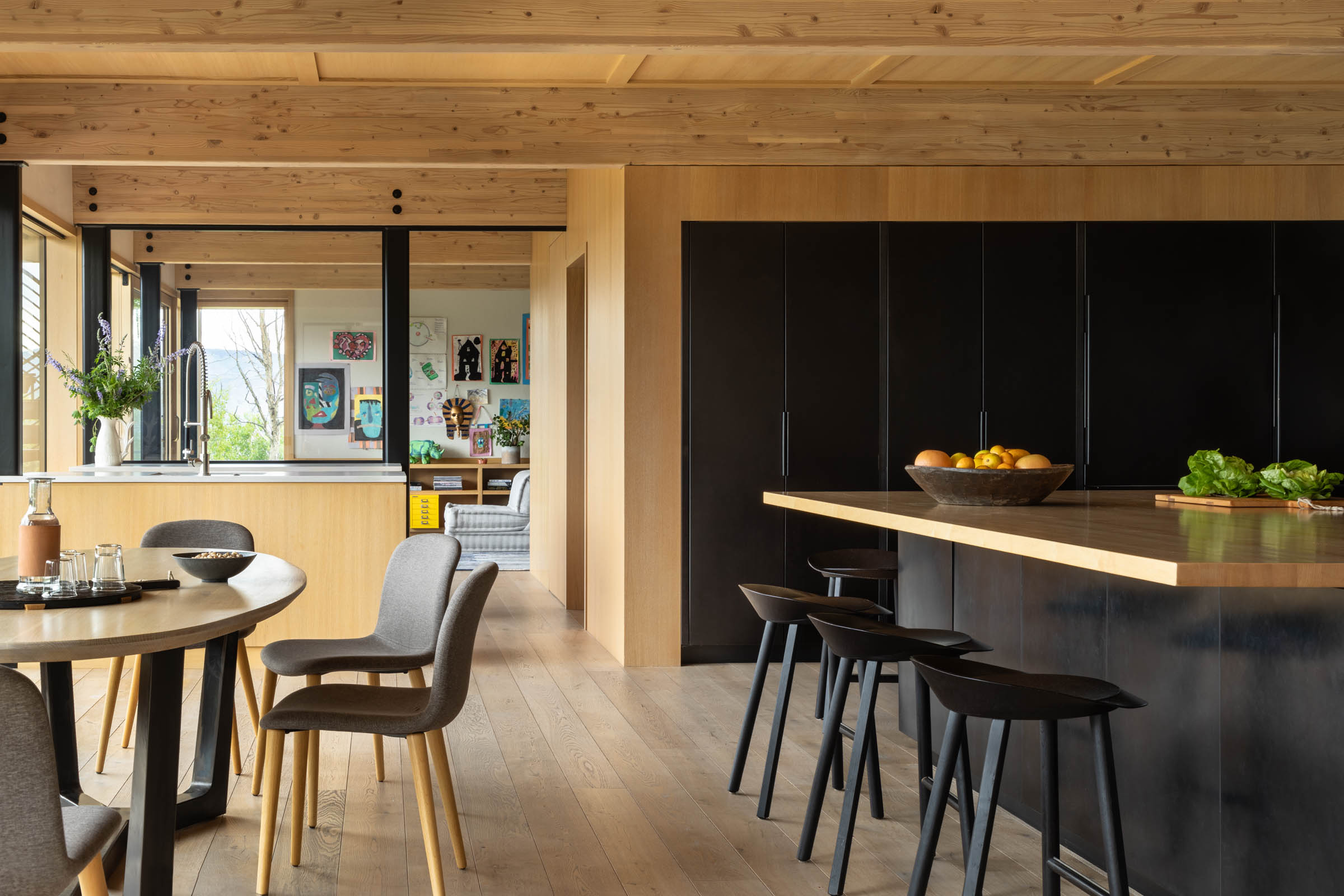
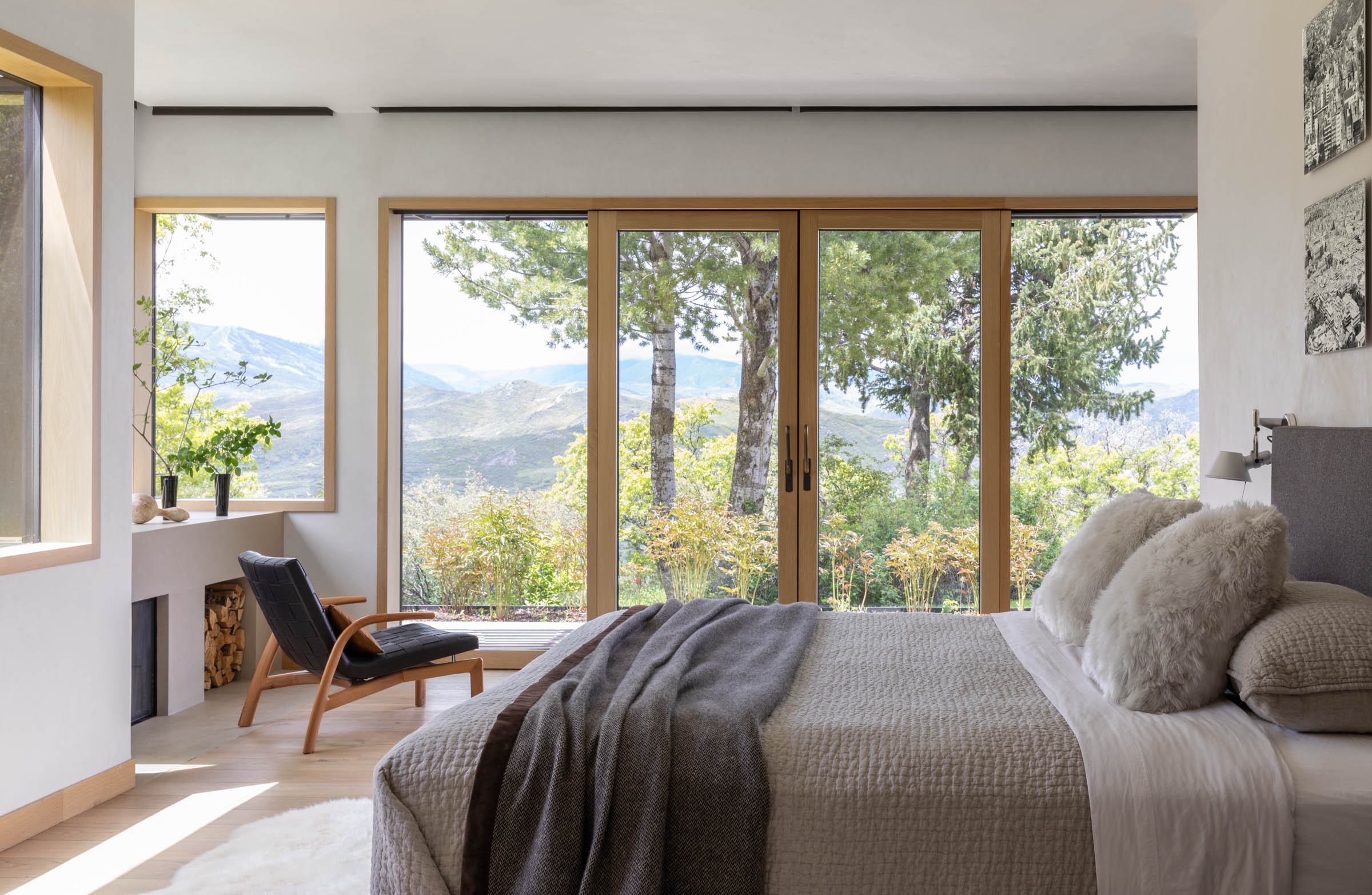
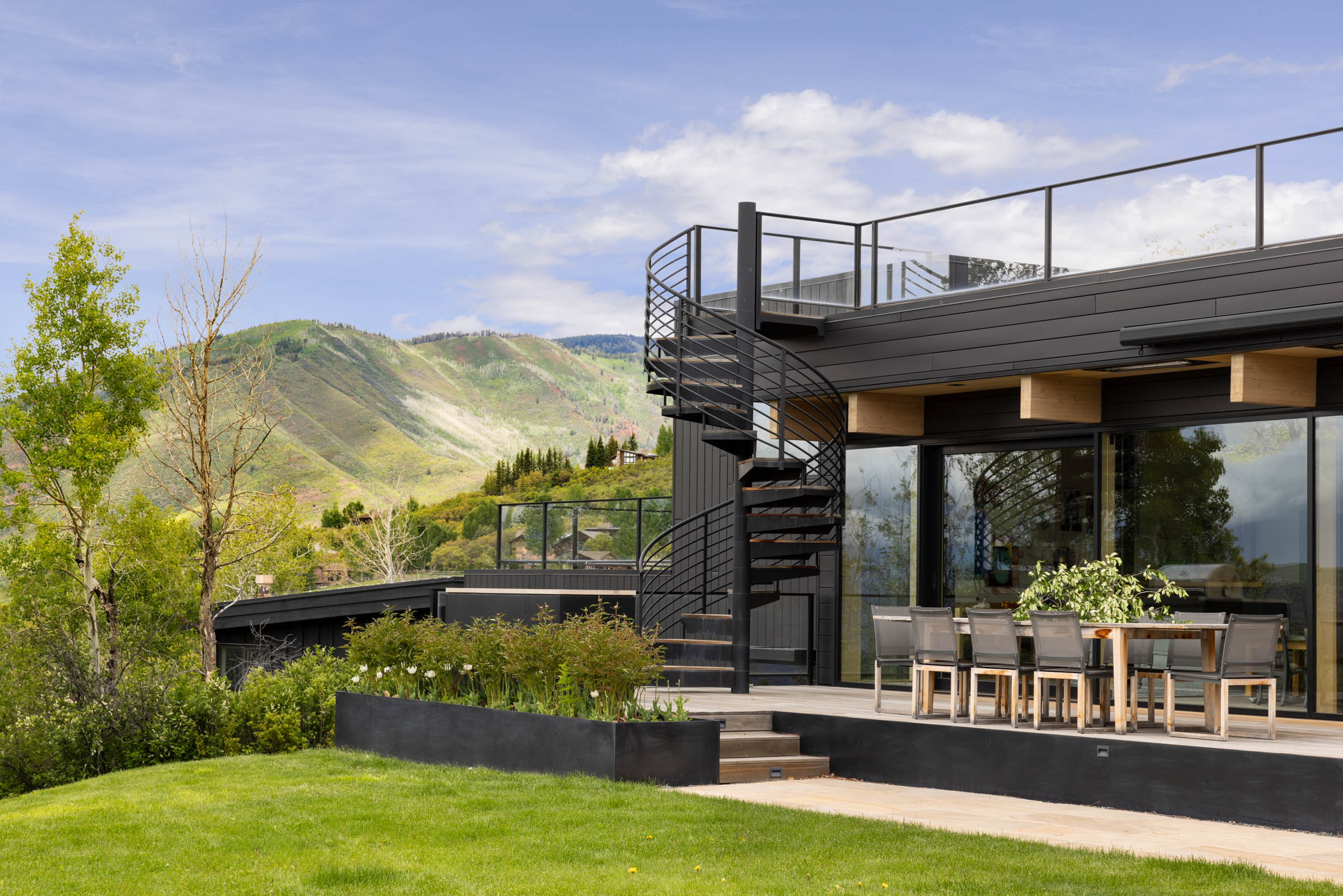
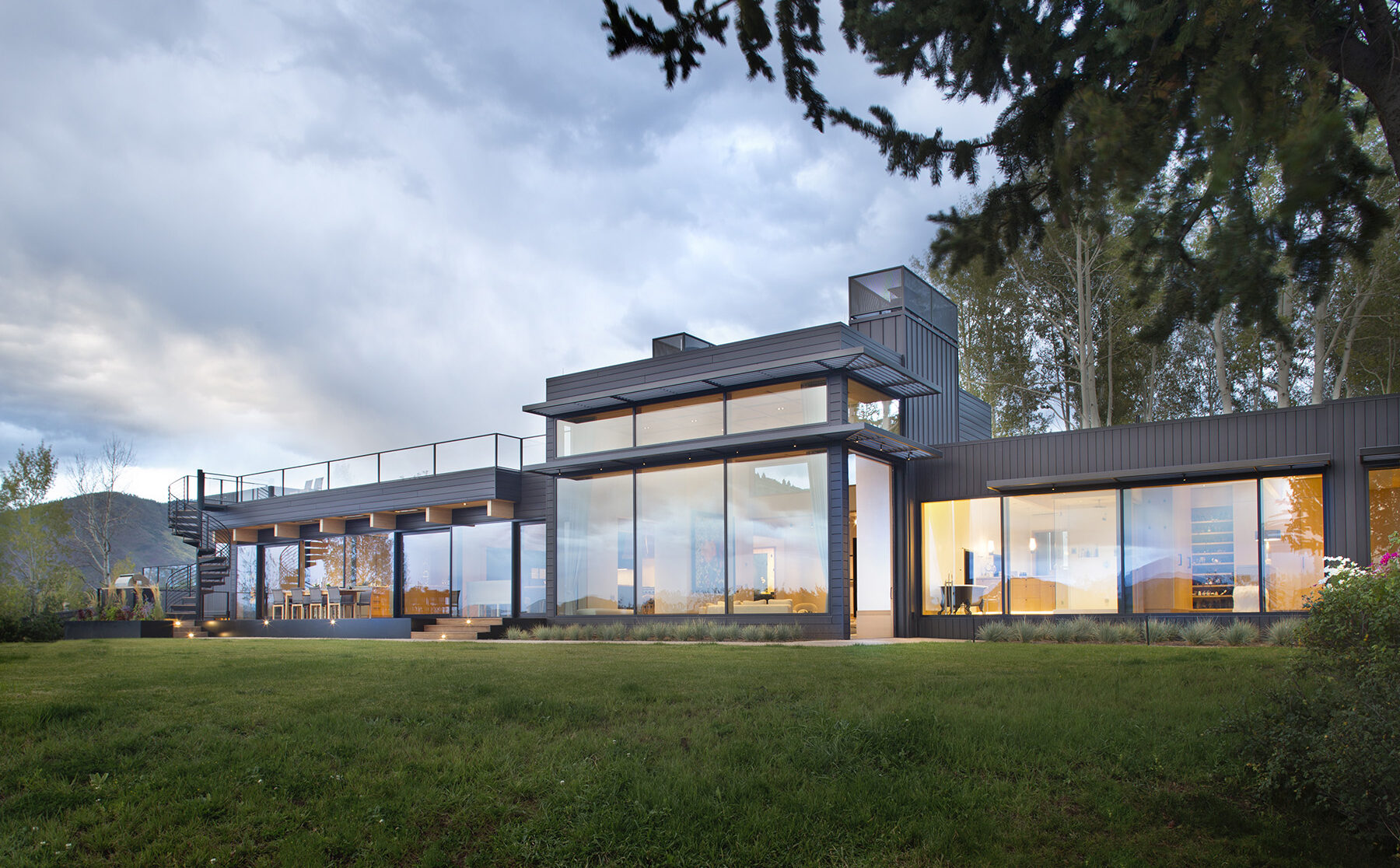
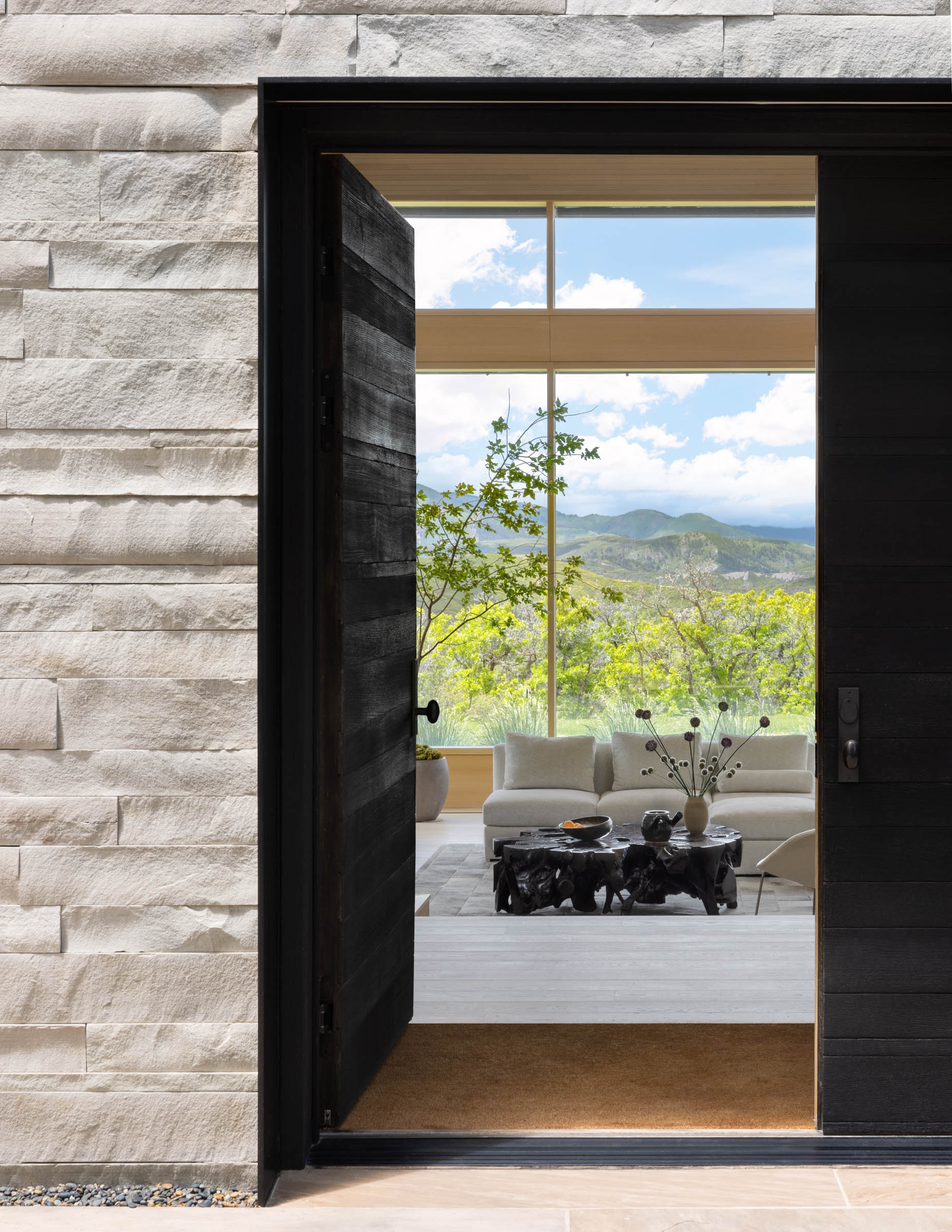
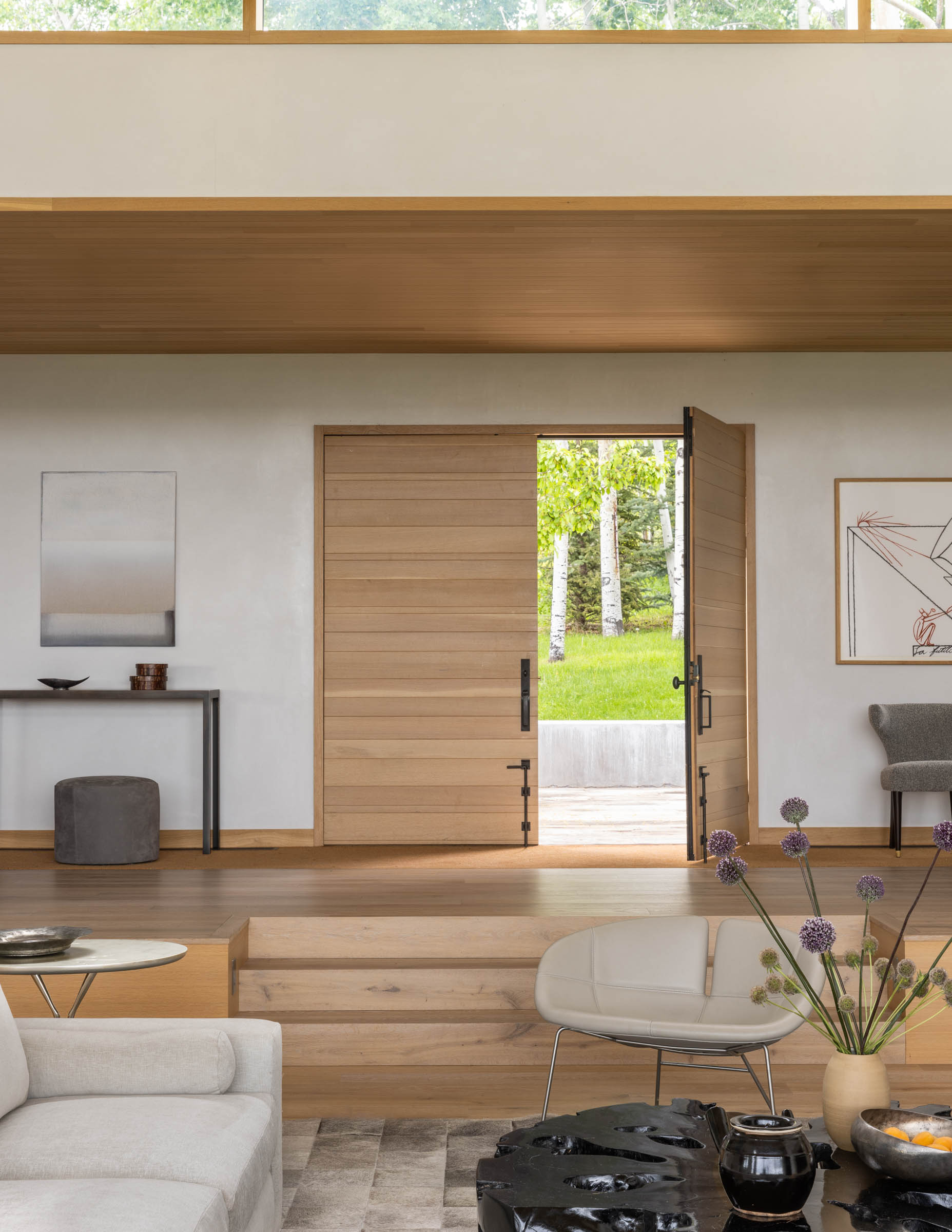
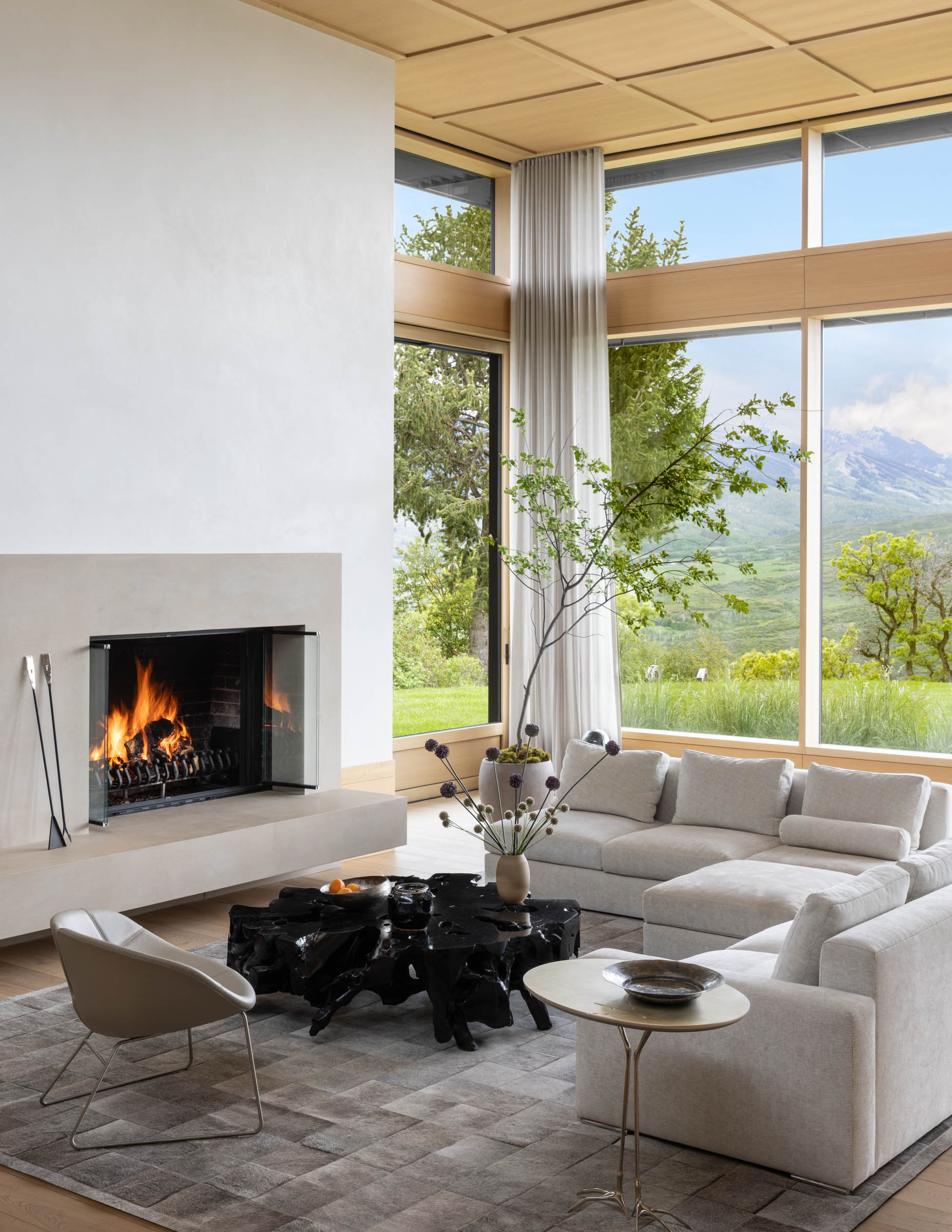
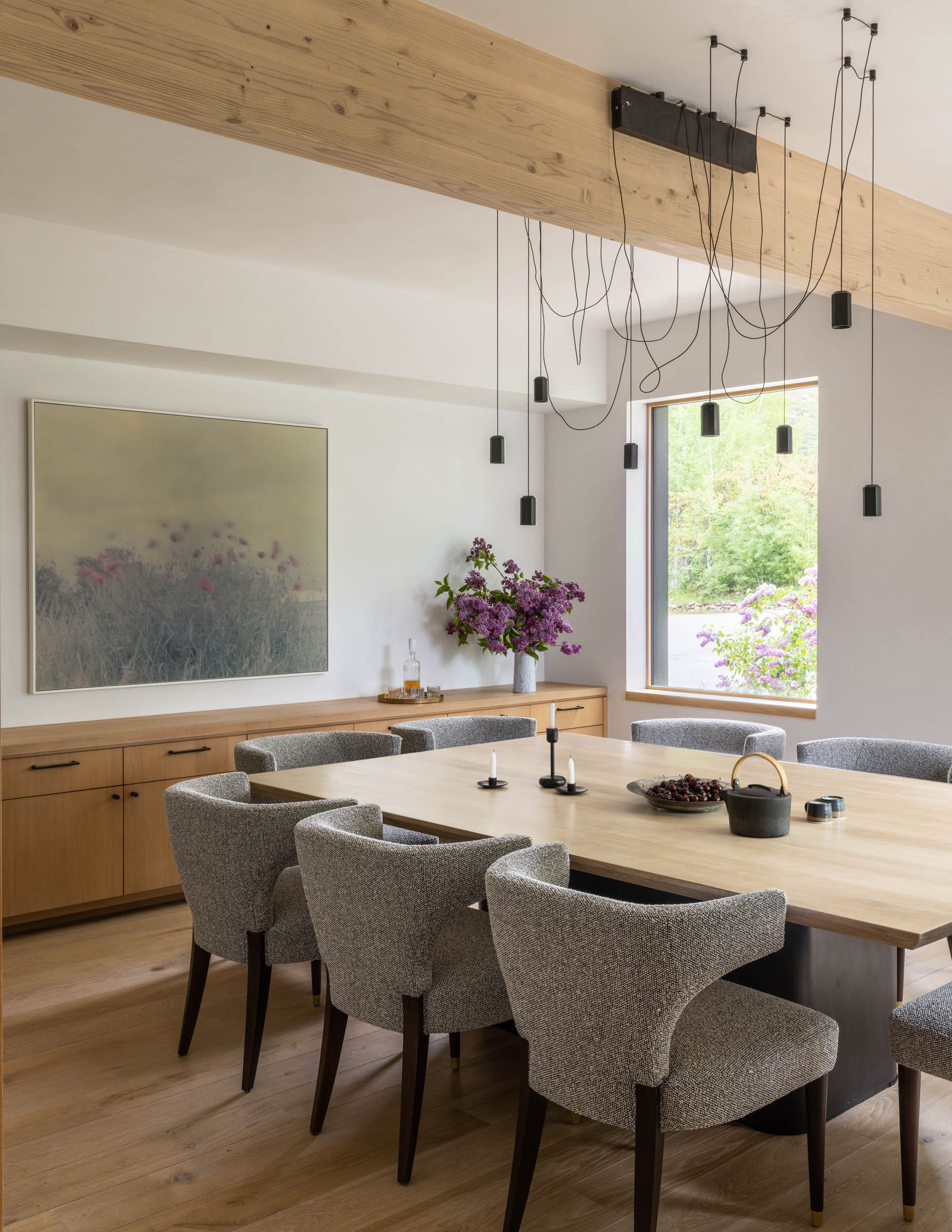
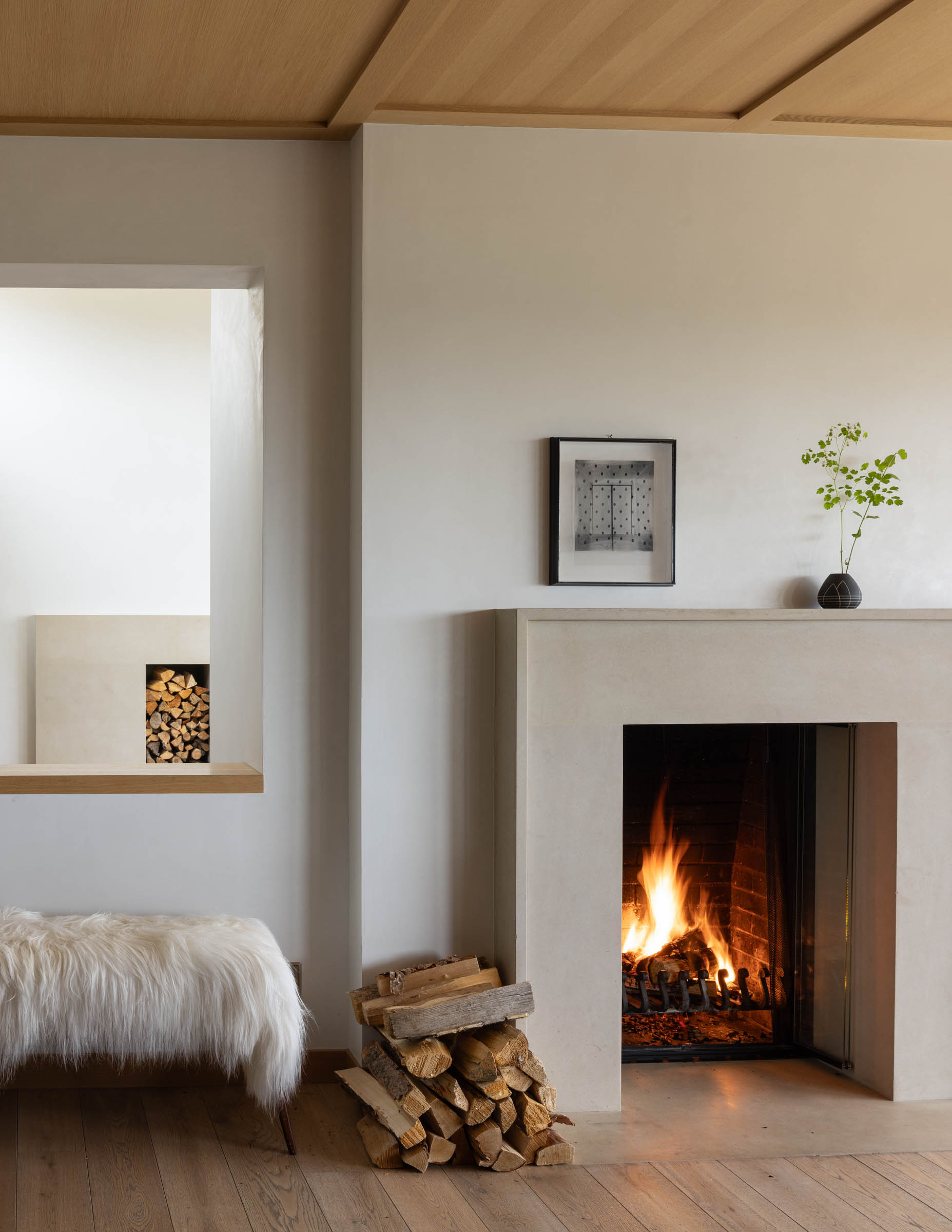
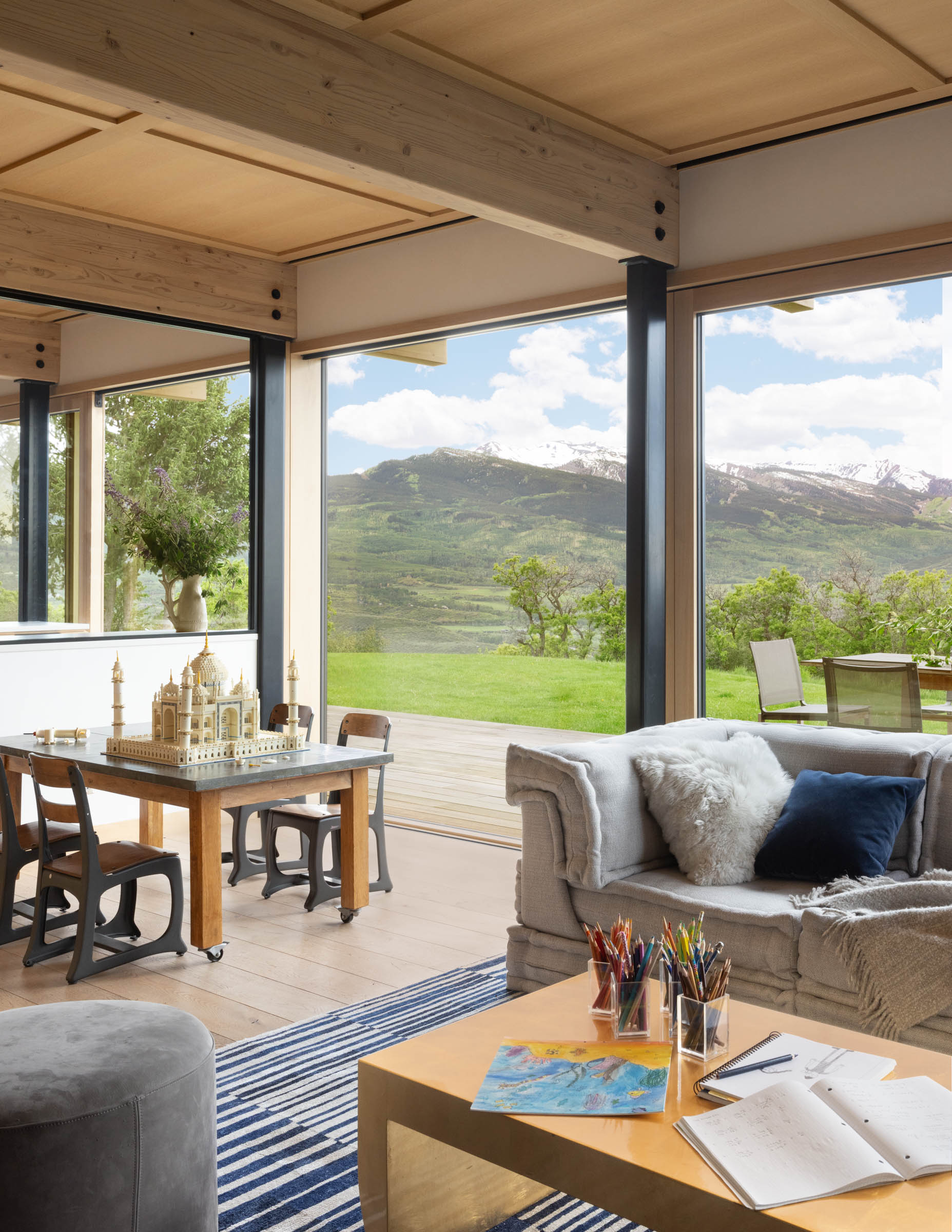
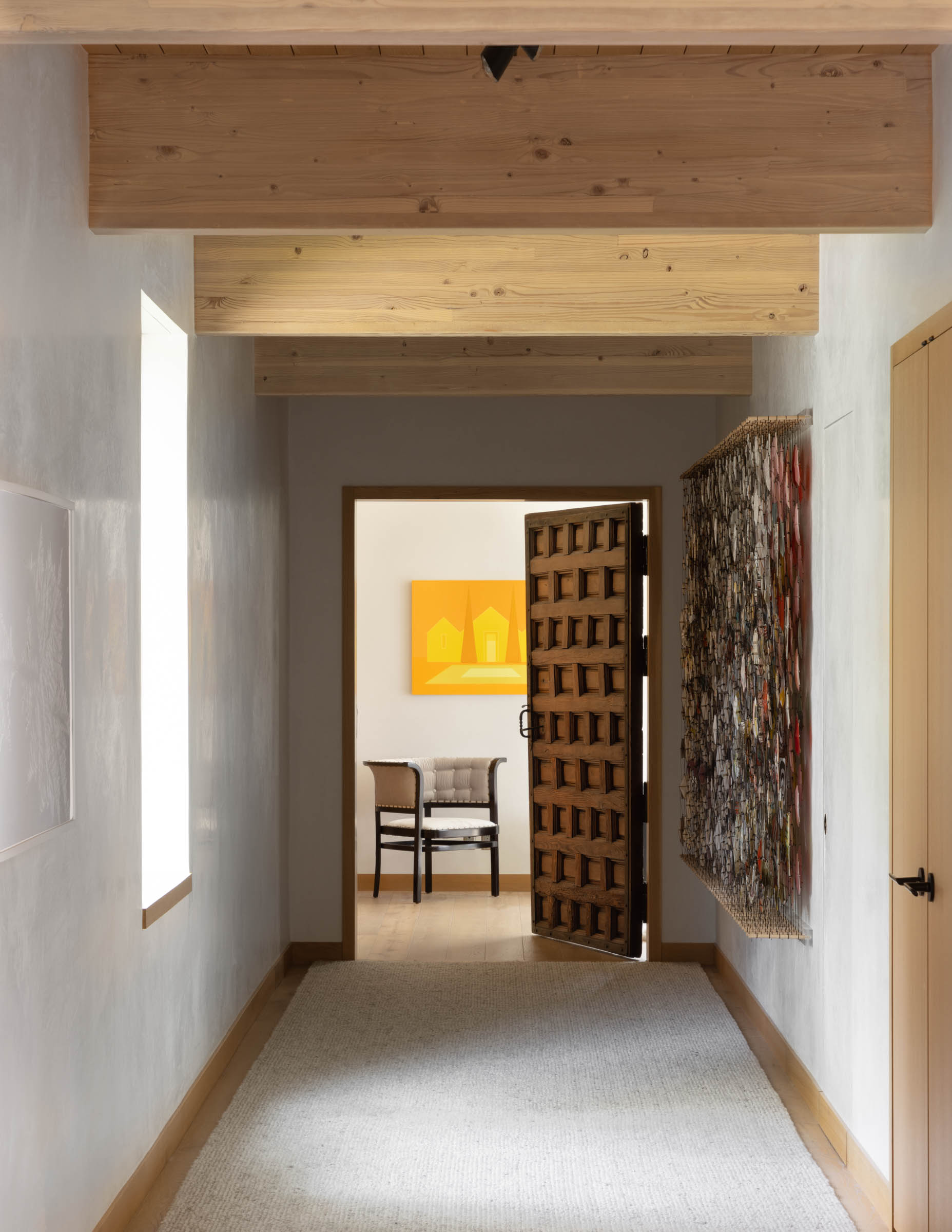
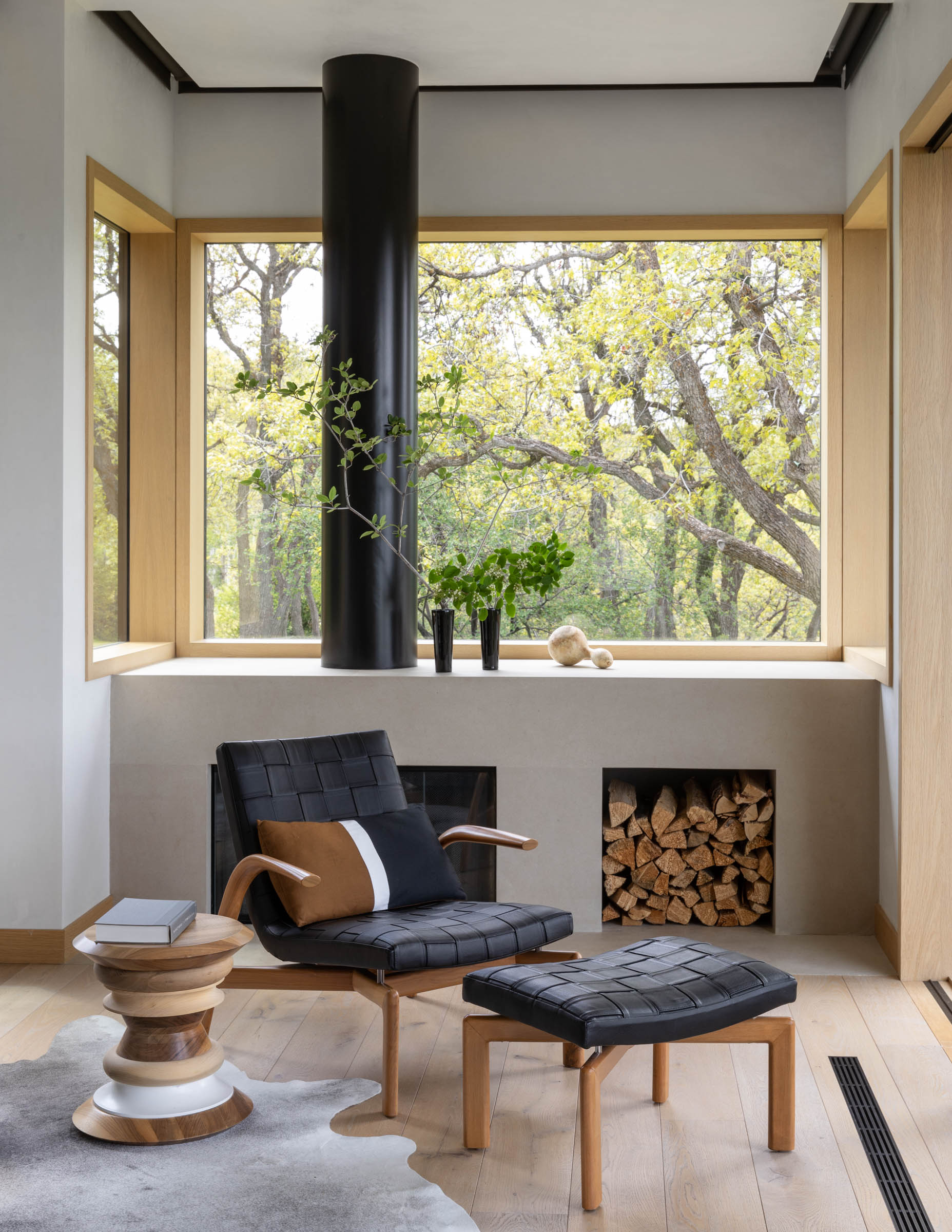
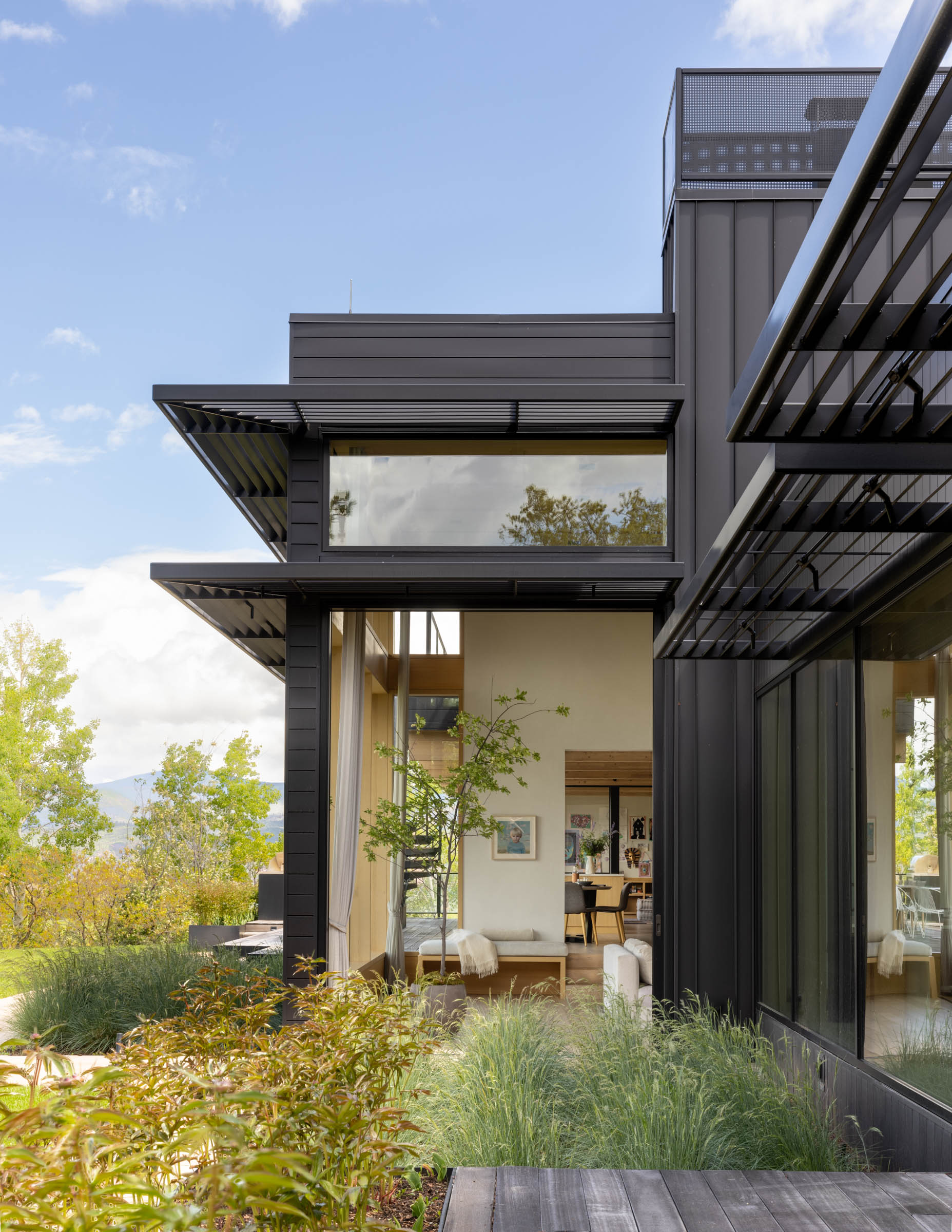
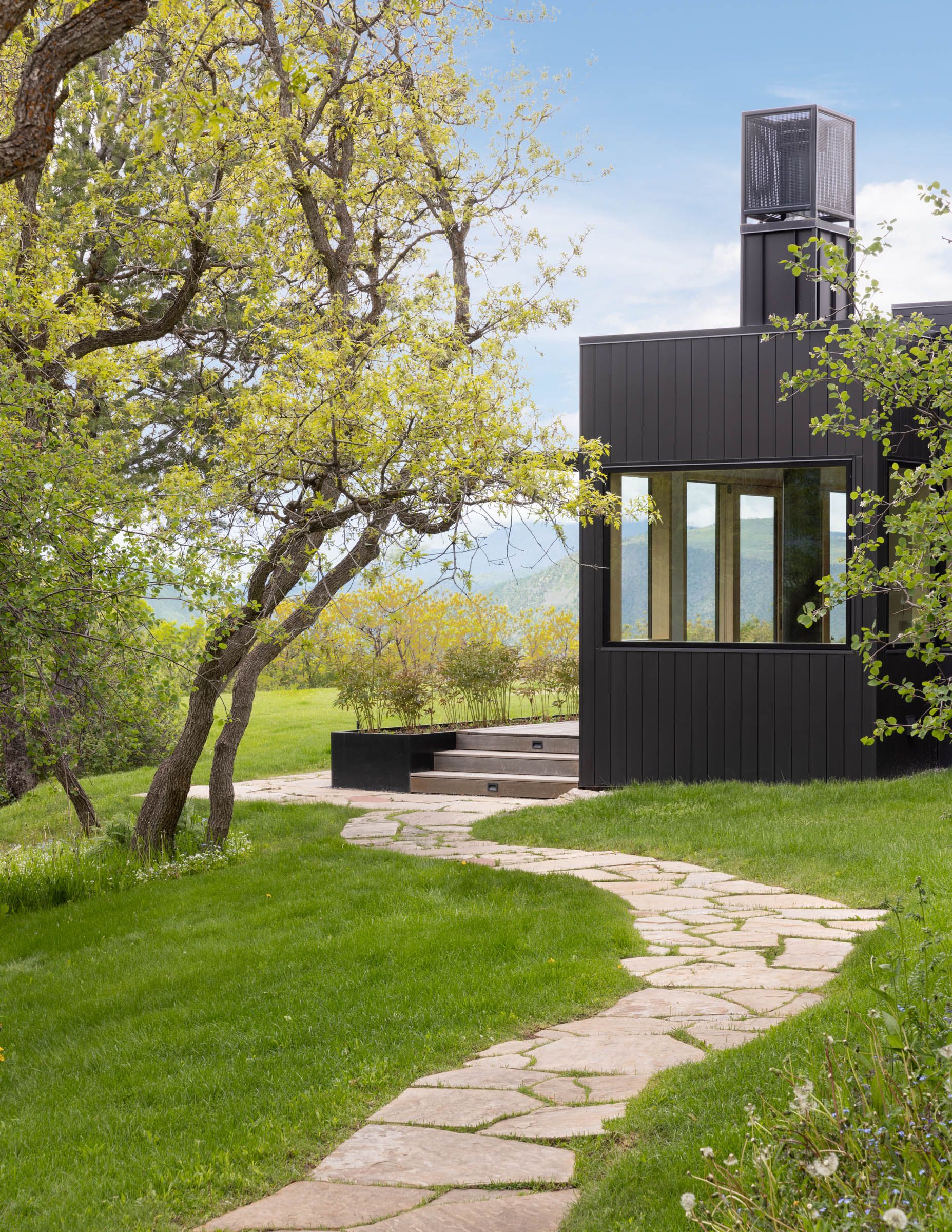
Ridge House began life in the 1960s, as the Aspen residence of the Norwegian-born Olympic gold medalist Stein Eriksen, and was designed by Ellie Brickham, the town’s first practicing female architect; the house sits on some 35 unspoiled acres (one of a compound of R+B-designed buildings) and overlooks all four ski mountains. The architects, as committed preservationists, understood the significance of Brickham’s Aspen Modern design, yet the structure was deteriorating and no longer conformed to local building codes. Consequently, R+B’s solutions preserved the spirit, if not the letter, of the original.
The entry façade, comprised of ‘found’ cut-stone walls, combines the region’s building traditions with a modernist sensibility. The obverse – the western, view-facing façade – does precisely the opposite: fully glazed with full-height doors and windows, it showcases the remarkable view in its entirety.
Within, R+B transformed what had been Brickham’s organizing hallway into a 126-foot-long, eight-foot-wide, end-to-end north-south axis that constitutes, for all of the architecture’s neo-Scandinavian modesty, a celebratory event that feels almost palatial. Entering through the front door, one is greeted by a sunken double-height living room, which conveys both a midcentury swank and the grandeur of the west; the primary suite occupies the entirety of the structure to the south; the living, dining, and media rooms, and the kitchen/breakfast area, sit in the center; and the children’s zone, with craft and game rooms, lies to the north.
Though utterly transformed, Ridge House retains the alternation between opacity and transparency that had been the original’s essence, remains nearly within the preexisting footprint, and maintains the former house’s four wood-burning fireplaces, which, as they predated the current code, were allowed to remain. Thus did R+B preserve the presiding spirit of the past within the pristine precincts of the new.
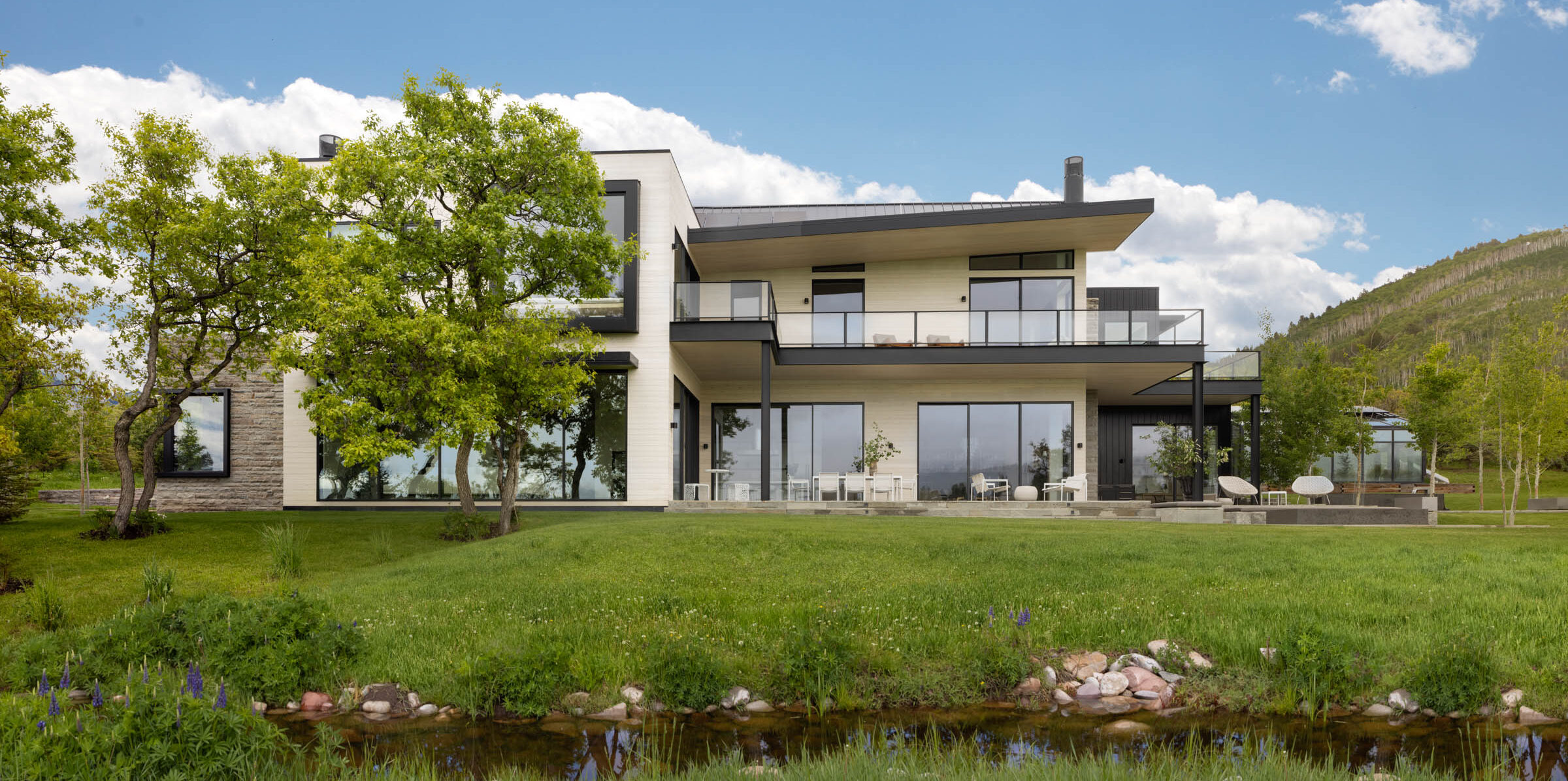
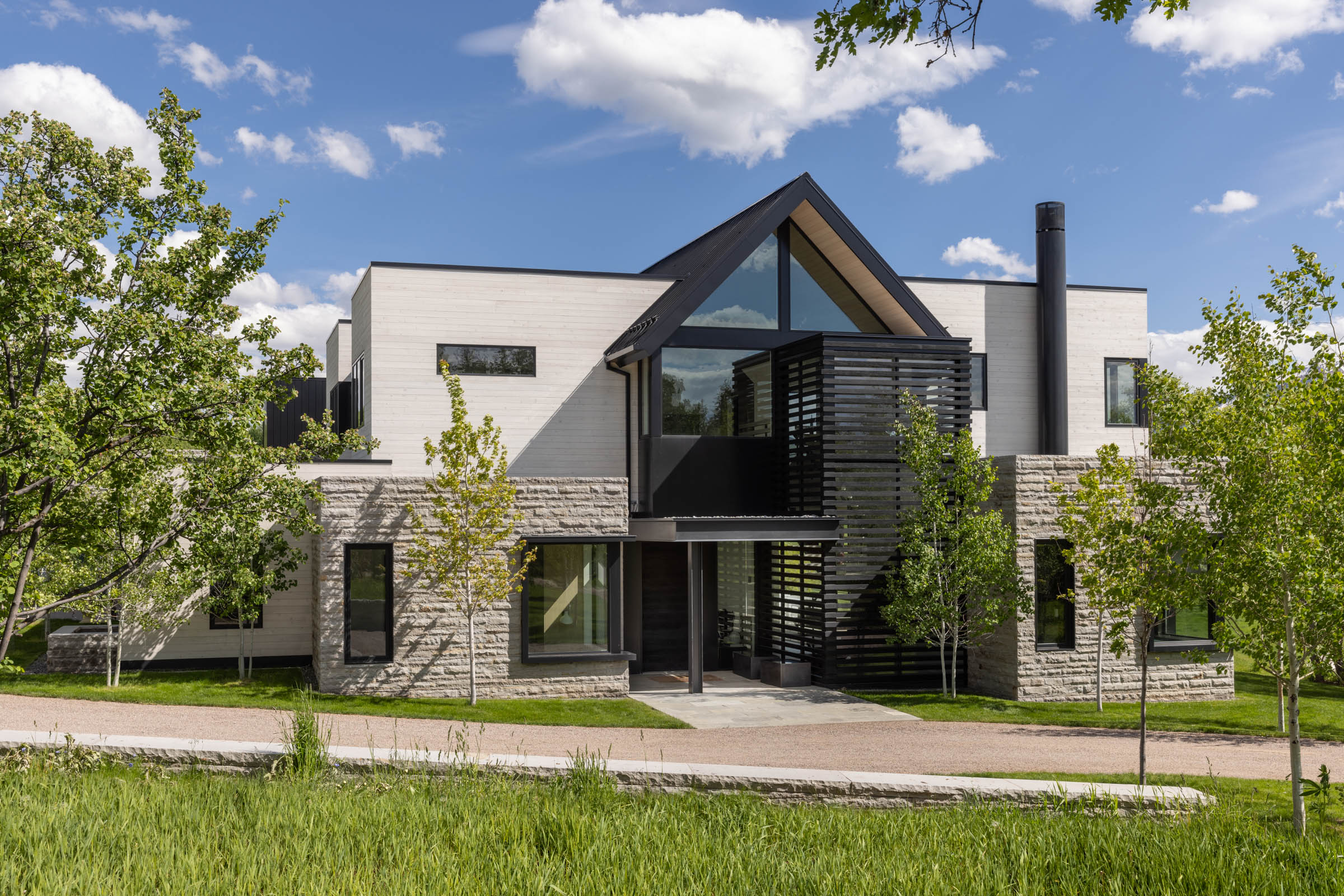
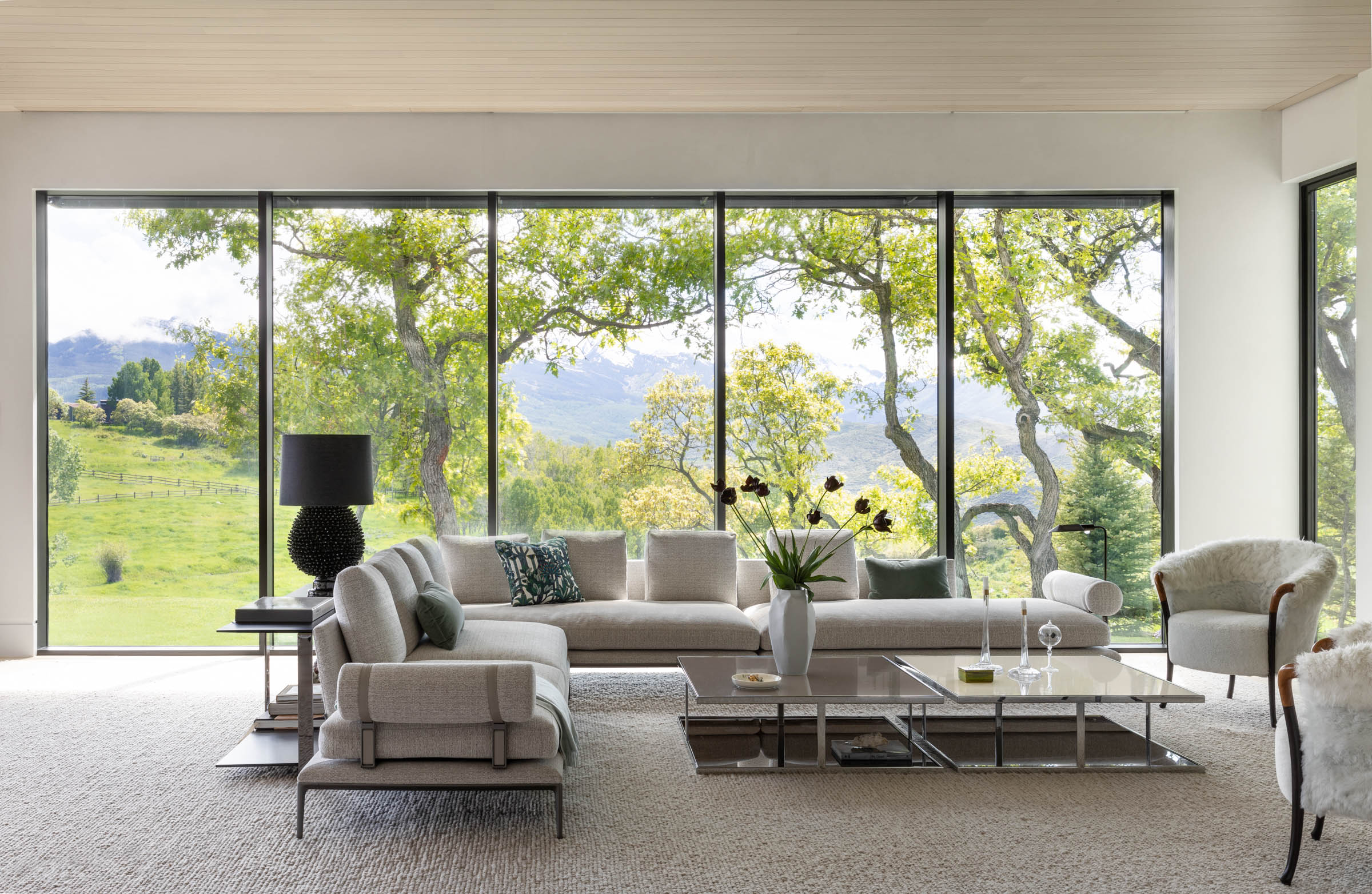
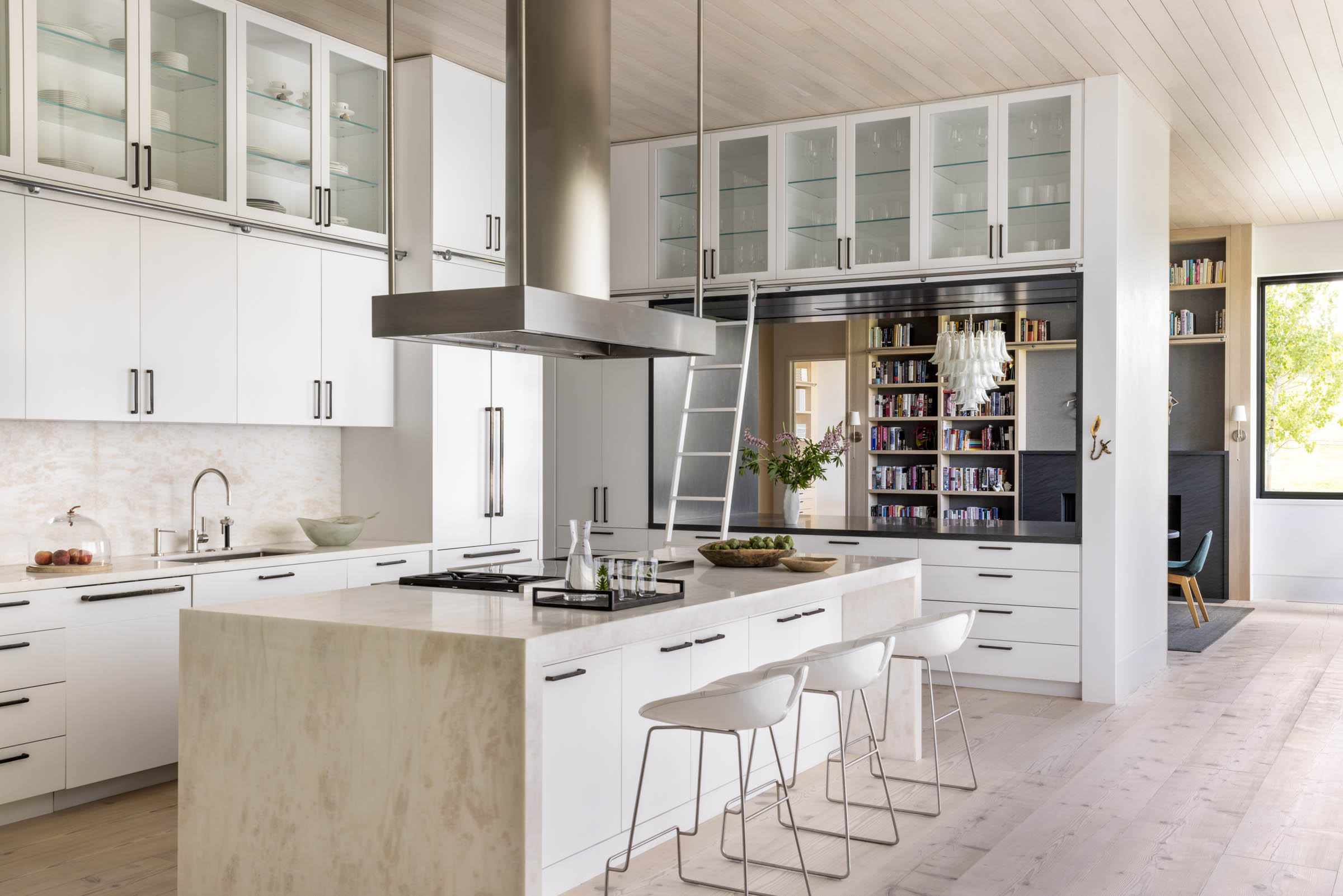
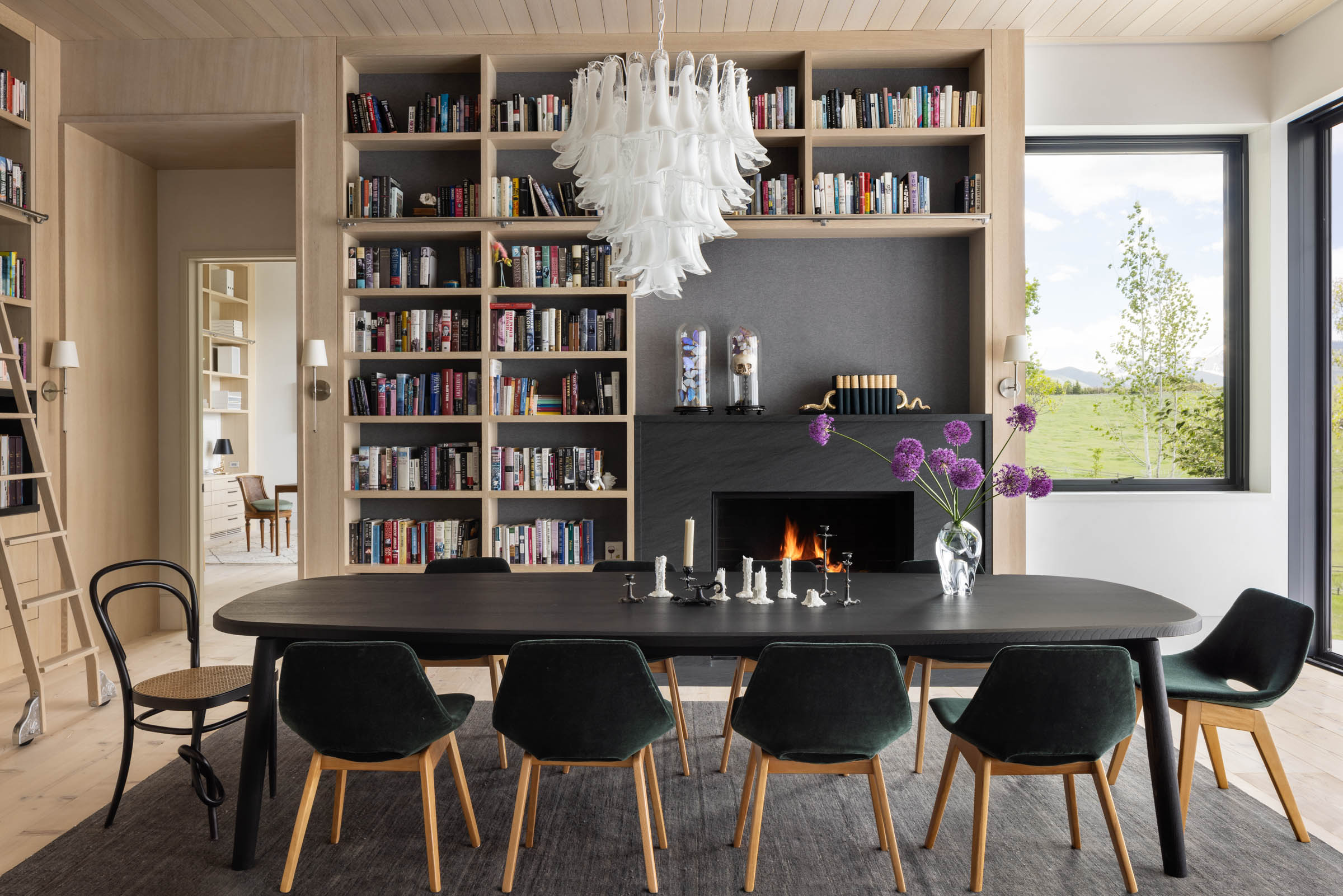
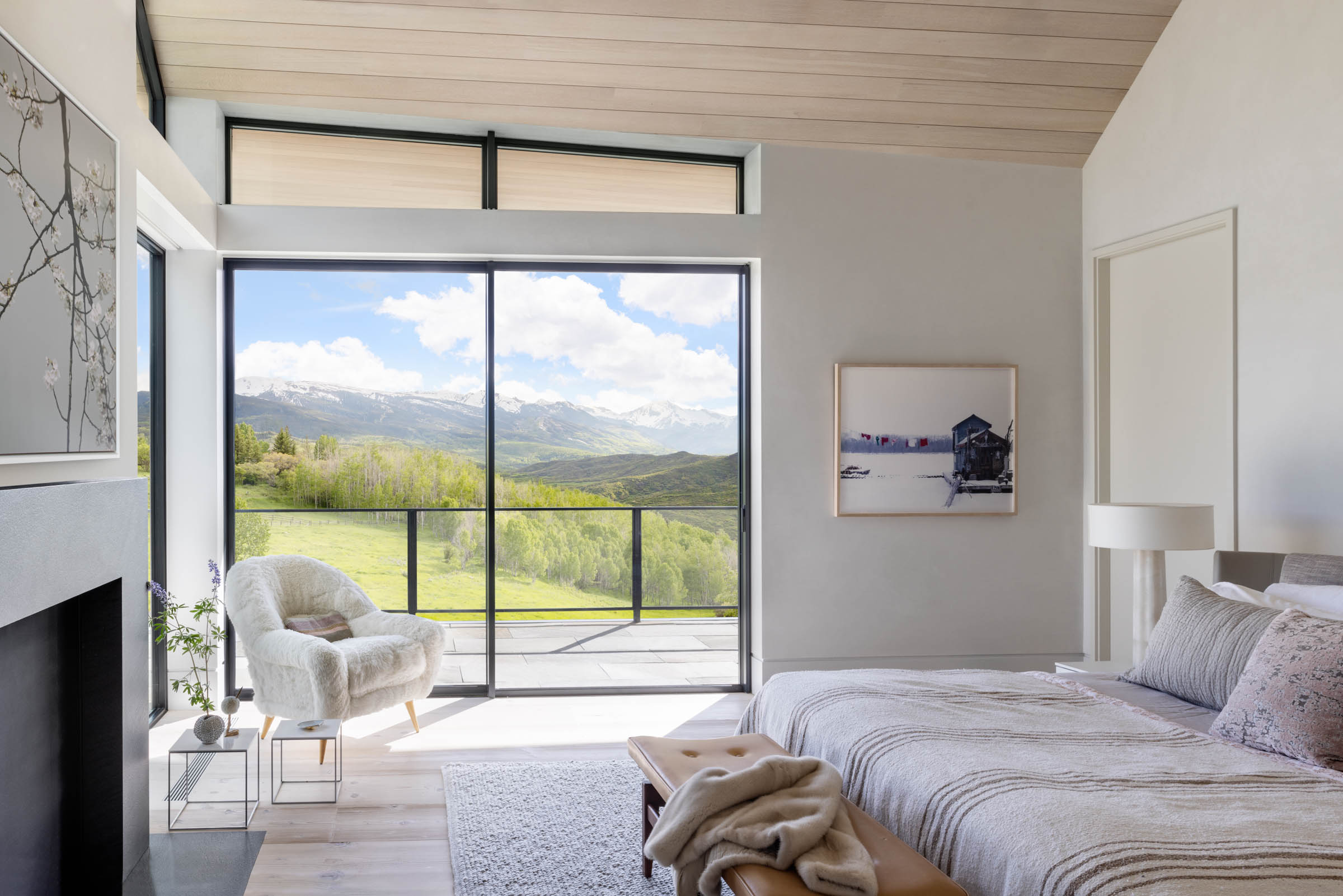
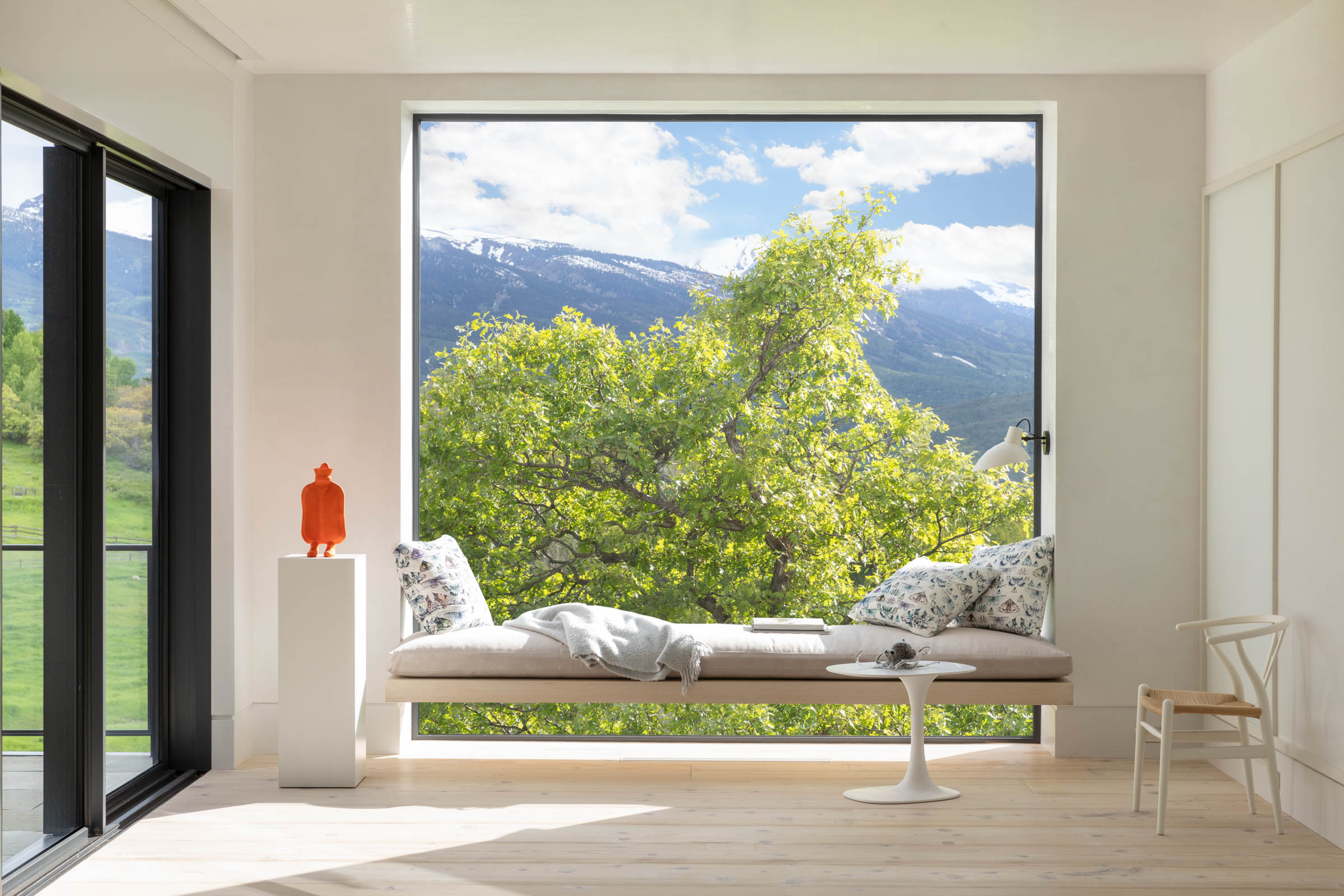
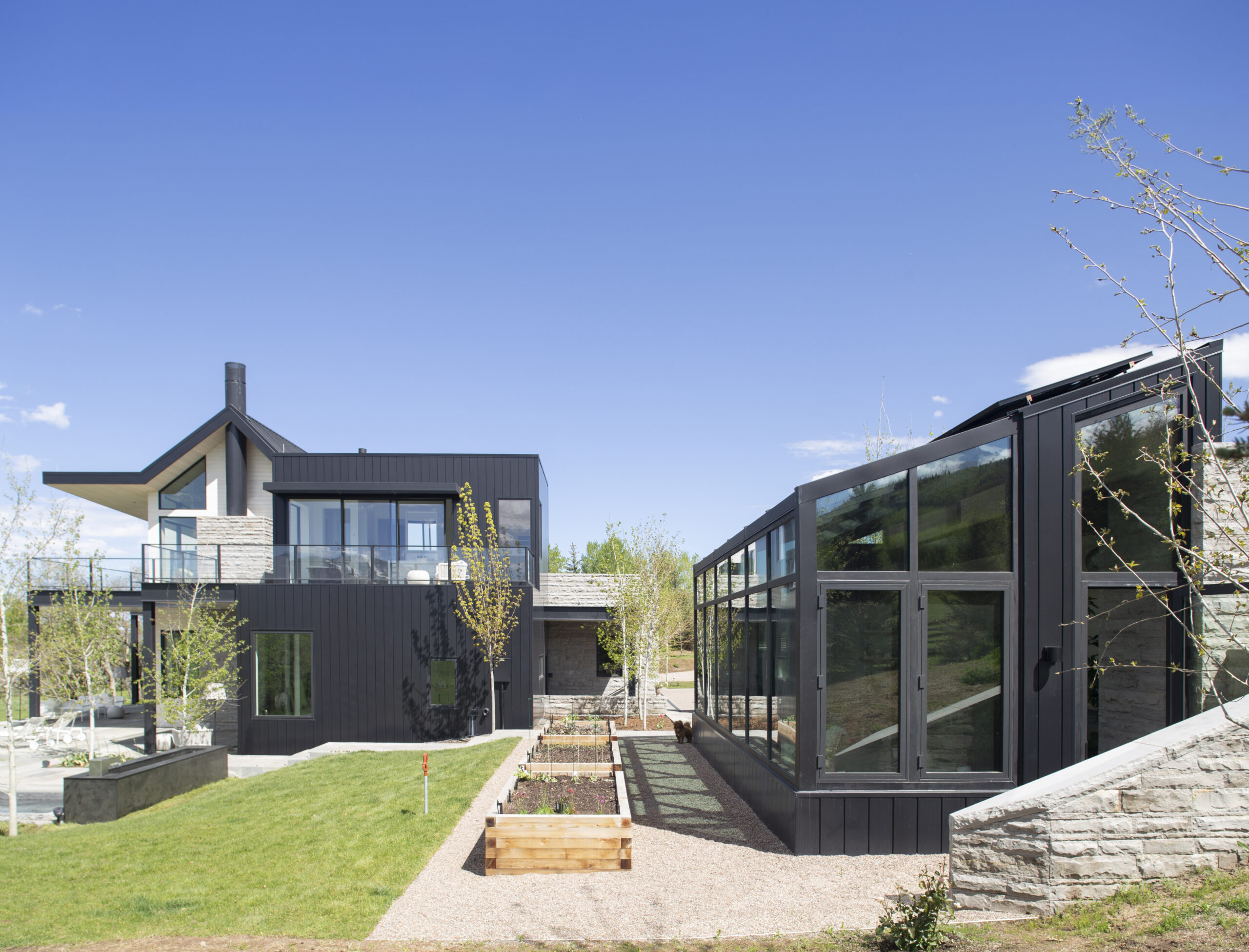
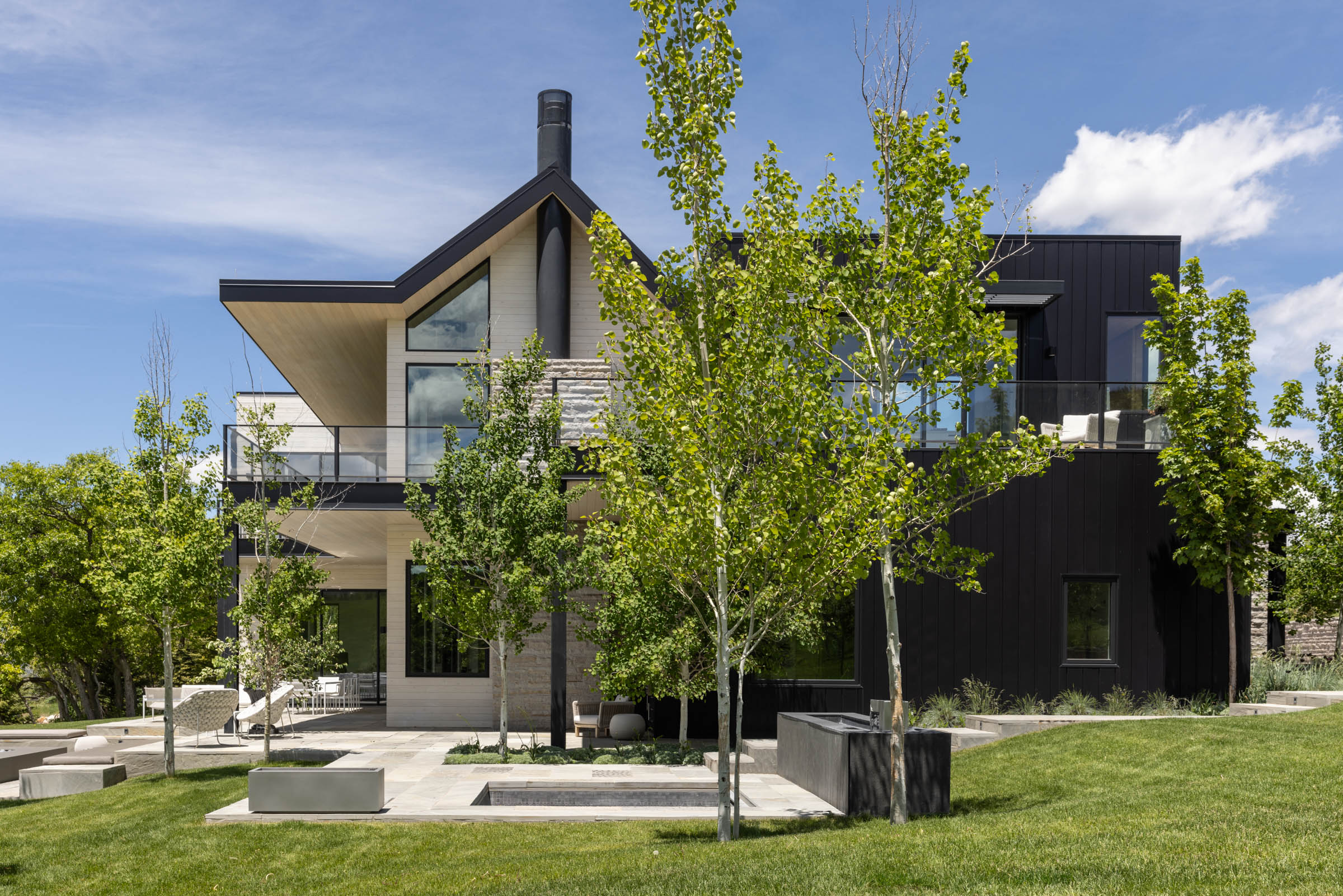
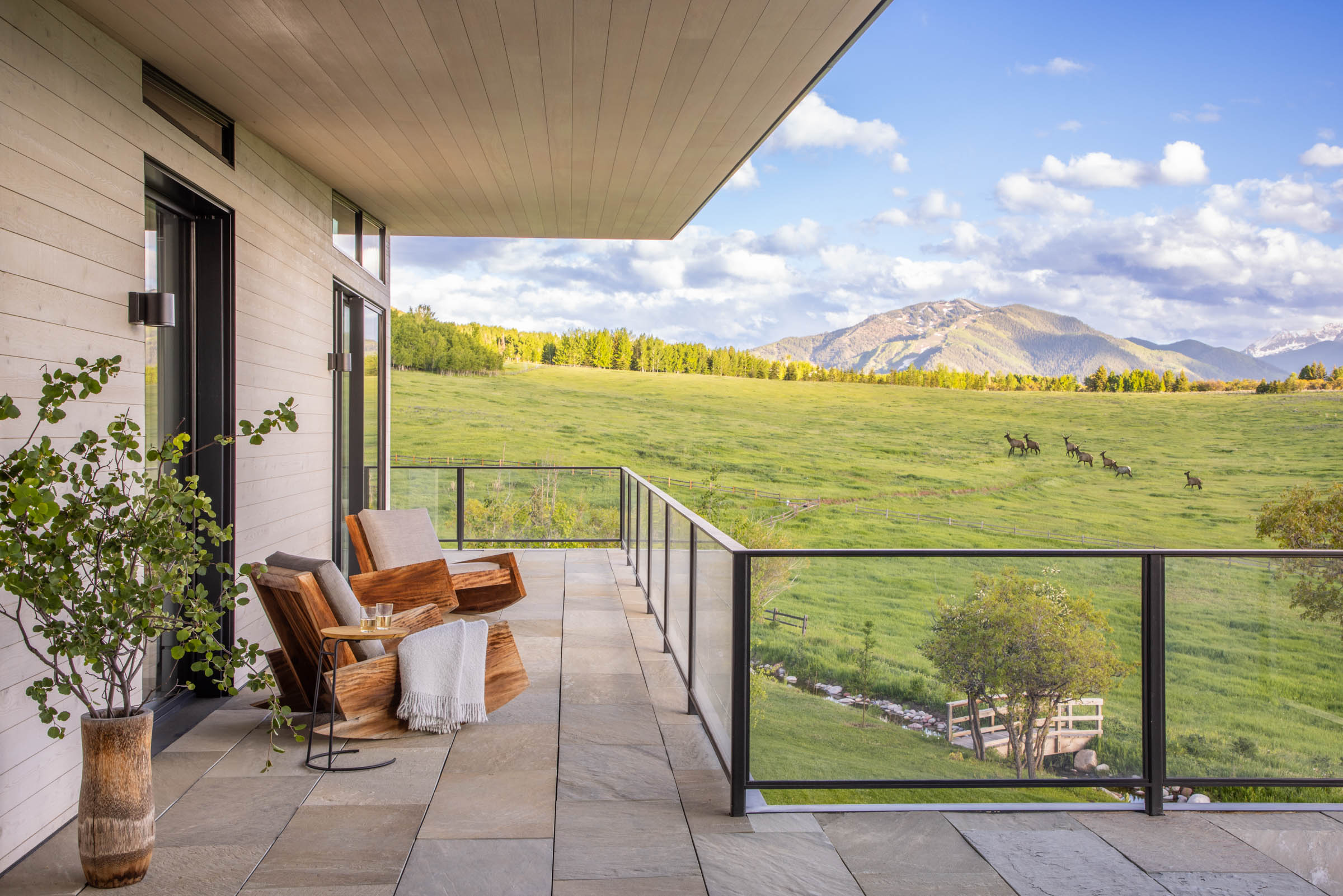
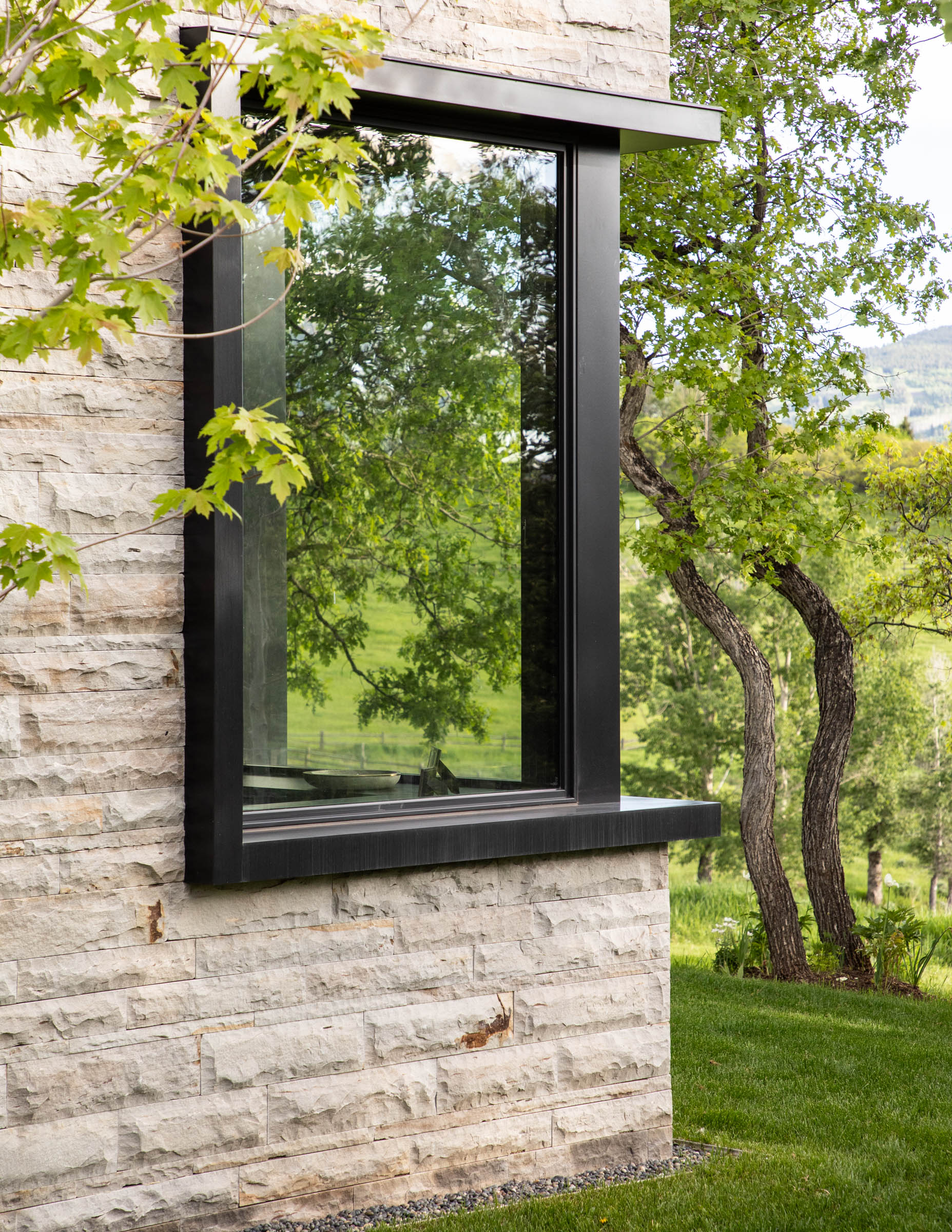
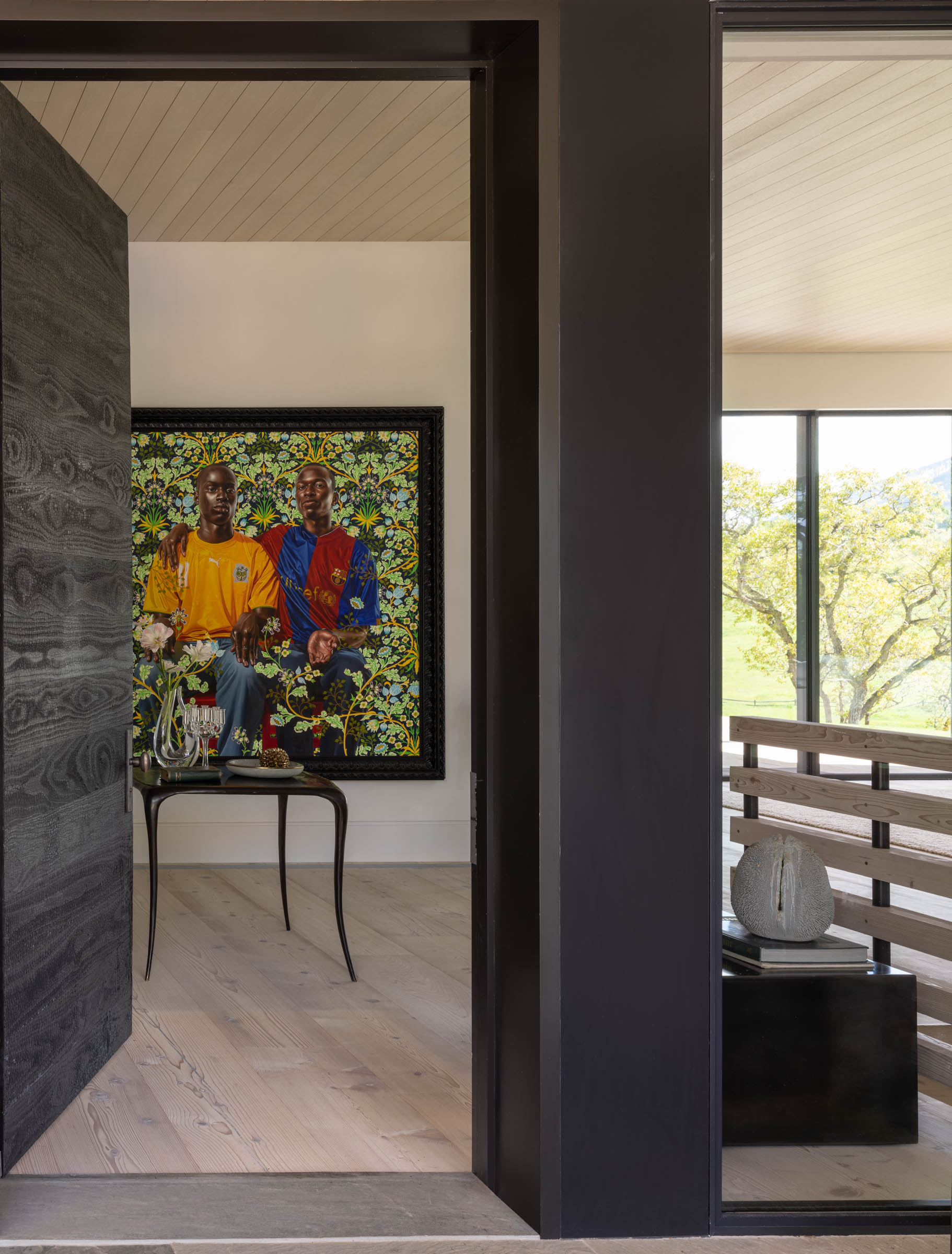
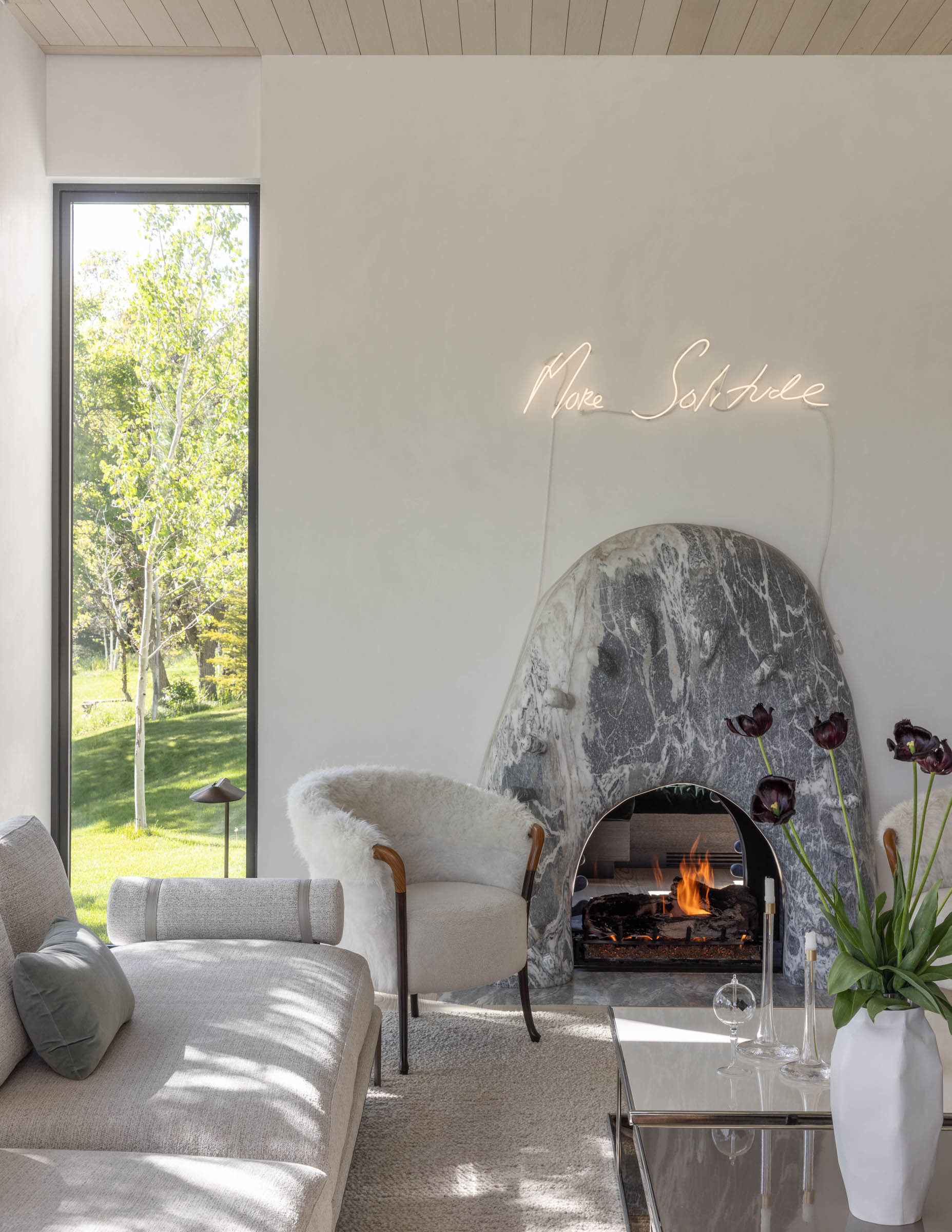
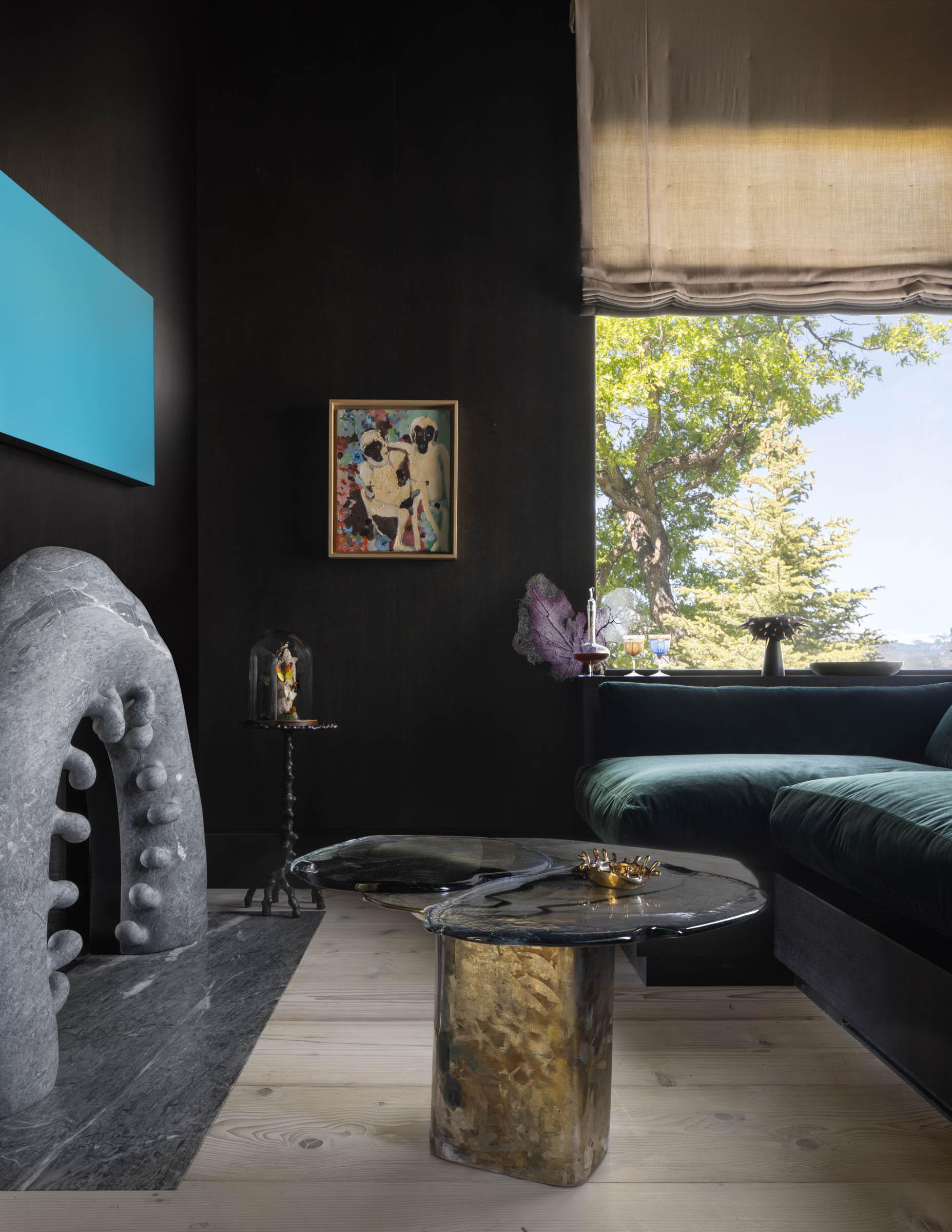
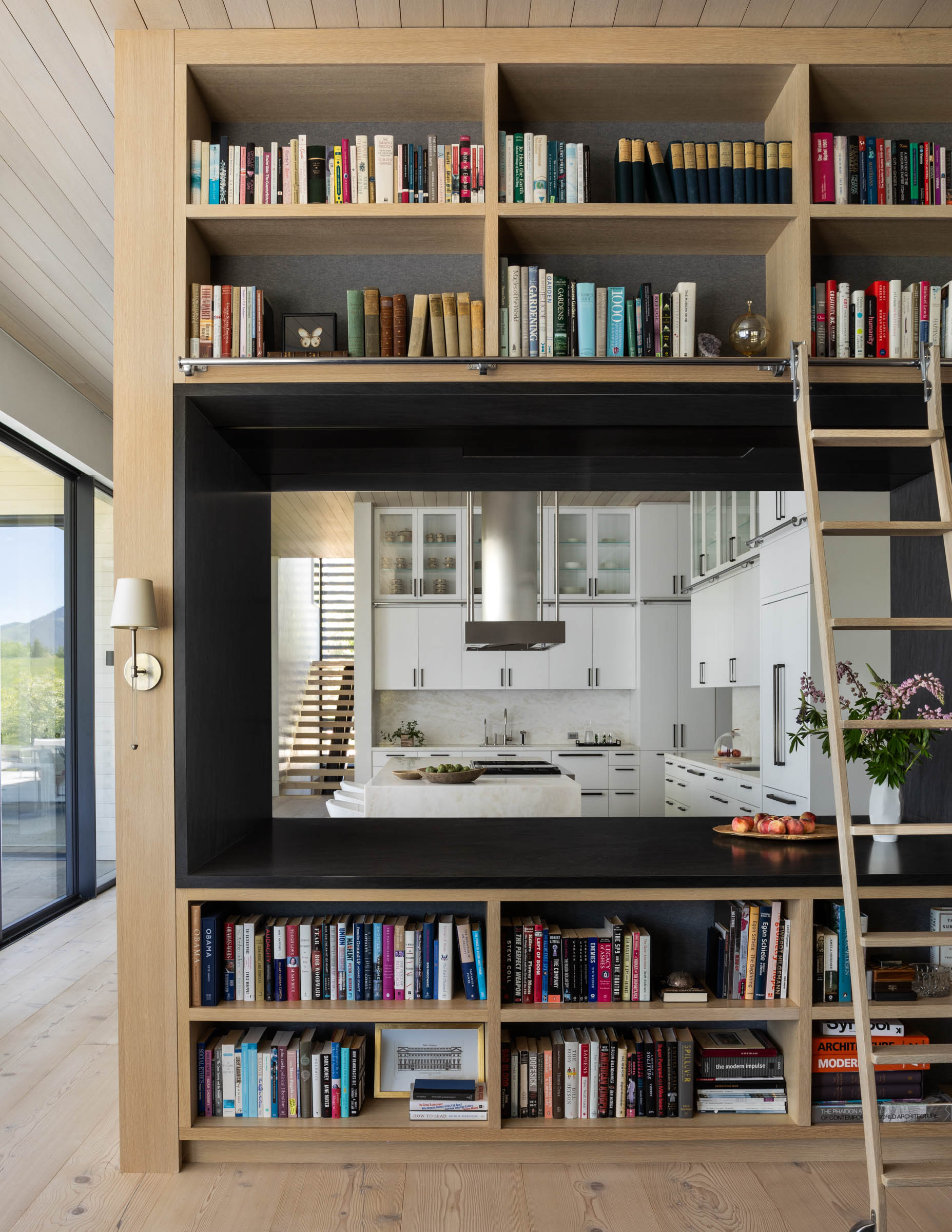
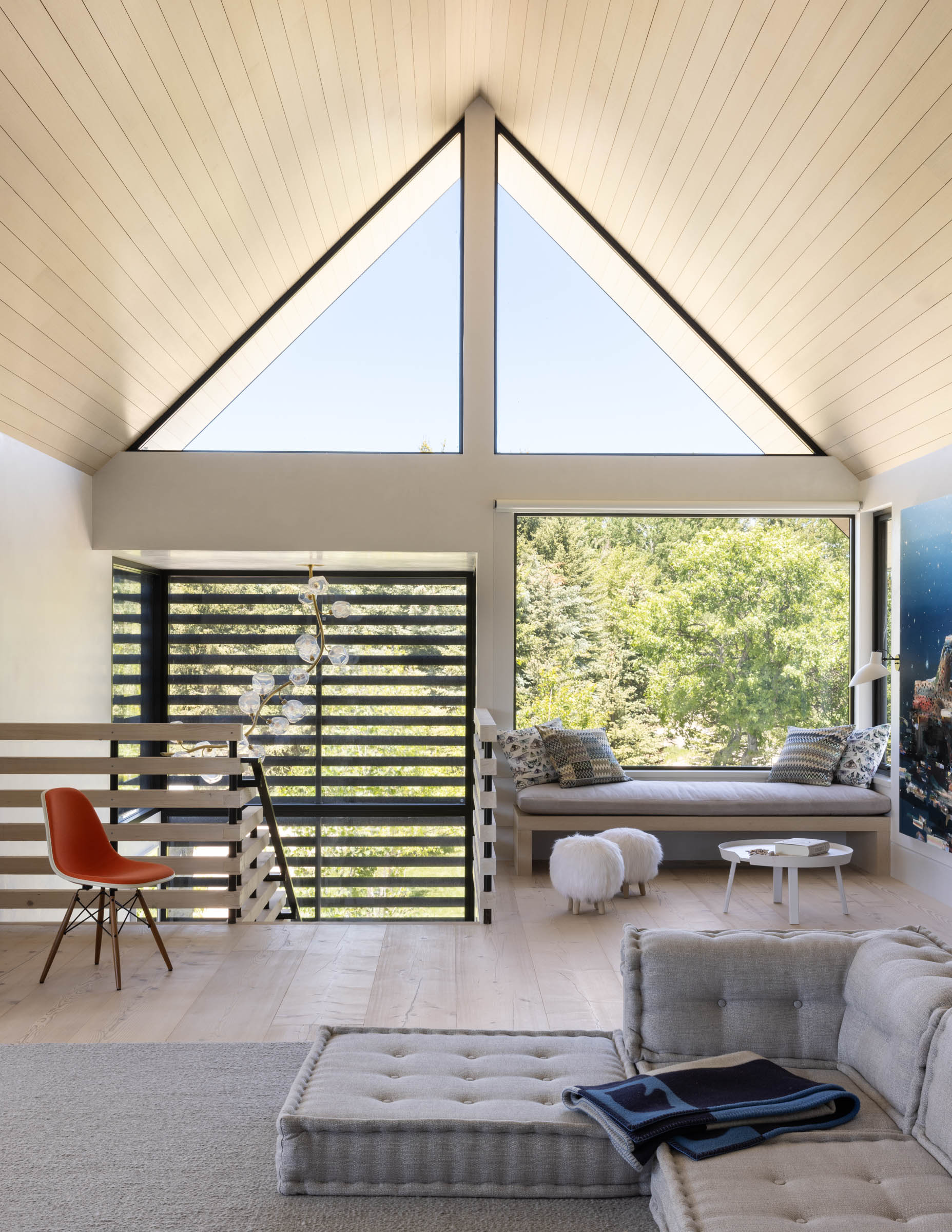
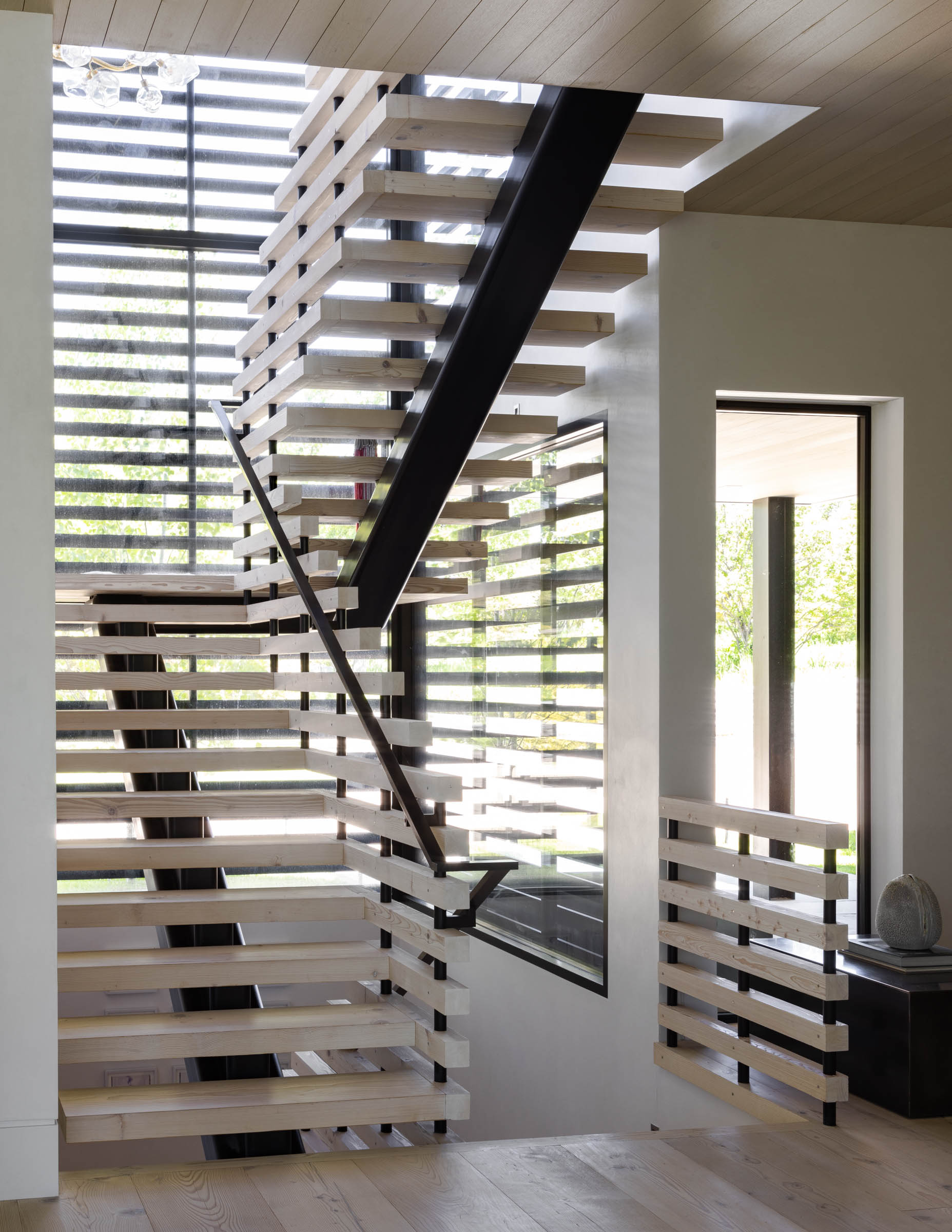
The essence of Meadow House, so named for its siting on an expansive Aspen greensward ringed by evergreen, spruce and scrub oak, lies in the idea of the threshold: between separation and connection, public and private, interior and exterior, architecture and design.
On the main floor, from the entry to the living area to the library/dining room, the sense is of a grand loft space, Scandinavian in its material simplicity, with eleven-foot ceilings and enormous, view-embracing glazed walls. Yet each space retains its own special character: if the overall experience is holistic, the rooms remain distinct and discrete.
Meadow House’s permeability is especially seductive, and particularly evident in the second-floor primary suite, which features the design’s iconic moment: a windowed agrarian gabled form, that ‘peels upward’ as it moves the full length of the rooms, revealing progressively more of the panoramic view. Here the threshold lies between the interior and the great outdoors, one dissolving into the other in a subtle, exquisite unfolding.
A separate greenhouse, designed for a year-round edible garden and to provide a farm-to-table learning opportunity for the family, offers an additional layer of experience. The greenhouse acts as a viewing machine, offering a different, no less dynamic perspective on the meadow, mountains, and the great western sky.
Meadow House also evinces a compelling sense of craft, exemplified by The Haas Brothers’ remarkable double-sided fireplace, commissioned for the project and custom-forged in Portugal. This, and other such moments, invest a capacious residence with the appealingly intimate presence of the hand.
‘Where to draw the line?’ is a question that runs through all of R+B’s work. With Meadow House, the firm has answered it with the utmost discernment, elegance, and drama.
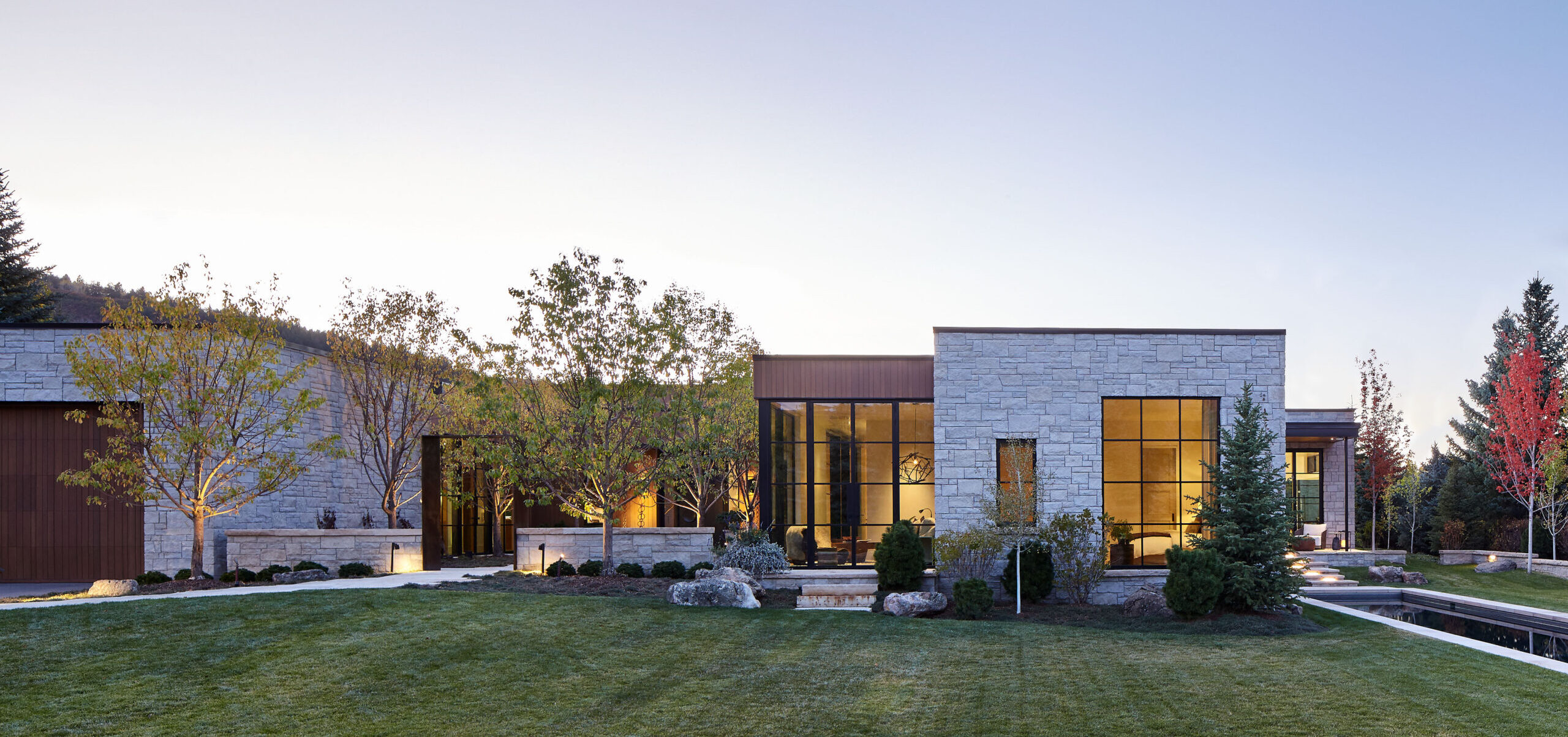
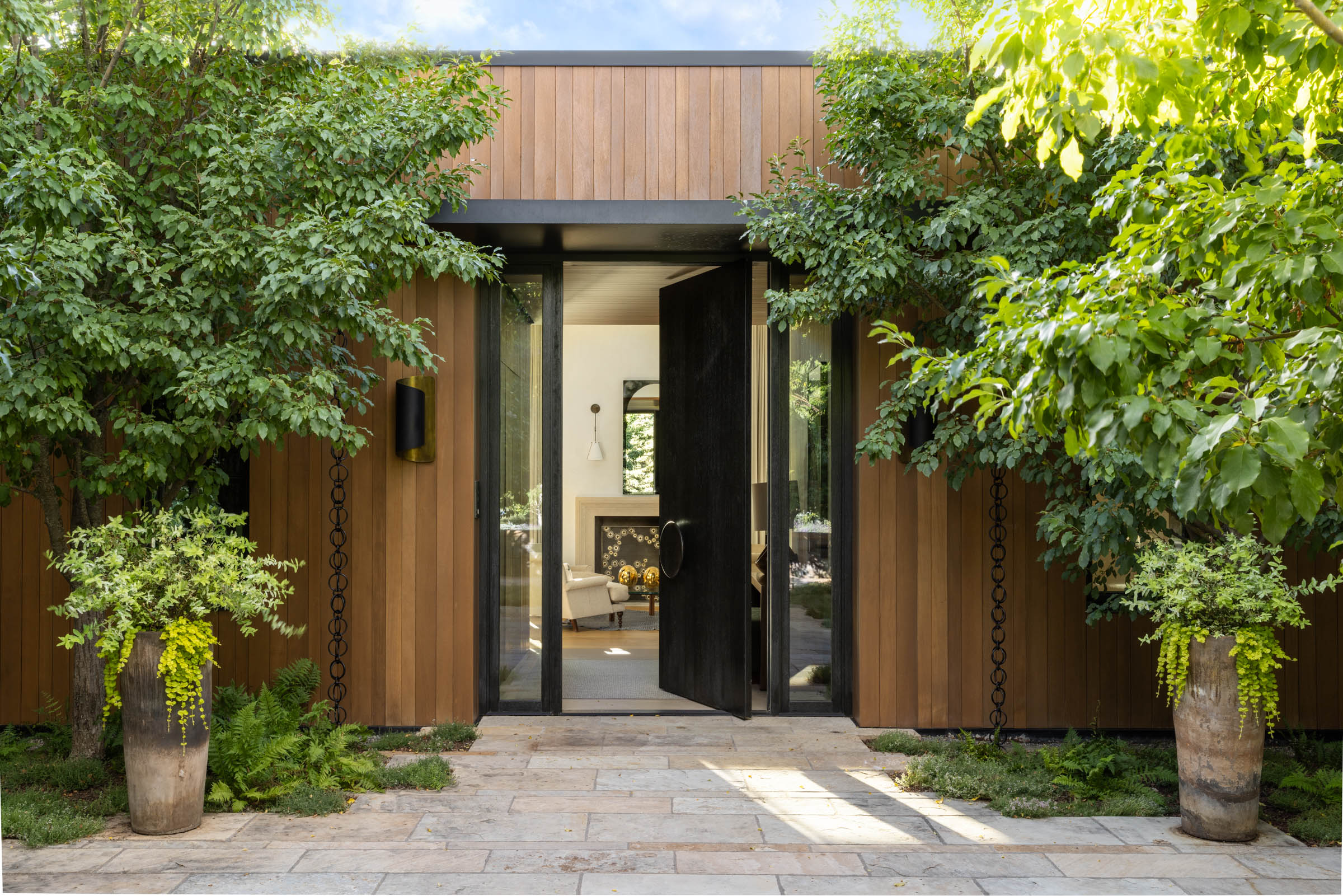
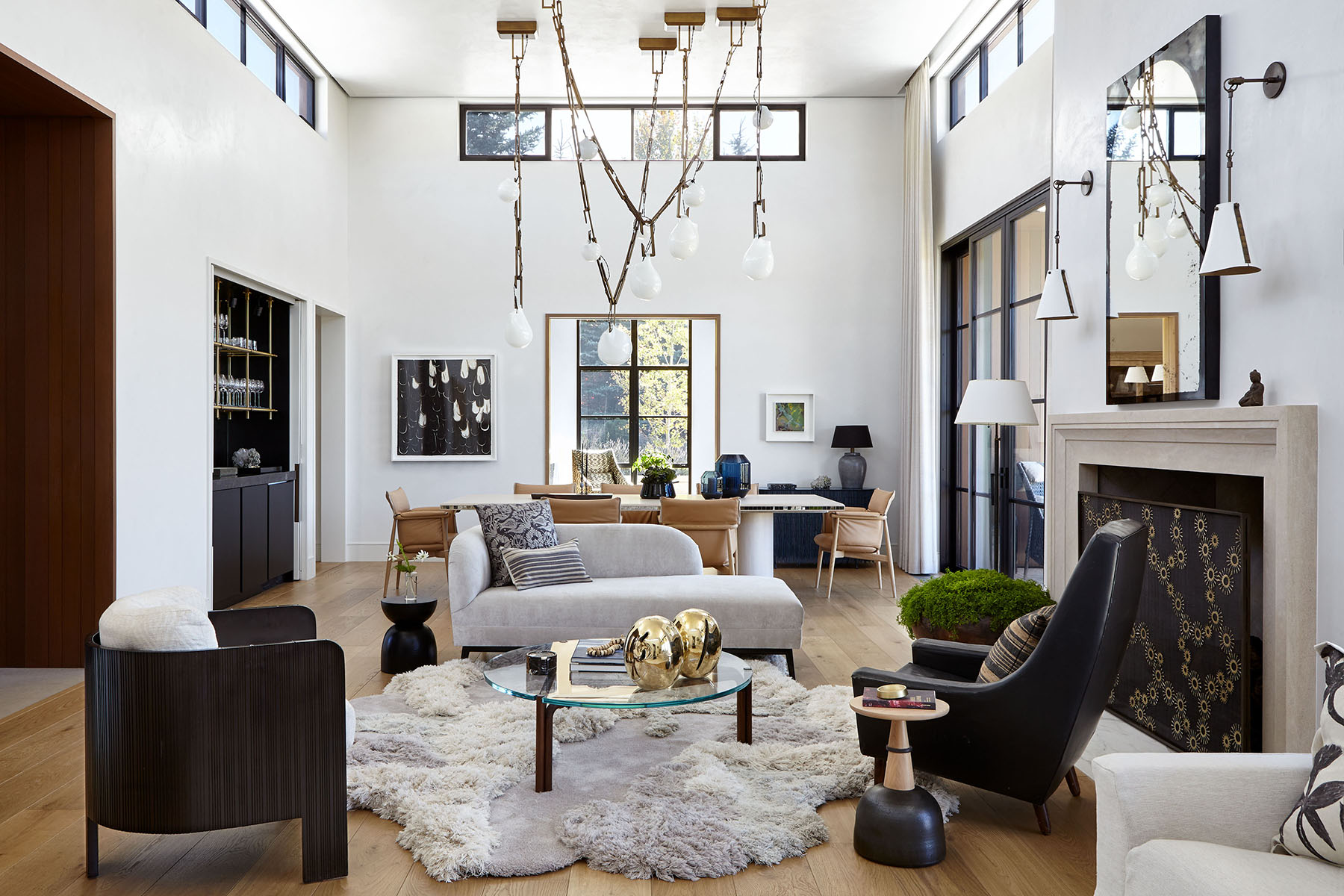
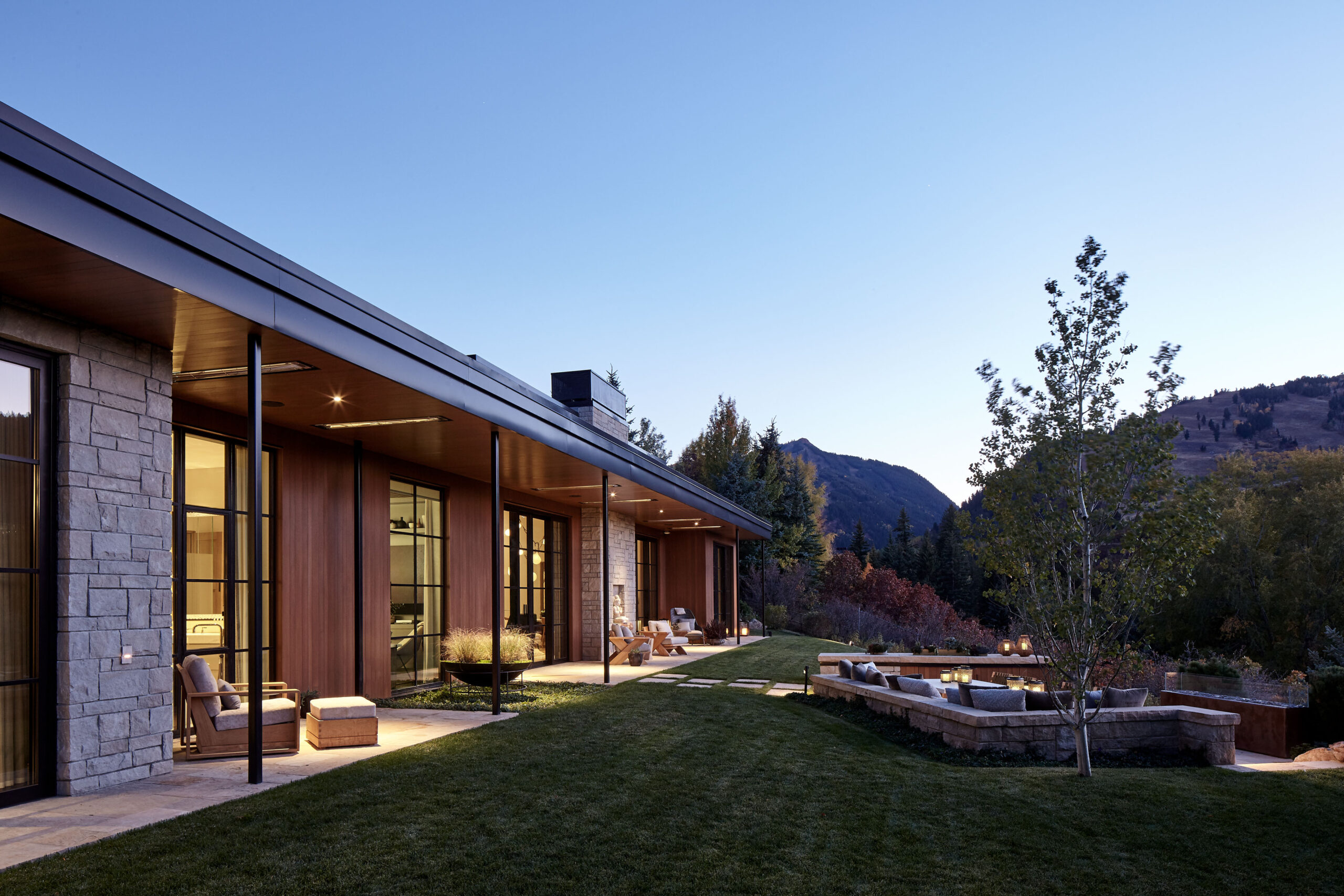
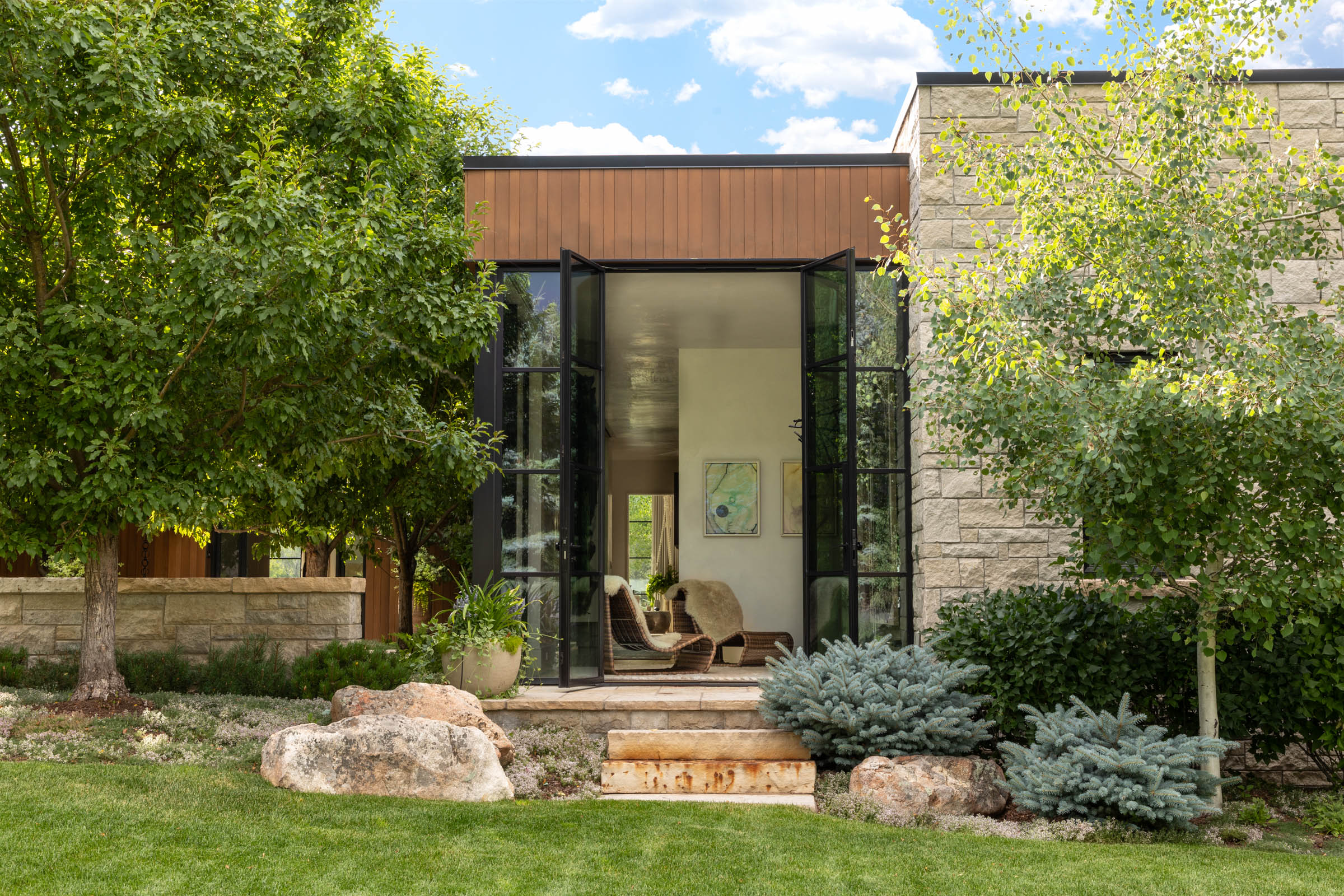
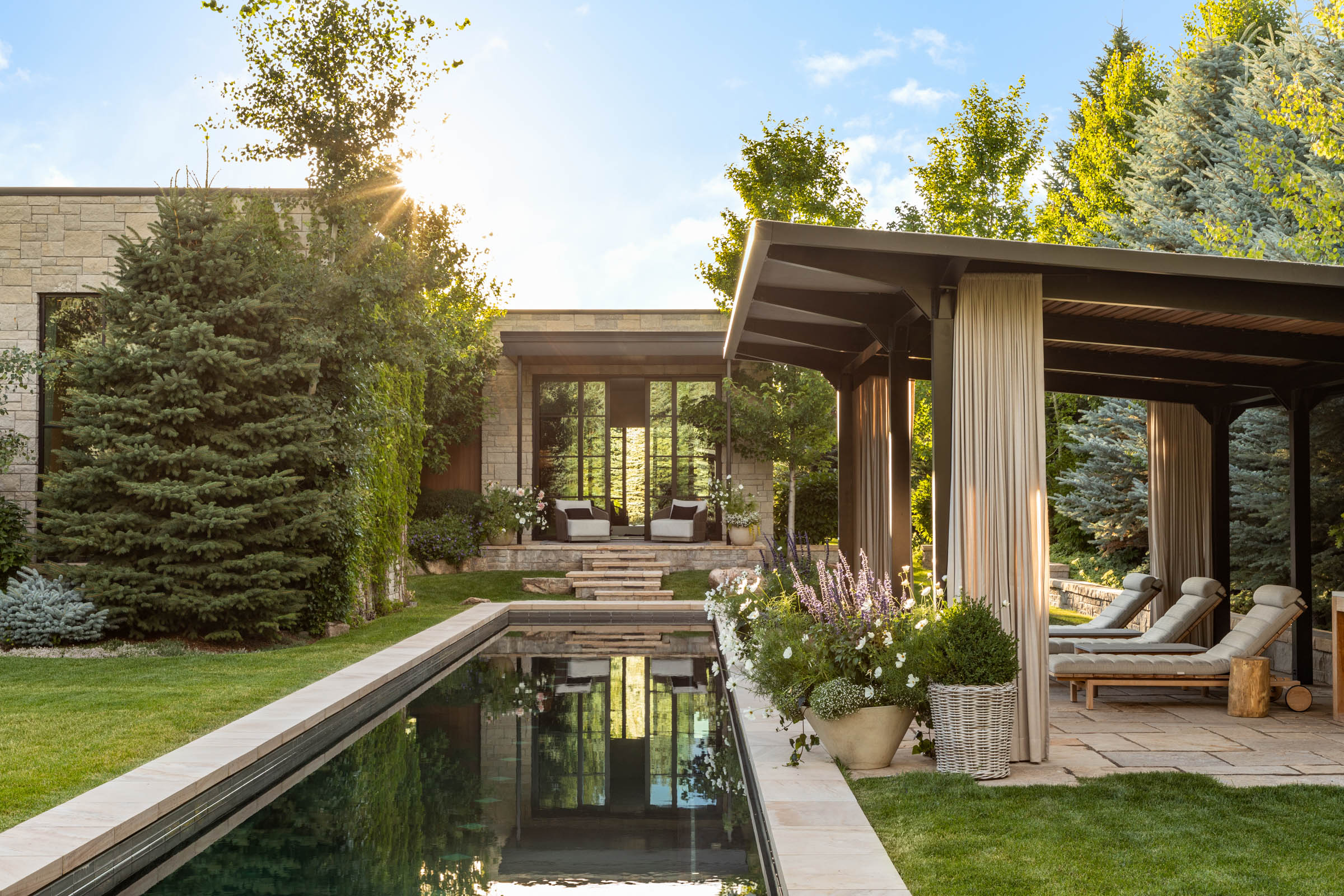
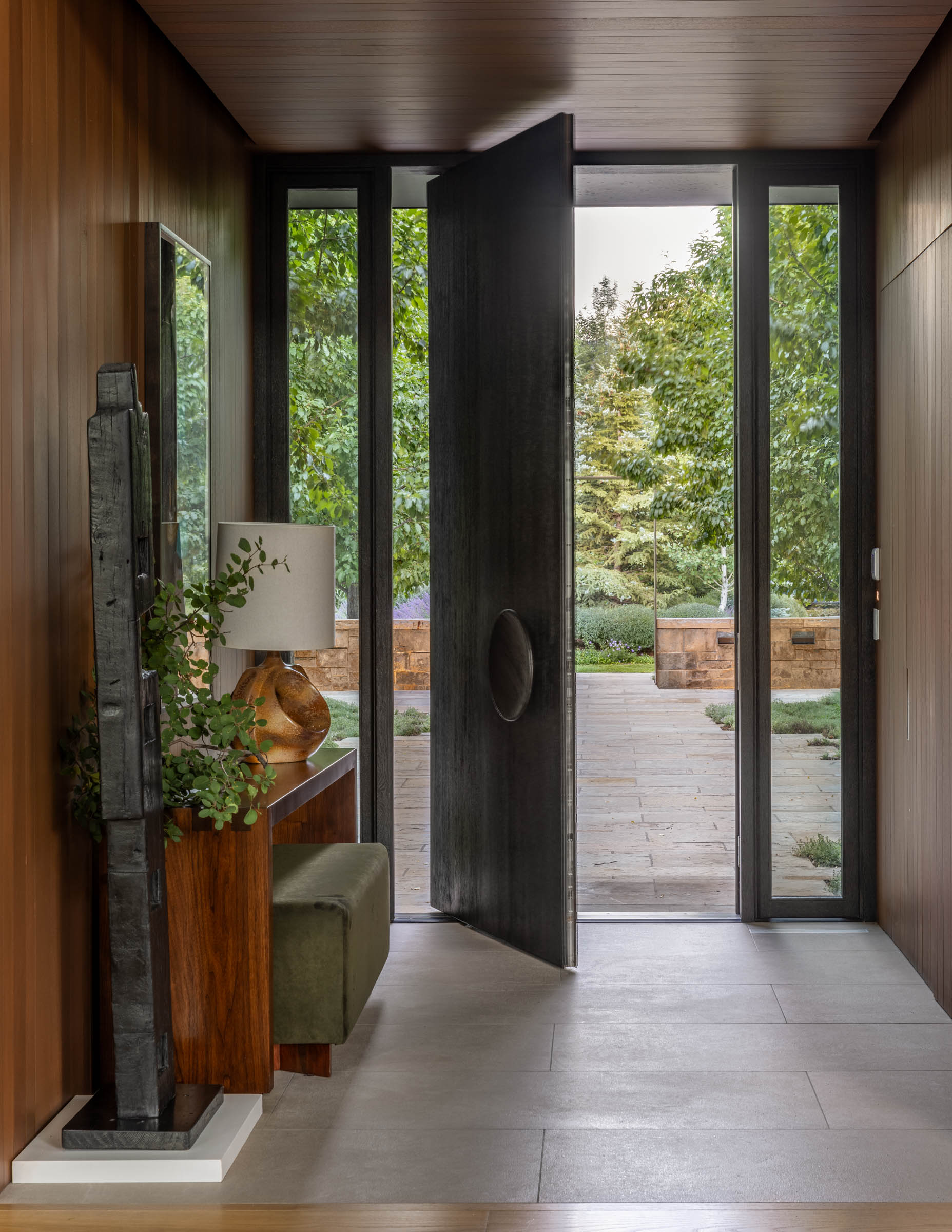
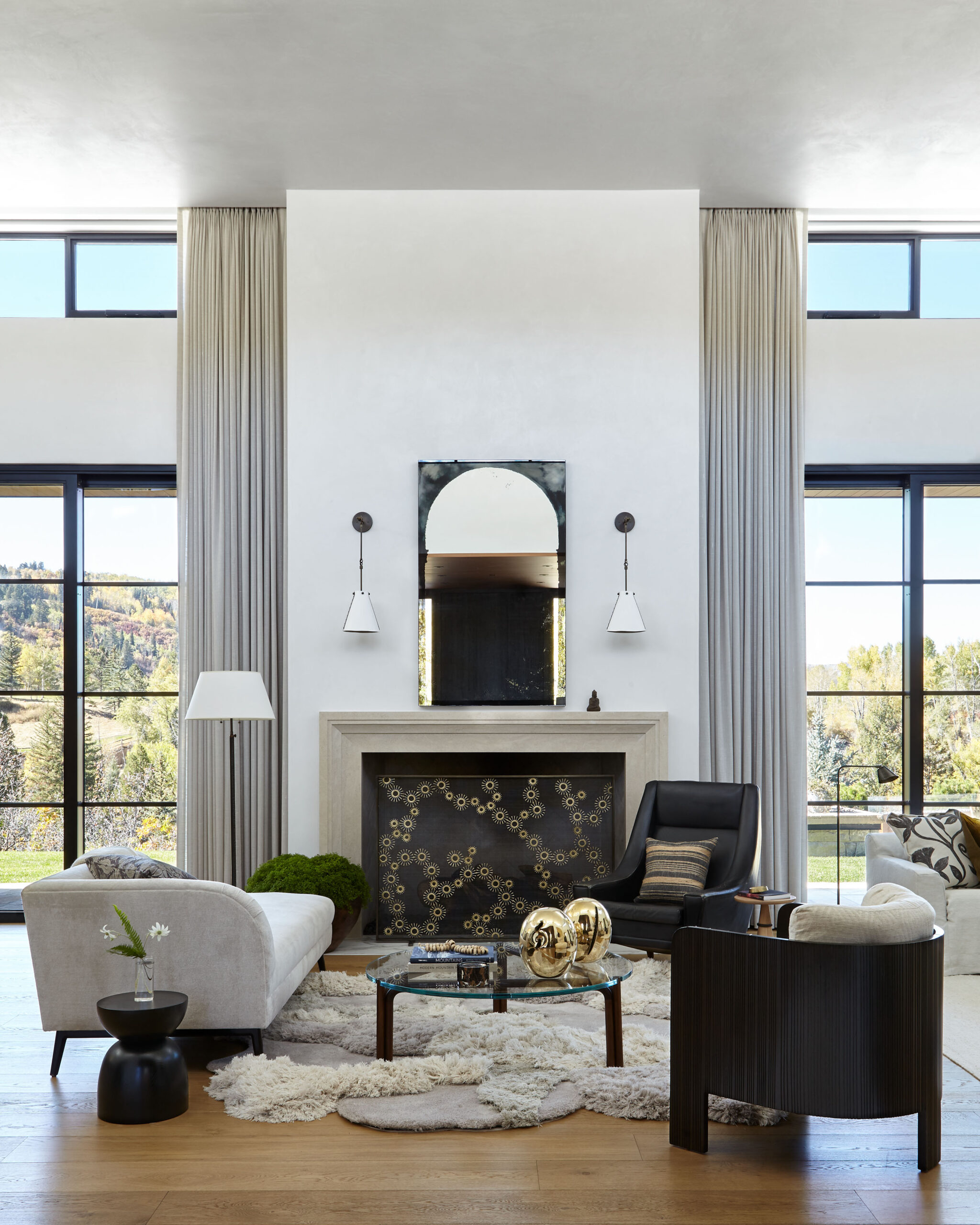
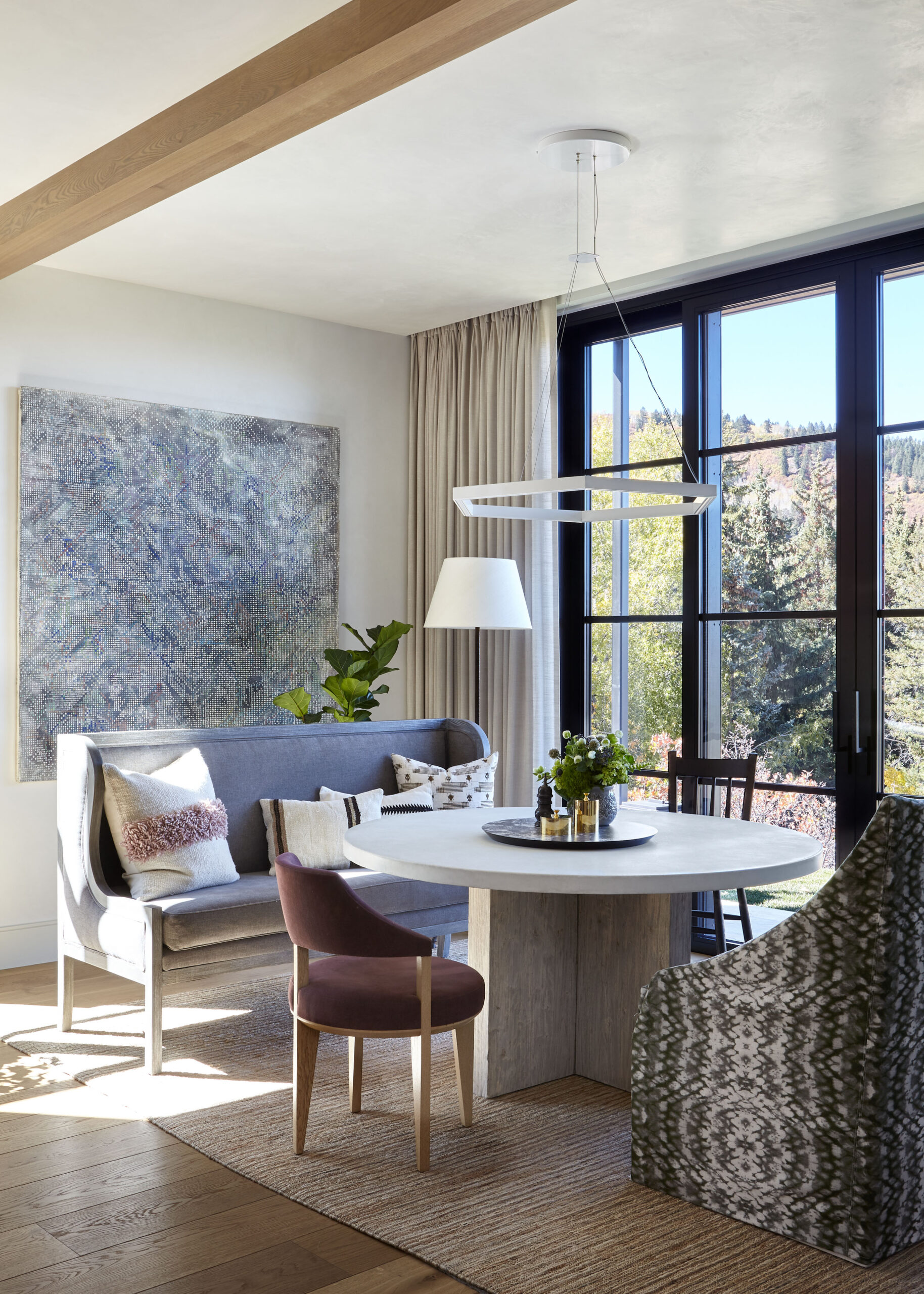
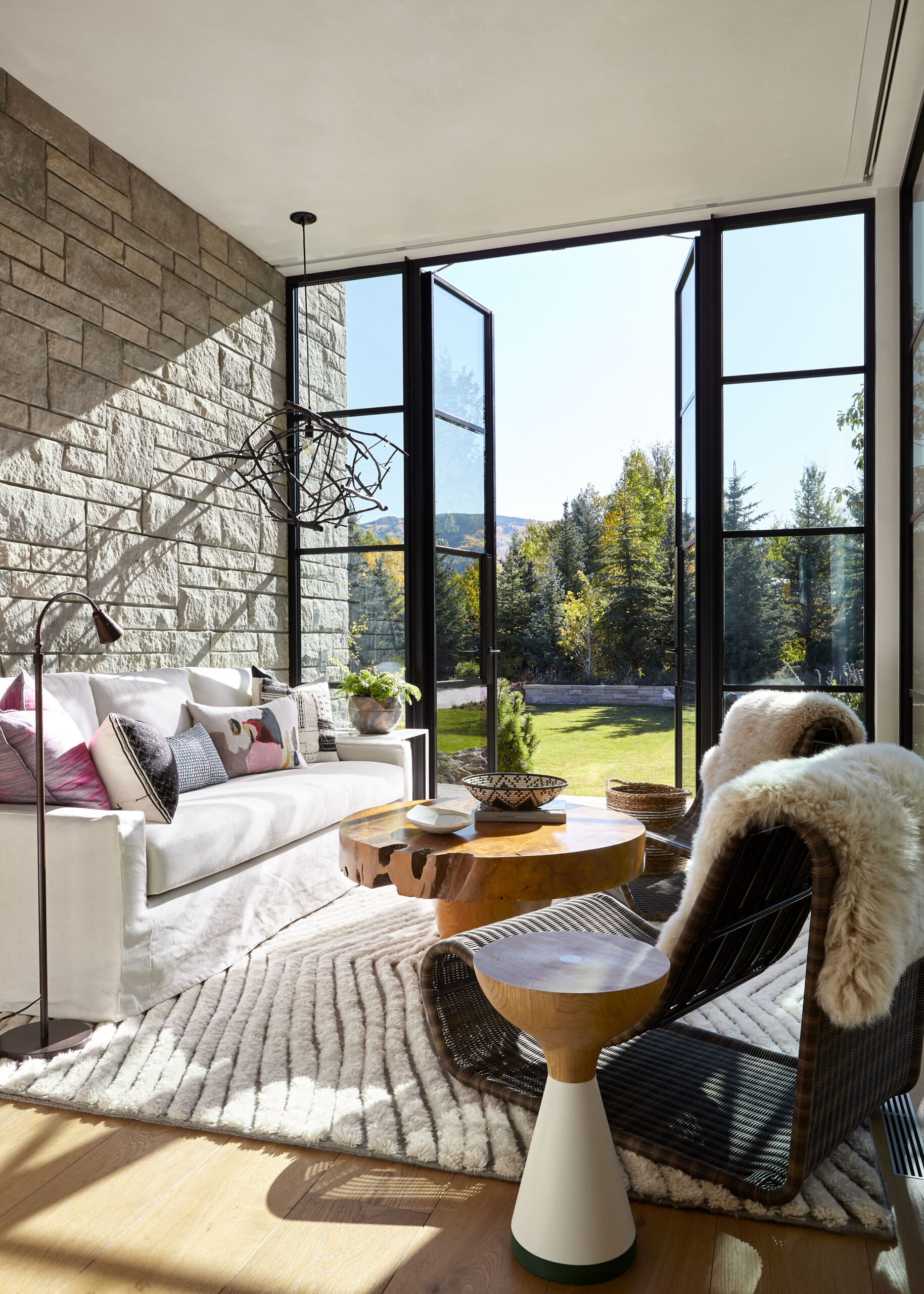
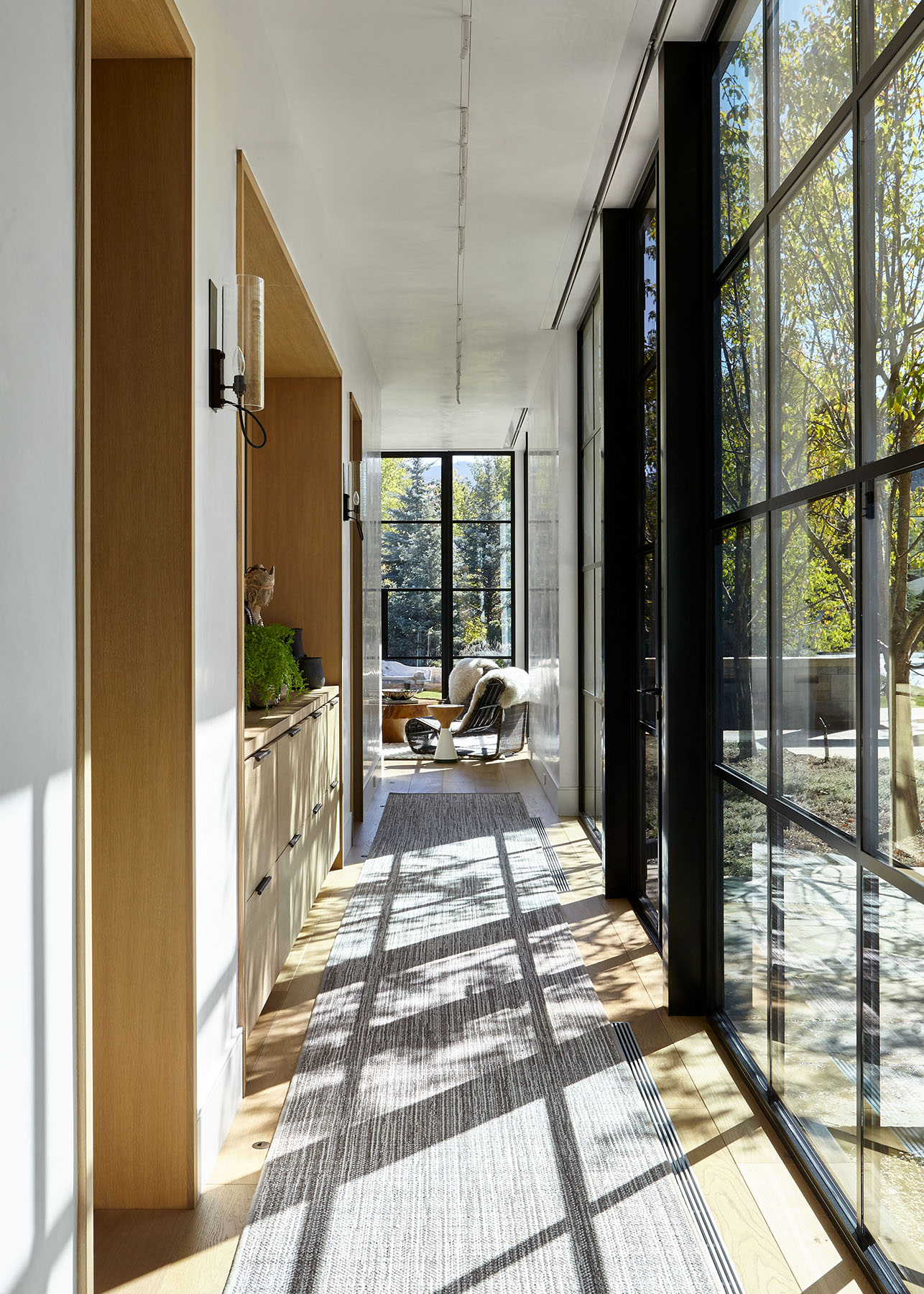
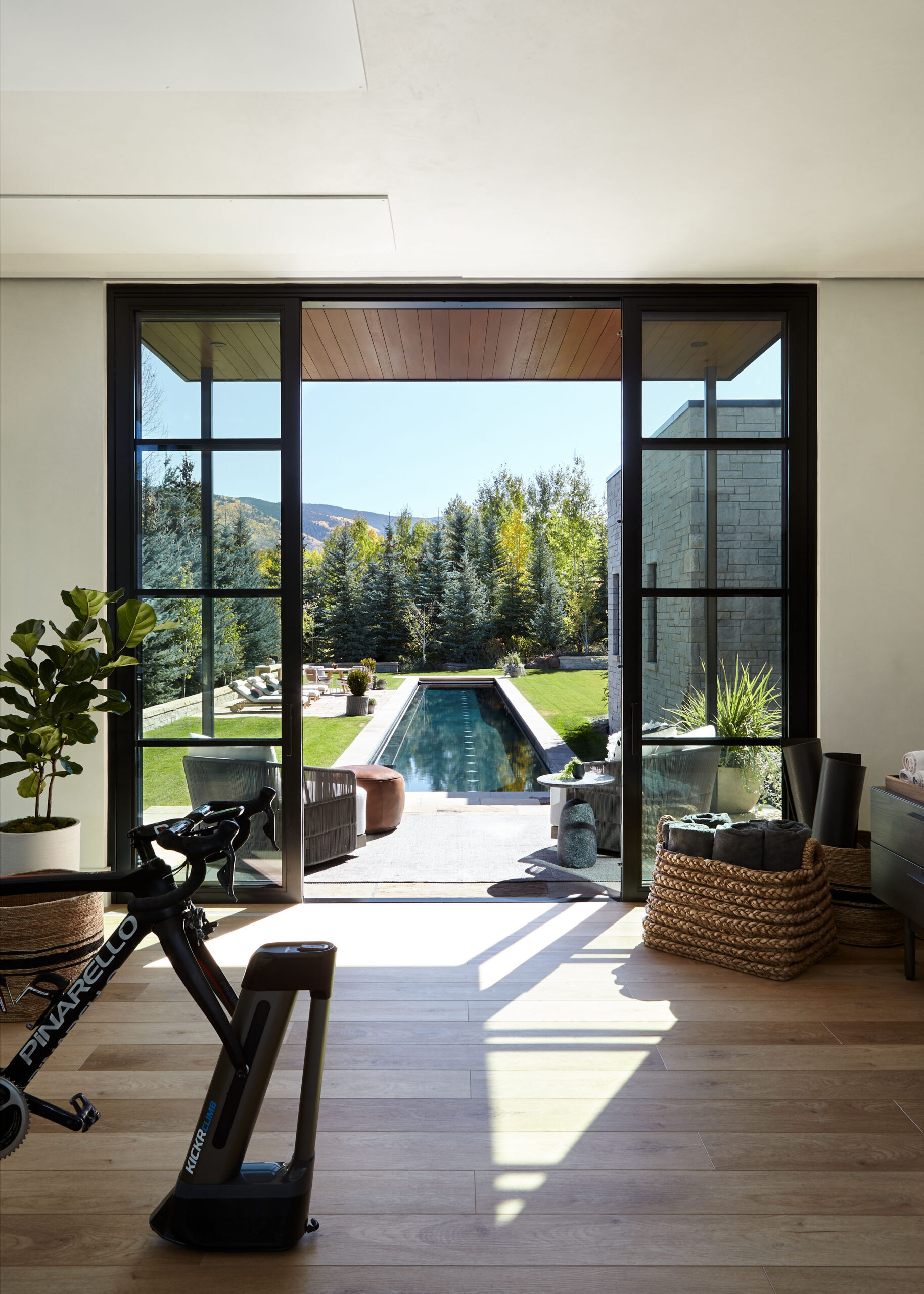
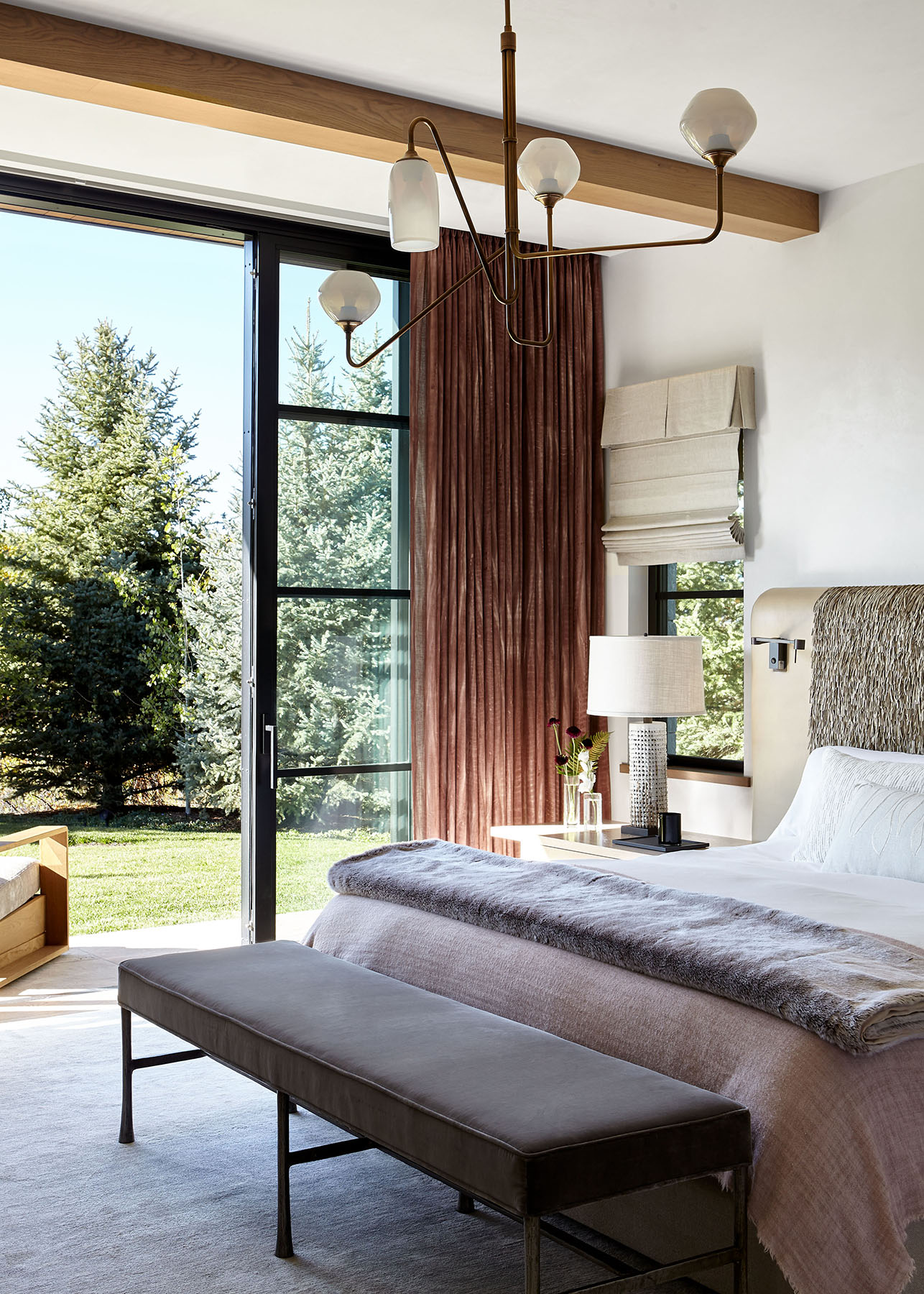
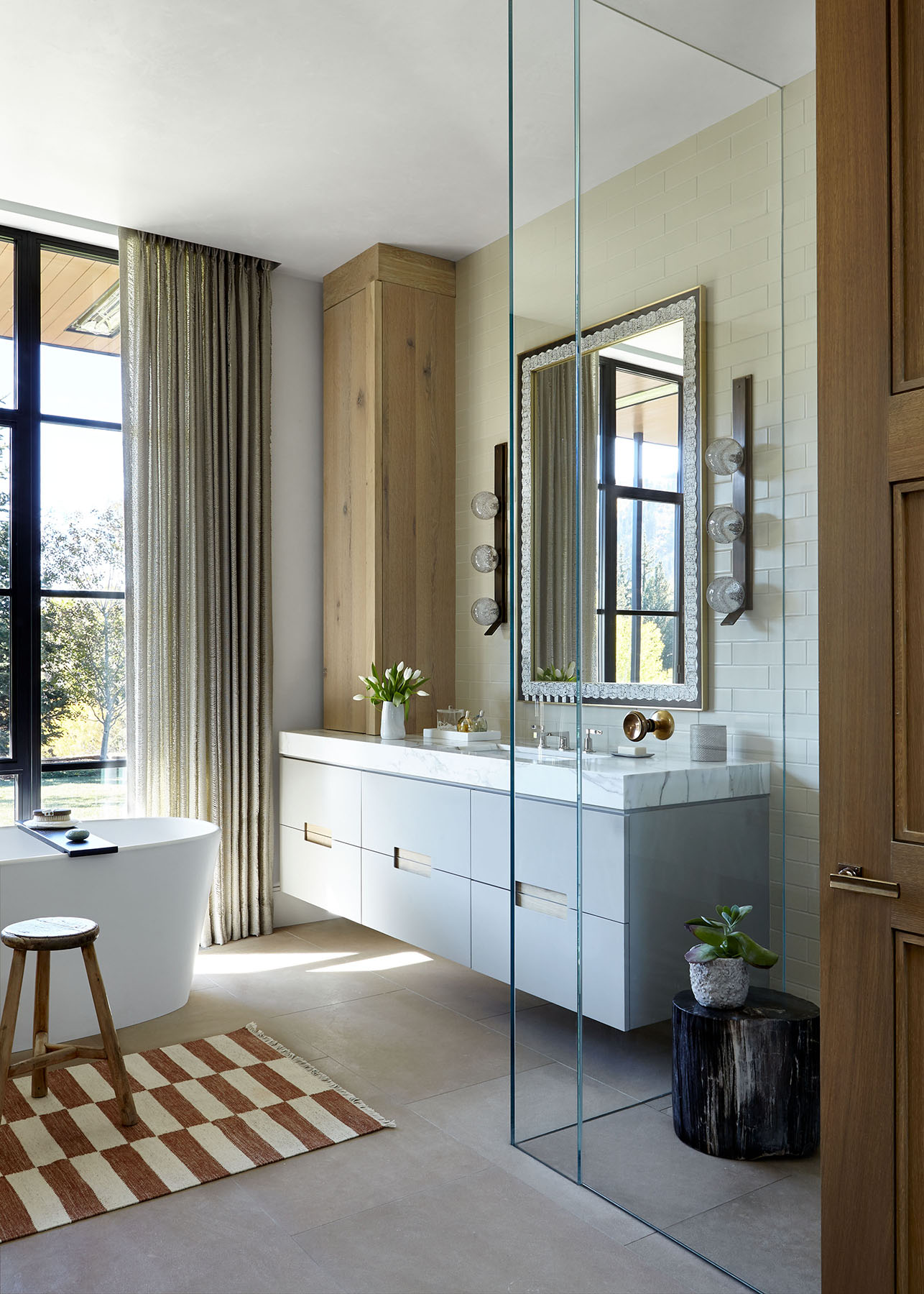
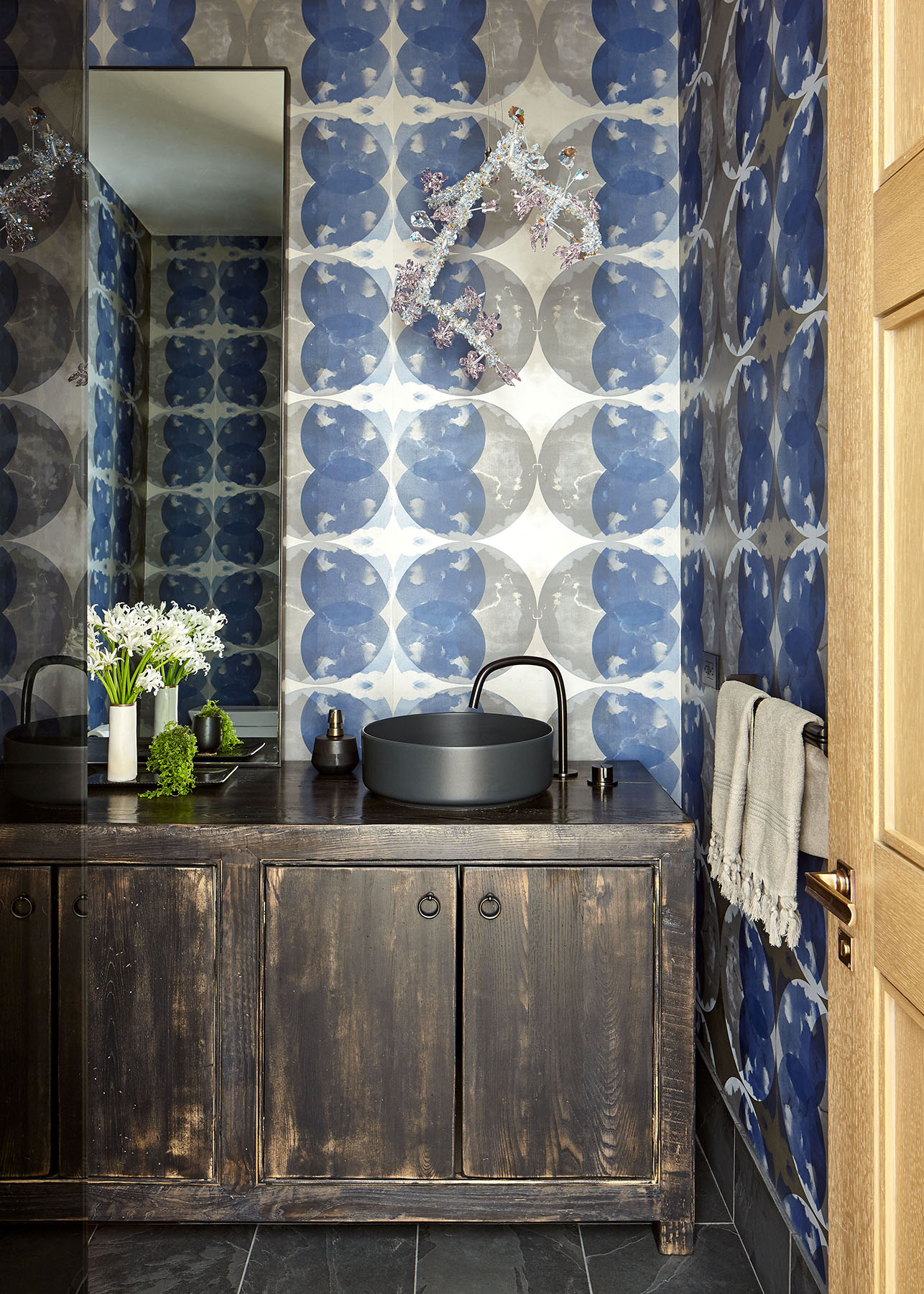
As practiced in the west, feng shui – an ancient Chinese method designed to bring structures into harmony with their surroundings – draws typically on the bagua, a set of eight symbols representing interconnected aspects of existence. At R+B’s art-filled, appropriately named Bagua House, perched atop a steep slope and enjoying expansive Aspen views, feng shui is made manifest in both the U-shaped plan and the house’s relationship to the site. Most of the firm’s designs feature a transparency that connects rooms both internally and to the typically sublime surroundings. Bagua House is different: here, interior spaces connect through exterior rooms. This interleaving of inside and outside creates an exquisite sense of amplitude, one that is as much emotional as actual.
The heart of the experience is the residence’s landscaped entry court, which sits between the three wings of the plan: it serves as the definitive moment of transition, from the wider world to the private experience of the dwelling. Within, a double-height living/dining great room gives way to the more intimate scale of the two wings. To the south, R+B set the intercommunicating family room and kitchen; while the north wing contains the parents’ suite (with an exercise room/hot yoga studio that opens onto a 75-foot-long lap pool), and the children’s bedrooms (with their communal ‘kids corner’).
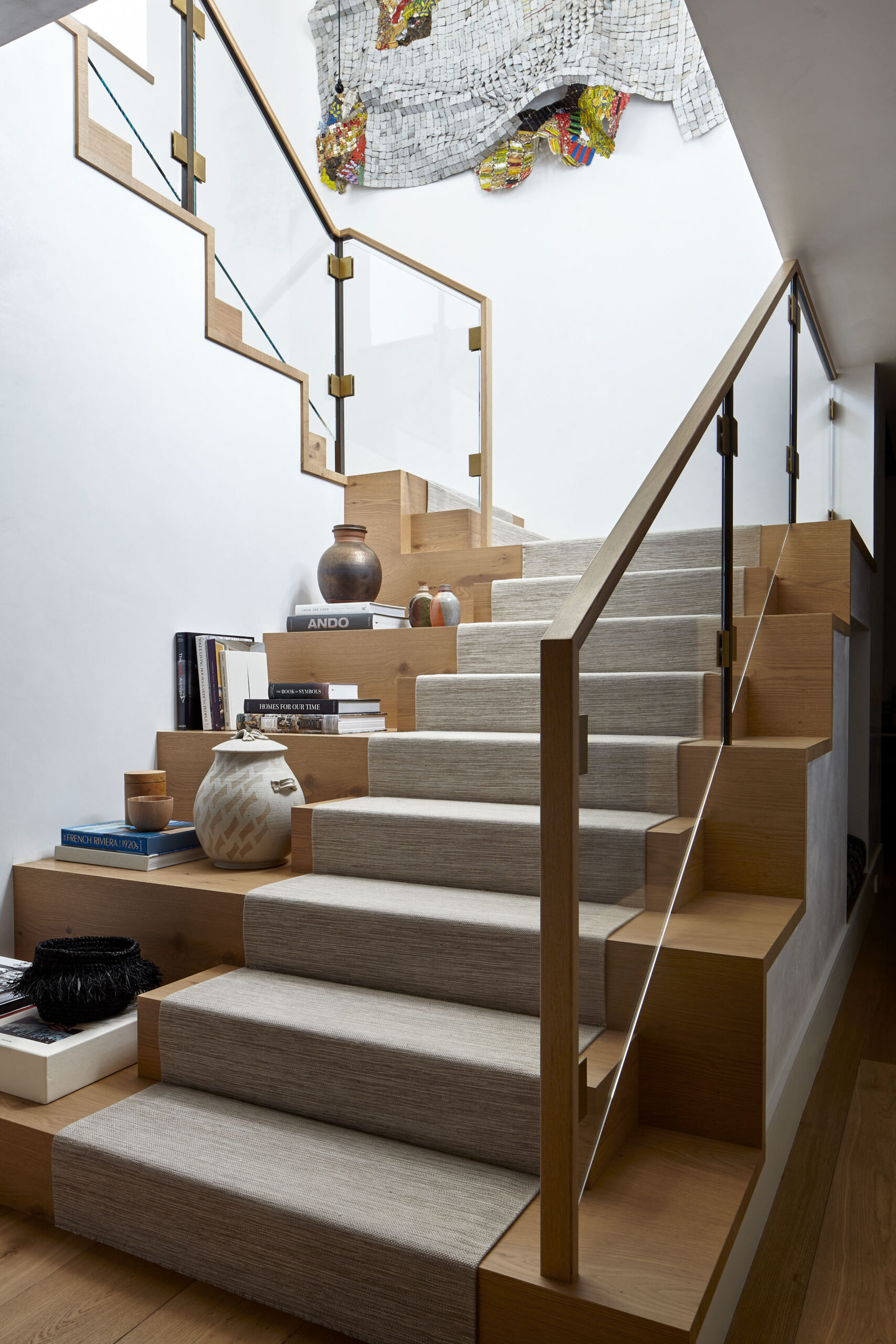
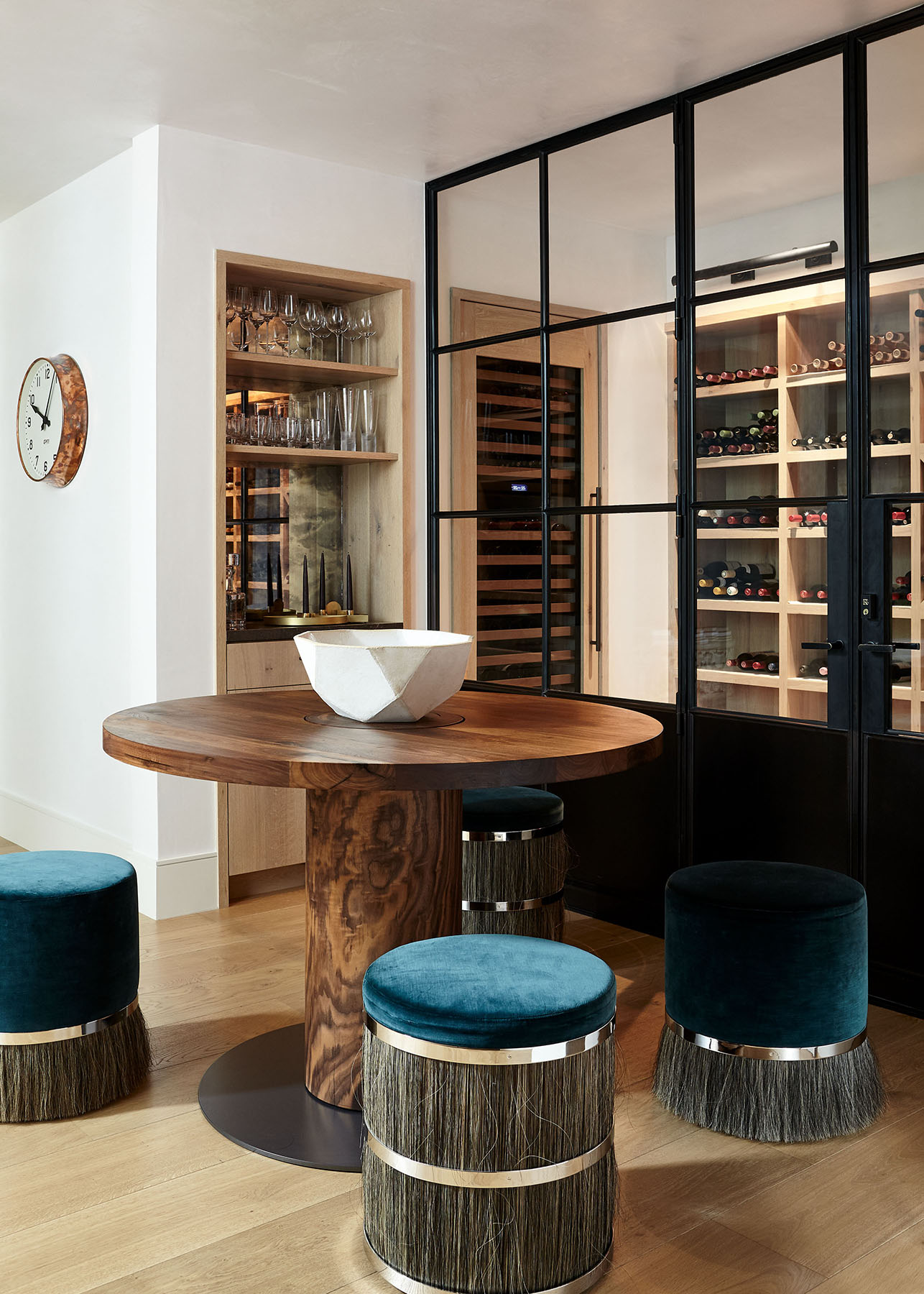
The modesty of the architecture contributes to the residence’s beauty and unity; set almost entirely on a single level (with a wine cellar and media room, and a habitable stair that serves as a library and art gallery, below), the spaces absorb the shifting character of the light as it transforms throughout the day. But it is the integration into the landscape – the positive flow of energy characteristic of the successful application of feng shui – that gives Bagua House its defining sense of serenity: a commingling of the built, the natural, and the human that feels at once comprehensive and sublime.
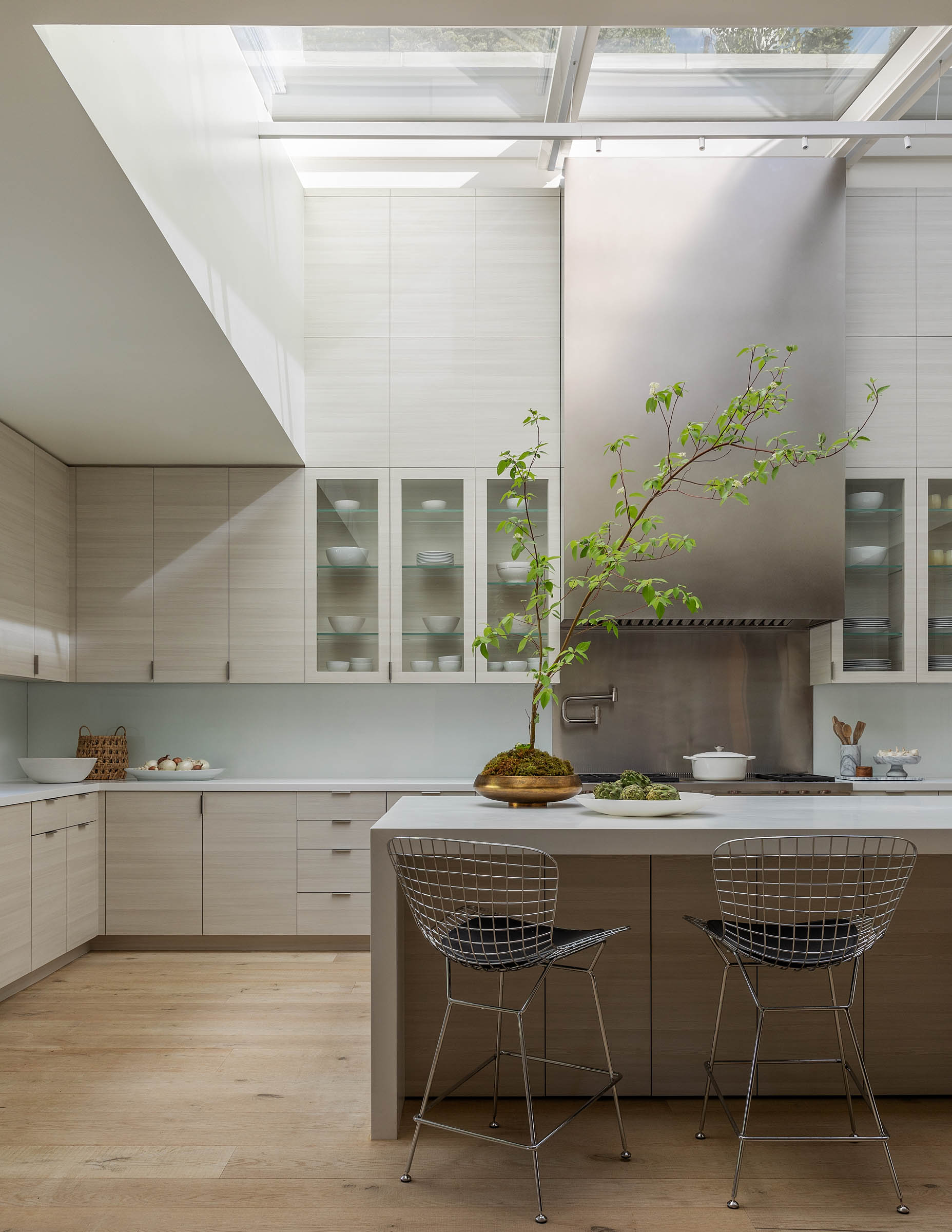
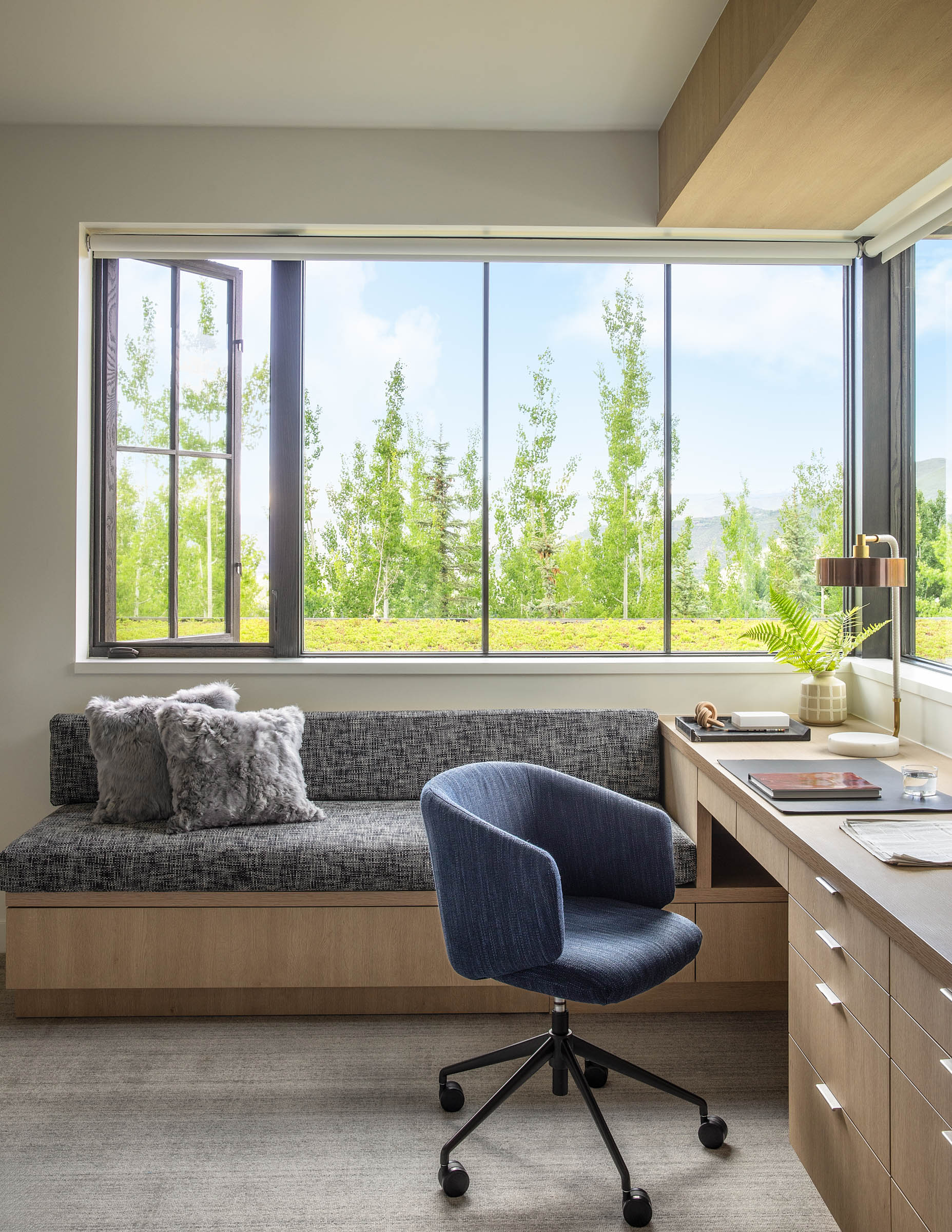
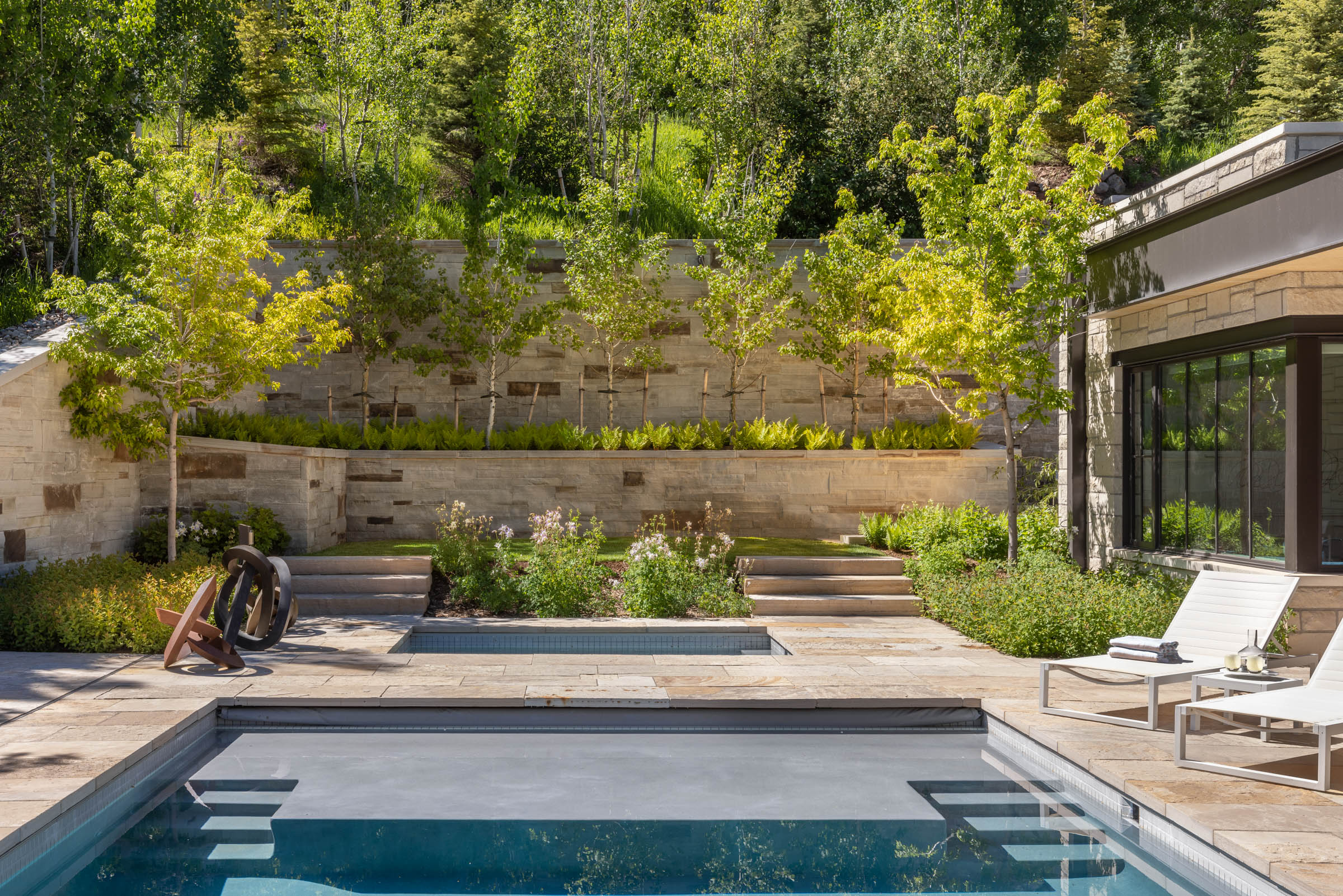
How do you create a glass box in a district that demands a vernacular tradition?
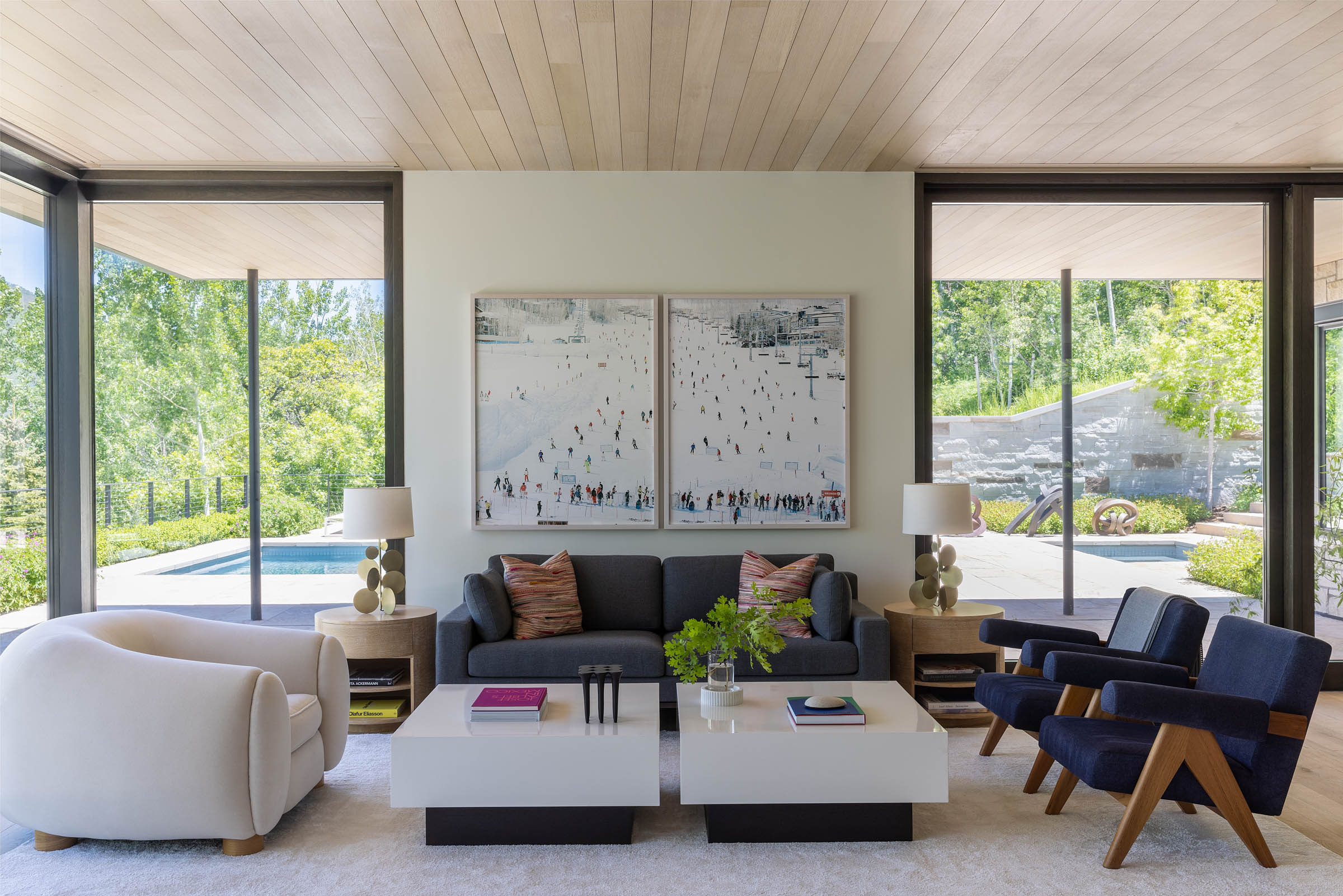
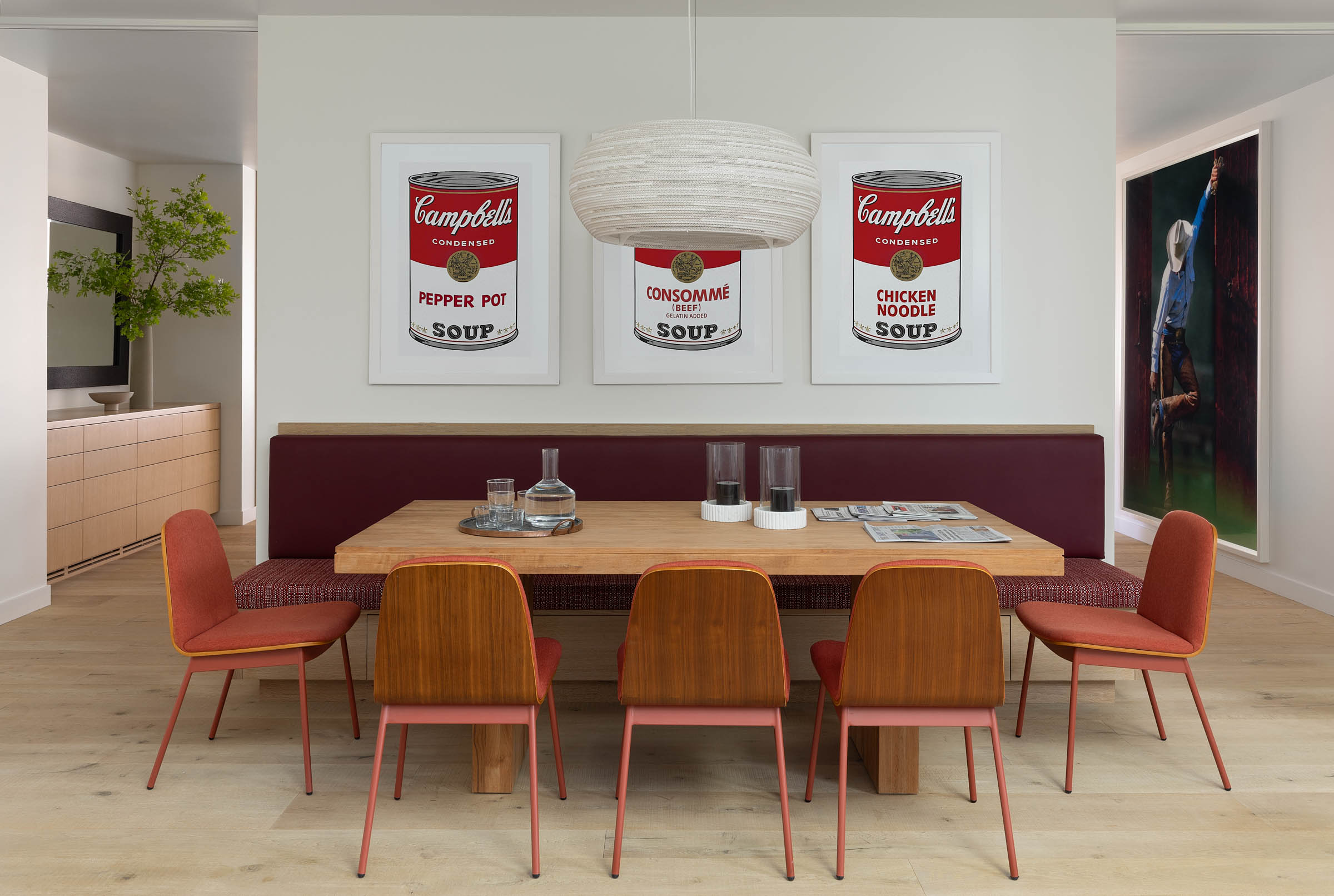
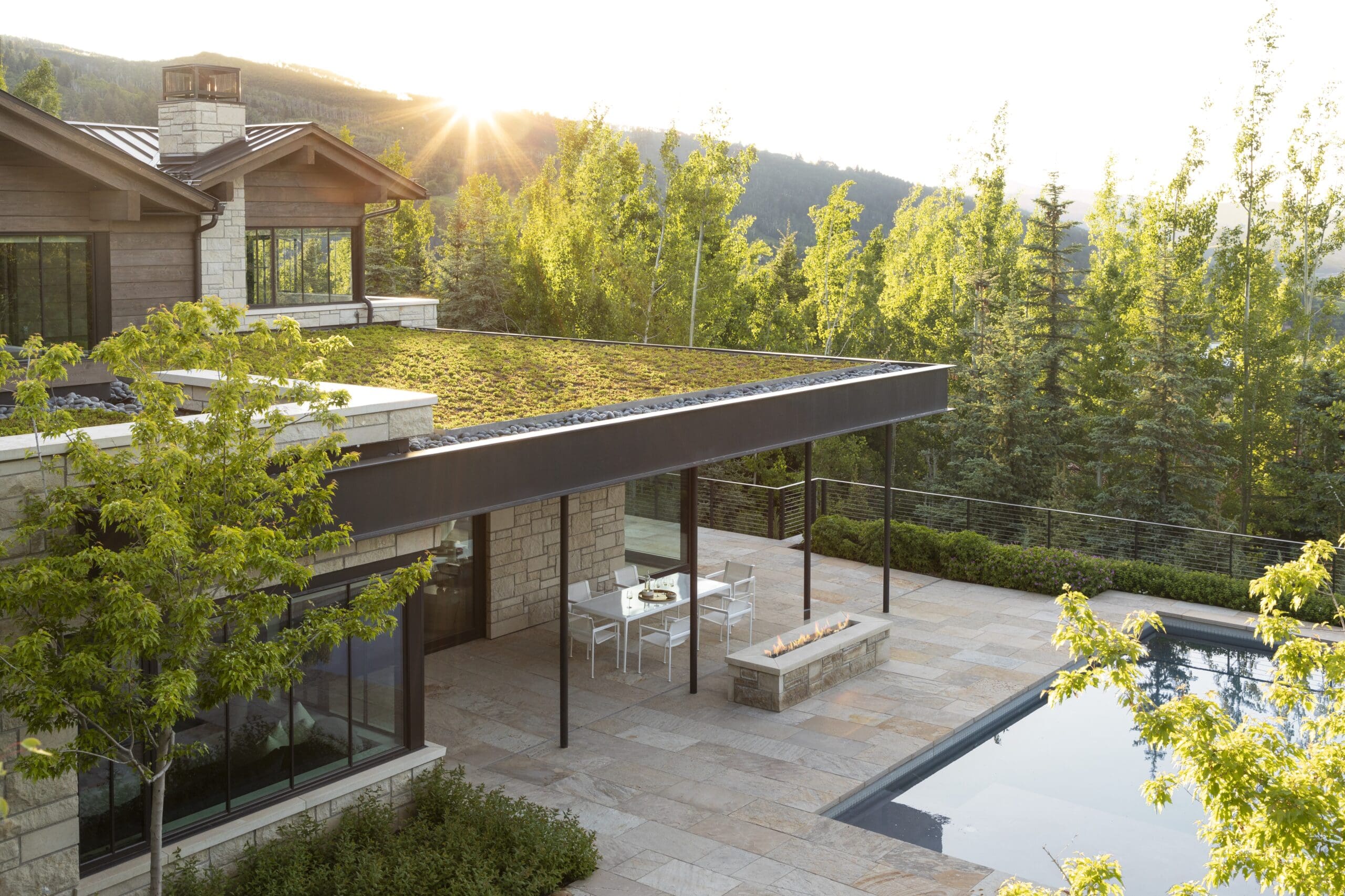
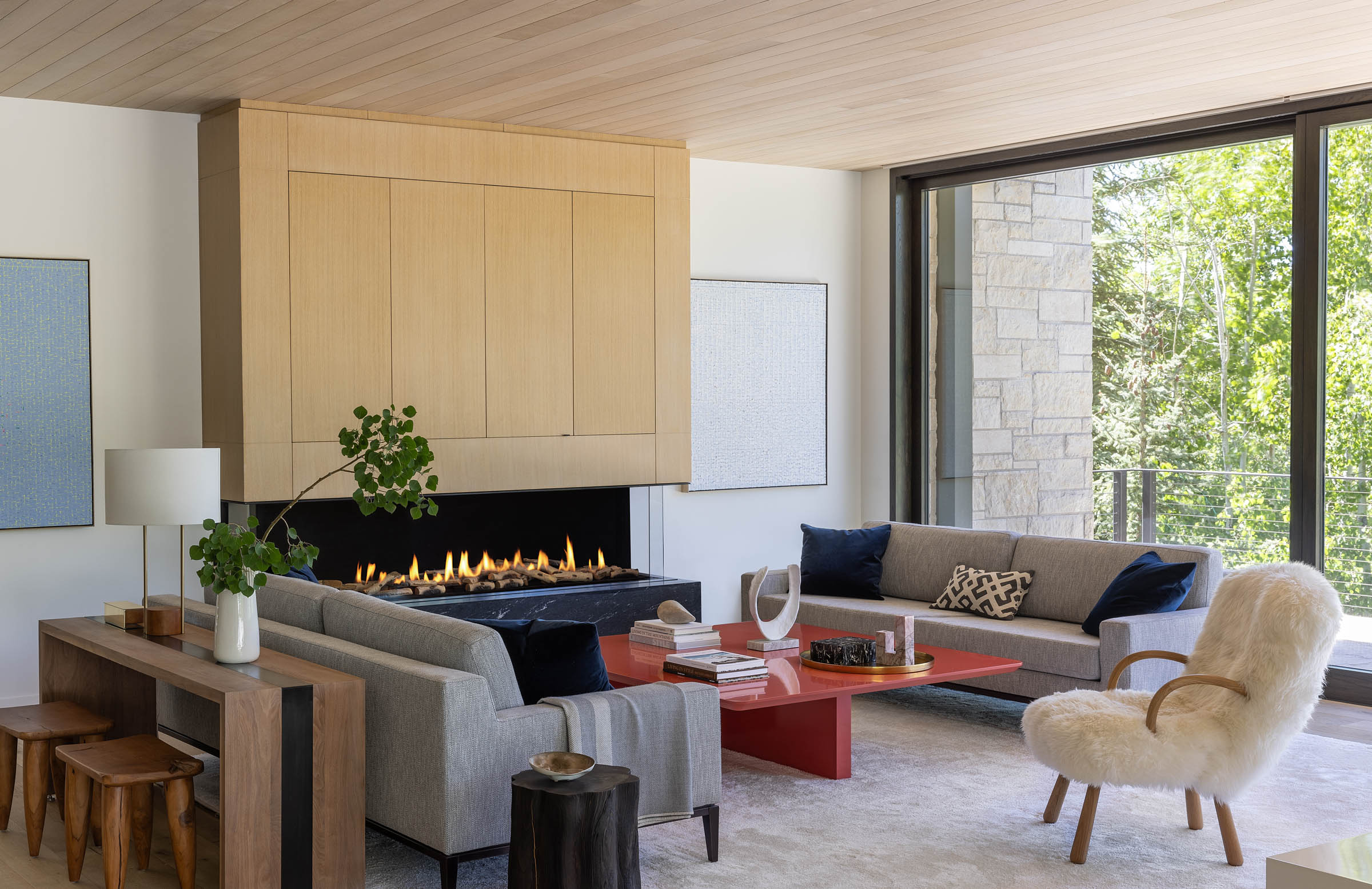
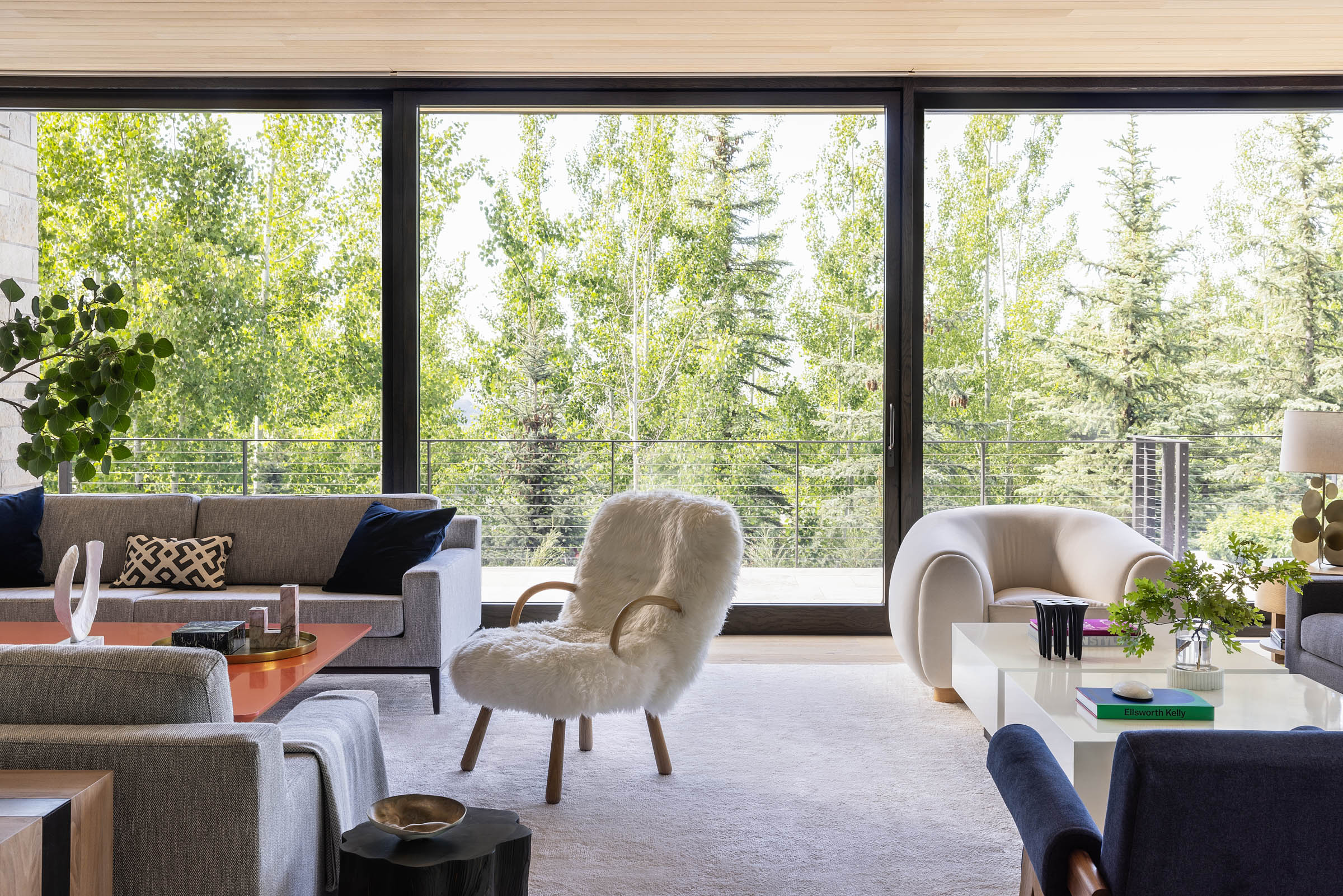
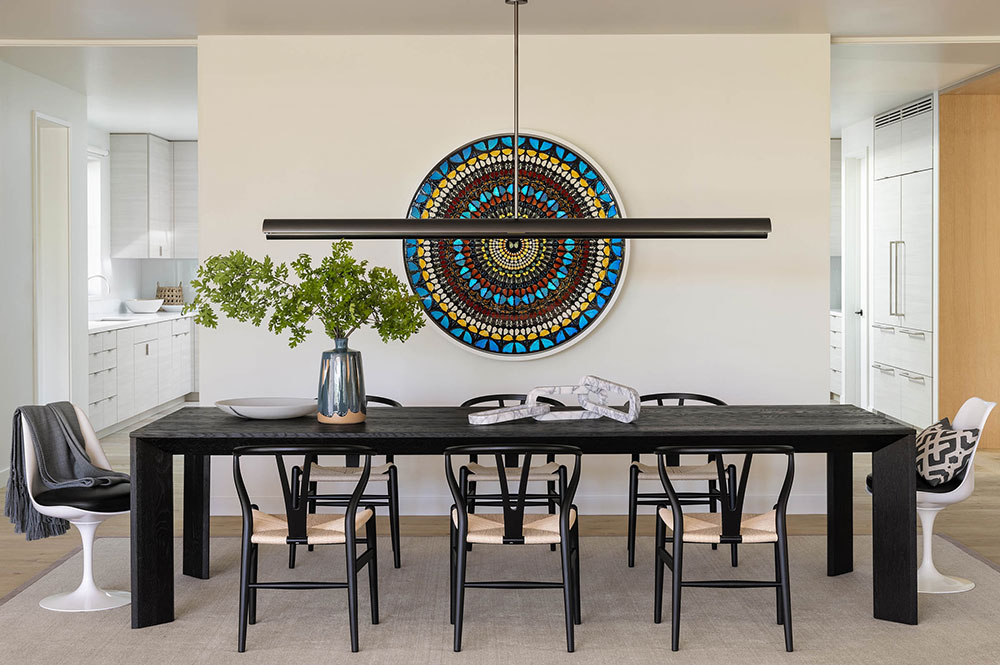
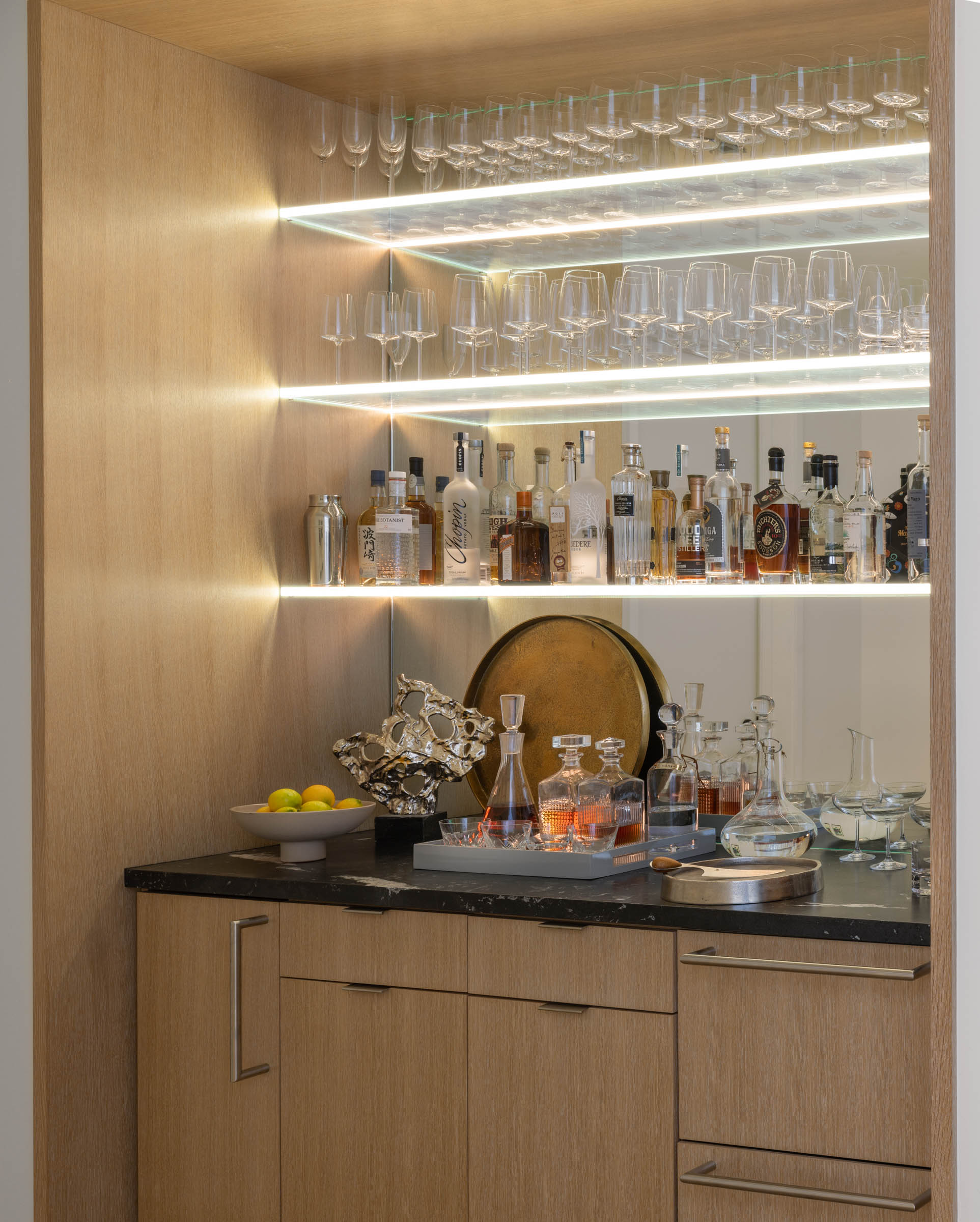
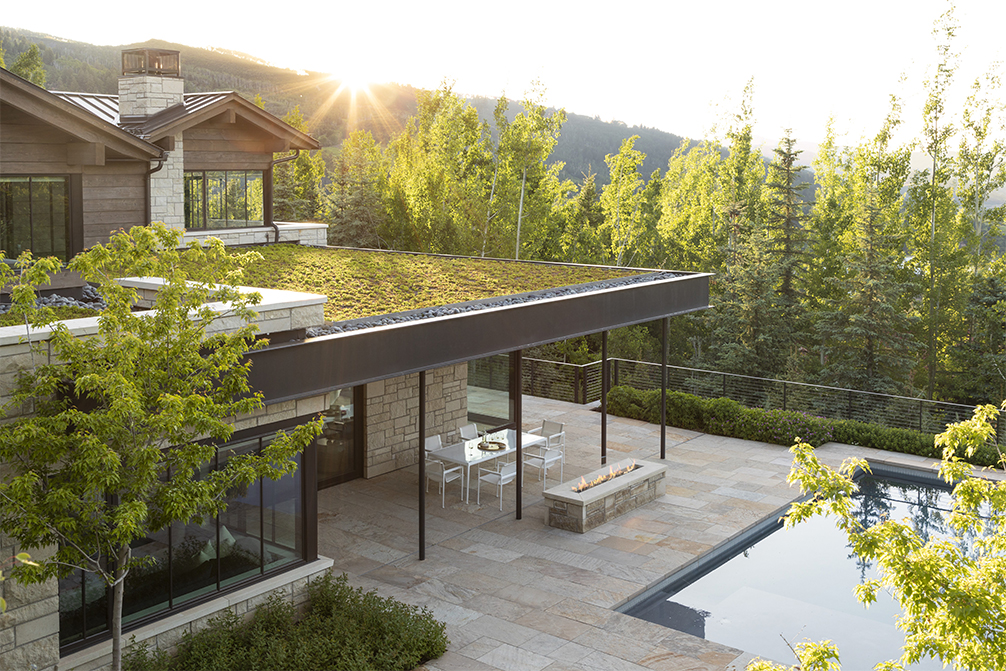
Located in a forest of aspen and fir, with stunning views of Maroon Creek, Roaring Fork, and Hunter Creek valleys, Mountain Retreat was commissioned for an Aspen neighborhood with strict architectural guidelines based on the design of 19th-century national park lodges. Both the residents and R+B wanted a 21st-century house tailored to a contemporary family. Yet the architects recognized that the convivial character of a lodge was not incompatible with the social advantages of open-plan modernism. And not just in the public rooms, but the interstitial zones, which encourage the accidental and the unexpected.
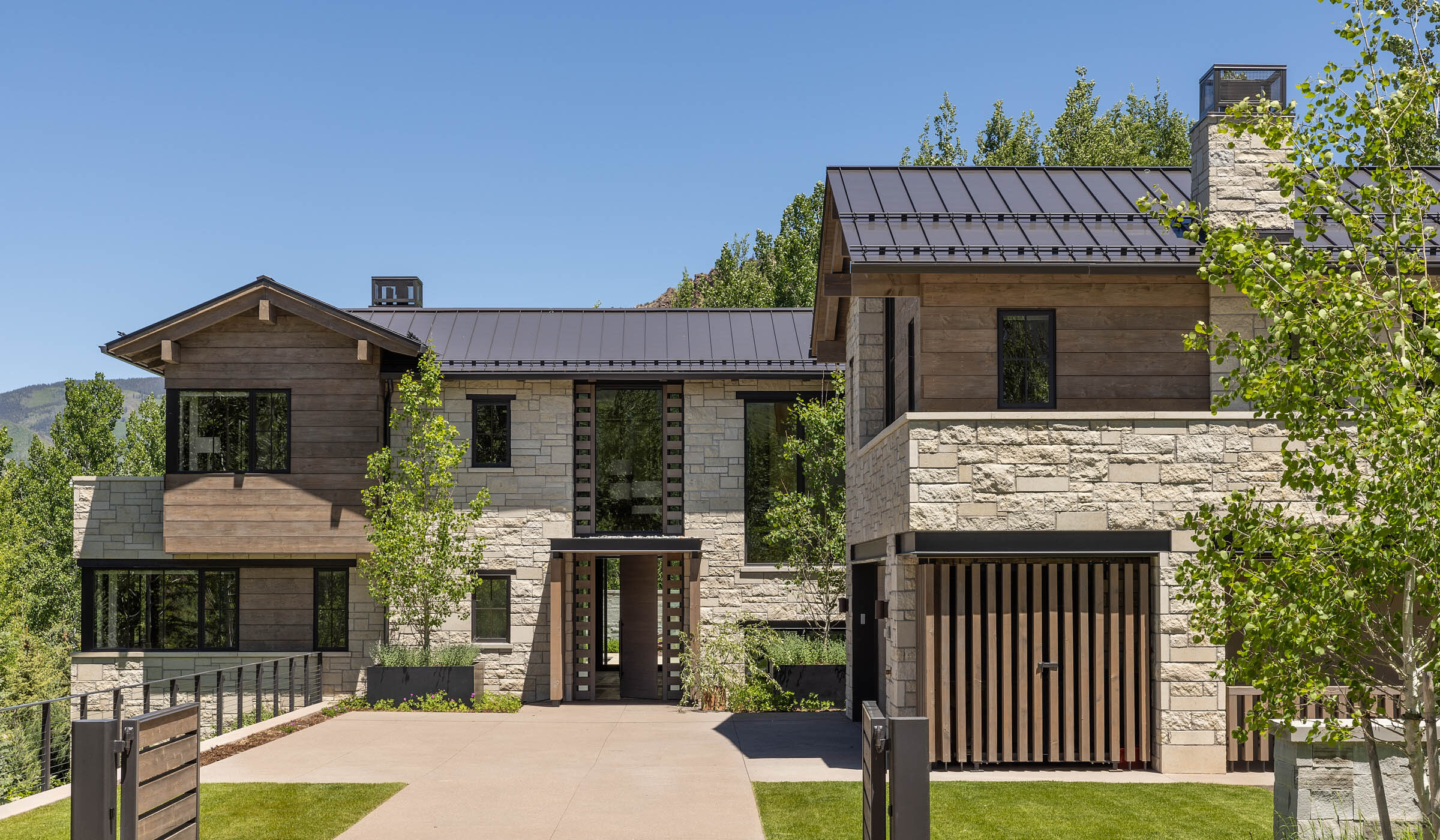
To satisfy district guidelines, R+B deployed a traditional palette of stacked stone, rough-hewn wood siding, and standing-seam metal for the volumes visible from the street. The elevations not on public view, conversely, feature floor-to-ceiling pocketing glass walls, facilitating an indoor/outdoor experience in which exterior spaces, including a covered entertaining terrace and pool, welcome the family and embrace the incomparable surroundings. (The site itself offered an even greater challenge, as the land was steeply sloped: six months were consumed by a monumental shoring effort to create a level building lot and the massive retaining wall on the property’s north side.)
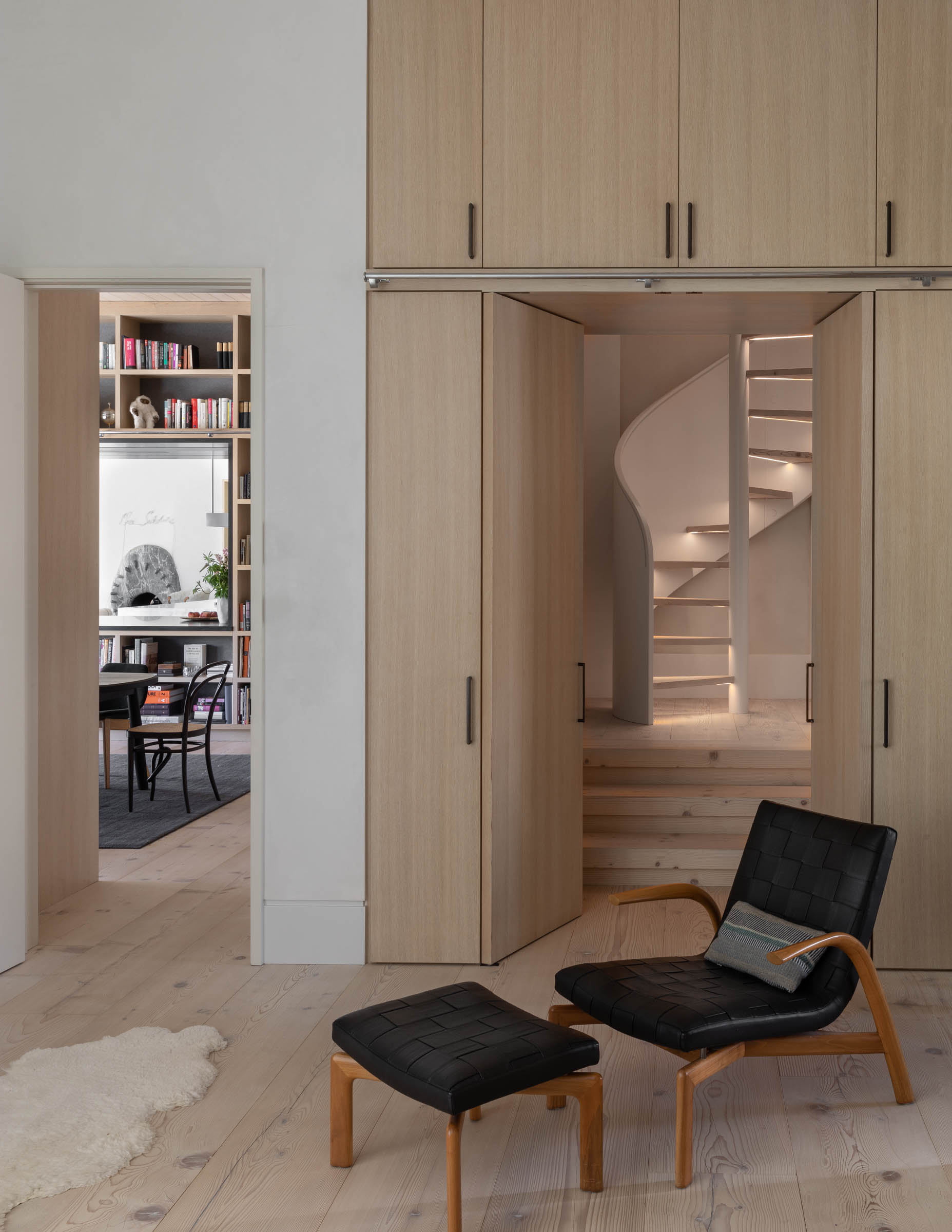
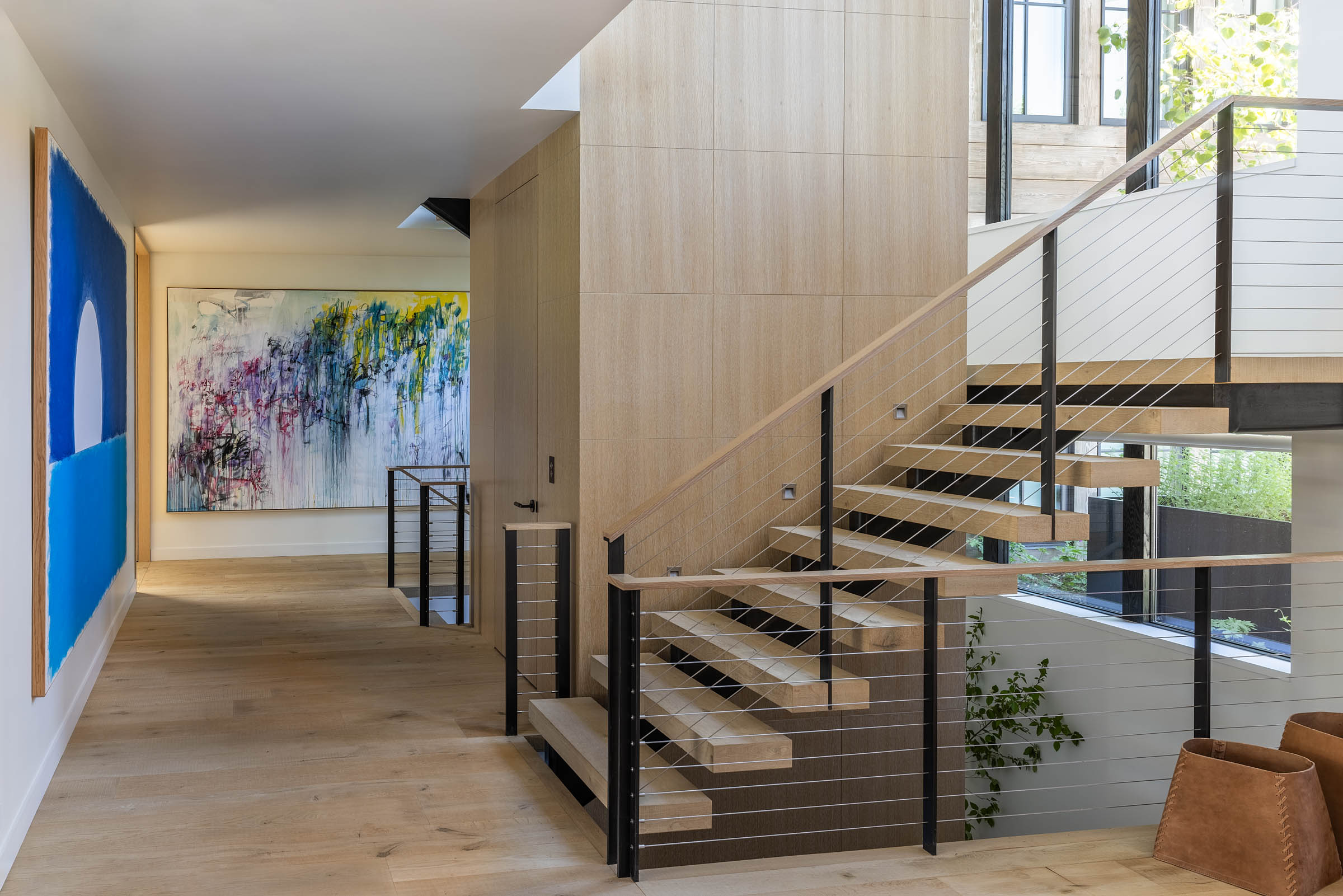
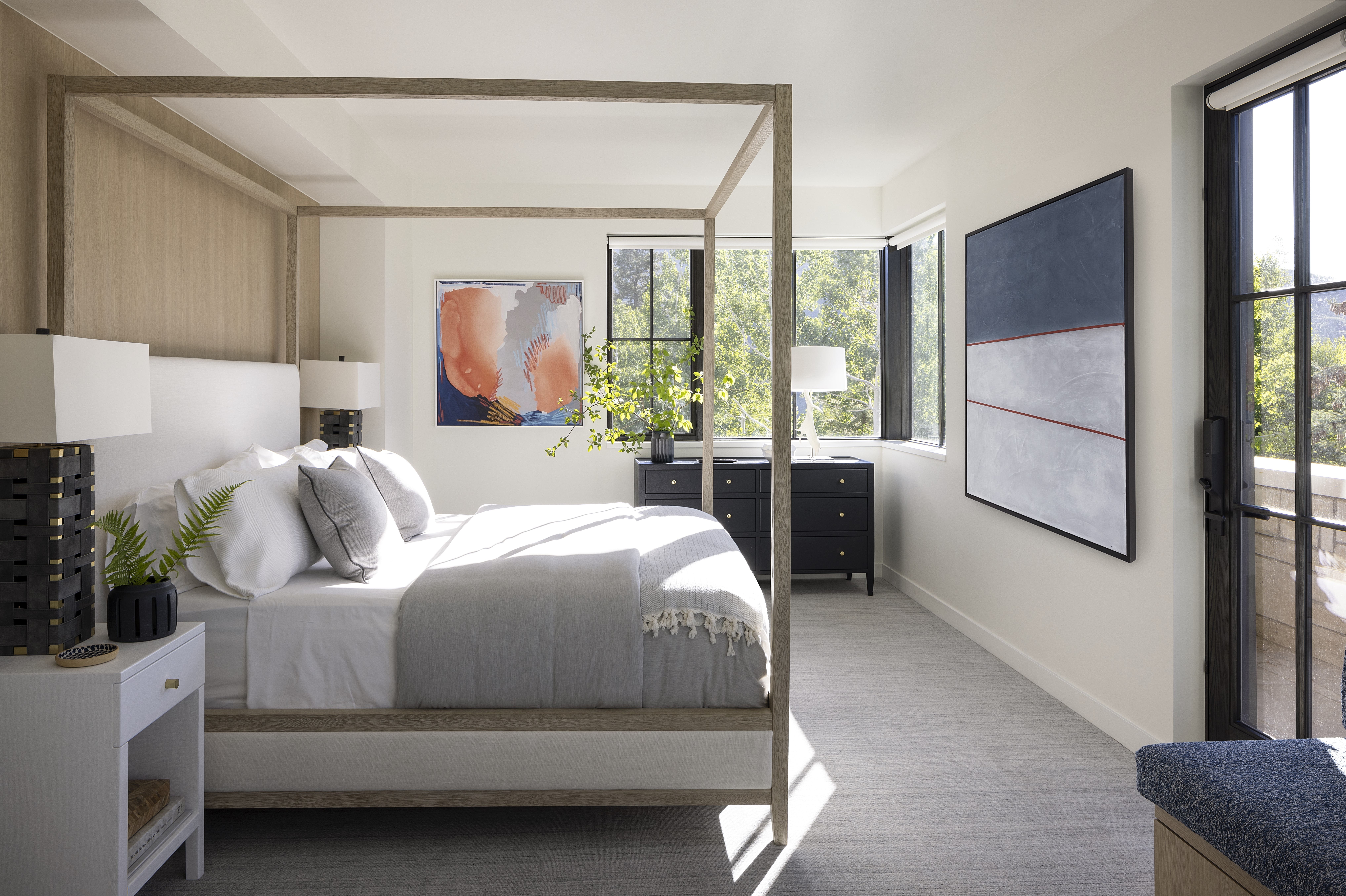
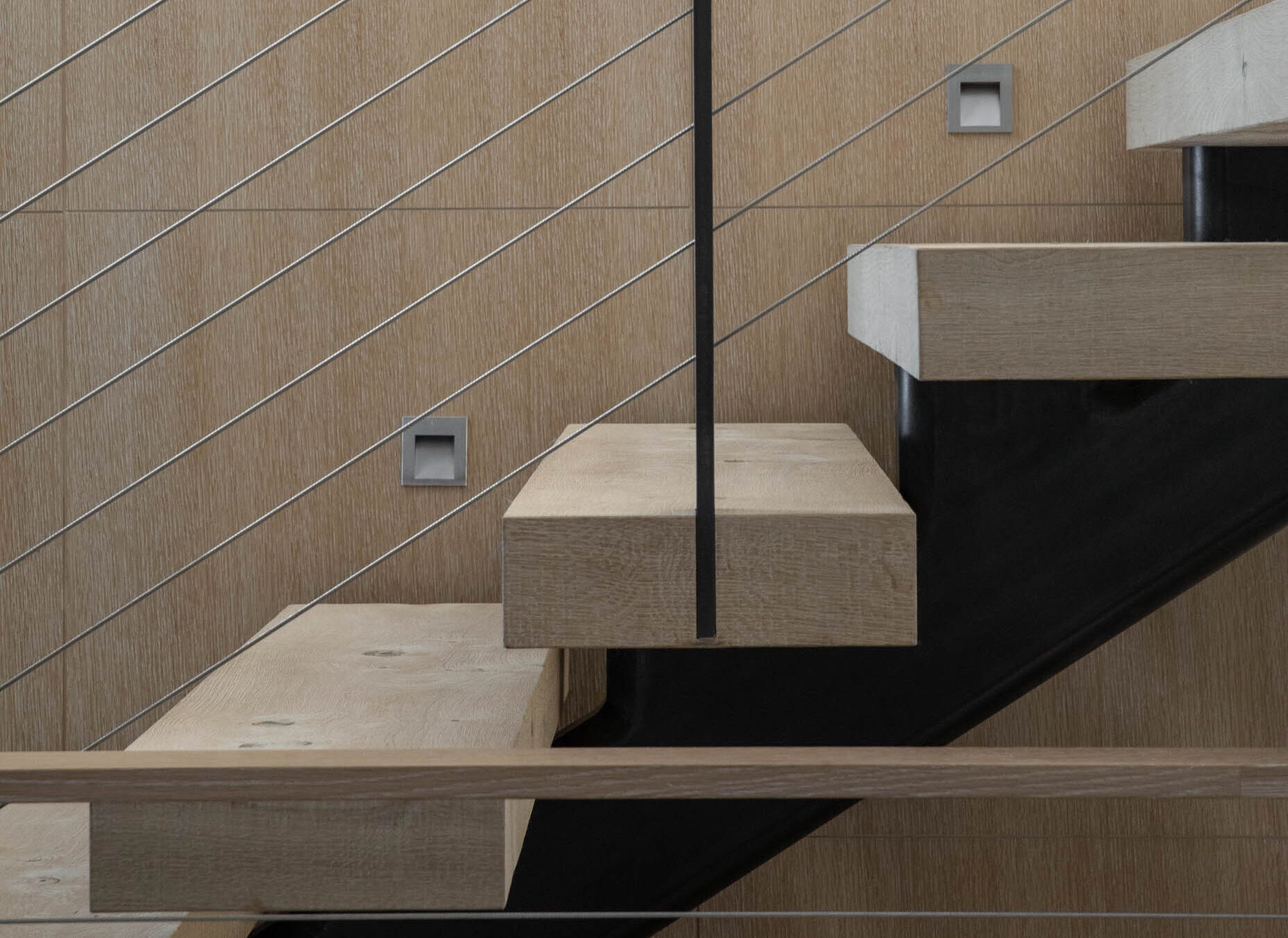
Within, R+B eschewed the usual primary bedroom, opting instead for a program of four ‘equal’ suites and a bunkroom. The self-contained character of these spaces – their well-equipped privacy, augmented by private terraces – makes for an appealing contrast with the communal areas. Regarding the latter, the architects placed unusual focus on the hallways and the grand stair: the halls are wide enough to be comfortably inhabited via seating nooks, and the stair remains an experience unto itself, floating between the three levels, affording views across a realm of changing moods and perspectives. These stand as zones of opportunity: of the unexpected sociability emblematic of the park lodges in their golden age, reinterpreted for a family in the present day.